

P0340 on 2001-2004 Toyota Sequoia: Camshaft Sensor Circuit Causes and Fixes
For a P0340 code on a 2001-2004 Sequoia, check the battery first. A weak battery is a very common cause documented in a Toyota TSB (T-TT-0010-10 Rev) that advises checking freeze frame data for voltage below 11V during cranking. If the battery is healthy, the camshaft position sensor (Bank 1, passenger side) is the next likely culprit, followed by its wiring, which is often damaged during timing belt service. An OEM Denso sensor costs about $60-$120.
- Always diagnose the battery and charging system FIRST when you see a P0340 on a 2001-2004 Sequoia.
- The code indicates a fault in the Bank 1 (passenger side) camshaft position sensor CIRCUIT, which includes the sensor, wiring, and ECM.
- Before buying parts, inspect the wiring harness for damage, especially near belts and pulleys.
- If the battery and wiring are good, the sensor itself is the likely culprit and is a simple part to replace.
- If the vehicle has high mileage and an unknown service history, a stretched or jumped timing belt is a serious possibility that must be investigated.
What's Unique About the 2001-2004 Toyota SEQUOIA
For the 4.7L 2UZ-FE engine in this generation of Sequoia and its platform mates, this code has a very specific and well-documented quirk. Toyota issued a Technical Service Bulletin (TSB T-TT-0010-10 Rev) stating that low battery voltage during cranking can cause inconsistent engine speed, which the ECM can misinterpret as a fault in the camshaft sensor circuit. The TSB specifically advises technicians to review the freeze frame data and check if battery voltage was below 11 volts when the code was set. Because of this, checking the battery's health is the mandatory first step before assuming any parts have failed.
Diagnostic Flowchart
Tap your situation to follow the diagnostic path that matches what you're seeing on this vehicle.
Symptoms You May Notice
- Check Engine Light is on
- Engine is difficult to start or cranks for a long time but won't start
- Engine stalls intermittently, especially at low speeds or when coming to a stop
- Rough idle or engine stumbling
- Noticeable loss of engine power and hesitation during acceleration
- Potential issues with transmission shifting as the vehicle may enter a fail-safe mode
- Increased black smoke from the exhaust if mechanical timing is off
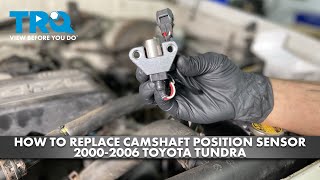
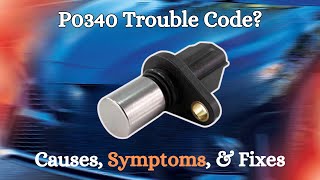
- Immediately replacing the camshaft position sensor without first checking the battery and charging system. The TSB for this vehicle makes the battery check the most important first step. 🎬 Watch: A quick overview of common causes for the P0340 code.
- Replacing the sensor when the actual fault is a damaged wire behind the timing cover.
- Replacing the crankshaft position sensor (for code P0335) when the code is P0340.
- Using a cheap aftermarket sensor which fails to solve the problem or fails again shortly after installation.
Most Likely Causes
- Low Battery Voltage or Failing Alternator 🔴 High Probability → Shop Vehicle Battery A Toyota Technical Service Bulletin (T-TT-0010-10 Rev) explicitly identifies low battery voltage during cranking as a cause for P0340 on this engine due to inconsistent rotational speed. This is a widely reported issue on owner forums for the 2UZ-FE engine.
How to confirm: Use a multimeter to test the battery. A healthy, fully charged battery should read above 12.4V with the engine off. Test the alternator output with the engine running; it should be between 13.5V and 14.5V. A load test at an auto parts store is the most definitive way to confirm battery health. Check the freeze frame data with a scan tool to see what the battery voltage was when the DTC was set; if it was below 11V, the battery is the likely cause.
Typical fix: Charge or replace the battery. If the charging system is faulty, diagnose and replace the alternator.
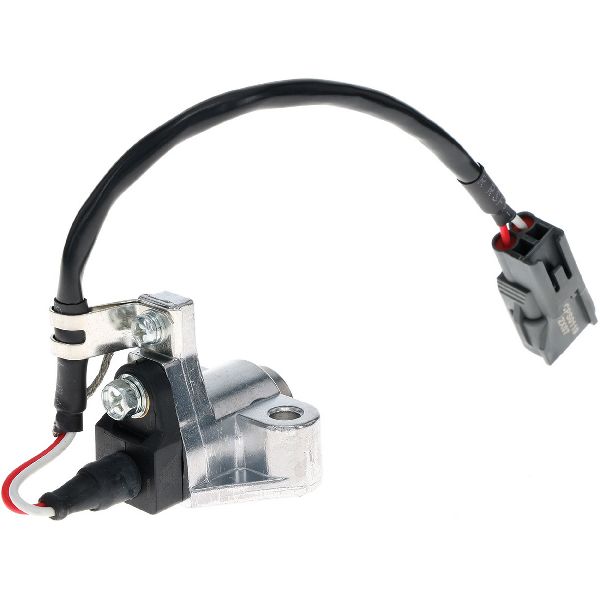
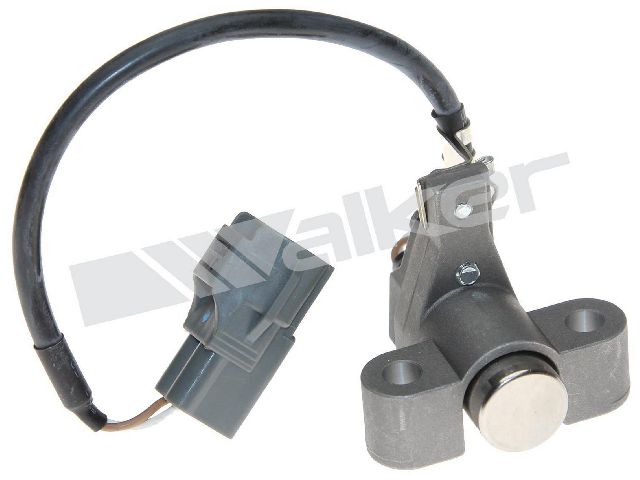
Est. part cost: $150-$350 - Failed Camshaft Position Sensor 🟡 Medium Probability → Shop Engine Camshaft Position Sensor The sensor is an electronic component that can fail with age and heat cycles. Owners and mechanics strongly recommend using the OEM Denso part, as aftermarket sensors have a reputation for premature failure or being dead-on-arrival.
How to confirm: After confirming the battery and wiring are good, the sensor is the next likely cause. On this V8, you can swap the Bank 1 (passenger side) and Bank 2 (driver side) sensors. If the code changes to P0345 (Bank 2), the sensor is confirmed bad. You can also test the sensor's internal resistance with a multimeter, which should be between 835-1,400 ohms when cold and 1,060-1,645 ohms when hot.
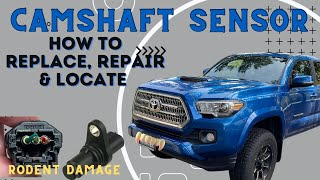
Typical fix: Replace the faulty camshaft position sensor. It is located on the top of the passenger-side valve cover, near the front, and 🎬 See this video to quickly locate the sensor on your engine. secured with a single 10mm bolt. 🎬 Watch: Step-by-step guide to replacing the camshaft position sensor.
Est. part cost: $40-$120 - Damaged Wiring or Connector 🟡 Medium Probability The wiring harness for the cam sensor is routed behind the timing belt cover. It is a very common point of failure for this harness to be pinched, rub against a pulley, or be chewed through by the timing belt itself, especially if it was misrouted after a timing belt service. This is a widely discussed failure mode on owner forums.
How to confirm: Visually inspect the wiring harness leading to the camshaft position sensor on the passenger side. This may require removing the plastic timing belt cover (a few 10mm bolts). Look for any signs of chafing, melting, corrosion in the connector, or rodent damage. Perform a continuity test on the wires from the sensor connector to the ECM.
Typical fix: Repair the damaged section of wire or replace the connector pigtail (related to Toyota part 90980-10947). Secure the harness away from moving parts using zip ties.
Est. part cost: $10-$50 - Stretched or Slipped Timing Belt ⚪ Low Probability → Shop Engine Timing Chain The 2UZ-FE is an interference engine with a timing belt that has a 90,000-mile replacement interval. If the belt is past its service life, it can stretch or jump a tooth, causing the camshaft and crankshaft to be out of sync. A completely broken belt will also cause this code, along with a no-start condition.
How to confirm: This requires removing the timing belt covers to visually inspect the belt's condition and verify the timing marks on the cam and crank gears are correctly aligned. A user on a Tundra forum confirmed their P0340 was ultimately caused by incorrect timing that was only found upon inspection. This is a labor-intensive check.
Typical fix: Replace the timing belt, tensioner, idler pulleys, and water pump (recommended at the same time). This is a major service. An Aisin kit is the preferred OEM-quality choice.
Est. part cost: $200-$500
Rare But Worth Checking
- Failed Engine Control Module (ECM): → Shop Engine Control Module (ECM) This is extremely rare. The ECM should only be considered after all other possibilities (battery, sensor, wiring, and mechanical timing) have been thoroughly ruled out by a professional. One owner on a forum replaced the ECU after exhausting all other options.
- Damaged Reluctor Ring: The teeth on the camshaft timing pulley that the sensor reads can be damaged, but this is uncommon unless there has been a major internal engine failure or damage during service.
Diagnosis Steps
- Read all stored DTCs with an OBD-II scanner. Use the scanner to view and save the Freeze Frame Data, paying close attention to the 'Battery Voltage' parameter when the code was set.
- CRITICAL: Test the battery and charging system. Check for a static voltage of at least 12.4V. Perform a load test on the battery and verify alternator output is 13.5-14.5V when running. If freeze frame data showed <11V, this is your primary suspect.
- If the battery is weak, charge or replace it, clear the codes, and drive to see if P0340 returns.
- If the battery is healthy, locate the Bank 1 (passenger side) camshaft position sensor on the front of the valve cover.
- Carefully inspect the sensor's electrical connector and wiring harness for any signs of damage, corrosion, or looseness. Consider removing the top timing cover to inspect the wiring harness routing near the pulleys.
- If you have a V8, swap the Bank 1 (passenger) and Bank 2 (driver) camshaft position sensors. They are the same part. Clear the codes. If the code returns as P0345, the sensor you moved is faulty.
- If the code remains P0340 after the swap, the issue is in the Bank 1 circuit wiring or potentially the ECM. Use a multimeter to check for continuity between the sensor connector and the ECM connector.
- If all electrical checks pass, the next step is to inspect the mechanical timing. This is labor-intensive and involves removing the timing covers to check the alignment of the timing belt and pulleys.
Parts You'll Likely Need
- Camshaft Position Sensor
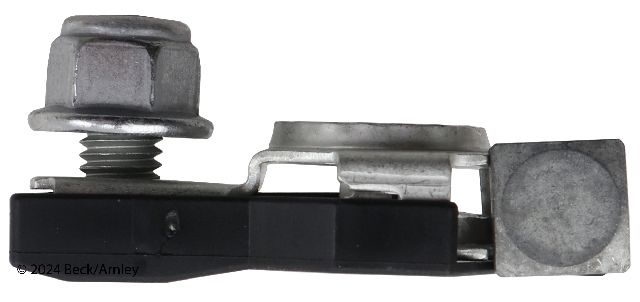
(OEM #90919-05026)— This is the most commonly replaced part for this code after ruling out battery issues. The sensor can fail electronically over time. It is highly recommended to use the OEM Denso part for reliability.
Trusted brands: Denso (OEM), NGK/NTK
OEM price range: $60-$120
Aftermarket price range: $30-$70 - Car Battery — A weak battery is a documented cause of P0340 on this specific vehicle per a manufacturer TSB.
Trusted brands: Interstate, DieHard, Duralast
OEM price range: $200-$350
Aftermarket price range: $150-$250 - Timing Belt Kit
(OEM #TKT-021 (Aisin Kit))— If mechanical timing is the cause, a full timing belt service is required. The Aisin kit is considered OEM quality and includes the belt, water pump, tensioner, and idlers.
Trusted brands: Aisin, Gates
OEM price range: $250-$400
Aftermarket price range: $150-$250
Related Codes That Often Appear With This One
- P0335 — Crankshaft Position Sensor Circuit Malfunction. The TSB T-TT-0010-10 Rev explicitly states that low battery voltage can trigger both P0340 and P0335 simultaneously.
- P0345 — Camshaft Position Sensor 'A' Circuit (Bank 2). If this code appears with P0340, it could indicate a systemic issue like a jumped timing belt, a widespread wiring problem, or a failing battery/alternator affecting both banks.
- P0300, P0301-P0308 — Random or specific cylinder misfire codes. If the cam timing signal is incorrect, the ECM cannot properly time spark and fuel, leading to misfires.
Technical Service Bulletins (TSBs) & Recalls
- T-TT-0010-10 Rev: Dated May 1, 2014, this Tech Tip bulletin applies to a wide range of Toyota vehicles, including the Sequoia. It states that low battery voltage can cause P0335 and/or P0340. It recommends checking the freeze frame data to see if the battery voltage was below 11 volts when the code was set. If so, the charging/starting system should be diagnosed and repaired before further troubleshooting.
Platform-Specific Known Issues
- TSB Confirmed Battery Voltage Issue: → Shop Vehicle Battery A Technical Service Bulletin (T-TT-0010-10 Rev) confirms that low battery voltage during startup is a primary cause to investigate for P0340. The ECM misinterprets the slow, uneven cranking as a sensor fault.
- Wiring Damage During Timing Belt Service: → Shop Engine Timing Chain A very common owner experience shared on forums is discovering the P0340 code after a timing belt replacement. The wiring for the camshaft sensor is routed near the timing components and can be easily pinched, damaged, or misrouted during reassembly, causing it to rub on a pulley or the belt itself.
Mechanic-Grade Diagnostic Values
- Camshaft Position Sensor Resistance (Cold) — expected: 835 - 1,400 Ohms at -10°C to 50°C (14°F to 122°F). Failure: Reading is open (infinite resistance) or outside the specified range.
- Camshaft Position Sensor Resistance (Hot) — expected: 1,060 - 1,645 Ohms at 50°C to 100°C (122°F to 212°F). Failure: Reading is outside the specified range when the sensor is at operating temperature.
- Oscilloscope Waveform Pattern — expected: A clean pulse signal (labeled G2+) should be observed when the engine is cranking or running. This signal should be synchronized with the crankshaft position sensor signal (NE+).. Failure: No signal, an erratic signal, or a signal with significant noise (which can be caused by a bad ground shield on the wire).
Scan Tool Commands That Help
- Toyota Techstream: Freeze Frame Data Viewer — This is critical for diagnosing P0340 on this vehicle. Use it to check the battery voltage parameter at the exact moment the DTC was stored. Per TSB T-TT-0010-10 Rev, a voltage below 11V strongly points to the battery/charging system as the root cause, not the sensor itself.
Wiring & Ground Locations
- EB & EC — EB is on the rear of the right cylinder head (Bank 1/Passenger side). EC is on the rear of the left cylinder head (Bank 2/Driver side).. These are the primary ground points for the engine block and cylinder heads. A loose or corroded connection at EB could cause a poor ground for the Bank 1 camshaft sensor, leading to an erratic signal and a P0340 code.
- ECM (Engine Control Module) — Located behind the glovebox in the passenger side dashboard.. This is the termination point for the camshaft position sensor circuit. When performing continuity or short-to-ground tests, one end of the multimeter will connect to the sensor harness, and the other will connect to the appropriate pins on the ECM connector.
- Cam Sensor Harness Routing — The wiring for the Bank 1 sensor runs from the top of the passenger valve cover and is routed behind the plastic timing belt covers.. This is a notorious chafe point. The harness can be pinched between the timing cover and the engine block, or it can rub against the timing belt or an accessory pulley, causing a short or open circuit. This is especially common after a timing belt service if the harness is not correctly secured.
Real Owner Repair Stories
- Commonly reported fix on TundraSolutions.com and other Toyota forums (2001-2004 Toyota Sequoia / Tundra with 4.7L 2UZ-FE V8) — P0340 code appears, sometimes intermittently. Engine cranks but won't start, or starts and then stalls. Rough running and lack of power.
❌ Tried (didn't work) Replacing the camshaft position sensor (sometimes multiple times with aftermarket parts)., Replacing the battery without checking freeze frame data., Swapping sensors between Bank 1 and Bank 2 with no change in the code.
✅ What actually fixed it The wiring harness for the camshaft position sensor was found to be damaged behind the timing belt cover. In many cases, the wire was chafed, melted, or completely severed from rubbing against a pulley or the timing belt itself. The fix was to repair the damaged section of wire and properly secure the harness with zip ties away from moving parts.
"I Checked Everything" — The Actual Cause
- A technician may perform a full electrical diagnosis of the camshaft position sensor and its wiring, finding everything to be in perfect working order (correct resistance, good continuity, no shorts). However, the P0340 code keeps returning. The actual cause, as documented in Toyota's TSB T-TT-0010-10 Rev, was low battery voltage specifically during engine cranking. This is missed if the technician only tests the battery's static voltage and not its performance under load or fails to check the freeze frame data for the voltage level when the code was set.
OEM Part Supersession History
90919-05026→90080-19014— Standard part consolidation and updates by Toyota.
Heads up: The new part number (90080-19014) is the correct service replacement for the original. Using the old part number may result in receiving old stock. Always verify the latest part number with a Toyota dealer.
Model Year Variations Within This Range
- 2001-2004: The 4.7L 2UZ-FE engines in this range are non-VVT-i. This is a key distinction from the 2005+ models which received VVT-i and a 5-speed transmission. The sensor for these non-VVT-i engines is a 2-wire variable reluctance (VR) type that generates its own AC voltage, whereas later VVT-i engines may use a 3-wire Hall effect sensor that is supplied voltage and ground. Diagnostic procedures differ slightly between the two types.
Helpful Videos
We Have This Part in Stock


The information in this article is provided for general reference and educational purposes only. Vehicle specifications, procedures, and part compatibility can vary by production date, trim level, and region. Always consult your vehicle's factory service manual and verify part numbers before purchasing or performing repairs. Safety-critical components such as airbags, seat belts, and braking systems should be installed by a qualified professional.
- Toyota SEQUOIA:
- 🧭 Diagnostic Flowchart
- 🎬 Helpful Videos
- 🛍️ Shop This Part
- What's Unique About the 2001-2004 Toyota SEQUOIA
- Symptoms You May Notice
- Most Likely Causes
- Rare But Worth Checking
- Diagnosis Steps
- Parts You'll Likely Need
- Related Codes That Often Appear With This One
- Technical Service Bulletins (TSBs) & Recalls
- Platform-Specific Known Issues
- Mechanic-Grade Diagnostic Values
- Scan Tool Commands That Help
- Wiring & Ground Locations
- Real Owner Repair Stories
- "I Checked Everything" — The Actual Cause
- OEM Part Supersession History
- Model Year Variations Within This Range
- 🎟️ Get 5% Off