

P0340 on 2013-2015 Toyota Venza: Camshaft Sensor Circuit Causes and Fixes
This code indicates a problem with the camshaft position sensor 'A' circuit. The most common fix is replacing the faulty camshaft position sensor. However, a weak battery can also trigger this code on a Venza, so it's crucial to test the battery and charging system before replacing parts. 'Sensor A' refers to the intake camshaft sensor on Bank 1.
- P0340 means there's a fault in the camshaft position sensor 'A' circuit, which is the intake sensor on Bank 1.
- On a 2013-2015 Venza, **always check the battery and charging system first**, as low voltage is a known cause for this specific code per a Toyota TSB.
- Common symptoms include hard starting, stalling, and a rough idle.
- If the battery is healthy, the most likely fix is replacing the camshaft position sensor (Part #90919-05060 or 90919-T5005), which is a manageable DIY job.
What's Unique About the 2013-2015 Toyota VENZA
For this generation of Toyota Venza and many other contemporary Toyota models using the 1AR-FE and 2GR-FE engines, a known quirk is that low battery voltage can cause the P0340 code, sometimes accompanied by the crankshaft sensor code P0335. A Technical Service Bulletin (T-TT-0010-10 Rev) was issued stating that low voltage during cranking (specifically below 11V) can lead to inconsistent rotational speed data, triggering the fault. This makes testing the battery an essential first step that is specific to this platform's known issues. A Reddit user with a Venza noted that a dead battery caused numerous error messages, including a check engine light that required a battery disconnect to clear.
Diagnostic Flowchart
Tap your situation to follow the diagnostic path that matches what you're seeing on this vehicle.
Symptoms You May Notice
- Check Engine Light is on
- Engine is hard to start or will not start.
- Engine stalls intermittently
- Rough idling or sputtering.
- Noticeable loss of power and poor acceleration.
- Reduced fuel economy
- Transmission may have shifting problems or enter a 'limp mode'.
- Replacing the camshaft position sensor when the actual cause is a weak battery or poor connection.
- Replacing the crankshaft position sensor (for code P0335) when the P0340 code points to the camshaft sensor.
- Assuming the sensor is bad without first inspecting the wiring harness for damage or testing for power and ground at the connector.
Most Likely Causes
- Failed Camshaft Position Sensor 🔴 High Probability → Shop Engine Camshaft Position Sensor Sensors are exposed to high heat and oil vapor in the engine bay, which can cause the internal electronics (often a Magneto-Resistive Element or MRE) to fail over time. Oil leaks from the valve cover gasket can also contaminate the sensor and its connector, leading to failure.
How to confirm: After confirming wiring is intact, the sensor can be tested with a multimeter for resistance or by observing its signal with an oscilloscope. The easiest confirmation for a DIYer is often replacement, as the part is relatively inexpensive. P0340 specifically points to 'Sensor A' on 'Bank 1'. For the 2GR-FE V6, Bank 1 is the cylinder head closer to the firewall, and 'Sensor A' is the intake camshaft sensor. For the 1AR-FE I4, there is only one bank, and 'Sensor A' is the intake sensor.
Typical fix: Replace the faulty camshaft position sensor. It is typically held in by a single 10mm bolt and is easily accessible on top of the valve cover.
Est. part cost: $80-$150 - Low Battery Voltage or Failing Starter/Alternator 🟡 Medium Probability → Shop Vehicle Battery A Toyota TSB (T-TT-0010-10 Rev) confirms that low battery voltage during cranking can cause inconsistent engine rotational speed, triggering P0340 and/or P0335. A failing alternator can lead to a depleted battery, which in turn causes this code.
How to confirm: Test the battery with a multimeter; it should read ~12.6V with the engine off and ~14.0-14.7V while running (indicating a healthy alternator). Perform a load test on the battery to check its health. Check the freeze frame data, as the TSB recommends, to see the battery voltage at the moment the fault was triggered.
Typical fix: Recharge or replace the weak battery. If the charging system is faulty (low voltage while running), the alternator may need replacement.
Est. part cost: $150-$400 - Damaged Wiring or Connector 🟡 Medium Probability Engine bay heat can make plastic connectors and wire insulation brittle over time, leading to cracks, corrosion, or loose connections. The sensor wiring is a three-wire circuit: a power source, a ground, and a signal wire to the ECM. A fault in any of these can trigger the code.
How to confirm: Visually inspect the wiring harness leading to the camshaft position sensor for any signs of fraying, melting, or corrosion. Check that the connector is securely plugged in and the pins are clean. Use a multimeter to check for 4.5V - 5.5V reference voltage and a good ground at the connector with the key on.
Typical fix: Repair the damaged section of wire or replace the connector pigtail. Clean corroded terminals with electrical contact cleaner.
Est. part cost: $10-$50
Rare But Worth Checking
- Stretched Timing Chain or Jumped Tooth: → Shop Engine Timing Chain While less common on these engines, if the timing chain has stretched or skipped a tooth, the physical timing of the camshaft will be out of sync with the crankshaft. The ECM compares the cam and crank signals, and if they are not synchronized, it will set a code. This is a serious mechanical issue that requires significant labor to correct. A failing timing chain tensioner can be a root cause.
- Damaged Reluctor Wheel on Camshaft: → Shop Engine Camshaft The camshaft has a reluctor wheel (a plate with teeth) that the sensor reads. If this wheel is damaged, cracked, or has broken teeth, the sensor will generate an erratic signal, causing a P0340 code. This is rare and typically requires camshaft replacement.
- Faulty Engine Control Module (ECM): → Shop Engine Control Module (ECM) This is very rare. The ECM is the last component to suspect after all other possibilities (sensor, wiring, battery, mechanical timing) have been thoroughly ruled out.
Diagnosis Steps
- Read the trouble codes with an OBD-II scanner and check freeze frame data for clues like battery voltage at the time of the fault.
- CRITICAL FIRST STEP for Venza: Check the battery. Ensure it has a full charge (12.6V+ engine off) and that the alternator is charging correctly (14.0-14.7V engine on). Perform a load test on the battery, as a weak battery is a known cause per TSB T-TT-0010-10 Rev.
- Visually inspect the camshaft position sensor's electrical connector and wiring harness. Look for loose connections, corrosion on the pins, or any signs of damage like melting or fraying.
- If wiring and battery are good, locate the correct sensor. P0340 is for Bank 1, Sensor 'A' (Intake). On the 2GR-FE V6, Bank 1 is against the firewall. On the 1AR-FE I4, it's the single intake sensor.
- Test the circuit. With the key on, engine off, unplug the sensor and use a multimeter to confirm you have a reference voltage (usually 4.5V - 5.5V) and a good ground at the connector pins.
- If the circuit has power and ground, the next step is typically to replace the camshaft position sensor, as it is the most likely culprit and relatively inexpensive.
- If a new sensor does not resolve the code, a more advanced diagnosis is needed. This includes checking the signal wire for continuity back to the ECM and using an oscilloscope to verify the sensor is producing a clean square wave signal.
- If the circuit and sensor are confirmed good, the issue may be mechanical. Inspect the engine's timing components (chain/guides/tensioner) for proper alignment and tension.
Parts You'll Likely Need
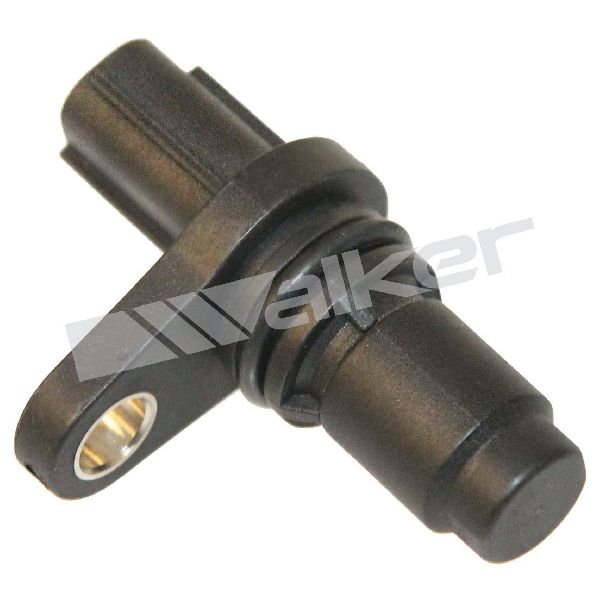
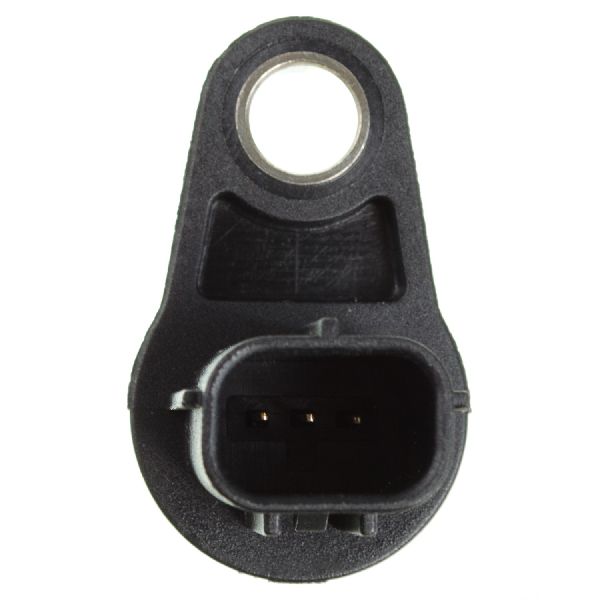
- Engine Camshaft Position Sensor (Bank 1 Intake)
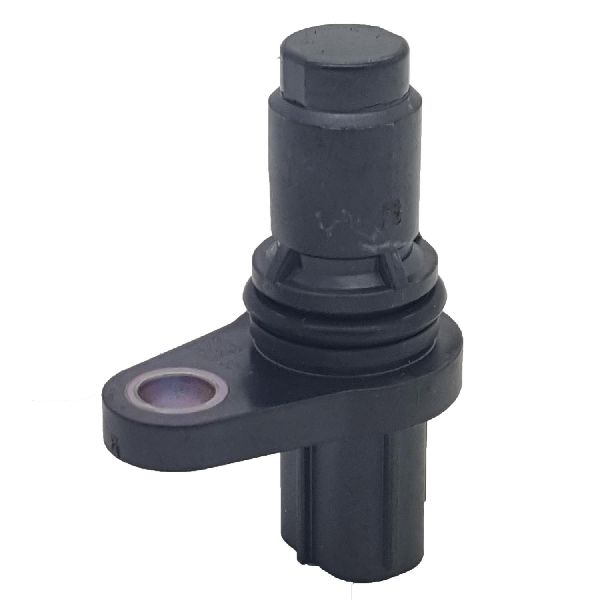
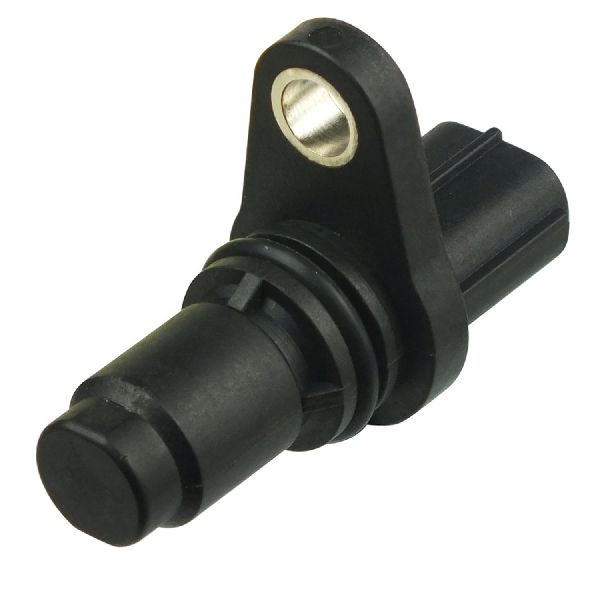
(OEM #90919-05060 (For both 1AR-FE and 2GR-FE). Note: This part may be superseded by 90919-T5005.)— This sensor is the most frequent cause of a P0340 code after ruling out battery and wiring issues. It is crucial to use a high-quality OEM or Denso replacement, as aftermarket sensors are known to have higher failure rates.
Trusted brands: Toyota (Genuine), Denso
OEM price range: $105-$150
Aftermarket price range: $40-$90
Related Codes That Often Appear With This One
- P0335 — This is the code for the Crankshaft Position Sensor. According to Toyota TSB T-TT-0010-10 Rev, both codes can be triggered simultaneously by low battery voltage due to inconsistent cranking speed.
- P0345 — This code is for 'Camshaft Position Sensor 'A' Circuit (Bank 2)'. On the 2GR-FE V6 engine, seeing P0340 and P0345 together could indicate a systemic problem like a weak battery, widespread wiring damage (e.g., from rodents), or a significant mechanical timing issue affecting both banks.
- P0341-P0349 — These are related codes that can indicate specific faults within the camshaft position sensor circuit, such as range/performance issues, or low/high/intermittent signals.
Technical Service Bulletins (TSBs) & Recalls
- T-TT-0010-10 Rev: States that low battery voltage (below 11V) can contribute to a MIL "ON" condition for P0335 (Crankshaft Position Sensor Circuit) and/or P0340 (Camshaft Position Sensor Circuit) due to inconsistent rotational speed of the engine's crankshaft.
Platform-Specific Known Issues
- Low Voltage Trigger: A low battery or failing starter/alternator can cause a P0340 code on this vehicle, as documented in Toyota Technical Service Bulletin T-TT-0010-10 Rev.
- Sensor Location (2GR-FE V6): For the 3.5L V6, P0340 refers to the intake camshaft sensor on Bank 1. Bank 1 is the cylinder head located against the firewall (rear bank). Bank 2 is the front bank, which is easier to see and access.
- Sensor Location (1AR-FE I4): For the 2.7L I4, there is only one cylinder head. P0340 refers to the intake camshaft position sensor, which is located on the top of the valve cover, typically on the driver's side of the engine.
Mechanic-Grade Diagnostic Values
- Camshaft Position Sensor Resistance (2-wire inductive type) — expected: 1,630 to 2,740 Ω (Cold) / 2,065 to 3,225 Ω (Hot). Note: 'Cold' is approx. -10°C to 50°C, 'Hot' is approx. 50°C to 100°C.. Failure: A resistance reading outside the specified range, or an open (infinite) / shorted (zero) reading indicates a failed sensor.
- Camshaft Position Sensor Connector Voltage (3-wire Hall effect type, 2GR-FE) — expected: With ignition ON, engine OFF: Pin 1 (VC) to Ground should be 4.5 - 5.5 V. Pin 3 (E2) to Ground should have continuity (< 1 Ω).. Failure: Voltage below 4.5V or above 5.5V on the reference wire points to a wiring or ECM issue, not necessarily a bad sensor.
- ECM Terminal Voltage (2GR-FE, for Intake Cam Sensor Bank 1) — expected: At the ECM connector, the voltage between the sensor signal terminal (e.g., VV1+) and ground (e.g., VV1-) should show a pulse generation (square wave) while cranking or idling when viewed on an oscilloscope.. Failure: A flat line (no signal), or a signal that is noisy or not synchronized with the crankshaft (NE) signal, indicates a fault in the sensor or circuit.
Scan Tool Commands That Help
- Toyota Techstream: Read Freeze Frame Data — This is a critical first step. The freeze frame data captures engine conditions at the exact moment the P0340 code was set, including battery voltage, which is crucial for diagnosing the known low-voltage issue on Venzas per TSB T-TT-0010-10 Rev.
- Toyota Techstream: Active Test / Utility — While there isn't a direct bidirectional control for the camshaft position sensor itself (as it's an input sensor), Techstream's utility functions allow for clearing codes and resetting modules after a repair. The Active Test for related components like VVT solenoids can help rule out other timing-related issues.
Wiring & Ground Locations
- ECM (Engine Control Module) — For the 2.7L (1AR-FE), the ECM is located in the left side of the engine compartment. For the 3.5L (2GR-FE), it is in the right rear of the engine compartment.. This is the destination for the camshaft position sensor signal. Advanced diagnosis requires checking for continuity and voltage at the specific ECM pins connected to the sensor to rule out a wiring break or an ECM fault.
- VVT Sensor (Bank 1 Intake) Connector — On the 2GR-FE V6, this is the connector for the sensor on the cylinder head against the firewall. On the 1AR-FE I4, it's the intake sensor on the top of the valve cover.. This is the primary point for testing. For a 3-wire sensor, you test for reference voltage (approx. 5V), ground, and the signal wire back to the ECM. For a 2-wire sensor, you test resistance across the pins.
Real Owner Repair Stories
- Tacoma World Forum User (2003 Toyota Tacoma V6 (Similar diagnostic principles)) — P0340 code with intermittent significant power loss.
❌ Tried (didn't work) Replaced camshaft position sensor (multiple times)., Corrected timing belt that was off by one tooth., Replaced crankshaft pulley., Replaced the ECU.
✅ What actually fixed it After extensive dealership diagnosis involving Toyota engineering, the root cause was found to be a disconnect in the wiring harness between the ECU and the camshaft position sensor. - YouTube video by Ali Mech (2017 Toyota Camry (Similar 4-cyl engine design)) — P0340 code present.
✅ What actually fixed it The video demonstrates that heavy sludge buildup from poor quality or infrequent oil changes can coat the tip of the camshaft position sensor, preventing it from reading the camshaft reluctor wheel correctly. The fix was to remove the sensor, clean the sludge off with brake cleaner, and reinstall it. If the code returns, the sensor itself is likely faulty.
OEM Part Supersession History
90919-05060→90919-T5005— Standard part evolution for improved performance, reliability, or manufacturing efficiency. The new part is the current genuine Toyota replacement.
Heads up: There are no known incompatibilities; 90919-T5005 is the direct replacement for 90919-05060.
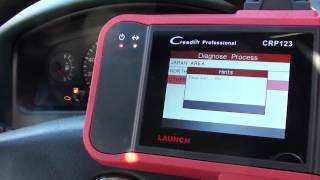
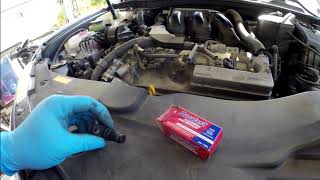
Helpful Videos


We Have This Part in Stock


The information in this article is provided for general reference and educational purposes only. Vehicle specifications, procedures, and part compatibility can vary by production date, trim level, and region. Always consult your vehicle's factory service manual and verify part numbers before purchasing or performing repairs. Safety-critical components such as airbags, seat belts, and braking systems should be installed by a qualified professional.
- Toyota VENZA:
- 🧭 Diagnostic Flowchart
- 🎬 Helpful Videos
- 🛍️ Shop This Part
- What's Unique About the 2013-2015 Toyota VENZA
- Symptoms You May Notice
- Most Likely Causes
- Rare But Worth Checking
- Diagnosis Steps
- Parts You'll Likely Need
- Related Codes That Often Appear With This One
- Technical Service Bulletins (TSBs) & Recalls
- Platform-Specific Known Issues
- Mechanic-Grade Diagnostic Values
- Scan Tool Commands That Help
- Wiring & Ground Locations
- Real Owner Repair Stories
- OEM Part Supersession History
- 🎟️ Get 5% Off