

P0340 on 1998-2000 Volvo S70: Camshaft Sensor Circuit Causes and Fixes
On a 1998-2000 Volvo S70, code P0340 is most often caused by a failed camshaft position sensor or its electrical connector. Replacing the sensor with an OEM or Bosch part is the most common fix, costing between $50 and $150 for the part. Always inspect the wiring and connector for disintegration before replacing the sensor.
- P0340 on your S70 almost always points to a bad camshaft position sensor or its wiring.
- Before buying any parts, carefully inspect the sensor's electrical connector for damage, as this is a very common point of failure.
- Do not use a cheap, unbranded sensor. Spend the extra money on a Bosch (0232101030) or genuine Volvo part to ensure a long-lasting fix.
- The repair is DIY-friendly for those with basic tools, typically taking less than an hour.
- If a new sensor doesn't fix the code, check your mechanical timing immediately.
What's Unique About the 1998-2000 Volvo S70
The 1998-2000 Volvo S70 uses a 5-cylinder engine that is part of the P80 platform family, shared with the 850 and first-generation V70/C70. For these engines, the P0340 code is a very common and well-documented issue. A primary point of failure is the sensor's wiring and plastic connector, which become brittle from engine heat and can crumble. Owner communities strongly advise against using cheap, unbranded aftermarket sensors, as they are known to fail quickly. Sticking with OEM Volvo or the original equipment manufacturer, Bosch (part number 0232101030), is the widely accepted best practice for a lasting repair.
Symptoms You May Notice
- Check Engine Light is on
- Difficulty starting the engine, or a 'crank-no-start' condition
- Engine stalls, especially when warm or at low speeds
- Rough running or unstable idle
- Noticeable loss of engine power and acceleration
- Engine cranks faster than normal (in cases where timing has jumped, indicating low/no compression)
- Tachometer reads zero while the engine is cranking or running (an intermittent symptom)
- Replacing the camshaft position sensor without first inspecting the electrical connector and wiring. A broken wire or crumbled connector is a common cause and a new sensor will not fix it.
- Immediately assuming the sensor is bad when the code appears after recent timing belt work. The code could indicate that the mechanical timing is off by a tooth.
Most Likely Causes
- Failed Camshaft Position Sensor 🔴 High Probability → Shop Engine Camshaft Position Sensor The original sensors are known to become brittle and fail electronically after many years and heat cycles. A common failure mode is 'heat soak', where the sensor works when cold but fails once the engine bay heats up, causing stalling. The plastic housing can also degrade and fall apart.
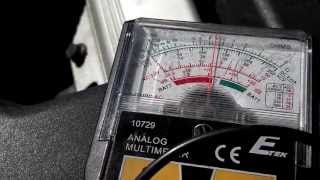
How to confirm: After confirming the wiring is intact, test the sensor's output signal with a multimeter. However, since the failure is often intermittent and heat-related, the most practical test for a DIYer is often replacement with a known-good part.
Typical fix: Replace the camshaft position sensor. It is highly recommended to use an OEM Volvo (9146108) or Bosch (0232101030) branded sensor for reliability.
Est. part cost: $50-$150 - Damaged Camshaft Position Sensor Wiring or Connector 🟡 Medium Probability → Shop Engine Camshaft Position Sensor The electrical connector and its wiring are located in the hot engine bay and the plastic can become extremely brittle over time, leading to cracks and poor connections. Forum posts frequently mention the connector simply falling apart upon being touched. The wiring loom's insulation also degrades, which can cause signal interference between the cam and crank sensor wires.
How to confirm: Visually inspect the sensor's electrical connector for cracks, damage, or a loose fit. Wiggle the connector with the engine running to see if it causes stalling or stumbling. Check the wiring for any signs of fraying, exposed copper, or damage from oil leaks.
Typical fix: Repair the damaged section of wiring or replace the connector pigtail. Pigtail kits are available (e.g., Standard Motor Products S2031 or similar 3-pin connectors).
Est. part cost: $15-$40
Rare But Worth Checking
- Slipped or Worn Timing Belt: → Shop Engine Timing Chain If the timing belt has jumped a tooth, the correlation between the camshaft and crankshaft will be incorrect, which will trigger a P0340 code even with a perfectly good sensor and wiring. This is a critical issue that should be investigated immediately if the sensor and wiring are confirmed to be good, especially if the belt's age is unknown. A compression test showing low readings across all cylinders can be an indicator of this problem.
- Faulty Crankshaft Position Sensor: → Shop Engine Crankshaft Position Sensor The ECM compares signals from both the cam and crank sensors. While less common, a failing crankshaft sensor can sometimes confuse the ECM, causing it to incorrectly flag the camshaft sensor circuit. In some cases, replacing both sensors is recommended if a no-start condition persists.
- Faulty Engine Control Module (ECM): → Shop Engine Control Module (ECM) This is extremely rare, but the internal driver circuit for the sensor within the ECM can fail. This should only be considered after all other possibilities, including timing and the crankshaft sensor, have been exhaustively ruled out.
Diagnosis Steps
- Read the code with an OBD-II scanner to confirm P0340 is present.
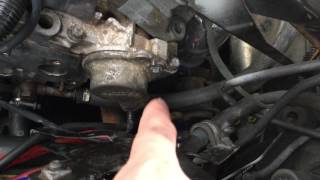
- Locate the camshaft position sensor. On the 5-cylinder engine, it is on the top rear of the engine at the exhaust camshaft end (passenger side in the US), held in by a single 10mm bolt.
- Crucial Step: Thoroughly inspect the electrical connector attached to the sensor. Look for cracks, corrosion, or a loose fit. Be gentle, as the plastic is often brittle and can disintegrate in your hand.
- Inspect the wiring leading to the sensor for any signs of damage, fraying, or degraded insulation. In a known issue, the wiring for the cam and crank sensors can lose their shielding and cause signal cross-talk, leading to a crank-no-start.
- If the wiring and connector look perfect, the next step is to test or replace the sensor. Given the high failure rate and intermittent nature, replacement with a Bosch or OEM sensor is a common and effective diagnostic step.
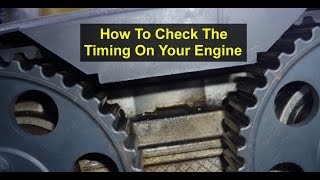
- If a new, quality sensor and good wiring do not resolve the code, the engine's mechanical timing MUST be checked. Verify that the timing marks on the camshaft sprockets and crankshaft pulley are perfectly aligned. 🎬 Watch: How to find and verify your engine's timing marks. A slipped tooth is a likely culprit.
- As a final, rare possibility, consider a fault with the crankshaft position sensor or the ECM itself.
Parts You'll Likely Need
- Engine Camshaft Position Sensor
(OEM #9146108)— This is the most common component to fail, causing the P0340 code. The internal electronics fail over time, especially with heat.
Trusted brands: Bosch (P/N: 0232101030), Volvo (OEM)
OEM price range: $120-$160
Aftermarket price range: $50-$90 - Camshaft Position Sensor Connector Pigtail — The original connector often becomes brittle and breaks, causing a bad connection. Replacing the pigtail is necessary if the connector is damaged.
Trusted brands: Standard Motor Products (e.g., S2031), Dorman, Various aftermarket suppliers
OEM price range: N/A
Aftermarket price range: $15-$40
Related Codes That Often Appear With This One
- P0335 — This code relates to the Crankshaft Position Sensor. Since the ECM compares both cam and crank signals, a fault in one can sometimes lead to a code for the other, or both may appear if there is a timing issue.
- P0341 — This code indicates 'Camshaft Position Sensor 'A' Circuit Range/Performance'. It can appear alongside P0340 and often points towards a mechanical timing issue (like a slipped belt) or a failing sensor that is producing an erratic, but not completely lost, signal.
Platform-Specific Known Issues
- Wiring Harness Degradation and Signal Interference: A specific, documented issue on these cars is the degradation of the wiring loom that houses both the camshaft and crankshaft sensor wires. The insulation breaks down, allowing the signals to interfere with each other, which confuses the ECM and can cause a persistent crank-no-start condition even with good sensors. The fix involves separating and shielding the wires. 🎬 Watch: This clever hack fixes persistent crank-no-start wiring issues.
Mechanic-Grade Diagnostic Values
- Camshaft Position Sensor Signal Voltage (while cranking) — expected: Varies between 0V and 5V. Failure: No voltage variation or steady voltage
- Camshaft Position Sensor Connector Voltages (Key On, Engine Off, Motronic 4.4) — expected: Pin 1: Ground (near 0V). Pin 2 (Signal): ~12V (Battery Voltage). Pin 3 (Power): ~12V (Battery Voltage).. Failure: Missing voltage on Pin 2 or 3, or bad ground on Pin 1. Note: Some sources suggest a 5V reference on Pin 2, but forum users with this specific system report 12V as normal.
- Camshaft Position Sensor Resistance — expected: ~5k Ohms (measured between center pin and passenger-side pin). Failure: Significantly different reading or open/short circuit.
Hidden / Shadow Codes Worth Checking
- e.g., ECM-300C (example from a later model): Volvo uses proprietary Diagnostic Trouble Codes (DTCs) that provide more specific information than generic OBD-II codes. The exact code for P0340 on an S70 may vary but will point to the Camshaft Position Sensor signal. (see via Volvo's diagnostic software, VIDA (Vehicle Information & Diagnostics for Aftersales), or a compatible high-end professional scan tool is required to read these manufacturer-specific codes.)
Scan Tool Commands That Help
- Volvo VIDA: Fault Trace / Activation — VIDA provides a guided diagnostic procedure for the specific Volvo DTC. It can walk a technician through checks and, for ME7 models (1999-2000), can be used to activate components like the VVT solenoid to test their function, which can be an edge-case cause of P0340.
Wiring & Ground Locations
- ECM Ground (31/71) — In the engine compartment on the right side member (frame rail), in front of the ECM/TCU box.. This is the common ground terminal for the Engine Control Module. A poor connection here can cause a host of sensor errors, including P0340.
- Main Engine Grounds — 1. Negative battery cable to frame behind driver's headlight. 2. Strap from engine block to frame. 3. Strap from transmission to frame. 4. Strap from valve cover to firewall.. Corrosion or looseness at any of these primary ground points can create electrical noise and voltage drops, leading to erratic sensor behavior and intermittent codes like P0340.
- Camshaft Sensor Connector Pins — On the sensor itself, at the rear of the cylinder head.. Pin 1 is Ground, Pin 2 is the Signal wire, and Pin 3 is the Power supply. Knowing the pinout is essential for performing voltage tests to determine if the fault is in the wiring or the sensor.
Real Owner Repair Stories
- Turbobricks Forum user '955IsAlive' (1996 Volvo 960 (with Motronic 4.4, same as 1998 S70)) — Misfire/hesitation around 3800 RPM under load and a constant P0340 code. Also experienced a longer-than-usual crank to start.
❌ Tried (didn't work) Cleaning and reseating the sensor connector, Checking mechanical timing, Running without the MAF sensor, Testing wiring voltages at the connector (which appeared normal)
✅ What actually fixed it Replacing the camshaft position sensor with a new part resolved all symptoms, including the hesitation and the P0340 code. - Reddit user in r/Volvo (1998 Volvo S70) — Crank but no start condition with code P0340.
❌ Tried (didn't work) Initial diagnosis pointed to the sensor.
✅ What actually fixed it The user crimped on a new connector pigtail and installed a new camshaft position sensor. The combination of the two parts fixed the no-start issue.
OEM Part Supersession History
1383966→9146108— Standard part revision by Volvo.
Heads up: The new part number (9146108) is a direct replacement for the old one. The Bosch equivalent is 0232101030.
Model Year Variations Within This Range
- 1998: The 1998 S70 uses the Bosch Motronic 4.4 engine management system. It has a mechanical throttle cable and does not have Variable Valve Timing (VVT). Diagnostics are slightly different from later years.
- 1999-2000: These model years use the Bosch ME7 engine management system, which features an electronic throttle module (ETM) and, on turbo models, Variable Valve Timing (VVT). For these cars, a faulty VVT solenoid can be an edge-case cause for a P0340 code, a possibility that does not exist on the 1998 model.
Diagnostic Flowchart
Other Known Issues on This Vehicle
Issues unrelated to this code that are worth knowing about as an owner of this generation:
- ABS/TRACS Control Module Failure 🔴 High — Extremely common. The solder joints on the internal circuit board crack over time, causing an intermittent or constant ABS light. Often fails between 100k-150k miles. (Ref: No official recall, but it's a widely known failure. Many independent shops offer a rebuild service.)
- Clogged PCV/Crankcase Ventilation System 🔴 High — Very common, especially if oil changes are neglected. Sludge builds up in the oil trap and hoses, leading to high crankcase pressure. (Ref: No TSB, but this is a critical maintenance item. If neglected, high pressure can blow out engine seals (like the rear main seal), leading to expensive oil leaks.)
- Electronic Throttle Module (ETM) Failure 🔴 High — Primarily affects 1999-2000 models. The internal sensors wear out, causing erratic idle, stalling, and 'limp-home' mode. Volvo extended the warranty to 10 years/200,000 miles due to the high failure rate. (Ref: Volvo extended warranty program (now expired).)
- A/C Evaporator Core Leak 🟠 Medium — A common failure point as the cars age. The evaporator, located deep inside the dashboard, develops leaks. (Ref: No TSB. This is a very labor-intensive repair, often costing over $1,500, as the entire dashboard must be removed.)
- Upper Engine Mount Failure 🟡 Low — The rubber in the upper engine torque mount wears out, leading to increased vibration at idle and during acceleration. This is a common and relatively easy-to-fix wear item.
Used vs. New Parts: Buying Guide for This Vehicle
When a used part is the smart pick: A used part is generally NOT recommended for the camshaft position sensor itself due to its high failure rate from age and heat cycles. A used connector pigtail from a junkyard is a viable option if the plastic is inspected and found to be pliable and not brittle.
Donor-vehicle mileage cap: roughly under 80000 miles for the part to have meaningful remaining life.
What to inspect on the donor part:
- For a connector pigtail, bend the wiring and squeeze the plastic connector.
- If the wiring insulation cracks or the plastic feels stiff and brittle, do not use it.
- Ensure the locking tab on the connector is intact and functional.
OEM-only on this vehicle (don't cheap out):
- Engine Camshaft Position Sensor
Aftermarket brands forum-validated for this vehicle:
- Bosch (for the sensor)
- Standard Motor Products (for the connector pigtail)
- Dorman (for the connector pigtail)
Brands owners have reported issues with on this vehicle:
- Unbranded, 'white-box' sensors from online marketplaces are frequently reported to be dead-on-arrival or fail within a few months.
Real Owner Stories
Aggregated from forums and TSBs cited above. Mileages and costs reflect what owners reported in those sources.
1998 Volvo S70
Symptoms: No-start condition and P0340 code.
What fixed it: Replaced the camshaft position sensor which had physically disintegrated and 'fell apart in my hand' during inspection.
Source hint: volvoforums.com thread 'p0340-camshaft-position-relay-circuit-malfunction-32586'
1998-2000 Volvo S70
Symptoms: Crank-no-start condition that persisted for 3 weeks.
What fixed it: Identified signal interference between the cam and crank sensor wires due to degraded insulation; fixed by separating and insulating the exposed wires.
Source hint: YouTube - '80s n' 90s Cars' video 'Volvo Hack S70 Crank No Start Finally Figured Out After 3 Weeks'
1998-2000 Volvo S70
Symptoms: P0340 code on a car that would not start.
What fixed it: The issue was ultimately a slipped timing belt causing low compression, rather than a sensor failure.
Source hint: Swedespeed / Matthew's Volvo Site
Related OBD-II Codes
Frequently Asked Questions
Is there a specific brand of sensor I should use for my S70 to fix the P0340 code?
My 1999 S70 is stalling and has a P0340 code; could this be related to the Electronic Throttle Module (ETM)?
I replaced the sensor but still have a crank-no-start condition on my S70. What else should I check?
Can a slipped timing belt cause a P0340 code on the Volvo S70?
Why does my S70 only stall or throw the P0340 code once the engine is hot?
Helpful Videos


We Have This Part in Stock


The information in this article is provided for general reference and educational purposes only. Vehicle specifications, procedures, and part compatibility can vary by production date, trim level, and region. Always consult your vehicle's factory service manual and verify part numbers before purchasing or performing repairs. Safety-critical components such as airbags, seat belts, and braking systems should be installed by a qualified professional.
- Volvo S70:
- 🧭 Diagnostic Flowchart
- 🎬 Helpful Videos
- 🛍️ Shop This Part
- What's Unique About the 1998-2000 Volvo S70
- Symptoms You May Notice
- Most Likely Causes
- Rare But Worth Checking
- Diagnosis Steps
- Parts You'll Likely Need
- Related Codes That Often Appear With This One
- Platform-Specific Known Issues
- Mechanic-Grade Diagnostic Values
- Hidden / Shadow Codes Worth Checking
- Scan Tool Commands That Help
- Wiring & Ground Locations
- Real Owner Repair Stories
- OEM Part Supersession History
- Model Year Variations Within This Range
- Other Known Issues on This Vehicle
- Used vs. New Parts: Buying Guide for This Vehicle
- Real Owner Stories
- 1998 Volvo S70
- 1998-2000 Volvo S70
- 1998-2000 Volvo S70
- Related OBD-II Codes
- Frequently Asked Questions
- 🎟️ Get 5% Off