

P0341 on 2008-2017 Buick Enclave 3.6L: Cam Sensor or Stretched Timing Chain?
On the 3.6L Buick Enclave, P0341 often points to a stretched timing chain, not just a bad sensor. This is a notorious and well-documented issue for this engine, often appearing with codes like P0008 or P0016. Expect a significant repair cost ($1800-$3500+) if the chains are the cause. Replacing the sensor first is a common but often incorrect fix that leads to the code returning.
- For a 2008-2017 Buick Enclave, P0341 is more likely a symptom of a stretched timing chain than a bad sensor.
- Before replacing any parts, scan for additional codes like P0008, P0016, or P0017. Their presence makes a timing chain problem almost certain.
- Check your oil level and condition immediately. Low or dirty oil can cause this code.
- Replacing only the camshaft position sensor is a common misdiagnosis and often results in the code returning.
- Due to the high probability of a complex mechanical issue (timing chains), professional diagnosis is strongly recommended.
What's Unique About the 2008-2017 Buick Enclave
While P0341 generically suggests a sensor issue, on the GM 3.6L V6 engines (LY7 and LLT) used in the Enclave and its platform mates, it is a very strong indicator of a stretched timing chain. This is a widely documented and notorious issue, especially on 2008-2012 models, often caused by premature wear of the original chains. The problem was so widespread that GM issued Special Coverage Adjustment #11340C, extending the warranty to 10 years/120,000 miles for this specific failure on many 2009 models. Owners frequently replace the sensor only to have the code return, because the sensor is accurately reporting a mechanical timing problem caused by chain slack. Therefore, diagnosis must prioritize checking for timing-related codes and symptoms before replacing the sensor.
Generation note: The 2008 model year used the LY7 3.6L V6, while the 2009-2017 models used the updated LLT 3.6L V6 with direct injection. Both engines are highly prone to timing chain issues that can trigger this code. The problem is considered most prevalent in models from 2008-2012. GM's Special Coverage Adjustment (#11340C) specifically covered certain 2009 models, among others, acknowledging the high failure rate. The later LFX engine (used in some platform mates from 2013+) had design updates intended to improve chain reliability.
Symptoms You May Notice
- Check Engine Light is on
- Difficulty starting the engine, extended cranking
- Rough or unstable idle
- Engine hesitation or stumbling on acceleration
- Reduced engine power
- Stalling at low speeds
- Rattling or scraping noise from the engine, especially on a cold start, that lasts for a few seconds
- Increased fuel consumption
- Replacing the camshaft position sensor without checking for stretched timing chains. The new sensor will correctly detect the same mechanical fault, and the code will return, wasting time and money.
- Replacing only the sensor when codes like P0008 or P0016 are also present. These codes are a near-certain confirmation of a mechanical timing issue.
Most Likely Causes
- Stretched Timing Chains 🔴 High Probability → Shop Engine Timing Chain The 3.6L V6 in this generation is infamous for premature timing chain wear. The original chains were prone to stretching, and the issue was exacerbated by an overly optimistic Oil Life Monitor (OLM) calibration that allowed for excessively long oil change intervals, leading to oil degradation. GM later issued TSBs and a special coverage program (#11340C) acknowledging the problem and, in some cases, updated the ECM to recommend shorter oil change intervals.
How to confirm: Scan for other codes, especially P0008, P0009, P0016, P0017, P0018, or P0019. The presence of these codes alongside P0341 makes a timing chain issue the primary suspect. A technician can use a scan tool to view camshaft deviation data; significant variance confirms a timing problem. A definitive diagnosis involves physical inspection and measurement of chain slack.
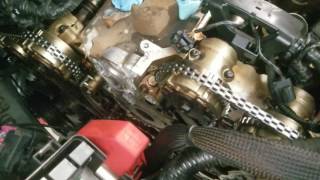
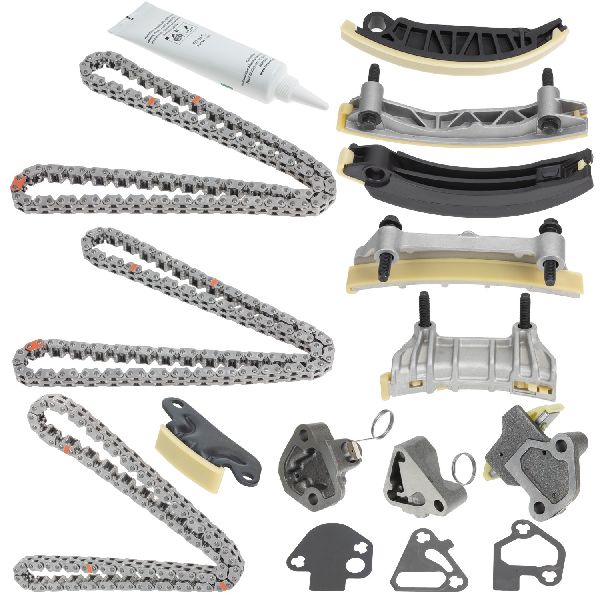
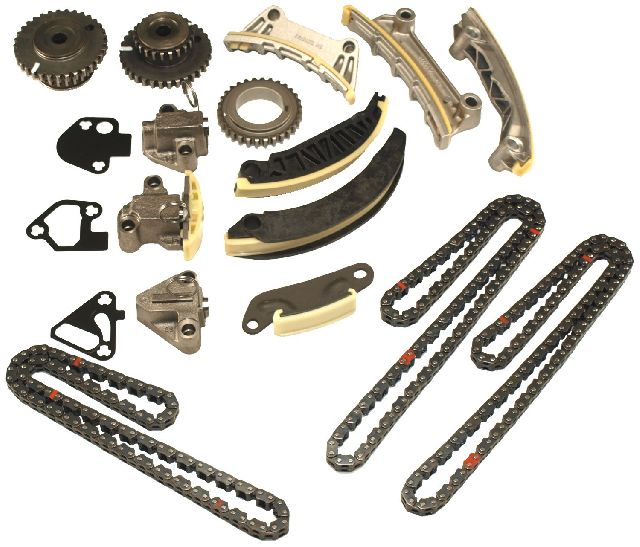
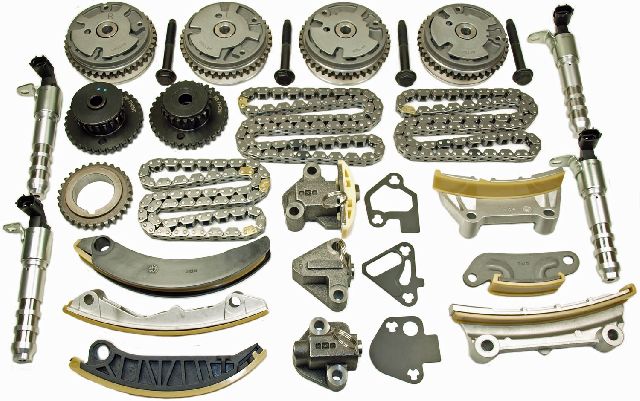
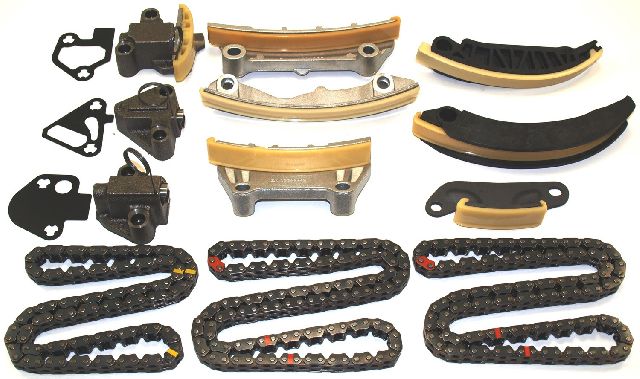
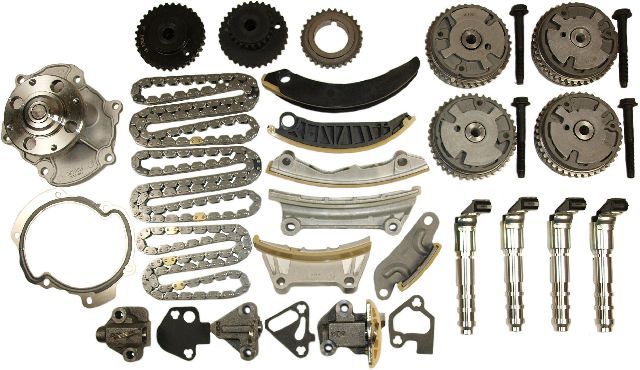
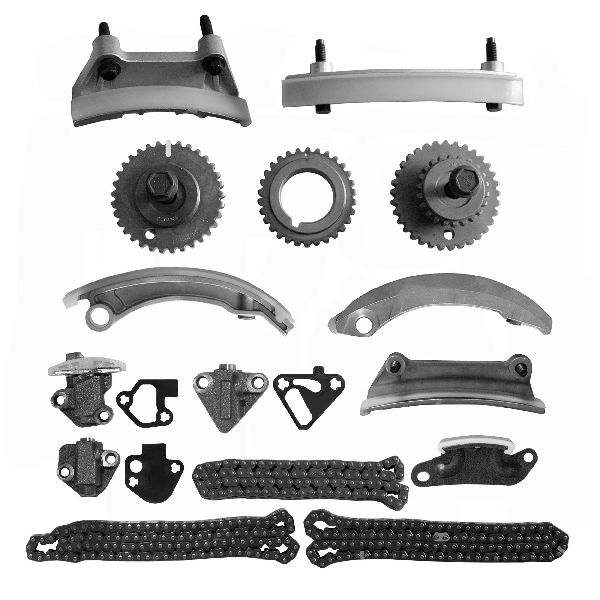
Typical fix: Replace all three timing chains, all guides, and all tensioners with an updated kit. This is a major engine-out or front-cover-off service. 🎬 Watch: This teardown shows the timing chain replacement process. It is also recommended to replace the water pump and VVT solenoids at the same time.
Est. part cost: $400-$800 for a quality kit - Faulty Bank 1 Intake Camshaft Position Sensor 🟡 Medium Probability → Shop Engine Camshaft Position Sensor Sensors can fail over time due to heat cycles and electronic failure. However, on this engine, it's often replaced unnecessarily when the root cause is mechanical chain stretch. The sensor is simply doing its job of reporting the incorrect camshaft timing.
How to confirm: After ruling out timing chain issues (no other timing codes present), a technician can use an oscilloscope to check the sensor's signal waveform. A common DIY method is to swap the Bank 1 intake sensor with the identical one from Bank 2 (front, more accessible bank) and see if the code follows and changes to P0346. If it does, the sensor is bad.
Typical fix: Replace the Bank 1 intake camshaft position sensor.
Est. part cost: $30-$90 - Low or Dirty Engine Oil 🟡 Medium Probability The timing chain tensioners and camshaft phasers (VVT system) are hydraulically operated by engine oil pressure. Low or degraded oil can cause them to malfunction, leading to timing correlation errors that can trigger P0341. This is a primary contributor to the larger timing chain wear problem.
How to confirm: Check the oil level and condition on the dipstick. Review service history for oil change frequency. If the oil is low, excessively dark, or past its service interval, this is a likely contributor.
Typical fix: Perform an engine oil and filter change using a full synthetic 5W-30 oil meeting GM's Dexos specification. Clear codes and see if they return. This is a critical first step but may not solve the problem if wear has already occurred.
Est. part cost: $50-$100 - Wiring or Connector Issue ⚪ Low Probability
How to confirm: Visually inspect the wiring harness and connector for the Bank 1 intake cam sensor for any signs of damage, corrosion, oil contamination, or looseness. Check for proper voltage and ground at the connector with a multimeter.
Typical fix: Repair the damaged section of the harness or clean/replace the connector.
Est. part cost: $5-$50
Rare But Worth Checking
- Failing Camshaft Actuator Solenoid (VVT Solenoid): → Shop Engine Camshaft A sticking or failed VVT solenoid on the Bank 1 intake camshaft can cause the cam to be in the wrong position, triggering a performance code. These are often replaced as a preventative measure during a timing chain job.
- Slipped Crankshaft Reluctor Wheel: Extremely rare, but documented in GM TSB PIP5163H. The reluctor wheel on the crankshaft, which the crank sensor reads, can physically move. This creates a timing discrepancy that perfectly mimics a stretched chain, but the fix is a new crankshaft.
- Failing Engine Control Module (ECM): This is exceptionally rare, but a faulty driver circuit within the ECM can cause it to misinterpret the sensor signal. This should only be considered after all other possibilities, including wiring, have been exhaustively ruled out by a professional.
Diagnosis Steps
- Check engine oil level and condition. If low or dirty, perform an oil and filter change with 5W-30 full synthetic oil. Clear codes and re-test.
- Scan for all stored DTCs. The presence of P0008, P0009, P0016, P0017, P0018, or P0019 is a very strong indicator of a timing chain problem that requires professional diagnosis.
- Listen for a rattling or scraping noise from the passenger side of the engine upon cold startup. This is a classic symptom of loose timing chains hitting the guides.
- If timing codes (like P0008) are present, assume a timing chain issue and seek professional diagnosis. Do not replace sensors.
- If P0341 is the only code, inspect the wiring and connector for the Bank 1 intake camshaft sensor (on the rear cylinder head, near the firewall). Check for damage or oil saturation.
- A good DIY step is to swap the Bank 1 intake sensor with the Bank 2 intake sensor (front cylinder head). They are identical parts. Clear the codes and drive. If the code returns as P0346 (for Bank 2), the sensor you moved is faulty.
- If swapping the sensor does not change the code (it returns as P0341), the problem is likely mechanical (timing chain) or a wiring issue specific to the Bank 1 circuit.
- For definitive diagnosis, a professional should use a lab scope to compare the camshaft and crankshaft sensor signals to a known-good pattern to visually confirm the timing deviation.
Parts You'll Likely Need
- Timing Chain Kit
(OEM #12700436)— This is the most probable root cause of P0341 on this engine, especially if accompanied by other timing codes. Use the latest superseded part number for the most durable design.
Related Codes That Often Appear With This One
- P0008 — Engine Positions System Performance Bank 1. This is the hallmark code for timing chain stretch on the GM 3.6L V6. If you have this code with P0341, the chains are the problem.
- P0016 — Crankshaft/Camshaft Position Correlation Bank 1 Sensor A. This code directly indicates a timing discrepancy on the same bank and sensor, strongly pointing to a stretched timing chain.
- P0017 — Crankshaft/Camshaft Position Correlation Bank 1 Sensor B. Indicates a timing issue on the exhaust cam of the same bank, also pointing to a chain issue affecting the entire bank.
- P0340 — Camshaft Position Sensor 'A' Circuit (Bank 1). This indicates a general circuit malfunction (like a complete loss of signal) rather than a performance issue, but can be related to wiring or sensor failure.
Technical Service Bulletins (TSBs) & Recalls
- 11340C (Supersedes 11340B/A): Special Coverage Adjustment for premature timing chain wear on specific models including the 2009 Enclave. Extended warranty coverage to 10 years/120,000 miles and included ECM reprogramming to shorten oil life intervals.
- 10287: Customer Satisfaction Program to reprogram the Engine Control Module (ECM) to shorten the oil life monitor interval to prevent premature oil breakdown.
- PIP5163H: Diagnostic aid for technicians encountering P0016-P0019 codes, noting the rare possibility of a slipped crankshaft reluctor wheel as an alternative cause to stretched chains.
Platform-Specific Known Issues
- Premature timing chain stretch is the most significant issue related to this code on the 2008-2017 Enclave. GM issued Special Coverage Adjustment #11340C for certain 2009 models, extending the warranty to 10 years/120,000 miles, though this has now expired for all vehicles.
- The original oil life monitoring system calibration is widely blamed for encouraging oil change intervals that were too long, leading to oil breakdown and accelerated chain wear. A related campaign, #10287, involved reprogramming the ECM to shorten these intervals.
- Forum discussions on
enclaveforum.netandacadiaforum.netare filled with owner experiences detailing their journey from a P0341 or P0008 code to a full timing chain replacement, often after a failed sensor replacement.
Mechanic-Grade Diagnostic Values
- Camshaft Position Actuator Solenoid Resistance (2009-2017 LLT Engine) — expected: 7-13 Ohms. Failure: A reading of 0 Ohms (short), OL/infinite (open), or an unstable reading indicates a failed solenoid.
- Camshaft Position Actuator Solenoid Resistance (2008 LY7 Engine) — expected: 4.6-7.5 Ohms. Failure: A reading outside this range indicates a failed solenoid.
- Engine Oil Pressure (Warm Engine, LY7/LLT) — expected: Minimum of 24 psi at 1,000 RPM, 34 psi at 2,000 RPM, and 38 psi at 4,000 RPM.. Failure: Pressure below these minimums can cause VVT system and tensioner malfunction, leading to timing codes. This indicates a worn oil pump or other internal engine issues.
- Scan Tool Camshaft Angle Variance (Desired vs. Actual) — expected: Less than 2-3 degrees at idle.. Failure: A variance consistently greater than 3-4 degrees, especially if it correlates with other timing codes like P0008/P0016, strongly suggests a stretched timing chain.
- Camshaft Position Sensor Connector Voltage (Key On, Engine Off) — expected: One pin should have ~5V (reference voltage), one pin should have a good ground (< 0.1V), and the third is the signal wire.. Failure: Absence of 5V reference or a poor ground indicates a wiring or ECM problem, not a sensor fault.
Scan Tool Commands That Help
- GDS2 / Tech2: Camshaft Position Actuator Solenoid Test — This bidirectional command allows the technician to activate each VVT solenoid independently to check for mechanical response (a change in engine sound or RPM). A solenoid that is commanded ON but does not affect the engine is likely stuck or failed.
- GDS2 / Tech2: Crankshaft Position Variation Learn — This procedure is required after replacing a crankshaft position sensor, crankshaft, or ECM to allow the module to learn the minor variations in the crankshaft reluctor wheel. While not directly for the cam sensor, failure to perform this when required can sometimes lead to other correlation codes.
- High-end Scan Tools (e.g., XTOOL D7): Sensor Test / Simulated Signal Injection — Some advanced scan tools can inject a simulated camshaft sensor signal directly into the ECM, bypassing the sensor and wiring. If the ECM accepts this simulated signal and the code does not set, it confirms the fault is in the sensor or the external circuit. If the code still sets, it points towards a rare internal ECM fault.
Wiring & Ground Locations
- Bank 1 Camshaft Position Sensors — Bank 1 is the cylinder head against the firewall. The intake and exhaust sensors are located on the valve cover, towards the passenger side of the engine.. P0341 specifically refers to the Bank 1 Intake sensor ('A' sensor). Its location on the firewall side makes it more difficult to access than the Bank 2 sensors.
- G103 / G108 — These are primary engine block and ECM ground points, often located on the engine block, cowl, or near the oil pan.. A loose or corroded engine ground can introduce electrical noise and voltage discrepancies across the entire engine management system. This can cause the ECM to misinterpret the low-voltage signal from the camshaft sensor, potentially triggering a range/performance code even if the sensor and timing are good.
- G105 — Typically located at the rear of the engine compartment on the instrument panel bulkhead.. This is another critical ground point for the ECM. A poor connection here can cause a wide range of erratic electrical behavior and spurious sensor codes.
- Camshaft Sensor Connector — Directly on the sensor body at the rear valve cover.. GM TSB PI0090C addresses intermittent hesitation caused by poor terminal connections at the cam sensor connector. For the 2009-2011 Enclave (LLT), the TSB specifically points to inspecting the Bank 1 *Intake* sensor connector, which is the exact circuit for P0341.
Real Owner Repair Stories
- Reddit r/MechanicAdvice (2010 Chevrolet Traverse 3.6L LLT V6) — Check engine light with P0019, but engine idled and ran perfectly.
❌ Tried (didn't work) Complete timing chain kit replacement with an aftermarket brand.
✅ What actually fixed it The code persisted after the timing job. The ultimate fix was replacing the Bank 2 Exhaust VVT Cam Phaser/Sprocket with a genuine OEM dealer part. The aftermarket phaser was likely out of spec or faulty, causing the correlation error even with new chains.
OEM Part Supersession History
12651450→12693218, then 12700436— GM progressively updated the timing chain kits to incorporate more durable chains and improved guide designs to address the widespread premature stretching and wear issues.
Heads up: While older kits may physically fit, it is critical to use the latest available part number (12700436 or a quality aftermarket equivalent) to get the most durable components and prevent a repeat failure.
Model Year Variations Within This Range
- 2008 (LY7) vs. 2009-2017 (LLT): The VVT actuator solenoids have different electrical resistance specifications. LY7 engines (2008) expect 4.6-7.5 Ohms, while the direct-injected LLT engines (2009+) expect 7-13 Ohms. Using the wrong solenoid will cause improper operation and may set codes, even though the part may physically fit.
- 2008 vs. 2009-2011: GM TSB PI0090C, regarding poor terminal connections, points to different sensors depending on the year. For a 2008 Enclave, it suggests inspecting the Bank 1 *Exhaust* sensor connector. For 2009-2011 models, it specifically calls out the Bank 1 *Intake* sensor connector, which is the direct circuit for code P0341.
Diagnostic Flowchart
Other Known Issues on This Vehicle
Issues unrelated to this code that are worth knowing about as an owner of this generation:
- 3-5-R Wave Plate Failure in 6T75 Transmission 🔴 High — Common on 2008-2010 models, typically occurring between 40,000 and 100,000 miles. Results in loss of Reverse, 3rd, and 5th gears. (Ref: Special Coverage Adjustment 14404B extended warranty to 10 years/120,000 miles.)
- Power Steering Pump Failure / Stiff Steering 🔴 High — Widespread issue causing intermittent or total loss of power steering assist, often accompanied by whining noises. Can occur at various mileages. (Ref: Special Coverage Adjustment #14329B extended warranty coverage for the pump and sometimes the steering gear to 10 years/150,000 miles.)
- Water Pump Leak 🟠 Medium — Common failure item, often identified by a coolant leak near the passenger side of the engine. Replacement is labor-intensive due to component access.
- Torn Upper Engine Mount (Torque Strut) 🟠 Medium — The passenger-side upper engine mount frequently tears, causing a clunking noise on acceleration as the engine moves excessively.
- Leaking Sunroof Drains 🟠 Medium — Drain tubes for the sunroof can clog or detach, causing water to leak into the cabin, potentially damaging headliners and electronics in the A-pillar and dash.
Used vs. New Parts: Buying Guide for This Vehicle
When a used part is the smart pick: For this specific repair, using used parts is generally not recommended. The primary cause is wear-and-tear on the timing chains, and a used set would have unknown life and could fail shortly after installation. Electronic components like sensors or solenoids could be sourced used in a pinch, but their low cost new makes it a poor value proposition.
Donor-vehicle mileage cap: roughly under 50000 miles for the part to have meaningful remaining life.
What to inspect on the donor part:
- If sourcing a VVT solenoid, check the donor vehicle's oil maintenance history if possible.
- Inspect sensor connectors for cracks, corrosion, or broken locking tabs.
- Avoid parts from engines that show heavy oil sludge or varnish when looking in the oil cap.
OEM-only on this vehicle (don't cheap out):
- Camshaft Phasers (VVT Actuators): As seen in repair stories, aftermarket phasers can be out of tolerance and cause codes to persist even after a full timing job. Using OEM/ACDelco is strongly advised for these critical components.
Aftermarket brands forum-validated for this vehicle:
- Timing Chain Kit: Cloyes (e.g., 9-0753S) and Melling (e.g., 3-753S) are well-regarded, high-quality aftermarket alternatives to the OEM ACDelco kit.
- Camshaft Position Sensors: Bosch, Delphi, and NTK are trusted OEM suppliers and provide reliable replacements.
Brands owners have reported issues with on this vehicle:
- Unbranded/white-box timing chain kits from online marketplaces. These often use inferior materials that can stretch or fail even faster than the original OEM parts, leading to catastrophic engine failure.
Real Owner Stories
Aggregated from forums and TSBs cited above. Mileages and costs reflect what owners reported in those sources.
2009 Buick Enclave 3.6L V6 — ~120000 miles
Symptoms: Check engine light with codes P0341 or P0008; often occurs after following the original long oil change intervals suggested by the vehicle.
What fixed it: Full timing chain replacement including all three chains, guides, and tensioners, along with an ECM update to shorten oil change intervals.
Cost: $2000-$4000
Source hint: enclaveforum.net
2008-2017 Buick Enclave 3.6L V6
Symptoms: Rattling or scraping noise from the engine on a cold start lasting for a few seconds; engine hesitation and reduced power.
What fixed it: Replacement of timing chains with an updated kit and replacing the water pump and VVT solenoids during the service.
Source hint: vehicle_specific_issues
Related OBD-II Codes
Frequently Asked Questions
Is my 2009 Buick Enclave covered for timing chain replacement under a special warranty?
Can I just replace the Bank 1 intake camshaft sensor to fix P0341 on my 3.6L V6?
What is the purpose of the ECM reprogramming mentioned in TSB 10287?
Why does my Enclave make a scraping noise for a few seconds when I start it cold?
What type of oil should I use to prevent P0341 and timing chain issues in my Enclave?
If I have to replace the timing chains, what else should be changed at the same time?
Helpful Videos

We Have This Part in Stock

The information in this article is provided for general reference and educational purposes only. Vehicle specifications, procedures, and part compatibility can vary by production date, trim level, and region. Always consult your vehicle's factory service manual and verify part numbers before purchasing or performing repairs. Safety-critical components such as airbags, seat belts, and braking systems should be installed by a qualified professional.
- Buick Enclave:
- 🧭 Diagnostic Flowchart
- 🎬 Helpful Videos
- 🛍️ Shop This Part
- What's Unique About the 2008-2017 Buick Enclave
- Symptoms You May Notice
- Most Likely Causes
- Rare But Worth Checking
- Diagnosis Steps
- Parts You'll Likely Need
- Related Codes That Often Appear With This One
- Technical Service Bulletins (TSBs) & Recalls
- Platform-Specific Known Issues
- Mechanic-Grade Diagnostic Values
- Scan Tool Commands That Help
- Wiring & Ground Locations
- Real Owner Repair Stories
- OEM Part Supersession History
- Model Year Variations Within This Range
- Other Known Issues on This Vehicle
- Used vs. New Parts: Buying Guide for This Vehicle
- Real Owner Stories
- 2009 Buick Enclave 3.6L V6 — ~120000 miles
- 2008-2017 Buick Enclave 3.6L V6
- Related OBD-II Codes
- Frequently Asked Questions
- 🎟️ Get 5% Off