

P0341 on 2015-2020 Cadillac Escalade: Camshaft Position Sensor Causes & Fixes
On a 2015-2020 Escalade, code P0341 is frequently caused by a pinched or chafed wiring harness near the engine, not a faulty sensor. Before buying a new sensor, thoroughly inspect the wiring on the lower-left side of the engine front cover, as detailed in multiple GM Technical Service Bulletins.
- For a P0341 code on a 2015-2020 Escalade, inspect the wiring harness for damage before replacing any parts.
- Multiple GM Technical Service Bulletins confirm that a pinched or chafed wiring harness on the lower-left front of the engine is a known cause for this code.
- Symptoms can be serious, including stalling or a no-start condition, and should be addressed promptly.
- Platform mates like the GMC Yukon, Chevy Silverado, and Tahoe with the same 6.2L L86 engine suffer from the exact same P0341 wiring vulnerability.
What's Unique About the 2015-2020 Cadillac ESCALADE
For the 4th generation Cadillac Escalade with the 6.2L V8 L86 engine, the story of P0341 is often about the wiring, not the sensor itself. Multiple official GM Technical Service Bulletins (TSBs) point to a recurring issue where a specific wiring jumper harness gets pinched or chafed against engine components. TSB PIP5724 specifically mentions the harness getting 'pinched between the X154 connector bracket and the front engine cover on the lower left side of the engine'. TSB PIP5553A points to the same harness 'chaffed at the bolt at the X154 connector'. This creates the exact intermittent signal fault that triggers the P0341 code, fooling many into replacing a perfectly good sensor.
Diagnostic Flowchart
Tap your situation to follow the diagnostic path that matches what you're seeing on this vehicle.
Symptoms You May Notice
- Check Engine Light is on
- Engine is hard to start or cranks but won't start
- Engine stalling, especially at idle or low speeds
- Rough idle or surging
- Engine hesitation or power loss
- Reduced fuel economy
- Engine cranks for an extended period (up to 15 seconds) before starting on a second attempt
- Replacing the camshaft position sensor without first thoroughly inspecting the wiring harness. Given the TSBs for this vehicle, the wiring is a more likely culprit than the sensor itself.
Most Likely Causes
- Pinched or Chafed Wiring Harness 🔴 High Probability Multiple GM TSBs (PIP5724, PIP5553A) specifically identify a wiring jumper harness being pinched or chafed as a primary failure point. TSB PIP5724 notes it can be pinched between the X154 connector bracket and the front engine cover. TSB PIP5553A notes it can chafe on the bolt for that same connector.
How to confirm: Carefully inspect the camshaft position sensor wiring harness on the lower-left side of the engine's front cover. Trace it from the sensor back, paying close attention to the X154 connector bracket and its mounting bolt for signs of damage, pinching, or rubbing.
Typical fix: Repair the damaged section of wire with solder and heat shrink 🎬 Watch: Two quick DIY methods to fix the P0341 code. or replace the pigtail connector. Secure the harness away from the point of friction using zip ties or re-routing.
Est. part cost: $5-$30 - Faulty Camshaft Position Sensor (CMP) 🟡 Medium Probability → Shop Engine Camshaft Position Sensor
How to confirm: If wiring is confirmed to be good, test the sensor. Use a multimeter to check for proper voltage and resistance according to the service manual, or use an oscilloscope to check for a clean square wave signal. Swapping with a known good sensor is also a valid diagnostic step.
Typical fix: Replace the camshaft position sensor. It is located on the front of the engine, below the water pump.
Est. part cost: $40-$120 - Poor Electrical Connection ⚪ Low Probability Engine vibration can loosen connectors over time. Oil or coolant leaks can contaminate the pins.
How to confirm: Unplug the sensor and inspect the connector and pins for corrosion, moisture, bent pins, or damage. Ensure the connector clicks securely into place. A user on ChevroletForum.com noted oil contamination in a connector between the harmonic balancer and power steering pump caused their issue.
Typical fix: Clean the connector terminals with an electrical contact cleaner and apply dielectric grease. Replace the connector pigtail if damaged.
Est. part cost: $5-$25
Rare But Worth Checking
- Timing Chain or Phaser Issue: → Shop Engine Timing Chain A stretched timing chain or failing VVT phaser can cause the cam/crank correlation to be out of spec, triggering P0341. This is a more serious mechanical issue and would likely be accompanied by other codes (like P0011, P0014) or engine noise.
- Bent or Damaged Camshaft Exciter Wheel: → Shop Engine Camshaft TSB PIP5822B suggests that a bent camshaft position sensor exciter wheel can cause a P0341 code. This can sometimes happen if it makes contact with the timing chain. Diagnosis requires removing the sensor and inspecting the wheel with a borescope.
- Faulty Engine Control Module (ECM): In very rare cases, the ECM itself can be the source of the problem. A user on the ScannerDanner forum reported that after replacing sensors and checking wiring, an ECM replacement ultimately fixed their P0341 issue on a similar GM truck. All other possibilities should be exhausted before considering ECM replacement.
Diagnosis Steps
- Read the trouble codes with an OBD-II scanner and note any other codes present.
- CRITICAL STEP: Visually inspect the entire wiring harness for the camshaft position sensor. Per TSBs #PIP5724 and #PIP5553A, focus on the lower-left side of the engine front cover. Look for pinched wires between the X154 connector bracket and the engine cover, or chafing on the bracket's mounting bolt.
- Inspect the sensor's electrical connector for damage, corrosion, or a loose fit. Ensure it is clean and secure.
- If the wiring and connector are in perfect condition, use a scan tool to observe the live data from the camshaft position sensor while the engine is running. Look for signal dropouts or erratic readings, especially while wiggling the harness. 🎬 See how to diagnose and fix P0341 circuit performance issues.
- If a signal issue is confirmed and wiring is good, test the sensor's resistance and voltage with a multimeter, comparing the readings to the specifications in a service manual. An oscilloscope is the best tool to verify a clean signal pattern.
- If the sensor tests bad, replace it. The sensor is located on the front of the engine, below the water pump.
- If the sensor and wiring are good, consider rarer causes. Use a borescope through the sensor hole to inspect the camshaft exciter wheel for damage or bending, per TSB PIP5822B.
- If all else fails, the issue may be a more complex mechanical problem (timing chain) or a faulty ECM, which may require professional diagnosis.
Parts You'll Likely Need
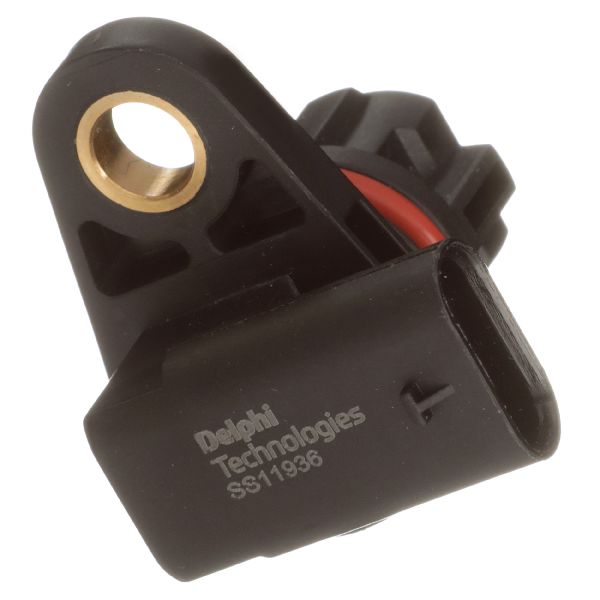
- Camshaft Position Sensor
(OEM #12679198 (supersedes 12684186, 12615371))— This is the sensor that is replaced if it fails testing, after the wiring has been ruled out as the cause. Note that part numbers can be superseded over time.
Trusted brands: ACDelco, Delphi, NTK
OEM price range: $80-$120
Aftermarket price range: $40-$75 - Wiring Pigtail Connector
(OEM #13576413 (Verify application))— Often needed if the connector itself is damaged or if a section of the harness needs to be repaired due to chafing.
Trusted brands: ACDelco, Dorman
OEM price range: $25-$40
Aftermarket price range: $15-$30
Related Codes That Often Appear With This One
- P0340 — P0340 indicates a general malfunction in the same sensor circuit, and both codes are often listed together in TSBs for this vehicle.
- P0335 / P0336 — These are codes for the Crankshaft Position Sensor. Since the ECM compares cam and crank signals, a fault in one can sometimes be flagged alongside the other, especially with wiring issues. [TSB #PIP5724, #PIP5553A]
- P0011 — This code relates to 'A' Camshaft Position - Timing Over-Advanced. It can appear with P0341 if there is a mechanical timing issue or a problem with the VVT system. [TSB #PIP5724]
Technical Service Bulletins (TSBs) & Recalls
- PIP5724: Potential for pinched wiring harness causing P0341 and other codes.
- PIP5553A: Potential for chafed wiring harness at a specific bolt causing P0341 and other codes.
- PIP5335D: Acknowledges P0341 as a potential issue and advises standard diagnostics.
- PIP5822B: Details diagnosis for a bent camshaft exciter wheel as a cause for P0341.
Platform-Specific Known Issues
- Technical Service Bulletin #PIP5724: Notes that P0341 and a host of other codes can be caused by a 'wiring jumper harness pinched between the X154 connector bracket and the front engine cover on lower left side of the engine.'
- Technical Service Bulletin #PIP5553A & #PIP5553: Specifically mention that a 'wiring jumper harness chaffed at the bolt at the X154 connector on lower left side of the engine front cover' can cause P0341 and other codes, potentially leading to a crank/no-start or stalling condition.
- Technical Service Bulletin #PIP5822B: Addresses a condition where DTC P0341 is set due to a bent Camshaft Position Sensor exciter wheel, sometimes from contacting the timing chain. Recommends inspection with a borescope.
- Real-World Repair Story: A user on ChevroletForum.com with a similar GM truck chased a P0341 code that would only appear after 25 miles and when turning left, causing a stall. After replacing the sensor, cam gear, and even the ECM to no avail, they discovered an oil-contaminated connector between the harmonic balancer and power steering pump was the likely culprit, highlighting the importance of checking all connections in the circuit.
Mechanic-Grade Diagnostic Values
- CMP Sensor 5V Reference Voltage — expected: 4.8V - 5.2V DC with key on, engine off, sensor connected.. Failure: No voltage or significantly low voltage points to a wiring issue or a problem with the ECM's 5V reference circuit.
- CMP Sensor Signal Voltage (Multimeter) — expected: Fluctuating between approximately 0V and 5V as the engine is cranked or running.. Failure: A static voltage or no voltage indicates a failed sensor or a break in the signal wire.
- CMP Sensor Signal (Oscilloscope) — expected: A clean digital square wave pattern that switches between low (near 0V) and high (near 5V) as the engine runs.. Failure: A missing, erratic, or noisy waveform indicates a faulty sensor, wiring issue, or a problem with the reluctor wheel.
Scan Tool Commands That Help
- GDS2 (GM Global Diagnostic System 2): Crankshaft Position Variation Learn — This procedure should be performed after replacing the camshaft position sensor, crankshaft position sensor, or performing major engine work to allow the ECM to relearn the precise positions of the components and prevent false timing-related codes.
Wiring & Ground Locations
- X154 Connector — On the lower-left (driver's) side of the engine front cover, near the vacuum pump.. This is the specific connector and bracket area cited in TSBs #PIP5724 and #PIP5553A as a common location for the wiring harness to become pinched or chafed, directly causing P0341.
- G103 — Located at the left rear of the engine compartment on the cowl, above the brake booster.. This is a primary ground point for the Body Control Module (BCM) and Instrument Panel Cluster (IPC), which communicate with the ECM. A poor ground here can cause a variety of difficult-to-diagnose electrical issues.
- G104 — Located on the rear of the left (driver's side) cylinder head.. This is a critical engine ground. A loose or corroded connection at G104 can disrupt sensor signals, including the camshaft position sensor, leading to erratic readings and codes like P0341.
Real Owner Repair Stories
- gm-trucks.com forum user (2015 GMC Sierra 6.2L (Same L86 engine and platform)) — Check Engine Light with code P0341, engine would occasionally stall.
❌ Tried (didn't work) Initial diagnosis suggested replacing the sensor.
✅ What actually fixed it Following TSB advice, the owner inspected the wiring harness at the front of the engine. They found the harness was rubbing against the head of a bolt on the X154 connector bracket, chafing through the insulation on one wire. The fix was to repair the damaged wire and secure the harness with a zip tie to prevent it from rubbing again. The code did not return.
OEM Part Supersession History
12615371→12684186, then current P/N 12679198— Part design updates and improvements by the manufacturer.
Model Year Variations Within This Range
- 2018-2020: For the 2018 model year, the Escalade's 6.2L V8 was paired with a new 10-speed automatic transmission (10L80), replacing the 8-speed (8L90) used from 2015-2017. While this doesn't directly change the cause of P0341, the transmission control module (TCM) software and integration with the ECM are different.
Helpful Videos
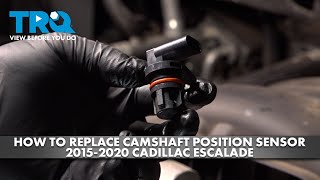
![How to Fix P0341 Engine Code in 3 Minutes [2 DIY Methods / Only $9.45]](https://img.youtube.com/vi/y3mPQ48c-_Q/mqdefault.jpg)
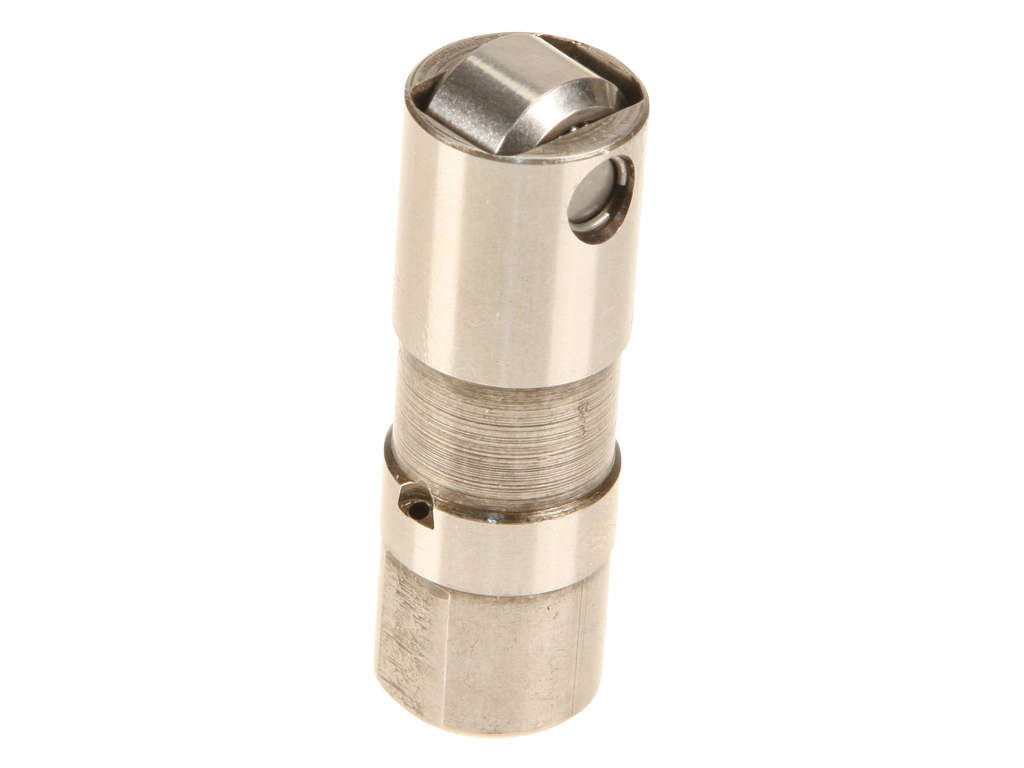
We Have This Part in Stock


The information in this article is provided for general reference and educational purposes only. Vehicle specifications, procedures, and part compatibility can vary by production date, trim level, and region. Always consult your vehicle's factory service manual and verify part numbers before purchasing or performing repairs. Safety-critical components such as airbags, seat belts, and braking systems should be installed by a qualified professional.
- Cadillac ESCALADE:
- 🧭 Diagnostic Flowchart
- 🎬 Helpful Videos
- 🛍️ Shop This Part
- What's Unique About the 2015-2020 Cadillac ESCALADE
- Symptoms You May Notice
- Most Likely Causes
- Rare But Worth Checking
- Diagnosis Steps
- Parts You'll Likely Need
- Related Codes That Often Appear With This One
- Technical Service Bulletins (TSBs) & Recalls
- Platform-Specific Known Issues
- Mechanic-Grade Diagnostic Values
- Scan Tool Commands That Help
- Wiring & Ground Locations
- Real Owner Repair Stories
- OEM Part Supersession History
- Model Year Variations Within This Range
- 🎟️ Get 5% Off