

P0341 on 2011-2016 Chevrolet Cruze: Camshaft Sensor Range/Performance Causes and Fixes
On a 2011-2016 first-generation Chevrolet Cruze, code P0341 almost always points to a failing intake camshaft position sensor. It's an affordable part (typically $25-$60) and is usually a simple, 15-minute DIY replacement held in by a single bolt.
- P0341 on your Cruze is most likely a bad intake camshaft position sensor.
- This is a very DIY-friendly repair that requires basic tools and about 15 minutes.
- Always check for other codes, but if P0341 is standalone, the sensor is the prime suspect.
- Check the negative battery cable for looseness or corrosion, as it's a known weak point on these cars that can cause electrical codes.
What's Unique About the 2011-2016 Chevrolet CRUZE

For the first-generation Cruze, this code is so commonly caused by a simple sensor failure that General Motors issued a Technical Service Bulletin (TSB PIP5329C) directing technicians to replace the sensor as the primary fix. Unlike in some other vehicles where P0341 might point to complex timing issues, on the Cruze, the sensor itself is the most frequent point of failure. This guide specifically covers the first-generation platform, which includes the 2016 "Cruze Limited" model.
Diagnostic Flowchart

Tap your situation to follow the diagnostic path that matches what you're seeing on this vehicle.
Generation note: The 2011-2016 year range covers the first generation of the Chevrolet Cruze. The 2016 model year was an overlap period; the first-generation body style was sold as the 'Cruze Limited', while an all-new second generation was also introduced. This guide and the cited TSBs apply to the first-generation platform, including the 2016 Cruze Limited.
Symptoms You May Notice

- Check Engine Light is on
- Engine is hard to start or requires extended cranking
- Engine stalls or idles roughly
- Hesitation or lack of power during acceleration
- Noticeable decrease in fuel economy
- Engine cranks but does not start
- Replacing the crankshaft position sensor instead of the camshaft position sensor.
- Replacing VVT solenoids when they are not faulty. While related to timing, they are a separate system and usually throw their own specific codes (e.g., P0010, P0011).
- Assuming a major timing issue before replacing the inexpensive and high-failure-rate camshaft position sensor.
Most Likely Causes

- Faulty Intake Camshaft Position Sensor 🔴 High Probability → Shop Engine Camshaft Position Sensor This is a well-documented failure point, as confirmed by GM's own Technical Service Bulletin #PIP5329C, which advises replacing the sensor as the first step for a P0341 code.
How to confirm: The sensor is located on top of the valve cover and is easy to access. Given the low cost and high probability, replacement is often the simplest and most effective diagnostic step after confirming the code.
Typical fix: Replace the intake camshaft position sensor. It is held in by a single 8mm or 10mm bolt. 🎬 Watch: How to identify and replace bad camshaft position sensors.
Est. part cost: $25-$60 - Wiring or Connector Issue 🟡 Medium Probability The sensor connector and nearby wiring are exposed to engine heat and vibration, which can cause wires to become brittle, corroded, or connections to loosen over time. TSB 16-NA-015 also points to fretting/corrosion on the ignition coil connector on 1.4L models, indicating a general susceptibility to connector issues in this area.
How to confirm: Visually inspect the wiring harness leading to the sensor for any signs of cracking, melting, or corrosion. Check that the connector is securely plugged into the sensor and that the locking tab isn't broken.
Typical fix: Repair the damaged section of wiring or clean the connector terminals. If the connector itself is broken, a pigtail replacement (like GM part 19300958 for the coil) may be necessary.
Est. part cost: $5-$30 - Poor Battery Connection or Weak Battery ⚪ Low Probability → Shop Vehicle Battery GM issued a special coverage bulletin (14311B) for an insufficient crimp on the negative battery cable for 2011-2015 models. A poor ground from this faulty cable causes high electrical resistance and can lead to a variety of unpredictable electrical issues, including sensor performance codes, flickering lights, and warning messages like 'Service Stabilitrac'.
How to confirm: Check that battery terminals are clean and tight. Inspect the negative battery cable for corrosion or looseness at the terminal clamp. The vehicle may be eligible for a free replacement cable under the special coverage program.
Typical fix: Clean or tighten battery terminals. If the negative cable is faulty, it should be replaced. The GM replacement part is around $25-$40. 🎬 Watch: How to fix the negative battery cable and Stabilitrak errors.
Est. part cost: $0-$40
Rare But Worth Checking
- Stretched Timing Chain or Belt Issue: → Shop Engine Timing Chain While less common than a sensor failure, a stretched or improperly installed timing belt/chain can cause the camshaft and crankshaft to lose synchronization, triggering P0341. This is a more serious and expensive repair, often accompanied by rattling noises from the engine or occurring after a recent timing belt service.
- Magnetized Cylinder Head Components: TSB #PIP5329C notes a rare scenario where improper welding procedures during a previous front-end collision repair can magnetize metal components in the cylinder head, interfering with the sensor's reading. The TSB states that if a new sensor doesn't fix the code and there's a history of collision repair, this should be investigated. The fix is a complete cylinder head replacement.
- Oil Contamination on Sensor: Oil leaking from the valve cover gasket can seep into the camshaft sensor's electrical connector or foul the sensor tip, interfering with its signal. If you remove the sensor and find it covered in oil, the valve cover gasket may also need to be replaced.
Diagnosis Steps
- Read the trouble codes with an OBD-II scanner to confirm P0341 is present and see if any other codes are stored, especially P0366 or P0016.
- Visually inspect the intake camshaft position sensor and its electrical connector. The sensor is on the top of the engine, on the valve cover. Look for obvious damage, loose connections, or oil contamination.
- Based on TSB #PIP5329C, the most direct and probable fix is to replace the intake camshaft position sensor. It is secured by one bolt and is easily accessible.
- Clear the trouble code with the scanner and drive the vehicle to see if the code returns.
- If the code returns, inspect the vehicle's battery and ground connections. Pay special attention to the negative battery cable, which is a known issue covered by GM Special Coverage 14311B for 2011-2015 models.
- If the battery and sensor are good, perform a thorough inspection of the wiring harness for shorts or open circuits. Check for 5V reference, ground, and signal continuity at the sensor connector.
- If all else fails, the issue may be with the engine's timing components (belt/chain) or, in very rare cases, a magnetized cylinder head from a past repair, which requires a more in-depth mechanical inspection.
Parts You'll Likely Need
- Intake Camshaft Position Sensor
(OEM #55565708)— This is the most common failure part for code P0341 on this vehicle, as identified by owner experiences and a manufacturer TSB.
Trusted brands: ACDelco, Delphi, Bosch, Standard Motor Products
OEM price range: $40-$60
Aftermarket price range: $25-$45 - Negative Battery Cable
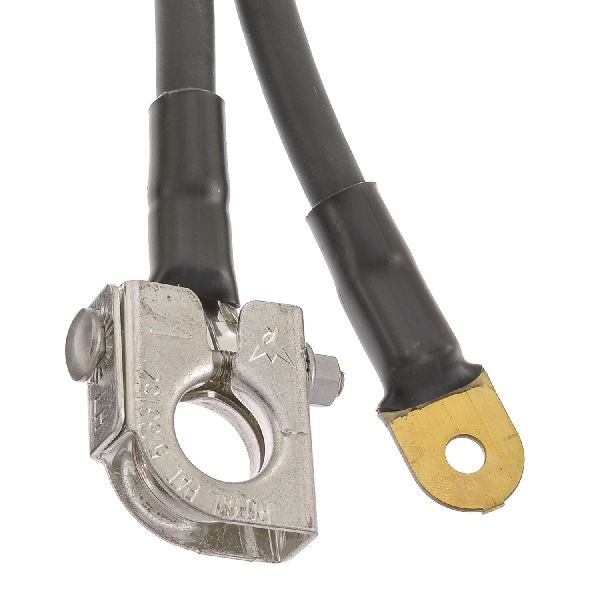
(OEM #22754271)— A known failure point covered under GM Special Coverage 14311B that can cause a host of electrical issues, including sensor codes. A wise preventative or diagnostic step if electrical gremlins are present.
Trusted brands: ACDelco, Standard Motor Products
OEM price range: $25-$40
Aftermarket price range: $20-$35
Related Codes That Often Appear With This One
- P0366 — This is the corresponding code for the exhaust camshaft position sensor ('B' sensor). GM TSB #PIP5329C mentions that P0341 and P0366 often appear together, and the diagnostic advice is the same: replace the sensor associated with the code.
- P0016 — This code indicates a Crankshaft/Camshaft Position Correlation error. If the timing chain has stretched or jumped, you will likely see this code along with P0341. This points towards a more serious mechanical timing problem rather than just a sensor failure.
- P0365 — This is the general circuit code for the exhaust camshaft sensor. A forum user reported getting both P0341 and P0365 after replacing an engine wiring harness, indicating a potential circuit-wide issue.
Technical Service Bulletins (TSBs) & Recalls
- PIP5329C: Directs technicians to replace the related camshaft position sensor as the primary fix for DTC P0341 and/or P0366. Also mentions the rare possibility of a magnetized cylinder head from improper welding during collision repair.
- 14311B (Special Coverage): Details the issue of an insufficient crimp on the negative battery cable for 2011-2015 models, which can cause widespread electrical problems mimicking sensor failures. It extends warranty coverage for this specific repair.
Platform-Specific Known Issues
- A known issue with the negative battery cable can cause various electrical faults. GM Special Coverage 14311B addresses this for 2011-2015 models, involving the replacement of the negative battery cable due to an insufficient crimp. While not a direct cause, poor electrical integrity can contribute to sensor performance codes and should be checked if multiple electrical issues are present.
Mechanic-Grade Diagnostic Values
- Camshaft Position Sensor Connector - Power Supply Pin to Ground — expected: ~5V with key on, engine off.. Failure: 0V or significantly lower voltage indicates a wiring or ECM power supply issue.
- Camshaft Position Sensor Connector - Signal Pin to Ground — expected: Should read ~5V with the sensor disconnected and key on, engine off. When cranking, voltage should fluctuate between a low (near 0V) and high (near 5V) state.. Failure: No voltage or a static voltage while cranking suggests a faulty sensor or a problem on the signal circuit.
- Camshaft Position Sensor Connector - Ground Pin to Chassis Ground — expected: Near 0 Ohms of resistance, indicating a good ground path provided by the ECM.. Failure: High resistance (OL) indicates an open in the ground circuit between the sensor and the ECM.
- Camshaft Position Sensor Internal Resistance — expected: Typically between 500 to 1,500 Ohms, but this can vary. Note: Some sources state there is no reliable internal resistance measurement for this type of sensor.. Failure: A reading outside the expected range or an open circuit (OL) suggests a faulty sensor.
Scan Tool Commands That Help
- GDS2/Professional Scan Tool: Cam Sensor Relearn / Crankshaft Position Variation Learn — Some GM vehicles may require a relearn procedure after replacing a camshaft or crankshaft position sensor. If the engine runs poorly, won't start, or the code returns immediately after replacing the sensor, a relearn procedure may be necessary to synchronize the new sensor's signal with the ECM.
Wiring & Ground Locations
- ECM Ground Pins (1.8L Engine) — On the Engine Control Module (ECM). Connector 1 (X1): Pins 20 and 35 are grounds. Connector 2 (X2): Pins 1, 3, and 5 are grounds.. The camshaft position sensor is grounded through the ECM. A poor ground connection at the main ECM connector can cause erratic sensor readings and trigger a P0341 code.
- Main Engine Ground (1.4L Engine) — A ground wire runs from the main engine wiring harness (near the ignition coil) to a bolt on the top of the engine/valve cover.. A loose, corroded, or broken ground wire at this location is a known issue that can cause multiple random codes, stalling, and erratic behavior, including camshaft sensor codes. Ensuring this ground is clean and tight is a critical diagnostic step.
- CMP Sensor Connector Pinout — At the sensor connector on the valve cover.. Knowing the pin functions is essential for testing. Pin 1 is typically the 5V power supply, Pin 2 is the signal wire, and Pin 3 is the ground provided by the ECM.
Real Owner Repair Stories
- YouTube user 'Ford Boss Me' (2012 Chevrolet Cruze 1.4L Turbo) — Stalling every 5-10 seconds, high cooling fan speed, underboost problems, and multiple (20+) random trouble codes appearing after previous work.
❌ Tried (didn't work) Replacing multiple parts previously., Over-tightening or having the main engine ground wire slightly loose, which caused different sets of problems (stalling vs. multiple codes).
✅ What actually fixed it The original main engine ground wire from the harness to the valve cover was faulty. The owner cut the old terminal off, ran a new 16-gauge wire to a clean ground point on the engine, and covered it. This resolved the stalling, high fan, underboost, and cleared all the random codes, including those related to cam/crank sensors.
OEM Part Supersession History
25195555→55565708— Part has been updated by the manufacturer.
Model Year Variations Within This Range
- 2010-2020: The 1.4L turbo engine came in two main variants within this generation: LUJ and LUV. While very similar, the LUV is considered a modification of the LUJ with a different block configuration. For most repairs, including the camshaft position sensor, the parts and procedures are identical. However, when performing major engine work like timing, it's important to know that while the intake and exhaust camshafts themselves are different, the VVT sprockets (phasers) are often interchangeable between intake and exhaust on the same engine.
Helpful Videos

We Have This Part in Stock



The information in this article is provided for general reference and educational purposes only. Vehicle specifications, procedures, and part compatibility can vary by production date, trim level, and region. Always consult your vehicle's factory service manual and verify part numbers before purchasing or performing repairs. Safety-critical components such as airbags, seat belts, and braking systems should be installed by a qualified professional.
- Chevrolet CRUZE:
- 🧭 Diagnostic Flowchart
- 🎬 Helpful Videos
- 🛍️ Shop This Part
- What's Unique About the 2011-2016 Chevrolet CRUZE
- Symptoms You May Notice
- Most Likely Causes
- Rare But Worth Checking
- Diagnosis Steps
- Parts You'll Likely Need
- Related Codes That Often Appear With This One
- Technical Service Bulletins (TSBs) & Recalls
- Platform-Specific Known Issues
- Mechanic-Grade Diagnostic Values
- Scan Tool Commands That Help
- Wiring & Ground Locations
- Real Owner Repair Stories
- OEM Part Supersession History
- Model Year Variations Within This Range
- 🎟️ Get 5% Off