

P0341 on 2015-2020 Chevrolet Tahoe: Cam Sensor Causes and Fixes
On 2015-2020 Tahoes, code P0341 is most often caused by a chafed or corroded wiring harness near the front of the engine, as noted in GM Technical Service Bulletins. Specifically, TSB #PIP5724 points to a harness being pinched by the X154 connector bracket, and TSB #PIP5335D highlights corrosion in the X154 connector itself. Before replacing the camshaft position sensor, inspect the wiring harness and connector X154 carefully. A new sensor costs about $20-$50.
- For a 2015-2020 Tahoe, suspect a wiring problem before a sensor problem for code P0341.
- Specifically inspect the wiring harness near the front of the engine and check connector X154 for corrosion, as per GM service bulletins.
- Symptoms can be severe, including stalling and no-start conditions, so address this code promptly.
- This code frequently appears with other sensor codes (like P0335 for the crankshaft sensor) due to the shared, vulnerable wiring harness.
What's Unique About the 2015-2020 Chevrolet TAHOE
For this generation of Chevrolet Tahoe (and related GM trucks/SUVs with the L83/L86 engines), the P0341 code is frequently not a sensor failure. Multiple Technical Service Bulletins (TSBs) point to known issues with wiring. TSB #PIP5724 identifies a specific issue where a wiring jumper harness can be pinched between the X154 connector bracket and the front engine cover. TSB #PIP5335D points to corrosion within the X154 connector itself, located near the vacuum pump. These known failure points make a thorough wiring inspection more critical on these vehicles than on others where a faulty sensor is the most common cause.
Diagnostic Flowchart
Tap your situation to follow the diagnostic path that matches what you're seeing on this vehicle.
Symptoms You May Notice
- Check Engine Light is on
- Engine may stall, sometimes unexpectedly, especially when coming to a stop. [Bulletin #PIP5724, #PIP5553A, 1, 27]
- Difficulty starting the engine or a crank-no-start condition. [Bulletin #PIP5724, #PIP5553A, 1, 27]
- Rough idling or engine misfires.
- Hesitation or poor acceleration.
- Reduced engine power or 'limp mode'.
- Replacing the camshaft position sensor without first inspecting the wiring harness. Given the known TSBs for this vehicle, the wiring is a more likely culprit than the sensor itself.
Most Likely Causes
- Chafed, Pinched, or Corroded Wiring Harness 🔴 High Probability Multiple GM Technical Service Bulletins (#PIP5724, #PIP5553A, #PIP5335D) identify this as a common problem. A specific wiring jumper harness can get pinched under the X154 connector bracket on the lower left side of the front engine cover. Additionally, connector X154 (or X159 on 2015 models) is prone to water intrusion and corrosion. The harness for both the cam and crank sensors runs along the front of the engine and is susceptible to rubbing against components like the A/C compressor or radiator hoses.
How to confirm: Visually inspect the wiring harness for the camshaft position sensor, paying close attention to where it runs near the front engine cover and the vacuum pump. Specifically check for a pinched harness under the bracket for connector X154. Unplug connector X154 (an 8-way black female connector) and check for any signs of green or white corrosion on the pins. Wiggle the harness with the engine running while monitoring sensor data on a scan tool to see if the signal drops out.
Typical fix: Repair the damaged section of wire or replace the corroded connector pigtail. Use dielectric grease on the new connector to prevent future corrosion. Secure the harness away from any sharp edges or moving parts using zip ties.
Est. part cost: $15-$40 - Faulty Camshaft Position Sensor 🟡 Medium Probability → Shop Engine Camshaft Position Sensor
How to confirm: If the wiring is confirmed to be in good condition, the sensor is the next likely part to fail. It can be tested with a multimeter for proper voltage at the connector or by monitoring its voltage signal with a scan tool or oscilloscope during cranking. Many owners report replacing the sensor only to have the code return, indicating wiring was the true cause.
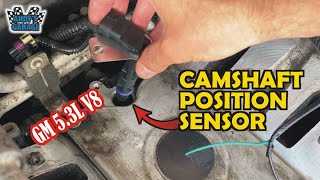
Typical fix: Replace the camshaft position sensor. It is located on the front of the engine and typically held in by a single bolt. Some vehicles may require a 'relearn' procedure after replacement, which can be done with a capable scan tool.
Est. part cost: $20-$60 - Stretched Timing Chain or Timing Component Issue ⚪ Low Probability → Shop Engine Timing Chain While less common than wiring issues, the timing chain can stretch over time, causing the cam and crank signals to fall out of sync. This is more likely on higher-mileage vehicles.
How to confirm: This is a more advanced diagnosis. It may be accompanied by rattling noises from the front of the engine. A mechanic would need to compare the actual camshaft and crankshaft positions using a dual-channel oscilloscope or by physically inspecting the timing marks, which requires significant engine disassembly.
Typical fix: Replace the timing chain, tensioners, and guides. This is a labor-intensive job.
Est. part cost: $200-$500
Rare But Worth Checking
- Failing Engine Control Module (ECM): This is very rare. The ECM should only be considered after all other possibilities, including wiring, sensors, and mechanical timing, have been exhaustively ruled out by a professional. One forum user reported a dealer replacing the ECM, but the problem persisted, ultimately pointing back to wiring.
- Damaged Reluctor Wheel: The toothed ring on the camshaft that the sensor reads can be damaged or have debris on it, causing an erratic signal. This usually requires removing the sensor for a visual inspection through the sensor port or more significant disassembly.
- Low or Dirty Engine Oil: On engines with Variable Valve Timing (VVT) like the L83 and L86, low or dirty oil can affect the operation of the cam phasers, which can lead to timing-related codes like P0341. Always ensure the oil is at the correct level and condition.
Diagnosis Steps
- Read all fault codes stored in the ECM. Note any other codes that appear with P0341, as they can provide important clues.
- Perform a thorough visual inspection of the camshaft position sensor wiring harness. Focus on the area near the front engine cover, A/C compressor, and the vacuum pump, looking for any signs of rubbing, pinching, or heat damage as specified in GM TSBs.
- Specifically inspect for a pinched harness under the bracket for connector X154 on the lower left side of the engine, as per TSB #PIP5724.
- Unplug and inspect connector X154 (or X159 on 2015 models) for corrosion. It is an 8-pin black connector. Clean any corrosion found and apply dielectric grease before reconnecting.
- Using a scan tool, monitor the live data for the camshaft position sensor. Check if the signal is present and stable. Wiggle the harness to see if you can make the signal drop out.
- If wiring and connections are good, test the sensor itself. This can involve checking for proper voltage and ground at the connector and testing the sensor's resistance.
- Check engine oil level and condition, as low or dirty oil can affect VVT operation and trigger timing codes.
- If the sensor and wiring test good, the next step is to investigate potential mechanical issues like a stretched timing chain, which is a more advanced diagnostic procedure.
- As a last resort, the ECM itself would be tested by a qualified technician.
Parts You'll Likely Need
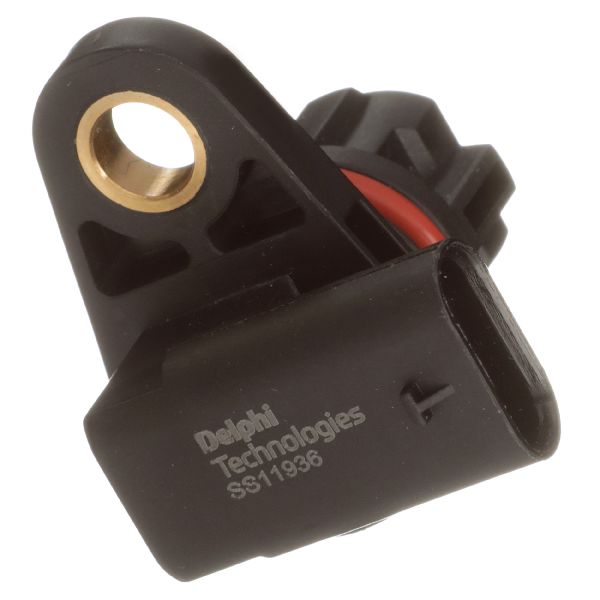
- Camshaft Position Sensor
(OEM #12684186)— If the wiring is intact, the sensor itself is the next most likely component to have failed, causing an out-of-range signal.
Trusted brands: ACDelco, Delphi, Standard Motor Products, Hitachi
OEM price range: $30-$50
Aftermarket price range: $20-$40 - Camshaft Position Sensor Connector Pigtail
(OEM #ACDelco PT2628 (check fitment), GM 84941154)— If corrosion is found in the X154 connector as described in TSB #PIP5335D, replacing the connector pigtail is the proper repair.
Trusted brands: ACDelco, Dorman
OEM price range: $25-$40
Aftermarket price range: $15-$30
Related Codes That Often Appear With This One
- P0340 — This is a general circuit malfunction code for the same sensor. P0340 and P0341 often appear together, with P0341 indicating an intermittent fault and P0340 a more permanent one. [Bulletin #PIP5335D, 3, 13]
- P0335 / P0336 — These are codes for the Crankshaft Position Sensor. The wiring for both the cam and crank sensors can be located in the same harness that is prone to chafing, causing both codes to set simultaneously. [Bulletin #PIP5724, #PIP5553A, 3]
- P0300 — This indicates random or multiple cylinder misfires. An incorrect camshaft position signal can disrupt ignition and fuel timing, leading to misfires. [Bulletin #PIP5724]
- P0011 — This code for 'Camshaft Position Timing Over-Advanced' can also be triggered by the same wiring harness issues affecting the cam sensor circuit and VVT system. [Bulletin #PIP5724, 26]
Technical Service Bulletins (TSBs) & Recalls
- PIP5724: Notes P0341 can be cause
Platform-Specific Known Issues
- Pinched Jumper Harness (TSB #PIP5724): A wiring jumper harness can be pinched between the X154 connector bracket and the front engine cover on the lower left side of the engine. This can cause a group of codes including P0341, P0335, P0300, and P0011, and may lead to a stall or no-start condition.
- Corroded Connector X154 (TSB #PIP5335D): Specifically calls out inspecting connector X154 (or X159 on 2015 models) for corrosion when diagnosing codes P0340 and P0341. This connector is located on the front engine cover near the vacuum pump. Water intrusion leads to green or white corrosion on the pins, causing an intermittent signal.
- Chafed Harness (TSB #PIP5553A): Similar to PIP5724, this bulletin points to a chafed wiring jumper harness as a cause for P0341 and a host of other electrical and engine performance codes.
Mechanic-Grade Diagnostic Values
- Camshaft Position Sensor 5V Reference Voltage — expected: 5 Volts DC. Failure: Voltage significantly lower than 5V or 0V indicates an open or short in the reference circuit or a faulty ECM.
- Camshaft Position Sensor Signal Voltage (using oscilloscope) — expected: A consistent square wave that toggles between approximately 0V and 5V as the engine is cranked or running.. Failure: A missing waveform, a flatline at 0V or 5V, or a noisy/erratic waveform indicates a faulty sensor, wiring issue, or damaged reluctor wheel.
- CAN Bus Resistance at DLC — expected: Approximately 60 Ohms. Failure: A reading of ~120 Ohms suggests a break in the CAN bus wiring or a missing terminating resistor, which can cause communication issues and various DTCs.
Scan Tool Commands That Help
- GDS2 / Tech2 / High-End Professional Scan Tool: Crankshaft Position System Variation Learn (also known as CASE Relearn) — This procedure is required after replacing the camshaft position sensor, crankshaft position sensor, timing components, or the ECM. It allows the ECM to learn the minor mechanical variations of the new components to ensure accurate timing calculations and prevent false codes like P0341 from returning.
- GDS2 / High-End Professional Scan Tool: Camshaft/Crankshaft Signal Live Plot — During diagnosis, graphing the CMP and CKP sensor signals simultaneously can help visualize dropouts or misalignments that indicate a wiring fault, sensor issue, or mechanical timing problem.
Wiring & Ground Locations
- Camshaft Position Sensor Connector — On the front of the engine, plugged into the camshaft position sensor on the timing cover, typically on the driver's side for V8s.. This is a 3-wire connector providing power, ground, and signal for the sensor. Pin 1 is typically the 5V reference, Pin 2 is the low reference/ground, and Pin 3 is the signal wire. A poor connection here is a primary point of failure.
- X154 / X159 — An 8-way black female harness connector located on the front engine cover, near the vacuum pump.. TSB #PIP5335D specifically identifies this connector as a common location for water intrusion and corrosion, which directly interrupts the cam sensor signal path to the ECM.
- G101 / G106 — Located on the lower front of the engine block, sometimes with a jumper to the frame cross rail under the crankshaft pulley.. This is a primary engine block and ECM ground. A loose or corroded connection here can cause widespread, difficult-to-diagnose electrical issues, including erratic sensor readings for the entire engine management system, which could manifest as a P0341.
- G103 — On the passenger side cylinder head (for V8s).. This is another critical engine ground point. While not the primary ECM ground, poor grounding at G103 can introduce electrical noise that may interfere with sensitive sensor signals like the one from the camshaft position sensor.
Real Owner Repair Stories
- LS1TECH Forum User (2015 Silverado 5.3L L83) — Extended crank/no-start condition, especially when the engine was at operating temperature, setting P0340 and P0341 codes.
❌ Tried (didn't work) The user was chasing multiple issues at once.
✅ What actually fixed it The user's P0341 was part of a larger electrical issue. They had previously found and fixed a problem with coolant leaking into a different connector, which caused a 5-volt reference signal problem. This highlights that the root cause for a sensor code can be a shared circuit problem, not just the sensor's dedicated wiring.
OEM Part Supersession History
12615371→12684186— Standard part update/revision by the manufacturer.
Heads up: The new part number (12684186) is the correct replacement for the original. No known incompatibility issues.
Model Year Variations Within This Range
- 2015 only: On 2015 models, the critical harness connector prone to corrosion mentioned in TSBs is designated as X159. For 2016-2020 models, this same connector is designated as X154.
Helpful Videos

We Have This Part in Stock


The information in this article is provided for general reference and educational purposes only. Vehicle specifications, procedures, and part compatibility can vary by production date, trim level, and region. Always consult your vehicle's factory service manual and verify part numbers before purchasing or performing repairs. Safety-critical components such as airbags, seat belts, and braking systems should be installed by a qualified professional.
- Chevrolet TAHOE:
- 🧭 Diagnostic Flowchart
- 🎬 Helpful Videos
- 🛍️ Shop This Part
- What's Unique About the 2015-2020 Chevrolet TAHOE
- Symptoms You May Notice
- Most Likely Causes
- Rare But Worth Checking
- Diagnosis Steps
- Parts You'll Likely Need
- Related Codes That Often Appear With This One
- Technical Service Bulletins (TSBs) & Recalls
- Platform-Specific Known Issues
- Mechanic-Grade Diagnostic Values
- Scan Tool Commands That Help
- Wiring & Ground Locations
- Real Owner Repair Stories
- OEM Part Supersession History
- Model Year Variations Within This Range
- 🎟️ Get 5% Off