

P0341 on 2011-2017 Chrysler 200 3.6L: Cam Sensor Causes and Fixes
On the 3.6L Pentastar, P0341 most often points to a failed camshaft position sensor on Bank 1 (the rear cylinder head near the firewall). It's a common failure item, and replacing the sensor with an OEM Mopar part (approx. $30-$50) usually resolves the issue. Access can be tight. However, if a ticking noise is present, this code is a strong early indicator of the common Pentastar rocker arm/camshaft failure.
- P0341 on your Chrysler 200 almost always points to the camshaft position sensor on the rear cylinder bank (Bank 1).
- Before buying parts, check your oil level and inspect the sensor's wiring for obvious damage.
- A simple diagnostic step is to swap the rear (Bank 1) and front (Bank 2) cam sensors. If the code follows the sensor (changing to P0366), you've confirmed the sensor is bad.
- It is strongly recommended to use an OEM Mopar sensor (part #5149141AF) for the replacement, as these engines are known to reject some aftermarket parts.
- If you hear a ticking noise along with this code, stop driving and have the engine inspected for potential valvetrain damage, a known issue with the Pentastar engine.
What's Unique About the 2011-2017 Chrysler 200
The 3.6L Pentastar V6 is a dual overhead cam (DOHC) engine, and code P0341 specifically points to the sensor on Bank 1. In the transverse layout of the Chrysler 200, Bank 1 is the cylinder head closer to the firewall, making access to the sensor more challenging than Bank 2, which is at the front. While a faulty sensor is the most common cause, this code on a Pentastar can sometimes be an early warning for more serious valvetrain issues like failing rocker arms or cam phasers, which are known weaknesses of this engine family, often accompanied by a distinct ticking sound.
Generation note: The 2011-2017 range covers two generations of the Chrysler 200: the first (JS) from 2011-2014 and the second (UF) from 2015-2017. Both generations used the 3.6L Pentastar V6. The engine and the causes for this code are fundamentally the same across both generations. However, early models (2011-2013) were known for a left cylinder head defect, while the 2014 models were subject to a TSB for faulty cam sensors from the factory.
Symptoms You May Notice
- Check Engine Light is on
- Engine is difficult to start or requires a long crank time
- Engine stalls, especially at low speeds or when stopping
- Rough or uneven idle
- Hesitation or stumbling during acceleration
- Noticeable loss of engine power
- Reduced fuel economy
- Engine ticking noise (indicates potential rocker arm/camshaft failure)
- Replacing the Crankshaft Position Sensor: This code is specific to the camshaft sensor circuit, not the crankshaft sensor.
- Replacing the wrong Camshaft Position Sensor: P0341 refers to Bank 1, which is the rear cylinder head on a Chrysler 200. Replacing the more accessible front sensor (Bank 2) will not fix the problem.
- Ignoring a ticking noise: Attributing the code solely to a sensor while a ticking noise is present. The tick is a critical symptom of a deeper mechanical issue (rocker arms) that must be addressed.
Most Likely Causes
- Faulty Bank 1 Camshaft Position Sensor 🔴 High Probability → Shop Engine Camshaft Position Sensor The camshaft position sensors on the Pentastar engine are a common failure point due to age and heat cycles. Chrysler issued TSB 18-054-14 for 2014 models (including the 200/Avenger) due to a bad batch of sensors causing long crank times, confirming it's a known issue. The faulty batch was identified by a serial number beginning with the letter 'D'.
How to confirm: Swap the Bank 1 (rear) sensor with the Bank 2 (front) sensor. If the code changes to P0366 (Cam Sensor 'A' Bank 2), the sensor is bad. If the P0341 code returns, the problem is with the wiring or a mechanical issue. You can also test the sensor with a multimeter; it should receive a 5V reference signal.
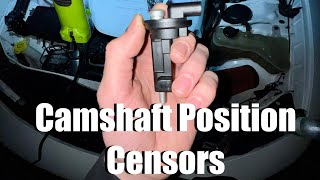
Typical fix: Replace the camshaft position sensor. 🎬 Watch: Step-by-step guide to replacing your Pentastar cam sensors. It is highly recommended to use an OEM Mopar part (Part No. 5149141AF) as these engines can be sensitive to aftermarket sensors.
Est. part cost: $30-$50 - Wiring Harness or Connector Issue 🟡 Medium Probability The wiring harness, especially for the rear sensor (Bank 1), is routed near the exhaust and firewall where it is subject to high heat and vibration. This can lead to chafed or melted insulation, loose connections, or corrosion in the connector pins.
How to confirm: Visually inspect the wiring harness and connector leading to the Bank 1 camshaft sensor. Check for any signs of damage, melting, or corrosion. Test for 5V supply, ground, and signal continuity with a multimeter.
Typical fix: Repair the damaged section of wire or replace the connector pigtail. Ensure the harness is properly secured away from heat sources.
Est. part cost: $15-$40 - Low, Dirty, or Incorrect Grade Engine Oil ⚪ Low Probability The Pentastar engine's Variable Valve Timing (VVT) system is hydraulically actuated and relies on clean oil at the proper pressure. Low, dirty, or incorrect viscosity oil can cause the cam phasers to respond sluggishly, creating a discrepancy between the cam and crank signals that can trigger P0341.
How to confirm: Check the engine oil level on the dipstick and inspect its condition. If the oil is low, dark, or sludgy, this could be the cause. Verify the last oil change used the correct oil grade (e.g., 5W-20 or 5W-30 depending on the year).
Typical fix: Top off or perform an oil and filter change using the manufacturer-specified oil grade.
Est. part cost: $40-$80
Rare But Worth Checking
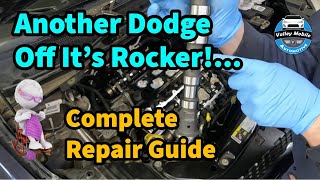
- Failing Rocker Arms or Camshaft Lobes ('Pentastar Tick'): → Shop Engine Camshaft The 3.6L Pentastar has a well-documented issue with premature rocker arm bearing failure. The bearings seize, causing the rocker to score the camshaft lobe. This mechanical failure disrupts valve timing enough to set a P0341 code. A rhythmic ticking sound from the top of the engine is the primary symptom. If you hear ticking, this should be investigated immediately to prevent 🎬 See this complete walkthrough on replacing failed rocker arms. catastrophic engine damage.
- Stretched Timing Chain or Failed Phaser: → Shop Engine Timing Chain While less common than a sensor failure, a stretched timing chain or a malfunctioning cam phaser can cause the camshaft and crankshaft to lose synchronization, triggering P0341. This is usually accompanied by other codes, like P0016, and may produce a rattling noise on startup.
- Failing Powertrain Control Module (PCM): A PCM failure is extremely rare but possible. This should only be considered after all other possibilities, including sensors, wiring, and mechanical components, have been thoroughly ruled out.
Diagnosis Steps
- Read the codes with an OBD-II scanner to confirm P0341 is present and note any other codes.
- Listen carefully to the engine at idle and while revving. Is there a rhythmic 'tick-tick-tick' noise? If so, suspect rocker arm failure.
- Check the engine oil level and condition. Top off or change if necessary, using the correct viscosity oil.
- Inspect the wiring and connector for the Bank 1 (rear) camshaft position sensor. Look for any visible damage, melting, corrosion, or loose pins.
- For diagnosis, you can swap the Bank 1 (rear) sensor with the Bank 2 (front) sensor. They are identical parts.
- Clear the codes and start the engine. If the code changes to P0366 (Bank 2), the sensor you moved is faulty and needs replacement.
- If the P0341 code returns after the swap, the problem lies in the wiring to the Bank 1 sensor or a mechanical issue on Bank 1.
- If wiring is confirmed good (checked with a multimeter for 5V power, ground, and signal), the issue is likely mechanical. The presence of a ticking noise strongly points to needing a valve cover removal for inspection of rocker arms and camshaft lobes.
- If no ticking is present and wiring is good, replacing the Bank 1 camshaft position sensor is a reasonable next step, as it is the most common failure part.
Parts You'll Likely Need
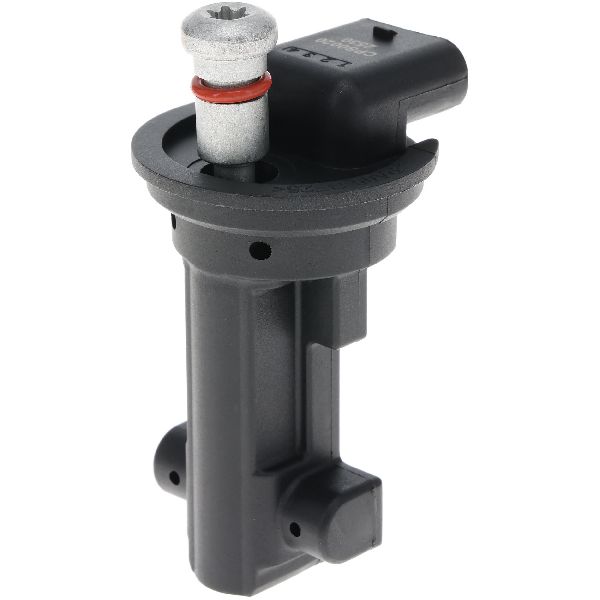
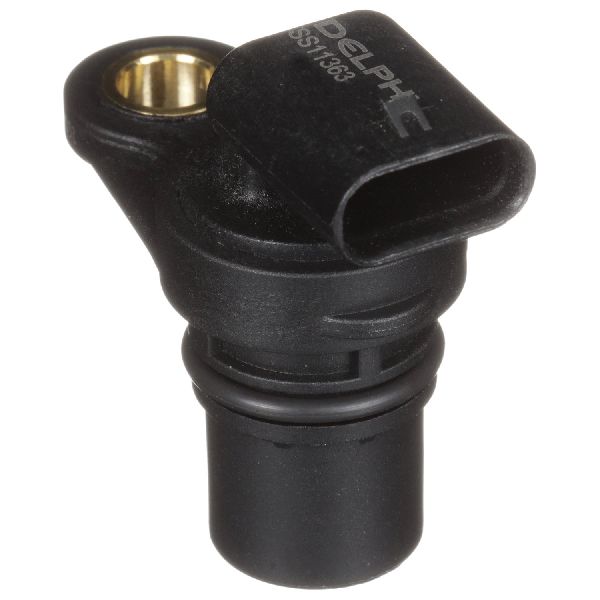
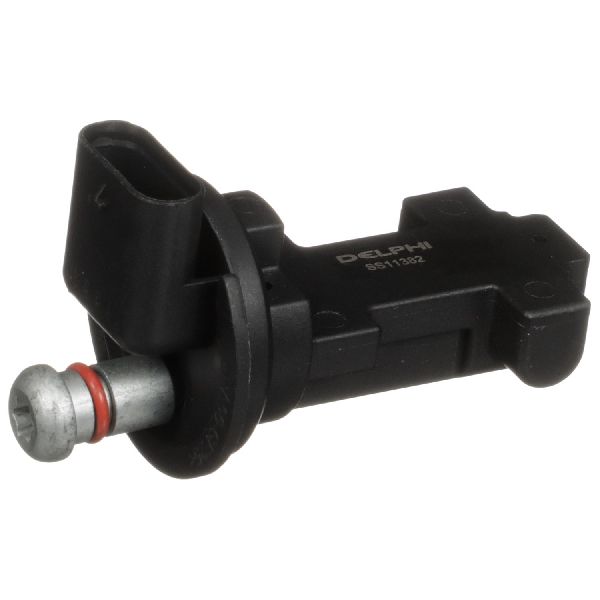
- Camshaft Position Sensor
(OEM #5149141AF)— This is the most frequent cause of code P0341 on the 3.6L Pentastar engine. It is a common failure item due to heat and age, and was subject to a TSB for a bad batch in 2014.
Trusted brands: Mopar (OEM), NGK/NTK, Delphi, Dorman 907-728
OEM price range: $30-$50
Aftermarket price range: $20-$40
Related Codes That Often Appear With This One
- P0366 — This is the corresponding code for the Bank 2 camshaft position sensor. It may appear if a faulty Bank 1 sensor is swapped to the Bank 2 position for diagnostic purposes.
- P0016 — Indicates a Crankshaft-Camshaft Position Correlation error. If this code appears with P0341, it strongly suggests a mechanical timing issue (e.g., stretched chain, failed phaser) rather than just a sensor fault.
- P0300, P0301, P0303, P0305 — Random or specific misfires on Bank 1. This can be a symptom of the incorrect timing information from the bad cam sensor, or it could point to a more serious underlying rocker arm failure on that bank.
- P0344 — Camshaft Position Sensor 'A' Circuit Intermittent (Bank 1). This code is very similar and often points to the same root causes, such as a failing sensor or a wiring issue.
Technical Service Bulletins (TSBs) & Recalls
- TSB 18-054-14: Addresses intermittent long crank times on 2014 models (including Chrysler 200/Avenger) with the 3.6L engine. It involves inspecting the Bank 1 Camshaft Position Sensor serial number (for those starting with 'D') and replacing it if it's from the faulty batch.
Platform-Specific Known Issues
- Access to the Bank 1 (rear) camshaft position sensor is tight due to its location against the firewall. Some mechanics may remove the upper intake manifold for better access, increasing labor time.
- The 3.6L Pentastar engine is known to be sensitive to aftermarket electronic sensors. It is highly recommended to use an OEM Mopar sensor to avoid persistent issues.
- A ticking noise accompanying P0341 is a strong indicator of rocker arm failure, a widespread and well-documented issue with the Pentastar engine that requires immediate attention.
Mechanic-Grade Diagnostic Values
- Camshaft Position Sensor Power Supply Voltage (KOEO) — expected: ~5.0 Volts DC. Failure: Voltage significantly below 5V or 0V indicates a wiring or PCM issue.
- Camshaft Position Sensor Ground Circuit Resistance — expected: Less than 5.0 Ohms. Failure: Resistance higher than 5.0 Ohms (or OL) indicates an open or corroded ground wire.
- Camshaft Position Sensor Signal (Hall-Effect Bench Test) — expected: Voltage should toggle between ~0V and ~5V when a magnet is passed over the sensor tip.. Failure: Voltage does not switch, indicating a failed sensor.
- Camshaft Position Sensor Signal (Oscilloscope) — expected: A clean square wave pattern that switches between approximately 0V and 5V as the engine runs.. Failure: A missing, erratic, or distorted square wave pattern indicates a faulty sensor, damaged tone wheel, or wiring issue.
Scan Tool Commands That Help
- wiTECH (Chrysler Dealer Tool) or advanced aftermarket scanner: VVT System Test / Camshaft Phaser Actuator Test — If a mechanical timing issue is suspected along with P0341 (e.g., P0016 is also present), this command can actuate the cam phasers to check for response. A slow or non-responsive phaser points to an oil pressure problem or a failed phaser.
- wiTECH or advanced aftermarket scanner: View Cam/Crank Sync Status and Cam Error PIDs — Live data can show if the PCM sees the cam and crank sensors as synchronized. More importantly, specific 'Cam Error' PIDs show the degrees of difference between desired and actual cam position. A value consistently above 10-11 degrees often indicates a mechanical problem like a stretched chain or slipped tone wheel.
Wiring & Ground Locations
- Bank 1 Camshaft Position Sensor Connector — On the rear valve cover (Bank 1), closer to the firewall. It is a 3-pin connector.. This is the primary connection point for the sensor. The pins can get contaminated with oil or back out, causing an intermittent signal and triggering P0341 or P0344.
- Camshaft Position Sensor Pinout (Typical) — At the sensor connector.. Pin 1 is typically the 5V power supply from the PCM. Pin 2 is the signal wire back to the PCM. Pin 3 is the ground. Testing these specific pins is required to differentiate a sensor failure from a wiring failure.
- PCM Connector C2 — The Powertrain Control Module (PCM) is on the driver's side of the firewall. C2 is the inboard connector.. This is the termination point for the sensor wiring. If tests at the sensor are inconclusive, checking for continuity and shorts between the sensor connector and the pins at C2 (e.g., pins 62 and 85 on a 2014 model) can isolate a wiring harness fault.
Real Owner Repair Stories
- RamForum.com user (2013 Ram 1500 3.6L (same engine family)) — Rough running, flashing check engine light, codes P2317 (Ignition Coil), P0018 (Cam/Crank Correlation Bank 2), and P0306 (Cylinder 6 Misfire).
❌ Tried (didn't work) Swapping ignition coil and spark plug for cylinder 6.
✅ What actually fixed it The user discovered physical damage (dents and scrapes) to the camshaft tone wheels on Bank 2 after removing the valve cover. This physical damage to the reluctor ring was causing the incorrect sensor readings, leading to the correlation and misfire codes. The fix required replacing the affected camshafts.
OEM Part Supersession History
5149141AE→5149141AF— Standard part revision for improved reliability or manufacturing process change.
Model Year Variations Within This Range
- 2011-2014 (First Gen 'JS' Body): The first generation Chrysler 200 used a 6-speed automatic transmission with the 3.6L V6. Early Pentastar engines (2011-2013) were more susceptible to the left cylinder head failure which could also manifest with timing-related codes.
- 2015-2017 (Second Gen 'UF' Body): The second generation model paired the 3.6L V6 with a 9-speed automatic transmission. The engine itself received minor updates over the years, and post-2015 models are generally considered less prone to the widespread rocker arm failures of the early 2011-2014 engines, though the issue was not completely eliminated. The recommended oil viscosity for later models is often 5W-20, while earlier models may specify 5W-30; using the correct oil is critical for VVT function.
Diagnostic Flowchart
Other Known Issues on This Vehicle
Issues unrelated to this code that are worth knowing about as an owner of this generation:
- Rocker Arm Bearing Failure ('Pentastar Tick') 🔴 High — Very common, can occur at any mileage but more frequent after 50,000 miles. Leads to camshaft and potentially full engine failure if ignored. (Ref: Multiple STAR cases (e.g., S1309000016) but no recall. Subject of class-action lawsuits.)
- Cracked Oil Filter/Cooler Housing 🔴 High — Extremely common. The plastic housing becomes brittle with heat cycles and cracks, causing major oil and/or coolant leaks into the engine valley. Can occur as early as 50,000 miles. (Ref: TSB #09-008-15 acknowledges the leak for 2014 models, but it affects all years. No recall issued.)
- ZF 9-Speed Transmission Problems (2015-2017 models) 🔴 High — Widespread on 2nd gen (UF) models. Symptoms include harsh/jerky shifting, lurching, and sudden shifts to neutral. Caused by both software issues and internal hardware/wiring problems. (Ref: Multiple software update TSBs and a recall (NHTSA #16V-160) for unexpected shifts to neutral.)
- Left Cylinder Head Defect (2011-2013 models) 🔴 High — Common on early Pentastar engines. Causes misfires on the left bank (cylinders 2, 4, 6) due to premature valve guide wear. (Ref: Chrysler issued an extended warranty (X56) to cover repairs, detailed in TSB 09-002-14.)
- Engine Stalls While Driving 🟠 Medium — Reported on both generations. A 2012 NHTSA investigation into 2011-2013 models found a defective PCM could cause stalling at low speeds. (Ref: NHTSA PE12033 investigation, but no widespread recall.)
Used vs. New Parts: Buying Guide for This Vehicle
When a used part is the smart pick: For this repair, a used OEM Mopar camshaft position sensor from a low-mileage donor vehicle can be a viable option, as they are generally more reliable than new aftermarket alternatives. If the root cause is a damaged camshaft due to rocker arm failure, a complete, low-mileage used cylinder head assembly can be more cost-effective than replacing individual camshafts and rockers.
Donor-vehicle mileage cap: roughly under 75000 miles for the part to have meaningful remaining life.
What to inspect on the donor part:
- For a sensor: Ensure the connector pins are straight and free of corrosion.
- For a cylinder head/camshafts: Ask for photos under the valve cover to check for oil sludge, which indicates poor maintenance. Inspect the camshaft lobes for any visible scoring or wear marks. Verify the tone wheels are free of nicks, dents, or damage.
OEM-only on this vehicle (don't cheap out):
- Camshaft Position Sensor: The Pentastar engine is notoriously sensitive to the signal quality from cam/crank sensors. Aftermarket sensors are a common cause of repeat failures or unresolved codes. Sticking with OEM Mopar (or OEM-supplier like NTK) is strongly advised.
- Rocker Arms: When replacing failed rocker arms, using updated OEM Mopar parts is critical to ensure the replacement is not prone to the same defect as the original part.
Aftermarket brands forum-validated for this vehicle:
- NGK/NTK (Often the OEM supplier)
- Delphi
Brands owners have reported issues with on this vehicle:
- Unbranded, 'white-box' sensors from online marketplaces. User reviews frequently report these parts being dead-on-arrival or failing within a few months.
Real Owner Stories
Aggregated from forums and TSBs cited above. Mileages and costs reflect what owners reported in those sources.
2014 Chrysler 200 3.6L V6
Symptoms: Engine is difficult to start or requires a long crank time.
What fixed it: Replacement of the Bank 1 Camshaft Position Sensor after identifying a serial number beginning with the letter 'D'.
🎬 Watch: A mechanic explains common causes for these sensor codes.Source hint: TSB 18-054-14
2012 Jeep Wrangler (JK) 3.6L — ~50000 miles
Symptoms: Engine ticking noise (indicates potential rocker arm/camshaft failure) and Check Engine Light.
What fixed it: Valve cover removal for inspection and replacement of failed rocker arms and camshaft lobes.
Source hint: wranglerforum.com
2011-2013 Chrysler 200 3.6L
Symptoms: Misfires on the left bank (cylinders 2, 4, 6) and Check Engine Light.
What fixed it: Repair of the left cylinder head due to premature valve guide wear under extended warranty (X56).
Source hint: TSB 09-002-14
Related OBD-II Codes
Frequently Asked Questions
My 2014 Chrysler 200 has a long crank time and a P0341 code. Is there a known issue for this year?
Should I use an aftermarket sensor to fix the P0341 code on my Pentastar V6?
I hear a ticking noise along with the P0341 code on my Chrysler 200. What does that mean?
Can I test if the sensor is actually bad before buying a new one?
Is the Bank 1 sensor easy to reach on the Chrysler 200 3.6L?
Could an oil change really fix my P0341 camshaft sensor code?
Helpful Videos

We Have This Part in Stock


The information in this article is provided for general reference and educational purposes only. Vehicle specifications, procedures, and part compatibility can vary by production date, trim level, and region. Always consult your vehicle's factory service manual and verify part numbers before purchasing or performing repairs. Safety-critical components such as airbags, seat belts, and braking systems should be installed by a qualified professional.
- Chrysler 200:
- 🧭 Diagnostic Flowchart
- 🎬 Helpful Videos
- 🛍️ Shop This Part
- What's Unique About the 2011-2017 Chrysler 200
- Symptoms You May Notice
- Most Likely Causes
- Rare But Worth Checking
- Diagnosis Steps
- Parts You'll Likely Need
- Related Codes That Often Appear With This One
- Technical Service Bulletins (TSBs) & Recalls
- Platform-Specific Known Issues
- Mechanic-Grade Diagnostic Values
- Scan Tool Commands That Help
- Wiring & Ground Locations
- Real Owner Repair Stories
- OEM Part Supersession History
- Model Year Variations Within This Range
- Other Known Issues on This Vehicle
- Used vs. New Parts: Buying Guide for This Vehicle
- Real Owner Stories
- 2014 Chrysler 200 3.6L V6
- 2012 Jeep Wrangler (JK) 3.6L — ~50000 miles
- 2011-2013 Chrysler 200 3.6L
- Related OBD-II Codes
- Frequently Asked Questions
- 🎟️ Get 5% Off