

P0341 on 2011-2023 Dodge Durango 3.6L: Camshaft Sensor Causes and Fixes
On the 3.6L Pentastar, P0341 is often a failing Bank 1 (passenger side) camshaft position sensor or simply low/dirty engine oil. However, it can also be an early warning for this engine's common valvetrain issues, like a failing rocker arm or cam phaser, which requires more in-depth diagnosis. It is highly recommended to use an OEM Mopar sensor for replacement, as these engines are sensitive to aftermarket parts.
- Always check your oil level and condition first; it's a simple and common fix for this code on the 3.6L Pentastar.
- P0341 points to the passenger side sensor, which is very difficult to access and may require removing the upper intake manifold.
- A ticking noise from the engine is a major red flag. Do not ignore it. This code, combined with a tick, strongly suggests a mechanical failure with the rocker arms, a known issue with this engine.
- If you replace the sensor and the code returns, the problem is likely mechanical (rocker arms, cam phaser) or a wiring issue, not another bad sensor.
What's Unique About the 2011-2023 Dodge Durango
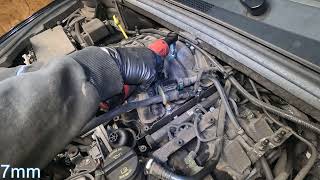
While a faulty sensor is a common cause on any vehicle, the 3.6L Pentastar engine has specific mechanical weaknesses that can trigger P0341. This code can be an early symptom of the engine's well-known rocker arm failure, where needle bearings fail, often producing a distinct ticking sound. This issue was more prevalent on pre-2016 engines. Additionally, because the variable valve timing (VVT) system is highly dependent on oil pressure, low or dirty oil can cause the cam phasers to respond slowly, creating a timing error that the PCM flags as a sensor performance issue. 🎬 Watch: Understanding the causes and fixes for the P0341 code. In some cases, the cam phaser itself can fail mechanically due to issues like a broken locking pin, causing the code without any electrical fault.
Symptoms You May Notice
- Check Engine Light is on
- Engine is hard to start or cranks for a long time
- Engine stalls, especially when warm or at idle
- Rough idle or engine misfires
- Hesitation or lack of power during acceleration
- Reduced fuel economy
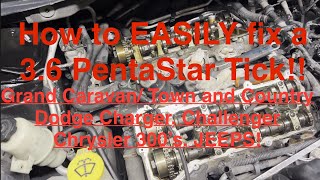
- A distinct 'ticking' or 'tapping' noise from the top of the engine, which gets faster with RPMs 🎬 Listen: Compare the distinct ticking sounds before and after repairs.
- Replacing the Crankshaft Position Sensor: While related to timing, P0341 specifically points to the camshaft sensor circuit on Bank 1. Replacing the crank sensor is unlikely to fix this specific code.
- Ignoring Engine Ticking Noise: Many owners assume the ticking is a minor 'lifter tick' and replace the camshaft sensor first. On a Pentastar, this noise is a strong indicator of rocker arm failure, and simply replacing the sensor will not fix the root cause.
- Using a Cheap Aftermarket Sensor: The 3.6L Pentastar is notoriously sensitive to the quality of its sensors. Using a low-quality aftermarket camshaft position sensor may fail to resolve the code, or the code may return shortly after. Using an OEM Mopar part is highly recommended.
Most Likely Causes
- Low or Dirty Engine Oil 🔴 High Probability The Pentastar's VVT system uses oil pressure to adjust cam timing via phasers. Incorrect oil level, viscosity, or contamination directly impacts their function, which can be misinterpreted by the PCM as a sensor fault.
How to confirm: Check the engine oil level on the dipstick and inspect its condition. If the oil is very low or appears dark and sludgy, this is a likely contributor.
Typical fix: Perform an oil and filter change using the manufacturer-specified oil viscosity (typically 5W-20 or 5W-30, check your owner's manual). Clear the codes and see if P0341 returns.
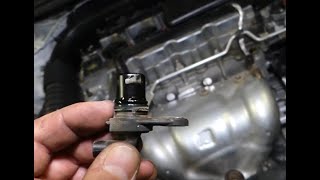
Est. part cost: $40-$80 - Failing Bank 1 Camshaft Position Sensor 🔴 High Probability → Shop Engine Camshaft Position Sensor The sensor is an electronic component that can fail over time due to heat cycles and vibration. The Bank 1 sensor's location near the firewall makes it particularly susceptible to heat. Oil leaks from the valve cover can also contaminate the sensor's connector.
How to confirm: After confirming oil level is correct, this is the next logical step. The sensor can be tested with a multimeter, but replacement is often the most straightforward diagnostic step. It is highly recommended to use an OEM Mopar sensor (Part No. 5149141AF) as the Pentastar engine is known to be sensitive to cheaper aftermarket sensors.
Typical fix: Replace the Bank 1 camshaft position sensor. Due to difficult access on the passenger side head against the firewall, this may require removing the upper intake manifold.
Est. part cost: $40-$90 - Failing Rocker Arms / Lifters 🟡 Medium Probability Early versions of the 3.6L Pentastar engine (approx. 2011-2016) are known for issues with the rocker arm bearings, which can seize and cause wear on the camshaft lobes. This creates slack in the valvetrain and can affect camshaft timing enough to trigger a performance code.
How to confirm: Listen for a persistent ticking or tapping sound from the top of the engine, which gets faster with RPMs. Confirmation requires removing the valve cover to visually inspect the rocker arms and camshaft lobes for wear, scoring, and damage.
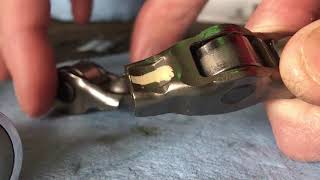
Typical fix: Replace all rocker arms and lifters on the affected cylinder head. If the camshaft lobes are scored, the camshafts must also be replaced. This is a labor-intensive repair. 🎬 See this walkthrough on replacing rocker arms and camshafts.
Est. part cost: $200-$600+ - Damaged Wiring or Connector ⚪ Low Probability The sensor for Bank 1 is located in a high-heat area near the firewall, making its wiring susceptible to becoming brittle and cracked over time. Owners have reported the harness chafing against hot exhaust components. Oil leaks can also saturate and damage the connector.
How to confirm: Visually inspect the wiring harness and connector for the Bank 1 camshaft sensor. Look for signs of melted plastic, chafed insulation, corrosion on the pins, or oil contamination. Check for a secure connection; the red locking tab should be fully engaged.
Typical fix: Repair the damaged section of wire or replace the connector pigtail.
Est. part cost: $15-$30
Rare But Worth Checking
- Failing Camshaft Phaser: → Shop Engine Camshaft A mechanical failure inside the VVT phaser, such as a broken locking pin, can cause it to not lock at base timing or respond slowly to commands from the PCM. This can cause a timing correlation issue that sets a P0341 code even if the sensor is working perfectly. Diagnosis involves removing the valve cover and checking for rotational play between the phaser and the camshaft.
- Stretched Timing Chain: → Shop Engine Timing Chain While not as common as rocker arm failure, a stretched timing chain can cause the correlation between the camshaft and crankshaft to be out of specification, triggering this code. This is usually a high-mileage issue and is often accompanied by rattling noises, especially on startup.
- Powertrain Control Module (PCM) Software: TSB 18-049-20 was issued for some 2016 models to address several camshaft position sensor codes. More recently, TSB S2308000152 (NHTSA ID #10248856, from Nov 2023) specifically addresses P0341, suggesting a software update or specific diagnostic path may be available at dealerships. It's worth checking with a dealer to see if any software updates apply to your vehicle's VIN.
Diagnosis Steps
- Check Engine Oil: Before buying any parts, verify the engine oil is at the proper level and is in good condition. If it's low or very dirty, perform an oil change with the correct viscosity oil and clear the code to see if it returns.
- Scan for Other Codes: Use an OBD-II scanner to check for any other pending or active codes. Codes for misfires (P030x) or timing correlation (P0016) can point towards a more serious mechanical issue.
- Listen for Noises: Start the engine and listen carefully for a distinct, rhythmic ticking from the top of the engine, particularly from the passenger side valve cover. This is a key symptom of rocker arm failure.
- Inspect Sensor Wiring: Locate the Bank 1 camshaft sensor on the passenger side cylinder head, near the firewall. Inspect its electrical connector and nearby wiring for any signs of damage, melting, or oil saturation. Ensure the harness is not chafed or touching the exhaust.
- Replace the Bank 1 Camshaft Sensor: If the oil is good, there are no ticking noises, and the wiring appears intact, the most likely cause is a failed sensor. Use an OEM Mopar sensor (P/N 5149141AF) for best results. Replacement is difficult due to its location and may require removing the upper intake manifold.
- Inspect Valvetrain: If the code persists after replacing the sensor, or if a ticking noise was present, the next step is to remove the Bank 1 (passenger side) valve cover. Carefully inspect all rocker arms for excessive play and the camshaft lobes for any scoring or unusual wear patterns.
- Seek Professional Diagnosis: If the valvetrain appears healthy, the issue could be a failing cam phaser or a stretched timing chain. These diagnoses require specialized tools and knowledge and are best left to a professional mechanic.
Parts You'll Likely Need
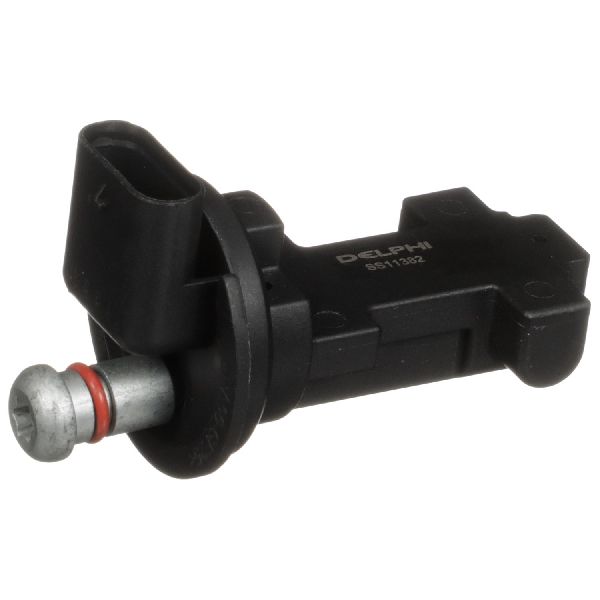
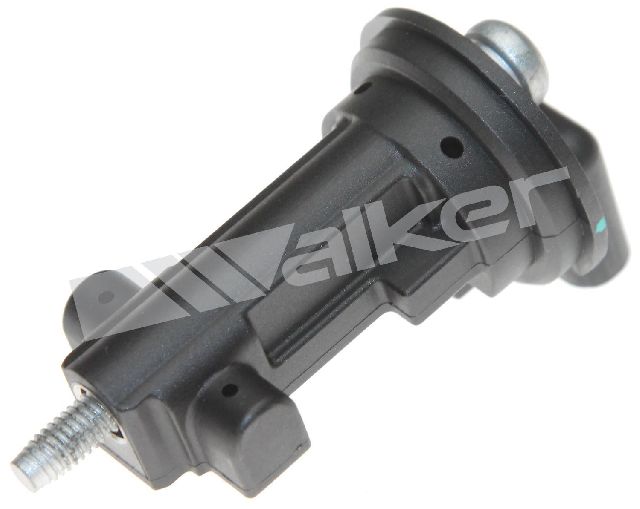
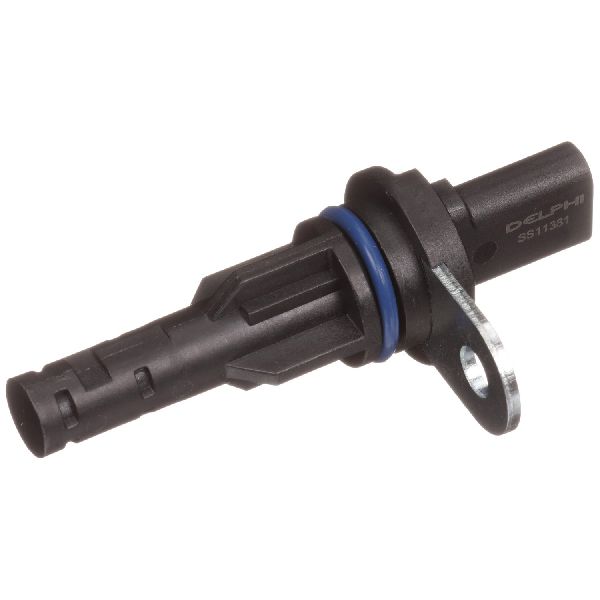
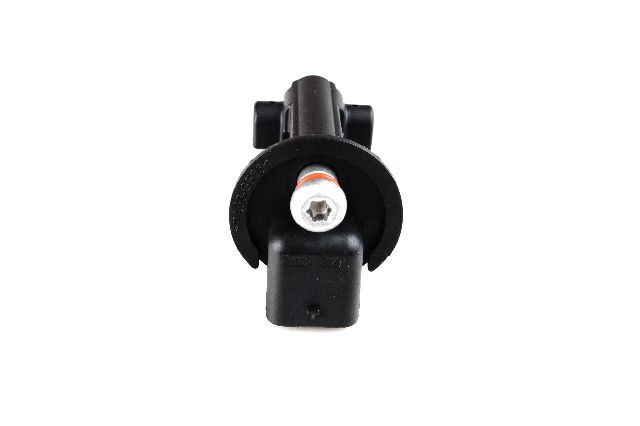
- Camshaft Position Sensor
(OEM #5149141AF)— This sensor is the most common electrical component to fail and is often the direct cause of the code when no mechanical symptoms are present.
Trusted brands: Mopar, Standard Motor Products (PC950), NGK, Delphi (SS11381)
OEM price range: $40-$60
Aftermarket price range: $25-$50 - Rocker Arm and Lifter Kit — A known failure point on the 3.6L Pentastar engine. A ticking noise accompanying P0341 is a strong indicator that these have failed and are the root cause of the timing deviation.
Trusted brands: Mopar, Mahle, Enginetech
OEM price range: $250-$400 (per head)
Aftermarket price range: $150-$250 (per head) - Upper Intake Manifold Gaskets — These must be replaced if the upper intake manifold is removed to access the Bank 1 camshaft position sensor or to service the valvetrain.
Trusted brands: Mopar, Fel-Pro, Mahle
OEM price range: $30-$50
Aftermarket price range: $15-$30
Related Codes That Often Appear With This One
- P0340 — This indicates a complete circuit malfunction for the same sensor. It can appear if the sensor failure is intermittent, alternating between a bad signal (P0341) and no signal (P0340).
- P0300, P0301-P0306 — Misfire codes can be triggered because incorrect camshaft timing leads to poor combustion in one or more cylinders.
- P0016 — This code indicates a Crankshaft/Camshaft Timing Misalignment. It often appears with P0341 when the underlying cause is mechanical, such as a stretched timing chain or a failed cam phaser, and is a strong indicator of a problem beyond just the sensor itself.
Technical Service Bulletins (TSBs) & Recalls
- TSB S2308000152 / NHTSA ID #10248856 (Nov 1, 2023): Specifically addresses MIL illumination with DTC P0341, suggesting a known issue with a specific diagnostic path or software update available at the dealership.
- TSB 18-049-20: A PCM software update for some 2016 models to correct false or intermittent camshaft and crankshaft position sensor codes caused by PCM sensitivity.
- TSB 09-005-14 (Not directly for P0341 but related): An earlier TSB addressing the 'Pentastar Tick' on 2011-2014 models, which involved replacing the cylinder head to fix valvetrain issues that can lead to timing codes.
Platform-Specific Known Issues
- Rocker Arm Failure: The needle bearings in the rocker arms can fail, causing the roller to seize and damage the camshaft lobe. This is often heard as a loud ticking from the upper engine and is a very common cause for cam-related codes on this engine.
- Cam Phaser Failure: The internal locking pin on the camshaft phaser can fail, allowing the camshaft to rotate slightly independent of the phaser, which throws off the timing reading and triggers a sensor performance code.
Mechanic-Grade Diagnostic Values
- Camshaft Position Sensor 5-Volt Supply — expected: 4.75 - 5.25 Volts DC with Key On, Engine Off (KOEO).. Failure: Voltage below 4.5V suggests an open or high resistance in the supply wire from the PCM, or a PCM fault.
- Camshaft Position Sensor Ground Circuit Resistance — expected: Less than 3.0 Ohms between the ground pin at the sensor connector and the battery negative terminal.. Failure: Resistance above 3.0-5.0 Ohms indicates a corroded, loose, or broken ground wire.
- Camshaft Position Sensor Signal (Hall-Effect Test) — expected: With the sensor connected and ignition on, the signal wire voltage should switch cleanly between ~0V and ~5V when the engine is cranked or a magnet is passed over the sensor tip.. Failure: Voltage that does not switch, or a noisy/unstable square wave on an oscilloscope, indicates a faulty sensor or a problem with the tone wheel.
Scan Tool Commands That Help
- wiTECH or equivalent professional scanner: Cam/Crank Sync Status — Use this to see if the PCM is reporting a synchronized or unsynchronized state between the camshaft and crankshaft sensors. An 'unsynchronized' status points directly to a timing correlation problem.
- wiTECH or advanced bidirectional scanner: VVT Solenoid Actuation Test — To test the functionality of the oil control solenoids that command the cam phasers. If a solenoid doesn't respond, it can cause timing deviations that trigger P0341, even if the sensor is good.
Wiring & Ground Locations
- Bank 1 CMP Sensor Connector — On the passenger side cylinder head, near the firewall. It is a 3-pin connector.. This is the primary connection point. The pins are for a 5V supply, sensor ground, and the signal return to the PCM. Corrosion or damage here is a common cause of the code.
- G904 / G905 — Lower left side of the engine block.. These are primary engine ground points. A poor connection here can introduce electrical noise and cause voltage drops, affecting various sensors including the camshaft position sensor.
- G907A — Lower right front of the engine compartment (on 3.6L models).. Another critical chassis ground. Verifying that this ground is clean and tight is a key step when diagnosing intermittent electrical faults like P0341.
Real Owner Repair Stories
- JK-Forum.com user 'Tricky_Dick' (2018 Jeep Wrangler JKU 3.6L Pentastar (engine is identical)) — Crank-no-start condition with multiple cam sensor codes (P0340, P0345, P0365, P0390) after a complete engine rebuild.
❌ Tried (didn't work) Verified 5V supply and ground at sensors were in spec., Wiggled and re-seated all related wiring harnesses., Checked for electrical faults using AllData procedures.
✅ What actually fixed it Upon removing the valve cover for a final inspection, the user discovered the primary timing chain had snapped. The engine would crank, but the cams were not turning, causing the sensors to correctly report a fault. The root cause was a mechanical failure, not electrical. - DodgeForum.com user '[email protected]' (2014 Dodge Durango 3.6L) — After replacing rocker arms for a ticking noise, the vehicle developed new codes P0345 & P0394 (Bank 2 equivalent of P0341/P0365).
❌ Tried (didn't work) Verified 5V supply at the sensor., Checked wiring continuity to the PCM., Swapped sensors from side-to-side (problem stayed on Bank 2).
✅ What actually fixed it The user was advised that getting a magnet near the magnetic encoder rings on the end of the camshafts during the rocker arm repair can 'scramble' or damage them, causing them to send an incorrect signal. The implied fix is camshaft replacement if the tone wheels are damaged.
OEM Part Supersession History
Unknown/Multiple earlier revisions→5149141AF— Standard part evolution for reliability and manufacturing improvements.
Heads up: While older part numbers may have existed, 5149141AF is the widely recognized and currently specified OEM Mopar part for the vast majority of 3.6L Pentastar applications within this year range.
Model Year Variations Within This Range
- 2011-2015: These earlier 'first generation' Pentastar engines are significantly more prone to rocker arm bearing failure, which is a primary mechanical cause for P0341. Diagnosis on these years should weigh rocker arm failure more heavily.
- 2016-2023: Starting in 2016, the Pentastar engine was upgraded (sometimes called PUGE). It featured a new two-step variable valve lift (VVL) system, redesigned cylinder heads, new injectors, and an updated VVT system. While rocker arm failures are less common, they can still occur. Diagnosis on these later models might shift slightly more towards VVT system components (phasers, solenoids) or wiring issues.
Diagnostic Flowchart
Other Known Issues on This Vehicle
Issues unrelated to this code that are worth knowing about as an owner of this generation:
- Cracked Oil Filter/Cooler Housing 🔴 High — Extremely common across all model years. The plastic housing becomes brittle from heat cycles and cracks, causing significant oil and/or coolant leaks into the engine valley. (Ref: No recall has been issued, but it is a widely documented failure. Upgraded aluminum replacement parts are available from the aftermarket (e.g., Dorman 926-959).)
- Rocker Arm / Lifter Failure ('Pentastar Tick') 🔴 High — Very common, especially on 2011-2016 models. Needle bearings in the rocker arms fail, causing a distinct ticking noise and potential camshaft damage. (Ref: TSB 09-005-14 was issued for early models, often resulting in cylinder head replacement.)
- Heater Core Clogging due to Casting Sand 🟠 Medium — Common issue where residual sand from the engine block casting process clogs the heater core, resulting in poor or no heat on the driver's side. (Ref: No recall, but it is a well-known manufacturing defect. The fix is to repeatedly back-flush the heater core or replace it.)
- Totally Integrated Power Module (TIPM) Failure 🔴 High — More common on earlier models (approx. 2011-2013). Can cause a wide range of random electrical issues, including no-start conditions, fuel pump staying on, and erratic behavior of lights/wipers. (Ref: A class-action lawsuit was filed regarding this issue, but no general recall was issued. Repair often involves replacing or rebuilding the TIPM.)
- Water Pump Failure 🟠 Medium — A common failure point leading to coolant leaks and potential overheating. The weep hole will show signs of leaking coolant when the internal seal fails.
Used vs. New Parts: Buying Guide for This Vehicle
When a used part is the smart pick: For this specific code, using used parts is generally not recommended. The primary fixes involve either low-cost electronic sensors where new OEM is best, or major internal engine components where the condition and remaining life of a used part is a significant gamble.
Donor-vehicle mileage cap: roughly under 50000 miles for the part to have meaningful remaining life.
What to inspect on the donor part:
- For mechanical parts like camshafts or phasers, there is no reliable way to inspect a used part without specialized tools.
- Avoid parts from engines known to have sludge, as oil passages can be clogged.
- If considering a used wiring harness, inspect thoroughly for brittle plastic, cut wires, or previous repairs.
OEM-only on this vehicle (don't cheap out):
- Camshaft Position Sensor: The 3.6L Pentastar is notoriously sensitive to sensor quality. Aftermarket sensors are a very common cause of repeat failures or unresolved codes. Always use an OEM Mopar sensor (P/N 5149141AF).
- Cam Phasers / VVT Solenoids: Due to the complexity and precision of the VVT system, OEM parts are strongly advised to ensure correct operation and avoid immediate or premature failure.
- Timing Chain Components: Given the labor-intensive nature of a timing job, using high-quality OEM or top-tier aftermarket (e.g., Melling) parts is critical to ensure longevity.
Aftermarket brands forum-validated for this vehicle:
- Melling (for timing chain kits)
Brands owners have reported issues with on this vehicle:
- Generic or 'white-box' camshaft position sensors from online marketplaces.
Real Owner Stories
Aggregated from forums and TSBs cited above. Mileages and costs reflect what owners reported in those sources.
2018 Jeep Wrangler (JK) 3.6L V6
Symptoms: The vehicle experienced a crank-no-start condition accompanied by multiple camshaft sensor codes, including P0340.
What fixed it: After replacing sensors and checking the wiring harness failed to solve the issue, the root cause was determined to be a failed PCM.
Source hint: JK-Forum.com - A user with a 2018 Jeep JKU 3.6L
2011-2014 Dodge Durango 3.6L V6
Symptoms: A loud, rhythmic ticking or tapping noise from the upper engine area (the 'Pentastar Tick').
What fixed it: Replacement of the cylinder head to address valvetrain issues that lead to timing codes.
Source hint: TSB 09-005-14
3.6L Pentastar V6 (General)
Symptoms: Cam sensor circuit codes (P0340/P0341) appearing even when there was no electrical fault in the sensor or wiring.
What fixed it: The cam phaser internal locking pin failed to lock, allowing the camshaft to rotate independently of the phaser; the fix required addressing the mechanical play between the cam and phaser.
Source hint: MotorCityMechanic (YouTube)
Related OBD-II Codes
Frequently Asked Questions
Is there a specific TSB for the P0341 code on my 2023 Dodge Durango?
My 2016 Durango is throwing intermittent cam sensor codes; could it be a software issue?
I hear a ticking noise from the top of my Pentastar engine along with the P0341 code. What is that?
Which camshaft sensor should I buy for my 3.6L Durango?
Why is the Bank 1 sensor on my Durango more prone to failure than Bank 2?
Can a simple oil change really fix a P0341 code on a 3.6L V6?
Helpful Videos
We Have This Part in Stock


The information in this article is provided for general reference and educational purposes only. Vehicle specifications, procedures, and part compatibility can vary by production date, trim level, and region. Always consult your vehicle's factory service manual and verify part numbers before purchasing or performing repairs. Safety-critical components such as airbags, seat belts, and braking systems should be installed by a qualified professional.
- Dodge Durango:
- 🧭 Diagnostic Flowchart
- 🎬 Helpful Videos
- 🛍️ Shop This Part
- What's Unique About the 2011-2023 Dodge Durango
- Symptoms You May Notice
- Most Likely Causes
- Rare But Worth Checking
- Diagnosis Steps
- Parts You'll Likely Need
- Related Codes That Often Appear With This One
- Technical Service Bulletins (TSBs) & Recalls
- Platform-Specific Known Issues
- Mechanic-Grade Diagnostic Values
- Scan Tool Commands That Help
- Wiring & Ground Locations
- Real Owner Repair Stories
- OEM Part Supersession History
- Model Year Variations Within This Range
- Other Known Issues on This Vehicle
- Used vs. New Parts: Buying Guide for This Vehicle
- Real Owner Stories
- 2018 Jeep Wrangler (JK) 3.6L V6
- 2011-2014 Dodge Durango 3.6L V6
- 3.6L Pentastar V6 (General)
- Related OBD-II Codes
- Frequently Asked Questions
- 🎟️ Get 5% Off