

P0341 on 2006-2010 Ford Explorer 4.6L V8: Cam Sensor, VCT, and Timing Fixes
On the Ford 4.6L 3V V8, P0341 often points to more than just a bad sensor. It's frequently caused by failing VCT solenoids due to dirty oil or wear. Expect to pay $40-$100 for a pair of solenoids, which are a common and relatively easy DIY fix. Before replacing any parts, check the engine oil level and condition, as low or dirty oil is a primary cause.
- For a P0341 code on a 2006-2010 Explorer 4.6L, suspect the VCT system before the sensor itself.
- Always check your engine oil level and condition first; low or dirty oil is a primary cause of VCT problems.
- Replacing both VCT solenoids is a common, effective, and affordable fix that often resolves this code.
- Do not ignore this code, especially if accompanied by engine rattling, as it can be an early warning of more severe timing chain issues that could lead to engine failure.
What's Unique About the 2006-2010 Ford Explorer
The Ford 4.6L 3-valve (3V) engine is known for having a complex and sensitive Variable Camshaft Timing (VCT) system. Unlike many other engines where a P0341 code points directly to a faulty sensor, on this platform, it is very often a symptom of an underlying issue with the VCT system itself. Low oil pressure, dirty oil, or failing VCT solenoids can prevent the camshafts from adjusting their timing correctly, leading the sensor to report a performance problem. Therefore, blindly replacing the camshaft sensor is a common misdiagnosis that fails to fix the root cause. The code's description mentioning a 'circuit' issue can be misleading on these engines, as the root cause is frequently mechanical or hydraulic.
Symptoms You May Notice
- Check Engine Light is on
- Engine stalling, especially at idle or low speeds when warm
- Difficulty starting the engine, or extended cranking time
- Rough, unstable, or shaking idle
- Engine hesitation or bucking during acceleration
- Reduced engine power and poor acceleration
- A rattling or knocking noise from the engine, similar to a diesel sound, especially at hot idle
- Reduced fuel economy
- Replacing only the camshaft position sensor without checking the oil condition or testing the VCT solenoids. The code often returns because the underlying mechanical/hydraulic issue was not addressed.
- Assuming the 'Circuit' in the code definition means it must be an electrical fault, when it is more often a hydraulic or mechanical timing issue on this engine.
Most Likely Causes
- Failing VCT (Variable Camshaft Timing) Solenoids 🔴 High Probability The VCT solenoids on the 3V V8 are highly susceptible to clogging from oil sludge and debris, which is common on higher mileage engines or those with extended oil change intervals. The fine mesh screens on the solenoids get blocked, preventing them from properly controlling oil flow to the cam phasers.
How to confirm: Listen for a rattling/knocking noise from the front of the valve covers. You can also swap the Bank 1 (passenger side) and Bank 2 (driver side) solenoids. If the code changes to P0346 (Bank 2), the solenoid is bad. A more advanced method is to monitor VCT PIDs (Desired vs. Actual angle, error) with a capable scan tool. Unplugging the electrical connector to the suspect solenoid at idle may cause the noise or rough idle to stop, pointing to a faulty solenoid.
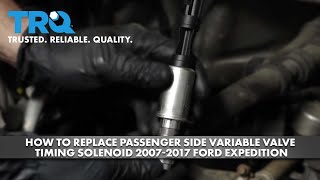
Typical fix: Replace both VCT solenoids. 🎬 Watch this walkthrough on how to replace your VCT solenoids. It is highly recommended to change the engine oil and filter at the same time using Motorcraft 5W-20 oil and a Motorcraft filter. For 2006 models, this can be done without removing the valve covers, but 2007 and newer models require valve cover removal due to a change in the seal design.
Est. part cost: $40-$120 for a pair - Low or Dirty Engine Oil 🔴 High Probability The entire VCT system is hydraulically operated by engine oil. Any degradation in oil quality, incorrect viscosity (anything other than 5W-20), or low oil level directly impacts its function, leading to timing correlation faults.
How to confirm: Check the oil level on the dipstick and inspect its color and consistency. If it's low, black, or sludgy, this is a likely contributor. This should be the very first check performed.
Typical fix: Perform an engine oil and filter change using the correct specification oil (Motorcraft SAE 5W-20 Synthetic Blend) and a quality filter (Motorcraft FL-820S). In some cases, performing two short-interval oil changes can help clean out sludge.
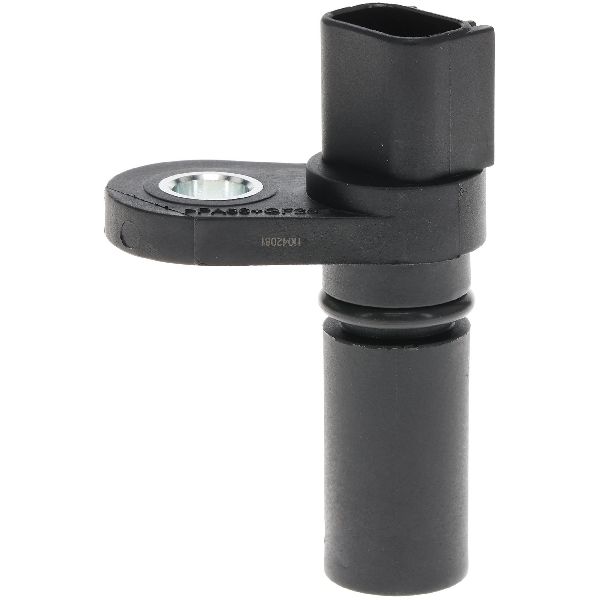
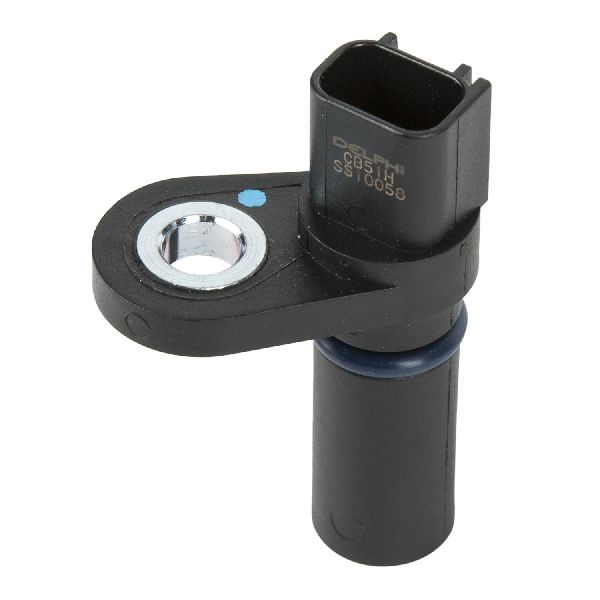
Est. part cost: $40-$80 - Faulty Camshaft Position Sensor (CMP) 🟡 Medium Probability → Shop Engine Camshaft Position Sensor The sensor's o-ring can fail, allowing oil to leak into the sensor's electronics, causing it to short out. While less common than VCT issues, direct sensor failure is still a possibility, especially on high-mileage vehicles.
How to confirm: Inspect the sensor and its connector for oil contamination. The sensor can be tested with a multimeter for proper voltage signal (typically a 5V reference, ground, and a fluctuating signal wire), which requires a wiring diagram. Swapping the Bank 1 and Bank 2 sensors (if identical) is a simple way to see if the code moves to P0346.
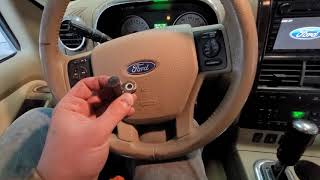
Typical fix: Replace the Bank 1 (passenger side) camshaft position sensor 🎬 See how to replace the camshaft position sensor yourself. and its connector if oil-fouled.
Est. part cost: $20-$60 - Damaged Wiring or Connectors ⚪ Low Probability Engine heat and vibration can cause wiring insulation to become brittle and crack over time. Wires routed too close to ignition components can also be damaged, leading to intermittent shorts or open circuits.
How to confirm: Visually inspect the wiring harness leading to the camshaft position sensor and VCT solenoid on Bank 1 for any signs of damage, melting, or corrosion on the connector pins. Perform a wiggle test on the harness while the engine is running to see if it affects the idle.
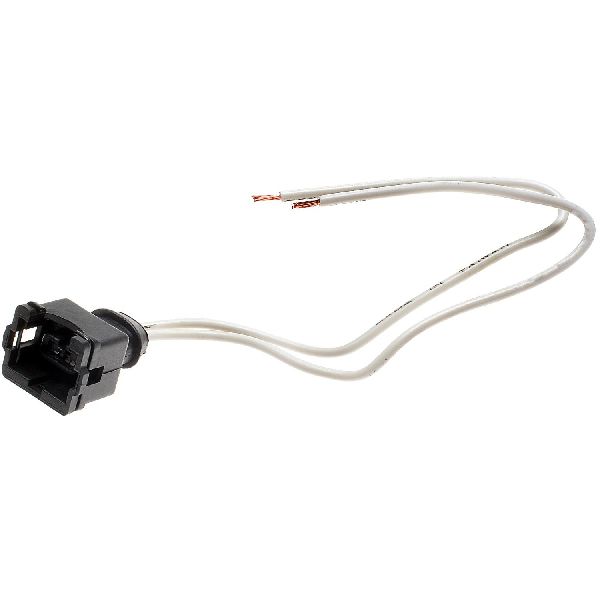
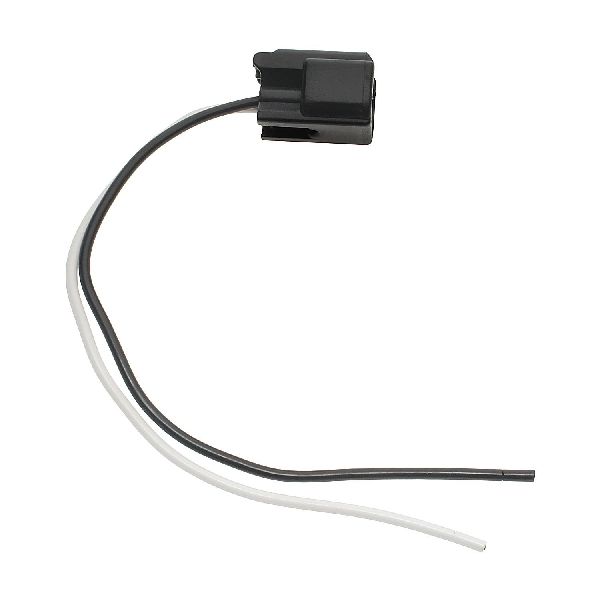
Typical fix: Repair the damaged section of the harness or replace the connector pigtail.
Est. part cost: $15-$50
Rare But Worth Checking
- Worn Timing Components (Chains, Guides, Tensioners, Phasers): While a major repair, this is a known failure point on the 4.6L 3V engine. A P0341 code, especially when accompanied by a loud startup rattle, persistent diesel-like knocking, and other timing codes (like P0012, P0022), strongly suggests the base mechanical timing is compromised. This is often due to plastic timing chain guides breaking or tensioners failing from oil pressure loss due to blown seals. An owner report in NHTSA ODI #10702433 noted that P0341 appeared alongside P0012, P0018, and P0022, indicating the engine was out of time due to faulty cam phasers and tensioners.
- Failing Powertrain Control Module (PCM): This is extremely rare. The PCM should only be considered after every other possible cause, both mechanical and electrical, has been exhaustively tested and ruled out. Sometimes a PCM software update is available from Ford to address overly sensitive code-setting logic.
Diagnosis Steps
- Check Engine Oil: Before doing anything else, check the oil level and condition. If it is low, dirty, or not the specified 5W-20 viscosity, an oil change is the first and most critical step.
- Scan for Other Codes: Use an OBD-II scanner to check for any other codes. Codes like P0012, P0022, P0340, or P0346 provide critical clues about the root cause. NHTSA ODI #11062913 describes a scenario where P0341 appeared with P0012, P0022, and P0346, requiring a deep engine inspection.
- Inspect Wiring: Visually inspect the wiring and connector for the camshaft position sensor and the VCT solenoid on the passenger side valve cover. Look for damage, corrosion, or oil saturation.
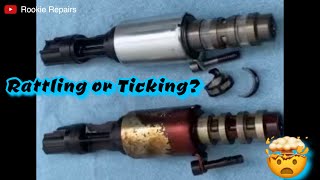
- Test VCT Solenoid: Listen for a ticking/clicking noise from the solenoid area. For a more definitive test, swap the Bank 1 and Bank 2 solenoids. 🎬 Watch: A pro mechanic's guide to VCT solenoid service. Clear the codes and drive the vehicle. If the fault code moves to the other bank (P0346), you have confirmed a bad solenoid.
- Test Camshaft Position Sensor: If the VCT solenoid checks out, you can test the sensor. Inspect it for oil contamination from a leaking o-ring. A multimeter can be used to check for a signal, but this often requires a specific procedure from a service manual.
- Advanced Scan Tool Analysis: Use a scan tool that can read live data to monitor VCT PIDs. Compare the 'Desired' vs 'Actual' cam angle for Bank 1. A large and persistent 'VCT Error' PID indicates a mechanical/hydraulic problem, not a sensor issue.
- Mechanical Timing Check: If all else fails and especially if you hear a persistent engine rattle, the issue may be internal with the timing chain, guides, or phasers. This is a complex job and may require professional diagnosis.
Parts You'll Likely Need
- VCT Control Solenoid
(OEM #8L3Z-6M280-B)— This is the most frequent cause of P0341 on the 4.6L 3V engine. This is an updated part number that supersedes the original 3L3Z-6M280-EA. Using the OEM Motorcraft part is highly recommended for reliability.
Trusted brands: Motorcraft, Dorman
OEM price range: $40-$70 per solenoid
Aftermarket price range: $20-$40 per solenoid - Camshaft Position Sensor
(OEM #3R2Z-6A257-DA)— This is the second most likely part to fail, either due to internal failure or an oil leak from its O-ring contaminating the electronics. It's the same part for both banks.
Trusted brands: Motorcraft, Bosch, NTK
OEM price range: $25-$50
Aftermarket price range: $15-$35
Related Codes That Often Appear With This One
- P0340 — This is the general circuit fault code for the same sensor. P0340 and P0341 often appear together, indicating both a circuit and a performance issue.
- P0346 — This is the equivalent P0341 code but for Bank 2 (driver's side). Seeing both codes together (P0341 & P0346) points strongly to a systemic issue like low/dirty oil, low oil pressure, or a problem affecting the entire timing system.
- P0012 — 'Camshaft Position Timing - Over-Retarded (Bank 1)'. This code specifically points to a VCT system problem on the same bank, reinforcing the likelihood of a VCT solenoid, phaser, or oil flow issue.
- P0022 — 'Camshaft Position Timing - Over-Retarded (Bank 2)'. If you see this with P0012 and P0341, it suggests a systemic problem affecting both banks, like low oil pressure or severely degraded oil. NHTSA ODI #10525992 reports a case where P0341 occurred alongside P0012, P0346, P2111, and P2112.
Platform-Specific Known Issues
- The 4.6L 3V engine is widely known for issues related to its Variable Camshaft Timing (VCT) system. The cam phasers can fail and cause a loud knocking sound, and the plastic timing chain guides are prone to breaking, which can lead to catastrophic engine failure if ignored.
- On 2007 and newer models, the VCT solenoid replacement requires removing the valve cover, unlike earlier models where it could be accessed directly. This adds complexity and cost to the repair.
- The use of incorrect oil viscosity (thicker than 5W-20) or low-quality oil filters can accelerate the failure of VCT components and trigger timing-related codes like P0341.
Mechanic-Grade Diagnostic Values
- VCT Solenoid Internal Resistance — expected: 5.0 to 14.0 Ohms. Failure: A reading of zero (short circuit) or infinite (open circuit) resistance.
- Engine Oil Pressure (at hot idle) — expected: Minimum of 15 PSI. Healthy engines typically show 25-30 PSI.. Failure: Pressure below 15 PSI will cause the VCT system to malfunction due to insufficient hydraulic pressure.
- Engine Oil Pressure (at 2,000 RPM, normal operating temp) — expected: Approximately 75 PSI.. Failure: Significantly lower pressure under load indicates potential oil pump or internal engine wear issues.
- CMP Sensor Connector Voltage (Key On, Engine Off) — expected: 4.8V to 5.2V on the 5-volt reference/power supply pin.. Failure: No voltage or significantly low voltage points to a wiring issue or a problem with the PCM's 5V supply circuit.
- Live Data: VCT Advance Error PID (VCT_ERR) — expected: Should hover close to 0 degrees at idle and during steady-state driving.. Failure: A persistent error of more than +/- 5 degrees for an excessive amount of time indicates a VCT control problem (solenoid, phaser, or oil flow), not a sensor issue.
- Alternator AC Ripple Voltage (at battery terminals, engine running) — expected: Less than 100 millivolts AC (0.1V AC).. Failure: AC voltage readings above 100mV indicate failing diodes in the alternator, which can create electrical noise that interferes with the CMP sensor signal.
Scan Tool Commands That Help
- Ford IDS, FORScan, or equivalent professional scanner: VCT Solenoid On/Off Command (Bidirectional Control) — With the engine idling, command the Bank 1 VCT solenoid on and off. You should hear an audible click from the solenoid and see a noticeable change in idle quality (stumbling or roughness). No click or no change in idle points to a failed solenoid or a circuit issue.
- Ford IDS, FORScan, or equivalent professional scanner: Datalogging VCT PIDs: VCT_ADV1, RCAM1, VCT_ERR1 — This is the primary method for diagnosing a performance-related VCT fault. By graphing the desired cam angle (VCT_ADV1) versus the actual angle (RCAM1), a technician can see the error (VCT_ERR1) in real-time during a test drive to confirm if the camshaft is failing to reach its commanded position.
- Ford IDS, FORScan, or equivalent professional scanner: Cam/Crank Relearn Procedure — This may be required after replacing a camshaft position sensor on some Ford vehicles. If the engine runs poorly or won't start after a sensor replacement, initiating this procedure allows the PCM to learn the electronic variations of the new sensor.
Wiring & Ground Locations
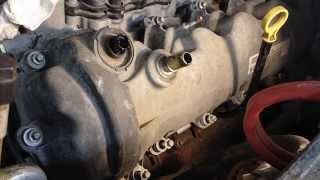
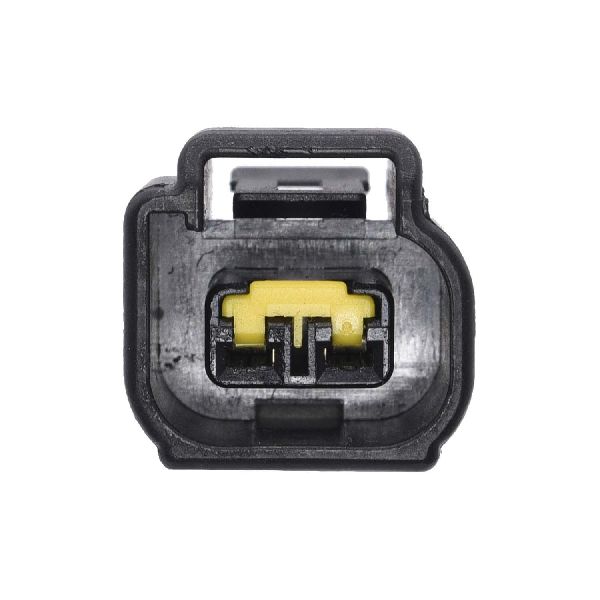
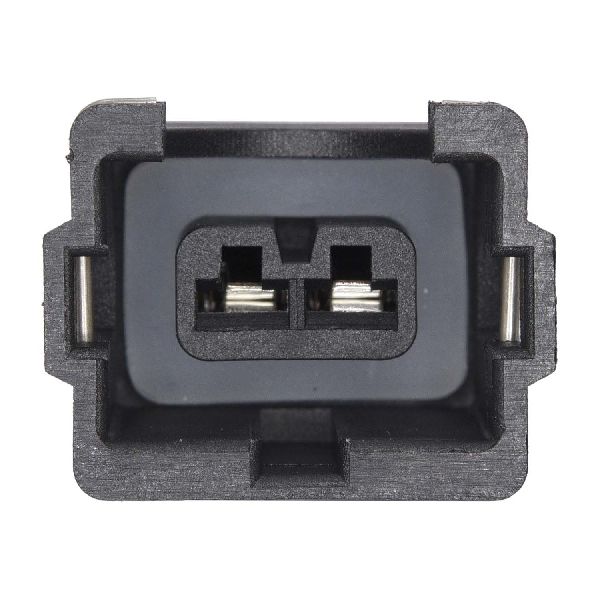
- Bank 1 CMP Sensor Connector — On the front of the passenger side valve cover, near the oil fill cap.. This is the primary electrical connection for the sensor in question. It is prone to oil contamination from a failed sensor o-ring, which can cause poor contact and signal degradation. The connector has three pins: 5V power, ground, and signal.
- Bank 1 VCT Solenoid Connector — On the front of the passenger side valve cover, typically below and inboard of the CMP sensor.. This connector provides power to the VCT solenoid. A loose or corroded connection here will prevent the solenoid from actuating, leading to a VCT performance issue that can trigger P0341.
- PCM Connector C175E — At the Powertrain Control Module (PCM), typically located in the engine bay near the firewall or fender.. This is the main harness connector at the PCM. If wiring checks at the sensor are inconclusive, a continuity test must be performed from the sensor connector pins back to the corresponding pins at C175E to rule out a break in the harness.
- Power Distribution Box — In the engine compartment, usually on the driver's side.. This box contains the high-current fuses and relays for the vehicle's main electrical systems, including the power supply to the PCM and related engine sensors. A fault here, while rare, could cause power supply issues.
Real Owner Repair Stories
- Aggregated from multiple owner forums (2007 Ford F-150 5.4L 3V (functionally identical VCT system)) — P0341 and P0346, long crank times, stumbling at idle when hot.
❌ Tried (didn't work) Replacing the camshaft position sensors.
✅ What actually fixed it Replacing both VCT solenoids with new OEM Motorcraft parts resolved all symptoms and cleared the codes permanently. - YouTube video by 'Tuning Decoded' (2007 Ford Explorer 4.6L 3V) — Check Engine Light with codes P0340 and P0344 (Bank 1 CMP circuit fault and intermittent fault).
❌ Tried (didn't work) Clearing the codes.
✅ What actually fixed it Visual inspection showed the Bank 1 (driver's side in video, but Bank 1 is passenger side on V8) CMP sensor was soaked in oil. Replacing the sensor and its failed o-ring fixed the oil leak and resolved the electrical fault codes. - S197Forum.com user discussion (2005-2010 Ford Mustang GT 4.6L 3V) — Intermittent camshaft position sensor codes (P03xx), fluctuating system voltage between 12.5V and 13.5V.
❌ Tried (didn't work) Chasing sensor and wiring issues.
✅ What actually fixed it The root cause was a failing alternator producing excessive AC ripple voltage. Replacing the alternator provided a steady 14.0-14.5V DC, which permanently resolved the sensor codes.
"I Checked Everything" — The Actual Cause
- A common diagnostic dead-end for P0341 occurs when all standard timing and sensor checks pass. A frequently overlooked cause is a failing alternator. The alternator's internal diodes can fail, allowing AC voltage (ripple) onto the DC electrical system. This 'dirty' power can interfere with the sensitive Hall-effect camshaft position sensor, creating a signal performance issue that the PCM interprets as a P0341 fault, even though the sensor, wiring, and timing system are perfectly fine.
OEM Part Supersession History
3L3Z-6M280-EA→8L3Z-6M280-A, then finally 8L3Z-6M280-B— Internal design improvements to resist clogging from oil debris and improve durability.
Heads up: All part numbers are physically interchangeable, but it is highly recommended to use the latest 'B' revision for reliability.
Model Year Variations Within This Range
- 2007-2010: On 2007 and newer models, the VCT solenoid seal was redesigned, making it mandatory to remove the valve cover to access and replace the VCT solenoid. While valve cover removal is also recommended for 2006 models, the earlier seal design sometimes allowed for replacement without full removal, though it is not the recommended procedure.
Diagnostic Flowchart
Other Known Issues on This Vehicle
Issues unrelated to this code that are worth knowing about as an owner of this generation:
- 6R60 Automatic Transmission Failure 🔴 High — Common at higher mileage (100k+ miles), often manifests as harsh shifting, slipping, or complete failure to engage gears. Internal mechatronic unit (solenoid body) and lead frame failures are frequent. (Ref: Multiple TSBs exist for various shift quality concerns, but no widespread recall for complete failure.)
- Cracked Plastic Intake Manifold 🟠 Medium — While more famous on the earlier 2-valve engines, the 3-valve can also experience cracks in the plastic intake manifold, particularly around the thermostat housing, leading to coolant leaks.
- Failing Rear Wheel Bearings/Hub Assembly 🟠 Medium — A loud humming or grinding noise from the rear of the vehicle that changes with speed is a common sign of a failing wheel bearing. It is a frequent wear item, sometimes appearing before 100,000 miles.
- Heater Blend Door Actuator Failure 🟡 Low — A clicking or popping sound from behind the dashboard, often accompanied by an inability to change air temperature or vent direction. This is a very common failure across many Ford platforms of this era.
- Intake Manifold Runner Control (IMRC) Failure 🟠 Medium — The IMRC system can fail, typically setting codes like P2004, P2005, or P2007. This can cause a lack of power, rough idle, and a check engine light. The plastic linkage arms are a known weak point.
Used vs. New Parts: Buying Guide for This Vehicle
When a used part is the smart pick: Used parts are a viable option for electronic components that do not have mechanical wear items, such as the Camshaft Position Sensor (CMP) itself or a wiring harness pigtail connector. A used part from a low-mileage, accident-damaged vehicle can be a cost-effective solution.
Donor-vehicle mileage cap: roughly under 80000 miles for the part to have meaningful remaining life.
What to inspect on the donor part:
- For a CMP sensor, ensure the plastic housing is not cracked and the o-ring is pliable (though you should replace the o-ring anyway).
- For a wiring pigtail, inspect for any signs of brittleness, cracking, or melting. Ensure the locking tab is intact and the pins inside are not corroded or bent.
OEM-only on this vehicle (don't cheap out):
- Variable Camshaft Timing (VCT) Solenoid
Aftermarket brands forum-validated for this vehicle:
- For the Camshaft Position Sensor, brands like Bosch, NTK, and Denso are generally considered reliable alternatives to OEM Motorcraft parts.
Brands owners have reported issues with on this vehicle:
- Dorman VCT solenoids are frequently cited in owner forums as having a high failure rate or causing performance issues shortly after installation on the Ford 3V engine.
- Avoid generic, unbranded VCT solenoids from online marketplaces, as they often use inferior internal components that cannot withstand the oil pressure and heat cycles of this engine.
Real Owner Stories
Aggregated from forums and TSBs cited above. Mileages and costs reflect what owners reported in those sources.
2010 Ford F-150 5.4L 3V (Same VCT System)
Symptoms: The engine was stumbling at hot idle and throwing codes P0341 and P0346.
What fixed it: Replacing the VVT (VCT) solenoids resolved the issue, rather than replacing the sensors.
Source hint: https://www.goparts.com/blog/p0341-obd-ii-trouble-code-camshaft-position-sensor-a-circuit-range-performance
2010 Ford F-150 4.6L 3V V8
Symptoms: Ticking noise at warm idle.
What fixed it: The owner confirmed the VCT solenoid was the culprit because the symptoms disappeared when the solenoid was unplugged.
Source hint: https://www.f150forum.com/f4/2010-vct-solenoid-258019/
Documented NHTSA Reports
NHTSA ODI #11062913
Symptoms: An owner reported the vehicle was running and in drive when codes P0012, P0022, P0341, and P0346 appeared. The dealership stated they would need to tear down the engine to inspect the issue.
NHTSA ODI #10702433
Symptoms: The engine began to run poorly and lose power before the check engine light came on. A mechanic found codes P0012, P0018, P0022, and P0341, indicating the engine was out of time due to faulty cam phasers and tensioners.
NHTSA ODI #10525992
Symptoms: An owner experienced issues resulting in error codes P0012, P0341, P0346, P2111, and P2112. The repair involved components not covered under the powertrain warranty.
Related OBD-II Codes
Frequently Asked Questions
Can I replace the VCT solenoids on my 2006 Ford Explorer without removing the valve covers?
What specific oil and filter should I use to prevent P0341 on my 4.6L 3V V8?
Is the P0341 code on this engine usually caused by a bad sensor?
How can I tell if my VCT solenoid is the cause of the rough idle and P0341?
Why is my 4.6L 3V engine making a diesel-like rattling sound at hot idle?
Helpful Videos
We Have This Part in Stock

The information in this article is provided for general reference and educational purposes only. Vehicle specifications, procedures, and part compatibility can vary by production date, trim level, and region. Always consult your vehicle's factory service manual and verify part numbers before purchasing or performing repairs. Safety-critical components such as airbags, seat belts, and braking systems should be installed by a qualified professional.
- Ford Explorer:
- 🧭 Diagnostic Flowchart
- 🎬 Helpful Videos
- 🛍️ Shop This Part
- What's Unique About the 2006-2010 Ford Explorer
- Symptoms You May Notice
- Most Likely Causes
- Rare But Worth Checking
- Diagnosis Steps
- Parts You'll Likely Need
- Related Codes That Often Appear With This One
- Platform-Specific Known Issues
- Mechanic-Grade Diagnostic Values
- Scan Tool Commands That Help
- Wiring & Ground Locations
- Real Owner Repair Stories
- "I Checked Everything" — The Actual Cause
- OEM Part Supersession History
- Model Year Variations Within This Range
- Other Known Issues on This Vehicle
- Used vs. New Parts: Buying Guide for This Vehicle
- Real Owner Stories
- 2010 Ford F-150 5.4L 3V (Same VCT System)
- 2010 Ford F-150 4.6L 3V V8
- Documented NHTSA Reports
- NHTSA ODI #11062913
- NHTSA ODI #10702433
- NHTSA ODI #10525992
- Related OBD-II Codes
- Frequently Asked Questions
- 🎟️ Get 5% Off