

P0341 on 2019-2024 Genesis G70 3.3T: Camshaft Sensor Range/Performance Causes and Fixes
P0341 on a Genesis G70 3.3T most often indicates a failing Bank 1 (passenger side) intake camshaft position sensor. A new OEM sensor costs around $60-$90 and is a relatively simple DIY replacement. Before replacing, check engine oil level, as a known oil feed line leak on this platform can cause low oil and related timing codes.
- P0341 on the G70 3.3T points to the passenger-side intake camshaft position sensor.
- Before buying parts, check your engine oil level. A safety recall (019G) exists for a turbo oil line leak that can cause low oil and trigger this code.
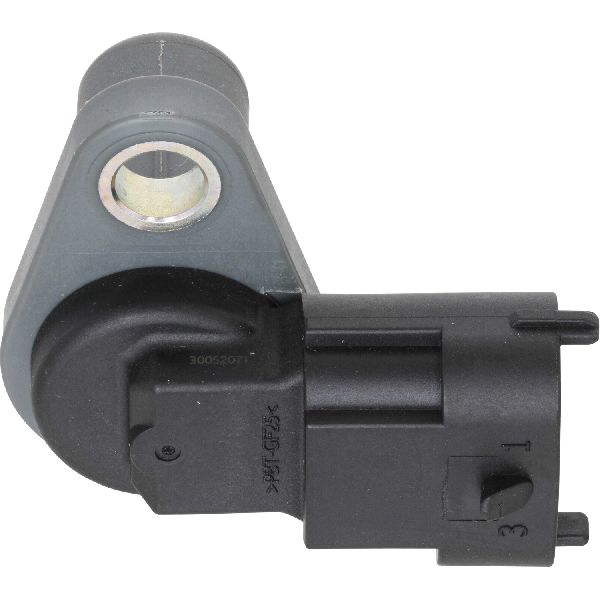
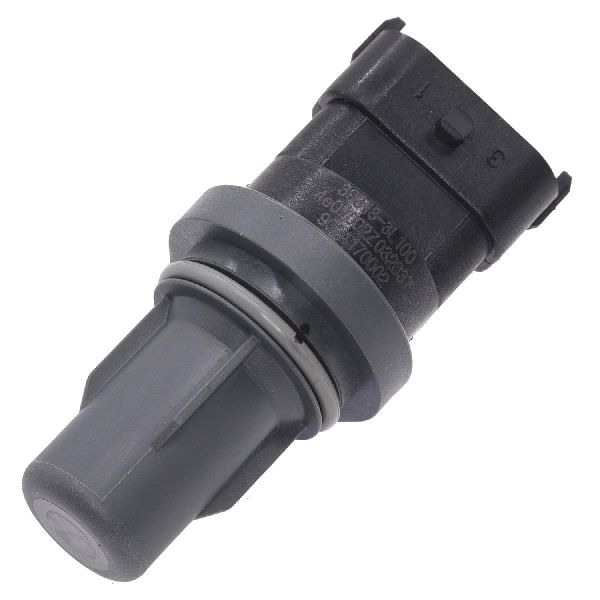
- The most likely fix is replacing the sensor itself (part #39318-3L100).
- A simple diagnostic test is to swap the passenger-side sensor with the driver-side sensor to see if the code follows the part, changing to P0346.
What's Unique About the 2019-2024 Genesis G70
The Lambda II 3.3T GDI V6, shared with the Kia Stinger, is a robust engine, but it is sensitive to oil quality and level. A critical issue on this platform is a safety recall (019G) for the left-hand turbocharger oil feed pipe, which can crack and cause significant oil leaks. This known leak reinforces why checking the engine oil level is a crucial first step for P0341, as low oil can disrupt the CVVT system and mimic sensor performance issues before other timing codes appear.
Symptoms You May Notice
- Check Engine Light is on
- Engine is hard to start or requires a long crank time.
- Rough or unstable idle
- Engine hesitation or stumbling during acceleration
- Reduced engine power
- Decreased fuel economy
- Engine may stall unexpectedly.
- Replacing the crankshaft position sensor. While related, P0341 is specific to the camshaft sensor circuit.
- Replacing spark plugs or ignition coils. While these can cause drivability issues, they will not set a P0341 code.
Most Likely Causes
- Failing Bank 1 Intake Camshaft Position Sensor 🔴 High Probability → Shop Engine Camshaft Position Sensor Sensors can fail over time due to heat cycles and electronic degradation. It's the most common point of failure for this specific code.
How to confirm: Swap the Bank 1 (passenger side) intake camshaft sensor with the Bank 2 (driver's side) intake sensor. Clear the codes and drive. If the code returns as P0346 (Camshaft Position Sensor 'A' Circuit Range/Performance Bank 2), the sensor is faulty.
Typical fix: Replace the faulty camshaft position sensor.
Est. part cost: $60-$90 for an OEM sensor. - Wiring or Connector Issue 🟡 Medium Probability The sensor connectors are located in a hot engine bay and can become brittle. Wires can be damaged by heat, vibration, or previous repairs. In some cases, the break can occur further up the harness in a main connector block, not just at the sensor pigtail.
How to confirm: Visually inspect the wiring harness and connector for the Bank 1 intake camshaft sensor. Look for frayed wires, loose pins, corrosion, or signs of melting. Wiggle the harness while the engine is running (if safe) to see if it affects idle. Use a multimeter to test for continuity and proper voltage at the connector.
Typical fix: Repair the damaged wiring or clean/replace the connector.
Est. part cost: $5-$30 for connector pigtails or wiring repair supplies. - Low or Dirty Engine Oil ⚪ Low Probability Very low or sludgy oil can affect the movement of the CVVT (Continuously Variable Valve Timing) phasers. This can cause the camshaft timing to be erratic, which may be misinterpreted by the ECM as a sensor signal performance issue. This is especially relevant given the platform's known turbo oil line leak recall (019G).
How to confirm: Check the engine oil dipstick for proper level and inspect the oil for cleanliness. This should be the very first check.
Typical fix: Perform an oil and filter change using the manufacturer-specified oil viscosity.
Est. part cost: $70-$120 for oil and a filter.
Rare But Worth Checking
- Failing Oil Control Valve (OCV): More commonly associated with codes like P0011, but a sticky OCV can cause erratic cam phasing that might, in some cases, be flagged as a sensor performance issue before a specific timing correlation code appears.
- Stretched Timing Chain or Damaged Tone Ring: → Shop Engine Timing Chain This is a significant mechanical issue. It would likely be accompanied by other timing correlation codes (like P0016, P0017) and audible rattling noises from the engine.
- Failing Engine Control Module (ECM): This is extremely rare and should only be considered after all other possibilities have been exhaustively ruled out.
Diagnosis Steps
- Check the engine oil level and condition. Top up or change if necessary. Be aware of the recall for turbo oil line leaks on this engine.
- Scan for any other trouble codes to see if P0341 is part of a larger problem.
- Carefully inspect the wiring and connector for the Bank 1 (passenger side) intake camshaft position sensor. Look for any signs of damage, corrosion, or loose connections.
- If the wiring looks good, the most effective next step is to swap the Bank 1 intake sensor with the Bank 2 (driver's side) intake sensor. They are the same part (OEM # 39318-3L100).
- Clear all diagnostic trouble codes.
- Drive the vehicle until the Check Engine Light comes back on.
- Re-scan the codes. If the code has changed to P0346, the sensor you moved to Bank 2 is faulty and needs to be replaced.
- If the P0341 code returns, the problem is in the wiring circuit or is a more complex mechanical issue.
- If the sensor is not the cause, use a multimeter to test the sensor circuit for correct voltage and ground signals from the ECM.
- If the circuit tests good, further investigation into the CVVT system (OCVs) or mechanical timing may be required.
Parts You'll Likely Need
- Camshaft Position Sensor
(OEM #39318-3L100)— This is the most frequent cause of a P0341 code. The sensor's electronics fail over time. Note: This same part number is used for all four sensor locations (Intake/Exhaust on Bank 1/Bank 2), which facilitates swapping for diagnosis.
Trusted brands: Hyundai / Genesis (OEM)
OEM price range: $60-$90
Aftermarket price range: $30-$60
Related Codes That Often Appear With This One
- P0340 — P0340 indicates a general malfunction in the same sensor circuit, whereas P0341 points to a 'Range/Performance' problem. They often point to the same root cause.
- P0346 — This is the equivalent code for the Bank 2 intake camshaft sensor. You would see this code after swapping a faulty Bank 1 sensor over to Bank 2 during diagnosis.
Technical Service Bulletins (TSBs) & Recalls
- TSB 24-01-032G: This technical service bulletin provides the dealer procedure for replacing the faulty LH turbo oil feed hose and pipe assembly with an updated full stainless steel part as part of Recall 019G.
Platform-Specific Known Issues
- Recall 019G: Turbo Oil Feed Line Leak: A critical safety recall was issued for 2019-2022 G70s with the 3.3T engine. The left-hand turbocharger oil feed pipe can crack from heat exposure, leaking oil onto the exhaust manifold and creating a fire risk. This can also cause a sudden or gradual loss of engine oil. Always check the oil level first when diagnosing any timing or sensor performance code.
Mechanic-Grade Diagnostic Values
- Camshaft Position Sensor (CMP) Connector Voltage Test (KOEO) — expected: With the sensor connector unplugged and Key On, Engine Off, test the harness-side connector pins: one pin should have ~5V (Reference), one pin should have ~5V (Signal pull-up from ECM), and the ground pin should show battery voltage (~12V) when measured against the positive battery terminal.. Failure: Missing voltage on the reference or signal wire, or no voltage on the ground test, points to a wiring harness or ECM issue, not a faulty sensor.
- Camshaft Position Sensor (CMP) Signal Waveform — expected: Using an oscilloscope, a healthy sensor should produce a clean digital square wave that switches between 0V and 5V as the engine is cranked or running.. Failure: A noisy, erratic, missing, or non-square waveform indicates a failing sensor.
- Oil Control Valve (OCV) Solenoid Resistance — expected: 6.9 - 7.9 Ohms at 68°F (20°C).. Failure: A reading of infinity (open circuit) or near-zero (short circuit) indicates a failed solenoid coil. This is useful if related timing codes are present or if the OCV is suspected.
Scan Tool Commands That Help
- Hyundai GDS (OEM Scan Tool): Resetting Adaptive Values — After replacing a camshaft position sensor, it may be necessary to reset the ECM's learned adaptations to ensure the new sensor's signal is interpreted correctly. This function is found under 'Vehicle Software Management'.
- Hyundai GDS / High-End Aftermarket (e.g., Snap-on): CKP/CMP Signal Test or Cam/Crank Relearn — This function verifies the signals from the cam and crank sensors are synchronized and within expected parameters. It's a diagnostic step to confirm sensor functionality and may also be required after replacing a sensor, timing chain, or ECM.
- Hyundai GDS (OEM Scan Tool): CVVT (OCV) Actuator Test — If an Oil Control Valve is suspected of causing timing-related issues that could be misinterpreted as a sensor fault, this bidirectional test allows the technician to manually command the OCV to activate, verifying its mechanical and electrical function.
Wiring & Ground Locations
- CMP Sensor Connector Pinout — The 3-pin connector on the Bank 1 (passenger side) intake camshaft position sensor, located on the top-rear of the valve cover.. Knowing the pinout is essential for electrical testing. While pin numbers can vary, a common Hyundai/Kia configuration is Pin 1: 5V Power, Pin 2: Signal, Pin 3: Ground. Verifying power, ground, and signal integrity at this connector is a primary diagnostic step.
- Main Engine Ground — Typically a heavy gauge wire running from the engine block to the chassis, often located near the alternator or starter. A key ground point is also the dedicated negative jump-start post on the chassis.. A poor main engine ground can cause floating voltages and erratic signals for multiple sensors, including the camshaft position sensor, leading to performance-related codes like P0341.
OEM Part Supersession History
39350-4A400→39318-3L100— Part consolidation and updates.
Heads up: Warning: While some parts catalogs claim 39318-3L100 supersedes 39350-4A400, the latter part number is frequently associated with different engines (often diesel) and vehicles like the Hyundai H100. This supersession is questionable and may be incorrect. Always verify the part number with a Genesis dealer using the vehicle's VIN. The confirmed correct part for the G70 3.3T is 39318-3L100.
Model Year Variations Within This Range
- 2019-2024: The Genesis G70 received a major facelift for the 2022 model year, including new exterior styling and a larger infotainment screen. However, the 3.3T Lambda II V6 engine and its core components, including the camshaft position sensors and CVVT system, remained mechanically unchanged. Therefore, the causes and fixes for P0341 are consistent across the entire 2019-2024 range.
Diagnostic Flowchart
Other Known Issues on This Vehicle
Issues unrelated to this code that are worth knowing about as an owner of this generation:
- LH Turbocharger Oil Feed Pipe Leak 🔴 High — Common enough to trigger a safety recall affecting 2019-2022 G70s. The pipe material can deteriorate from heat, crack, and leak oil onto the hot exhaust manifold. (Ref: Recall 019G (NHTSA 24V-192), detailed in TSB 24-01-032G.)
- Electronic Wastegate Actuator Rattle/Failure 🟠 Medium — Owners report a distinct squeaking or rattling noise from the electronic wastegate. In some cases, ignoring it has led to overboost codes and eventual turbocharger replacement.
- Sunroof and Headliner Rattles 🟡 Low — A widely reported annoyance where the panoramic sunroof assembly or headliner develops persistent creaks and rattles over bumps. (Ref: No recall, but dealers may attempt fixes under warranty.)
- Premature Brake Rotor Warping / Shudder 🟠 Medium — Owners on forums report experiencing brake shudder/vibration earlier than expected. Many owners resolve this by switching to higher-quality aftermarket pads and rotors.
- Infotainment Screen Delamination or Failure 🟡 Low — Some owners have experienced the anti-glare coating on the infotainment screen bubbling or peeling (delaminating).
Used vs. New Parts: Buying Guide for This Vehicle
When a used part is the smart pick: For this specific repair, using a used part is not recommended. The only exception might be sourcing a used wiring harness pigtail if only the connector is damaged and a new pigtail is unavailable.
Donor-vehicle mileage cap: roughly under 20000 miles for the part to have meaningful remaining life.
What to inspect on the donor part:
- For a connector pigtail: ensure the plastic is not brittle, the locking tab is intact, and there is no corrosion on the pins.
OEM-only on this vehicle (don't cheap out):
- Camshaft Position Sensor: Given the sensor's electronic nature, its relatively low cost from OEM, and its failure mode (heat cycles), an OEM sensor is strongly recommended for reliability. Aftermarket sensors have a higher reported failure rate.
Aftermarket brands forum-validated for this vehicle:
- Bosch
- Delphi
Brands owners have reported issues with on this vehicle:
- Generic, unbranded sensors from online marketplaces (e.g., eBay, Amazon) should be avoided as their quality control and signal accuracy can be poor, potentially causing persistent issues.
Real Owner Stories
Aggregated from forums and TSBs cited above. Mileages and costs reflect what owners reported in those sources.
Genesis Coupe V6
Symptoms: The vehicle experienced extended crank times (long cranking) before the P0341 code finally appeared.
What fixed it: Replacement of the failing camshaft position sensor.
Source hint: https://www.reddit.com/r/genesiscoupe/comments/10l4j2r/38_genesis_coupe_throwing_p0341_code_which_is/
2019-2024 Genesis G70 3.3T
Symptoms: Brake shudder and vibration during deceleration, occurring earlier than expected for the vehicle's age.
What fixed it: Switching to higher-quality aftermarket brake pads and rotors.
Source hint: https://www.reddit.com/r/GenesisG70/comments/1c3v576/whats_your_take_on_reliability/
2019-2024 Genesis G70 3.3T
Symptoms: A distinct squeaking or rattling noise coming from the turbocharger area, specifically the electronic wastegate.
What fixed it: In some cases, this issue requires turbocharger replacement if the wastegate actuator fails or causes overboost codes.
Source hint: https://www.reddit.com/r/GenesisG70/comments/1b3595q/wastegate_actuator_issue_is_there_a_permanent_fix/
Related OBD-II Codes
Frequently Asked Questions
Does Recall 019G apply to my 2019-2022 Genesis G70 3.3T, and could it be related to my P0341 code?
What is the specific dealer procedure for the turbo oil line leak on the G70?
Can I swap sensors between banks to test if the Bank 1 intake sensor is bad?
Is there a specific brand of sensor I should buy for my 3.3T GDI V6?
Are there any common wiring issues near the camshaft sensors on this platform?
Helpful Videos
We Have This Part in Stock

The information in this article is provided for general reference and educational purposes only. Vehicle specifications, procedures, and part compatibility can vary by production date, trim level, and region. Always consult your vehicle's factory service manual and verify part numbers before purchasing or performing repairs. Safety-critical components such as airbags, seat belts, and braking systems should be installed by a qualified professional.
- Genesis G70:
- 🧭 Diagnostic Flowchart
- 🎬 Helpful Videos
- 🛍️ Shop This Part
- What's Unique About the 2019-2024 Genesis G70
- Symptoms You May Notice
- Most Likely Causes
- Rare But Worth Checking
- Diagnosis Steps
- Parts You'll Likely Need
- Related Codes That Often Appear With This One
- Technical Service Bulletins (TSBs) & Recalls
- Platform-Specific Known Issues
- Mechanic-Grade Diagnostic Values
- Scan Tool Commands That Help
- Wiring & Ground Locations
- OEM Part Supersession History
- Model Year Variations Within This Range
- Other Known Issues on This Vehicle
- Used vs. New Parts: Buying Guide for This Vehicle
- Real Owner Stories
- Genesis Coupe V6
- 2019-2024 Genesis G70 3.3T
- 2019-2024 Genesis G70 3.3T
- Related OBD-II Codes
- Frequently Asked Questions
- 🎟️ Get 5% Off