

P0341 on 2007-2016 GMC Acadia 3.6L: Cam Sensor vs. Timing Chain Causes
P0341 on a GMC Acadia 3.6L often points to a failing camshaft position sensor on Bank 1. However, it can also be an early sign of a stretched timing chain, a very common and serious issue on this engine. Always check for other timing-related codes like P0008 or P0017 before replacing just the sensor, as a rattling noise on acceleration combined with this code is a strong indicator of a timing problem.
- On a 2007-2016 Acadia, P0341 should be treated as a potential timing chain problem until proven otherwise.
- Always scan for additional codes. P0008, P0017, or P0018 appearing with P0341 makes a stretched timing chain the most likely cause.
- A simple diagnostic step is to swap the Bank 1 (firewall side) and Bank 2 (radiator side) intake cam sensors to see if the code follows the sensor.
- Do not ignore this code. A stalling engine is a safety hazard, and if the timing chain is the cause, it can fail completely and destroy the engine.
What's Unique About the 2007-2016 GMC Acadia
The GM 3.6L V6 engines (LY7 and LLT) used in this generation of Acadia are notorious for premature timing chain stretching. This issue was exacerbated by an original oil life monitor (OLM) calibration that allowed for excessively long oil change intervals, leading to oil degradation and accelerated wear. While P0341 can be a simple sensor failure, it is frequently a secondary code caused by this underlying mechanical timing issue. GM acknowledged the problem by issuing Special Coverage Adjustment #11340C, which extended the warranty for this specific failure to 10 years or 120,000 miles and mandated an ECM reprogram to shorten oil change intervals. Therefore, unlike on many other vehicles, this code on an Acadia warrants an immediate and serious investigation into the health of the timing chains.
Symptoms You May Notice
- Check Engine Light is on
- Engine is hard to start or requires extended cranking
- Engine stalls, especially at low speeds
- Rough idle
- Hesitation or stumbling during acceleration
- Reduced engine power
- Rattling noise from the engine, especially on acceleration
- Replacing only the camshaft position sensor without checking for timing chain codes. If the chain is stretched, a new sensor will not fix the problem and the code will return.
- Ignoring a rattling engine noise. On this specific engine, a rattle combined with P0341 is a huge red flag for a timing chain problem that a new sensor will not solve.
Most Likely Causes
- Stretched Timing Chains 🔴 High Probability → Shop Engine Timing Chain The 3.6L V6 engines from this era are widely known for premature timing chain wear, often exacerbated by extended oil change intervals recommended by the original Oil Life Monitor software. This causes the camshaft timing to deviate from the crankshaft, triggering correlation codes.
How to confirm: Scan for other DTCs, especially P0008, P0009, P0016, P0017, P0018, or P0019. The presence of these codes alongside P0341 strongly suggests a timing chain issue. A mechanic can use a scan tool to view camshaft deviation data or physically inspect the chains for slack.
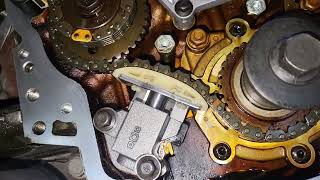
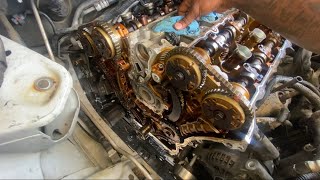
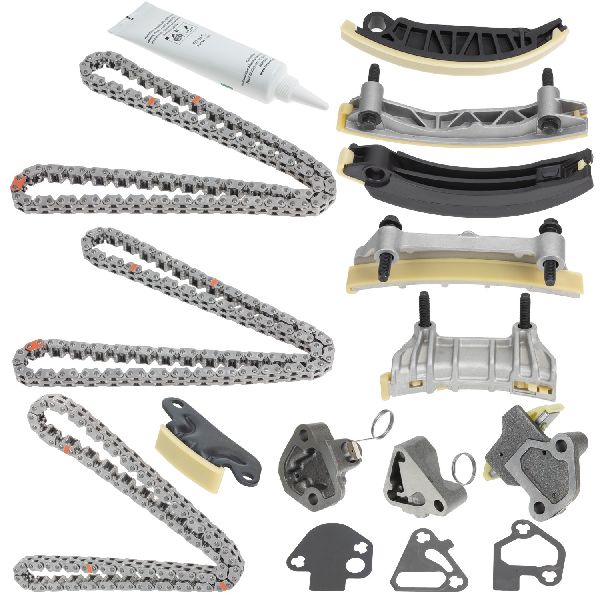
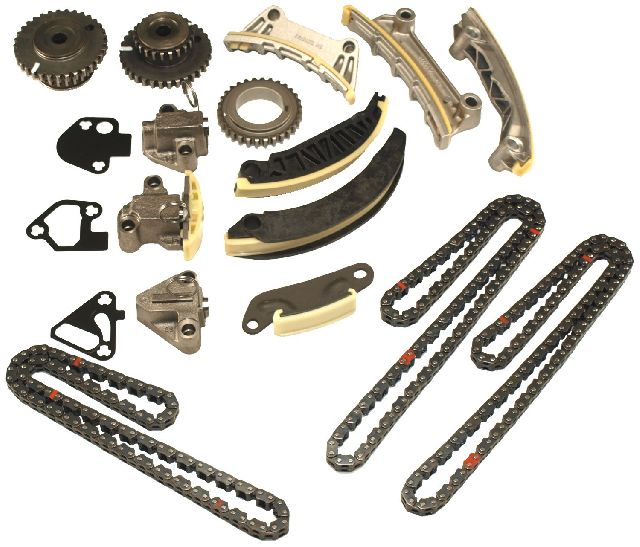
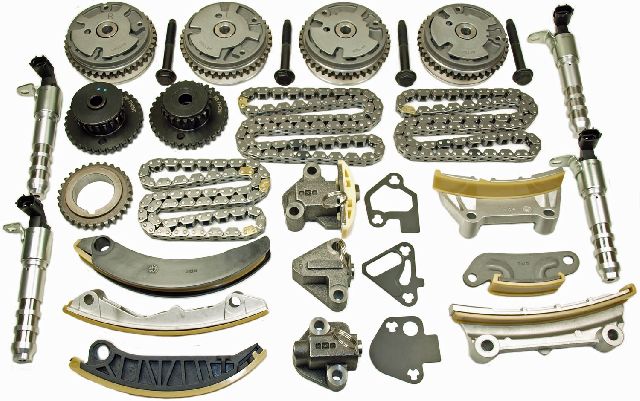
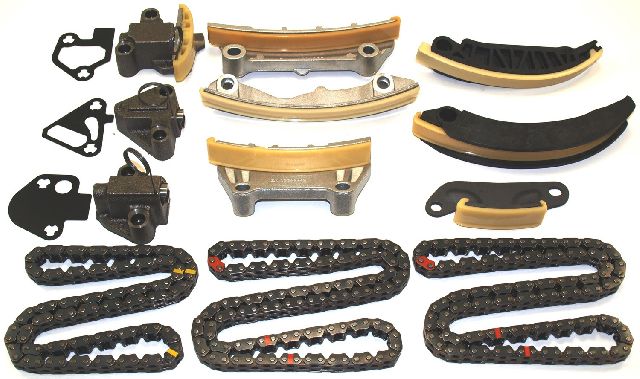
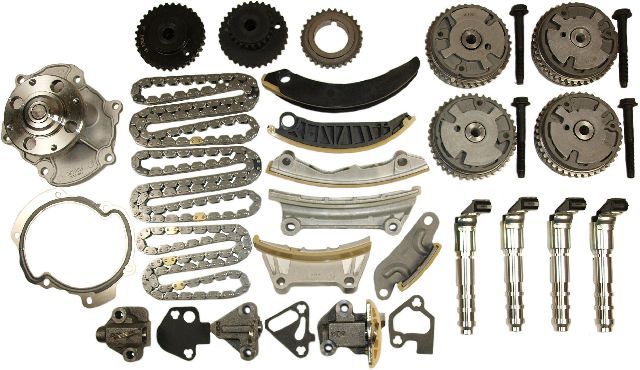
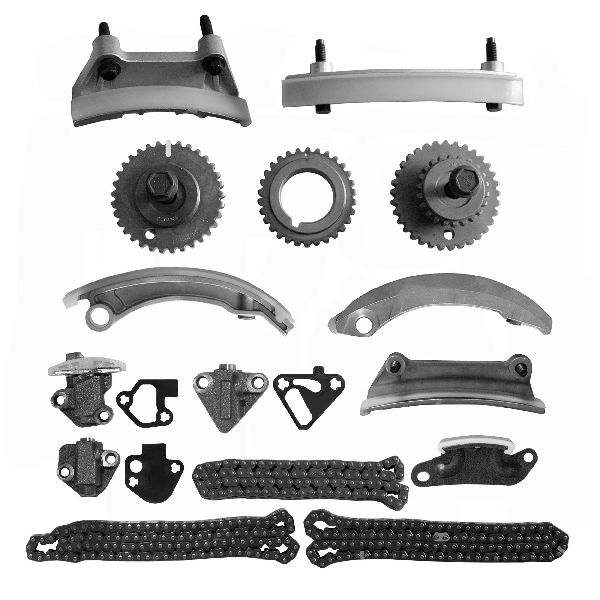
Typical fix: Replace all three timing chains, the tensioners, and the guides using the updated GM parts. This is a major repair, often requiring engine removal. 🎬 Watch: A guide to replacing timing chains while the engine is in-car.
Est. part cost: $250-$500 for a complete kit - Failed Camshaft Position Sensor (Bank 1 Intake) 🟡 Medium Probability → Shop Engine Camshaft Position Sensor The sensor can fail from heat cycles and oil contamination over time. It is a common failure point on many modern engines.
How to confirm: Swap the Bank 1 intake cam sensor (firewall side) with the Bank 2 intake cam sensor (radiator side). Clear the codes and drive the vehicle. If the code changes to P0346 (Camshaft Position Sensor 'A' Circuit Range/Performance Bank 2), the sensor is faulty.
Typical fix: Replace the faulty camshaft position sensor. Some vehicles may require a camshaft sensor relearn procedure after replacement, which can be done with a capable scan tool.
Est. part cost: $25-$75 - Damaged Wiring or Poor Connection ⚪ Low Probability The wiring harness, particularly the connector to the sensor, can become brittle from engine heat or contaminated with oil, leading to a poor connection. Manufacturer service bulletins for similar GM platforms, such as Bulletin #PIP5724, note that P0341 can be caused by a wiring jumper harness being pinched.
How to confirm: Visually inspect the wiring harness and connector for the Bank 1 intake camshaft position sensor. Check for frayed wires, loose pins, or corrosion in the connector. Use a multimeter to test for proper voltage (typically 5V reference) and ground at the connector with the key on.
Typical fix: Repair the damaged section of the harness or clean/replace the connector pigtail.
Est. part cost: $5-$50 - Low or Dirty Engine Oil ⚪ Low Probability Low oil pressure can affect the performance of the hydraulic timing chain tensioners and the camshaft phasers (actuators), leading to timing correlation issues that can trigger this code. This engine family is known for oil consumption issues.
How to confirm: Check the engine oil level and condition. If it is low or very dirty, this could be a contributing factor.
Typical fix: Perform an oil and filter change using the correct specification oil (5W-30 full synthetic meeting Dexos1 spec).
Est. part cost: $40-$80
Rare But Worth Checking
- Failing Camshaft Actuator Solenoid (VVT Solenoid): → Shop Engine Camshaft A dirty or failing solenoid on Bank 1 can cause the camshaft to be improperly positioned, which can sometimes trigger a sensor performance code before a specific solenoid code appears.
- Damaged Reluctor Wheel on Camshaft: → Shop Engine Camshaft The sensor reads a toothed wheel on the camshaft. If this wheel is damaged, bent, or has debris on it, the sensor's readings will be incorrect. This is rare and usually only occurs if other engine work has been performed.
- Failing Engine Control Module (ECM): In very rare instances, the fault may lie within the ECM itself, but all other possibilities should be exhausted before considering this.
Diagnosis Steps
- Scan for all stored trouble codes. Pay close attention to any other timing-related codes like P0008, P0009, P0016, P0017, etc. The presence of these codes makes a timing chain issue the primary suspect. As noted in Bulletin #PIT5677E, P0341 may be found in combination with a wide variety of other electrical and performance codes.
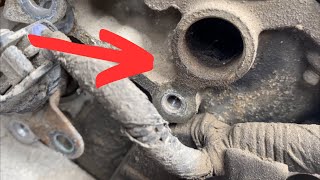
- Listen for any rattling noises from the engine, particularly during startup or acceleration. 🎬 Watch: Hear the engine clattering noise caused by timing issues. A rattle strongly points to a timing chain problem.
- Check the engine oil level and condition. Top off or change if necessary, using 5W-30 synthetic oil.
- Locate the Bank 1 (firewall side) intake camshaft position sensor. Inspect its electrical connector and nearby wiring for any signs of damage, corrosion, or oil contamination. Bulletin #PIP5724 suggests checking for pinched jumper harnesses that could cause a stall or no-start condition alongside P0341.
- If no other timing codes are present and there is no engine rattle, perform a diagnostic swap. Move the Bank 1 intake cam sensor to the Bank 2 intake sensor position (radiator side).
- Clear all codes and perform a test drive. If the code returns as P0346, the sensor you moved is faulty and needs replacement.
- If the P0341 code returns after the swap, or if other timing codes were present from the start, the issue is almost certainly a stretched timing chain or a wiring problem. Bulletin #PIP5335D advises technicians to use normal published service information diagnostics if P0340 and P0341 are setting at times.
- A professional diagnosis using a scan tool to monitor camshaft deviation angles is the next step to confirm a stretched timing chain before committing to the repair.
Parts You'll Likely Need
- Engine Timing Chain Kit
(OEM #12650230 (for 2007-2008 LY7), 12651450 (for 2009+ LLT))— This is the definitive fix for the common stretched timing chain issue on the 3.6L V6 engine, which is a primary cause of P0341. Using the latest revised GM kit is critical.
Trusted brands: ACDelco (OEM), Cloyes
OEM price range: $350-$500
Aftermarket price range: $250-$400 - Camshaft Position Sensor (Bank 1 Intake)
(OEM #12684186 (supersedes 12588992))— If diagnosis proves the sensor itself has failed, this is the required part. Bank 1 is the firewall side.
Trusted brands: ACDelco, Delphi, Bosch, NTK
OEM price range: $40-$75
Aftermarket price range: $25-$50
Related Codes That Often Appear With This One
- P0008 — Indicates an engine timing issue between Bank 1 and the crankshaft. It's a very strong indicator of a stretched primary timing chain and is frequently seen with P0341 on this engine.
- P0017 — Indicates a correlation issue between the crankshaft and the Bank 1 exhaust camshaft. Seeing this with P0341 points heavily towards a base timing problem (stretched chain).
- P0340 — This code indicates a general circuit malfunction for the same sensor, whereas P0341 is a performance/range issue. They can appear together if the sensor's failure is intermittent or complete. Bulletin #PIP5335D notes these two codes often set together.
- P0346 — This is the equivalent P0341 code but for Bank 2 (front/radiator side). If you swap sensors for diagnosis and this code appears, you've confirmed the original sensor was bad.
Technical Service Bulletins (TSBs) & Recalls
- 11340C: Special Coverage Adjustment for premature timing chain wear. Extended warranty to 10 years/120,000 miles and mandated an ECM reprogram to shorten oil life monitor intervals.
- 12-06-01-009F: Provides information on updated timing chain kits for High Feature V6 engines and lists DTCs P0008, P0009, P0016, P0017, P0018, and P0019 as related to this issue.
- PIP3423 (various revisions): Guides technicians to check for loose timing chains or a slipped crankshaft reluctor wheel when timing correlation codes are present.
- Bulletin #PIP5335D: Advises that P0340 and P0341 may set at times and directs technicians to follow normal published service diagnostics.
- Bulletin #PIP5724: Notes that P0341 can be associated with a pinched wiring jumper harness, potentially leading to a crank no-start or stalling condition.
- Bulletin #PIT5677E: Lists P0341 as part of a large combination of possible DTCs that may be found when checking for electrical system faults.
Platform-Specific Known Issues
- Premature timing chain stretch is a well-documented factory issue. GM issued a special coverage adjustment (11340C) extending the warranty
Mechanic-Grade Diagnostic Values
- Camshaft Position Sensor (CMP) Connector Voltage — expected: One pin with 4.5-5.0V (reference voltage) with key on, engine off.. Failure: No voltage or voltage significantly lower than 4.5V indicates a wiring or ECM issue, not necessarily a bad sensor.
- Camshaft Position Sensor (CMP) Ground Circuit — expected: Near 0 ohms of resistance between the ground pin on the connector and the battery negative terminal.. Failure: High resistance (OL) indicates a broken ground wire, which will cause sensor codes.
- Camshaft Actuator Solenoid Resistance (LLT Engine, 2009-2016) — expected: 7-13 Ohms.. Failure: A reading of 0 Ohms (short), OL/infinite (open), or an unstable reading indicates a failed solenoid.
- Camshaft Actuator Solenoid Resistance (LY7 Engine, 2007-2008) — expected: 4.6-7.5 Ohms.. Failure: A reading outside this range indicates a failed solenoid.
- Scan Tool: Desired vs. Actual Camshaft Position Angle Variance — expected: Less than 5 degrees at idle.. Failure: A consistent variance greater than 5-6 degrees for more than a few seconds strongly suggests a mechanical timing issue (stretched chain) or a problem with the phaser/solenoid.
Scan Tool Commands That Help
- GDS2 (GM Global Diagnostic System 2): Camshaft Position Actuator Solenoid Control / Test — This bidirectional control allows a technician to command the VVT solenoids on and off while watching live data for 'Desired vs. Actual' camshaft position angles. If the actual angle does not change when commanded, it confirms a stuck solenoid, clogged oil passage, or wiring issue, helping to differentiate a component failure from a base timing problem.
- GDS2 / Tech2Win: Crankshaft Position Variation Learn (Cam/Crank Relearn) — This procedure should be performed after replacing a camshaft position sensor, crankshaft position sensor, or after any timing chain service. Failure to perform the relearn can sometimes cause the P0341 code to persist even with new parts, as the ECM is still using old correlation values.
Wiring & Ground Locations
- G103 / G107 — Primary engine-to-chassis grounds, typically located on the front of the cylinder heads (one on each side).. A loose or corroded ground at these locations can cause erratic voltage and incorrect readings for multiple engine sensors, including the camshaft and crankshaft position sensors, potentially leading to false timing codes.
- G110 — Located on the right rear of the engine, mounted to the back of the cylinder head (Bank 1 / firewall side).. This is a primary ground for the Bank 1 side of the engine. A poor connection here can directly cause issues with the Bank 1 camshaft position sensor circuit.
- ECM (Engine Control Module) — Located in the engine compartment, on the front of the engine, near the radiator.. The ECM is the termination point for the camshaft sensor wiring. Knowing its location is critical for end-to-end circuit testing if a wiring break is suspected.
- Bank 1 CMP Sensor Connector — On the firewall side (Bank 1) of the engine, on the end of the cylinder head, below the intake plenum. Access is difficult and may require removal of other components.. This is the primary point of failure for wiring issues. The connector and its pigtail are subject to extreme heat and can become brittle or contaminated with oil, leading to poor connections that set a P0341 code.
Real Owner Repair Stories
- BobIsTheOilGuy forum user 'clinebarger' (2010 Buick Enclave 3.6L LLT with 140,xxx miles) — Check Engine Light with codes P0017 & P0008, and an audible noise from the timing cover area.
❌ Tried (didn't work) The user, a professional mechanic, immediately identified the issue as timing-related based on the codes and noise, bypassing simpler fixes.
✅ What actually fixed it A complete timing job including all three chains, guides, tensioners, both idler gears, the crank gear, and all four VVT actuators (cam phasers). The VVT solenoids were cleaned during the service. The user noted that using 100% GM OE updated parts was critical.
OEM Part Supersession History
12588992, 12615371→12684186— Part revision and consolidation for Camshaft Position Sensor.
Heads up: While multiple aftermarket versions exist, some technicians report persistent codes until a genuine ACDelco/GM sensor is used, suggesting potential signal quality differences.Various older VVT Solenoid part numbers (e.g., 12586722, 12588943, 12615613)→12636175 (common replacement)— Updated design to improve reliability and resistance to oil contamination.Original timing chains prior to ~2010→Chains included in modern ACDelco kits (e.g., 12651450)— The design of the timing chain itself was revised to be more robust and less prone to stretching. The newer OEM chains have a visibly different link design for added reinforcement.
Heads up: Using aftermarket kits with the older, less robust chain design can lead to premature failure, sometimes within a few miles.
Model Year Variations Within This Range
- 2007-2008 (LY7) vs 2009-2016 (LLT): The specified resistance for the Camshaft Actuator Solenoids (VVT Solenoids) is different. LY7 engines expect 4.6-7.5 Ohms, while LLT engines expect 7-13 Ohms. Using the wrong solenoid or test spec could lead to misdiagnosis.
- 2007-2009: These model years were the primary focus of GM's Special Coverage Adjustment #11340C for premature timing chain wear. While later years can still have the issue, it was most pronounced on these early models.
Diagnostic Flowchart
Other Known Issues on This Vehicle
Issues unrelated to this code that are worth knowing about as an owner of this generation:
- 3-5-R Wave Plate Failure (6T70/6T75 Transmission) 🔴 High — Common on 2007-2009 models, typically occurring between 50k-100k miles. Results in loss of 3rd, 5th, and Reverse gears. (Ref: Special Coverage 14404B (previously TSB 09-07-30-012F) extended warranty to 10yr/120k miles.)
- Leaking Water Pump 🟠 Medium — Common failure item, often noticed around 80,000-120,000 miles. Can lead to overheating if not addressed.
- Power Steering Pump/Line Leaks 🟠 Medium — Leaks from the power steering pump or high-pressure lines are frequently reported, causing whining noises and loss of steering assist. (Ref: Recall 14V447000 (NHTSA Campaign #14V447000) for some models related to power steering pump issues.)
- Excessive Oil Consumption 🟠 Medium — Many owners of the 3.6L V6 report high oil consumption between changes, which can exacerbate timing chain wear if the level gets too low.
- Stretched Timing Chains 🔴 High → Shop Engine Timing Chain — Extremely common on 2007-2012 models, often appearing before 100,000 miles. Less common but still possible on later models. (Ref: Special Coverage 11340C)
Used vs. New Parts: Buying Guide for This Vehicle
When a used part is the smart pick: For this specific P0341 repair, using used parts is generally not recommended for the primary failure items. However, a used wiring harness pigtail from a junkyard could be a cost-effective repair for a damaged connector, provided the donor part is in excellent condition with no brittleness or corrosion.
Donor-vehicle mileage cap: roughly under 80000 miles for the part to have meaningful remaining life.
What to inspect on the donor part:
- For a wiring pigtail, check for flexibility; avoid any that are stiff or brittle.
- Inspect connector pins for any green or white corrosion.
- Ensure locking tabs on connectors are intact and not broken.
OEM-only on this vehicle (don't cheap out):
- Timing Chain Kit: This is the most critical part to buy new from the OEM (ACDelco). Aftermarket kits, even from known brands, have been documented to use older, inferior chain designs that can fail very quickly. The revised GM chain design is essential for a lasting repair.
- Camshaft Position Sensor: While many aftermarket sensors exist, professional technicians have documented cases where only a genuine GM/ACDelco sensor produced the correct signal waveform, resolving persistent codes after multiple aftermarket parts failed.
Aftermarket brands forum-validated for this vehicle:
- Cloyes: Historically a trusted brand for timing components, but some users report concerns about sourcing, suggesting careful inspection of the kit's contents to ensure it contains the newer revised chain style.
Brands owners have reported issues with on this vehicle:
- Unbranded/White-box Timing Kits: Forum and video evidence strongly suggests that cheap, unbranded timing chain kits from online marketplaces are a significant gamble and have a high failure rate on this engine.
Real Owner Stories
Aggregated from forums and TSBs cited above. Mileages and costs reflect what owners reported in those sources.
2007-2012 GMC Acadia 3.6L V6 — ~95000 miles
Symptoms: Check engine light illuminated and a noticeable rattling noise coming from the engine during acceleration.
What fixed it: Replacement of all three timing chains, tensioners, and guides using updated GM parts.
Source hint: acadiaforum.net
2009-2017 Chevrolet Traverse 3.6L LLT — ~110000 miles
Symptoms: The vehicle experienced a check engine light with codes P0341 and P0008, identical to the issues seen on the Acadia platform.
What fixed it: Timing chain replacement due to premature stretch, a known issue for the HFV6 engine family.
Source hint: traverseforum.com
2008-2017 Buick Enclave 3.6L LY7/LLT — ~85000 miles
Symptoms: Owner documented a pattern of P0341 and P0008 codes appearing together.
What fixed it: Timing chain job performed to correct the correlation between the camshaft and crankshaft.
Source hint: enclaveforum.net
Related OBD-II Codes
Frequently Asked Questions
Is there a special warranty extension for the timing chain issues on my GMC Acadia?
My Acadia has a P0341 code and a rattling noise during acceleration; what is the most likely cause?
Can I just swap the sensors to see if the Camshaft Position Sensor is actually bad?
Does the type of oil I use affect the P0341 code on the 3.6L engine?
What other codes should I look for that confirm a timing chain failure rather than just a sensor?
Is the P0341 code related to the power steering or water pump issues common on the Acadia?
Helpful Videos


We Have This Part in Stock

The information in this article is provided for general reference and educational purposes only. Vehicle specifications, procedures, and part compatibility can vary by production date, trim level, and region. Always consult your vehicle's factory service manual and verify part numbers before purchasing or performing repairs. Safety-critical components such as airbags, seat belts, and braking systems should be installed by a qualified professional.
- GMC Acadia:
- 🧭 Diagnostic Flowchart
- 🎬 Helpful Videos
- 🛍️ Shop This Part
- What's Unique About the 2007-2016 GMC Acadia
- Symptoms You May Notice
- Most Likely Causes
- Rare But Worth Checking
- Diagnosis Steps
- Parts You'll Likely Need
- Related Codes That Often Appear With This One
- Technical Service Bulletins (TSBs) & Recalls
- Platform-Specific Known Issues
- Mechanic-Grade Diagnostic Values
- Scan Tool Commands That Help
- Wiring & Ground Locations
- Real Owner Repair Stories
- OEM Part Supersession History
- Model Year Variations Within This Range
- Other Known Issues on This Vehicle
- Used vs. New Parts: Buying Guide for This Vehicle
- Real Owner Stories
- 2007-2012 GMC Acadia 3.6L V6 — ~95000 miles
- 2009-2017 Chevrolet Traverse 3.6L LLT — ~110000 miles
- 2008-2017 Buick Enclave 3.6L LY7/LLT — ~85000 miles
- Related OBD-II Codes
- Frequently Asked Questions
- 🎟️ Get 5% Off