

P0341 on 2007-2012 Hyundai Santa Fe: Camshaft Sensor Causes and Fixes
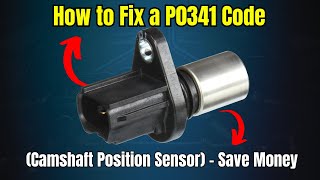
Code P0341 on a 2007-2012 Santa Fe most often means the Bank 1 (rear) camshaft position sensor is failing. This sensor is difficult to access, especially on the 2.7L V6. The part costs between $25 and $120, but labor can be significant due to its location near the firewall. Before replacing, check for oil contamination on the connector from leaking valve cover gaskets.
- P0341 points to the Bank 1 camshaft sensor, which is the rear sensor near the firewall on both the 2.7L and 3.3L V6 engines.
- The most likely cause is a failed sensor, but you should inspect the wiring for damage before replacing parts.
- This repair is considered difficult for a DIYer due to the sensor's very tight location. Significant disassembly is required to gain access.
- If you have a 2.7L engine, ensure the timing belt has been replaced at its 60,000-mile interval. If you have a 3.3L and hear a startup rattle, suspect a timing chain issue.
- Do not confuse the Bank 1 (rear) sensor with the much easier to access Bank 2 (front) sensor; replacing the wrong one will not fix the code.
What's Unique About the 2007-2012 Hyundai Santa Fe
For the 2007-2012 Santa Fe V6, the key challenge with P0341 is the location of the Bank 1 sensor, which is notoriously difficult to access against the firewall. A critical distinction exists between the two available engines: the 2.7L Mu engine (2007-2009) uses a timing belt with a 60,000-mile service interval, and a neglected or stretched belt can cause this code. In contrast, the 3.3L Lambda engine (2007-2009) uses a timing chain, where a stretched chain or failing tensioner (often signaled by a startup rattle) can be the underlying cause. Additionally, on the 2.7L V6, the Bank 1 (rear) and Bank 2 (front) sensors are physically different shapes (right-angle vs. straight) and cannot be swapped for diagnosis. For the 2010-2012 model years, the V6 option was changed to a 3.5L Lambda II engine, which has different characteristics.
Symptoms You May Notice
- Check Engine Light is on
- Difficulty starting the engine, or extended cranking time
- Engine stalls, sometimes intermittently while driving
- Rough idle or engine misfiring
- Hesitation or lack of power during acceleration
- Reduced fuel economy
- Engine may crank but fail to start
- Replacing the wrong sensor. P0341 specifically refers to Bank 1, which is the rear bank near the firewall. The front sensor (Bank 2) is much easier to access but replacing it will not fix this code.
- Replacing the sensor without checking the wiring. A simple broken wire or corroded/oil-soaked connector can mimic the symptoms of a failed sensor.
- Replacing the camshaft sensor when the root cause is a stretched timing chain/belt.
Most Likely Causes
- Failing Bank 1 Camshaft Position Sensor 🔴 High Probability → Shop Engine Camshaft Position Sensor The sensor is an electronic component that operates in a high-heat environment near the firewall and is a common wear item. Heat can cause the plastic housing and internal electronics to become brittle and fail.
How to confirm: After checking wiring, this is the most likely component failure. On the 2.7L, the Bank 1 and 2 sensors are different shapes and cannot be swapped for diagnosis. An advanced diagnostic would involve using an oscilloscope to check the sensor's square wave signal against the crankshaft sensor signal. Replacement is the most common confirmation.
Typical fix: Replace the Bank 1 (rear) camshaft position sensor. Due to the difficult access, this can be a time-consuming job requiring removal of the airbox and battery.
Est. part cost: $25-$120 - Damaged Wiring or Connector 🟡 Medium Probability The wiring harness near the back of the engine is exposed to heat and vibration. A common issue is oil leaking from the valve cover gasket, which can contaminate the sensor's connector and disrupt the signal.
How to confirm: Visually inspect the wiring harness leading to the Bank 1 sensor for any signs of melting, chafing, or breaks. Check the connector for corrosion, pushed-out pins, or oil saturation. Wiggle the connector with the engine running to see if it causes a stall or stumble.
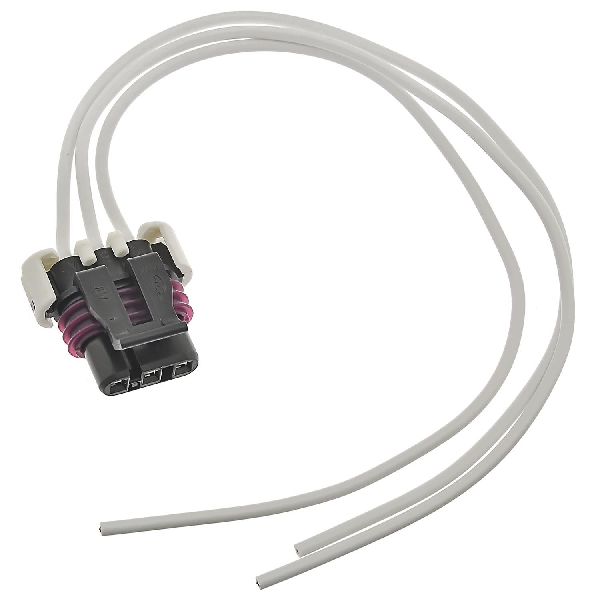
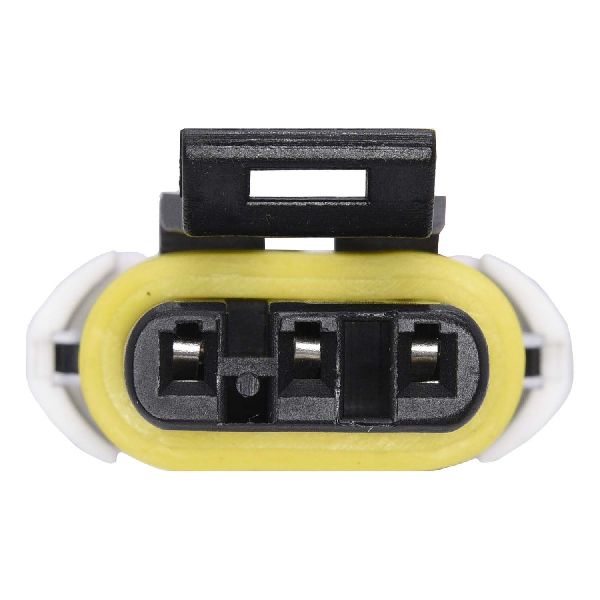
Typical fix: Repair the damaged section of the wiring harness or replace the connector pigtail. An aftermarket pigtail like the Carquest Premium PTA3234 may be available. If oil contamination is present, fix the leaking valve cover gasket first.
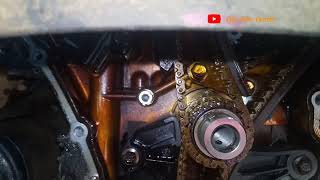
Est. part cost: $15-$40 - Mechanical Timing Issue (Belt/Chain) ⚪ Low Probability On the 2.7L engine, the rubber timing belt has a 60,000-mile replacement interval and can stretch or jump a tooth if neglected. On the 3.3L, timing chain tensioners are a known weak point and can fail, losing their ability to hold pressure at rest and causing chain slack, especially on higher-mileage vehicles.
How to confirm: This is an advanced diagnosis. For the 2.7L, check service records for the last timing belt change. For the 3.3L, listen for a distinct rattling or grinding noise from the engine for 2-3 seconds on cold startups. Confirming requires partial engine disassembly to inspect timing marks. This is often accompanied by other codes like P0016.
Typical fix: For the 2.7L, replace the timing belt, tensioner, and idler pulleys. For the 3.3L, replace the timing chain, guides, and tensioners. This is a significant labor-intensive job.
Est. part cost: $100-$500
Rare But Worth Checking
- Failing Crankshaft Position Sensor: A failing crankshaft position sensor can send erratic signals that the ECM struggles to correlate with the camshaft signal, sometimes incorrectly flagging the cam sensor. This is more likely if crankshaft-specific codes (like P0335) are also present.
- Damaged Camshaft Reluctor Wheel: → Shop Engine Camshaft The sensor reads a toothed wheel on the camshaft. If this wheel is bent, damaged, or has debris on it, the signal will be incorrect. This is very rare and typically only occurs if the engine has had major internal work done incorrectly.
- Failing Engine Control Module (ECM): An internal failure of the ECM is extremely rare but possible. This should only be considered after all other possibilities have been exhaustively ruled out by a professional.
Diagnosis Steps
- Scan for Codes: Use an OBD-II scanner to confirm P0341 is present and check for any other related codes (e.g., P0016, P0346, P0335).
- Inspect Wiring and Connector: Locate the Bank 1 camshaft position sensor on the rear cylinder head, near the firewall. Carefully inspect its electrical connector and wiring for any signs of damage, melting, corrosion, or oil contamination from a leaking valve cover gasket. Ensure the connector is securely plugged in.
- Check for Intermittent Faults: With the engine idling, gently wiggle the sensor's wiring harness to see if it causes the engine to stumble or stall, which would indicate a wiring issue.
- Test the Sensor (Optional, Advanced): Using a multimeter, you can back-probe the connector to check for the correct reference voltage (typically 5V) and a good ground. With an oscilloscope, you can observe the square wave signal from the sensor to verify its performance against the crankshaft sensor signal.
- Replace the Sensor: If the wiring appears intact, the most probable cause is a failed sensor. Replace the Bank 1 camshaft position sensor. This will likely require removing the battery and air intake assembly for access.
- Investigate Mechanical Timing: If a new sensor does not resolve the code, especially if code P0016 is present or you hear a startup rattle (3.3L), the next step is to investigate the mechanical engine timing. This is an advanced repair best left to a professional.
Parts You'll Likely Need
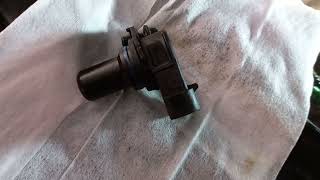
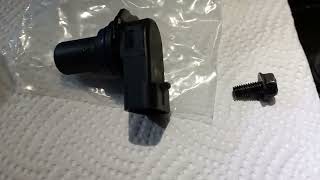
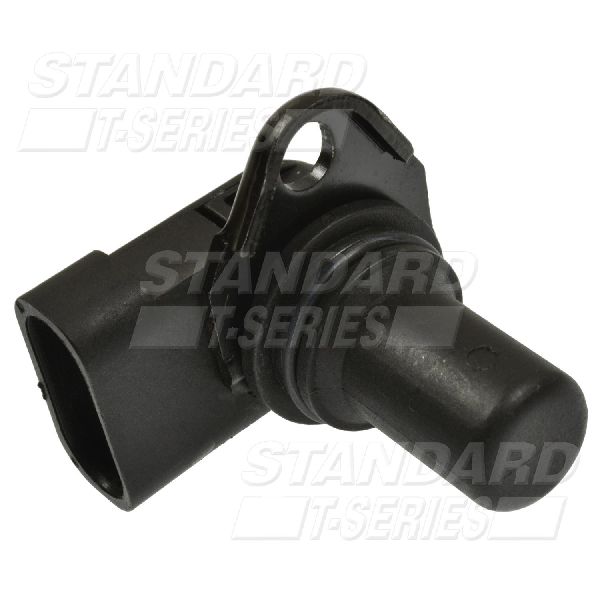
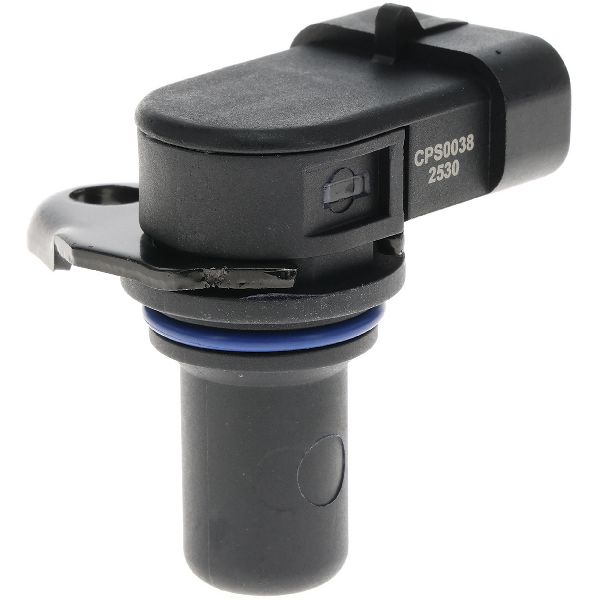
- Camshaft Position Sensor (Bank 1, Rear)
(OEM #39318-3C100)— This is the most common component to fail and trigger code P0341. Bank 1 is the rear bank on the V6 engines. This part number appears to be applicable to both the 2.7L and 3.3L engines.
Trusted brands: Hyundai (OEM), Delphi, NTK, Walker Products, Beck/Arnley
OEM price range: $80-$120
Aftermarket price range: $25-$70
Related Codes That Often Appear With This One
- P0016 — This code indicates a 'Crankshaft/Camshaft Correlation' error. Seeing it with P0341 strongly suggests a mechanical timing problem (jumped timing belt or stretched chain) rather than a simple sensor failure.
- P0346 — This is the equivalent code for the Bank 2 (front) camshaft sensor. If both codes appear together, it points to a systemic issue like a jumped timing belt/chain affecting both banks, or a wiring issue common to both sensors. One owner with a 2.7L reported this combination pointed to a timing issue.
- P0340 — P0340 is a general circuit malfunction code for the same sensor. They often appear together, pointing directly to a bad sensor or a significant wiring problem.
Platform-Specific Known Issues
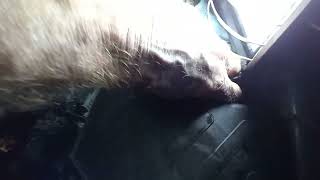
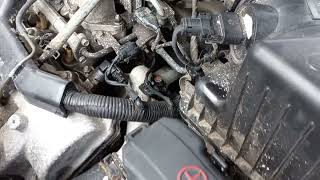
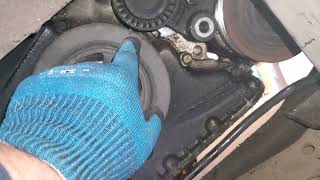
- The Bank 1 (rear) camshaft position sensor is extremely difficult to access, especially on the 2.7L V6. Replacement often requires removing the battery, battery tray, and air intake ducting to create enough room to work. A YouTube video shows a mechanic also removing a coolant pipe and throttle body bracket to gain access.
- On the 2.7L V6, the Bank 1 and Bank 2 sensors are physically different (right-angle vs. straight) and cannot be swapped for diagnosis.
- On the 3.3L V6, a startup rattle lasting 2-3 seconds is a classic sign of a failing timing chain tensioner, which can be the root cause of the P0341 code. This is a known weak point in the Lambda engine family.
- Leaking valve cover gaskets are common as these vehicles age and can lead to oil contaminating the camshaft position sensor connectors, causing a P0341 code.
Mechanic-Grade Diagnostic Values
- Camshaft Position Sensor (CMP) Power Supply Voltage — expected: Approx. 5V. Failure: No voltage or significantly low voltage points to a wiring issue or a problem with the ECM's 5V reference circuit.
- Camshaft Position Sensor (CMP) Signal Voltage (Hall Effect) — expected: Switches between 0V and 5V. Failure: A signal that does not produce a clean square wave switching between 0V and 5V when viewed on an oscilloscope indicates a faulty sensor. A voltmeter reading that is stuck high or low is also an indicator of failure.
- Camshaft Position Sensor (CMP) Ground Circuit Resistance — expected: Less than 1 Ohm. Failure: High resistance indicates a poor or broken ground connection, which can cause an erratic or missing signal.
- Camshaft Position Sensor (CMP) Signal Waveform Analysis — expected: A clean square wave that correlates correctly with the crankshaft position sensor's waveform.. Failure: A waveform that is noisy, has dropouts, or shows incorrect timing relative to the crank sensor points to a failing sensor, wiring issue, or mechanical timing problem.
Scan Tool Commands That Help
- Hyundai GDS / Snap-on High-Level Scanners: CKP/CMP Signal Test — This function, found under 'Functional Resets and Calibrations', is used to verify that the signals from both the crankshaft and camshaft sensors are being read correctly by the PCM after a repair or during diagnosis. The tool guides the user through the test and confirms if the data PIDs read 'Good'.
- Hyundai GDS (Global Diagnostic System): Flight Record / Data Logging — For intermittent P0341 faults, this function can capture sensor data during a test drive. When the fault occurs (e.g., a stumble or stall), the technician can trigger the recording to save the preceding minutes of data, which is invaluable for diagnosing intermittent electrical faults that don't appear in the shop.
Real Owner Repair Stories
- YouTube channel 'jon lamb' (Hyundai Santa Fe CM (2007-2009) 2.7L V6) — Engine running rough, P0341 code present.
❌ Tried (didn't work) The video series focuses directly on the sensor replacement and doesn't mention other failed attempts.
✅ What actually fixed it The owner replaced both the Bank 1 (rear) and Bank 2 (front) camshaft position sensors. The video documents the extreme difficulty in accessing the rear sensor, requiring removal of the battery, airbox, and other components to reach it. After replacement, the engine was shown running smoothly.
OEM Part Supersession History
39318-3C300→39318-3C100— Standard part revision or manufacturer change.
Heads up: The new part number (39318-3C100) is the correct replacement for the original. No known incompatibilities.
Model Year Variations Within This Range
- 2007-2009: These years offered the 2.7L Mu V6 (timing belt) and 3.3L Lambda V6 (timing chain) as the primary V6 options.
- 2010-2012: For the 2010 model year refresh, the V6 engines were replaced. The primary V6 option became the 3.5L Lambda II V6 (timing chain). The 2.7L was discontinued. Therefore, diagnosis on a 2010-2012 V6 would focus on timing chain issues, not a timing belt.
Diagnostic Flowchart
Other Known Issues on This Vehicle
Issues unrelated to this code that are worth knowing about as an owner of this generation:
- Faulty Fuel Level Sending Units 🟠 Medium — Very common. The fuel gauge becomes erratic or reads empty, often triggering a check engine light. The vehicle has two sending units, and both often require replacement. (Ref: No recall, but widely documented by owners and technicians.)
- Timing Chain Tensioner Failure (3.3L V6) 🔴 High → Shop Engine Timing Chain — Common on higher-mileage Lambda engines. Characterized by a 2-3 second rattle on cold startup. Failure can lead to jumped timing and catastrophic engine damage.
- Leaking Valve Cover Gaskets 🟠 Medium — Becomes common as the vehicle ages. Gaskets become brittle and leak oil onto exhaust manifolds (causing a burning smell) or into spark plug tubes and onto nearby sensors.
- Excessive Oil Consumption (3.3L V6) 🔴 High — A known issue on some Lambda II engines, though more pronounced in later GDI versions. Can lead to low oil levels that cause timing system faults. (Ref: Later models and engines were subject to warranty extensions and TSBs like 23-EM-007H for oil consumption.)
Used vs. New Parts: Buying Guide for This Vehicle
When a used part is the smart pick: For this repair, using used parts is generally not recommended. The primary failure parts are a low-cost electronic sensor and potentially timing components, which are wear items. The labor involved, especially for the rear sensor or timing components, is too high to risk using a part with an unknown history.
Donor-vehicle mileage cap: roughly under 80000 miles for the part to have meaningful remaining life.
What to inspect on the donor part:
- If buying a used engine harness, inspect thoroughly for brittle plastic, chafing, or previous repairs.
- Avoid any electronic sensor from a junkyard; the failure rate is high and the cost savings are minimal.
OEM-only on this vehicle (don't cheap out):
- While not strictly OEM-only, using an OEM or a top-tier aftermarket brand (NTK, Delphi, Beck/Arnley) for the camshaft position sensor is strongly recommended over generic online parts. The cost difference is minimal compared to the diagnostic headache a poor-quality sensor can cause.
Aftermarket brands forum-validated for this vehicle:
- NTK
- Delphi
- Beck/Arnley
Brands owners have reported issues with on this vehicle:
- Unnamed or 'white box' sensors from online marketplaces are frequently cited as being dead-on-arrival or failing prematurely.
Real Owner Stories
Aggregated from forums and TSBs cited above. Mileages and costs reflect what owners reported in those sources.
2007-2012 Hyundai Santa Fe 2.7L V6 — ~124274 miles
Symptoms: Vehicle has just clicked over 200,000 KS.
What fixed it: Replacement of the camshaft position sensor. Note that the mechanic may also need to remove a coolant pipe and throttle body bracket to gain access to the rear sensor.
Source hint: youtube_comment from jon lamb
2007-2012 Hyundai Santa Fe V6
Symptoms: Difficulty of accessing the Bank 1 sensor; engine issues resolved after replacement.
What fixed it: Replacement of the Bank 1 (rear) camshaft position sensor.
Source hint: hyundai-forums.com
Related OBD-II Codes
Frequently Asked Questions
Can I swap the Bank 1 and Bank 2 sensors on my 2.7L V6 to see if the code moves?
Why is the labor for replacing the Bank 1 sensor so high on the Santa Fe?
I hear a rattling sound for a few seconds when I start my 3.3L Santa Fe; is this related to P0341?
Could an oil leak be causing my P0341 code?
Is there a specific replacement wiring part if my connector is damaged?
Does my 2.7L engine have a timing belt or a chain that could cause this?
Helpful Videos


We Have This Part in Stock


The information in this article is provided for general reference and educational purposes only. Vehicle specifications, procedures, and part compatibility can vary by production date, trim level, and region. Always consult your vehicle's factory service manual and verify part numbers before purchasing or performing repairs. Safety-critical components such as airbags, seat belts, and braking systems should be installed by a qualified professional.
- Hyundai Santa Fe:
- 🧭 Diagnostic Flowchart
- 🎬 Helpful Videos
- 🛍️ Shop This Part
- What's Unique About the 2007-2012 Hyundai Santa Fe
- Symptoms You May Notice
- Most Likely Causes
- Rare But Worth Checking
- Diagnosis Steps
- Parts You'll Likely Need
- Related Codes That Often Appear With This One
- Platform-Specific Known Issues
- Mechanic-Grade Diagnostic Values
- Scan Tool Commands That Help
- Real Owner Repair Stories
- OEM Part Supersession History
- Model Year Variations Within This Range
- Other Known Issues on This Vehicle
- Used vs. New Parts: Buying Guide for This Vehicle
- Real Owner Stories
- 2007-2012 Hyundai Santa Fe 2.7L V6 — ~124274 miles
- 2007-2012 Hyundai Santa Fe V6
- Related OBD-II Codes
- Frequently Asked Questions
- 🎟️ Get 5% Off