

P0341 on 2007-2009 Kia Sorento 3.3L/3.8L V6: Camshaft Sensor Causes and Fixes
On a 2007-2009 Sorento V6, code P0341 is most often caused by a failing intake camshaft position sensor on the rear cylinder bank (Bank 1). Replacing this sensor is a common, affordable DIY fix, with the part costing around $25-$75. However, it's critical to also check for wiring issues or signs of a more serious timing chain problem, especially on higher-mileage engines.
- P0341 on this Sorento almost always points to the intake camshaft position sensor on the rear cylinder bank (Bank 1).
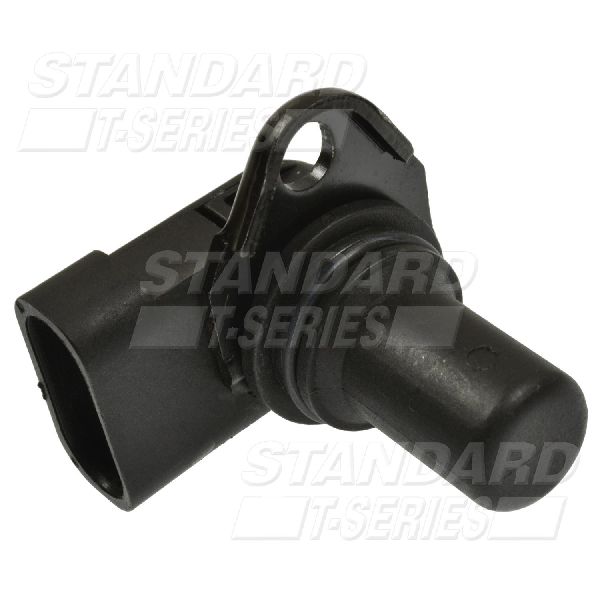
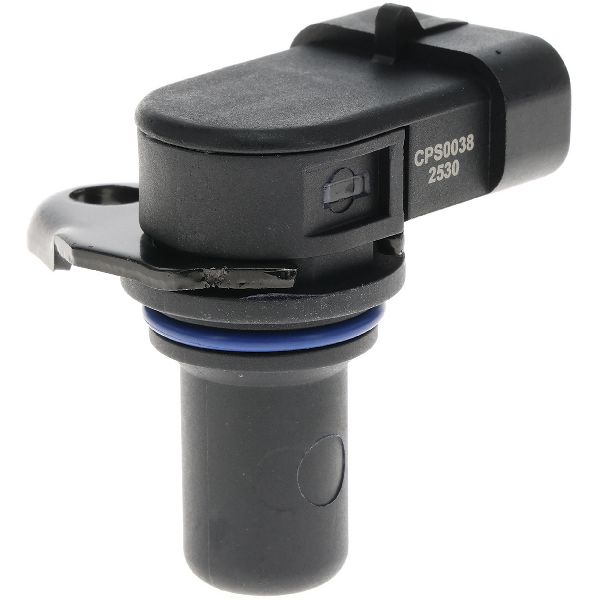
- The most likely fix is replacing the sensor (Part No. 39318-3C100), a DIY-friendly job that takes less than an hour.
- Before buying parts, check the engine oil level and inspect the sensor's wiring and connector for damage or oil contamination.
- If a new sensor doesn't solve the problem, or if the code is paired with P0016 and a startup rattle, the issue could be a more serious timing chain problem requiring professional diagnosis.
What's Unique About the 2007-2009 Kia Sorento
For the first-generation (BL) Kia Sorento with the Lambda V6, the P0341 code is typically a straightforward fault. Unlike some other Kia engines from different eras, there are no widespread TSBs or recalls directly linking this code to a systemic failure on these 2007-2009 models. However, these Lambda engines can be prone to timing chain tensioner wear at higher mileage (over 100,000 miles), which can cause a startup rattle and trigger this code. A key diagnostic challenge is distinguishing between a simple, cheap sensor failure and a more complex, expensive timing chain problem. Low or dirty engine oil can also cause this code by affecting the Continuous Variable Valve Timing (CVVT) system's ability to adjust cam phasing, even if the sensor itself is working perfectly.
Symptoms You May Notice
- Check Engine Light (CEL) is on
- Difficulty starting the engine, or extended cranking time
- Engine stalls, especially at low speeds or when idling
- Rough idle or engine misfires
- Hesitation or stumbling during acceleration
- Reduced engine power
- Engine makes a rattling noise on startup (indicates possible timing chain issue)
- Replacing the crankshaft position sensor when the code clearly points to the camshaft sensor.
- Replacing the wrong camshaft sensor (e.g., the one on the front bank, Bank 2, which would set code P0346).
- Replacing the sensor when the root cause is low/dirty oil affecting the CVVT system.
Most Likely Causes
- Failing Bank 1 Camshaft Position Sensor 🔴 High Probability → Shop Engine Camshaft Position Sensor Sensors can fail over time due to heat cycles and internal electronic degradation. Oil from valve cover gasket leaks can also contaminate the sensor and its connector.
How to confirm: After visually inspecting the wiring, this is the most likely component to have failed. A common diagnostic trick is to swap the Bank 1 (rear) and Bank 2 (front) intake cam sensors. If the code changes to P0346 after clearing and re-scanning, the sensor is confirmed faulty.
Typical fix: Replace the Bank 1 (rear) intake camshaft position sensor.
Est. part cost: $25-$75 - Wiring Harness or Connector Issue 🟡 Medium Probability The engine bay environment can cause wiring to become brittle, and connectors can be damaged or contaminated with oil from valve cover leaks.
How to confirm: Visually inspect the wiring harness leading to the sensor for any signs of damage, fraying, or melting. Disconnect the sensor and check the connector pins for corrosion, moisture, or oil contamination. Use a multimeter to check for 5V reference, ground, and signal continuity at the connector.
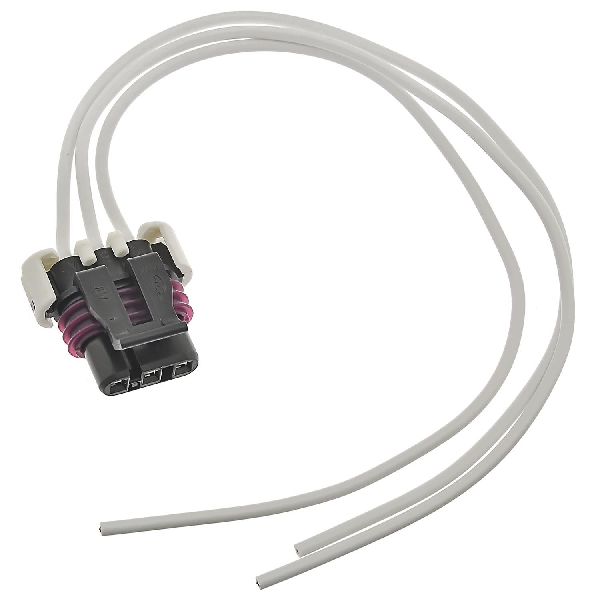
Typical fix: Repair the damaged section of wiring or clean/replace the connector pigtail.
Est. part cost: $10-$50 - Stretched Timing Chain or Failing Tensioner ⚪ Low Probability → Shop Engine Timing Chain This is a known issue on higher-mileage Lambda V6 engines (typically over 100,000 miles). The timing chain tensioners can lose oil pressure, allowing the chain to have slack, which disrupts the cam/crank correlation.
How to confirm: Listen for a distinct rattling or 'marbles in a can' noise from the front of the engine for 1-3 seconds on a cold start. The presence of code P0016 (Crankshaft/Camshaft Correlation) alongside P0341 strongly points to a timing issue.
Typical fix: This is a complex repair involving the replacement of the timing chains, guides, and tensioners. Professional service is highly recommended.
Est. part cost: $400-$800
Rare But Worth Checking
- Damaged Reluctor Wheel: The tone ring on the camshaft that the sensor reads can become damaged or bent, though this is uncommon without other major engine work or failure.
- Faulty Engine Control Module (ECM): This is extremely rare, and all other possibilities, including wiring and mechanical issues, should be exhaustively ruled out before considering ECM replacement.
- Low or Dirty Engine Oil: While not a direct cause of failure, low or dirty engine oil can starve the CVVT (Continuous Variable Valve Timing) system of necessary oil pressure. This prevents the camshaft from phasing as commanded, causing the sensor to report a performance issue and trigger P0341.
Diagnosis Steps
- Read the codes with an OBD-II scanner and note any other codes present, especially P0016 or P0346.
- Check engine oil level and condition. Low or dirty oil can cause CVVT-related performance codes.
- Listen for any unusual engine noises, especially a rattle on cold startup, which could indicate a timing chain issue.
- Visually inspect the Bank 1 (rear) intake camshaft position sensor and its electrical connector. Look for loose connections, damaged wires, or oil contamination from valve cover leaks.
- For a definitive sensor test, swap the Bank 1 (rear) and Bank 2 (front) intake cam sensors. Clear the codes and drive the vehicle. If the code returns as P0346, the original sensor is faulty and needs replacement.
- If the P0341 code returns after the swap, the problem lies in the Bank 1 circuit or mechanical timing. Test the sensor connector for a 5-volt reference, ground, and signal continuity with a multimeter.
- If wiring and sensor are confirmed good, but the code persists (especially with a startup rattle or P0016), further diagnosis of the engine's mechanical timing is required. This may involve using an oscilloscope to check the cam/crank sensor patterns or performing a physical inspection of the timing components, which is best left to a professional.
Parts You'll Likely Need
- Camshaft Position Sensor (Bank 1 Intake)
(OEM #39318-3C100)— This sensor is the most frequent point of failure for code P0341 on this vehicle. It is identical to the Bank 2 sensor.
Trusted brands: Kia (Genuine OE), Hyundai (Genuine OE), Delphi, NGK/NTK, Bosch
OEM price range: $50-$115
Aftermarket price range: $25-$60
Related Codes That Often Appear With This One
- P0340 — P0340 indicates a general circuit malfunction, while P0341 indicates a performance/range problem. They can appear together if the sensor is failing intermittently or has a severe wiring issue.
- P0016 — This code indicates a 'Crankshaft/Camshaft Correlation' error. If seen with P0341, it strongly suggests a mechanical timing issue (e.g., stretched timing chain) rather than just a bad sensor.
- P0346 — This is the equivalent code for the Bank 2 (front bank) intake camshaft sensor. Seeing both P0341 and P0346 might point to a systemic issue affecting both banks, such as low oil pressure or a problem with the primary timing chain.
Platform-Specific Known Issues
- Higher mileage (100k+) Lambda V6 engines can develop timing chain tensioner and guide wear, which can cause cam/crank correlation codes like P0341, often accompanied by a brief startup rattle.
- Valve cover gasket leaks are common and can lead to oil contaminating the camshaft position sensor's electrical connector, causing signal issues.
Mechanic-Grade Diagnostic Values
- Camshaft Position Sensor (3-wire Hall-effect) Signal Voltage — expected: With ignition ON and engine OFF, back-probing the signal wire should show approximately 4.8-5.0 volts. When cranking, it should produce a clean 0-5V square wave on an oscilloscope.. Failure: Voltage is stuck high or low and does not change when the engine is rotated by hand. A 'low' state that reads significantly above 0V (e.g., >0.15V) can indicate a poor ground.
- Camshaft Position Sensor Connector Voltages (Key On, Engine Off) — expected: Pin 1: ~12V (Battery Voltage), Pin 2: Ground (0V), Pin 3: ~5V (Signal Reference). Pinout may vary, so confirming with a wiring diagram is best.. Failure: Missing voltage on any pin indicates a wiring issue, blown fuse (check 'SNSR' fuses in engine bay fuse box), or ECM fault.
- Oil Control Valve (OCV) / VVT Solenoid Coil Resistance — expected: Approximately 6.9 – 7.9 Ω at 68°F (20°C).. Failure: Resistance is significantly higher (open circuit) or lower (short circuit) than the specified range.
Scan Tool Commands That Help
- Kia GDS (Global Diagnostic System) or equivalent professional scanner: CVVT Actuation Test — If P0341 is accompanied by other timing-related codes (like P0016) or if a sensor replacement doesn't fix the issue. This command manually activates the Oil Control Valve (OCV) to verify if the camshaft phaser is responding. A lack of response points to a stuck OCV, clogged oil passages, or a mechanical phaser issue, rather than a sensor problem.
- High-end bidirectional scan tool: Cam/Crank Relearn (or Crankshaft Position Variation Learn) — This is generally NOT required for a simple camshaft position sensor replacement on this model. It is typically only necessary after major mechanical work like replacing a timing chain, flywheel, or the ECM itself.
Wiring & Ground Locations
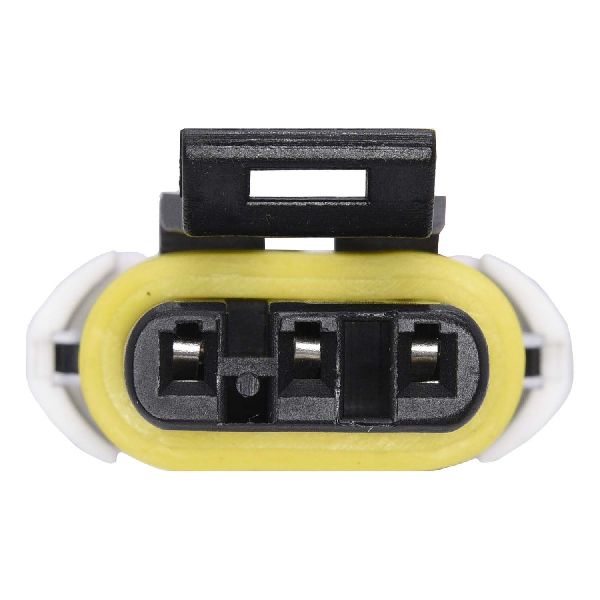
- CMP Sensor Connector (Bank 1) — On the rear valve cover (closer to the firewall), connecting to the intake camshaft position sensor.. This 3-pin connector provides the sensor with power, ground, and carries the signal back to the ECM. It is a primary point of failure due to oil contamination from leaky valve cover gaskets or heat-induced brittleness.
- Engine Ground Points — Key grounding points are located on the cylinder head, the main engine block to the chassis (often near the transmission), and on the intake plenum.. A poor or corroded engine ground strap can introduce electrical noise or cause an unstable voltage supply to all engine sensors, including the camshaft sensor. This can lead to an erratic signal and a P0341 performance code even if the sensor and its direct wiring are perfectly fine.
- Fuse Box (Engine Compartment) — Located in the engine bay, typically near the battery.. The camshaft position sensor circuit is protected by a fuse, often labeled 'SNSR' or similar. A blown fuse will cause a complete loss of signal and may trigger a P0340 (circuit fault) code along with P0341.
Real Owner Repair Stories
- Composite of Kia-Forums.com and SorentoForums.com threads (2008 Kia Sorento 3.8L, ~145,000 miles) — Check Engine Light with P0341, intermittent hard starting, and a noticeable 1-2 second rattle on cold starts.
❌ Tried (didn't work) Replaced the Bank 1 camshaft position sensor., Swapped the Bank 1 and Bank 2 sensors (code remained P0341)., Cleaned the sensor connector and checked for voltage.
✅ What actually fixed it The combination of the startup rattle and the persistent code after a sensor swap pointed to a timing issue. A professional mechanic confirmed a stretched timing chain and worn tensioners. Replacing the timing chains, guides, and tensioners resolved both the noise and the P0341 code. - YouTube video comment section (2007 Kia Sorento 3.3L) — Persistent P0341 code, engine running rough, especially at idle.
❌ Tried (didn't work) Replaced camshaft position sensor twice (once with aftermarket, once with OEM)., Checked wiring for continuity.
✅ What actually fixed it The owner discovered the Bank 1 (rear) Oil Control Valve (OCV) was sluggish. After removing the OCV and cleaning a significant amount of sludge from its internal passages and screen, the valve began actuating correctly. After reinstallation and an oil change, the P0341 code was cleared and did not return.
OEM Part Supersession History
39318-3C000→39318-3C100— Part revision for improved reliability or manufacturing process change.
Heads up: The newer part number 39318-3C100 is fully backward compatible and is the recommended replacement for the original part.
Diagnostic Flowchart
Other Known Issues on This Vehicle
Issues unrelated to this code that are worth knowing about as an owner of this generation:
- Crankshaft Pulley Bolt Failure 🔴 High — A known issue on earlier 3.5L Sorentos (2003-2006) that led to a class-action lawsuit, but some failures are reported on the 3.8L as well. The bolt can break, causing loss of power steering and potential engine damage. (Ref: A class-action settlement existed for 2003-2006 models with the 3.5L engine.)
- Timing Chain System Wear 🔴 High → Shop Engine Timing Chain — More common on engines over 100,000-150,000 miles. Tensioners can fail, leading to a startup rattle and eventual chain stretch or failure, which is a major engine repair.
- A/C Compressor Clutch Failure 🟠 Medium — Common across the 2002-2009 Sorento generation. The clutch on the A/C compressor fails, leading to a rumbling or whining noise and loss of cold air.
- ABS Module Electrical Short 🔴 High — Subject to a recall. Moisture can enter the ABS module, creating a risk of an electrical short and potential engine compartment fire, even when the vehicle is off. (Ref: NHTSA Recall 13V114000)
- Faulty Stop Lamp Switch 🟡 Low — Widespread issue across many Kia/Hyundai models of this era, subject to a recall. A faulty switch can prevent brake lights from illuminating or cause them to stay on. It can also prevent shifting from Park. (Ref: NHTSA Recall 13V114000 (often bundled with other recalls))
Used vs. New Parts: Buying Guide for This Vehicle
When a used part is the smart pick: For this repair, using a used part is almost never recommended. The primary failure component is the electronic camshaft position sensor, which has a finite lifespan and is inexpensive to buy new. The cost savings of a used sensor are negligible compared to the risk of it failing shortly after installation.
Donor-vehicle mileage cap: roughly under 50000 miles for the part to have meaningful remaining life.
What to inspect on the donor part:
- If forced to use a used part, pull it from the lowest-mileage vehicle possible.
- Inspect the connector for any signs of brittleness, cracking, or oil contamination.
- Avoid sensors from engines that show heavy sludge buildup under the oil cap, as this indicates poor maintenance and higher heat stress.
OEM-only on this vehicle (don't cheap out):
- While not strictly 'OEM-only', using a Genuine Kia/Hyundai sensor or a sensor from the original equipment manufacturer (e.g., Delphi, Bosch) is highly recommended for reliability. Avoid no-name, white-box parts.
Aftermarket brands forum-validated for this vehicle:
- NGK/NTK
- Delphi
- Bosch
- Mando
Brands owners have reported issues with on this vehicle:
- Ultra-cheap, unbranded sensors from online marketplaces often have high failure rates and may not meet OEM specifications for signal accuracy, leading to persistent codes.
Real Owner Stories
Aggregated from forums and TSBs cited above. Mileages and costs reflect what owners reported in those sources.
2007-2009 Kia Sorento Lambda V6
Symptoms: The owner reported successfully resolving the issue but noted that the Bank 1 (rear) sensor was slightly more difficult to access than the front sensor.
What fixed it: Replacement of the Bank 1 (rear) camshaft position sensor.
Source hint: Kia-Forums.com
2007-2009 Kia Sorento Lambda V6
Symptoms: Persistent P0341 code accompanied by a 'marbles in a can' rattle on startup.
What fixed it: The dealership diagnosed and replaced a stretched timing chain.
Source hint: SorentoForums.com
Kia Sorento 3.3L V6 — 125000 miles
Symptoms: Vehicle presented with a P0341 code at high mileage.
What fixed it: Timing chain replacement.
Source hint: Reddit r/Kia
Related OBD-II Codes
Frequently Asked Questions
Is there a recall for the 2007-2009 Kia Sorento that might cause electrical issues related to the P0341 code?
My 3.8L Sorento has a 'marbles in a can' sound on startup along with P0341. Is this just a bad sensor?
Can I test if the Bank 1 sensor is actually bad before buying a new one?
Does the crankshaft pulley bolt issue apply to my 2007-2009 3.8L Sorento?
Why is the P0341 code appearing specifically for Bank 1 on my Sorento?
Helpful Videos


We Have This Part in Stock


The information in this article is provided for general reference and educational purposes only. Vehicle specifications, procedures, and part compatibility can vary by production date, trim level, and region. Always consult your vehicle's factory service manual and verify part numbers before purchasing or performing repairs. Safety-critical components such as airbags, seat belts, and braking systems should be installed by a qualified professional.
- Kia Sorento:
- 🧭 Diagnostic Flowchart
- 🎬 Helpful Videos
- 🛍️ Shop This Part
- What's Unique About the 2007-2009 Kia Sorento
- Symptoms You May Notice
- Most Likely Causes
- Rare But Worth Checking
- Diagnosis Steps
- Parts You'll Likely Need
- Related Codes That Often Appear With This One
- Platform-Specific Known Issues
- Mechanic-Grade Diagnostic Values
- Scan Tool Commands That Help
- Wiring & Ground Locations
- Real Owner Repair Stories
- OEM Part Supersession History
- Other Known Issues on This Vehicle
- Used vs. New Parts: Buying Guide for This Vehicle
- Real Owner Stories
- 2007-2009 Kia Sorento Lambda V6
- 2007-2009 Kia Sorento Lambda V6
- Kia Sorento 3.3L V6 — 125000 miles
- Related OBD-II Codes
- Frequently Asked Questions
- 🎟️ Get 5% Off