

P0341 on 1997-2003 Pontiac Grand Prix 3.1L: Cam Sensor Causes and Fixes
On the 3.1L V6, code P0341 is almost always a failing camshaft position sensor. The sensor is located under the power steering pump, so expect a 1-2 hour job. A quality ACDelco or Delphi replacement part costs around $30-$60. Inspecting the wiring for chafing during the repair is critical.
- P0341 on a 1997-2003 Grand Prix 3.1L almost always means you need a new camshaft position sensor.
- The biggest challenge of the repair is accessing the sensor, which is located under the power steering pump.
- You must remove the serpentine belt and unbolt the power steering pump (without disconnecting the lines) to get to the sensor.
- Always inspect the wiring harness for damage while you are replacing the sensor, as chafing near the power steering pump or ICM is a possible secondary cause.
- Using a quality replacement sensor from a brand like ACDelco or Delphi is highly recommended to ensure a lasting repair and avoid installing a part that is dead-on-arrival.
What's Unique About the 1997-2003 Pontiac Grand Prix
For the 3.1L L82 V6 engine, the key challenge is the location of the camshaft position sensor. It is buried underneath the power steering pump. While the sensor itself is a simple part, replacing it requires removing the serpentine belt and unbolting the power steering pump to move it out of the way, making the job more involved than on many other engines. Some owners also find it necessary to remove the cruise control module and a motor mount bracket to gain sufficient access.
Symptoms You May Notice
- Check Engine Light is on.
- Engine is difficult to start, requiring long cranking times.
- Engine cranks but will not start (no-start condition).
- Engine stalling, especially at low speeds or when coming to a stop.
- Rough idle or hesitation during acceleration.
- Tachometer may behave erratically or drop to zero while the engine is running.
- Replacing the Crankshaft Position Sensor. While related, a failing crankshaft sensor will set different codes (e.g., P0335, P0336). P0341 specifically points to the camshaft sensor circuit.
- Replacing ignition coils or spark plugs. While these can cause misfires, they do not directly set a P0341 code. However, high resistance in plugs or wires could theoretically cause electrical interference.
Most Likely Causes
- Failing Camshaft Position Sensor (CMP) 🔴 High Probability → Shop Engine Camshaft Position Sensor The sensor is a common failure item due to age and heat cycles in the engine bay. Forum users frequently report that replacing the sensor resolves the P0341 code.
How to confirm: The best method is to use an oscilloscope to observe the sensor's square wave signal; a failing sensor will show dropouts or an inconsistent pattern. A scan tool may also show an intermittent 'no' for the 'CAM signal present' data PID. Due to the high failure rate, many DIYers opt to replace the sensor as the primary diagnostic step after checking for obvious wiring damage. There are reports of brand new aftermarket sensors being defective out of the box, so using a quality part is crucial.
Typical fix: Replace the camshaft position sensor. It's recommended to apply a small amount of silicone grease or clean engine oil to the new sensor's O-ring before installation to ensure it seats properly.
Est. part cost: $30 - $70 - Damaged Wiring or Connector 🟡 Medium Probability The wiring harness for the cam and crank sensors is routed in a tight engine bay and can become brittle, chafed, or contaminated with oil over time. A common point of failure is where the harness runs near the power steering pump or other brackets.
How to confirm: Visually inspect the wiring harness leading to the camshaft position sensor for any signs of chafing, melting, or corrosion at the connector pins. Pay close attention to the harness that also leads to the ignition control module (ICM), as breaks in this harness are known to cause this code. Wiggle the harness with the engine running to see if it causes a stall or stumble.
Typical fix: Repair the damaged section of wiring or replace the connector pigtail. In some cases, the entire ICM-to-sensor harness may need replacement.
Est. part cost: $15 - $40
Rare But Worth Checking
- Stretched Timing Chain or Worn Timing Components: → Shop Engine Timing Chain While possible, this is less likely than a sensor or wiring fault. A timing issue would cause the cam signal to be out of sync with the crank signal. This would typically present with other more severe symptoms like engine rattling, lack of power, or additional codes, and should be considered on very high-mileage engines.
- Failing Ignition Control Module (ICM): The ICM processes signals from the cam and crank sensors. While a failure is uncommon, a faulty ICM or its dedicated wiring harness can cause a P0341 code. This was reported as a cause on related GM V6 platforms after new sensors failed to fix the issue.
- Failing Powertrain Control Module (PCM): This is extremely rare. The PCM should only be considered after all other possibilities, including the sensor, wiring, ICM, and mechanical timing, have been definitively ruled out. One owner reported a faulty reprogrammed PCM as the root cause after replacing multiple sensors.
Diagnosis Steps
- Read the trouble codes with an OBD-II scanner to confirm P0341 is present and see if any other codes are stored.
- Visually inspect the camshaft position sensor's wiring harness and connector for obvious damage like chafing, melting, or corrosion. Follow the harness back to the Ignition Control Module (ICM) checking for damage along the way.
- If you have a capable scan tool, monitor the 'CAM signal present' data parameter while the engine is running. It should consistently read 'Yes'. If it flickers to 'No', the sensor or its circuit is failing.
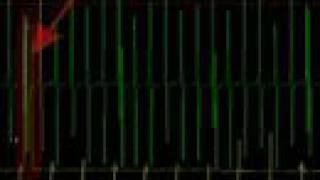
- For a definitive diagnosis, use an oscilloscope to back-probe the sensor's signal wire. Look for a clean, consistent square wave that does not drop out. The cam signal should occur once for every two crankshaft revolutions.
- If the wiring appears intact, the next step is to replace the camshaft position sensor, as it is the most common failure point. To do this, you will need to release the serpentine belt tension, unbolt the power steering pump (typically three 13mm bolts), and move it aside to access the sensor's 8mm or 10mm hold-down bolt.
- If a new, quality sensor does not resolve the issue, perform a continuity and resistance check on the wiring between the sensor connector and the ICM/PCM.
- If wiring is confirmed good, investigate potential mechanical issues like the timing chain or a faulty Ignition Control Module (ICM), though these are less likely causes.
Parts You'll Likely Need
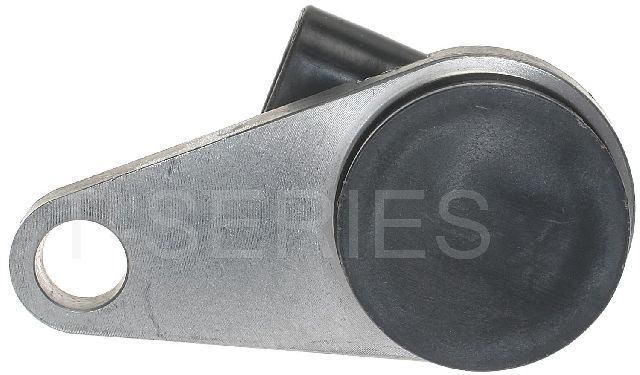
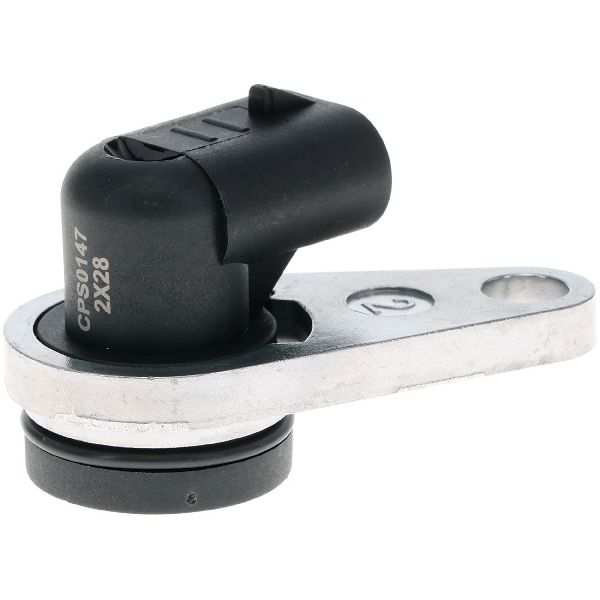
- Camshaft Position Sensor
(OEM #ACDelco 213-920 (replaces 10485432))— This sensor is the most frequent cause of the P0341 code on this engine. Owners report that using OEM or high-quality aftermarket parts is important, as cheap sensors can be faulty out of the box.
Trusted brands: ACDelco (OEM), Delphi
OEM price range: $50-$70
Aftermarket price range: $30-$50
Related Codes That Often Appear With This One
- P0340 (Camshaft Position Sensor Circuit Malfunction): Can appear if the sensor failure is intermittent, sometimes registering as a performance issue (P0341) and other times as a complete circuit failure (P0340).
- P0300-P0306 (Misfire Codes): Can be triggered because the incorrect camshaft signal leads to improper ignition and fuel timing, causing misfires in one or more cylinders.
Technical Service Bulletins (TSBs) & Recalls
- While no TSB is specific to P0341 on the Grand Prix, GM bulletin PI0090D for related engines notes that intermittent hesitation can be caused by poor connections at the camshaft position sensor, reinforcing the need to check wiring.
- Manufacturer TSB Bulletin #PIP5329C provides information regarding vehicles with a Service Engine Soon lamp and DTC P0341; it directs technicians to replace the related Camshaft Position sensor if the concern is duplicated.
Platform-Specific Known Issues
- The location of the sensor under the power steering pump is the main vehicle-specific issue, complicating what would otherwise be a very simple repair.
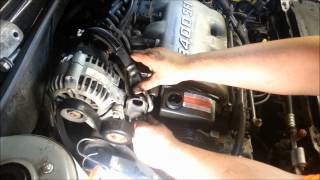
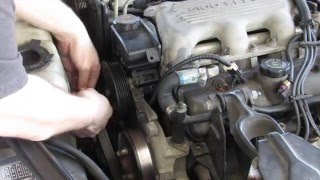
- A DIY tip from owners is to use a 3/8" drive ratchet or breaker bar on the belt tensioner to release the serpentine belt. The power steering pump is typically held by three 13mm bolts that may need to be accessed by rotating the pump pulley. 🎬 Watch: An easy walkthrough for accessing the sensor behind the pump.
- Some owners find it easier to access the bolts by first unbolting and setting aside the cruise control module.
Mechanic-Grade Diagnostic Values
- Camshaft Position Sensor Signal Voltage (Dynamic Test) — expected: An ON/OFF signal that switches between 0V (ON) and 9.5-10V DC (OFF).. Failure: The voltage does not switch, or remains stuck at 0V or a constant voltage while the engine is being hand-cranked.
- Camshaft Position Sensor Power Supply Voltage — expected: Approximately 12V DC with key on, engine off.. Failure: Voltage is significantly lower than 12V or is absent, indicating a problem with the power feed from the PCM/fuse block.
- Scan Tool 'CAM Signal Present' PID — expected: A consistent 'Yes' reading while the engine is running or cranking.. Failure: The reading flickers or intermittently shows 'No', indicating signal dropouts from the sensor or wiring.
Wiring & Ground Locations
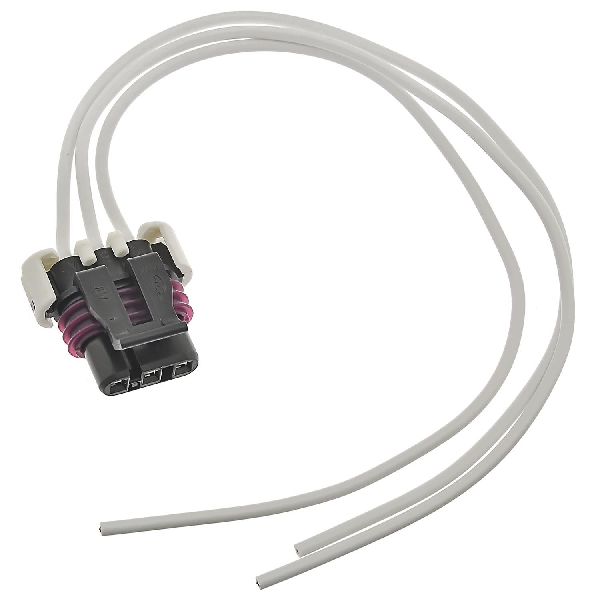
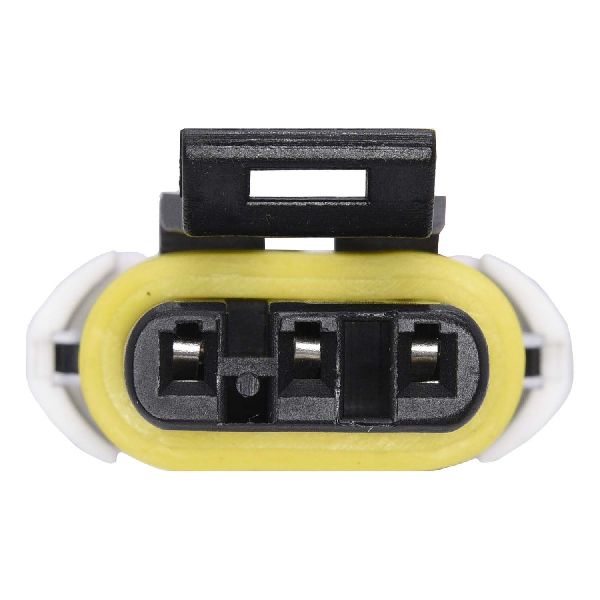
- CMP Sensor Connector Pinout — The 3-pin connector for the camshaft position sensor, located under the power steering pump.. Knowing the pinout is essential for testing power, ground, and signal directly at the sensor harness. Pin A is typically 12V Power (Pink), Pin B is the Signal (Yellow), and Pin C is the Ground (e.g., Lt Green/Black).
- ICM to Sensor Harness — The wiring harness that runs from the Ignition Control Module (ICM) to both the camshaft and crankshaft position sensors.. This specific harness is a known failure point. Insulation can wear away from heat and vibration, causing wires to short and trigger a P0341 even with a good sensor and ICM.
- G112 / G118 — Engine block grounds, typically located on the rear of the cylinder heads.. A poor engine ground can cause erratic behavior in various sensors, including the camshaft position sensor. While not a primary cause, checking that main engine grounds are clean and tight is a crucial step in diagnosing any electrical fault.
Real Owner Repair Stories
- Grand Prix Forums user 'Scottydoggs' (2004 Pontiac Grand Prix (related W-body platform)) — Persistent P0341 code after sensor replacement, rough idle, and stalling.
❌ Tried (didn't work) Replacing the Camshaft Position Sensor.
✅ What actually fixed it The user advised that the 'crank/cam to ICM harness' was the likely culprit, as they get worn out, causing insulation to fail and wires to short, resulting in a low circuit error. - Go-Parts research citing a GM forum (High-mileage GM 3.4L vehicle (similar engine family)) — Intermittent P0341 and stalling.
❌ Tried (didn't work) Replacing the cam sensor, Replacing the crank sensor, Replacing spark plugs and wires
✅ What actually fixed it Replacing the Ignition Control Module (ICM) finally resolved the issue after other common parts failed to do so.
When the Usual Fixes Don't Work
- In several documented cases, replacing the camshaft position sensor, which is the most common fix, did not resolve the P0341 code. The subsequent successful repair often involved replacing the wiring harness that connects the cam and crank sensors to the Ignition Control Module (ICM), as this harness is prone to chafing and shorting out. In rarer instances, the ICM itself was the root cause of the fault.
OEM Part Supersession History
10485432→ACDelco 213-920— Standard part number update and consolidation by the manufacturer.
Model Year Variations Within This Range
- 1997-1999 (L82) vs 2000-2003 (LG8): The electrical connector for the camshaft position sensor is different between the L82 and LG8 engines. When swapping engines between these year ranges, the original sensor corresponding to the vehicle's harness must be used. A 2000-2003 sensor will not plug into a 1997-1999 harness, and vice-versa.
Diagnostic Flowchart
Other Known Issues on This Vehicle
Issues unrelated to this code that are worth knowing about as an owner of this generation:
- Lower Intake Manifold (LIM) Gasket Failure 🔴 High — Extremely common on GM 3100/3400 SFI engines, often occurring between 80,000 and 150,000 miles. The original gasket design degrades from exposure to Dex-Cool coolant.
- Faulty Idle Air Control (IAC) Valve 🟠 Medium — A common cause of rough, unstable, or stalling idle. Carbon buildup often clogs the valve.
- Failing Window Regulators/Motors 🟡 Low — A frequent complaint from owners is the failure of power window motors or regulators, causing windows to become stuck.
- Warping/Curling Dashboard 🟡 Low — The dashboard material, particularly near the defroster vents, is known to curl up and deform from sun exposure over time.
- Prematurely Worn Suspension Components 🟠 Medium — Owners report that struts and other suspension parts can wear out sooner than expected, leading to poor ride quality.
Used vs. New Parts: Buying Guide for This Vehicle
When a used part is the smart pick: For electronic sensors like the CMP, a new part is always recommended. However, a used wiring harness (e.g., the cam/crank-to-ICM harness) from a low-mileage, undamaged donor vehicle can be a cost-effective solution if a new harness is discontinued or prohibitively expensive.
Donor-vehicle mileage cap: roughly under 100000 miles for the part to have meaningful remaining life.
What to inspect on the donor part:
- Inspect the harness for any signs of cracking, brittleness, or flaking insulation.
- Check for previous repairs like electrical tape, butt connectors, or non-factory splicing.
- Ensure connector housings are not cracked and that all locking tabs are present and functional.
- Avoid any harness that is covered in oil or appears to have been subjected to extreme heat.
OEM-only on this vehicle (don't cheap out):
- Camshaft Position Sensor
Aftermarket brands forum-validated for this vehicle:
- ACDelco (OEM)
- Delphi
Brands owners have reported issues with on this vehicle:
- Unbranded 'white-box' sensors
- Store-brand sensors with poor reviews
Real Owner Stories
Aggregated from forums and TSBs cited above. Mileages and costs reflect what owners reported in those sources.
1997 Pontiac Grand Prix 3.1L
Symptoms: The check engine light is illuminated but no drivability concerns have been noted by the owner.
What fixed it: Replacement of the camshaft position sensor (CMP).
Source hint: GoTech / WELLS Vehicle Electronics
2004 Pontiac Grand Prix GT
Symptoms: Persistent P0341 error code.
What fixed it: Checking the cam/crank to Ignition Control Module (ICM) harness for wear and tear.
Source hint: https://www.grandprixforums.net/threads/2004-gpgt-p0341-error-code.100999/
Pontiac Grand Prix
Symptoms: Engine cranks but will not start; P0341 code present.
What fixed it: Replacing the camshaft position sensor, though users warn that new sensors can be bad from the factory.
Source hint: https://www.grandprixforums.net/threads/p0340-p0341-camshaft-sensor.48042/
Pontiac Grand Prix
Symptoms: P0341 code persists even after a new sensor was installed.
What fixed it: Repairing the fragile Ignition Control Module (ICM) wiring harness.
Source hint: https://www.reddit.com/r/PontiacGrandPrix/comments/l3353r/hey_guys_i_really_need_help/
Related OBD-II Codes
Frequently Asked Questions
Does GM bulletin PI0090D apply to my Grand Prix's P0341 code?
Where is the camshaft position sensor located on the 3.1L L82 V6?
Why is my tachometer dropping to zero while driving my Grand Prix?
I replaced the sensor but the P0341 code is still there. What else should I check on this specific engine?
Are there any tips for removing the power steering pump to get to the sensor?
Should I use an aftermarket camshaft sensor for my 3.1L Pontiac?
Helpful Videos
We Have This Part in Stock


The information in this article is provided for general reference and educational purposes only. Vehicle specifications, procedures, and part compatibility can vary by production date, trim level, and region. Always consult your vehicle's factory service manual and verify part numbers before purchasing or performing repairs. Safety-critical components such as airbags, seat belts, and braking systems should be installed by a qualified professional.
- Pontiac Grand Prix:
- 🧭 Diagnostic Flowchart
- 🎬 Helpful Videos
- 🛍️ Shop This Part
- What's Unique About the 1997-2003 Pontiac Grand Prix
- Symptoms You May Notice
- Most Likely Causes
- Rare But Worth Checking
- Diagnosis Steps
- Parts You'll Likely Need
- Related Codes That Often Appear With This One
- Technical Service Bulletins (TSBs) & Recalls
- Platform-Specific Known Issues
- Mechanic-Grade Diagnostic Values
- Wiring & Ground Locations
- Real Owner Repair Stories
- When the Usual Fixes Don't Work
- OEM Part Supersession History
- Model Year Variations Within This Range
- Other Known Issues on This Vehicle
- Used vs. New Parts: Buying Guide for This Vehicle
- Real Owner Stories
- 1997 Pontiac Grand Prix 3.1L
- 2004 Pontiac Grand Prix GT
- Pontiac Grand Prix
- Pontiac Grand Prix
- Related OBD-II Codes
- Frequently Asked Questions
- 🎟️ Get 5% Off