

P0341 on 2003-2010 Porsche Cayenne: Camshaft Sensor Causes and Fixes
On a 2003-2010 Porsche Cayenne, code P0341 most often points to a failing Bank 1 camshaft position sensor. However, before replacing it, check the wiring for damage or oil contamination. If a new sensor doesn't fix it, the issue could be a more serious mechanical timing problem, like a stretched timing chain or a failing VarioCam solenoid/actuator, particularly on higher-mileage V8s.
- P0341 on a Cayenne specifically refers to a problem with the Bank 1 (passenger side in the US) camshaft position sensor signal.
- The most likely cause is a faulty sensor, which is a moderately difficult DIY replacement due to its location at the rear of the engine.
- A crucial diagnostic step is to swap the Bank 1 and Bank 2 sensors to see if the fault code follows the sensor.
- If a new sensor and confirmed good wiring do not fix the code, you may have a more serious mechanical timing issue that requires professional diagnosis.
What's Unique About the 2003-2010 Porsche Cayenne
The first-generation Cayenne (955/957) uses V6 and V8 engines where the camshaft position sensors are located at the rear of the engine, often requiring intake manifold removal for access on V8 models, which complicates replacement. While a faulty sensor is common, these higher-mileage V8 engines can also be prone to timing chain stretch or wear. This can cause the camshaft and crankshaft to be physically out of sync, which also triggers a P0341 code and represents a much more significant repair. Additionally, issues with the VarioCam (variable valve timing) system, such as a failing solenoid or adjuster, can also lead to this code.
Generation note: This guide covers the first-generation Porsche Cayenne, which includes two distinct phases: the 955 (2003-2006) and the 957 (2008-2010), with 2007 being a skipped model year in the US. The 955 models use port-injected 3.2L V6 and 4.5L V8 engines, while the 957 models switched to direct-injected 3.6L V6 and 4.8L V8 engines. These engine differences mean different part numbers and potentially different locations for the sensors and related components.
Symptoms You May Notice
- Check Engine Light is on
- Rough idle or engine stumbling
- Engine hesitating or surging on acceleration
- Difficulty starting the engine, or extended cranking time
- Reduced engine power and performance
- Potential for engine stalling
- Increased fuel consumption
- Replacing the crankshaft position sensor. While related to timing, this code specifically points to the camshaft 'A' circuit on Bank 1.
- Immediately assuming the timing chain is bad without diagnosing the sensor and wiring first. Always start with the simplest and most likely fixes.
- Replacing the sensor with a cheap, no-name aftermarket part. These can be dead-on-arrival or fail quickly, leading to wasted time and money. It's recommended to use OEM or a reputable brand like Bosch.
Most Likely Causes
- Failing Camshaft Position Sensor (Bank 1) 🔴 High Probability → Shop Engine Camshaft Position Sensor Sensors are electronic components that operate in a high-heat environment and can fail over time. It's the most common starting point for this code.
How to confirm: After checking wiring, the easiest way to confirm is to swap the Bank 1 and Bank 2 camshaft position sensors (they are identical parts). Clear the codes and drive. If the code changes to P0346 (Bank 2), the sensor you moved is faulty. If P0341 returns, the problem is not the sensor. This is a widely recommended diagnostic step on forums like Rennlist.
Typical fix: Replace the Bank 1 camshaft position sensor and its O-ring. Using an OEM sensor from a brand like Bosch is highly recommended.
Est. part cost: $25-$150 - Wiring Harness or Connector Issue 🟡 Medium Probability Engine bay heat makes wiring and plastic connectors brittle. Oil from leaking valve cover gaskets or VarioCam solenoid seals can seep into the connector, disrupting the signal.
How to confirm: Visually inspect the wiring harness and connector for the Bank 1 camshaft sensor. Look for frayed wires, loose pins, corrosion, or oil contamination. Use a multimeter to check for a 5V reference, a good ground, and a signal wire at the connector with the ignition on. A Rennlist user traced a similar fault to a bad solder joint in the harness near the ECU.
Typical fix: Repair the damaged section of the wiring harness or clean/replace the connector.
Est. part cost: $5-$50 - Stretched Timing Chain or Failed Tensioner ⚪ Low Probability → Shop Engine Timing Chain On higher-mileage Cayenne V8 engines (over 100k-150k miles), timing chain wear (often called 'stretch') is a known issue. The chain wears at its links, effectively lengthening it and causing the cam timing to lag behind the crank timing. This can be exacerbated by infrequent oil changes.
How to confirm: This is a complex diagnosis. A professional can use a VW/Porsche specific tool (like VCDS or PIWIS) to check camshaft deviation values. An oscilloscope can also compare cam and crank signals to reveal a timing discrepancy. A Rennlist user with 310,000 km noted a 10mm difference in length between his old and new chains. Physical inspection is the ultimate confirmation but requires significant engine disassembly.
Typical fix: Replace the timing chains, guides, and tensioners. This is a very labor-intensive job.
Est. part cost: $800-$2000
Rare But Worth Checking
- Failing VarioCam Solenoid or Actuator: The VarioCam system adjusts camshaft timing. A sticking or failed solenoid on Bank 1 can prevent the camshaft from being in its expected position, causing a discrepancy with the crank signal and triggering P0341. Oil leaking from the solenoid connector is a common sign of failure.
- Damaged Camshaft Reluctor Wheel: → Shop Engine Camshaft The teeth or 'fingers' on the camshaft that the sensor reads can become damaged, clogged with debris, or slip, leading to an incorrect signal. This is rare but possible if other engine work has been performed or if there has been a major mechanical failure.
- Failing ECM/DME: It is very rare for the Engine Control Module (ECM), also known as the Digital Motor Electronics (DME) in Porsches, to be the cause. This should only be considered after all other potential causes, including wiring back to the ECM, have been exhaustively ruled out.
- Weak Battery or Charging System Issue: → Shop Vehicle Battery Low voltage during cranking can sometimes cause the ECM to receive an implausible signal from the sensor, triggering the code. One forum user noted this possibility. This is more likely if the code appears intermittently and is accompanied by slow cranking.
Diagnosis Steps
- Read the code with an OBD-II scanner to confirm P0341 is present. Note any other codes, as they can provide critical clues (e.g., P0346, P0300, P0016).
- Visually inspect the Bank 1 camshaft position sensor and its electrical connector. It is located on the rear of the cylinder head (passenger side in US). Look for any obvious damage, loose connections, or oil contamination from nearby gaskets or seals.
- If accessible, swap the Bank 1 and Bank 2 camshaft position sensors. They are the same part. Clear the codes, run the engine, and see if the fault moves to Bank 2 (code P0346). If it does, the sensor is bad. If P0341 returns, the problem is not the sensor.
- If the code P0341 returns after the swap, test the wiring. Disconnect the sensor and check the connector for a 5-volt reference, a good ground, and a signal wire. Check for continuity on the signal wire back to the ECM. A YouTube guide shows testing for 12V and 5V signals at the connector.
- If the sensor and wiring are confirmed to be good, the next step is to investigate mechanical timing. This is best left to a professional or experienced DIYer. Use a Porsche-specific scan tool to check camshaft deviation angles. Values outside the +/- 6 degree range often indicate a stretched chain.
- As a deeper step, inspect the VarioCam solenoid on Bank 1 for leaks or use a scan tool to activate it. A faulty solenoid can cause timing deviation.
- The final, most involved step is physical inspection of the timing chain, guides, and tensioners, which requires significant engine disassembly.
Parts You'll Likely Need
- Camshaft Position Sensor
(OEM #99660610602 (V8 955), 95560610600 (V6 955), 94860610600 (V8 957))— This is the most common component to fail and trigger the P0341 code. Part numbers vary by engine.
Trusted brands: Bosch (OEM), VEMO, Standard Motor Products (SMP), FAE
OEM price range: $90-$180
Aftermarket price range: $25-$80
Related Codes That Often Appear With This One
- P0346 — Camshaft Position Sensor 'A' Circuit Range/Performance (Bank 2). If both P0341 and P0346 appear, it could point to a systemic issue like a timing chain problem affecting both banks, or a shared power/ground issue for the sensors.
- P0300, P0301-P0304 — Random or specific cylinder misfire codes for Bank 1. Incorrect cam timing can lead to misfires as the ignition and fuel events are not happening at the optimal moment.
- P0016 — Crankshaft Position - Camshaft Position Correlation (Bank 1). This code more directly indicates a mechanical timing issue between the crank and cam, strengthening the suspicion of a stretched chain or VarioCam problem.
Platform-Specific Known Issues
- Accessing the camshaft position sensors on V8 models requires the removal of the intake manifold, which adds significant labor time and complexity to the job. Several DIY guides on Pelican Parts and YouTube detail this process.
Mechanic-Grade Diagnostic Values
- Camshaft Position Sensor Supply Voltage — expected: ~5V. Failure: Significantly lower or no voltage indicates a wiring or ECU issue.
- Camshaft Position Sensor Signal Voltage (Static) — expected: ~4-5V. Failure: A reading of 0V or a short to ground (very low voltage) can indicate a wiring fault or a bad sensor.
- Camshaft Deviation Angles — expected: Between -6 and +6 degrees at idle.. Failure: Values consistently outside of the +/- 6 degree range strongly suggest a stretched timing chain or other mechanical timing issue.
- VarioCam Solenoid Activation — expected: An audible 'click' from the solenoid and a noticeable change in engine idle (stumbling).. Failure: No click or no change in idle suggests a failed solenoid or a problem in its control circuit.
Scan Tool Commands That Help
- PIWIS or Durametric: VarioCam Solenoid Activation / Test — Use this when the sensor and wiring have been verified as good. This command directly tests the variable valve timing solenoid for Bank 1. A failure to actuate points to a faulty solenoid or its wiring, which can cause the camshaft to be in the wrong position and trigger P0341.
Wiring & Ground Locations
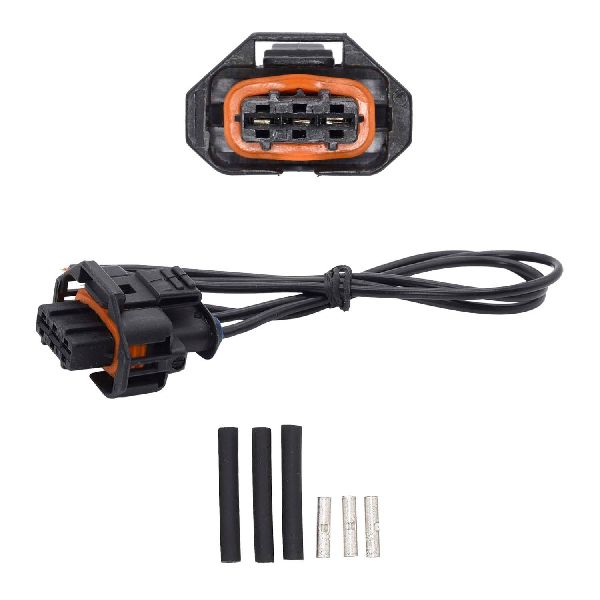
- Camshaft Position Sensor Connector — At the sensor, located on the rear of the cylinder head for the respective bank.. Pin 1 is Ground, Pin 3 is the ~5V power supply. The center pin is the signal wire. Correctly identifying these pins is crucial for electrical testing.
- Engine Ground Straps — There are major ground points on the rear of the engine block, sometimes near the heater control valve or bell housing. Another key ground runs from the alternator to the front left frame rail.. A corroded or loose main engine ground can introduce electrical noise and cause erratic behavior from sensitive electronics like the camshaft position sensor, leading to a P0341 code.
- Cam Sensor Signal Solder Joint — In the main wiring harness near the ECU/DME. The signal wires from both Bank 1 and Bank 2 sensors are spliced together into a single wire before entering the ECU.. A fracture in this solder joint, particularly on the wire coming from the Bank 1 sensor, will cause a P0341 code even if the sensor is good and the wiring appears intact at both ends. This is a difficult-to-find failure point.
Real Owner Repair Stories
- Rennlist user 'Austingtir' (Porsche Cayenne (955)) — Persistent P0341 code, inconsistent and laggy performance.
❌ Tried (didn't work) Replacing the camshaft position sensor, Replacing the VarioCam solenoids
✅ What actually fixed it Diagnosis revealed the true cause was mechanical timing. After locking the crankshaft at TDC, the user found that the Bank 1 camshafts were perfectly aligned, but the Bank 2 camshafts were out of time. This is a critical finding, as the P0341 code for Bank 1 was actually caused by a timing issue on Bank 2, confusing the ECU. The final fix is a timing chain service. - Rennlist user 'injurylawyer' (1999 Porsche (similar Motronic 5.2.2 system)) — Persistent P0341 after an engine rebuild.
❌ Tried (didn't work) Replacing sensors, Re-checking timing, Replacing tensioners, Sending DME/ECU for testing (came back good), Extensive electrical troubleshooting by an independent shop
✅ What actually fixed it The owner traced the signal wires (red/grey) in the harness near the ECU. He found the solder joint where the two sensor signals combine into one wire. The wire for the problematic sensor had a break at this joint. Repairing the broken wire at the splice finally resolved the code. - Rennlist user 'tuomo' (Porsche Cayenne with 310,000 km) — Persistent cam over-advanced error codes from Bank 1.
❌ Tried (didn't work) ECU flash/tune modifications by a previous owner had hidden the code temporarily.
✅ What actually fixed it The timing chain was replaced. When the old chain was laid next to the new one, it was visibly longer by approximately 5-10mm due to wear at the links. This 'stretch' was enough to cause the timing deviation and trigger the fault code.
"I Checked Everything" — The Actual Cause
- A smoke test for vacuum leaks will not identify the root cause of P0341. This code is electrical or mechanical in nature. Technicians have reported cases where all electrical tests on the sensor and wiring pass, and the ultimate cause was found to be either a subtle mechanical issue like a broken reluctor tooth on the camshaft, or a hidden wiring break at a splice point far from the sensor itself.
When the Usual Fixes Don't Work
- In one well-documented case on Rennlist, a user with a P0341 code (Bank 1) performed all the standard checks (sensor, wiring, solenoid) with no success. Upon performing a full mechanical timing check, he discovered Bank 1 was perfectly in time, but Bank 2 was off. This indicates that a significant timing deviation on the opposite bank can, in some cases, confuse the ECU and cause it to report a fault on the correctly timed bank. This contradicts the common assumption that P0341 is always an issue isolated to Bank 1's sensor, wiring, or mechanical timing.
Model Year Variations Within This Range
- 2003-2006 (955 V8): These models use the VarioCam system, which adjusts camshaft timing.
- 2008-2010 (957 V8): These models use the more advanced VarioCam Plus system, which adds variable valve lift to the variable timing. This adds another layer of complexity to the valvetrain system.
- 2010-2012 (958 - Next Gen): It is important not to confuse the 957 with the next-generation 958. The early 958 V8 engines were subject to a major recall (AH08 / WC22) for camshaft adjuster bolts that could shear off. This specific recall does NOT apply to the 2003-2010 models covered in this article.
Diagnostic Flowchart
Used vs. New Parts: Buying Guide for This Vehicle
When a used part is the smart pick: For this specific code, used parts are generally not recommended for sensors or wiring. The only scenario where a used part might be considered is if a major mechanical failure (like a failed timing chain) is diagnosed, and a complete, low-mileage used engine is more cost-effective than the labor-intensive repair of the original engine.
Donor-vehicle mileage cap: roughly under 75000 miles for the part to have meaningful remaining life.
What to inspect on the donor part:
- For a complete engine, seek proof of mileage and service history.
- Check for oil leaks around valve covers, VarioCam solenoids, and front engine seals.
- If possible, get camshaft deviation numbers from the donor vehicle before it was pulled.
OEM-only on this vehicle (don't cheap out):
- Camshaft Position Sensor: Forums and specialists universally recommend using the OEM Bosch sensor. Aftermarket sensors are known to be a common cause of repeat failures.
- Timing Chain and Components: Given the critical nature and high labor cost of this job, using OEM or OEM-supplier parts is essential for longevity.
Aftermarket brands forum-validated for this vehicle:
- Bosch (OEM supplier for sensors)
- VEMO (Often a reliable alternative for sensors and solenoids)
Brands owners have reported issues with on this vehicle:
- Unbranded, low-cost sensors from online marketplaces like Amazon or eBay are frequently reported as being dead-on-arrival or failing within a short period.
Real Owner Stories
Aggregated from forums and TSBs cited above. Mileages and costs reflect what owners reported in those sources.
2003-2010 Cayenne 955 — 146020 miles
Symptoms: Check engine light was on with inconsistent and laggy boost, but the owner noted no rough idle.
What fixed it: After replacing the cam sensor and solenoids did not fix the P0341 code, the owner suspected the root cause was a mechanical timing issue, likely a worn timing chain.
Source hint: Rennlist
2005 Cayenne S — 91000 miles
Symptoms: The P0341 code returned immediately with a rough idle and engine surging.
What fixed it: Replacing the camshaft position sensor with a new Bosch unit did not fix the problem, indicating the fault was with the wiring or mechanical timing, not the sensor itself.
Source hint: Rennlist: 'Possible Camshaft Problem?'
2003-2010 Cayenne — 192625 miles
Symptoms: A persistent P0341 code that was not resolved by replacing sensors or solenoids.
What fixed it: The owner confirmed the root cause was a stretched timing chain, which was found to be 10mm longer than the new replacement chain upon disassembly.
Source hint: Rennlist: 'Cam sensor fault p0341 CHECKING TIMING!'
2005 Cayenne Turbo
Symptoms: Engine misfires were occurring along with the P0341 trouble code.
What fixed it: The owner reported that the P0341 code was the likely root cause for the accompanying misfire codes, as incorrect cam timing can disrupt engine operation.
Source hint: RennTech: 'P0341 Camshaft Position Sensor problem/Misfire'
Related OBD-II Codes
Frequently Asked Questions
Is it difficult to replace the camshaft position sensor on my V8 Cayenne?
I replaced the Bank 1 sensor but the P0341 code came back. What's the next step?
How can I test the camshaft position sensor without buying a new one first?
Is a stretched timing chain a common cause for P0341 on these Cayennes?
Can an oil leak cause this P0341 code?
How can a mechanic confirm a stretched timing chain without disassembling the engine?
What brand of replacement sensor is recommended for the Porsche Cayenne?
We Have This Part in Stock


The information in this article is provided for general reference and educational purposes only. Vehicle specifications, procedures, and part compatibility can vary by production date, trim level, and region. Always consult your vehicle's factory service manual and verify part numbers before purchasing or performing repairs. Safety-critical components such as airbags, seat belts, and braking systems should be installed by a qualified professional.
- Porsche Cayenne:
- 🧭 Diagnostic Flowchart
- 🛍️ Shop This Part
- What's Unique About the 2003-2010 Porsche Cayenne
- Symptoms You May Notice
- Most Likely Causes
- Rare But Worth Checking
- Diagnosis Steps
- Parts You'll Likely Need
- Related Codes That Often Appear With This One
- Platform-Specific Known Issues
- Mechanic-Grade Diagnostic Values
- Scan Tool Commands That Help
- Wiring & Ground Locations
- Real Owner Repair Stories
- "I Checked Everything" — The Actual Cause
- When the Usual Fixes Don't Work
- Model Year Variations Within This Range
- Used vs. New Parts: Buying Guide for This Vehicle
- Real Owner Stories
- 2003-2010 Cayenne 955 — 146020 miles
- 2005 Cayenne S — 91000 miles
- 2003-2010 Cayenne — 192625 miles
- 2005 Cayenne Turbo
- Related OBD-II Codes
- Frequently Asked Questions
- 🎟️ Get 5% Off