

P0341 on 2011-2013 Subaru Forester: Camshaft Position Sensor Causes and Fixes
On a 2011-2013 Forester with the FB25B engine, P0341 is frequently caused by faulty ECM software, a failing camshaft position sensor, or an incorrect sensor air gap. A software update from a dealer (TSB 11-137-14) or installation of a sensor shim (TSB 11-130-13R) may be required. If not, replacing the sensor is a common fix, costing around $40-$80 for an aftermarket part or $99-$150 for OEM.
- Before buying parts, call a Subaru dealer with your VIN to check if TSB #11-137-14 (ECM reprogram) applies to your vehicle.
- P0341 refers to the intake camshaft sensor on Bank 1, which is the passenger side of the engine.
- If a software update doesn't fix it, the next logical step is replacing the camshaft position sensor.
- Be aware that a rare but documented fix involves installing a small shim to correct the sensor's air gap, especially on 2013 models.
- This code can cause significant drivability problems, including a no-start condition, so it should be addressed promptly.
What's Unique About the 2011-2013 Subaru FORESTER
The 2011-2013 Forester is unique for P0341 because its FB25B engine was new to the platform, and Subaru subsequently identified several distinct root causes through Technical Service Bulletins (TSBs). Unlike many vehicles where P0341 points directly to a bad sensor, here it could be a software glitch needing an ECM reprogram (TSB #11-137-14), a mechanical tolerance issue where the air gap between the sensor and camshaft requires a shim (TSB #11-130-13R), or a standard sensor failure. This multi-faceted problem means simply replacing the sensor often fails to fix the issue, requiring a more nuanced diagnostic approach.
Diagnostic Flowchart
Tap your situation to follow the diagnostic path that matches what you're seeing on this vehicle.
Symptoms You May Notice
- Check Engine Light is on (often with flashing cruise control and brake lights)
- Difficulty starting the engine, or extended cranking time
- Engine won't start on the first try, but may start on the second
- Rough idle
- Engine stalling or hesitating, sometimes described as lurching
- Reduced engine power and poor acceleration
- Decreased fuel economy
- Engine sounds like it's running on fewer cylinders
- Replacing the camshaft position sensor when the actual root cause is a software issue that requires an ECM reprogram or an air gap issue requiring a shim.
- Replacing the crankshaft position sensor instead of the camshaft position sensor.
- Assuming the new engine is at fault after a replacement, when ancillary components like sensors or wiring from the old engine were reused and are the actual cause.
- Replacing other ignition components like spark plugs or coils without first addressing the specific sensor circuit code.
Most Likely Causes
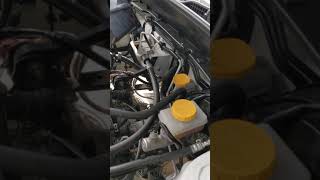
- Faulty Engine Control Module (ECM) Software 🔴 High Probability Subaru issued TSB #11-137-14 specifically to address this code with a software update, indicating the original logic was too sensitive or flawed for certain conditions. This TSB applies to 2013 Forester Turbo models, 🎬 See this walkthrough for replacing sensors on a 2011 Turbo but similar logic issues can affect other models in this range.
How to confirm: Contact a Subaru dealership with your vehicle's VIN. They can verify if TSB #11-137-14 or another reprogramming campaign is applicable and whether it has already been performed.
Typical fix: Reprogramming (reflashing) the ECM with the updated software file provided by Subaru. This requires a dealer or a specialized shop with a Subaru Select Monitor (SSM) tool.
Est. part cost: $100-$200 (Typically a 1-hour labor charge at a dealership for the reflash) - Incorrect Sensor Air Gap 🟡 Medium Probability TSB #11-130-13R, which supersedes several earlier bulletins, identifies that manufacturing tolerances in the camshaft or sensor plate can cause an incorrect air gap between the sensor and the reluctor wheel. This was a known issue on the then-new FB/FA series engines.
How to confirm: This is diagnosed after a new sensor and software update fail to resolve the code. A technician can use an oscilloscope to check the sensor's waveform; an irregular pattern suggests an air gap issue. The gap can be physically measured, but this is a complex procedure detailed in the TSB.
Typical fix: Installation of a specific shim (a thin spacer) between the sensor and its mounting point to correct the air gap. The TSB provides a procedure for selecting the correct shim thickness (0.1mm to 0.8mm). The torque for the sensor bolt is critical: 6.4 Nm (4.7 ft-lbs).
Est. part cost: $10-$20 (for OEM shim kit, p.n. 10130AA060) - Failing Camshaft Position Sensor 🟡 Medium Probability → Shop Engine Camshaft Position Sensor The sensor is an electronic component in a high-heat, high-vibration environment and can fail with age. Oil contamination can also damage the sensor. Owners often replace this part first, though it may not be the root cause.
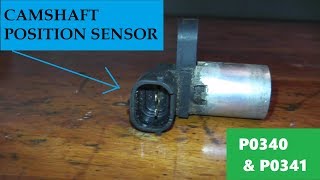
How to confirm: After ruling out software, this is a common next step. The sensor can be tested with a multimeter for resistance; a reading between 1 to 4 kilo-ohms is typical for a good sensor on some Subaru models. An out-of-spec reading indicates failure. A definitive test uses an oscilloscope to check for a clean square wave signal. 🎬 Watch: How to test and replace the camshaft position sensor
Typical fix: Replace the Bank 1 (right/passenger side) intake camshaft position sensor. Always replace the O-ring (p.n. 13099AA050) at the same time.
Est. part cost: $40-$80 (aftermarket), $99-$150 (OEM) - Damaged Wiring or Connector ⚪ Low Probability Engine bay wiring is exposed to heat and vibration, which can cause chafing, breaks, or loose pins in the connector over time. Corrosion can also build up in the connector.
How to confirm: Visually inspect the wiring harness and connector for the Bank 1 camshaft position sensor for any signs of damage, corrosion, or loose pins. Use a multimeter to test for proper voltage (10V+), ground, and signal continuity back to the ECM.
Typical fix: Repair the damaged section of the harness or clean the connector with electrical contact cleaner. In severe cases, the connector pigtail may need to be replaced.
Est. part cost: $5-$50
Rare But Worth Checking
- Stretched Timing Chain or Failed Tensioner: → Shop Engine Timing Chain While less common on its own, a stretched timing chain or a failing hydraulic tensioner can cause the camshaft and crankshaft signals to fall out of sync, triggering a P0341 performance code. This is a more serious mechanical issue often accompanied by a rattling noise on startup or at idle.
- Failing AVCS Solenoid or Cam Sprocket: A problem with the Active Valve Control System (AVCS) oil control solenoid or the cam phaser (sprocket) itself can prevent the camshaft from reaching its target position. This can lead to a performance code like P0341, though it often sets other AVCS-specific codes as well.
Diagnosis Steps
- Check for TSBs: Contact a Subaru dealer with your VIN to check for outstanding TSBs, specifically #11-137-14 (ECM reprogram) and #11-130-13R (air gap/shim). This should be the first step.
- Perform Software Update: If an ECM update is applicable and hasn't been done, have this performed by a dealer or qualified shop.
- Inspect Wiring: Locate the Bank 1 (passenger side) intake camshaft position sensor on the front of the engine timing cover. Visually inspect the sensor's electrical connector and wiring for damage, corrosion, or loose connections.
- Test the Sensor: If wiring is intact, test the sensor with a multimeter for resistance or, ideally, with an oscilloscope for a clean signal waveform. An irregular waveform points towards a bad sensor or an air gap issue.
- Replace the Sensor: If the sensor tests bad or as a common diagnostic step, replace the Bank 1 intake camshaft position sensor (p.n. 22056AA101) and its O-ring (p.n. 13099AA050).
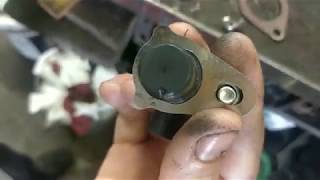
- Address Air Gap: If the code returns after replacement, the issue is likely the sensor's air gap. Following the procedure in TSB #11-130-13R, install the appropriate shim from kit p.n. 10130AA060. This involves starting with a thin shim and checking the waveform, progressively using thicker shims until the signal is stable. 🎬 Watch: How to install shims to fix the sensor gap
- Advanced Diagnosis: If all else fails, a more in-depth mechanical diagnosis is needed to check for a stretched timing chain or issues with the AVCS system, which may require a professional technician.
Parts You'll Likely Need
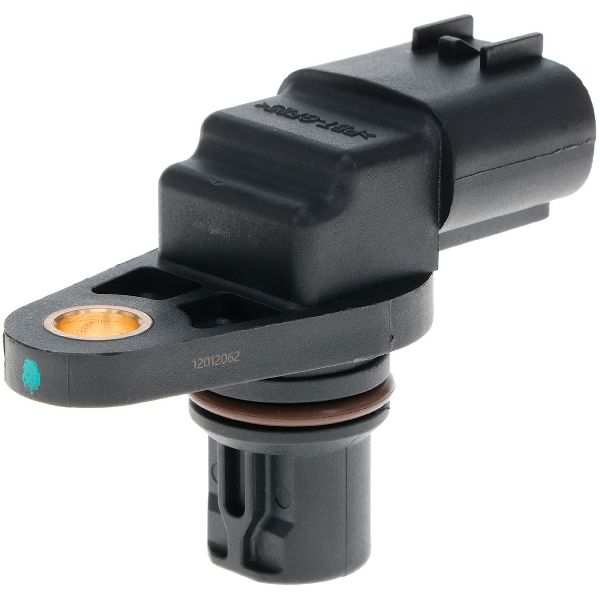
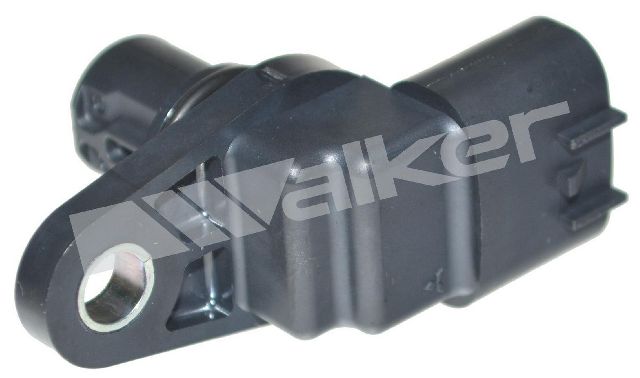
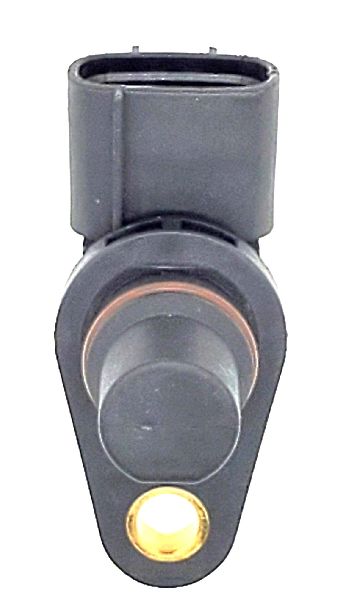
- Camshaft Position Sensor
(OEM #22056AA101)— This sensor is the most frequently replaced part to resolve a P0341 code after software and air gap issues have been ruled out.
Trusted brands: Denso, NTK, Hitachi, Subaru (OEM)
OEM price range: $99-$150
Aftermarket price range: $40-$80 - Camshaft Position Sensor Shim Kit
(OEM #10130AA060)— Required in cases where the sensor's air gap is out of specification, as documented in Subaru TSB #11-130-13R. The kit contains 8 shims of varying thickness.
Trusted brands: Subaru (OEM)
OEM price range: $10-$20
Related Codes That Often Appear With This One
- P0340 — This is a general circuit malfunction code for the same sensor. P0341 is a performance/range code, but a failing sensor or wiring issue can trigger both.
- P0301, P0302, P0303, P0304 — These are misfire codes for individual cylinders. Incorrect cam timing from a bad sensor signal directly impacts ignition and fuel events, leading to misfires. Subaru TSB #11-130-13R explicitly links these codes together as a common symptom set.
- P0346 — This is the equivalent P0341 code but for the Bank 2 (driver's side) camshaft position sensor. TSBs from Subaru often address P0341 and P0346 together, as the underlying software or mechanical tolerance issues can affect both banks.
Technical Service Bulletins (TSBs) & Recalls
- 11-137-14: REPROGRAMMING FILE AVAILABILITY FOR DTCS P0341 AND P0346
- 11-130-13R: DIFFICULTY STARTING, ROUGH IDLE, CAM POSITION OR MISFIRE DTCS...
- 11-100-11R: DIFFICULTY STARTING, ROUGH IDLE DTCS P0301, P0302, P0303, P0304 P0340, P0341, P0345, P0346
Platform-Specific Known Issues
- ECM Software Update: TSB #11-137-14 was issued to provide a reprogramming file for the ECM to correct false P0341/P0346 codes on 2013 Forester Turbo models. The bulletin provides specific PAK file names for the update.
- Sensor Air Gap/Shim Requirement: TSB #11-130-13R is a comprehensive bulletin that supersedes earlier ones and details a procedure to inspect and correct the air gap for camshaft position sensors using a shim kit (p.n. 10130AA060). It notes this can cause rough idle, hard starting, and various cam/misfire codes. The fix involves adding one shim of the correct thickness to achieve a normal oscilloscope pattern.
- 2013 Model Year Note: An earlier TSB (#11-100-11R) specifically noted that an irregular stamping of the camshaft position sensor plate could cause this issue and that DTCs P0341 and P0346 were particularly applicable to 2013 models in the context of the shim fix.
Mechanic-Grade Diagnostic Values
- Camshaft Position Sensor Internal Resistance — expected: 1 to 4 kΩ (kilo-ohms). Failure: A reading outside of this range, or an open/infinite reading, indicates a failed sensor.
- Sensor Power Supply Voltage (Key On, Engine Off) — expected: 10 V or more. Failure: Voltage below 10V indicates an open or short circuit in the power supply harness between the main relay and the sensor.
- Continuity between ECM and Sensor Connector — expected: Less than 1 Ω (ohm). Failure: Resistance higher than 1 Ω indicates an open circuit or poor connection in the harness.
- Sensor Retaining Bolt Torque — expected: 6.4 Nm (4.7 ft-lbs). Failure: Incorrect torque can lead to a poor sensor reading or damage to the sensor/housing.
Scan Tool Commands That Help
- Subaru Select Monitor (SSM): Live Waveform Monitoring — This is the definitive method for diagnosing an air gap issue. The TSB procedure requires observing the sensor's square wave pattern on an oscilloscope or the SSM to see if it is irregular. A stable, clean square wave confirms a good signal.
Wiring & Ground Locations
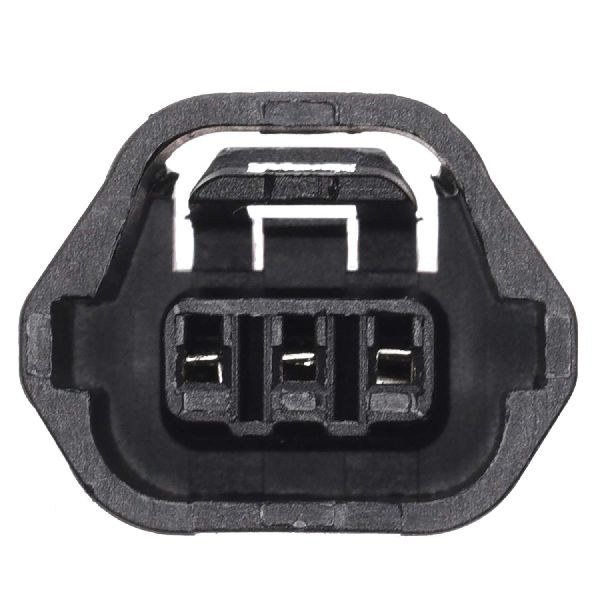
- E36 — The electrical connector on the Bank 1 (passenger side) camshaft position sensor itself.. This is the primary connector to test for power, ground, and signal. Pin 1 is power, Pin 2 is signal, and Pin 3 is ground.
- B136 — The main engine computer (ECM) connector, located in the passenger footwell area.. This is the termination point for the sensor harness. Technicians test for continuity between connector E36 at the sensor and connector B136 at the ECM (specifically pins 26 and 34) to rule out a wiring break.
- Engine Ground Points — The primary engine-to-chassis grounds are typically located on the intake manifold, bolting the harness directly to the manifold.. A loose or corroded engine ground can introduce electrical noise and cause erratic sensor readings, potentially triggering a P0341 code even if the sensor and its direct wiring are good.
Real Owner Repair Stories
- subaruforester.org forum user (2011 Subaru Forester 2.5X (FB25B)) — P0341 and P0346 codes appeared together, along with rough idle and occasional stalling.
❌ Tried (didn't work) Replaced both Bank 1 and Bank 2 camshaft position sensors., Checked wiring for continuity, which tested okay.
✅ What actually fixed it The user took the car to a dealer who found the Bank 1 (passenger side) AVCS (Active Valve Control System) oil control solenoid was faulty. Replacing the solenoid (and performing an oil change) resolved both camshaft codes. - Reddit user r/subaru (2013 Subaru Outback 2.5i Premium (FB25B), 200k+ miles) — Persistent P0341 with severe symptoms: lurching, missing, stalling at idle, and increased oil consumption.
❌ Tried (didn't work) The shop initially dismissed the intermittent code as not an issue.
✅ What actually fixed it The user planned to replace the camshaft position sensor themselves. The detailed diagnostic steps provided in the comments, including specific voltage and resistance checks for the harness and sensor, represent the proper troubleshooting path beyond simple replacement. The final resolution was not posted, but the provided diagnostic steps are of high value.
OEM Part Supersession History
22056AA101→None, this part number remains current.— N/A
Heads up: While this part number fits a wide range of Subaru models, including older Legacy and Tribeca models, it is crucial to use this specific OEM part or a high-quality equivalent for the 2011-2013 Forester due to the known sensitivity and TSBs related to this system.
Model Year Variations Within This Range
- 2013: TSB #11-137-14, which provides a software update for P0341 and P0346, is specifically listed for 2013 model year vehicles. While the air gap issue (TSB #11-130-13R) applies to the entire 2011-2014 range, the software-specific fix was targeted at the later model year within this generation, suggesting a change in the factory ECM logic for 2013.
Helpful Videos
We Have This Part in Stock


The information in this article is provided for general reference and educational purposes only. Vehicle specifications, procedures, and part compatibility can vary by production date, trim level, and region. Always consult your vehicle's factory service manual and verify part numbers before purchasing or performing repairs. Safety-critical components such as airbags, seat belts, and braking systems should be installed by a qualified professional.
- Subaru FORESTER:
- 🧭 Diagnostic Flowchart
- 🎬 Helpful Videos
- 🛍️ Shop This Part
- What's Unique About the 2011-2013 Subaru FORESTER
- Symptoms You May Notice
- Most Likely Causes
- Rare But Worth Checking
- Diagnosis Steps
- Parts You'll Likely Need
- Related Codes That Often Appear With This One
- Technical Service Bulletins (TSBs) & Recalls
- Platform-Specific Known Issues
- Mechanic-Grade Diagnostic Values
- Scan Tool Commands That Help
- Wiring & Ground Locations
- Real Owner Repair Stories
- OEM Part Supersession History
- Model Year Variations Within This Range
- 🎟️ Get 5% Off