

P0341 on 2005-2009 Subaru Outback 2.5L: Camshaft Sensor and Timing Fixes
On a 2005-2009 Outback, P0341 is most often a failing camshaft position sensor, causing hard starts or stalling. If a new OEM sensor doesn't fix it, the timing belt may have stretched or skipped a tooth. A new OEM sensor costs around $110. Aftermarket sensors are strongly discouraged by owners.
- P0341 on a 2005-2009 Outback points to the passenger-side camshaft position sensor.
- The most common fix is replacing the sensor (OEM Part #22056AA063), which is an easy DIY job.
- If a new sensor doesn't solve the problem, immediately suspect a mechanical timing issue, such as a skipped or stretched timing belt.
- Symptoms like hard starting, stalling, and rough idle are very common with this code and should be addressed to avoid being stranded.
- Do not confuse this with issues on newer (2010+) Subarus, which may involve different sensors, ECM updates, or shims not applicable to this generation.
What's Unique About the 2005-2009 Subaru Outback
The EJ253 is a Single Overhead Cam (SOHC) engine that uses a timing belt, not a chain. Because of this, a common cause for P0341 that is often overlooked is a worn or stretched timing belt that has slipped a tooth. This throws off the mechanical timing between the camshaft and crankshaft, leading the ECM to see a 'performance' issue with the sensor's signal, even if the sensor itself is working perfectly. Owners should always consider the timing belt's age and condition when diagnosing this code, especially if the code appears shortly after a timing belt service.
Symptoms You May Notice
- Check Engine Light is on
- Engine is hard to start or cranks for a long time
- Engine will not start at all
- Engine stalls unexpectedly, often at idle
- Rough idling or engine misfires
- Hesitation or stumbling during acceleration
- Reduced engine power
- Decreased fuel economy
- Replacing the crankshaft position sensor instead of the camshaft position sensor.
- Replacing the camshaft sensor multiple times (especially with aftermarket parts) without checking for a mechanical timing issue (skipped timing belt).
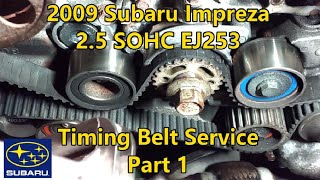
- Assuming the timing is correct without performing a thorough visual inspection of the alignment marks. 🎬 See this walkthrough on checking your timing belt alignment.
Most Likely Causes
- Failing Camshaft Position Sensor 🔴 High Probability → Shop Engine Camshaft Position Sensor The sensor is a common failure point due to age and heat cycles in the engine bay. Owner forums are filled with reports of this sensor failing and strongly recommend using only Genuine Subaru (OEM) parts, as aftermarket sensors are notorious for being dead-on-arrival or failing within a short period.
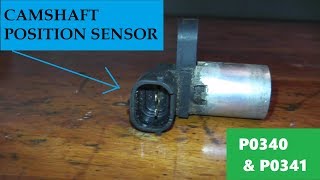
How to confirm: Test the sensor's resistance with a multimeter. A reading between 1 to 4 kΩ is expected; a reading outside this range indicates a bad sensor. 🎬 Watch: How to test and replace the camshaft sensor. Given the high failure rate of aftermarket parts, replacement with an OEM sensor is a common and often successful first diagnostic step.
Typical fix: Replace the camshaft position sensor and its O-ring with a Genuine Subaru part.
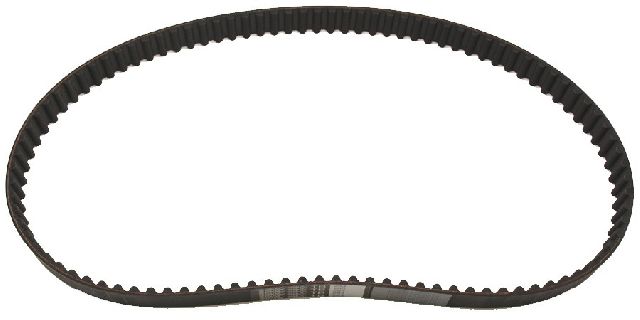
Est. part cost: $90-$130 for OEM - Stretched or Skipped Timing Belt 🟡 Medium Probability → Shop Engine Timing Chain The EJ253 engine uses a timing belt with a recommended replacement interval of 105,000 miles. As the belt ages, it can stretch or the tensioner can weaken, allowing the belt to jump a tooth on the cam sprocket. This is also a common issue if the timing belt was recently replaced incorrectly.
How to confirm: Remove the timing belt covers and visually inspect the alignment marks on the camshaft and crankshaft sprockets. Rotate the engine by hand to ensure all marks line up perfectly as per the service manual. Also inspect the belt for wear, cracking, or excessive slack.
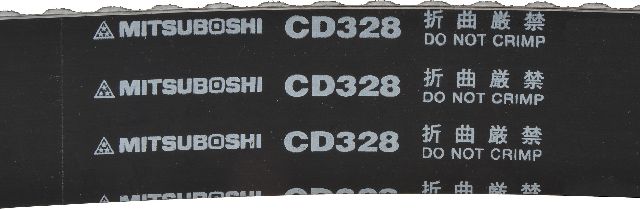
Typical fix: Replace the timing belt, tensioner, and idler pulleys. This is often done as a complete kit. The Aisin TKF-004 kit is a highly regarded choice containing OEM-supplier components.
Est. part cost: $150-$300 - Damaged Wiring or Connector ⚪ Low Probability The wiring harness in the engine bay is exposed to heat and vibration, which can cause wires to become brittle or connectors to loosen over time. Oil from a leaking sensor O-ring can also contaminate the connector pins.
How to confirm: Visually inspect the wiring harness leading to the camshaft position sensor for any signs of cracking, melting, or chafing. Unplug the connector and check for oil contamination, corrosion, or bent pins. Perform a continuity test on the signal, power, and ground wires from the sensor connector to the ECM.
Typical fix: Clean the connector with electrical contact cleaner. Repair the damaged section of wire or replace the connector pigtail.
Est. part cost: $10-$30
Rare But Worth Checking
- Damaged Camshaft Sprocket Reluctor Ring: → Shop Engine Camshaft The teeth on the back of the camshaft sprocket, which the sensor reads, can become damaged, bent, or covered in debris, leading to an erratic signal. This is rare but should be checked during a timing belt inspection.
- Failing Engine Control Module (ECM): In very rare cases, the fault may lie within the ECM's internal circuitry. This should only be considered after all other possibilities, including wiring and mechanical timing, have been exhaustively ruled out.
Diagnosis Steps
- Read the code with an OBD-II scanner to confirm P0341 is present. Note any other codes.
- Inspect the wiring and connector for the passenger-side camshaft position sensor. Look for loose connections, oil contamination, corrosion, or damaged wires.
- If wiring looks good, replace the camshaft position sensor with a new OEM part (Part No. 22056AA063). This is the most common fix and avoids issues with unreliable aftermarket sensors.
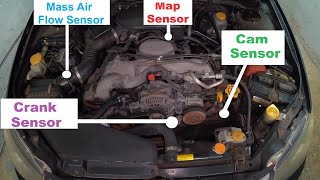
- The sensor is located on the top of the passenger-side cylinder head, near the front timing cover. 🎬 Watch: Locate every sensor on your Subaru Boxer engine. It is held by a single 10mm bolt.
- After replacing the sensor, clear the code and test drive the vehicle. If the code returns, the problem is likely mechanical.
- Perform a timing belt inspection. This is critical. Remove the front timing covers to check the belt's condition and, most importantly, verify that the timing marks on the cam and crank sprockets are perfectly aligned per the service manual.
- If the timing is off by even one tooth, a full timing belt service (belt, tensioner, idlers) is required. Use a quality kit like the Aisin TKF-004.
- If timing is correct and the sensor and wiring are good, inspect the reluctor teeth on the back of the cam sprocket for damage or debris.
- As a final, rare check, an oscilloscope can be used to compare the camshaft and crankshaft sensor waveforms to a known-good pattern to identify subtle signal issues.
Parts You'll Likely Need
- Camshaft Position Sensor
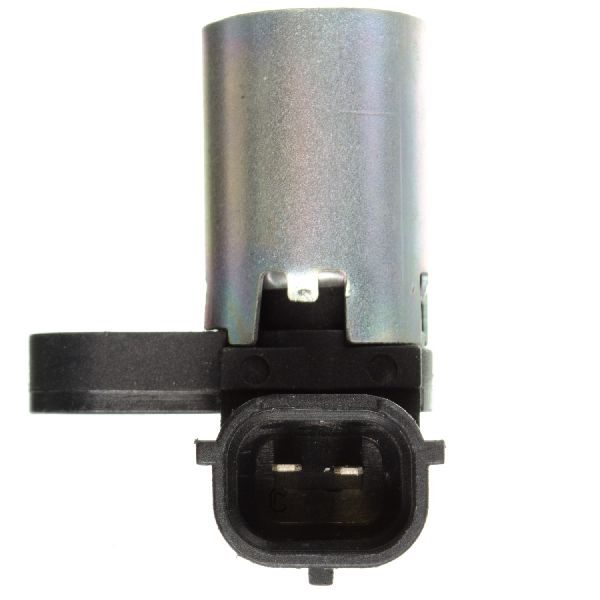
(OEM #22056AA063 (may be superseded by 22056AA064))— This is the most common part to fail and cause a P0341 code. Using an OEM sensor is critical for a lasting repair.
Trusted brands: Subaru (OEM) - Strongly Recommended, NGK/NTK, Denso
OEM price range: $90-$130
Aftermarket price range: $40-$80 - Timing Belt Kit
(OEM #Aisin TKF-004 (OEM supplier kit))— If the sensor replacement does not fix the issue, a stretched or skipped timing belt is the next most likely cause. A kit includes the belt, tensioner, and idler pulleys.
Trusted brands: Aisin, Gates, ContiTech
OEM price range: $250-$350
Aftermarket price range: $150-$250
Related Codes That Often Appear With This One
- P0340 — P0340 is a general circuit malfunction for the same sensor. A failing sensor can intermittently trigger both a performance code (P0341) and a circuit fault code (P0340).
- P0301, P0302, P0303, P0304 — These are cylinder misfire codes. An incorrect camshaft signal disrupts ignition and fuel timing, which can lead to misfires on one or more cylinders.
Technical Service Bulletins (TSBs) & Recalls
- TSB 11-118-12R / 02-143-13R: While not for the EJ253, these TSBs for later FB/FA engines address P0341/P0346 codes caused by an incorrect air gap between the sensor and the reluctor wheel, requiring shims for adjustment. This highlights a potential, though less documented, diagnostic path if all else fails.
- TSB Bulletin #11-137-14: This manufacturer bulletin notes that reprogramming files are available for DTCs P0341 and P0346 on certain Subaru models, indicating that software logic can sometimes play a role in how these codes are triggered.
- TSB Bulletin #11-130-13R: This record describes issues with difficulty starting and rough idle associated with cam position or misfire DTCs including P0341, P0301, and P0304, providing specific inspection and repair procedures for intake and exhaust components.
- TSB Bulletin #11-124-12R: A manufacturer service bulletin notes that P0341 can be accompanied by difficulty starting and rough idling, specifically linking the code to camshaft position or misfire faults.
- TSB Bulletin #11-100-11R: This bulletin describes a condition where a shim may need to be added to the Bank 1 (right hand) camshaft position sensor to bring the air gap into specification to resolve P0341.
Platform-Specific Known Issues
- Aftermarket Sensor Unreliability: There is a strong consensus in owner communities that aftermarket camshaft position sensors for this vehicle are highly unreliable, often failing out of the box or within a few months. It is almost always recommended to spend the extra money on a Genuine Subaru (OEM) sensor to avoid repeat repairs.
- Post-Timing Belt Job Fault: → Shop Engine Timing Chain The P0341 code appearing immediately after a timing belt replacement is a red flag for incorrect mechanical timing. Even being off by a single tooth can trigger this code, and the timing marks must be re-verified before suspecting other components.
Mechanic-Grade Diagnostic Values
- Camshaft Position Sensor AC Voltage Output (while cranking) — expected: ~0.5V AC or higher, increasing with engine RPM. Failure: No AC voltage or a very weak/erratic signal suggests a failed sensor.
- Continuity between Sensor Connector and ECM — expected: Less than 1.0 Ω. Failure: Resistance greater than 1.0 Ω indicates a break or high resistance in the wiring harness.
- Camshaft Position Sensor Internal Resistance — expected: 1 to 4 kΩ (kilo-ohms). Failure: A reading outside this range, or an open/infinite reading, indicates a failed sensor.
Scan Tool Commands That Help
- Subaru Select Monitor (SSM) or equivalent professional oscilloscope: Live Waveform Monitoring (Cam vs. Crank) — This is the definitive diagnostic step when a new OEM sensor and correct mechanical timing do not resolve the code. It allows a technician to visually compare the camshaft and crankshaft sensor signals to a known-good pattern, revealing subtle issues like electrical noise, incorrect air gap, or a damaged reluctor ring that a simple code reader cannot see.
Wiring & Ground Locations
- Camshaft Position Sensor Connector (E36) — On the top of the passenger-side cylinder head, near the front timing cover, connecting directly to the sensor.. This is the primary point for testing the sensor itself and the start of the circuit back to the ECM. It is prone to oil contamination from a leaking sensor O-ring.
- ECM Connector B135 (on a 2005 model, may vary slightly by year) — Located in the passenger footwell, behind the kick panel.. The wires from the camshaft sensor terminate here. Specifically, pins 13 and 14 are for the camshaft sensor signal. Checking for continuity between connector E36 and these pins is the final confirmation of wiring integrity.
- Main Engine Ground Strap — Typically a braided strap on the passenger side of the engine bay, connecting the engine block (near the pitch stop mount) to the firewall.. A corroded or loose main engine ground can introduce electrical noise across multiple sensor circuits. The ECM relies on a stable ground reference. An unstable ground can cause the sensitive cam sensor signal to appear erratic, triggering a P0341 even if the sensor and its dedicated wiring are perfect.
Real Owner Repair Stories
- Multiple Subaru forum threads (2005-2009 Subaru Outback 2.5L) — P0341 code returns shortly after replacing camshaft sensor.
❌ Tried (didn't work) Replacing the camshaft position sensor (often with an aftermarket part), Replacing the sensor a second time with an OEM part
✅ What actually fixed it A full timing belt service was performed, and the mechanic discovered the original belt had skipped one tooth on the passenger-side cam sprocket. Re-establishing correct mechanical timing resolved the code. - Mechanic anecdote from online technical forums (Subaru with EJ25 engine, high mileage) — Persistent P0341, hard starting, and stalling, especially when warm.
❌ Tried (didn't work) Replaced camshaft sensor with OEM part, Verified timing belt alignment was perfect, Checked wiring harness continuity from sensor to ECM
✅ What actually fixed it The alternator was failing and producing excessive AC ripple (electrical noise) on the vehicle's electrical system. This noise interfered with the weak signal from the variable reluctance cam sensor. Replacing the alternator provided a clean DC voltage and the P0341 code was resolved. - Mechanic anecdote from online technical forums (Subaru with EJ25 engine) — P0341 that could not be solved by sensor, wiring, or timing belt replacement.
❌ Tried (didn't work) Sensor replacement, Wiring check, Timing belt job
✅ What actually fixed it The passenger side camshaft sprocket was removed. A small piece of metallic debris was found magnetically attached to one of the teeth of the reluctor ring on the back of the sprocket. This debris caused a distorted signal as it passed the sensor. Cleaning the reluctor ring fixed the issue.
OEM Part Supersession History
22056AA062→22056AA063— Standard part revision and consolidation by the manufacturer.
Heads up: Parts are fully interchangeable for this application.22056AA063→22056AA064— Standard part revision.
Heads up: Parts are fully interchangeable for this application.
Model Year Variations Within This Range
- 2006-2009: Starting in 2006, the EJ253 engine was updated with Subaru's Active Valve Lift System (AVLS). While this doesn't fundamentally change the cause of a P0341 code (which still relates to the base cam timing signal), it adds another layer of mechanical and electronic complexity to the cylinder head. However, diagnosis for P0341 remains focused on the sensor, wiring, and timing belt.
Diagnostic Flowchart
Other Known Issues on This Vehicle
Issues unrelated to this code that are worth knowing about as an owner of this generation:
- Head Gasket Failure 🔴 High — Very common, typically between 80,000 and 150,000 miles. The EJ253 is prone to external oil and coolant leaks from the head gaskets.
- Catalytic Converter Inefficiency (P0420) 🟠 Medium — Extremely common code as the vehicle ages. Often caused by an aging converter, but can also be triggered by exhaust leaks or faulty oxygen sensors.
- Front CV Axle Failure 🟠 Medium — Common failure item. Presents as a clicking or popping sound during low-speed turns. Aftermarket axles are known to fail prematurely compared to OEM.
- Oil Leaks (Valve Covers, Oil Pan, AVLS Switch) 🟡 Low — Frequent but less critical leaks from valve cover gaskets, the oil pan, and the AVLS oil pressure switch are common on the EJ253.
Used vs. New Parts: Buying Guide for This Vehicle
When a used part is the smart pick: A used OEM camshaft position sensor from a reputable junkyard is often a better choice than a new aftermarket sensor. A used wiring harness pigtail is also a perfectly acceptable repair for a damaged connector.
Donor-vehicle mileage cap: roughly under 120000 miles for the part to have meaningful remaining life.
What to inspect on the donor part:
- For a used sensor, ensure the plastic housing is not cracked or showing signs of extreme heat stress.
- Check that the connector pins are straight and free of corrosion.
- If possible, test the resistance of the used sensor with a multimeter before purchase; it should be between 1-4 kΩ.
OEM-only on this vehicle (don't cheap out):
- Camshaft Position Sensor: Aftermarket sensors are notoriously unreliable for this specific application and frequently cause repeat failures.
- Timing Belt Tensioner: The hydraulic tensioner is a critical component; using a non-OEM part is a significant risk that can lead to catastrophic engine failure.
Aftermarket brands forum-validated for this vehicle:
- Aisin (for Timing Belt Kit - Aisin is the OEM supplier)
- Gates (for Timing Belt)
- NGK/NTK (often an OEM supplier for sensors, but Genuine Subaru is still the safest bet for this specific part)
Brands owners have reported issues with on this vehicle:
- Generic, unbranded, or 'white-box' camshaft position sensors from online marketplaces are strongly discouraged by owner communities.
Real Owner Stories
Aggregated from forums and TSBs cited above. Mileages and costs reflect what owners reported in those sources.
2009 Subaru Outback 2.5L
Symptoms: The P0341 code persisted even after the owner replaced the sensor and verified that the wiring had proper continuity.
What fixed it: The issue was identified as a worn timing belt system.
Source hint: Car Talk Community: '2009 Subaru Outback P0341'
2005-2009 Subaru Outback EJ253
Symptoms: The owner experienced classic symptoms including the engine stalling and a rough idle.
What fixed it: The source describes these as drivability concerns associated with P0341, typically requiring sensor replacement or timing verification.
Source hint: Reddit r/Subaru_Outback: 'P0341 Repair Delay'
2005-2009 Subaru Outback 2.5L
Symptoms: The owner experienced a P0341 code, replaced the camshaft sensor, but the code returned shortly after.
What fixed it: Checking the timing belt alignment to ensure the belt had not skipped a tooth.
Source hint: subaruoutback.org: 'P0341 Camshaft Position Sensor Range/Performance'
Related OBD-II Codes
Frequently Asked Questions
Can I use an aftermarket camshaft sensor from a local parts store for my 2005-2009 Outback?
I just finished a timing belt job on my 2.5L Outback and now I have a P0341 code. What happened?
Where is the camshaft position sensor located on the EJ253 engine?
How can I test if my Subaru's cam sensor is actually bad before buying a new one?
Do TSB 11-118-12R or 02-143-13R apply to my 2005-2009 Outback with the EJ253 engine?
Is there a specific timing belt kit recommended for the 2.5L Outback to prevent P0341 issues?
Helpful Videos
We Have This Part in Stock

The information in this article is provided for general reference and educational purposes only. Vehicle specifications, procedures, and part compatibility can vary by production date, trim level, and region. Always consult your vehicle's factory service manual and verify part numbers before purchasing or performing repairs. Safety-critical components such as airbags, seat belts, and braking systems should be installed by a qualified professional.
- Subaru Outback:
- 🧭 Diagnostic Flowchart
- 🎬 Helpful Videos
- 🛍️ Shop This Part
- What's Unique About the 2005-2009 Subaru Outback
- Symptoms You May Notice
- Most Likely Causes
- Rare But Worth Checking
- Diagnosis Steps
- Parts You'll Likely Need
- Related Codes That Often Appear With This One
- Technical Service Bulletins (TSBs) & Recalls
- Platform-Specific Known Issues
- Mechanic-Grade Diagnostic Values
- Scan Tool Commands That Help
- Wiring & Ground Locations
- Real Owner Repair Stories
- OEM Part Supersession History
- Model Year Variations Within This Range
- Other Known Issues on This Vehicle
- Used vs. New Parts: Buying Guide for This Vehicle
- Real Owner Stories
- 2009 Subaru Outback 2.5L
- 2005-2009 Subaru Outback EJ253
- 2005-2009 Subaru Outback 2.5L
- Related OBD-II Codes
- Frequently Asked Questions
- 🎟️ Get 5% Off