

P0341 on 2010-2014 Subaru Outback: Camshaft Sensor Causes and Fixes
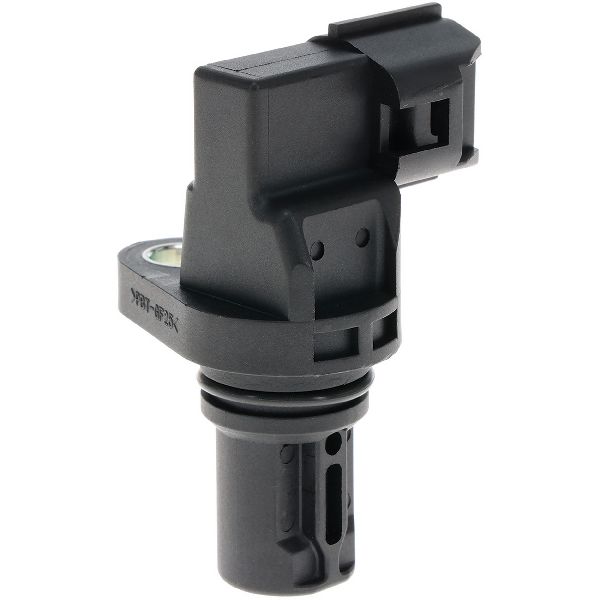
On a 2010-2014 Outback, P0341 most often means a failing camshaft position sensor on Bank 1 (passenger side). On 2013-2014 models with the FB25 engine, it can also be caused by faulty ECU software that requires a dealer update. A new sensor costs between $40 and $150.
- P0341 on a 2010-2014 Outback points to a problem with the camshaft position sensor on the passenger side (Bank 1).
- The most likely fix is replacing the camshaft position sensor, which is a relatively easy and affordable DIY job.
- If you have a 2013-2014 model, check with a dealer for a potential software update before replacing parts.
- Symptoms can include stalling, rough idle, and difficulty starting, so it's best to address the code promptly to avoid being stranded.
- A simple diagnostic step is to swap the passenger and driver side cam sensors to see if the trouble code follows the sensor.
What's Unique About the 2010-2014 Subaru Outback
This year range covers two different 2.5L engines. The 2010-2012 models use the timing belt-driven EJ25, while the 2013-2014 models use the newer, timing chain-driven FB25. While a failing sensor is common to both, the FB25 engine is also susceptible to overly sensitive software logic that can trigger a P0341 code, sometimes requiring an ECM reflash from a dealer as a first step per TSB #11-137-14. This TSB was created to address idle instability and extended cranking, which are core symptoms of P0341. Additionally, TSB #11-130-13R addresses the need to sometimes install a shim to correct the air gap between the sensor and reluctor on FB25 engines. Manufacturer service bulletin TSB #11-100-11R further clarifies that for certain models, a shim must be added specifically to the Bank 1 (right hand) camshaft position sensor to bring the air gap into specification.
Generation note: The 2010-2014 Outback is all part of the fourth generation. However, it spans a major engine change. 2010-2012 models have the EJ253 2.5L SOHC engine with a timing belt. 2013-2014 models have the FB25B 2.5L DOHC engine with a timing chain. This distinction is important, as some causes, like a stretched timing chain, are specific to the FB25, while a worn or skipped timing belt could be a factor on the EJ25.
Symptoms You May Notice
- Check Engine Light is on
- Flashing cruise control and brake lights (a common Subaru trait when the CEL is on)
- Engine is difficult to start or cranks for a long time
- Engine won't start on the first try, but may start on the second
- Engine stalls, especially at idle or low speeds
- Rough or unstable idle
- Hesitation, stumbling, or lurching during acceleration
- Reduced engine power and poor fuel economy
- Increased oil consumption, as noted by one owner whose issue worsened along with the P0341 symptoms
- Replacing the crankshaft position sensor when the code clearly points to the camshaft sensor.
- Replacing the spark plugs or ignition coils without first diagnosing the sensor circuit.
- On FB25 models, replacing the sensor when a simple ECM software update was the actual required fix.
Most Likely Causes
- Failing Camshaft Position Sensor (Bank 1) 🔴 High Probability → Shop Engine Camshaft Position Sensor Sensors are exposed to significant heat and vibration, causing them to fail electronically over time. It is the most frequently replaced part for this code.
How to confirm: Swap the Bank 1 (passenger side) and Bank 2 (driver side) camshaft position sensors. They are identical parts. Clear the codes and drive. If the code changes to P0346 (Bank 2), the sensor is bad. If the code remains P0341, the problem is elsewhere. The sensor can also be tested with a multimeter for resistance; a reading between 1-4 kilo-ohms is expected.
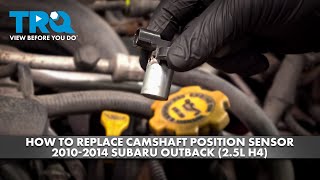
Typical fix: Replace the Bank 1 (passenger side) camshaft position sensor. It is held on by a single 10mm bolt.
Est. part cost: $40-$150 - Faulty Engine Control Module (ECM) Software 🟡 Medium Probability Primarily affects 2013-2014 models with the FB25 engine. Subaru issued Technical Service Bulletin #11-137-14 for the Forester with the same engine, indicating known software logic that is too sensitive and can falsely trigger P0341. The bulletin addresses customer complaints of idle drop and extended cranking.
How to confirm: Contact a Subaru dealer with your vehicle's VIN. They can check their system to see if TSB #11-137-14 or another software update is applicable to your specific vehicle.
Typical fix: Dealer reprograms or updates the ECM software. This is often a required first step before other parts are replaced under warranty.
Est. part cost: $0-$200 - Damaged Wiring or Poor Connection ⚪ Low Probability The wiring harness connector can become brittle from heat, or wires can chafe. Oil leaks from valve covers or cam carriers can also contaminate the connector.
How to confirm: Visually inspect the sensor's wiring harness and connector for signs of damage, corrosion, or oil saturation. Use a multimeter to check for proper voltage (typically a 5V reference) and ground at the connector with the key on, engine off. A Reddit user posted a detailed diagnostic tree from a service manual for checking the harness resistance and voltage.
Typical fix: Repair or replace the damaged section of the wiring harness or clean/replace the connector.
Est. part cost: $10-$50
Rare But Worth Checking
- Stretched Timing Chain (FB25 Engine): → Shop Engine Timing Chain On 2013-2014 models, a stretched timing chain can cause the cam/crank correlation to be out of spec, triggering P0341. This is a significant mechanical failure often preceded by a rattling noise on startup.
- Skipped Tooth on Timing Belt (EJ25 Engine): → Shop Engine Timing Chain On 2010-2012 models, if the timing belt has skipped a tooth or the tensioner has failed, the camshaft and crankshaft will be out of sync. This is a serious issue that requires immediate attention to prevent engine damage.
- Faulty AVCS Oil Control Solenoid: The Active Valve Control System (AVCS) uses oil pressure, regulated by a solenoid, to adjust cam timing. A failing or clogged solenoid on Bank 1 can cause incorrect cam phasing and trigger this code. Low or dirty engine oil can also cause the solenoid to malfunction.
- Incorrect Sensor Air Gap (FB25 Engine): Subaru TSB #11-130-13R, primarily for the 2013 Forester but also applicable to the Outback, describes a situation where the air gap between the sensor and the camshaft reluctor teeth is out of spec. The fix is to measure the gap and install a specific thickness shim under the sensor to bring it into the target range of 1.25-1.35mm.
Diagnosis Steps
- Read the code with an OBD-II scanner and document any other codes present.
- For 2013-2014 models, call a Subaru dealer with your VIN to check for open recalls or applicable software updates (like TSB #11-137-14) related to P0341. This should be done before replacing parts.
- Inspect the wiring and connector for the Bank 1 (passenger side) camshaft position sensor. Look for visible damage, corrosion, loose pins, or oil contamination.
- A common DIY test is to swap the Bank 1 and Bank 2 camshaft position sensors. They are identical and held by a single 10mm bolt. Clear the codes and drive the vehicle. If the code returns as P0346 (Bank 2), the sensor you moved is faulty.
- If the code remains P0341 after the swap, the issue is likely in the wiring, timing system, or ECM.
- Using a multimeter, verify the sensor's integrity. On an EJ25 sensor, check for resistance between 1-4 kilo-ohms. Also, check the harness connector for the correct reference voltage (usually 5V) and a good ground connection with the key on, engine off.
- If the sensor and wiring are confirmed good, the next step is to investigate mechanical timing. For EJ25 (2010-2012), inspect the timing belt for wear, damage, or improper tension. For FB25 (2013-2014), listen for chain rattle, which could indicate a stretched chain or failing tensioner.
- If timing appears correct, investigate the AVCS system. Check the Bank 1 oil control solenoid for clogging or failure. Also, for FB25 engines, consider the possibility of an incorrect sensor air gap as described in TSB #11-130-13R.
Parts You'll Likely Need
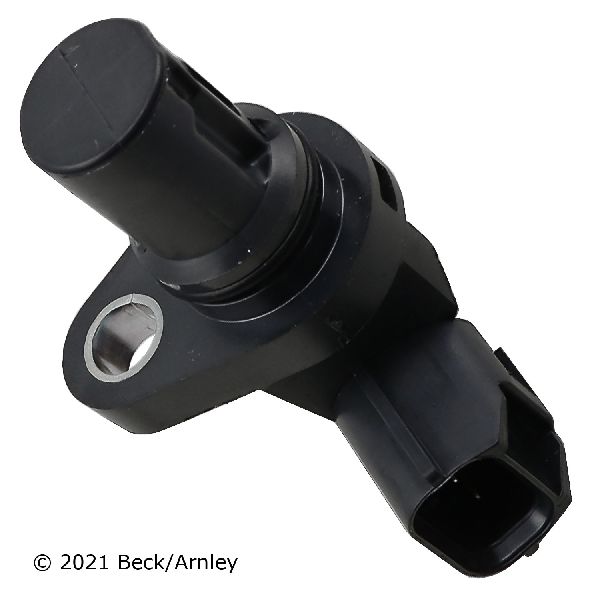
- Camshaft Position Sensor (Bank 1)
(OEM #22056AA140 (for EJ25), 22056AA260 (for FB25))— This is the most common failure point for a P0341 code. The sensor fails internally, providing an erratic signal. Note: Part number 22056AA250 is often listed but fits the 3.6L H6 engine.
Trusted brands: Denso (OEM supplier), Hitachi, NTK/NGK, Beck/Arnley
OEM price range: $90-$150
Aftermarket price range: $40-$80
Related Codes That Often Appear With This One
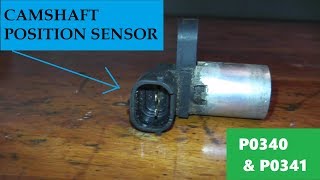
- P0340 — This is a general circuit malfunction code for the same sensor. P0341 indicates a performance issue, while P0340 indicates a complete circuit failure (e.g., open or short). A failing sensor can trigger either or both.
- P0301, P0302 — These are misfire codes for cylinders 1 and 2, which are on Bank 1 (passenger side). Incorrect cam timing data leads to improper fuel and ignition timing, causing misfires on the affected bank. TSB #11-130-13R explicitly links cam sensor codes with these misfires. Manufacturer bulletin TSB #11-124-12R also notes that P0341 can be accompanied by rough idle and misfire codes P0301 through P0304.
- P0016 — This code indicates a Crankshaft/Camshaft Correlation error. It is more serious than P0341 alone and strongly points towards a mechanical timing issue like a stretched chain or skipped belt.
Technical Service Bulletins (TSBs) & Recalls
- TSB #11-137-14: Addresses an ECM reprogram for idle instability and extended crank on the FB25 engine, which can present as a P0341 code.
- TSB #11-130-13R: Mentions installing a sensor shim to correct air gap on the FB25 engine, though this is more commonly cited for the Forester. This bulletin provides inspection and repair procedures for intake and exhaust camshaft position sensors.
- TSB #16-90-13R: Related to torque converter issues on 2010-2012 models that can cause stalling, a symptom that might be confused with a P0341 fault.
- TSB #11-100-11R: Notes that for certain models, difficulty starting and rough idle may be associated with P0341 and misfire codes, requiring a shim to be added to the Bank 1 camshaft position sensor.
Platform-Specific Known Issues
- On FB25 engines (2013-2014), an ECM software update may be required to correct overly sensitive diagnostic logic, as detailed in TSBs for similar models like the Forester. TSB #11-137-14 specifically notes that reprogramming files are available for DTCs P0341 and P0346.
- On high-mileage FB25 engines, a stretched timing chain is a possible, though more serious, cause of this code.
- On EJ25 engines (2010-2012), a worn or improperly installed timing belt can cause this code. A visual inspection of the belt and sprockets is a key diagnostic step.
Mechanic-Grade Diagnostic Values
- Camshaft Position Sensor Internal Resistance (EJ25/FB25) — expected: 1-4 kΩ (kilo-ohms). Failure: A reading outside this range, or an open/infinite reading, indicates a failed sensor.
- Camshaft Position Sensor Supply Voltage (at connector E36, Pin 1) — expected: 10V or more (Key On, Engine Off). Failure: Less than 10V indicates an open or short in the power supply harness from the main relay.
- Camshaft Position Sensor Signal Wire Voltage (at connector E36, Pin 2) — expected: Less than 5V (Key On, Engine Off). Failure: 5V or more indicates a short to power in the harness between the ECM and the sensor.
- Camshaft Position Sensor Ground Circuit Resistance (at connector E36, Pin 3 to ECM connector B136, Pin 34) — expected: Less than 1 Ω. Failure: Resistance greater than 1 Ω indicates an open circuit or poor connection in the ground wire.
- Sensor Air Gap (FB25 Engine) — expected: Target gap is 1.25 – 1.35 mm after shim installation. Failure: An initial clearance outside the ranges specified in TSB #11-130-13R requires adding a specific shim.
Scan Tool Commands That Help
- Subaru Select Monitor (SSMIII): Oscilloscope Function - Camshaft/Crankshaft Waveform Analysis — To visually inspect the camshaft position sensor's output waveform compared to the crankshaft sensor's waveform. An abnormal, intermittent, or misshapen waveform confirms a faulty sensor or a problem with the reluctor wheel, even if resistance and voltage tests pass.
Wiring & Ground Locations
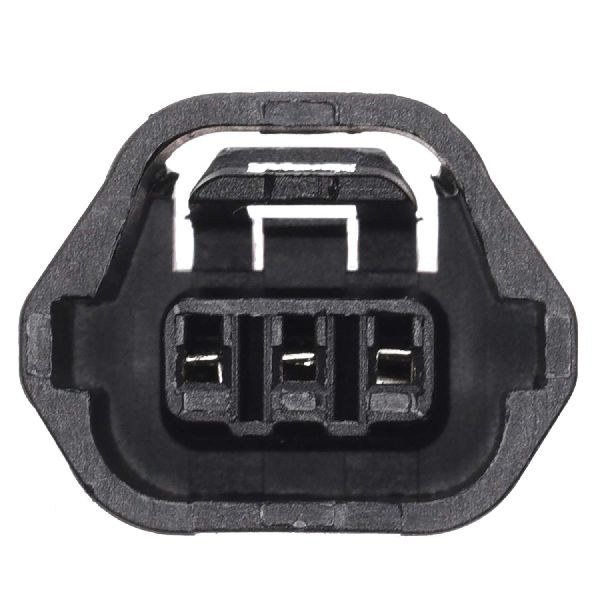
- E36 — The 3-pin connector at the Bank 1 (passenger side) intake camshaft position sensor.. This is the primary connector for testing voltage, ground, and signal integrity directly at the sensor. Pin 1 is power, Pin 2 is signal, and Pin 3 is ground.
- B136 — One of the main ECM connectors, located behind the right side of the dashboard.. This connector is the termination point for the camshaft sensor harness. Checking for continuity between connector E36 and pins on B136 (e.g., Pin 26 for signal, Pin 34 for ground) is essential for ruling out a wiring harness break.
- Engine Ground Points — Two main ground lugs are located on top of the intake manifold, secured by 12mm bolts.. The ECU and its sensors get their ground reference from the top of the intake manifold. Corrosion or looseness at these points can introduce electrical noise and cause erratic sensor behavior, leading to a P0341 code. Cleaning these grounds is a critical and often overlooked step.
Real Owner Repair Stories
- Reddit user in r/subaru (2013 Subaru Outback 2.5i Premium (FB25B), 200k+ miles) — Intermittent Check Engine Light that became constant. Severe lurching, missing, stalling at idle, and increased oil consumption.
❌ Tried (didn't work) A shop initially dismissed the intermittent code as not being a significant issue.
✅ What actually fixed it The owner planned to replace the camshaft position sensor themselves. The resolution was not explicitly posted, but the detailed diagnostic steps provided by another user (which included specific voltage and resistance checks) pointed towards a definitive diagnosis of either the sensor or wiring, which is the standard fix. - Reddit user in r/MechanicAdvice (2013 Subaru Forester X Premium (FB25B)) — P0341 code appeared after a new (remanufactured) engine was installed. Car would occasionally not start on the first try, but would start on the second.
❌ Tried (didn't work) Replacing the camshaft position sensor with a new one did not resolve the code or the starting symptom.
✅ What actually fixed it The user was left with an unresolved issue. This story is valuable because it highlights that when a new sensor doesn't fix the problem (especially after major engine work), the cause is likely deeper, such as incorrect mechanical timing of the new engine, a wiring issue created during the engine swap, or the need for the ECM reflash (TSB #11-137-14).
Model Year Variations Within This Range
- 2013-2014: These models with the FB25 engine may require an ECM software update per TSB #11-137-14 or a sensor shim per TSB #11-130-13R, which are not applicable to the 2010-2012 EJ25 engine.
Diagnostic Flowchart
Other Known Issues on This Vehicle
Issues unrelated to this code that are worth knowing about as an owner of this generation:
- Excessive Oil Consumption (FB25 Engine) 🔴 High — Common on 2013-2014 models. Caused by issues with piston rings. A class-action lawsuit was settled over this issue. (Ref: TSB #02-143-13R)
- CVT Torque Converter Failure/Shudder 🔴 High — Widespread on 2010-2014 models, causing stalling, shuddering, and hesitation. Symptoms can feel like the engine is stalling when it's a transmission issue. (Ref: Subaru extended the CVT warranty to 10 years/100,000 miles for many vehicles, including these Outbacks.)
- Head Gasket Failure (EJ25 Engine) 🟠 Medium — While improved from prior generations, the 2010-2012 EJ25 still uses a design prone to failure, typically leaking coolant internally into the combustion chamber. Often requires engine removal to properly repair.
- Wheel Bearing Failure 🟡 Low — Front and rear wheel bearings are a common wear item, often failing before 100,000 miles, causing a loud humming or grinding noise that changes with speed.
Used vs. New Parts: Buying Guide for This Vehicle
When a used part is the smart pick: A used part is a reasonable choice for a wiring harness pigtail/connector if the original is damaged. It is generally not recommended for the sensor itself due to its electronic nature and high failure rate.
Donor-vehicle mileage cap: roughly under 80000 miles for the part to have meaningful remaining life.
What to inspect on the donor part:
- For a wiring connector, ensure the plastic is not brittle or cracked.
- Check that the locking tab is intact and functional.
- Inspect the internal pins for any signs of corrosion (green or white powder) or being bent/pushed out.
OEM-only on this vehicle (don't cheap out):
- Camshaft Position Sensor: Many forum and professional accounts state that Subaru engines, particularly the FB25, can be very sensitive to aftermarket sensors. Using an OEM (Denso-supplied) or a trusted OEM-supplier brand like Hitachi or NTK is strongly recommended to avoid repeat failures or incorrect readings.
Aftermarket brands forum-validated for this vehicle:
- Denso (OEM)
- Hitachi
- NTK/NGK
Brands owners have reported issues with on this vehicle:
- Unbranded, 'white-box' sensors from online marketplaces are frequently reported to be dead-on-arrival or fail within a short period.
Real Owner Stories
Aggregated from forums and TSBs cited above. Mileages and costs reflect what owners reported in those sources.
2013 Subaru Outback FB25 — 200000 miles
Symptoms: Intermittent P0341 code that eventually evolved into severe running issues including lurching and stalling.
What fixed it: The owner highlighted the importance of early diagnosis, though the specific final repair was part of a 'repair delay' discussion involving the camshaft sensor circuit.
Source hint: Reddit r/Subaru_Outback - Thread 'P0341 Repair Delay'
2013 Subaru Outback FB25
Symptoms: Idle drop and extended cranking.
What fixed it: Dealer reprograms or updates the ECM software per TSB #11-137-14.
Source hint: TSB #11-137-14
2010-2012 Subaru Outback EJ25
Symptoms: Check engine light with code P0341; engine difficult to start.
What fixed it: Swapping the passenger side sensor with the driver side sensor confirmed the fault moved, leading to the replacement of the Bank 1 camshaft position sensor.
Source hint: subaruoutback.org forum threads
Related OBD-II Codes
Frequently Asked Questions
Does TSB #11-137-14 apply to my 2013 Subaru Outback with the FB25 engine?
Can I test the camshaft position sensor myself before buying a new one?
My Outback is stalling at stoplights; could this be the P0341 code or something else?
Is there a specific TSB for the sensor air gap on the FB25 engine?
What is the difference between P0341 on a 2011 Outback versus a 2014 Outback?
Why are my cruise control and brake lights flashing along with the Check Engine Light?
Helpful Videos

We Have This Part in Stock


The information in this article is provided for general reference and educational purposes only. Vehicle specifications, procedures, and part compatibility can vary by production date, trim level, and region. Always consult your vehicle's factory service manual and verify part numbers before purchasing or performing repairs. Safety-critical components such as airbags, seat belts, and braking systems should be installed by a qualified professional.
- Subaru Outback:
- 🧭 Diagnostic Flowchart
- 🎬 Helpful Videos
- 🛍️ Shop This Part
- What's Unique About the 2010-2014 Subaru Outback
- Symptoms You May Notice
- Most Likely Causes
- Rare But Worth Checking
- Diagnosis Steps
- Parts You'll Likely Need
- Related Codes That Often Appear With This One
- Technical Service Bulletins (TSBs) & Recalls
- Platform-Specific Known Issues
- Mechanic-Grade Diagnostic Values
- Scan Tool Commands That Help
- Wiring & Ground Locations
- Real Owner Repair Stories
- Model Year Variations Within This Range
- Other Known Issues on This Vehicle
- Used vs. New Parts: Buying Guide for This Vehicle
- Real Owner Stories
- 2013 Subaru Outback FB25 — 200000 miles
- 2013 Subaru Outback FB25
- 2010-2012 Subaru Outback EJ25
- Related OBD-II Codes
- Frequently Asked Questions
- 🎟️ Get 5% Off