

P0341 on 2013-2014 Subaru Outback 2.5L: Camshaft Sensor Causes and Fixes
On a 2013-2014 Subaru Outback with the 2.5L engine, code P0341 is most often caused by an incorrect air gap for the camshaft position sensor, especially on 2013 models. A specific Technical Service Bulletin (TSB #11-130-13R) addresses this, often requiring a shim to fix. If not the air gap, the next most likely cause is a failing sensor itself, which costs about $40-$80 for an aftermarket part or $90-$150 for an OEM replacement. Low or dirty oil can also contribute due to the engine's known oil
- For a 2013 Subaru Outback with code P0341, do not immediately replace the sensor. First, investigate TSB #11-130-13R, as an incorrect sensor air gap is a very likely cause that requires a shim, not a new sensor.
- P0341 refers specifically to the INTAKE camshaft sensor on the PASSENGER side of the engine.
- Symptoms like stalling and hard starting are common and can be dangerous; address this code promptly.
- Always check the engine oil level and condition, as low or dirty oil can affect the timing system that this sensor monitors.
- If replacing the sensor, using a genuine Subaru or a reputable OEM-supplier part (like Denso or Hitachi) is recommended for reliability.
What's Unique About the 2013-2014 Subaru Outback
The 2013-2014 Outback with the FB25B engine is subject to a specific Technical Service Bulletin (TSB #11-130-13R) for this exact code. The bulletin states that the clearance, or air gap, of the camshaft position sensor may be out of specification, leading to an erratic signal. This is a known mechanical tolerance issue on this platform, making it a more probable cause than on other vehicles where a P0341 is almost always just a bad sensor. The fix involves measuring the gap and installing a specific shim, rather than simply replacing the part. Additionally, manufacturer service bulletin TSB #11-100-11R notes that for certain models, a shim may specifically need to be added to the Bank 1 (right hand) camshaft position sensor to bring the air gap into specification.
Symptoms You May Notice
- Check Engine Light is on
- Flashing cruise control and/or brake light (a common Subaru indicator when a CEL is present)
- Engine is difficult to start or requires extended cranking
- Engine stalls, especially at idle
- Rough idling or running
- Hesitation, stumbling, or lurching during acceleration
- Reduced engine power and performance
- Decreased fuel economy
- Replacing the camshaft position sensor without first checking for the sensor air gap issue as described in TSB #11-130-13R, especially on a 2013 model.
- Replacing the wrong camshaft position sensor. The FB25B engine has four sensors (intake and exhaust for each bank). P0341 specifically points to the intake sensor on the passenger side (Bank 1).
- Replacing the crankshaft position sensor instead of the camshaft position sensor.
- Assuming a new sensor is faulty when the problem is actually a poor connection or wiring issue.
Most Likely Causes
- Incorrect Camshaft Position Sensor Air Gap 🔴 High Probability → Shop Engine Camshaft Position Sensor A known issue documented in Subaru TSB #11-130-13R specifically for 2013 Outback 2.5L models. The sensor's clearance may be out of spec from the factory, causing an inconsistent signal.
How to confirm: A technician will need to use a depth micrometer or caliper to measure the installed depth of the sensor and the camshaft reluctor wheel to calculate the clearance. The TSB provides a specific procedure for this measurement.
Typical fix: If the clearance is out of the specified range (TSB target is 1.25mm to 1.35mm), a shim of the correct thickness is installed between the sensor and its mounting point. The TSB lists the part numbers for the available shims. The sensor bolt should be torqued to 6.4 Nm (4.7 ft-lbs).
Est. part cost: $15-$35 for the shim kit. - Failing Camshaft Position Sensor 🟡 Medium Probability → Shop Engine Camshaft Position Sensor Sensors can fail over time due to heat cycles, engine vibration, and oil contamination. This is a common failure point for this code on any vehicle if the air gap issue is ruled out. Some owners report replacing the sensor only to have the code return, indicating another root cause.
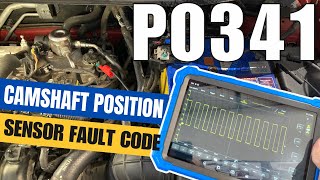
How to confirm: After verifying the wiring and air gap are correct, the sensor itself is the next logical point of failure. A diagnostic scan tool can monitor the sensor's waveform for erratic behavior. It can also be tested 🎬 Watch: How to test and fix the P0341 circuit. with a multimeter for resistance, which should typically be between 500 to 1,500 ohms or 1 to 4 kilo-ohms, depending on the source.
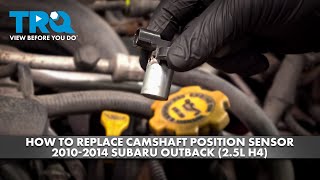
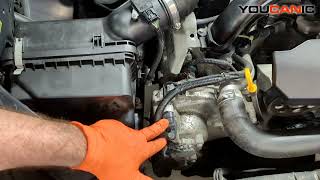
Typical fix: Replace the Bank 1 (passenger side) intake camshaft position sensor. The sensor is held by a single 10mm bolt. 🎬 Watch: See this step-by-step sensor replacement walkthrough. It is recommended to also replace the O-ring (p.n. 13099AA050) at the same time.
Est. part cost: $40-$80 for aftermarket, $90-$150 for OEM. - Low or Dirty Engine Oil ⚪ Low Probability The AVCS (variable valve timing) system is hydraulically operated by engine oil. Early FB25 engines are known for excessive oil consumption, which can lead to low oil levels. Low or sludgy oil can cause the camshaft phasers to respond slowly or incorrectly, creating a discrepancy between the cam and crank signals that can trigger P0341.
How to confirm: Check the engine oil level and condition. If the oil is very low (Subaru's consumption spec can be as high as 1 quart per 1200 miles) or appears dark and sludgy, this is a likely contributing factor.
Typical fix: Perform an oil and filter change with high-quality 0W-20 synthetic oil. Regularly monitor oil levels between changes. Some owners switch to a slightly thicker 5W-30 oil on higher mileage engines to reduce consumption.
Est. part cost: $40-$80 for oil and filter. - Damaged Wiring or Poor Connection ⚪ Low Probability Engine bay wiring is subject to heat and vibration, which can lead to chafed wires or loose/corroded connector pins over time.
How to confirm: Visually inspect the sensor's wiring harness and connector for any signs of damage, melting, or corrosion. Use a multimeter to check for proper voltage (around 10V+ with key on at pin 1), ground, and signal continuity back to the ECM.
Typical fix: Repair the damaged section of wire or clean the connector terminals with electrical contact cleaner. If the connector is damaged, the pigtail may need to be replaced.
Est. part cost: $10-$30 for a new connector pigtail.
Rare But Worth Checking
- Stretched Timing Chain or Timing Issue: → Shop Engine Timing Chain While not common, a stretched timing chain or failing tensioner can cause the camshaft and crankshaft signals to be out of sync, triggering P0341. This is a more serious mechanical issue and is often accompanied by rattling noises from the front of the engine on startup.
- Failing AVCS Solenoid or Cam Sprocket: A problem with the Active Valve Control System (AVCS) oil control solenoid or the cam phaser (sprocket) itself can prevent the camshaft from reaching its target position, leading to a performance code. This can be related to the low/dirty oil issue.
- Failing Engine Control Module (ECM): This is very rare, but a faulty ECM can misinterpret a good sensor signal. This should only be considered after all other possibilities (sensor, wiring, air gap, timing) have been exhaustively ruled out. Manufacturer TSB #11-137-14 notes that reprogramming files may be available for DTCs P0341 and P0346 on certain models.
Diagnosis Steps
- Read the code with an OBD-II scanner to confirm P0341 and check for any other related codes.
- Check the engine oil level and condition. Top off or change if necessary, using 0W-20 oil. Given the FB25's tendency to consume oil, this is a critical first step.
- Inspect the wiring harness and connector for the Bank 1 (passenger side) intake camshaft sensor. Look for any signs of damage, corrosion, or loose pins.
- If you have a 2013 model, consult Subaru TSB #11-130-13R. The procedure involves measuring the sensor's air gap. This step may require a professional technician with the correct tools.
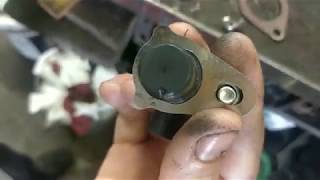
- If the air gap is out of spec, install the appropriate shim from Shim Kit p/n 10130AA060. 🎬 Watch: See how to install these specific sensor shims.
- If the air gap is correct (or if the vehicle is a 2014 model where the TSB is less likely to apply), test the sensor's circuit. Use a multimeter to confirm power (10V+), ground, and signal integrity at the connector.
- If the circuit is good, test the sensor itself. With a multimeter, check for resistance between the sensor's terminals. A reading outside the 500-1500 ohm range suggests a faulty sensor.
- If the sensor tests bad or is the most likely remaining cause, replace the Bank 1 intake camshaft position sensor and its O-ring.
- If the code returns after replacing the sensor, the issue may be more complex, such as a stretched timing chain or a problem with the camshaft phaser (AVCS gear). This level of diagnosis should be performed by a professional.
- As a final, rare step, consider a faulty ECM if all other possibilities are eliminated.
Parts You'll Likely Need
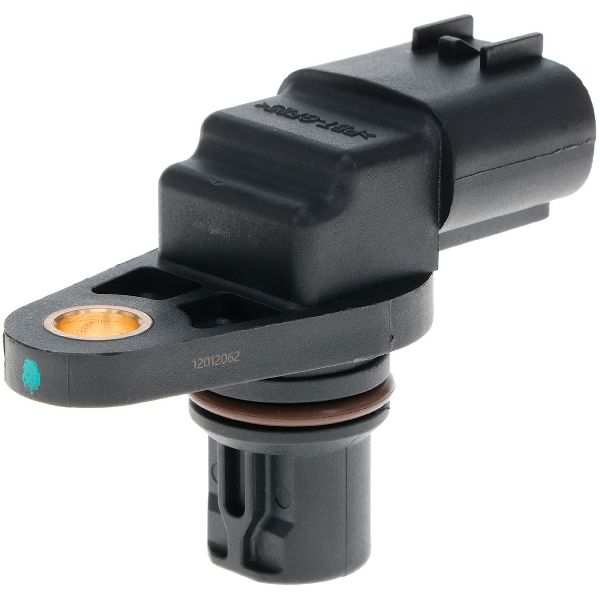
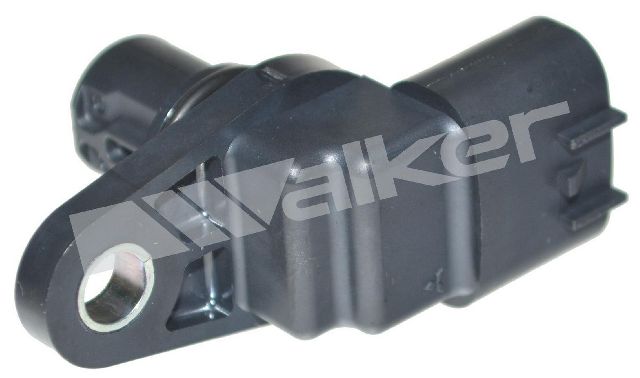
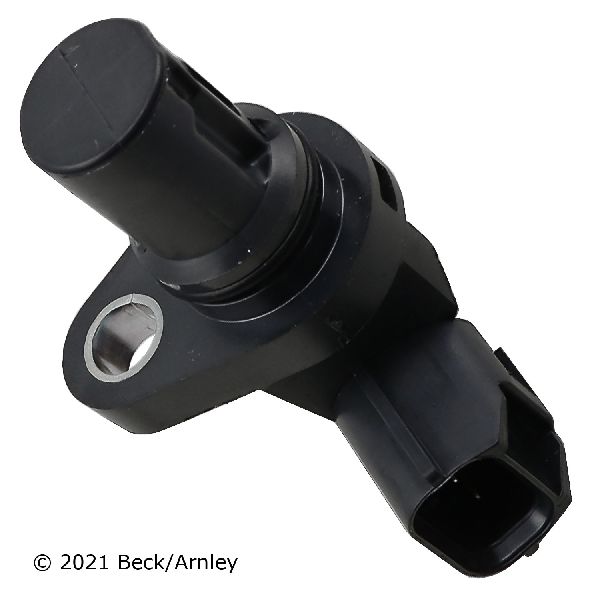
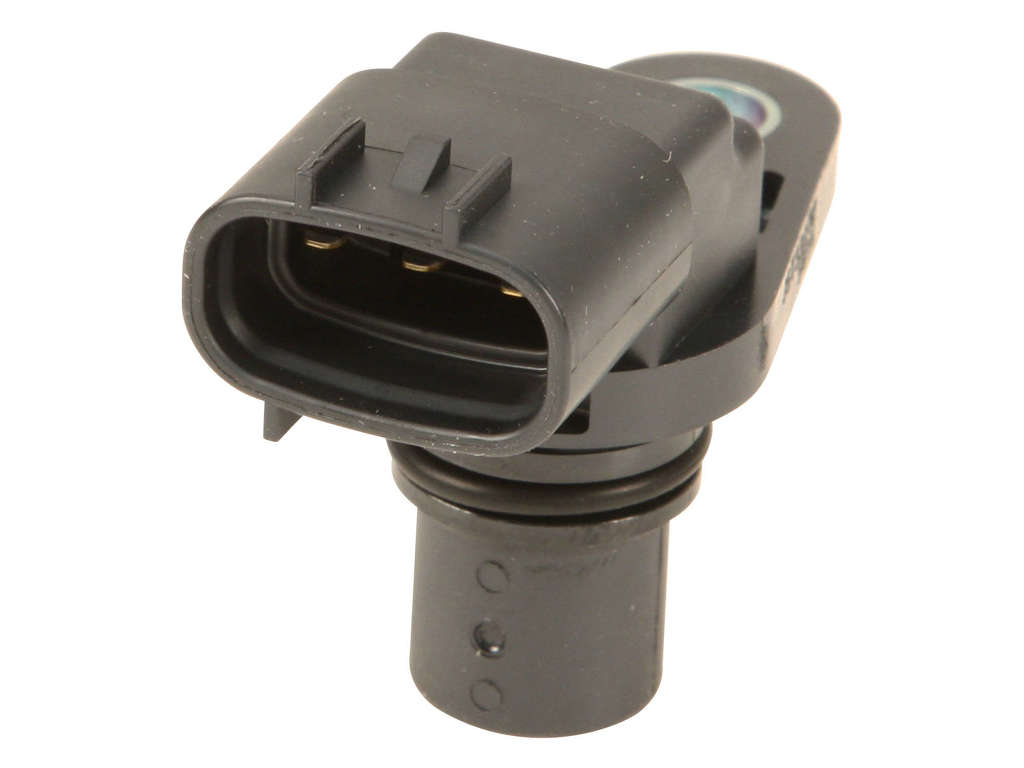
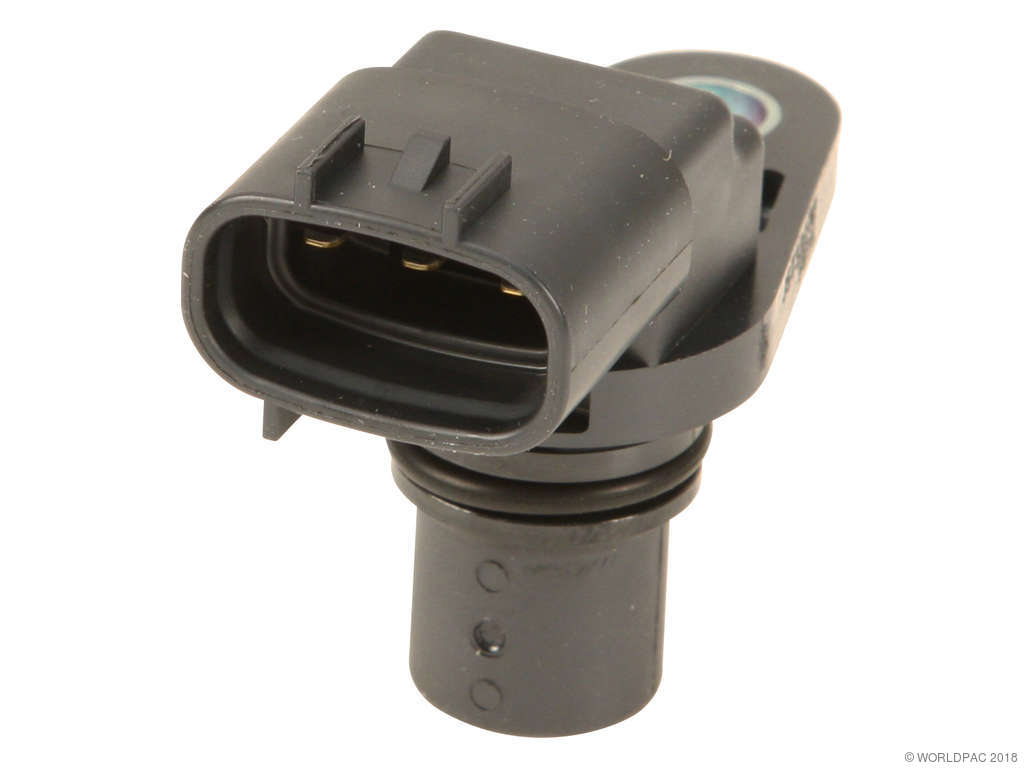
- Intake Camshaft Position Sensor (Bank 1, Passenger Side)
(OEM #22056AA270)— This is the sensor that generates the signal monitored by the ECM. It is the most commonly replaced part for this code after the air gap issue is ruled out.
Related Codes That Often Appear With This One
- P0340 — This is the general circuit malfunction code for the same sensor. A failing sensor or wiring issue can trigger both codes.
- P0301, P0302, P0303, P0304 — These are cylinder misfire codes. Incorrect cam timing data from a faulty sensor signal disrupts fuel and ignition timing, leading to misfires. The TSB for P0341 explicitly lists these as related codes.
- P0016 — This code indicates a correlation problem between the crankshaft and camshaft. It can be triggered by the same sensor fault or air gap issue as P0341, but can also point to a more serious mechanical timing problem like a stretched chain.
- P0346 — This is the identical code but for Bank 2 (driver's side). The underlying TSB for the air gap issue addresses both P0341 and P0346, as the manufacturing tolerance issue could affect either side.
Technical Service Bulletins (TSBs) & Recalls
- TSB #11-130-13R: Difficulty Starting, Rough Idle, Cam Position or Misfire DTCs: This is the primary TSB for the P0341 code on this platform. It details the procedure for inspecting the camshaft position sensor air gap and installing a shim if the clearance is out of spec. It covers multiple FA and FB series engines, including the 2.5L in the 2013 Outback.
- TSB #11-100-11R: Difficulty Starting, Rough Idle: This bulletin provides inspection and repair procedures for intake and exhaust camshaft position sensors, specifically noting that P0341 and P0346 are applicable to 2013MY vehicles only.
- TSB #11-124-12R: Difficulty Starting, Rough Idle, Cam Position or Misfire DTCs: This bulletin addresses similar symptoms including P0341 and misfire codes P0301 through P0304.
- TSB #02-157-14R: Engine Oil Consumption: This TSB acknowledges the potential for oil consumption in certain Subaru models, including those with the FB25 engine. It defines normal consumption as up to 1 quart per 1200 miles and lists conditions that can increase it. This is relevant to P0341 as low/dirty oil can affect AVCS performance.
Platform-Specific Known Issues
- Subaru Technical Service Bulletin #11-130-13R documents that an incorrect air gap on the camshaft position sensor can cause P0341 and related drivability issues on 2013 2.5L Outback models.
Mechanic-Grade Diagnostic Values
- Camshaft Position Sensor Air Gap — expected: 1.25mm - 1.35mm. Failure: A gap outside this range can cause an inconsistent signal, triggering P0341.
- Sensor Power Supply Voltage (Key On, Engine Off) — expected: 10 V or more. Failure: Voltage below 10V points to an open or short circuit in the power supply harness from the main relay.
- Camshaft Position Sensor Internal Resistance — expected: 1 to 4 kΩ (kilo-ohms) or 500 to 1,500 Ω (ohms). Failure: An open/infinite reading or a value outside the expected range indicates a failed sensor. Note: Different sources provide different ranges.
- Harness Continuity (between ECM and Sensor Connector) — expected: Less than 1 Ω (ohm). Failure: Resistance higher than 1 Ω indicates an open circuit or a poor connection in the harness.
- Alternator AC Ripple Voltage (at battery terminals, engine running) — expected: Below 50-100 mV (millivolts) AC. Failure: Excessive AC ripple (e.g., over 140 mV) indicates failing alternator diodes, which can create electrical noise and interfere with sensor signals.
Scan Tool Commands That Help
- Subaru Select Monitor (SSMIII): Oscilloscope Function — To visually inspect the camshaft position sensor's output for a clean, square waveform. This is the most definitive test of sensor operation, as described in TSB #11-130-13R.
Wiring & Ground Locations
- E36 — The electrical connector at the Bank 1 (passenger side) intake camshaft position sensor.. This is the primary connection point for testing. Pin 1 is power (10V+), Pin 2 is the signal to the ECM, and Pin 3 is ground.
- B136 — A main connector at the Engine Control Module (ECM).. Used for continuity testing of the sensor harness. For example, testing between Pin 2 of connector E36 and Pin 26 of connector B136 checks the signal wire's integrity.
- Main Engine Ground Points — The primary ground for the ECU is located on the top of the intake manifold.. A poor ground at the intake manifold can cause a variety of strange electrical issues, including erroneous sensor codes. This is especially important if TGV deletes or spacers have been installed, as they can interrupt this ground path.
Real Owner Repair Stories
- Reddit user in r/subaru (2013 Subaru Outback 2.5i Premium, 200k+ miles) — Persistent P0341, engine lurching, missing, stalling at idle, and increased oil consumption.
❌ Tried (didn't work) An initial mechanic shop dismissed the intermittent code as not being a significant issue.
✅ What actually fixed it The owner was advised to perform a full diagnostic procedure themselves, starting with checking the sensor circuit voltage and resistance at the connector pins before replacing the sensor. The resolution was the plan to follow these specific diagnostic steps rather than just replacing the part.
OEM Part Supersession History
22056AA270→No direct supersession found for this part number.— This part number appears to be specific to its application range.
Heads up: Later model year sensors (e.g., 22056AA28A for 2017+ models) are not listed as backward compatible. Use the exact part number specified for the 2013-2014 model year.
Model Year Variations Within This Range
- 2013 only: The 2013 model year is the primary subject of TSB #11-130-13R regarding the incorrect camshaft sensor air gap. A countermeasure was implemented in production starting with Outback VIN D*295279.
- 2014: Most 2014 models were built after the production countermeasure for the sensor air gap was implemented, making the TSB and the need for a shim much less likely to be the cause of P0341 on these vehicles. The 2014 FB25 engine also received internal updates like a higher compression ratio and redesigned intake ports.
Diagnostic Flowchart
Other Known Issues on This Vehicle
Issues unrelated to this code that are worth knowing about as an owner of this generation:
- Excessive Oil Consumption 🔴 High — Very common in 2011-2014 FB25 engines. A class-action lawsuit was filed over this issue. Consumption can start early and worsen with mileage. (Ref: TSB #02-157-14R acknowledges consumption rates up to 1qt/1200 miles as 'normal'.)
- CVT Transmission Failure 🔴 High — Failures of the torque converter or valve body were common enough to also be part of a class-action lawsuit, leading to a warranty extension for some owners. Issues can manifest as shuddering, stalling, or complete failure. (Ref: Warranty Extension (not a recall))
- Windshield Wiper Motor Failure 🟡 Low — Common enough to warrant a recall. Contamination could cause the wiper motor to fail. (Ref: NHTSA Recall 16V-738 (supersedes 11V-469))
- Takata Airbag Inflator Recall 🔴 High — Affects a massive number of vehicles across many brands, including the 2013-2014 Outback. The inflator can rupture during deployment. (Ref: Multiple NHTSA Recalls, e.g., 19V-008, 18V-055)
- Steering Column Failure 🔴 High — A recall was issued for a specific production range of 2013 models where the inner and outer shafts of the steering column could disengage, causing a complete loss of steering. (Ref: NHTSA Recall 13V-195 (Subaru campaign WQI-45))
Used vs. New Parts: Buying Guide for This Vehicle
When a used part is the smart pick: For this repair, a used part is not recommended. The camshaft position sensor is a relatively inexpensive electronic component that is a known failure point. The labor cost to replace a faulty used sensor a second time would negate any initial savings.
What to inspect on the donor part:
- Not applicable as a used sensor is not advised.
OEM-only on this vehicle (don't cheap out):
- Camshaft Position Sensor
Aftermarket brands forum-validated for this vehicle:
- While no specific brands were universally praised in search results, Denso and NTK are generally reputable OEM suppliers for Japanese vehicles and are often considered reliable alternatives.
Brands owners have reported issues with on this vehicle:
- No specific brands were named, but sources strongly caution against using generic, low-cost aftermarket sensors, as they have been reported to fail prematurely or be dead-on-arrival for this application.
Real Owner Stories
Aggregated from forums and TSBs cited above. Mileages and costs reflect what owners reported in those sources.
2013 Subaru Outback 2.5L — 200000 miles
Symptoms: The car suffered from poor running, lurching, and stalling at idle. The P0341 code was intermittent before becoming persistent.
What fixed it: The owner investigated the sensor circuit and noted a connection to the engine's high oil consumption at high mileage.
Source hint: Reddit: r/Subaru_Outback - P0341 Repair Delay
2013 Subaru Forester 2.5L
Symptoms: After installing a new engine and reusing the old camshaft sensor, the vehicle experienced a no-start condition and a P0341 code.
What fixed it: The owner replaced the sensor, but the issue persisted, highlighting that the sensor itself is not always the root cause.
Source hint: Reddit: r/MechanicAdvice - CEL P0341 2013 Subaru Forester x premium
Related OBD-II Codes
Frequently Asked Questions
Does Subaru TSB #11-130-13R apply to my 2013 Outback 2.5L?
What is the specific air gap clearance required for the camshaft sensor on my FB25 engine?
Can I use 5W-30 oil in my 2014 Outback to help with P0341 issues?
Why is my brake light and cruise control light flashing along with the Check Engine Light?
What is the part number for the shim kit mentioned in the Subaru service bulletin?
Is there a specific torque spec for the camshaft sensor bolt on the FB25B?
Helpful Videos
We Have This Part in Stock


The information in this article is provided for general reference and educational purposes only. Vehicle specifications, procedures, and part compatibility can vary by production date, trim level, and region. Always consult your vehicle's factory service manual and verify part numbers before purchasing or performing repairs. Safety-critical components such as airbags, seat belts, and braking systems should be installed by a qualified professional.
- Subaru Outback:
- 🧭 Diagnostic Flowchart
- 🎬 Helpful Videos
- 🛍️ Shop This Part
- What's Unique About the 2013-2014 Subaru Outback
- Symptoms You May Notice
- Most Likely Causes
- Rare But Worth Checking
- Diagnosis Steps
- Parts You'll Likely Need
- Related Codes That Often Appear With This One
- Technical Service Bulletins (TSBs) & Recalls
- Platform-Specific Known Issues
- Mechanic-Grade Diagnostic Values
- Scan Tool Commands That Help
- Wiring & Ground Locations
- Real Owner Repair Stories
- OEM Part Supersession History
- Model Year Variations Within This Range
- Other Known Issues on This Vehicle
- Used vs. New Parts: Buying Guide for This Vehicle
- Real Owner Stories
- 2013 Subaru Outback 2.5L — 200000 miles
- 2013 Subaru Forester 2.5L
- Related OBD-II Codes
- Frequently Asked Questions
- 🎟️ Get 5% Off