

P0341 on 2002-2006 Toyota Camry 2.4L: Cam Sensor Causes and Fixes
On a 2002-2006 Camry with the 2.4L engine, code P0341 is most often caused by a failing camshaft position sensor or low engine oil. First, check your oil level, as this engine can consume oil. If the oil is full, the next step is usually replacing the camshaft position sensor, which costs about $65-$95 for an OEM part.
- Before buying any parts, check the engine oil level. Low oil is a very common cause for P0341 on this specific engine.
- If the oil level is correct, the most likely fix is replacing the camshaft position sensor, which is an easy and affordable DIY job.
- A rattling noise from the engine during a cold start strongly suggests a stretched timing chain, which is a more serious and expensive repair.
- This code can cause significant drivability issues like stalling and hard starts, so it should be addressed promptly.
What's Unique About the 2002-2006 Toyota Camry
The 2AZ-FE engine in this generation of Camry has a well-documented history of excessive oil consumption due to its piston ring design. This is critical context for P0341 because low engine oil can starve the VVT-i system, causing the camshaft timing to deviate and trigger this code even if the sensor is perfectly fine. Therefore, unlike on many other vehicles, the absolute first diagnostic step for a P0341 on this Camry is to check the engine oil level on the dipstick. Many owners have fixed this code simply by topping up the oil.
Symptoms You May Notice
- Check Engine Light is on
- Difficulty starting the engine, or extended cranking time
- Engine stalls, especially at low speeds or when stopping
- Rough or uneven idle
- Hesitation or stumbling on acceleration
- Noticeable loss of engine power
- Reduced fuel economy
- Engine cranks but does not start
- Replacing the crankshaft position sensor. While related, P0341 specifically points to the camshaft sensor circuit.
- Replacing the timing chain when the actual issue is a simple bad sensor or low oil level.
- Replacing the ECM without thoroughly testing the wiring harness and sensor first.
Most Likely Causes
- Low or Dirty Engine Oil 🔴 High Probability The 2AZ-FE engine is known for excessive oil consumption. Low oil pressure directly impacts the performance of the VVT system, which can cause the camshaft to fall out of phase with the crankshaft.
How to confirm: Check the engine oil level using the dipstick. If it is low, top it off, clear the codes, and see if the problem returns. Note the oil condition; if it is very dirty or sludgy, it can also affect VVT operation by clogging passages in the oil control valve.
Typical fix: Top off or change the engine oil and filter. Monitor oil levels regularly, as often as weekly.
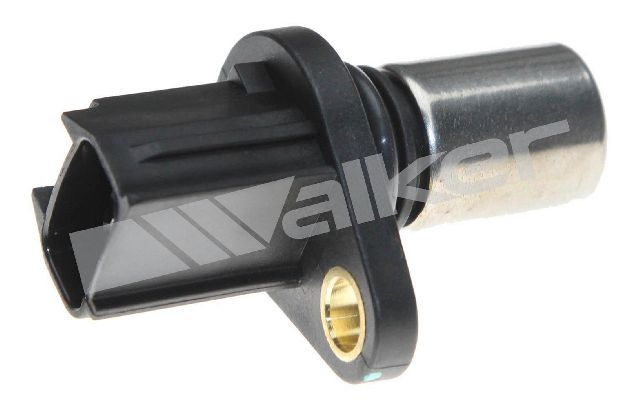
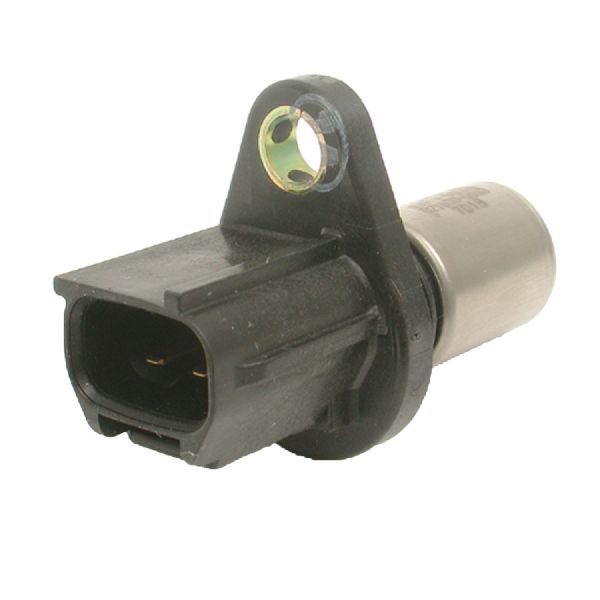
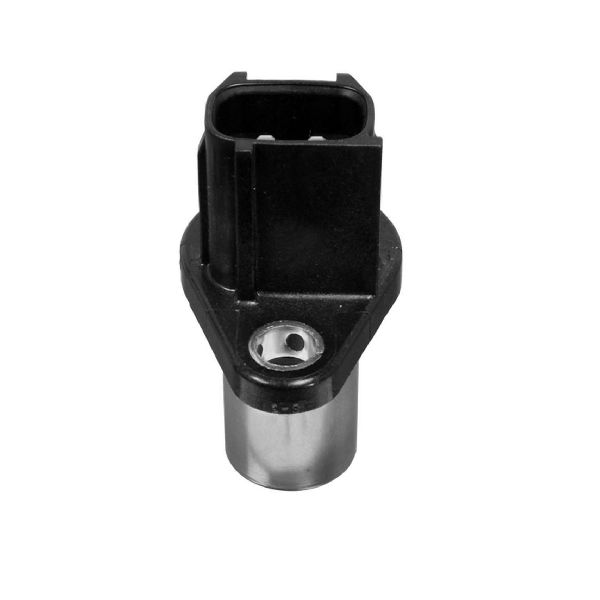
Est. part cost: $25-$50 - Failing Camshaft Position Sensor 🔴 High Probability → Shop Engine Camshaft Position Sensor The sensor is an electronic component that can fail over time due to heat cycles and vibration. It is a very common failure point after ruling out oil level issues.
How to confirm: After confirming the oil level is correct, the sensor is the next most likely culprit. It can be tested with a multimeter for resistance, but replacement is often the most straightforward diagnostic step due to its low cost and accessibility.
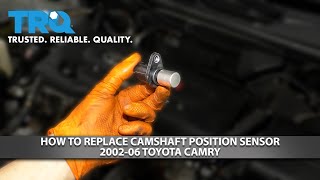
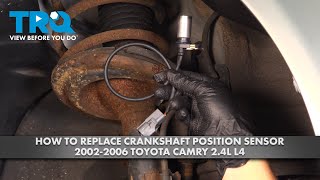
Typical fix: Replace the camshaft position sensor. It is located on the top of the cylinder head on the intake (firewall) side and held by a single 10mm bolt. 🎬 Watch this quick guide to replacing the camshaft sensor.
Est. part cost: $25-$95 - Damaged Wiring or Connector 🟡 Medium Probability
How to confirm: Visually inspect the wiring harness and connector leading to the camshaft position sensor for any signs of fraying, melting, corrosion, or loose pins. A common failure point is the wire breaking inside the insulation right at the connector.
Typical fix: Repair the damaged section of wire or clean/replace the connector. In one documented case, an owner fixed a persistent P0341 by finding and soldering a broken wire right at the connector harness.
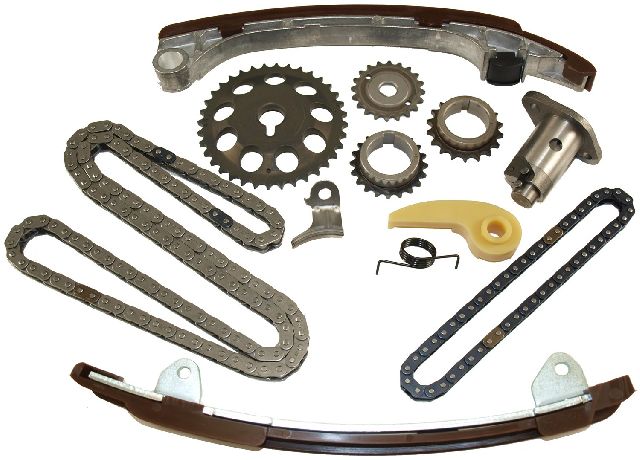
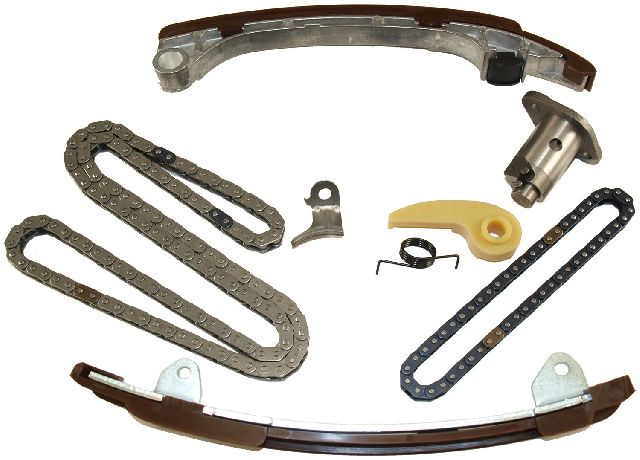
Est. part cost: $5-$30 - Stretched Timing Chain ⚪ Low Probability → Shop Engine Timing Chain On higher mileage engines (typically over 150,000 miles), the timing chain can stretch, causing a discrepancy between cam and crank signals that the computer detects as a performance fault.
How to confirm: Listen for a rattling noise from the passenger side of the engine on cold startups. This is a classic symptom. Confirming requires checking timing marks, which is a labor-intensive job that involves removing the valve cover.
Typical fix: Replace the timing chain, tensioner, and guides. This is a significant repair best left to a professional.
Est. part cost: $200-$500
Rare But Worth Checking
- Faulty VVT Oil Control Valve (OCV): A stuck or clogged OCV can prevent the VVT system from adjusting cam timing correctly, leading to this code. It's often seen with codes like P0011 or P0012. The valve can be removed and tested by applying 12v to see if the plunger actuates. It can also be cleaned with brake cleaner to restore function if it's merely clogged with sludge.
- Damaged Camshaft Reluctor Wheel: → Shop Engine Camshaft The teeth on the camshaft that the sensor reads can become damaged or dirty, leading to an erratic signal. This is rare and requires removing the valve cover to inspect.
- Failing Engine Control Module (ECM): This is extremely rare. The ECM's internal driver for the sensor circuit can fail, but all other possibilities should be exhausted before considering ECM replacement.
Diagnosis Steps
- Check Engine Oil Level: This is the most important first step for a 2AZ-FE engine. If the oil is low, top it off, clear the code, and drive to see if it returns.
- Scan for Other Codes: Use an OBD-II scanner to check for any other stored codes. Codes like P0011/P0012 point towards VVT/oil issues, while P0335 could indicate a timing chain problem.
- Inspect Sensor Wiring: Visually inspect the camshaft position sensor's connector and wiring harness. Look for loose connections, corrosion on the pins, or any signs of damage like melting or chafing. Pay close attention to the wires right at the connector, as they can break internally.
- Test or Replace the Camshaft Position Sensor: Given the high probability of failure and low cost, many choose to replace the sensor as a diagnostic step. It is held by one 10mm bolt on the cylinder head. Alternatively, it can be tested with a multimeter for resistance according to the factory service manual.
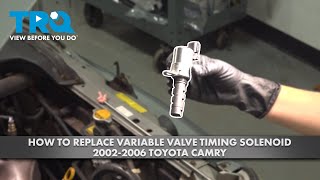
- Inspect VVT System: If the code persists, inspect the VVT oil control valve (OCV). It is located on the front of the cylinder head. It can be removed and tested by applying 12v to see if the plunger actuates. Check its filter screen for sludge. 🎬 See how to replace the VVT oil control valve.
- Inspect Mechanical Timing: If all else fails, the issue is likely mechanical. This involves removing the valve cover to inspect the timing chain for slack and verifying the timing marks align. A rattling noise on startup is a strong indicator of a stretched chain. 🎬 Listen to what a rattling timing chain sounds like. This step is best performed by a professional.
Parts You'll Likely Need
- Camshaft Position Sensor
(OEM #90919-05043 (superseded by 90919-A5003))— This is the most common electrical component to fail and cause a P0341 code after low oil has been ruled out.
Trusted brands: Denso (OEM supplier), NGK/NTK, Hitachi
OEM price range: $65-$95
Aftermarket price range: $25-$60 - Timing Chain Kit
(OEM #13506-0H011 (Chain), 13507-28010 (Tensioner Assy))— Required if diagnosis confirms the timing chain has stretched, a known issue on high-mileage 2AZ-FE engines.
Trusted brands: Aisin (OEM supplier), Cloyes
OEM price range: $300-$450
Aftermarket price range: $150-$250
Related Codes That Often Appear With This One
- P0011 / P0012 — These codes relate to camshaft timing being over-advanced or over-retarded, strongly pointing to a VVT system issue caused by low oil or a faulty OCV.
- P0335 — This is a code for the Crankshaft Position Sensor. Seeing both codes together can indicate a more serious timing issue, like a jumped or stretched timing chain, or a wiring harness problem common to both sensors.
- P0300, P0301-P0304 — Misfire codes are a direct symptom of incorrect cam timing, as the engine cannot properly time spark and fuel injection.
Technical Service Bulletins (TSBs) & Recalls
- S-SB-0024-11 (Rev2) / S-SB-0031-14: While not directly for P0341, these TSBs address the root cause of excessive oil consumption in the 2AZ-FE engine, which is a primary trigger for this code. They detail the inspection and repair procedure, which involves replacing the pistons and rings.
- T-SB-0133-10 / EG015-07: These TSBs address the procedure for repairing stripped cylinder head bolt threads using thread inserts (like Time-Sert), which is a common, major repair on these engines.
Platform-Specific Known Issues
- Excessive Oil Consumption: This engine is subject to Toyota's Warranty Enhancement Program (ZE7) and Technical Service Bulletin S-SB-0024-11 (Rev2) for excessive oil consumption caused by faulty piston rings. This condition frequently leads to low oil levels, which triggers VVT-related codes like P0341. The official test procedure involves an oil consumption test over 1,100-1,300 miles.
- Stripped Head Bolt Threads: A notorious issue on the 2AZ-FE is the stripping of the aluminum block's cylinder head bolt threads, particularly the three rear bolts. This leads to a blown head gasket, coolant loss, and overheating. While not a direct cause of P0341, a severe overheating event from this issue could damage the camshaft sensor or its wiring.
Mechanic-Grade Diagnostic Values
- Camshaft Position Sensor Resistance — expected: 835 to 1,400 Ω (cold); 1,060 to 1,645 Ω (hot). 'Cold' is 10°C to 50°C (14°F to 122°F), 'Hot' is 50°C to 100°C (122°F to 212°F).. Failure: Resistance is infinite (open circuit) or well outside the specified range for the given temperature.
- VVT Oil Control Valve (OCV) Solenoid Resistance — expected: 6.9 to 7.9 Ω at 20°C (68°F).. Failure: Resistance is infinite (open circuit) or significantly higher/lower than the specified range.
- Camshaft Position Sensor Signal (Oscilloscope) — expected: A repeating pattern of 3 AC voltage pulses for every 2 crankshaft rotations, viewed with an oscilloscope connected to ECM terminals G2+ and G-.. Failure: Missing pulses, erratic or noisy waveform, or no signal generated during engine cranking.
Scan Tool Commands That Help
- Toyota Techstream: Active Test: Control the VVT System (Bank 1) — After verifying sensor and wiring integrity, this command manually actuates the VVT solenoid. It helps determine if the code is caused by a mechanical VVT system fault (stuck phaser, clogged oil passage, bad OCV) versus an electrical sensor/circuit fault.
Wiring & Ground Locations
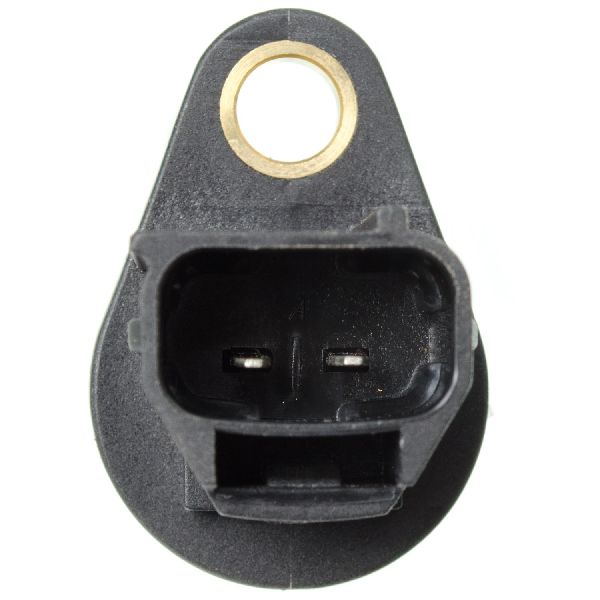
- Camshaft Position Sensor Connector — On the top of the cylinder head, on the intake (firewall) side of the engine.. This is the primary connection point to inspect for damage, corrosion, or oil contamination. It is a 2-pin connector.
- ECM Terminals G2+ and G- — At the Engine Control Module (ECM). The specific pin locations on the multi-pin connector vary by year and specific ECM part number.. These are the two terminals where the ECM receives the signal from the 2-wire inductive camshaft sensor. Advanced diagnosis involves checking for a proper signal waveform with an oscilloscope at these pins.
Real Owner Repair Stories
- VWVortex Forum User (Vehicle with recent cylinder head replacement) — Engine will not start, P0341 code present immediately after major engine work.
❌ Tried (didn't work) Verifying camshaft timing marks were aligned., Ensuring timing chain marks were correct.
✅ What actually fixed it The technician discovered that when the crankshaft pulley bolt was removed to install the pulley (after the timing cover was on), the crank timing gear itself had shifted on the crankshaft. The gear is not keyed and floats without the bolt's clamping force. The engine was retimed, confirming the crank gear's position before final assembly, which resolved the code.
OEM Part Supersession History
90919-05047→90919-A5002— Standard part revision and consolidation by Toyota.
Heads up: The part number 90919-05043, often incorrectly listed for this vehicle, is for smaller Toyota engines (Yaris, Echo) and will not work correctly. Always verify the part number against the vehicle's VIN.
Model Year Variations Within This Range
- 2002-2004: These earlier models of the 2AZ-FE were more prone to the cylinder head bolt threads stripping in the block, leading to head gasket failure and overheating. A severe overheat can damage the plastic camshaft sensor or its wiring harness, indirectly causing a P0341.
Diagnostic Flowchart
Other Known Issues on This Vehicle
Issues unrelated to this code that are worth knowing about as an owner of this generation:
- Stripped Cylinder Head Bolt Threads 🔴 High — Common on engines over 100,000 miles, especially on earlier 2002-2006 models. Caused by overheating and weak aluminum block threads. (Ref: T-SB-0133-10 / EG015-07)
- Excessive Oil Consumption 🔴 High — Extremely common across the entire 2AZ-FE production run due to faulty piston ring design. Can start as early as 60,000 miles. (Ref: S-SB-0024-11 (Rev2), T-SB-0094-11 (Rev2), Warranty Enhancement ZE7)
- Leaking Water Pump 🟠 Medium — Often reported by owners, can lead to overheating if not addressed.
- Faulty A/C Clutch Relay 🟡 Low — A common cause for intermittent A/C operation or a flashing A/C light. The relay is located in the under-hood fuse box.
- Deteriorating Rear Speaker Covers 🟡 Low — The plastic covers on the rear deck become brittle and crumble from sun exposure.
Used vs. New Parts: Buying Guide for This Vehicle
When a used part is the smart pick: A used wiring harness connector pigtail is a viable and cost-effective repair if the original connector is broken or corroded. A complete engine wiring harness from a low-mileage, non-wrecked donor car can also be a good choice if the original is extensively damaged.
Donor-vehicle mileage cap: roughly under 80000 miles for the part to have meaningful remaining life.
What to inspect on the donor part:
- Inspect plastic connectors for brittleness, cracking, or signs of melting from overheating.
- Ensure connector locking tabs are present and functional.
- Check for any signs of oil saturation or corrosion on the pins.
- For a full harness, ensure it came from a vehicle that was not in a front-end collision.
OEM-only on this vehicle (don't cheap out):
- Camshaft Position Sensor
Aftermarket brands forum-validated for this vehicle:
- Denso (This is the Original Equipment Manufacturer; buying a Denso-branded sensor is equivalent to buying the Toyota part)
- Aisin (For timing chain components, if required)
Brands owners have reported issues with on this vehicle:
- Unbranded 'white-box' sensors from online auction or marketplace sites.
- Store brands with a high rate of premature failure reported on forums.
Real Owner Stories
Aggregated from forums and TSBs cited above. Mileages and costs reflect what owners reported in those sources.
2002 Toyota Camry 2.4L — 190000 miles
Symptoms: Stored codes P0341, P0335, P0012, P0300, P0302, and P0304. Owner replaced the cam sensor, crank sensor, and VVT solenoid but the codes persisted.
What fixed it: The ultimate cause was a stretched timing chain.
Source hint: ToyotaNation Forum - 'P0341, P0335, P0012, and now P0300, P0302, P0304...'
2002-2006 Toyota Camry 2.4L
Symptoms: Persistent P0341 code.
What fixed it: Finding and soldering a broken wire right at the connector harness.
Source hint: common_causes - Damaged Wiring or Connector
2005-2010 Scion tC 2.4L
Symptoms: P0341 code and documented oil consumption issues.
What fixed it: Topping off or changing the engine oil and filter to restore VVT system performance.
Source hint: Go-Parts.com / Scion tC article
Related OBD-II Codes
Frequently Asked Questions
Is there a Toyota program that covers the excessive oil consumption causing my P0341 code?
I have a 2002 Camry with high mileage and a P0341; could it be the timing chain?
Where is the camshaft position sensor located on my 2.4L Camry?
Can stripped head bolt threads cause a P0341 code?
Why does low oil trigger a camshaft performance code like P0341?
What should I check first on my 2AZ-FE engine before replacing the sensor?
Helpful Videos
We Have This Part in Stock

The information in this article is provided for general reference and educational purposes only. Vehicle specifications, procedures, and part compatibility can vary by production date, trim level, and region. Always consult your vehicle's factory service manual and verify part numbers before purchasing or performing repairs. Safety-critical components such as airbags, seat belts, and braking systems should be installed by a qualified professional.
- Toyota Camry:
- 🧭 Diagnostic Flowchart
- 🎬 Helpful Videos
- 🛍️ Shop This Part
- What's Unique About the 2002-2006 Toyota Camry
- Symptoms You May Notice
- Most Likely Causes
- Rare But Worth Checking
- Diagnosis Steps
- Parts You'll Likely Need
- Related Codes That Often Appear With This One
- Technical Service Bulletins (TSBs) & Recalls
- Platform-Specific Known Issues
- Mechanic-Grade Diagnostic Values
- Scan Tool Commands That Help
- Wiring & Ground Locations
- Real Owner Repair Stories
- OEM Part Supersession History
- Model Year Variations Within This Range
- Other Known Issues on This Vehicle
- Used vs. New Parts: Buying Guide for This Vehicle
- Real Owner Stories
- 2002 Toyota Camry 2.4L — 190000 miles
- 2002-2006 Toyota Camry 2.4L
- 2005-2010 Scion tC 2.4L
- Related OBD-II Codes
- Frequently Asked Questions
- 🎟️ Get 5% Off