

P0341 on 1995-2004 Toyota Tacoma: Camshaft Sensor Range/Performance Causes and Fixes
This code almost always points to a failing camshaft position sensor or its wiring. On the 2.4L and 2.7L engines, the sensor is located in a tight spot under the intake manifold, making replacement a bit tricky but possible for a DIYer with the right tools. Using an OEM Denso sensor is highly recommended over aftermarket alternatives to avoid repeat failures.
- P0341 on a 1st Gen Tacoma almost always means the camshaft position sensor is failing.
- Before buying parts, inspect the sensor's wiring and connector for damage, as it's located in a tight, hot area.
- The sensor is located under the intake manifold, between the #2 and #3 intake runners, and requires long extensions and a swivel socket for removal.
- To avoid repeat issues, it is strongly recommended to use a genuine OEM Denso replacement sensor (part no. 90919-05026).
What's Unique About the 1995-2004 Toyota Tacoma
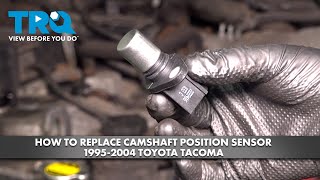
The 2RZ-FE and 3RZ-FE engines in the first-generation Tacoma are known for their durability, and a P0341 code is a straightforward diagnostic issue. Unlike on V-engines, these inline-four engines have only one camshaft sensor ('Bank 1'), simplifying diagnosis. The most platform-specific challenge is the sensor's physical location; it's tucked under the intake manifold plenum on the driver's side of the cylinder head. Access requires patience and specific tools like multiple long socket extensions and a universal swivel joint, but the intake manifold does not need to be removed. 🎬 Watch: Step-by-step guide to replacing the sensor in this tight spot. A critical variation exists: 1995-~1999 models use a pickup coil inside the distributor to generate the cam signal, while ~2000-2004 models use a separate, standalone sensor on the head. Diagnosis differs significantly between these two types.
Symptoms You May Notice
- Check Engine Light is on
- Engine is hard to start or cranks but won't start
- Engine stalls intermittently, especially at idle or low speeds
- Rough running or misfiring
- Hesitation or lack of power during acceleration
- Reduced fuel economy
- Engine idling too low or too high
- Replacing the Crankshaft Position Sensor. Many owners confuse the camshaft and crankshaft sensors. The crankshaft position sensor (Part No. 90919-05016) is located lower on the engine, often behind the alternator, and will typically set different codes (like P0335).
- Ignoring Aftermarket Sensor Quality. Many forum users report chasing the P0341 code after installing a cheap aftermarket sensor. The code would disappear and then return, only to be permanently fixed by installing a genuine Denso sensor.
- Misunderstanding the Ignition System Type. On 1995-~1999 models, the fault is with the pickup coil inside the distributor, not a separate sensor on the cylinder head. Replacing a non-existent sensor on these early models is a common point of confusion.
Most Likely Causes
- Failing Camshaft Position Sensor 🔴 High Probability → Shop Engine Camshaft Position Sensor Heat and vibration in the engine bay cause the sensor's internal electronics to fail over time. It is the most common point of failure for this code. Many owners report that cheaper aftermarket sensors fail quickly or are dead-on-arrival, making the OEM Denso sensor the recommended replacement.
How to confirm: After checking wiring, test the sensor's internal resistance with a multimeter. The factory service manual specifies a resistance between 835-1,400 ohms (cold) or 1,060-1,645 ohms (hot) for models up to 1999. For later models, specs can be 1,630-2,740 ohms (cold). The definitive test is to view the sensor's output signal on an oscilloscope while the engine is running; the signal should be a clean, consistent square wave.
Typical fix: Replace the camshaft position sensor, preferably with an OEM Denso part.
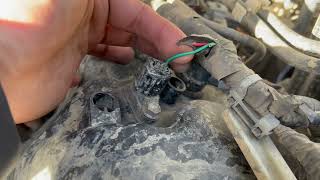
Est. part cost: $70-$150 - Wiring Harness or Connector Issue 🟡 Medium Probability The wiring harness runs in a hot, tight space under the intake manifold. Over time, wires can become brittle and crack, or the connector can become contaminated with oil or dirt, leading to a poor connection. The plastic connector itself can become brittle and break when trying to disconnect it.
How to confirm: Visually inspect the wiring harness leading to the sensor for any signs of cracking, melting, or rodent damage. Unplug the connector and check for corrosion, bent pins, or oil contamination. Use a multimeter to check for continuity and shorts in the wiring between the sensor connector and the ECM.
Typical fix: Repair the damaged section of wire or replace the connector pigtail.
Est. part cost: $15-$40 - Stretched or Jumped Timing Chain ⚪ Low Probability → Shop Engine Timing Chain While the 2RZ/3RZ engines use a durable timing chain, very high mileage (typically over 200,000 miles) can lead to stretching or a failing tensioner. This would cause the camshaft and crankshaft signals to be out of sync, triggering a P0341 code. This is often preceded by a rattling noise from the front of the engine, especially on cold starts.
How to confirm: This is a more involved diagnosis. If the sensor and wiring are good, the next step is to remove the valve cover and inspect the timing marks on the camshaft and crankshaft sprockets to ensure they align correctly. Listen for chain slap noise from the timing cover area.
Typical fix: Replace the timing chain, guides, and tensioner.
Est. part cost: $150-$300
Rare But Worth Checking
- Weak Battery or Starter: → Shop Vehicle Battery In some Toyota models, low voltage during cranking can cause the ECM to receive an erratic signal from the cam sensor, temporarily setting a P0341 code. If the code only appears during startup and the battery is old, it's worth testing the battery and charging system before replacing other parts.
- Faulty Engine Control Module (ECM): This is very rare. The ECM should only be considered a potential cause after all other possibilities (sensor, wiring, timing) have been exhaustively ruled out.
- Damaged Reluctor Wheel: The sensor reads teeth on a reluctor wheel mounted to the camshaft. While extremely uncommon, if this wheel is damaged, bent, or has debris on it, it can cause an erratic signal. This would typically only happen during major engine work.
Diagnosis Steps
- Read the codes: Use an OBD-II scanner to confirm P0341 is present. Note any other codes, but P0341 often appears alone.
- Identify Ignition System: Determine if your engine has a distributor (1995-~1999) or a distributorless coil-on-plug system (~2000-2004). The diagnostic path depends entirely on this.
- For Distributorless Models (~2000-2004): Inspect the wiring and connector for the standalone sensor on the driver's side of the cylinder head, under the intake manifold plenum. Look for any obvious damage, corrosion, or loose connections. Test the sensor's resistance (e.g., 835-1,400 ohms cold). The most accurate test is using an oscilloscope to watch the signal pattern while cranking the engine.
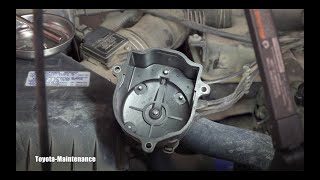
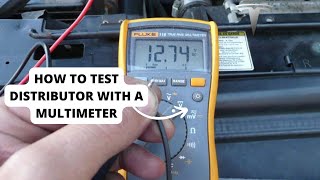
- For Distributor Models (1995-~1999): Inspect the distributor cap, rotor, and wiring. 🎬 See how to access the distributor components on early models. Test the resistance of the pickup coil inside the distributor between terminals G+ and G-. 🎬 Watch: How to test the pickup coil using a multimeter. The expected resistance is 185-275 ohms (cold). Check the air gap between the signal rotor and pickup coil (0.2-0.4mm).
- Check Mechanical Timing: If the sensor/pickup coil and wiring test good, suspect a mechanical issue. Remove the valve cover and inspect the timing chain for excessive slack. Verify the timing marks on the cam and crank gears are aligned per the factory service manual.
- Consider the ECM: Only if all previous steps fail to find a fault should the ECM be considered as the potential cause.
Parts You'll Likely Need
- Camshaft Position Sensor
(OEM #90919-05026)— This sensor is the most frequent cause of a P0341 code due to failure from heat and age. Owner experiences strongly suggest using the OEM Denso part (Denso 196-1105) to avoid repeat failures common with aftermarket brands. This applies to ~2000-2004 models with distributorless ignition.
Trusted brands: Denso (OEM), NGK/NTK, Hitachi
OEM price range: $100-$150
Aftermarket price range: $40-$90 - Distributor Assembly or Pickup Coil
(OEM #19100-75050 (Full Assembly Example))— On 1995-~1999 models, the cam signal comes from a pickup coil inside the distributor. Often, the entire distributor is replaced as an assembly if the internal coil fails.
Trusted brands: Denso (OEM), Cardone (Remanufactured)
OEM price range: $250-$400 (Assembly)
Aftermarket price range: $100-$200 (Assembly) - Camshaft Position Sensor Connector Pigtail
(OEM #90980-11162 (Connector Housing))— If the connector itself is damaged, corroded, or the plastic lock tab breaks during removal, simply replacing the sensor will not fix the issue.
Trusted brands: Dorman, Standard Motor Products, OEM
OEM price range: $10-$20 (housing only)
Aftermarket price range: $15-$30 (pigtail with wires)
Platform-Specific Known Issues
- The primary vehicle-specific issue is the difficult-to-access location of the sensor. It is positioned under the intake manifold and requires working in a tight space. A TRQ repair video recommends using multiple long socket extensions and a swivel to reach the 10mm bolt.
- A common DIY struggle is dropping the 10mm mounting bolt into the engine bay. Using a magnetic socket or placing a rag underneath the work area is highly recommended.
- Many owners on forums like TacomaWorld emphasize the importance of using a genuine Denso sensor. Multiple threads describe situations where a new aftermarket sensor failed to fix the code or failed within a few months, while an OEM sensor resolved the problem immediately.
Mechanic-Grade Diagnostic Values
- Distributor Pickup Coil Resistance (1995-~1999 models) — expected: 185 - 275 Ohms (cold), 240 - 325 Ohms (hot). Failure: Resistance is infinite (open), zero (shorted), or significantly outside the specified range.
- Distributor Pickup Coil Air Gap (1995-~1999 models) — expected: 0.2 - 0.4 mm (0.008 - 0.016 in). Failure: Air gap is outside the specified range, indicating a worn or improperly installed component.
- Standalone Camshaft Position Sensor Resistance (~2000-2004 models) — expected: 835 - 1,400 Ohms (cold) or 1,630 - 2,740 Ohms (cold), depending on specific year/part.. Failure: Resistance is infinite (open), zero (shorted), or outside the specified range.
- Camshaft Position Sensor Signal (~2000-2004 models) — expected: A clean, consistent AC square wave signal visible on an oscilloscope while cranking or running.. Failure: A missing, erratic, or noisy waveform indicates a failing sensor or wiring issue.
Wiring & Ground Locations
- Sensor Connector (Distributorless, ~2000-2004) — On the driver's side of the cylinder head, tucked under the intake manifold plenum.. This is a 2-pin connector for a variable reluctance sensor. The pins are typically labeled NE+ and NE-. The sensor generates its own AC signal; it does not receive a 5V reference. The connector is a common failure point due to heat and vibration.
- Distributor Connector (1995-~1999) — Connected to the distributor on the passenger side of the engine.. This multi-pin connector contains the G+ and G- wires from the internal pickup coil. Testing resistance between these specific pins is the primary electrical test for the cam signal on these models.
- Ground Point 'EB' — On the intake manifold.. Engine wiring diagrams show a primary engine ground point located on the intake manifold. A loose or corroded connection here can introduce noise or resistance into sensor circuits, potentially causing a range/performance code like P0341.
Real Owner Repair Stories
- TacomaWorld Forum Thread (1995.5 Toyota Tacoma 2.4L (2RZ-FE)) — Engine would crank but not start, threw P0341 code.
❌ Tried (didn't work) Initially confused about the location of the camshaft position sensor, as guides for later models were not applicable.
✅ What actually fixed it The user identified that their early model had a distributor. The problem was resolved by replacing the entire distributor assembly, which contains the camshaft position pickup coil. - YouTube Video Comment Section / Multiple Forum Threads (2001 Toyota Tacoma 2.7L (3RZ-FE)) — Check Engine Light with P0341, intermittent stalling at idle, and hard starting.
❌ Tried (didn't work) Replacing the camshaft position sensor with a cheap, unbranded aftermarket part from an online retailer. The code returned within a week.
✅ What actually fixed it The problem was permanently resolved after replacing the sensor again, this time with a genuine OEM Denso sensor. This is a recurring story across many owner forums. - YouTube Video (Vehicle unspecified, but demonstrates a common wiring failure mode.) — Intermittent P0341 code, especially in damp weather.
❌ Tried (didn't work) Clearing the code, which would cause it to go away temporarily.
✅ What actually fixed it The technician found a section of the sensor's wiring harness where the insulation had rubbed through and was making intermittent contact with the engine block (grounding out). Repairing the chafed wire and protecting it with new wire loom solved the problem without replacing the sensor.
OEM Part Supersession History
90919-05026→90080-19014— Part consolidation and updates by Toyota.
Heads up: While 90080-19014 is listed as a replacement, it's crucial to verify fitment with a VIN. The part 90919-05026 is specific to many Toyota 4-cylinders of this era, and using the correct OEM or Denso cross-reference is the safest approach.
Model Year Variations Within This Range
- 1995-~1999: These models use a distributor-based ignition system. The camshaft position signal is generated by a magnetic pickup coil (signal generator) located inside the distributor assembly. The diagnostic process focuses on testing this coil's resistance and air gap, or replacing the entire distributor.
- ~2000-2004: These models use a Distributorless Ignition System (DIS) with coil packs. The camshaft position sensor is a standalone, 2-wire variable reluctance sensor mounted on the cylinder head, reading a reluctor wheel on the camshaft itself. The diagnosis focuses on testing or replacing this separate sensor.
Diagnostic Flowchart
Other Known Issues on This Vehicle
Issues unrelated to this code that are worth knowing about as an owner of this generation:
- Frame Rust/Corrosion 🔴 High — Extremely common, especially in 'Salt Belt' states. Led to a massive warranty extension program and vehicle buybacks from Toyota. (Ref: Toyota initiated a Customer Support Program (CSP) extending the frame warranty to 15 years, unlimited mileage, for 1995-2000 models, later including 2001-2004 for frame replacement.)
- Lower Ball Joint Failure 🔴 High — Common enough to prompt a safety recall. A manufacturing defect could cause the ball joint to wear prematurely and separate, causing a loss of steering control. (Ref: NHTSA Campaign ID: 05V225000 (Toyota Recall 50J) for 2001-2004 models.)
- Head Gasket Failure 🟠 Medium — Not as common as frame rust, but a known potential failure point at higher mileage (150k+ miles), particularly on the 3RZ-FE. Often manifests as misfires and coolant consumption.
- Failing Starter Motor Contacts 🟡 Low — Very common around 150,000-200,000 miles. The starter will click but not engage. It's usually caused by worn copper contacts inside the solenoid, which is a cheap and simple fix compared to replacing the entire starter.
- Cracked Exhaust Manifold 🟡 Low — The factory cast iron exhaust manifold is known to develop cracks over time, causing an exhaust leak noise (ticking) that is most noticeable when the engine is cold.
Used vs. New Parts: Buying Guide for This Vehicle
When a used part is the smart pick: For early models (1995-~1999), a complete, low-mileage used OEM distributor assembly from a junkyard can be a cost-effective alternative to a new aftermarket unit, which may have questionable reliability.
Donor-vehicle mileage cap: roughly under 120000 miles for the part to have meaningful remaining life.
What to inspect on the donor part:
- Check for minimal corrosion on the housing and electrical connector.
- Inspect the distributor cap and rotor (if included) for cracks, carbon tracking, or heavy wear.
- Manually turn the distributor gear and feel for any binding or excessive side-to-side shaft play.
OEM-only on this vehicle (don't cheap out):
- Standalone Camshaft Position Sensor (~2000-2004 models)
- Distributor Pickup Coil (if replacing separately on early models)
Aftermarket brands forum-validated for this vehicle:
- Denso (is the OEM supplier, best choice)
- NGK/NTK
- Hitachi
Brands owners have reported issues with on this vehicle:
- Unbranded 'white-box' sensors from online marketplaces (e.g., eBay, Amazon) are frequently cited in forums as being dead-on-arrival or failing prematurely.
Real Owner Stories
Aggregated from forums and TSBs cited above. Mileages and costs reflect what owners reported in those sources.
2000-2004 Toyota Tacoma (Distributorless)
Symptoms: The owner struggled with the difficult-to-access location of the sensor under the intake manifold and warned about dropping the 10mm mounting bolt into the engine bay.
What fixed it: Replaced the sensor using multiple long socket extensions and a swivel, while using a magnetic socket to prevent losing the bolt.
Source hint: TRQ repair video
Toyota Tacoma (RZ-series engine)
Symptoms: The user experienced repeat failures and a recurring P0341 code after installing non-OEM parts.
What fixed it: Replacing the failing aftermarket sensors with a genuine OEM Denso sensor.
Source hint: Tacoma World (tacomaworld.com) thread titled 'Going thru camshaft position sensors'
1995-1999 Toyota Tacoma (Distributor model)
Symptoms: P0341 code on a model with an older ignition style.
What fixed it: Inspecting the distributor cap, rotor, and testing the resistance of the pickup coil (G+ to G- terminals) inside the distributor.
Source hint: YotaTech (yotatech.com) forum discussions
Related OBD-II Codes
Frequently Asked Questions
I have a 1997 Tacoma; where is the camshaft position sensor located?
I found a cheap camshaft sensor online for my 2002 Tacoma; is it okay to use?
Is there a special tool needed to reach the sensor on the 2.4L/2.7L engines?
My 3RZ-FE has over 200,000 miles and a P0341 code; could it be the timing chain?
What are the specific resistance specs for testing the sensor on a 2001 Tacoma?
Could my P0341 code be related to the frame rust recall or lower ball joint issues?
Helpful Videos
We Have This Part in Stock


The information in this article is provided for general reference and educational purposes only. Vehicle specifications, procedures, and part compatibility can vary by production date, trim level, and region. Always consult your vehicle's factory service manual and verify part numbers before purchasing or performing repairs. Safety-critical components such as airbags, seat belts, and braking systems should be installed by a qualified professional.
- Toyota Tacoma:
- 🧭 Diagnostic Flowchart
- 🎬 Helpful Videos
- 🛍️ Shop This Part
- What's Unique About the 1995-2004 Toyota Tacoma
- Symptoms You May Notice
- Most Likely Causes
- Rare But Worth Checking
- Diagnosis Steps
- Parts You'll Likely Need
- Platform-Specific Known Issues
- Mechanic-Grade Diagnostic Values
- Wiring & Ground Locations
- Real Owner Repair Stories
- OEM Part Supersession History
- Model Year Variations Within This Range
- Other Known Issues on This Vehicle
- Used vs. New Parts: Buying Guide for This Vehicle
- Real Owner Stories
- 2000-2004 Toyota Tacoma (Distributorless)
- Toyota Tacoma (RZ-series engine)
- 1995-1999 Toyota Tacoma (Distributor model)
- Related OBD-II Codes
- Frequently Asked Questions
- 🎟️ Get 5% Off