

P0341 on 2005-2015 Toyota Tacoma 4.0L V6: Cam Sensor Causes and Fixes
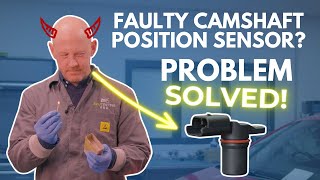
On a 2005-2015 Tacoma with the 4.0L V6, code P0341 most often means the passenger side (Bank 1) camshaft position sensor is failing. Replacing the sensor is the typical fix. Expect to pay $40-$90 for an aftermarket sensor (Denso is a good choice) or $100-$150 for an OEM part. The sensor is located under the intake manifold, making replacement more difficult than on other vehicles, turning a 15-minute job into a 3-4 hour repair.
- P0341 on your Tacoma most likely means the passenger-side camshaft position sensor is failing.
- Due to the sensor's location under the intake manifold, this is a labor-intensive job for a relatively inexpensive part. DIY is possible but requires significant disassembly.
- Before replacing the sensor, always check the wiring and connector for damage, and verify your oil level is correct.
- When performing the repair, it is highly recommended to replace the intake manifold gaskets.
- If a new sensor doesn't fix the code, the problem may lie in the wiring, the VVT system, or, in rare cases, a stretched timing chain.
What's Unique About the 2005-2015 Toyota Tacoma
On the Tacoma's 1GR-FE engine, the camshaft position sensors are located on the front of the cylinder heads, underneath the lower intake manifold. This placement makes what is a simple, 15-minute job on many other vehicles a more involved repair requiring the removal of the upper and lower intake plenums. This significantly increases labor time and DIY difficulty compared to engines where the sensors are easily accessible on the valve covers. This design is shared with other Toyota models using the 1GR-FE, such as the 4Runner and FJ Cruiser.
Symptoms You May Notice
- Check Engine Light illuminated
- Engine hesitates or stumbles on acceleration
- Rough or uneven idle
- Engine stalls, especially at low speeds or when stopping
- Difficulty starting the engine (may crank for an extended time but not fire).
- Noticeable loss of power and reduced fuel economy.
- Replacing the crankshaft position sensor. While related to timing, the P0341 code specifically points to the camshaft sensor circuit for Bank 1.
- Assuming any engine drivability issue is due to spark plugs or ignition coils without first scanning for codes.
- Replacing the sensor without checking the wiring harness and connector for damage, leading to a recurring code.
Most Likely Causes
- Failing Camshaft Position Sensor (Bank 1) 🔴 High Probability → Shop Engine Camshaft Position Sensor Heat and vibration in the engine bay, particularly being buried under the intake manifold, cause the sensor's internal electronics to fail over time. This is the most common point of failure for this code.
How to confirm: After verifying wiring is intact, replacing the sensor is the most direct confirmation. A technician can also use an oscilloscope to view the sensor's signal waveform for dropouts or inconsistencies, which is the definitive diagnostic method.
Typical fix: Replace the Bank 1 (passenger side) camshaft position sensor. Given the significant labor involved in accessing the sensors, many owners and shops choose to replace both Bank 1 and Bank 2 sensors at the same time as preventative maintenance.
Est. part cost: $40-$150 - Wiring Harness or Connector Damage 🟡 Medium Probability The wiring harness connector can become brittle from heat cycles. Wires can also be damaged by rodents or chafing against other engine components. Moisture can get into the connector and corrode the pins, causing a poor signal.
How to confirm: Visually inspect the sensor's connector and the wiring leading to it for any signs of cracking, corrosion, melted plastic, or loose pins. Tug gently on the wires to ensure they are secure in the connector. Use a multimeter to check for continuity and proper voltage at the connector.
Typical fix: Repair the damaged section of wiring or replace the connector pigtail. Ensure the connection is clean and secure.
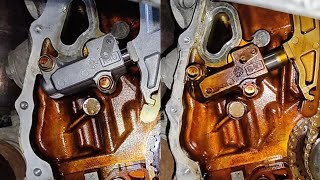
Est. part cost: $15-$40 - Stretched Timing Chain ⚪ Low Probability → Shop Engine Timing Chain While the 1GR-FE has a robust timing chain, it can stretch over many miles (typically well over 150,000), causing the camshaft and crankshaft timing to deviate slightly. This small deviation can be enough to trigger a range/performance code like P0341 before a more serious timing code appears.
How to confirm: This is a complex diagnosis. It may present with a rattling noise on startup. A technician can check cam/crank correlation with a capable scan tool or check the timing chain tensioner extension to gauge chain stretch. This is usually suspected after a new sensor and verified wiring do not resolve the code.
Typical fix: Replace the timing chain, tensioners, and guides. This is a significant and expensive repair.
Est. part cost: $300-$700
Rare But Worth Checking
- Low Battery Voltage or Weak Starter: → Shop Vehicle Battery During cranking, a weak battery or starter can cause a significant voltage drop, which may be enough to corrupt the camshaft sensor signal and temporarily set a P0341 code. If the code only appears during starting and you have a known weak battery, address the battery issue first.
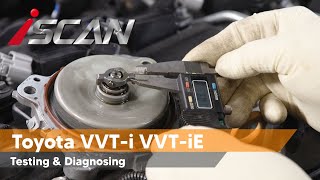
- Dirty or Low Engine Oil / Failing Oil Control Valve (OCV): The VVT-i system uses oil pressure, controlled by the OCV, to adjust cam timing. If the oil is dirty, low, or the OCV for Bank 1 is clogged or failing, it can cause the camshaft to be in an incorrect position relative to the crankshaft, triggering P0341. Check your oil and consider testing or cleaning the OCV for Bank 1 before suspecting major mechanical issues.
- Faulty ECM: In very rare cases, the Engine Control Module itself can be the source of the problem, failing to correctly interpret the signal from a perfectly good sensor. This is typically the last item to be considered after all other possibilities have been exhausted.
Diagnosis Steps
- Read the code with an OBD-II scanner and confirm it is P0341. Note any other codes present and review freeze frame data to understand the conditions when the code was set.
- Check engine oil level and condition. Low or dirty oil can affect the VVT system. Top off or change oil if necessary.
- Visually inspect the wiring harness and connector for the Bank 1 (passenger side) camshaft position sensor. Look for obvious signs of damage, corrosion, or loose connections. The harness is routed near hot engine components and can become brittle.
- If wiring looks good, the most probable cause is a faulty sensor. Proceed with replacement. Given the labor, consider replacing both bank 1 and bank 2 sensors.
- To replace the sensor, the upper and lower intake manifolds must be removed to gain access. This requires disconnecting fuel lines, vacuum hoses, and electrical connectors. New intake manifold gaskets are required for reassembly.
- Once the sensor(s) are replaced and the intake is reassembled, clear the code with the scanner and perform a test drive, including multiple start/stop cycles, to see if the code returns.
- If the code returns, a more advanced diagnosis is needed. This includes testing the sensor circuit with a multimeter for proper voltage and ground, and using an oscilloscope to analyze the sensor's signal pattern for noise or dropouts.
- If the sensor and wiring are confirmed to be good, the next step is to investigate mechanical timing issues, such as a stretched timing chain, or a problem with the VVT actuator or Oil Control Valve (OCV) on Bank 1.
Parts You'll Likely Need
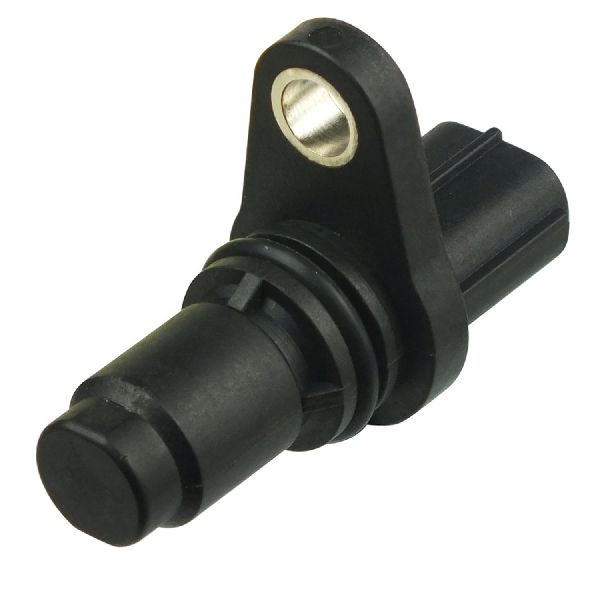
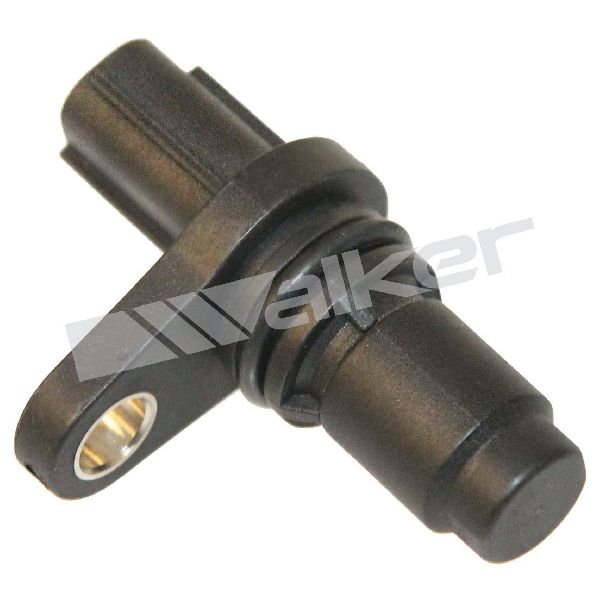
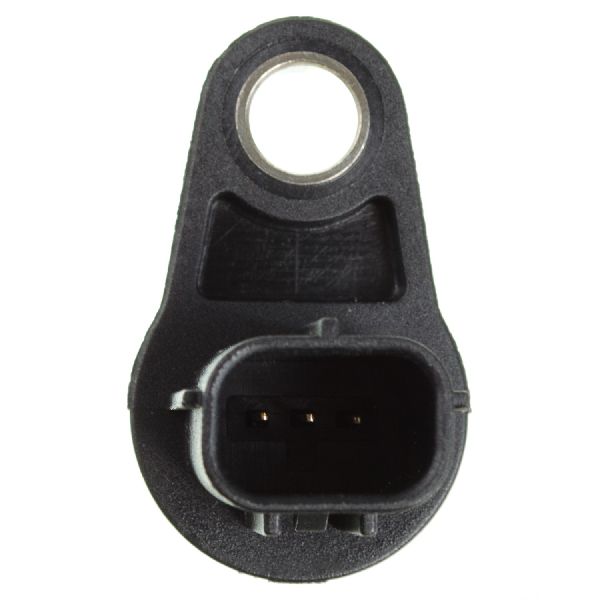
- Camshaft Position Sensor (Bank 1)
(OEM #90919-05060)— This sensor is the most common failure point for the P0341 code. The same part number is used for both banks.
Trusted brands: Denso (OEM supplier), NGK/NTK, Delphi, Toyota Genuine
OEM price range: $100-$150
Aftermarket price range: $40-$90 - Intake Manifold Gasket Set
(OEM #17176-31130 (Surge Tank to Manifold Gasket))— Required for the repair, as the upper and lower intake manifolds must be removed to access the camshaft position sensors. A full kit is recommended.
Trusted brands: Fel-Pro, Mahle, VR Gaskets, Toyota Genuine
OEM price range: $50-$80
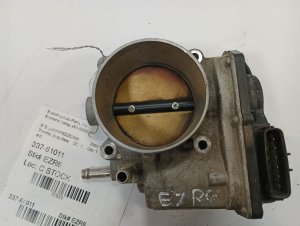
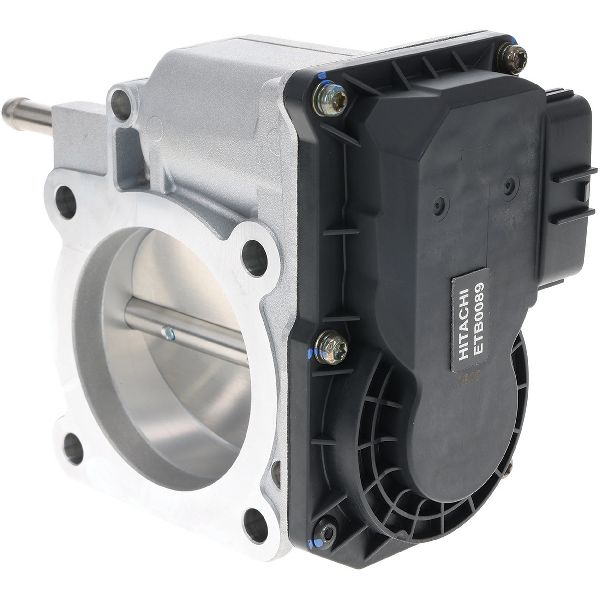
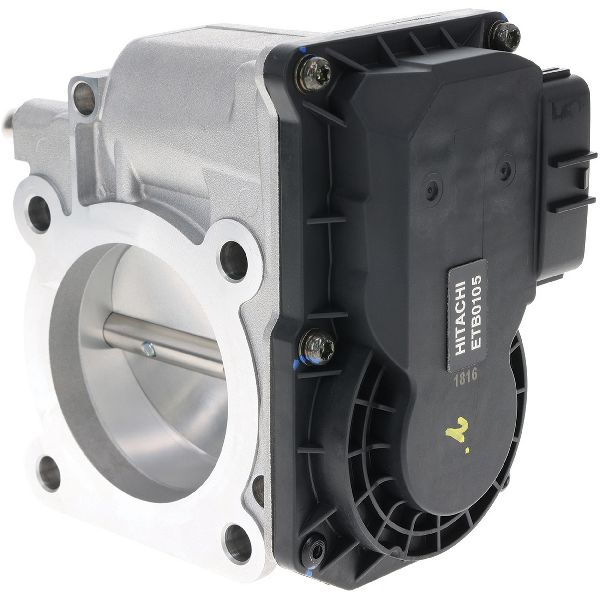
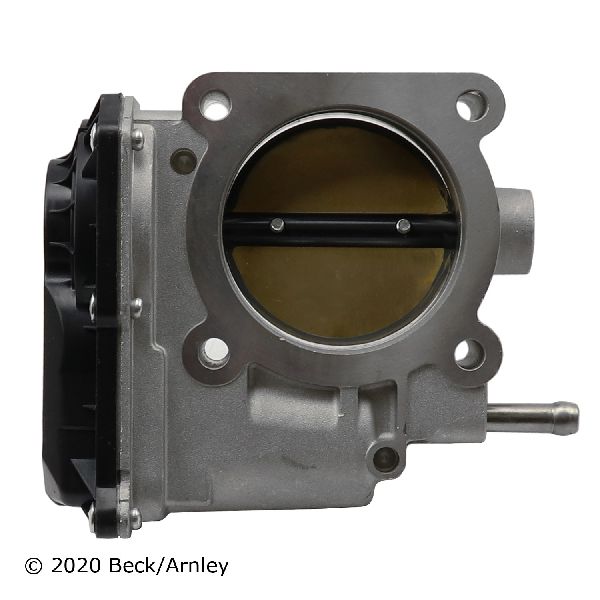
Aftermarket price range: $25-$50 - Throttle Body Gasket — Recommended to replace 'while you're in there' since the throttle body must be removed from the upper intake manifold. It's an inexpensive part that ensures no vacuum leaks.
Trusted brands: Fel-Pro, Toyota Genuine
OEM price range: $10-$20
Aftermarket price range: $5-$10
Related Codes That Often Appear With This One
- P0340 — P0340 is a circuit malfunction code for the same sensor. An intermittent wiring problem or a sensor in the final stages of failure could cause both P0340 and P0341 to appear at different times.
- P0011 / P0012 — These codes relate to camshaft timing being over-advanced or over-retarded on Bank 1. They can appear with P0341 if the root cause is related to the VVT system (like a bad OCV) or a stretched timing chain, as these conditions affect the cam's physical timing.
- P0346 — This is the equivalent P0341 code but for Bank 2 (driver's side). If both sensors are of similar age and mileage, it's not uncommon for them to fail around the same time, or for a DIYer to accidentally swap the connectors if they are working on both sides.
Technical Service Bulletins (TSBs) & Recalls
- While no specific TSB for P0341 was found, user-cited TSB-EG-007-11 for older models suggests that deteriorated connectors were a common cause for cam sensor codes, reinforcing the need to inspect wiring thoroughly.
Platform-Specific Known Issues
- The placement of the camshaft position sensors under the intake manifold is a key specific issue for the 1GR-FE engine, turning a simple part swap into a more involved job.
- Some owners on forums recommend cleaning the throttle body and Mass Airflow (MAF) sensor while the intake is disassembled for this job as preventative maintenance.
Mechanic-Grade Diagnostic Values
- Camshaft Position Sensor Power Supply Voltage — expected: 4.5 to 5.5 V. Failure: Voltage below 4.5V or above 5.5V indicates a problem with the ECM or wiring.
- Camshaft Position Sensor Signal Voltage (Oscilloscope) — expected: Correct waveform is a square wave pulse between 0.3V and 4.7V.. Failure: A missing, distorted, or inconsistent waveform indicates a faulty sensor or reluctor wheel issue.
- Oil Control Valve (OCV) Resistance — expected: 6.9 to 7.9 Ω at 20°C (68°F). Failure: Resistance outside this range indicates a faulty OCV, which can affect cam timing and trigger P0341.
Scan Tool Commands That Help
- Toyota Techstream: Active Test: Control the VVT System (Bank 1) — This function allows a technician to command the VVT actuator (cam phaser) to advance or retard timing while the engine is running. If the 'Target' angle and 'Current' angle in the live data do not match during the test, or if the engine idle doesn't change, it points to a mechanical VVT issue (bad phaser, clogged oil passage, failing OCV) rather than a sensor electrical fault.
- Toyota Techstream: Live Data: VVT Angle (Bank 1) vs. Target VVT Angle (Bank 1) — Continuously monitor these two parameters during a test drive. If there is a significant and persistent deviation between the commanded angle and the actual angle, it confirms a performance issue in the VVT system, which could be mechanical or hydraulic (oil pressure related), and is a common underlying cause for a P0341 code when the sensor itself is good.
Wiring & Ground Locations
- B15 (Bank 1) and B27 (Bank 2) — These are the identifiers for the camshaft position sensor connectors themselves, located under the intake manifold on the front of the cylinder heads.. These are the primary points for visual inspection and electrical testing (voltage, ground, signal).
- ECM Connector B3 — This is one of the main connectors at the Engine Control Module (ECM).. The Bank 1 Cam Sensor signals are on pins B3-19 (VV1+) and B3-29 (VV1-). Technicians can test for continuity between the sensor connector (B15) and these pins to rule out an open or short in the wiring harness.
Real Owner Repair Stories
- TacomaWorld Forum (2013 Honda CRV (Illustrates a common P0341 outcome, applicable across brands)) — Check Engine Light with code P0341.
❌ Tried (didn't work) Not specified, but the diagnosis went directly to mechanical timing.
✅ What actually fixed it The timing chain was found to be stretched. Replacing the timing chain, guides, and tensioner resolved the code. - AcuraZine Forum (discussion on P0341) (Acura TL (General P0341 diagnostic advice)) — P0341 code present.
❌ Tried (didn't work) Jumping straight to replacing the timing chain/tensioner without proper diagnosis.
✅ What actually fixed it The user was advised to first check the VTC (VVT) oil control solenoid valve and its filter screen for clogs, and to verify engine oil level. A faulty solenoid or low/dirty oil can cause the cam phasing to be incorrect, triggering P0341 even with a good sensor and timing chain.
OEM Part Supersession History
90919-05060→90919-05060 (current)— This part number has remained stable and has not been officially superseded by Toyota for this application.
Heads up: This part number is used across various Toyota/Lexus engines for both camshaft and sometimes crankshaft position sensors. While it may physically fit other applications, it's critical to verify fitment by VIN. Using a sensor intended for a different engine family, even with the same part number, could cause issues.
Model Year Variations Within This Range
- 2005-2015: The 1GR-FE engine in the Tacoma for this entire model range uses a single VVT-i system that only adjusts the intake camshafts. Other Toyota models like the 4Runner and FJ Cruiser received an updated version of the 1GR-FE with Dual VVT-i (adjusting both intake and exhaust cams) starting around 2009-2010, but the Tacoma did not. Therefore, the diagnosis for P0341 on a Tacoma is simpler, as there is no exhaust cam sensor or actuator to consider.
- 2012-2015: For the 2012 model year, Toyota added a secondary air injection system to the 1GR-FE for emissions purposes. This system is unrelated to the camshaft position sensor circuit and does not affect the diagnosis of P0341.
Diagnostic Flowchart
Other Known Issues on This Vehicle
Issues unrelated to this code that are worth knowing about as an owner of this generation:
- Frame Rust / Perforation 🔴 High — Very common, especially in cold climates with road salt. Affects all 2nd gen model years to some extent. (Ref: Limited Service Campaign (LSC) K0D / Customer Support Program (CSP) ZKA covered inspection, coating, or frame replacement for many vehicles.)
- Secondary Air Injection Pump Failure 🟠 Medium — Common on 2012+ models. The internal foam filter disintegrates, destroying the pump and valves, causing a check engine light and limp mode. (Ref: A warranty enhancement program (ZE6) was issued for some vehicles. Many owners perform a 'Uni-filter mod' to prevent the failure.)
- Weak Head Gaskets (Early Models) 🔴 High — Primarily affects 2005 and some early 2006 models. Gaskets, particularly around cylinder 6, were prone to premature failure, often between 150k-200k miles. (Ref: No official recall, but the part was updated in mid-2006 to resolve the issue.)
- Weak Rear Leaf Springs 🟠 Medium — Common on 2005-2011 models, especially those used for hauling. Springs could flatten or break. (Ref: A recall was issued for certain 3-leaf spring packs due to risk of puncturing the gas tank if a leaf broke.)
- Melting Daytime Running Light (DRL) Lens 🟡 Low — Common cosmetic issue where the amber DRL lens inside the headlight housing can melt or deform from the bulb's heat.
- Failing Engine Mounts (Early Models) 🟠 Medium — Affects early 2nd gen models (approx. 2005-2006) used heavily off-road. The frame-side mounts could crack. The design was later reinforced.
Used vs. New Parts: Buying Guide for This Vehicle
When a used part is the smart pick: For this repair, using a used part is generally not recommended for the electronic sensors themselves. The labor to access the sensors is significant, and the risk of a used sensor failing shortly after installation is high. However, if a larger mechanical failure occurred (e.g., damaged cylinder head), sourcing a complete used cylinder head with sensors already installed from a low-mileage donor could be cost-effective.
Donor-vehicle mileage cap: roughly under 80000 miles for the part to have meaningful remaining life.
What to inspect on the donor part:
- Verify the donor vehicle's mileage.
- Ask for maintenance records if possible, specifically oil change history.
- Inspect the part for any physical damage, cracks in the connector, or signs of extreme heat exposure.
- If buying a larger assembly like a cylinder head, check for signs of oil sludge, indicating poor maintenance.
OEM-only on this vehicle (don't cheap out):
- Camshaft Position Sensor
Aftermarket brands forum-validated for this vehicle:
- Denso (this is the Original Equipment Manufacturer)
- NTK / NGK
- Delphi
Brands owners have reported issues with on this vehicle:
- Unbranded, 'white-box' sensors from online marketplaces are frequently reported on forums as being dead-on-arrival or failing quickly.
Real Owner Stories
Aggregated from forums and TSBs cited above. Mileages and costs reflect what owners reported in those sources.
2005-2015 Toyota Tacoma 1GR-FE 4.0L V6
Symptoms: The P0341 code is common and the primary challenge is the sensor location being buried under the intake manifold.
What fixed it: Replacement of both camshaft sensors and the intake gaskets at the same time.
Source hint: TacomaWorld.com: Multiple threads corroborate that P0341 is a common code and that the sensor location under the intake manifold is the primary challenge for DIY repair.
Toyota Tundra 4.0L V6
Symptoms: P0341 and P0346 codes appearing on the 4.0L V6 engine.
What fixed it: The same repair procedure as the Tacoma, involving intake manifold removal to access the sensors.
Source hint: Tundras.com: Owners of Tundras with the 4.0L V6 report the same issue and repair procedure. URL: https://www.tundras.com/threads/p0341-and-p0346-cam-position-sensors.56911/
Related OBD-II Codes
Frequently Asked Questions
Does TSB-EG-007-11 apply to the camshaft sensor issues on my Tacoma?
Is the P0341 code on my 1GR-FE 4.0L V6 a simple sensor swap?
Should I replace both bank sensors if I only have a P0341 code?
Can low engine oil cause a P0341 code on my Tacoma?
Are there other maintenance items I should perform while fixing the P0341 code?
Could a rattling noise on startup be related to my P0341 code?
Helpful Videos
Used OEM Parts in Stock
New Aftermarket Parts Available

The information in this article is provided for general reference and educational purposes only. Vehicle specifications, procedures, and part compatibility can vary by production date, trim level, and region. Always consult your vehicle's factory service manual and verify part numbers before purchasing or performing repairs. Safety-critical components such as airbags, seat belts, and braking systems should be installed by a qualified professional.
- Toyota Tacoma:
- 🧭 Diagnostic Flowchart
- 🎬 Helpful Videos
- 🛍️ Shop This Part
- What's Unique About the 2005-2015 Toyota Tacoma
- Symptoms You May Notice
- Most Likely Causes
- Rare But Worth Checking
- Diagnosis Steps
- Parts You'll Likely Need
- Related Codes That Often Appear With This One
- Technical Service Bulletins (TSBs) & Recalls
- Platform-Specific Known Issues
- Mechanic-Grade Diagnostic Values
- Scan Tool Commands That Help
- Wiring & Ground Locations
- Real Owner Repair Stories
- OEM Part Supersession History
- Model Year Variations Within This Range
- Other Known Issues on This Vehicle
- Used vs. New Parts: Buying Guide for This Vehicle
- Real Owner Stories
- 2005-2015 Toyota Tacoma 1GR-FE 4.0L V6
- Toyota Tundra 4.0L V6
- Related OBD-II Codes
- Frequently Asked Questions
- 🎟️ Get 5% Off