

OBD-II Code P0343: Camshaft Position Sensor 'A' Circuit High
An ASE-Certified Master Technician's Expanded Guide to P0343
- Code P0343 triggers when the PCM detects a continuous signal above 4.5V from camshaft position sensor 'A', indicating a short-to-power.
- A failed sensor or a shorted wiring harness causes 90% of P0343 codes.
- Expect severe drivability issues like random stalling and extended cranking times; a flashing check engine light means stop driving immediately to prevent catalytic converter damage.
- Test the signal wire for a 5V or 12V short with the sensor disconnected before spending $40-$150 on a replacement part.
- Limit driving to essential trips under 10 miles, as unexpected stalling at highway speeds poses a severe safety risk.
What Does P0343 Mean?

The Powertrain Control Module (PCM) detects a voltage signal from Camshaft Position Sensor 'A' that consistently exceeds the normal 0.5V to 4.5V operating range. The PCM sets P0343 when it sees a sustained voltage above 4.5V or 5.0V. This sensor tells the computer the exact rotational position of the camshaft, which synchronizes fuel injection and ignition timing. When this signal sticks high, the PCM loses camshaft position data, causing severe engine performance issues like stalling, misfires, and no-start conditions.
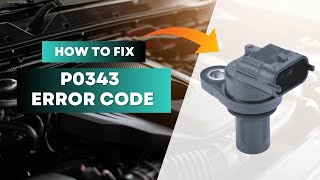
Technical definition: Camshaft Position Sensor 'A' Circuit High Input (Bank 1 or Single Sensor). 🎬 Watch: A detailed breakdown of the P0343 code and its causes. The PCM detects bank 1 camshaft position sensor voltage above the maximum specified threshold (e.g., >5.0 volts for more than 2 seconds). 'Bank 1' is the engine side containing cylinder #1. Sensor 'A' designates the intake camshaft sensor on dual-camshaft engines.
Can I Drive With P0343?
Yes, But With Caution. You can drive the vehicle for short, essential trips (under 10 miles), but it is risky. The engine will stall without warning, struggle to start, or suffer significantly reduced power. If the Check Engine Light flashes, stop driving immediately to prevent catastrophic catalytic converter damage, a repair costing $800 to $2,500. Get this diagnosed promptly to avoid being stranded.
Common Causes

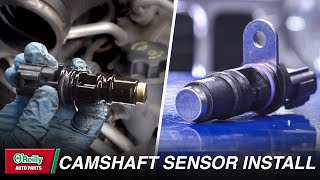
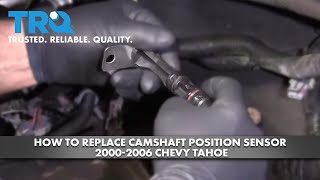
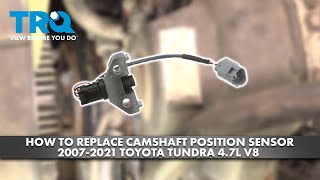
- Faulty Camshaft Position Sensor (Very Common) — The sensor fails internally from heat cycles and vibration, shorting to its own internal voltage supply and sending a constant high signal. This is the most frequent cause. 🎬 See this step-by-step guide on how to replace the sensor.
- Wiring or Connector Issues (Common) — The wiring harness shorts to a power source, frays, or corrodes. A loose connector, bent pins, or moisture creates a short circuit, forcing a high voltage reading.
- Oil or Fluid Contamination (Common) — Oil leaking from a valve cover gasket or camshaft seal seeps into the sensor's connector, fouling the connection and bridging the power and signal wires.
- Improper Sensor Installation (Less Common) — A recently replaced sensor that is misaligned or not fully seated lacks proper contact with the reluctor wheel, generating incorrect readings.
- Mechanical Timing Issues (Stretched/Jumped Timing Chain) (Less Common) — A stretched timing chain or jumped tooth destroys the physical correlation between the camshaft and crankshaft. This usually sets P0335 or P0016, but triggers P0343 if the computer sees an unexpected signal pattern.
- Damaged Reluctor Wheel/Ring (Less Common) — The sensor reads a toothed reluctor ring on the camshaft. A bent, damaged, or debris-covered ring produces an erratic signal the PCM interprets as a high voltage fault.
- Weak or Failing Battery/Charging System (Less Common) — An unstable electrical system with fluctuating voltage from a failing alternator confuses the PCM, causing it to misread the sensor signal. A healthy battery reads 12.6V-12.8V with the engine off.
- PCM Software Glitch (Rare) — Outdated PCM software misinterprets sensor data, triggering a false P0343. Manufacturers issue Technical Service Bulletins (TSBs) with software updates to fix this.
- Faulty Engine Control Module (ECM/PCM) (Rare) — The computer develops a faulty internal circuit that misinterprets a normal sensor signal. Rule out all other possibilities before replacing the ECM.
- Aftermarket Component Interference (Rare) — Low-quality aftermarket electrical components (like EV chargers or HID lighting) create electromagnetic interference that disrupts the camshaft sensor signal.
Symptoms
- Check Engine Light is On — This is the first and most obvious sign. The light illuminates steadily.
- Engine is Hard to Start or Won't Start — Without a correct cam signal, the computer struggles to sync spark and fuel. This causes extended cranking times or a complete no-start condition.
- Engine Stalls or Runs Rough — The engine stalls unexpectedly at idle or when coming to a stop. A rough, unstable idle and engine misfires are highly prevalent.
- Reduced Engine Power and Poor Acceleration — The vehicle feels sluggish, hesitates during acceleration, and lacks power because the PCM cannot optimize ignition timing.
- Flashing Check Engine Light — A flashing light indicates a severe, catalyst-damaging misfire. Stop driving immediately to prevent destroying the catalytic converter.
- Increased Fuel Consumption — Incorrect timing forces the engine to run inefficiently, wasting unburned fuel and noticeably dropping gas mileage.
Diagnostic Flowchart
Tap your situation to follow the diagnostic path that matches what you're seeing on this code.
Common Fixes & Costs
- Replace Camshaft Position Sensor — Parts: $40-$150, Labor: $75-$200, ~1.2 hr book time (DIY)
- Clean Oil/Debris from Sensor and Connector — Parts: $5-$10, Labor: $20-$50, ~0.3 hr book time (DIY)
- Repair Wiring or Replace Connector Pigtail — Parts: $10-$50, Labor: $100-$250, ~1.5 hr book time (Intermediate)
- Perform PCM Reflash/Update — Parts: $0, Labor: $100-$200, ~1.0 hr book time (Professional)
- Replace Timing Components (Chain, Belt, Tensioner) — Parts: $400-$1200, Labor: $600-$1500, ~8.5 hr book time (Professional)
- Replace Engine Control Module (ECM) — Parts: $600-$900, Labor: $200-$300, ~2.5 hr book time (Professional)
Used vs. New Parts: Buying Guide
When a used part is worth it: Buying a used camshaft position sensor is never recommended. The low cost of a new OEM part outweighs the risk of a used electronic component failing shortly after installation.
Donor-vehicle mileage cap: roughly under 40000 miles for the part to have meaningful remaining life.
Donor quality checklist:
- Verify the part number exactly; visual similarities do not guarantee compatibility.
- Avoid sensors from engines with known oil leaks, as contamination causes internal shorts.
- Ensure the supplier offers a return policy for dead-on-arrival electronics.
Decision logic:
- If The cost for a new, quality aftermarket part is under $100 → buy new. The labor to replace it a second time negates any savings from a used part.
- If The vehicle is very old and a new OEM part is discontinued → a used part from a low-mileage vehicle is the only option.
- If The part has a known high failure rate → favor a new OEM part featuring an updated design over a used component.
Warranty tradeoff: Used parts carry a 30-day warranty at best. New aftermarket parts offer 1-year to limited lifetime warranties. New OEM parts carry a 12-month/12,000-mile warranty.
Worst-case if a used part fails: $150-$300 if a used sensor fails, requiring repeat labor costs for diagnosis and replacement.
What Happens If You Wait — Timeline
- 0-2 weeks: Check Engine Light appears. The engine takes a few extra seconds to crank before starting. No other major symptoms occur. (MPG impact: 0-5%% · Added cost: $0-$25 in wasted fuel)
- 2 weeks - 3 months: Hard starting becomes consistent. The engine stalls at idle. Hesitation and lack of power during acceleration appear. (MPG impact: 10-15%% · Added cost: $50-$150 in wasted fuel and increased wear on starter motor and battery)
- 3-6 months: The vehicle enters a frequent no-start condition or stalls unpredictably in traffic. Constant misfires send unburnt fuel into the exhaust, overheating the catalytic converter. (MPG impact: 15-25%% · Added cost: $200-$400 in wasted fuel, plus potential tow bills. The risk of catalytic converter damage begins.)
- 6+ months: Catastrophic failure occurs. The catalytic converter substrate melts from continuous overheating. Prolonged incorrect combustion causes internal engine damage. (MPG impact: 25%+% · Added cost: $1000-$3000+ for catalytic converter replacement and potential engine repairs.)
Cost of Not Fixing It
- 0-1 month: Significant drop in fuel economy (10-20%), risk of stalling in traffic, and difficulty starting. (Added cost: $50-$150 in wasted fuel)
- 1-6 months: Continued misfires overheat and destroy the catalytic converter. The engine enters a permanent no-start condition. (Added cost: $800-$2500 for catalytic converter replacement)
- 6+ months: Internal engine damage occurs due to prolonged inefficient combustion and stress on timing components. Increased wear destroys the starter and battery. (Added cost: $2000+ for extensive engine repairs)
Diagnosis Steps

- Read the Trouble Codes
Use an OBD-II scanner to confirm P0343 is active. Note any other codes. Codes like P0335 (crankshaft sensor), P0016 (timing correlation), or P030X (misfires) point toward a mechanical timing issue rather than a sensor fault.
Tools: OBD-II Scanner (Beginner) - Visually Inspect the Sensor and Wiring
Locate Camshaft Position Sensor 'A' on Bank 1. Inspect the sensor and connector for cracked plastic, melted wiring, or green pin corrosion. Look for valve cover oil leaks contaminating the connection. Trace the wiring harness for chafing or breaks.
Tools: Flashlight (Beginner) - Analyze Live Data with a Scan Tool
Monitor the 'Camshaft Sensor Voltage' PID with the engine running. A healthy sensor's voltage fluctuates rapidly. For P0343, the voltage sticks at or above 5V. Check the 'Cam/Crank Sync' PID; 'No' or 'Out of Sync' indicates a timing issue.
Tools: OBD-II Scanner with Live Data (Intermediate) - PRO TIP: Perform a 'Wiggle Test'
With the engine running, carefully wiggle the camshaft sensor wiring harness and connector. If the engine stumbles or the live scan tool data changes erratically, you have confirmed an intermittent short or open in the harness.
Tools: OBD-II Scanner (with live data), Gloves (Intermediate) - Test the Sensor's Circuit (Multimeter)
Disconnect the sensor (key on, engine off). Verify the 5V reference and ground are present. Check the signal wire voltage to ground; it must be near 0V. Reading 5V or 12V on the signal wire confirms a short-to-power in the harness.
Tools: Multimeter, Vehicle-specific wiring diagram (Advanced) - Test the Sensor Itself (Resistance)
With the sensor disconnected, measure resistance across the terminals. Two-wire magnetic sensors read 200-1,000 Ohms; three-wire Hall-effect sensors read 500-1,500 Ohms. Infinite (OL) or zero resistance confirms a failed sensor.
Tools: Multimeter, Repair Manual (Intermediate) - Check for Technical Service Bulletins (TSBs)
Search professional databases for TSBs related to P0343 for your specific vehicle. Manufacturers release bulletins for known wiring flaws or PCM software updates that resolve false codes.
Tools: Internet Access, Professional Repair Database (Beginner) - PRO TIP: Analyze the Waveform (Oscilloscope)
Back-probe the signal wire with the engine running. A healthy Hall-effect sensor produces a clean 0V to 5V square wave. A flat line stuck at 5V confirms an internal short. A noisy pattern indicates external interference.
Tools: Oscilloscope (Professional) - Inspect Mechanical Components
If the sensor and wiring test good, inspect the timing chain/belt for proper tension and alignment. Check the camshaft reluctor ring for damage or debris. This requires significant engine disassembly.
Tools: Mechanical Tool Set (Professional)
When This Code Triggers (Freeze-Frame Conditions)
- Engine Coolant Temp: 180-200°F (fully warmed up)
- RPM: 700-2500 (idle or cruise)
- Engine Load: 25-50% (light to moderate acceleration)
- Vehicle Speed: 0-55 mph (during idle or city/highway driving)
Related Codes
- P0340 — P0340 is a general 'Circuit Malfunction' code. P0343 specifically identifies the circuit voltage is stuck HIGH, directing diagnosis toward a short-to-power rather than an open circuit.
- P0342 — The direct opposite of P0343, indicating 'Circuit Low Input'. Diagnosing P0342 requires hunting for a short-to-ground or open circuit, while P0343 focuses on a short-to-voltage.
- P0335 — Indicates a Crankshaft Position Sensor fault. Seeing P0343 and P0335 together strongly suggests a slipped timing belt or chain, as the PCM sees disagreement between the two timing sensors.
- P0341 / P0344 — P0341 indicates a 'Range/Performance' problem; P0344 indicates an 'Intermittent' signal. Both suggest a failing sensor or mechanical timing issue that precedes a hard P0343 fault.
Climate & Environmental Factors
- High Humidity and Moisture: Rain and deep puddles force moisture into the sensor's electrical connector. This promotes pin corrosion, bridging the signal and power wires to create a short circuit.
- Cold Weather: Cold weather exacerbates hard starting and no-start conditions. An engine that barely starts in warm weather will fail to start entirely in freezing temperatures without a reliable cam signal.
- Altitude: High altitude does not cause the electrical fault, but it amplifies the performance symptoms. Reduced engine power is much more noticeable where the air is less dense.
How to Talk to a Mechanic About This Code
Say this: "I have a P0343 code and I'd like to schedule a diagnostic. My car is having trouble starting and sometimes stalls. I want to confirm if the issue is the sensor itself or a short in the wiring harness before replacing any parts."
This signals you understand the common failure points for P0343. It directs the technician to perform a proper electrical diagnosis rather than swapping the cheapest part, preventing misdiagnosis.
Avoid saying:
- 'Just replace the cam sensor.'
- 'My check engine light is on, can you look at it?'
- 'Just fix whatever's wrong.'
Questions to ask before authorizing the repair:
- Did you test the sensor circuit? What voltage did you see on the signal wire with the sensor disconnected?
- Can you confirm the sensor has a good 5-volt reference and ground at the connector?
- Will you be using an OEM or a quality aftermarket sensor? What is the warranty on the part and the labor?
Where to Take It: Dealer vs Independent vs Chain
- Dealer:
Best for: Vehicles still under powertrain warranty, Known TSBs that require a PCM software update, Complex electrical issues on German brands (BMW, VW, Audi) requiring specialized tools.
Downsides: Higher labor rates, typically $150-$250+ per hour., May default to replacing parts rather than repairing wiring to save time. (Typical cost: +50% vs. baseline) - Independent Shop:
Best fit. A reputable independent shop easily diagnoses the sensor vs. wiring issue causing P0343 and charges lower labor rates than a dealer.
Best for: Out-of-warranty vehicles where cost is a factor., Diagnosing common electrical faults like P0343., Getting a second opinion on a dealership quote.
Downsides: Quality varies; verify ASE certifications in electrical systems (A6)., May lack access to the latest manufacturer-specific software updates. (Typical cost: +0% vs. baseline) - Chain Shop:
Use with caution. Acceptable for a straightforward sensor replacement, but AVOID for initial diagnosis of an electrical code like P0343.
Best for: Simple part replacements if the diagnosis is already certain.
Downsides: Technician skill varies dramatically; they lack experience for in-depth electrical diagnostics., Incentivized to replace parts rather than perform detailed wiring tests, leading to misdiagnosis. (Typical cost: -10% vs. baseline)
When to Walk Away From the Repair
If the estimated repair cost exceeds 40-50% of the car's private-party value, seriously consider selling or trading it in.
- Car worth $5000, fix is $350: Fix it. A standard sensor replacement is a minor repair and well below the threshold.
- Car worth $4000, fix is $1800: Borderline. This suggests a complex wiring or PCM issue. Get a second opinion before authorizing.
- Car worth $2500, fix is $1500: Walk away. The repair cost is 60% of the car's value and is not a sound investment.
What Scan Tool You Need for This Code

Minimum: A scanner that reads and graphs live data, specifically the Camshaft Position Sensor voltage PID.
A $20 code reader only confirms P0343 is present. It cannot display the live voltage signal, which is essential to confirm if the voltage is stuck high.
Budget: BlueDriver Pro Scan Tool (~$99) — Connects to your smartphone via Bluetooth to display live data, allowing you to watch the cam sensor voltage in real-time. It also provides freeze-frame data.
Mid-range: Foxwell NT510 Elite (~$180) — A handheld scanner offering live data graphing for the cam sensor. It accesses manufacturer-specific codes helpful if other codes accompany P0343.
Professional: Autel MaxiCOM MK808S (~$450) — Offers comprehensive OE-level diagnostics, advanced live data graphing, and bidirectional controls invaluable for diagnosing complex wiring or PCM faults.
Rent vs buy: Auto parts stores read codes for free, but their tools lack live data. Buying a budget scanner with live data is a worthwhile investment for diagnosing P0343.
How to Clear the Code After You Fix It
- Reconnect battery (if disconnected for repair)
- Use OBD-II scan tool to clear diagnostic trouble codes
- Perform a complete drive cycle to allow readiness monitors to run
Drive cycle (~20 minutes): Cold start the vehicle. Idle for 2-3 minutes. Drive in stop-and-go traffic for 10-15 minutes, including some steady-speed cruising. Allow the vehicle to cool down completely. This helps the PCM relearn sensor values and confirm the fix.
Readiness monitors affected: Misfire Monitor, Fuel System Monitor, Comprehensive Component Monitor
Before emissions retest: drive at least 50 miles to fully set monitors.
Watch out for:
- Disconnecting the battery clears the code temporarily, but it returns immediately if the short circuit remains.
- Failing to complete a full drive cycle leaves readiness monitors incomplete, causing an automatic emissions test failure.
Will This Fail Emissions / State Inspection?
Yes — this code typically fails an OBD-II emissions inspection.
- California: An active P0343 code results in an automatic smog check failure. All readiness monitors must be set to 'Ready' for the test to proceed.
- New York: The NYS DMV inspection includes an OBD-II scan. The presence of a Check Engine Light and code P0343 is an automatic failure.
- Texas: In counties requiring emissions testing, a vehicle with an illuminated Check Engine Light and an active P0343 code fails the inspection.
Most Commonly Affected Vehicles
- Chevrolet Silverado, Tahoe, Suburban (2003-2007) — On 5.3L V8 engines, the sensor sits at the back of the block. Oil leaks from the intake manifold or oil pressure sender routinely contaminate the sensor and connector.
- Ford F-150, Focus, Fiesta (2004-2010) — Wiring harness chafing against the engine block is highly prevalent. Ensure the O-ring is seated correctly on replacement to prevent oil leaks.
- Jeep Wrangler (JK), Grand Cherokee (2000-2012) — The sensor frequently becomes heat-soaked and fails internally. On the 3.8L V6 Wrangler, replacement is common and easily accessible.
- Toyota Tundra, Corolla, Camry (2005-2012) — On 5.7L V8 Tundras, the factory wiring harness is too short, causing wires to fatigue and break. Replacing the connector pigtail alongside the sensor is standard practice.
- Honda Accord, Civic (2003-2008) — The camshaft position sensor is a known high-failure item on K-series and J-series engines from this era.
- BMW 3 Series, 5 Series, X5 (2006-2018) — The wiring harness becomes brittle from extreme heat near the cylinder head, leading to shorts. Both intake and exhaust sensors fail frequently.
- Hyundai/Kia Sonata, Sportage, Santa Fe (2011-2017) — The 2.4L GDI engines show a high prominence of P0343, pointing directly to faulty sensors or wiring degradation near the top of the engine.
- Volkswagen Jetta, Golf, Passat (2006-2014) — On 2.0T TSI engines, P0343 acts as an early indicator of timing chain stretch. If other timing codes are present, immediate mechanical inspection is critical.
Manufacturer-Specific Notes
- Ford: On V8 and V6 engines, meticulously inspect the wiring loom for chafing against engine brackets or melting near exhaust components before condemning the sensor.
- Chevrolet/GM: On 5.3L V8 engines, the sensor is buried at the back of the block. Oil leaks from the oil pressure sender drip directly onto the sensor, causing premature failure.
- Chrysler/Jeep/Dodge: Replacing the camshaft sensor requires a 'relearn' or 'sync' procedure using a capable scan tool. Without this, the vehicle runs poorly and the code returns immediately.
- Toyota: On 5.7L V8 engines, the factory wiring harness to the cam sensors is too tight. Wires fatigue and break inside the insulation, requiring a connector pigtail replacement.
Real Owner Stories
2010 Dodge Charger R/T 5.7L - The Misleading Sensor Swap
Owner experienced a P0014 code, replaced the camshaft position sensor, and triggered a new P0343 code. The car also had low oil pressure (15 psi at idle).
Outcome: The original problem remained, and a new code appeared. The low oil pressure affected timing components and sensor readings, proving the new sensor was not faulty.
Lesson: A new code after a repair does not mean the new part is faulty. Low oil pressure affects timing components, highlighting the need for comprehensive diagnosis rather than parts swapping.
2014 VW Jetta 2.0L - The Persistent Code After Major Repairs
Car exhibited intermittent long crank/no-start and a P0343 code. Live data showed no cam signal.
Outcome: Despite correct power, ground, signal, and mechanical timing, P0343 persisted due to an elusive, intermittent wiring fault.
Lesson: P0343 is frustrating. Even after addressing the sensor and mechanical timing, elusive wiring faults persist. A 'wiggle test' or oscilloscope analysis is critical before condemning the PCM.
APR Tuned VW Golf GTI - The Dealership Dilemma
After a random stall, the Check Engine Light illuminated with P0343. The car was under warranty but had an APR Stage I ECU tune.
Outcome: The dealership returned the car unfixed, forcing the owner to solve the problem independently.
Lesson: Dealerships deny warranty claims for modified vehicles. Find an independent shop familiar with tuned vehicles for an objective diagnosis of electrical faults.
How to Prevent This Code From Triggering
- Regularly inspect engine wiring harnesses (Every 15,000 miles or annually) — Heat and vibration break protective conduit, exposing wires. Secure loose wires with new conduit or high-temp tape to prevent chafing and shorts.
- Address oil leaks promptly (As soon as they are noticed) — Engine oil degrades plastic connectors. A valve cover gasket leak seeps into the camshaft sensor connector, contaminating pins and causing electrical shorts.
- Apply dielectric grease to key sensor connectors (When replacing a sensor or during major service) — Dielectric grease creates a barrier that repels moisture and prevents pin corrosion, eliminating intermittent high-circuit faults.
- Maintain a healthy battery and charging system (Test annually) — Voltage spikes from a bad alternator or low voltage from a weak battery confuse the PCM, generating false P0343 codes.
- Use high-quality, OEM or equivalent sensors (Whenever replacement is needed) — Cheap aftermarket sensors feature low-quality internal components prone to failure from heat and vibration. Reputable brands ensure reliable signal output.
Frequently Asked Questions
How much does it cost to fix P0343?
Costs depend on the root cause. A DIY sensor replacement runs $40-$150, while professional replacement costs $225-$400 including diagnosis. Wiring repairs average $150-$300, and rare ECM replacements exceed $1,200.
What are the most common misdiagnosis mistakes for P0343?
The biggest mistake is replacing the sensor without testing the circuit for a short-to-power. Using cheap aftermarket sensors that fail quickly is another frequent error. Finally, ignoring concurrent codes like P0335 leads to missed mechanical timing issues.
Why did the P0343 code come back after replacing the sensor?
This confirms the sensor was not the root cause. The actual fault is likely a persistent short-to-power in the wiring, a contaminated connector, or a missing PCM relearn procedure.
Will P0343 clear itself?
No, P0343 indicates a hard electrical fault and will not clear itself. You must repair the underlying short or sensor failure. Afterward, clear the code with a scan tool and complete a drive cycle.
Can a bad starter motor cause a P0343 code?
Yes, though uncommon. A failing starter draws excessive current during cranking, causing a severe system voltage drop. This voltage fluctuation triggers false high-voltage codes in sensitive PCM circuits.
Can P0343 cause transmission problems?
Indirectly, yes. Erratic engine performance and incorrect torque data from a bad cam signal confuse the transmission control module, causing harsh shifting or delayed engagement.
Where is Camshaft Position Sensor 'A' located?
Location varies by engine, but it typically mounts on the valve cover, front timing cover, or cylinder head. On a 'V' style engine, 'Bank 1' is the side containing cylinder #1. Sensor 'A' designates the intake camshaft.
What is the difference between Camshaft Sensor 'A' and 'B'?
On dual overhead cam (DOHC) engines, Sensor 'A' monitors the intake camshaft. Sensor 'B' monitors the exhaust camshaft and triggers different codes (P0365-P0368). The sensors are rarely interchangeable.
Key Takeaways
- Code P0343 triggers when the PCM detects a continuous signal above 4.5V from camshaft position sensor 'A', indicating a short-to-power.
- A failed sensor or a shorted wiring harness causes 90% of P0343 codes.
- Expect severe drivability issues like random stalling and extended cranking times; a flashing check engine light means stop driving immediately to prevent catalytic converter damage.
- Test the signal wire for a 5V or 12V short with the sensor disconnected before spending $40-$150 on a replacement part.
- Limit driving to essential trips under 10 miles, as unexpected stalling at highway speeds poses a severe safety risk.
Helpful Videos
Shop the Parts Behind P0343
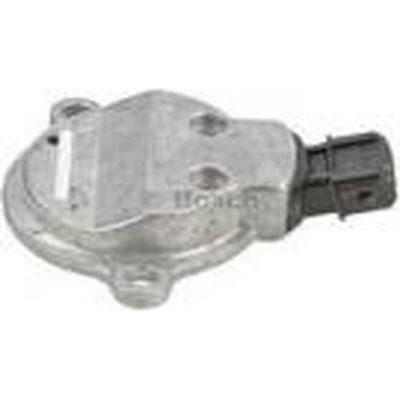
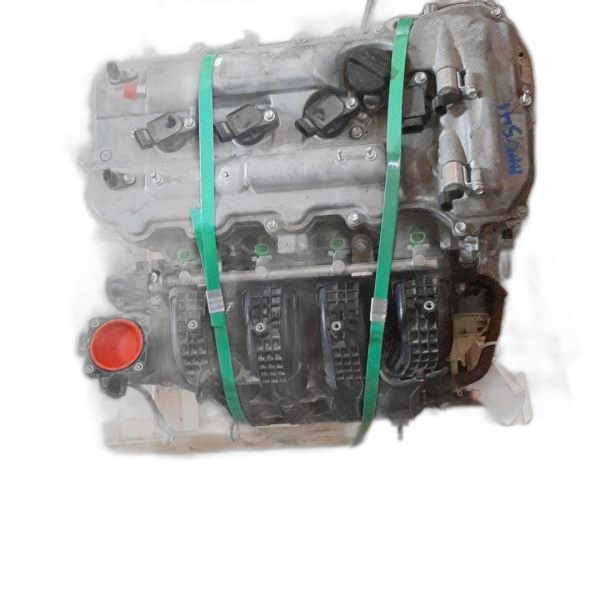
Below are the parts most often responsible for code P0343, ranked by how frequently each one is the actual culprit (per the diagnosis above). Tap any to see what we have for your vehicle.


The information in this article is provided for general reference and educational purposes only. Vehicle specifications, procedures, and part compatibility can vary by production date, trim level, and region. Always consult your vehicle's factory service manual and verify part numbers before purchasing or performing repairs. Safety-critical components such as airbags, seat belts, and braking systems should be installed by a qualified professional.
- 🧭 Diagnostic Flowchart
- 🎬 Helpful Videos
- 🛍️ Shop This Part
- What Does P0343 Mean?
- Can I Drive With P0343?
- Common Causes
- Symptoms
- Common Fixes & Costs
- Used vs. New Parts: Buying Guide
- What Happens If You Wait — Timeline
- Cost of Not Fixing It
- Diagnosis Steps
- When This Code Triggers (Freeze-Frame Conditions)
- Related Codes
- Climate & Environmental Factors
- How to Talk to a Mechanic About This Code
- Where to Take It: Dealer vs Independent vs Chain
- When to Walk Away From the Repair
- What Scan Tool You Need for This Code
- How to Clear the Code After You Fix It
- Will This Fail Emissions / State Inspection?
- Most Commonly Affected Vehicles
- Manufacturer-Specific Notes
- Real Owner Stories
- 2010 Dodge Charger R/T 5.7L - The Misleading Sensor Swap
- 2014 VW Jetta 2.0L - The Persistent Code After Major Repairs
- APR Tuned VW Golf GTI - The Dealership Dilemma
- How to Prevent This Code From Triggering
- Frequently Asked Questions
- How much does it cost to fix P0343?
- What are the most common misdiagnosis mistakes for P0343?
- Why did the P0343 code come back after replacing the sensor?
- Will P0343 clear itself?
- Can a bad starter motor cause a P0343 code?
- Can P0343 cause transmission problems?
- Where is Camshaft Position Sensor 'A' located?
- What is the difference between Camshaft Sensor 'A' and 'B'?
- Key Takeaways
- 🎟️ Get 5% Off