

P0344 on 2001-2006 Chrysler Sebring 2.4L: Intermittent Stall Causes and Fixes
On a 2001-2006 Sebring with the 2.4L engine, code P0344 is most often caused by a failing camshaft position sensor. This can cause dangerous, intermittent stalling. The sensor is inexpensive (~$25-$50) and very easy to replace, making it a common DIY fix. Owners strongly recommend using an OEM Mopar sensor to avoid premature failure of aftermarket parts.
- P0344 indicates an intermittent signal from the camshaft sensor, which often leads to dangerous engine stalling while driving.
- The most likely cause is a faulty camshaft position sensor, which is inexpensive and easy to replace on the 2.4L engine.
- Before replacing the sensor, always inspect the wiring and connector for damage, as a bad connection can mimic a failed sensor.
- If you also have a P1391 code, it strongly points to an intermittent fault in either the cam or crank sensor circuits, which is common on these vehicles.
- Do not continue to drive with this issue. The risk of the engine stalling in traffic is high and presents a serious safety hazard.
What's Unique About the 2001-2006 Chrysler Sebring
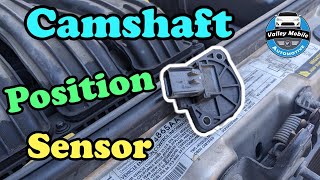
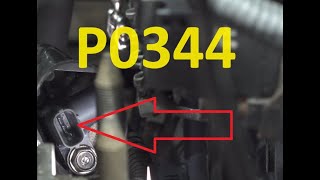
The 2001-2006 Sebring sedan and convertible (part of the Chrysler JR platform) use a Chrysler-built 2.4L DOHC 'EDZ' engine that is belt-driven. Unlike V6 models where the cam sensor can be difficult to access, the sensor on this engine is located in a very accessible spot on the passenger side of the cylinder head, making diagnosis and replacement straightforward. 🎬 Watch: A clear walkthrough of the P0344 diagnosis and repair. Owners frequently report that intermittent stalling is the most common and dangerous symptom, which is directly tied to the intermittent loss of the cam signal that this code reports. The issue is also common on platform-mate vehicles like the Dodge Stratus and Chrysler PT Cruiser.
Symptoms You May Notice
- Engine suddenly stalls while driving
- Engine cranks but will not start
- Hard starting, requiring long crank times
- Hesitation or stumbling during acceleration
- Rough or erratic idle
- Check Engine Light is illuminated
- Cruise control is inoperative
- Engine RPM is limited to ~2500 RPM (limp mode)
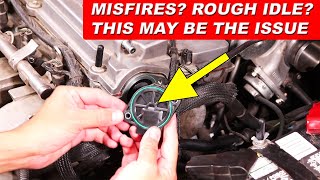
- Replacing the crankshaft position sensor. While related, P0344 specifically points to the camshaft sensor circuit. 🎬 See this breakdown of common causes for the P0344 code. However, the Chrysler-specific code P1391 can indicate a fault with either sensor.
Most Likely Causes
- Failing Camshaft Position Sensor 🔴 High Probability → Shop Engine Camshaft Position Sensor The sensor's electronics can degrade from engine heat cycles, leading to intermittent failure. It may work when cold but fail when the engine warms up. This is a very common failure item on Chrysler vehicles of this era.
How to confirm: Test the sensor's output with a multimeter or oscilloscope. However, because the failure is intermittent and the part is inexpensive, replacement is a common first diagnostic step after checking wiring. A faulty aftermarket sensor can also be the cause; many forum users report issues with non-OEM parts.
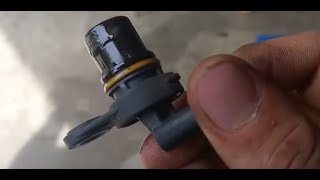
Typical fix: Replace the camshaft position sensor. 🎬 Watch: Step-by-step guide to replacing the sensor on this engine. Using a quality OEM (Mopar) or reputable aftermarket brand (e.g., NGK/NTK, Standard Motor Products) is highly recommended to avoid repeat failures.
Est. part cost: $25-$75 - Wiring Harness or Connector Issue 🟡 Medium Probability Engine vibration and heat can cause wires to chafe or the plastic connector to become brittle and fail, leading to a poor connection. The connector lock tab is especially prone to breaking.
How to confirm: Visually inspect the wiring harness for cracks, chafing, or melting. Check the connector for corrosion, backed-out pins, or a loose fit. Wiggle the harness with the engine running to see if it causes a stall.
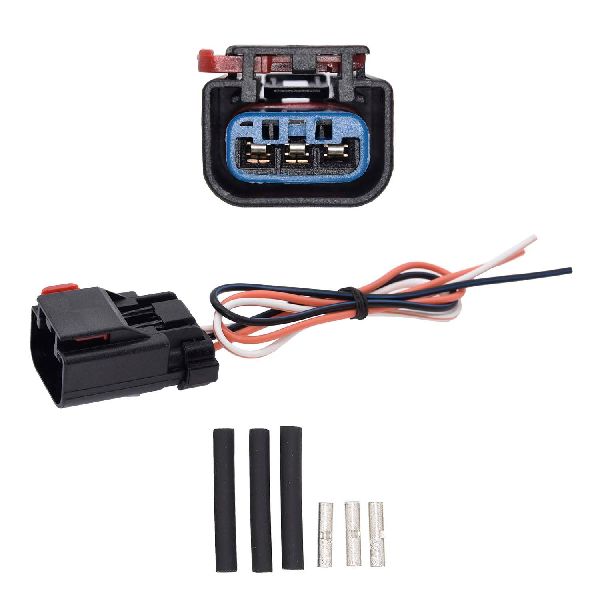
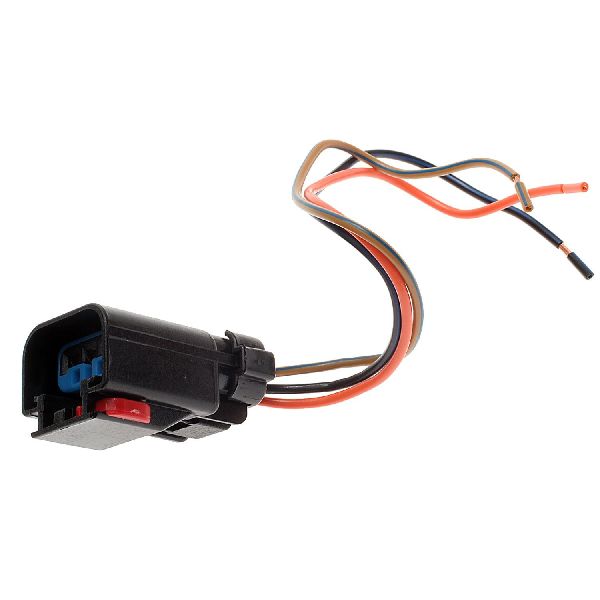
Typical fix: Repair the damaged section of wire or replace the connector pigtail. If the connector is damaged, a new pigtail can be spliced in.
Est. part cost: $10-$30 - Incorrect or Slipped Engine Timing ⚪ Low Probability The 2.4L engine uses a timing belt which can stretch or jump a tooth, especially if it is old or was installed incorrectly. This desynchronizes the cam and crank sensors. This is often seen after a recent timing belt or water pump job where the timing was not set correctly.
How to confirm: This is an advanced check. Remove the upper timing cover and rotate the engine to Top Dead Center (TDC) to verify that the camshaft and crankshaft timing marks are perfectly aligned.
Typical fix: Replace the timing belt, tensioner, and pulleys, ensuring correct timing alignment. This is a labor-intensive job.
Est. part cost: $100-$250
Rare But Worth Checking
- Weak Battery or Failing Alternator: Low system voltage can cause erratic behavior from various engine sensors. Before chasing complex electrical issues, ensure the battery and charging system are healthy by testing voltage with a multimeter (should be 13.5-14.5V when running).
- Faulty Powertrain Control Module (PCM): → Shop Engine Control Module (ECM) This is a rare cause and should only be considered after all other possibilities (sensor, wiring, timing) have been definitively ruled out. A PCM failure is unlikely to only affect the cam sensor circuit.
Diagnosis Steps
- Read Fault Codes: Use an OBD-II scanner to confirm P0344 is present and check for other codes like P1391 or P0340.
- Inspect the Sensor and Connector: Locate the camshaft position sensor on the passenger side of the cylinder head. Visually inspect the sensor, its connector, and the nearby wiring for any obvious signs of damage, melting, oil contamination, or a broken locking tab.
- Test the Circuit: Disconnect the sensor. With the key in the 'On' position, use a multimeter to test the connector's three pins. You should find a 5-volt reference wire, a ground wire, and a signal wire (which may also show 5 volts).
- Confirm Power and Ground: If you are missing the 5V reference or ground, you have a wiring issue that needs to be traced back to the PCM. If power and ground are present, the wiring is likely okay.
- Test the Sensor (Optional): If you have an oscilloscope, you can back-probe the signal wire to watch the square wave pattern while the engine is running. An intermittent dropout in the pattern confirms a bad sensor. Given the low cost of the part, many DIYers will skip this and proceed with replacement if wiring is confirmed good.
- Replace the Sensor: If wiring is good, the sensor is the most likely culprit. Replace it. It is highly recommended to use an OEM Mopar part to prevent future issues.
- Check Mechanical Timing: If a new, quality sensor and confirmed-good wiring do not fix the code, the next step is to inspect the timing belt for proper alignment. This is a more advanced step and is especially relevant if the issue started after a timing belt service.
- Consider the PCM: If all of the above checks out, a faulty PCM is the final, though very unlikely, possibility.
Parts You'll Likely Need
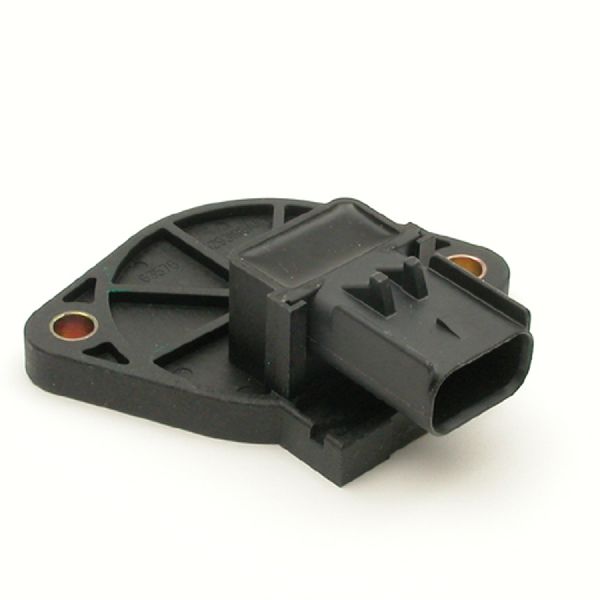
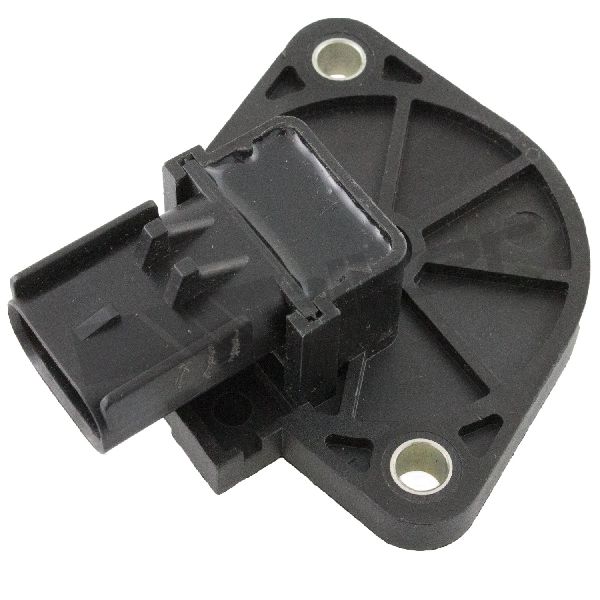
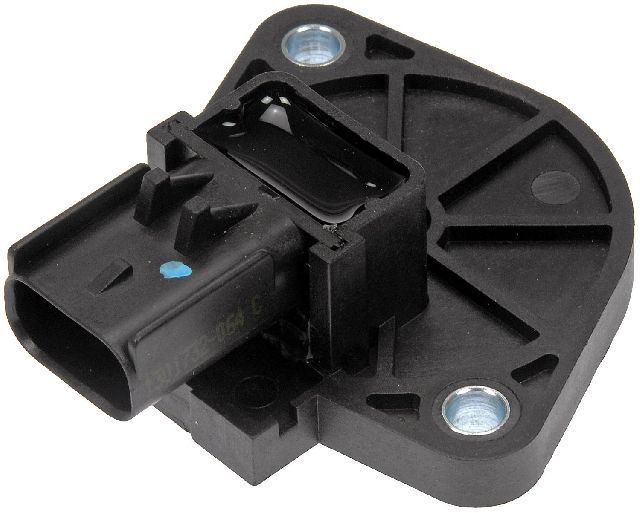
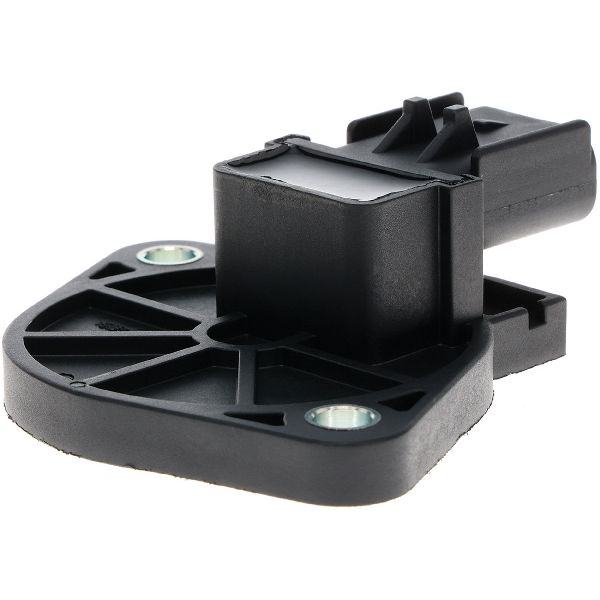
- Camshaft Position Sensor
(OEM #4609086AF, 4609087AC)— This sensor's internal electronics are the most common failure point for code P0344, typically due to heat and age.
Trusted brands: Mopar, NGK/NTK, Standard Motor Products (SMP), Delphi
OEM price range: $50-$90
Aftermarket price range: $25-$50
Related Codes That Often Appear With This One
- P1391 — This is a Chrysler-specific code for 'Intermittent Loss of CMP or CKP Signal'. It often appears alongside P0344 and confirms an intermittent signal from either the camshaft (CMP) or crankshaft (CKP) sensor.
- P0340 — This code indicates a constant 'Camshaft Position Sensor Circuit Malfunction' rather than an intermittent one. If the sensor fails completely, you may see P0340 instead of or in addition to P0344.
Technical Service Bulletins (TSBs) & Recalls
- While no TSBs directly address P0344 on this specific model, Chrysler has issued numerous TSBs for similar intermittent crank/cam sensor codes (like P0339) on other engines, such as TSB 18-024-10. The fix often involves a PCM software update or shimming the sensor, indicating a sensitivity in the system.
Platform-Specific Known Issues
- Owner experiences highlight that using cheap aftermarket sensors often leads to the code returning quickly. A 2005 Dodge Stratus owner on 2CarPros with a 2.4L engine reported having to replace both cam and crank sensors, and still having the issue, which was later suspected to be a timing issue after a water pump replacement.
- A common symptom on the platform mate Dodge Stratus is the engine revs being limited to 2500 RPM when the code is active, which is a form of 'limp mode'.
Mechanic-Grade Diagnostic Values
- Camshaft Position Sensor Power Supply Voltage — expected: 5 Volts DC (some older Chrysler systems used 8V, but 5V is common for this era). Failure: Voltage below 5V or no voltage indicates a wiring or PCM supply issue.
- Camshaft Position Sensor Ground Circuit — expected: Near 0 Ohms resistance to a known good ground (e.g., battery negative terminal).. Failure: High resistance indicates a corroded or broken ground wire.
- Camshaft Position Sensor Signal (Static Test) — expected: With the sensor connected and key on, back-probing the signal wire should show approximately 5V.. Failure: 0V or fluctuating voltage at rest may indicate a short or faulty sensor.
- Camshaft Position Sensor Signal (Dynamic Test) — expected: Using an oscilloscope or a multimeter while slowly turning the engine by hand, the voltage should switch between ~5V and ~0V.. Failure: The signal failing to switch, or dropping out intermittently, confirms a faulty sensor or a problem with the tone wheel/timing.
Scan Tool Commands That Help
- DRB III: View Cam/Crank Sync Status — While P0344 is an electrical circuit code, the dealer-level DRB III scan tool can monitor the synchronization status between the cam and crank sensors. If the PCM reports losing sync intermittently, it can help differentiate between a wiring fault (signal dropout) and a mechanical timing issue (consistent out-of-sync state). This is more relevant for the companion code P1391.
Wiring & Ground Locations
- Camshaft Position Sensor Connector — On the passenger side of the cylinder head, for the 2.4L DOHC engine.. This 3-pin connector is a primary failure point due to heat and vibration. The pins are: Pin 1 - 5V/8V Supply, Pin 2 - Ground, Pin 3 - Signal Output to PCM. Verifying power, ground, and signal at this connector is the main diagnostic step.
- G103 Ground — A central ground lug located on the driver's side strut tower.. This is a major grounding point for multiple engine management sensors. While not the direct ground for the CMP sensor itself (which is grounded through the PCM), a poor connection at G103 can introduce electrical noise and voltage offsets that can affect PCM operation and cause erratic sensor readings across the system. Checking that this ground is clean and tight is a good practice when chasing intermittent electrical faults.
Real Owner Repair Stories
- Allpar Forums (Dodge Stratus with 2.4L engine (platform mate)) — Car would stall randomly while driving, sometimes would not restart for a period. Codes P0344 and P1391 were present.
❌ Tried (didn't work) Replaced camshaft position sensor (no change), Replaced crankshaft position sensor (no change), Inspected wiring harness for visible damage (none found)
✅ What actually fixed it The timing belt tensioner had weakened, allowing the timing belt to have enough slack to occasionally jump or flap, causing the cam and crank signals to go out of sync intermittently. Replacing the timing belt and, critically, the tensioner, resolved the stalling and the codes. - YouTube - P0344 Camshaft Sensor Repair Chrysler Sebring 2005 (2005 Chrysler Sebring) — Check Engine Light with code P0344, battery light came on during one event.
❌ Tried (didn't work) The owner did not report trying other fixes first.
✅ What actually fixed it The owner tested the connector and found 5V power and signal. Based on this, they replaced the camshaft position sensor with a part from eBay, which resolved the code.
OEM Part Supersession History
4609086AC→4609086AD, 4609086AE, 4609086AF— Standard part revisions for improved reliability or manufacturing changes.
Heads up: The part number 4609086AF is listed for V6 engines in many catalogs, which can cause confusion. However, the physical sensor and its operation are often shared across engines. The key is to verify fitment for the 2.4L engine specifically. The part number for the 2.4L is more commonly cited as 4609087AC, but cross-reference databases show interchangeability. Always verify with the supplier for the specific vehicle.
Diagnostic Flowchart
Other Known Issues on This Vehicle
Issues unrelated to this code that are worth knowing about as an owner of this generation:
- Oil Sludge Buildup (2.7L V6 Engine) 🔴 High — Extremely common on the 2.7L V6 engine variant, not the 2.4L I4. Failure of the internal water pump contaminates the oil, leading to sludge and catastrophic engine failure.
- Transmission Control Module (TCM) Failure 🟠 Medium — Commonly reported issue causing the transmission to enter 'limp mode' (stuck in 2nd gear) and throw codes like P0700.
- Failing Alternator 🟠 Medium — Alternator failure is a common wear item, leading to a no-charge situation and stalling once the battery is depleted. Symptoms include a battery light and whining noises.
- Failing Idle Air Control (IAC) Valve 🟡 Low — Can become clogged with carbon, causing rough idle, stalling at stops, or a high idle. Often misdiagnosed as a bad throttle body.
- Convertible Top Hydraulic Leaks/Motor Failure 🟠 Medium — Common on convertible models as they age. Hydraulic lines can leak or the electric motor can fail, making the top inoperable.
Used vs. New Parts: Buying Guide for This Vehicle
When a used part is the smart pick: A used part is almost never a smart choice for this repair. The camshaft position sensor is an electronic component with a finite lifespan that degrades with heat and time. Given the low cost of a new, quality aftermarket part, the savings from a used sensor are minimal and the risk of premature failure is very high.
Donor-vehicle mileage cap: roughly under 15000 miles for the part to have meaningful remaining life.
What to inspect on the donor part:
- If forced to use a junkyard part, look for a donor vehicle with the lowest possible mileage.
- Inspect the plastic housing for any cracks, melting, or signs of extreme heat exposure.
- Ensure the connector pins are clean, straight, and free of corrosion.
OEM-only on this vehicle (don't cheap out):
- Camshaft Position Sensor
Aftermarket brands forum-validated for this vehicle:
- NGK/NTK
- Standard Motor Products (SMP)
- Delphi
Brands owners have reported issues with on this vehicle:
- Unbranded, 'white-box' parts from online marketplaces are frequently cited in forums as failing quickly or being dead-on-arrival.
Real Owner Stories
Aggregated from forums and TSBs cited above. Mileages and costs reflect what owners reported in those sources.
2003 Dodge Stratus 2.4L
Symptoms: The engine's revs were limited to 2500 RPM.
What fixed it: The issue was suspected to be incorrect engine timing after a water pump replacement, as replacing both the cam and crank sensors did not solve the problem.
Source hint: 2CarPros.com: A thread on a 2003 Dodge Stratus (a platform mate) with code P0344...
2006 Jeep Liberty 2.4L
Symptoms: The vehicle experienced dangerous intermittent stalling while driving; it would die and then restart after being turned off.
What fixed it: The owner's troubleshooting focused on cleaning and inspecting the wiring connector to resolve a suspected intermittent connection.
Source hint: JeepLibertyForum.com: A thread on a 2006 Liberty (which also uses a Chrysler 2.4L engine) with P0344...
Related OBD-II Codes
Frequently Asked Questions
My Sebring stalls when it gets hot but seems fine when cold. Is this a common symptom for P0344?
I replaced the camshaft sensor with a cheap aftermarket part and the P0344 code came back. What went wrong?
My car won't rev past 2500 RPM and has the check engine light on. Is this 'limp mode' related to P0344?
I just had the timing belt and water pump replaced, and now this P0344 code appeared. Are these events related?
Is there a specific Technical Service Bulletin (TSB) from Chrysler for P0344 on the 2.4L Sebring?
Besides the sensor itself, what is the next most common failure point to check for P0344?
Helpful Videos
![How to Fix P0344 Engine Code in 3 Minutes [2 DIY Methods / Only $9.56]](https://img.youtube.com/vi/XgMi0_loTu0/mqdefault.jpg)
We Have This Part in Stock

The information in this article is provided for general reference and educational purposes only. Vehicle specifications, procedures, and part compatibility can vary by production date, trim level, and region. Always consult your vehicle's factory service manual and verify part numbers before purchasing or performing repairs. Safety-critical components such as airbags, seat belts, and braking systems should be installed by a qualified professional.
- Chrysler Sebring:
- 🧭 Diagnostic Flowchart
- 🎬 Helpful Videos
- 🛍️ Shop This Part
- What's Unique About the 2001-2006 Chrysler Sebring
- Symptoms You May Notice
- Most Likely Causes
- Rare But Worth Checking
- Diagnosis Steps
- Parts You'll Likely Need
- Related Codes That Often Appear With This One
- Technical Service Bulletins (TSBs) & Recalls
- Platform-Specific Known Issues
- Mechanic-Grade Diagnostic Values
- Scan Tool Commands That Help
- Wiring & Ground Locations
- Real Owner Repair Stories
- OEM Part Supersession History
- Other Known Issues on This Vehicle
- Used vs. New Parts: Buying Guide for This Vehicle
- Real Owner Stories
- 2003 Dodge Stratus 2.4L
- 2006 Jeep Liberty 2.4L
- Related OBD-II Codes
- Frequently Asked Questions
- 🎟️ Get 5% Off