

P0344 on 2014-2018 Ram ProMaster 3.6L: Intermittent Cam Sensor Causes and Fixes
On a 2014-2018 ProMaster 3.6L, P0344 is almost always a failing Bank 1 (rear) camshaft position sensor. The repair is labor-intensive because the sensor is under the intake manifold. Expect a shop bill of $350-$550, as this is not a simple DIY job. Using an OEM Mopar sensor is highly recommended to avoid repeat failures.
- P0344 on a ProMaster 3.6L is a serious code that can cause dangerous engine stalling and should be addressed immediately.
- The cause is almost always the Bank 1 (rear) camshaft position sensor, but the repair is difficult and expensive due to its location under the intake manifold.
- Do not attempt this repair without also purchasing a new set of upper intake manifold gaskets.
- To avoid having to do the labor-intensive job twice, use a high-quality OEM Mopar sensor (Part # 5149141AF).
- Before any repair, do the simple check: ensure your engine oil is full and in good condition.
What's Unique About the 2014-2018 Ram ProMaster
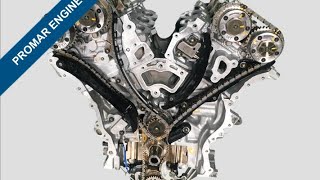
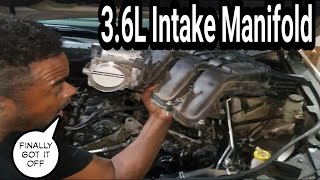
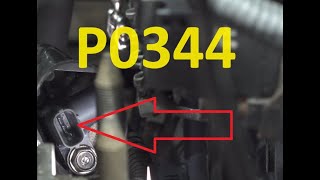
The defining challenge for this code on the ProMaster is the location of the Bank 1 camshaft sensor. 🎬 Watch: See exactly where this sensor is hidden on the engine. The 3.6L engine is mounted transversely, burying the rear sensor under the upper intake manifold against the firewall. This turns a simple sensor swap into a multi-hour job requiring significant disassembly. 🎬 See this walkthrough on how to remove the intake manifold. This design makes the repair significantly more difficult and expensive than for the easily accessible Bank 2 sensor. Furthermore, Chrysler issued software updates (TSB 18-024-17 REV. C and the superseding TSB 18-049-20) to make the PCM less sensitive to this fault, acknowledging that early software could trigger the code too easily by changing it to a 'two-trip' fault.
Symptoms You May Notice
- Engine suddenly stalling while driving
- Engine is hard to start or has a long crank time
- Engine fails to start
- Rough idle or hesitation during acceleration
- Check Engine Light is on
- Traction control light may illuminate at the same time as the Check Engine Light
- Replacing the wrong sensor. P0344 is for the Bank 1 (rear) sensor, which is hard to access. Do not confuse it with the easier-to-reach Bank 2 (front) sensor.
- Replacing the PCM. The PCM is rarely the cause of the failure and should only be replaced after all other possibilities have been exhausted.
- Using a cheap aftermarket sensor. Many owners report that non-OEM sensors fail quickly or don't resolve the code, forcing a repeat of the difficult repair. Sticking to Mopar is highly recommended.
Most Likely Causes
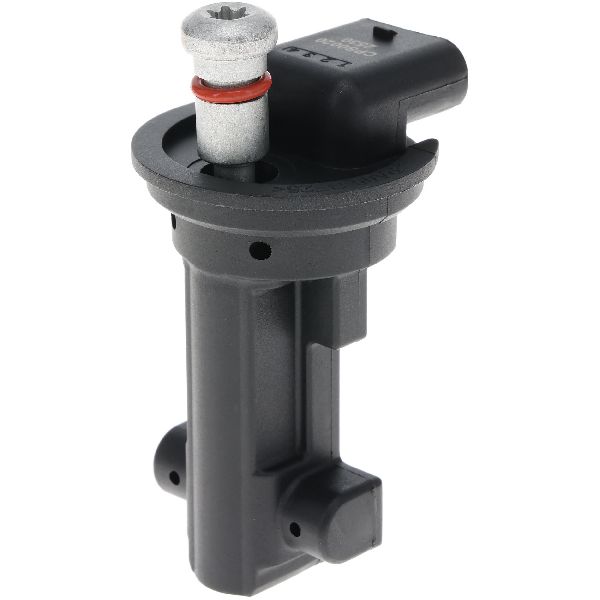
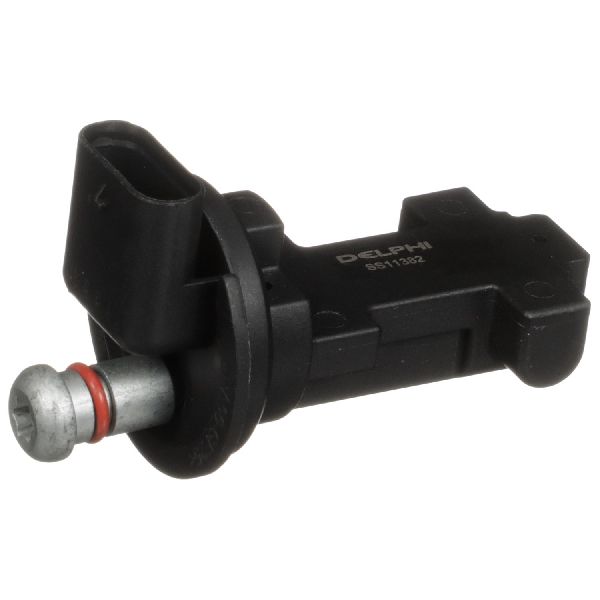
- Failing Bank 1 Camshaft Position Sensor 🔴 High Probability → Shop Engine Camshaft Position Sensor This is a very common failure item on the 3.6L Pentastar engine across many Chrysler/Dodge/Ram platforms due to heat and vibration. The intermittent nature often precedes total failure.
How to confirm: Because access is so difficult, diagnosis often involves ruling out other causes first. If wiring and oil level are good, the sensor is the presumed cause. A professional can use an oscilloscope to check the signal before disassembly, looking for dropouts.
Typical fix: Replace the Bank 1 (rear) camshaft position sensor. It is critical to also replace the upper and lower intake manifold gaskets at the same time to prevent vacuum leaks. Using an OEM Mopar sensor (Part No. 5149141AF) is strongly advised.
Est. part cost: $30-$90 - Wiring Harness or Connector Issue 🟡 Medium Probability The 'intermittent' nature of the code often points to a connection problem. The engine wiring harness is exposed to high heat and vibration, which can lead to chafed wires, loose pins in the connector, or corrosion.
How to confirm: Visually inspect the wiring harness leading to the rear of the engine for any signs of damage. Test for 5V reference, ground, and signal continuity at the sensor connector 🎬 Watch: How to diagnose and fix the P0344 circuit fault. with a multimeter. This requires removing the intake manifold for access.
Typical fix: Repair the damaged section of the harness or replace the sensor's pigtail connector. Clean terminals with electrical contact cleaner and apply dielectric grease.
Est. part cost: $15-$50 - Low or Incorrect Engine Oil ⚪ Low Probability The 3.6L Pentastar uses oil pressure to operate the Variable Valve Timing (VVT) system. If oil is low or the wrong viscosity, the cam phasers can't adjust timing correctly, which can be misinterpreted by the PCM as a sensor signal fault. This is a common first check on other vehicles with this engine, like the ProMaster City.
How to confirm: Check the engine oil level on the dipstick and verify its condition. This should be the very first check before any disassembly.
Typical fix: Perform an oil and filter change using the manufacturer-specified oil viscosity (typically 5W-20).
Est. part cost: $40-$80 - Outdated PCM Software ⚪ Low Probability Chrysler released TSB 18-024-17 REV. C, later superseded by TSB 18-049-20, which specifically changes P0344 to a 'two-trip' fault. This was done to reduce the sensitivity of the engine computer, which could falsely trigger the code from minor, transient signal interruptions.
How to confirm: A dealership or a shop with a subscription service (like Snap-on or Autel) can check if your vehicle's PCM has the latest software version installed by referencing the TSBs.
Typical fix: Reprogram (flash) the Powertrain Control Module (PCM) with the latest software.
Est. part cost: $0-$200
Rare But Worth Checking
- Failing Rocker Arms: The 3.6L Pentastar engine is known for rocker arm bearing failures, which create a ticking noise. The needle bearings inside the roller can fail, causing excessive play and eventually damaging the camshaft lobe. This mechanical issue can affect camshaft timing and indirectly trigger sensor codes like P0344.
- Low Oil Pressure due to Internal Issues: Beyond just a low oil level, issues like a clogged oil pump pickup screen or a cracked oil filter housing assembly (a very common Pentastar issue) can cause systemic low oil pressure, triggering VVT and cam sensor codes.
Diagnosis Steps
- Check the engine oil level and condition. Top off or change if necessary.
- Use an OBD-II scanner to check for other related trouble codes.
- Due to the difficult access, a visual inspection of the sensor and connector is not a practical first step. Listen for any engine ticking that could indicate rocker arm failure.
- If no other obvious causes are found, the most probable cause is the sensor itself.
- At this point, professional service is recommended. A technician will remove the upper intake manifold to access the sensor.
- Once the intake is off, inspect the wiring and connector for damage before replacing the sensor.
- Replace the Bank 1 camshaft position sensor, preferably with an OEM Mopar part (5149141AF).
- Crucially, replace the upper (plenum) and lower intake manifold gaskets with new ones (OEM set may be 68191356AA or individual gaskets 5184331AC and 5184562AC).
- Reassemble, clear the codes, and perform a test drive to confirm the fix.
- If the code returns, investigate having a dealer check for and apply any PCM software updates per TSB 18-049-20.
Parts You'll Likely Need
- Camshaft Position Sensor (Bank 1)
(OEM #5149141AF)— This is the most common component to fail and trigger code P0344 on this engine.
Trusted brands: Mopar, Bosch, NTK/NGK, Delphi
OEM price range: $45-$80
Aftermarket price range: $25-$60 - Upper and Lower Intake Manifold Gasket Set
(OEM #68191356AA (Set), 5184331AC (Lower), 5184562AC (Upper))— These gaskets must be replaced any time the intake manifold is removed to prevent future vacuum leaks. They are a mandatory part of this job.
Trusted brands: Mopar, Fel-Pro, Mahle, Victor Reinz
OEM price range: $40-$70
Aftermarket price range: $20-$40
Related Codes That Often Appear With This One
- P0340 — This code is for a constant circuit malfunction of the same sensor. P0344 (intermittent) often turns into P0340 as the sensor or wiring fails completely.
- P0016 — This indicates a timing misalignment between the crankshaft and camshaft. If you see this with P0344, it points toward a more serious mechanical problem like a stretched timing chain or failed cam phaser, not just a sensor fault.
- P1524 — This code relates to oil pressure being out of range. Its presence alongside P0344 strongly suggests the root cause is related to the oiling system affecting the VVT phasers.
- P0171 / P0174 — These are 'System Too Lean' codes. They can appear if the intake manifold gaskets are leaking. Since the intake must be removed for the P0344 repair, these codes might appear if the old gaskets were already failing or were damaged during service.
- P0369 — This is the intermittent fault code for the Bank 2 camshaft position sensor. Seeing both P0344 and P0369 simultaneously strongly points to a shared issue like a wiring harness problem, a bad ground, or the need for a PCM software update.
Technical Service Bulletins (TSBs) & Recalls
- 18-024-17 REV. C: This TSB from Chrysler involves a PCM software update that changes the logic for setting code P0344 (and others) to a 'two-trip' fault. This makes the system less sensitive to
- Bulletin #68080819A: This manufacturer bulletin notes that if a technician is replacing a camshaft position sensor for P0340 and/or P0344 fault codes, they should review specific internal information and contact engineering support.
- Bulletin #05149141A: A manufacturer service bulletin regarding the replacement of camshaft position sensors for several fault codes, including P0340, P0344, P0345, P0349, P0365, P0369, P0390, or P0394.
Platform-Specific Known Issues
- The Bank 1 (rear) camshaft position sensor is located under the upper intake manifold, making replacement a labor-intensive job.
- The two rearmost intake manifold bolts are located in deep wells and can be difficult to access without the correct extensions and swivels.
- While the intake manifold is removed, it is highly advisable to inspect the plastic oil filter/cooler housing assembly located in the engine valley for signs of oil or coolant leaks, as this is another extremely common failure point on the 3.6L Pentastar.
Mechanic-Grade Diagnostic Values
- Camshaft Position Sensor 5V Reference — expected: Approximately 5.0V with key on, engine off.. Failure: Voltage significantly below 4.5V suggests a wiring or PCM issue.
- Camshaft Position Sensor Ground Circuit Resistance — expected: Less than 3.0 to 5.0 Ohms between the sensor's ground pin and a known good chassis ground.. Failure: Resistance above 5.0 Ohms points to a corroded or broken ground wire.
- Camshaft Position Sensor Signal (Oscilloscope) — expected: A clean square wave pattern switching between approximately 0V and 5V as the engine is running.. Failure: Glitches, dropouts, or a flat line indicate a failing sensor or intermittent wiring fault.
- Alternator AC Ripple Voltage — expected: Less than 0.5V (500mV) AC at the battery terminals with the engine at 1500 RPM and electrical loads on.. Failure: A reading significantly higher than 0.5V AC indicates failing alternator diodes, which can create electrical noise that disrupts the cam sensor signal.
Scan Tool Commands That Help
- wiTECH (Dealer Tool) or Professional Scan Tool (Snap-on, Autel): Live Data Graphing - CAM/CRANK SYNC PID — This is used to diagnose an intermittent fault. By monitoring the 'CAM/CRANK SYNC' status PID while performing a wiggle test on the wiring harness, a technician can see if the PCM is losing synchronization in real-time, confirming a connection issue.
- wiTECH (Dealer Tool): Cam/Crank Relearn — This procedure is not typically required for a simple sensor replacement. However, it may be necessary if other timing components like the camshaft, phasers, or the PCM itself have been replaced, to ensure the new components' positions are correctly learned by the engine computer.
Wiring & Ground Locations
- Main Engine Ground Strap — This braided ground strap connects the transmission case to a bolt on the top of the driver's side transmission mount. It is the primary ground for the engine and transmission assembly. It can be visually inspected by removing the driver's side headlight assembly.. A loose or corroded main ground strap can cause inconsistent voltage and data corruption for all engine sensors, including the camshaft position sensor. This can lead to intermittent and difficult-to-diagnose codes like P0344. Verifying this ground is a critical step before assuming a sensor or module has failed.
- Camshaft Position Sensor Pinout (Bank 1) — At the sensor connector, located on the rear cylinder head under the intake manifold.. Knowing the pin functions is essential for testing. For the 3.6L Pentastar, the 3-wire connector typically consists of: Pin 1: 5-Volt Supply (from PCM), Pin 2: Sensor Ground (to PCM), Pin 3: Camshaft Position Sensor Signal (to PCM). These must be tested for voltage, ground integrity, and signal output.
Real Owner Repair Stories
- RamForum.com user 'saltywater63' (2012 Ram 1500 with a replacement 5.7L Hemi engine (illustrates a common diagnostic path for related codes)) — Check Engine Light and an intermittent Traction Control light. Low oil pressure reading on the gauge (15 psi at idle, max 40 psi).
❌ Tried (didn't work) Replaced the camshaft position sensor., Replaced the oil pressure switch.
✅ What actually fixed it The user was experiencing both P0344 and P1524 (Oil Pressure Out of Range). The combination strongly pointed away from the sensor itself and towards a systemic oil pressure problem affecting the VVT system, which is what the cam sensor monitors. The likely root cause was an internal engine issue like a failing oil pump or debris in the oil pickup, not the sensor that was replaced.
OEM Part Supersession History
5149141AE→5149141AF— Standard part revision and update for the camshaft position sensor.
Heads up: The parts are generally interchangeable, with the newer 'AF' revision being the preferred and currently supplied part.4727654AA, 4727654AB→4727654AC— Revision of the main engine ground strap.
Diagnostic Flowchart
Other Known Issues on This Vehicle
Issues unrelated to this code that are worth knowing about as an owner of this generation:
- Cracked Oil Filter/Cooler Housing 🔴 High — Extremely common, often occurs between 60,000-120,000 miles. Can cause major oil and/or coolant leaks.
- Rocker Arm / Lifter Failure ('Pentastar Tick') 🔴 High — Common issue, often starting as a light ticking noise that worsens over time. Can lead to camshaft damage if not addressed. (Ref: An extended warranty was offered for the left cylinder head on early (2011-2013) models, but not for later years.)
- 62TE Transmission Failure 🔴 High — The 62TE transmission is considered undersized for the heavy ProMaster, leading to premature failure, often of the torque converter or solenoid pack. (Ref: Recall 44A (NHTSA 23V-339) was issued for 2019-2021 models for a different issue (park pawl), but highlights the transmission's troubled history.)
- Cooling System Problems 🟠 Medium — Failures of the water pump, thermostat, and radiator are reported, which can lead to overheating and contribute to other engine issues like cylinder head problems.
- Electrical System Faults 🟡 Low — Owners report various electrical gremlins, including random warning lights and issues with accessories, sometimes traced back to faulty grounds or modules.
Used vs. New Parts: Buying Guide for This Vehicle
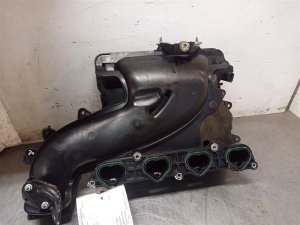
When a used part is the smart pick: For this specific repair, using used parts is generally not recommended. The primary failure is an electronic sensor subject to heat and vibration, and a used sensor from a junkyard carries a high risk of being near the end of its own service life. Given the high labor cost to access the sensor, the savings on a used part are not worth the risk of a repeat repair.
Donor-vehicle mileage cap: roughly under 40000 miles for the part to have meaningful remaining life.
What to inspect on the donor part:
- If forced to use a used sensor, source it from the lowest-mileage donor vehicle possible.
- Visually inspect the sensor housing for any cracks, melting, or physical damage.
- Ensure the connector pins are straight, clean, and free of corrosion.
OEM-only on this vehicle (don't cheap out):
- Camshaft Position Sensor
Aftermarket brands forum-validated for this vehicle:
- Bosch
- NTK/NGK
- Delphi
Brands owners have reported issues with on this vehicle:
- Unbranded, 'white-box' sensors from online marketplaces are frequently cited in forums as being dead-on-arrival or failing within a few months, forcing a repeat of the labor-intensive repair.
Real Owner Stories
Aggregated from forums and TSBs cited above. Mileages and costs reflect what owners reported in those sources.
Jeep Wrangler JK 3.6L
Symptoms: Owner was getting code P0340 and then P0344 after replacing sensors, leading to diagnostic frustration.
What fixed it: The problem was suspected to be a wiring or other non-sensor cause, rather than the sensor itself.
Source hint: Reddit r/Jeep - P0340 and now p0344 help, Jeep jk 3.6
Jeep Wrangler 3.6L
Symptoms: Vehicle presented with P0344 and other related codes.
What fixed it: A mechanic performed a real-world diagnostic process and ultimately traced the issue to a wiring problem.
Source hint: YouTube - Busted to Built: 3.6 Wrangler Camshaft Sensor Codes? Check This Out!
Jeep Wrangler JKU 3.6L
Symptoms: Owner went through a lengthy troubleshooting process for a persistent P0344 code.
What fixed it: The root cause was found to be an intermittent electrical fault in a connector, not the sensor.
Source hint: YouTube - BackCountry Wrenching: THE SMOKING GUN JEEP JKU 3.6 IS FIXED P0344 P0340 BE Gone
Related OBD-II Codes
Frequently Asked Questions
Where is the Bank 1 camshaft position sensor located on my 2014-2018 Ram ProMaster?
Is there a software update from Ram to fix a false P0344 code?
What other parts must I replace when changing the camshaft position sensor on my ProMaster's 3.6L engine?
What is the recommended replacement part number for the Bank 1 camshaft position sensor?
I'm taking the intake manifold off to fix P0344. Is there anything else I should inspect while I'm in there?
Why is checking the engine oil the first step for a P0344 sensor code?
Helpful Videos
Used OEM Parts in Stock
New Aftermarket Parts Available


The information in this article is provided for general reference and educational purposes only. Vehicle specifications, procedures, and part compatibility can vary by production date, trim level, and region. Always consult your vehicle's factory service manual and verify part numbers before purchasing or performing repairs. Safety-critical components such as airbags, seat belts, and braking systems should be installed by a qualified professional.
- Ram ProMaster:
- 🧭 Diagnostic Flowchart
- 🎬 Helpful Videos
- 🛍️ Shop This Part
- What's Unique About the 2014-2018 Ram ProMaster
- Symptoms You May Notice
- Most Likely Causes
- Rare But Worth Checking
- Diagnosis Steps
- Parts You'll Likely Need
- Related Codes That Often Appear With This One
- Technical Service Bulletins (TSBs) & Recalls
- Platform-Specific Known Issues
- Mechanic-Grade Diagnostic Values
- Scan Tool Commands That Help
- Wiring & Ground Locations
- Real Owner Repair Stories
- OEM Part Supersession History
- Other Known Issues on This Vehicle
- Used vs. New Parts: Buying Guide for This Vehicle
- Real Owner Stories
- Jeep Wrangler JK 3.6L
- Jeep Wrangler 3.6L
- Jeep Wrangler JKU 3.6L
- Related OBD-II Codes
- Frequently Asked Questions
- 🎟️ Get 5% Off