

P0345 on 2012-2018 Audi A6 3.0T: Camshaft Sensor (Bank 2) Causes and Fixes
On a 2012-2018 Audi A6 3.0T, code P0345 almost always means the Bank 2 (driver's side) intake camshaft position sensor has failed. A quality aftermarket replacement costs around $30-$60, and it's a simple DIY fix taking less than 30 minutes. Before replacing, verify the sensor connector isn't swapped with the nearby intake manifold tuning valve connector, a common installation error.
- P0345 on this Audi almost always points to the driver's side intake camshaft position sensor.
- Before buying parts, check that the sensor's electrical connector hasn't been accidentally swapped with the identical connector for the intake manifold tuning valve, especially if recent work was done.
- The easiest way to confirm a bad sensor is to swap it with the passenger's side sensor and see if the code changes to P0340.
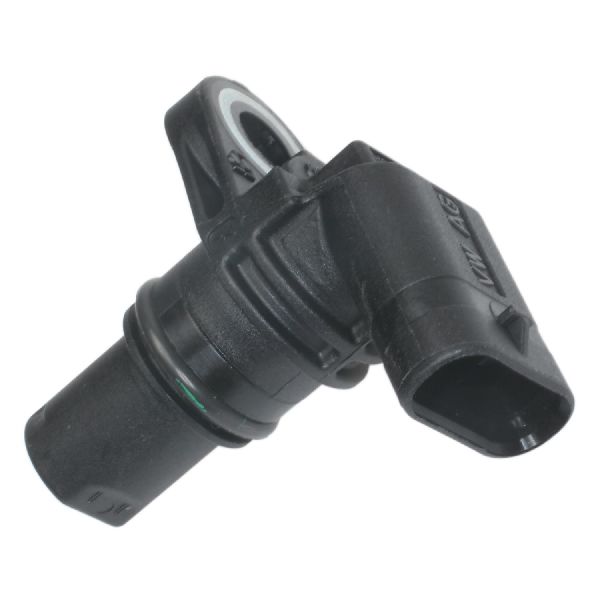
- Use a quality OEM or reputable aftermarket brand like Bosch for the replacement sensor (Part No. 07L905163C) to ensure reliability.
- If the code persists after replacing the sensor, or if you hear a rattling noise on startup, seek professional help to check for a more serious timing chain issue as outlined in Audi TSB 2039995/1.
What's Unique About the 2012-2018 Audi A6
The 3.0L TFSI V6 engine (EA837) in the C7 generation A6 has four camshaft position sensors in total—one for the intake and one for the exhaust camshaft on each bank. Fortunately, the sensors are often identical, which allows for easy diagnostic swapping. A unique and frustrating issue on this platform is that the electrical connector for the Bank 2 camshaft sensor is identical to the nearby intake manifold tuning valve connector. Mechanics and owners frequently report that these two connectors are accidentally swapped during maintenance (like valve cover gasket replacement or carbon cleaning), leading to a P0345 code that isn't caused by a failed part.
Symptoms You May Notice
- Check Engine Light is on
- Engine is difficult to start or requires long cranking (e.g., 4-10 seconds)
- Engine will not start
- Rough or unstable idle
- Engine stalling, especially at low speeds or when coming to a stop
- Noticeable loss of power and poor acceleration
- Reduced fuel economy
- Engine may run in a limp mode, preventing RPMs over 4,000
- A very common mistake on Audi V6 engines is accidentally swapping the identical electrical connectors for the camshaft position sensor and the nearby intake manifold tuning valve after performing other service (like replacing spark plugs or fixing an oil leak). Before buying any parts, double-check that these two connectors are not mixed up. One owner on AudiWorld forums confirmed this simple swap fixed their P0345 and P2075 codes after a mechanic had performed other work.
Most Likely Causes
- Failed Camshaft Position Sensor (Bank 2) 🔴 High Probability → Shop Engine Camshaft Position Sensor These Hall-effect sensors operate in a high-heat engine environment and can fail electronically over time due to thermal cycles and vibration. Oil leaks from the valve cover gasket can also seep into the sensor or its connector, causing failure.
How to confirm: Swap the Bank 2 (driver's side) intake camshaft sensor with the Bank 1 (passenger's side) sensor. Clear the codes and run the engine. If the code changes to P0340 (Bank 1), the sensor is definitively bad. This is the most reliable diagnostic step.
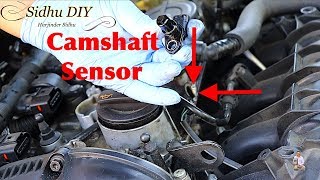
Typical fix: Replace the faulty camshaft position sensor. It is held in by a single Torx bolt and is easily accessible on top of the engine. 🎬 Watch: Step-by-step guide to replacing the camshaft sensor on an A6.
Est. part cost: $25-$60 for a quality OEM-supplier brand (Bosch, Hella), $100-$150 for a Genuine Audi part from a dealer. - Wiring Harness or Connector Issue 🟡 Medium Probability The engine bay heat can make wires brittle and connectors fragile over time. Oil leaks from valve covers are common and can contaminate the connector, degrading the wiring insulation. The most common issue is accidentally swapping the cam sensor connector with the identical intake manifold tuning valve connector during reassembly after another repair.
How to confirm: Visually inspect the wiring leading to the sensor for any signs of cracking, fraying, or melting. Check the connector for oil contamination, corrosion, or pushed-out pins. Most importantly, confirm the connector is not swapped with the one for the intake manifold tuning valve located nearby on the front of the intake manifold.
Typical fix: Clean the connector with electrical contact cleaner. If wiring is damaged, repair the specific wire or replace the connector pigtail. If connectors are swapped, simply switch them back to their correct components and clear the codes.
Est. part cost: $5 for contact cleaner, $20-$40 for a new connector pigtail.
Rare But Worth Checking
- Timing Chain Tensioner or Guide Failure: → Shop Engine Timing Chain While a P0345 code alone is unlikely to be a timing issue, it can be an early symptom if accompanied by other codes like P0018 or a distinct rattling noise from the rear of the engine 🎬 Listen: Here is what the 3.0T timing chain rattle sounds like. on a cold start. The 3.0T is known for issues with the upper timing chain tensioners bleeding down oil pressure, causing a 1-3 second rattle. Audi issued TSB 2039995/1 for this issue, recommending replacement with updated tensioners. 🎬 See how to replace upper chain tensioners with the engine in-car. A persistent rattle or correlation codes point to a much more serious and expensive repair.
- Faulty Engine Control Module (ECM): This is extremely rare. The ECM should only be considered as the cause after all other possibilities, including sensor, wiring, and mechanical timing issues, have been exhaustively ruled out by a professional.
Diagnosis Steps
- Read the code with an OBD-II scanner to confirm P0345 is present. Note any other codes, especially P0018 or P2075.
- Locate the Bank 2 (driver's side) intake camshaft position sensor. It is on the top rear of the valve cover.
- CRITICAL FIRST CHECK: Locate the intake manifold tuning valve connector on the front of the intake manifold. Verify that its connector has not been swapped with the camshaft sensor connector. They are identical and easily mixed up.
- Inspect the sensor's electrical connector and wiring for any visible damage, corrosion, or oil contamination.
- If no visual or connector swap issues are found, perform a sensor swap. Label and move the Bank 2 sensor to the Bank 1 (passenger side) position and move the Bank 1 sensor to the Bank 2 position.
- Clear the fault codes with the scanner.
- Start the engine and let it run for a minute, then rescan for codes.
- If code P0340 (Bank 1) appears, the sensor you moved is faulty and needs to be replaced.
- If code P0345 (Bank 2) returns, the problem lies in the wiring to the Bank 2 sensor or is a more complex mechanical/ECM issue requiring further diagnosis with a multimeter or oscilloscope.
- If you hear a brief (1-3 second) rattle on cold starts, investigate TSB 2039995/1 regarding upper timing chain tensioners.
Parts You'll Likely Need
- Camshaft Position Sensor
(OEM #07L905163C)— This is the most common failure point for a P0345 code. The sensor's internal electronics fail over time. This part number supersedes older versions like 07L905163A and 07L905163B.
Trusted brands: Bosch (e.g., 0232103126), Hella, NTK, Genuine Audi
OEM price range: $100-$150
Aftermarket price range: $25-$60
Related Codes That Often Appear With This One
- P0340 — If you swap a faulty Bank 2 sensor to Bank 1 for diagnosis, P0345 will disappear and P0340 (Camshaft Position Sensor 'A' Circuit Malfunction Bank 1) will appear, confirming the sensor is bad.
- P0018 — Crankshaft Position - Camshaft Position Correlation (Bank 2). This code indicates a mechanical timing issue, such as a stretched timing chain, and is much more serious than a simple sensor circuit fault.
- P2075 — Intake Manifold Tuning (IMT) Valve Position Sensor/Switch Circuit. This code often appears alongside P0345 when their respective electrical connectors have been accidentally swapped.
Technical Service Bulletins (TSBs) & Recalls
- { "id": "TSB 2039995/1 (or 15-15-26)", "description": "Addresses a 1-3 second rattling noise from the timing chains on cold start due to upper chain tensioners bleeding off oil pressure. Recommends replacement with updated parts. This is relevant as a timing issue can sometimes manifest as a cam sensor code." }
Platform-Specific Known Issues
- On the 3.0T engine, camshaft position fault codes can sometimes be an early indicator of more severe issues like rocker arm bearing failure or timing chain tensioner problems. If replacing the sensor does not fix the code, or if you hear any rattling noises, professional diagnosis is strongly recommended. A 1-3 second rattle on cold start is a well-documented symptom of failing upper timing chain tensioners (TSB 2039995/1).
Mechanic-Grade Diagnostic Values
- Camshaft Position Sensor Connector Voltage (Reference) — expected: Approximately 5.0V DC. Failure: No voltage or significantly less than 5.0V indicates a wiring or ECM power supply issue.
- Camshaft Position Sensor Signal (Oscilloscope) — expected: A clean 0-5V square-wave signal while the engine is cranking or running.. Failure: A missing, noisy, or inconsistent waveform points to a faulty sensor or wiring issue.
- Wiring Harness Continuity to ECM — expected: Less than 1.5 ohms of resistance on the signal, power, and ground wires between the sensor connector and the ECM connector.. Failure: Resistance higher than 1.5 ohms, or an open circuit (OL), indicates a break or corrosion in the harness.
Wiring & Ground Locations
- Engine Block Ground Strap — On the C7 platform, a primary engine ground point is on the right (passenger side in the US) of the engine compartment, near the alternator.. A corroded or loose main engine ground can cause a variety of erratic electrical issues, including intermittent sensor faults that are difficult to trace. While not a direct cause of P0345, it can create phantom electrical problems across the engine.
- Sensor Connector Pinout (3-wire) — The 3-pin connector on the camshaft position sensor itself.. For manual testing, Pin 1 is typically the 5V reference, Pin 3 is the ground, and the center pin is the signal wire. Testing for 5V between the outer pins (Key On, Engine Off) is the primary check for circuit integrity before condemning the sensor.
Real Owner Repair Stories
- Ross-Tech Forums User (2003 Audi A4 3.0L V6 (different chassis but similar engine design principles)) — Rough idle, multiple codes including P0345 (Cam Sensor Bank 2).
❌ Tried (didn't work) Replacing the camshaft position sensors with new Bosch units., Swapping sensors between banks., Replacing the crank sensor.
✅ What actually fixed it The user discovered that the power supply for the camshaft position sensors was routed through the fuel pump relay. Replacing the fuel pump relay resolved the P0345 code and other related electrical fault codes.
OEM Part Supersession History
07L905163A, 07L905163B→07L905163C— Standard part revision and improvement by the manufacturer.
Heads up: The newer 'C' revision is backward compatible and is the recommended replacement for all previous versions. Using an older 'A' or 'B' revision if found is not recommended.
Model Year Variations Within This Range
- 2016-2018: The C7.5 facelift models from 2016-2018 use an updated 'CREC' version of the 3.0T engine. While the diagnosis for P0345 is fundamentally the same and the sensor part number (07L905163C) remains consistent, the CREC engine has other internal and software differences. However, for this specific fault, the troubleshooting steps are interchangeable with the earlier CGXB engine.
Diagnostic Flowchart
Other Known Issues on This Vehicle
Issues unrelated to this code that are worth knowing about as an owner of this generation:
- Water Pump & Thermostat Failure 🔴 High — Very common, especially on earlier 2012-2013 models. Often fails between 60k-100k miles. The plastic components become brittle and leak. (Ref: Multiple part revisions exist. Later models (2013+) have improved parts, but failure is still common.)
- PCV Valve / Oil Separator Failure 🟠 Medium — Common failure around 60k-80k miles. The internal diaphragm tears, causing high oil consumption, rough idle, and a potential whistling noise. (Ref: Audi has updated part numbers for the PCV assembly (e.g., 06E103547AC).)
- Timing Chain Tensioner Rattle 🔴 High → Shop Engine Timing Chain — Common to hear a 1-3 second rattle on cold starts as the car ages. While Audi considers this 'normal' to an extent, it indicates wear on the upper tensioners. (Ref: TSB 2039995/1 (15-15-26) was issued for this specific symptom, recommending replacement of upper tensioners.)
- Intake Valve Carbon Buildup 🟠 Medium — A universal issue for all direct-injection engines. Significant buildup can occur by 60k-80k miles, causing misfires and reduced performance. Requires manual cleaning (walnut blasting).
- Engine Mount Failure 🟠 Medium — The fluid-filled engine mounts are known to leak and fail, causing increased vibration in the cabin, especially at idle.
Used vs. New Parts: Buying Guide for This Vehicle
When a used part is the smart pick: For this repair, a used part is NOT recommended. The camshaft position sensor is a relatively low-cost electronic component that is critical for engine operation and fails due to heat and age. The cost savings of a used sensor are minimal and do not justify the risk of installing a part with unknown life remaining or potential for being faulty from the start.
OEM-only on this vehicle (don't cheap out):
- While not strictly 'OEM-only', using a sensor from the original equipment manufacturer (OEM) or a top-tier OE supplier is strongly advised for this part. Cheap, unbranded sensors are a common source of repeat failures and phantom issues.
Aftermarket brands forum-validated for this vehicle:
- Bosch (often the original supplier)
- Hella
- NTK/NGK
- Delphi
Brands owners have reported issues with on this vehicle:
- Unbranded, no-name sensors from online marketplaces (e.g., Amazon, eBay) that are priced significantly lower than reputable brands. These often use lower-quality electronics that are not as durable in the high-heat engine environment.
Real Owner Stories
Aggregated from forums and TSBs cited above. Mileages and costs reflect what owners reported in those sources.
2012 Audi A6 3.0T
Symptoms: The owner was quoted for a Bank 2 camshaft sensor replacement after the vehicle triggered a P0345 code.
What fixed it: Replacement of the Bank 2 camshaft sensor.
Cost: $392.80
Source hint: AudiWorld Forums thread titled 'cam shaft sensor bank 2 valve cover gasket replace 2989938'
2012-2018 Audi A6 3.0T
Symptoms: Error codes P2075 and P0345 appeared immediately following a repair.
What fixed it: Swapping the identical connectors for the cam sensor and intake manifold tuning valve back to their correct positions.
Source hint: AudiWorld Forums thread titled 'p2075-p0345-error-codes-2975883'
Audi V6 (3.0T/3.2L)
Symptoms: Starting and idling problems accompanied by codes G513 (P2075) and G163 (P0345).
What fixed it: Correcting the swapped connectors between the camshaft sensor and the intake manifold tuning valve.
Source hint: YouTube - 'Audi A6 3.2 code G513 ( p2075) and G163 (p0345) fix'
Related OBD-II Codes
Frequently Asked Questions
I have a P0345 code on my 2012 Audi A6 3.0T after a recent repair; could it be a simple mistake?
Does TSB 2039995/1 apply to my Audi A6 if I hear a rattle when I start the engine?
How can I be sure the Bank 2 sensor is actually bad before buying a new one?
What is the estimated cost to have a dealership replace the camshaft sensor on a 2012 A6 3.0T?
Can an oil leak cause the P0345 code on my 3.0L TFSI engine?
Is there a specific brand of sensor I should use for the 3.0T Supercharged V6?
Helpful Videos
Used OEM Parts in Stock
New Aftermarket Parts Available


The information in this article is provided for general reference and educational purposes only. Vehicle specifications, procedures, and part compatibility can vary by production date, trim level, and region. Always consult your vehicle's factory service manual and verify part numbers before purchasing or performing repairs. Safety-critical components such as airbags, seat belts, and braking systems should be installed by a qualified professional.
- Audi A6:
- 🧭 Diagnostic Flowchart
- 🎬 Helpful Videos
- 🛍️ Shop This Part
- What's Unique About the 2012-2018 Audi A6
- Symptoms You May Notice
- Most Likely Causes
- Rare But Worth Checking
- Diagnosis Steps
- Parts You'll Likely Need
- Related Codes That Often Appear With This One
- Technical Service Bulletins (TSBs) & Recalls
- Platform-Specific Known Issues
- Mechanic-Grade Diagnostic Values
- Wiring & Ground Locations
- Real Owner Repair Stories
- OEM Part Supersession History
- Model Year Variations Within This Range
- Other Known Issues on This Vehicle
- Used vs. New Parts: Buying Guide for This Vehicle
- Real Owner Stories
- 2012 Audi A6 3.0T
- 2012-2018 Audi A6 3.0T
- Audi V6 (3.0T/3.2L)
- Related OBD-II Codes
- Frequently Asked Questions
- 🎟️ Get 5% Off