

P0345 on 2011-2017 Audi A8 4.2L V8: Camshaft Sensor (Bank 2) Causes and Fixes
On a 2011-2012 Audi A8 4.2L V8, code P0345 almost always indicates a failed intake camshaft position sensor on the driver's side (Bank 2). A DIY-friendly fix involves swapping the sensor, which costs about $40-$120 for a quality part from brands like Bosch or Hitachi. Before replacing, swap the sensor with the passenger side (Bank 1) to see if the code changes to P0340, which confirms a bad sensor.
- P0345 on your Audi A8 points specifically to the intake camshaft position sensor on the driver's side (Bank 2), also known as G163.
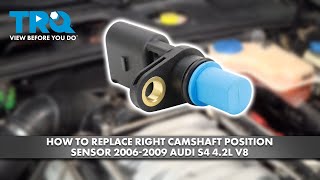
- The most likely cause is a failed sensor, which is an inexpensive part and simple to replace for a DIYer with basic tools (a single T30 Torx bolt).
- The most effective diagnostic step is to swap the driver's side and passenger's side sensors to see if the fault code moves with the sensor.
- For 2011-2012 models, a TSB exists that may require replacing both intake sensors and an ECM software update to permanently fix the issue.
- Listen for a rattling sound from the engine on cold starts; this could indicate the code is an early warning for a much more serious timing chain problem.
What's Unique About the 2011-2017 Audi A8
This guide covers the D4 generation Audi A8 (2011-2017). The specified 4.2L FSI V8 engine was primarily available in the 2011-2012 models before being replaced by the 4.0T V8. For the 4.2L engine, a Technical Service Bulletin (TSB 2036687/1) noted that the original sensors could have internal electrical issues, sometimes requiring the replacement of both intake sensors and an ECM software update. While P0345 is usually just a bad sensor, on higher-mileage Audi V8s it can be an early warning of more serious timing chain guide or tensioner problems, a known issue on the 4.2L V8. A rattling noise from the rear of the engine on cold starts is the key symptom of this more severe underlying problem.
Symptoms You May Notice
- Check Engine Light is on
- Difficulty starting the engine, or extended cranking time
- Engine runs rough or misfires
- Engine may stall unexpectedly
- Reduced engine power and poor acceleration
- Poor fuel efficiency
- Rattling noise from the engine on startup (if related to timing chain issues)
- Replacing the crankshaft position sensor. While they work together, P0345 specifically points to the camshaft sensor circuit.
- Replacing spark plugs or ignition coils to fix a rough idle without first addressing the specific circuit fault indicated by the code.
Most Likely Causes
- Failed Bank 2 Camshaft Position Sensor (G163) 🔴 High Probability → Shop Engine Camshaft Position Sensor A known TSB (2036687) for the 4.2L engine points to potential internal electrical issues in the original-spec sensors. Heat and age cause the internal electronics to fail.
How to confirm: Swap the Bank 2 (driver's side) sensor with the Bank 1 (passenger side) sensor. Clear the codes. If the fault code changes to P0340 (Bank 1 fault), the sensor is confirmed bad. This is the most reliable DIY diagnostic test.
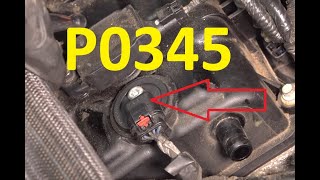
Typical fix: Replace the Bank 2 (driver's side) intake camshaft position sensor. It is located on the front of the cylinder head and held by a single T30 Torx bolt.
Est. part cost: $40-$120 - Wiring Harness or Connector Issue 🟡 Medium Probability Engine heat and vibrations can cause wiring to become brittle or connectors to fail over time. The plastic connector tabs can become brittle and break.
How to confirm: Visually inspect the sensor's wiring and connector for damage, corrosion, or oil contamination. Use a multimeter to check for a 5-volt reference signal at the connector with the ignition on. If the 5V signal is present, the wiring is likely good.
Typical fix: Repair the damaged section of wiring or clean/replace the connector. Ensure the connector clicks securely into place.
Est. part cost: $5-$50
Rare But Worth Checking
- Stretched Timing Chain or Failing Tensioner: → Shop Engine Timing Chain While a failed sensor is far more likely, timing chain issues are a known, serious problem on the 4.2L V8. This code can be an early symptom. Listen for any rattling noises from the engine, especially on cold startup. If a new sensor doesn't fix the code, this is the next area to investigate professionally. Diagnosis involves checking camshaft adaptation values with a tool like VCDS; large deviations point to a mechanical timing problem.
- Engine Control Module (ECM) Software Issue: A TSB for the 4.2L engine suggests that in some cases, an ECM software update is required along with sensor replacement to fully resolve the fault. This is typically performed by an Audi dealer or specialist shop.
- Low Battery Voltage: Audis are notoriously sensitive to battery voltage. A weak or failing battery can cause a host of random electrical faults and codes, including sensor circuit malfunctions. If the battery is old or the car has been sitting, test the battery voltage before proceeding with more complex diagnostics.
Diagnosis Steps
- Read the fault codes with an OBD-II scanner to confirm P0345 is the primary code. Note any other codes present.
- Remove the plastic engine cover to access the front of the cylinder heads.
- Locate the Bank 2 (driver's side) intake camshaft position sensor (G163).
- Inspect the sensor's electrical connector and wiring for any signs of physical damage, corrosion, or oil contamination.
- Perform a sensor swap test: Disconnect and remove the Bank 2 (driver's side) and Bank 1 (passenger's side) intake cam sensors. They are identical parts held by a single T30 Torx bolt.
- Clear the fault codes, start the engine, and let it run for a minute.
- Re-scan for codes. If P0340 (Bank 1) now appears, the sensor you moved to the passenger side is faulty and must be replaced.
- If P0345 returns, the problem is likely in the wiring or the ECM. Test the harness connector for a 5-volt reference signal and ground using a multimeter.
- If wiring is confirmed to be good and the sensor is not the issue, the problem may be mechanical (timing chain) or the ECM itself, which requires professional diagnosis. Listen for startup rattle as a key indicator of timing issues.
Parts You'll Likely Need
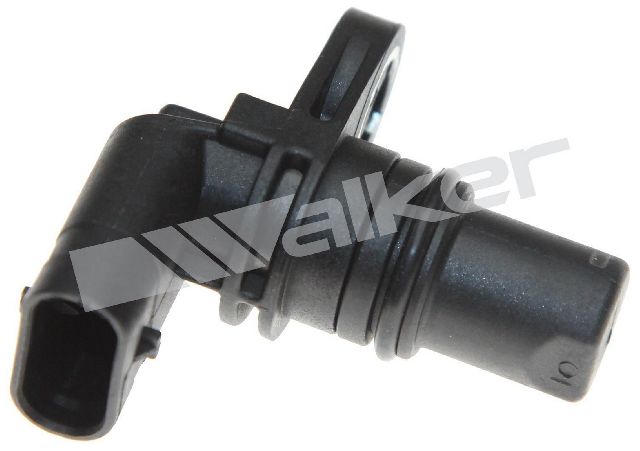
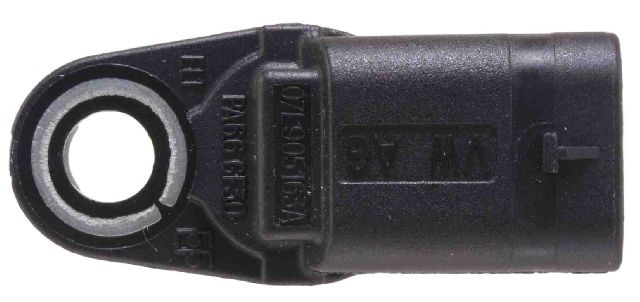
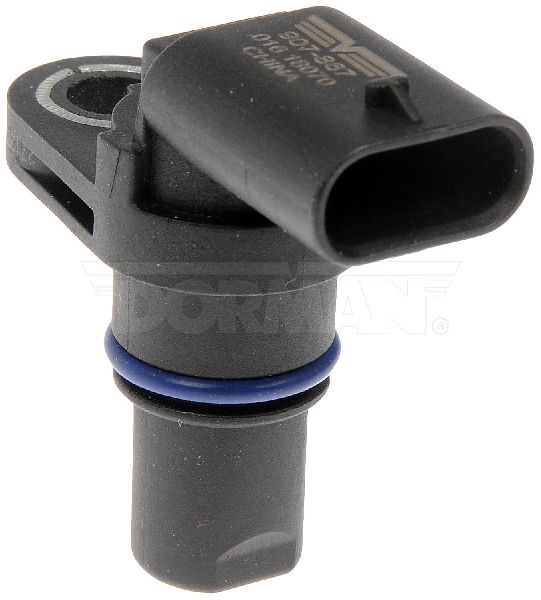
- Camshaft Position Sensor (Bank 2, Intake)
(OEM #07L905163C)— This is the most common failure point for code P0345. The sensor's internal electronics fail over time. The OEM part number may have revisions (e.g., ending in A, B, or C), with the latest revision being preferred.
Trusted brands: Bosch, Hitachi, Hella, Vemo
OEM price range: $90-$120
Aftermarket price range: $40-$80
Related Codes That Often Appear With This One
- P0340 — If you swap the Bank 1 and Bank 2 sensors for diagnosis and the sensor is faulty, P0345 will disappear and P0340 (Bank 1 Camshaft Position Sensor Circuit Malfunction) will appear.
- P0018 / P0019 — These are camshaft/crankshaft correlation codes for Bank 2. They can appear if the timing is off due to a stretched chain or if the sensor is providing a signal that is out of sync with the crankshaft.
- P0341 / P0346 — These are 'Range/Performance' codes for the same sensor circuit. TSB 2036687/1 specifically mentions P0341 and P0346 can appear alongside or instead of P0345 for the same root cause.
Technical Service Bulletins (TSBs) & Recalls
- TSB 2036687/1 (also cited as 15-14-01): Addresses internal electrical issues in the original camshaft position sensors on the 2011-2012 4.2L engine, recommending replacement and a potential ECM software update.
Platform-Specific Known Issues
- A Technical Service Bulletin (TSB 2036687/1) was issued for the 4.2L V8 regarding internal electrical faults in the original camshaft position sensors, which could trigger this code. The fix may involve replacing both intake sensors and updating the ECM software.
Mechanic-Grade Diagnostic Values
- Voltage supply at sensor connector — expected: Approximately 5.0 V. Failure: No voltage or significantly lower voltage indicates a wiring or ECM issue.
- Sensor connector wiring continuity to ECM — expected: Max 1.5 Ohms. Failure: Higher resistance or an open circuit (OL) indicates a break in the wiring harness.
- Camshaft Adaptation (Phase Position) via VCDS — expected: Sum of intake and exhaust values for each bank should not exceed ~7 degrees.. Failure: A total deviation greater than 7 degrees on Bank 2 strongly suggests a mechanical timing issue (e.g., stretched chain, failed tensioner).
Scan Tool Commands That Help
- VCDS (VAG-COM): Advanced Measuring Values - Group 093 (or 91, 92, 94 depending on ECU) — Use this after confirming the sensor and wiring are good. It reads the camshaft phase position relative to the crankshaft. Large deviation values (e.g., more than 7-8 degrees) point towards a mechanical timing problem like a stretched chain or failing tensioner, rather than an electrical fault.
Wiring & Ground Locations
- G163 Connector — On the front of the driver's side (Bank 2) cylinder head.. This is the primary connection point for the sensor. Testing for 5V power between Pin 1 and Pin 3 is the first step in diagnosing a circuit fault.
- Ground Connection 600 — On the right cylinder head.. A poor engine ground can cause erratic behavior in many sensors, including the camshaft position sensor. Verifying this ground is clean and tight is a crucial step when diagnosing persistent electrical faults.
- ECM Pins (example) — On a similar 4.2L V8 (BHF engine), the pins at the ECU are 98 (Power), 86 (Signal), and 108 (Ground).. While pin numbers may vary for the specific CDRA engine in the A8, this provides a reference for checking end-to-end continuity of the harness from the sensor connector to the ECM if a wiring break is suspected.
Real Owner Repair Stories
- AudiWorld Forums user 'allroad(s) lead 2Gavin' (Audi Allroad 2.7T (similar V-engine sensor layout and diagnostic process)) — Check Engine Light with code 17755 / P1347 (Camshaft/Engine Speed sensor correlation), and no value registering for Bank 2 in VCDS measuring block 93.
❌ Tried (didn't work) Swapping the Bank 1 and Bank 2 camshaft position sensors; the fault remained on Bank 2., Verifying 5V power at the sensor connector, which was present and correct.
✅ What actually fixed it The dealer suspected a mechanical timing issue or a faulty ECU. The owner reported the car ran perfectly, making a significant timing issue unlikely. The thread implies the next step was a costly diagnostic to check physical timing, highlighting that when the sensor swap test fails, the problem is deeper in the wiring, ECU, or mechanical timing.
OEM Part Supersession History
07L905163, 07L905163A, 07L905163B→07L905163C— Standard part revision and improvement process to address reliability issues, including the internal electrical faults noted in TSB 2036687.
Model Year Variations Within This Range
- 2011-2012: The 4.2L FSI V8 engine was primarily offered in these model years for the D4 A8. Later models (2013-2017) used a 4.0T V8, which may have different sensor locations and part numbers, although it can experience similar codes.
Diagnostic Flowchart
Other Known Issues on This Vehicle
Issues unrelated to this code that are worth knowing about as an owner of this generation:
- Adaptive Air Suspension Failure 🔴 High — Common over 80,000 miles. Leaking air struts or a failing compressor are typical. The car may sag at one corner or the compressor may run constantly.
- Intake Valve Carbon Buildup 🟠 Medium — Inevitable on FSI (direct injection) engines. Recommended cleaning service every 40,000-60,000 miles to prevent rough idle, misfires, and power loss.
- MMI Infotainment Screen Failure 🟠 Medium — The motorized screen mechanism can fail, causing it to get stuck, make grinding noises, or the screen may go blank. Often a gear or motor failure, but can also be a software or fuse issue.
- Timing Chain Tensioner & Guide Wear 🔴 High → Shop Engine Timing Chain — A significant issue on the 4.2L V8, typically appearing after 100,000 miles. Symptoms include a loud rattle from the back of the engine on cold starts. Repair is extremely expensive as it requires engine removal.
- Premature Control Arm Bushing Wear 🟠 Medium — The front multi-link suspension bushings can wear out, causing clunking noises over bumps, steering vibration, and uneven tire wear.
- Clogged Plenum Drains 🔴 High — Drains at the base of the windshield can clog with leaves/debris, causing rainwater to overflow into the cabin or onto critical electronic modules and the brake booster, leading to major electrical damage.
Used vs. New Parts: Buying Guide for This Vehicle
When a used part is the smart pick: A used camshaft position sensor can be a cost-effective choice for diagnosis (to confirm the fault without buying a new part) or as a temporary fix, especially if sourced from a low-mileage, reputable salvage yard.
Donor-vehicle mileage cap: roughly under 70000 miles for the part to have meaningful remaining life.
What to inspect on the donor part:
- Check for a clean part with no oil residue seeping from the sensor body.
- Ensure the plastic connector housing is not cracked or brittle.
- Verify the O-ring is present and pliable, though replacing it is always recommended.
- Ask for the donor vehicle's mileage if possible.
Aftermarket brands forum-validated for this vehicle:
- Bosch
- Hitachi
- Hella
- Bougicord
Brands owners have reported issues with on this vehicle:
- Unnamed or 'white-box' brands from online marketplaces should be avoided, as they are a common source of premature failures. While URO Parts is a known brand, some forum users report mixed experiences with their electronic sensors compared to their mechanical parts.
Real Owner Stories
Aggregated from forums and TSBs cited above. Mileages and costs reflect what owners reported in those sources.
2011 Audi A8 4.2L FSI V8
Symptoms: Internal electrical faults in the original camshaft position sensors triggering fault codes.
What fixed it: Replacing both intake sensors and updating the ECM software as per the technical service bulletin.
Source hint: TSB 2036687/1 (also cited as 15-14-01)
Audi A8 4.2L FSI V8 (D3/D4 Platform)
Symptoms: Camshaft sensor / Speed sensor incorrect correlation; Bank 2 intake was running at +14 degrees.
What fixed it: Troubleshooting timing deviation by checking cam adaptation values in VCDS (Measuring Blocks) after a timing job.
Source hint: AudiWorld Forums - '4.2L BFM Camshaft Sensor / Speed Sensor incorr Correlation'
2011-2017 Audi A8 4.2L FSI V8 — ~115000 miles
Symptoms: Loud rattle from the back of the engine on cold starts.
What fixed it: Extremely expensive repair involving engine removal to replace timing chain tensioners and guides.
Source hint: Known Issues - Timing Chain Tensioner & Guide Wear
Related OBD-II Codes
Frequently Asked Questions
Does TSB 2036687/1 apply to my 2012 Audi A8 with the 4.2L engine?
Which sensor is responsible for the P0345 code on my A8 4.2L V8?
Can I use a used sensor from a donor vehicle to fix this?
Is there a simple way to confirm the sensor is bad before I buy a new one?
What aftermarket brands are recommended for the 4.2L FSI camshaft sensor?
Could a rattling noise on startup be related to my P0345 code?
Helpful Videos
We Have This Part in Stock

The information in this article is provided for general reference and educational purposes only. Vehicle specifications, procedures, and part compatibility can vary by production date, trim level, and region. Always consult your vehicle's factory service manual and verify part numbers before purchasing or performing repairs. Safety-critical components such as airbags, seat belts, and braking systems should be installed by a qualified professional.
- Audi A8:
- 🧭 Diagnostic Flowchart
- 🎬 Helpful Videos
- 🛍️ Shop This Part
- What's Unique About the 2011-2017 Audi A8
- Symptoms You May Notice
- Most Likely Causes
- Rare But Worth Checking
- Diagnosis Steps
- Parts You'll Likely Need
- Related Codes That Often Appear With This One
- Technical Service Bulletins (TSBs) & Recalls
- Platform-Specific Known Issues
- Mechanic-Grade Diagnostic Values
- Scan Tool Commands That Help
- Wiring & Ground Locations
- Real Owner Repair Stories
- OEM Part Supersession History
- Model Year Variations Within This Range
- Other Known Issues on This Vehicle
- Used vs. New Parts: Buying Guide for This Vehicle
- Real Owner Stories
- 2011 Audi A8 4.2L FSI V8
- Audi A8 4.2L FSI V8 (D3/D4 Platform)
- 2011-2017 Audi A8 4.2L FSI V8 — ~115000 miles
- Related OBD-II Codes
- Frequently Asked Questions
- 🎟️ Get 5% Off