

P0345 on 2009-2012 Audi Q5 3.2L V6: Camshaft Sensor Causes and Fixes
For the 2009-2012 Audi Q5 3.2L, code P0345 most often means the driver's side (Bank 2) intake camshaft position sensor has failed. Replacing the sensor is a common DIY fix costing $30-$120. However, this code can also be an early warning for a more serious timing chain problem, so further diagnosis is crucial, especially if a rattling noise is heard on cold starts.
- P0345 on a 2009-2012 Q5 3.2L points to the intake camshaft sensor on the driver's side.
- The easiest first step is to swap the driver's side and passenger's side intake cam sensors to see if the fault code follows the sensor.
- Always consider the possibility of a stretched timing chain on this engine. A professional scan tool can check camshaft deviation to confirm or rule this out.
- Use a quality OEM or OEM-supplier brand like Bosch or Delphi for the replacement sensor to ensure longevity.
- The correct OEM part number is 07L905163C, which replaces several older versions.
What's Unique About the 2009-2017 Audi Q5
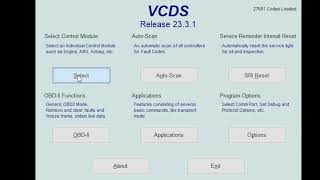
While a faulty sensor is the most frequent cause, the 3.2L FSI V6 engine (engine code CALB) is notorious for having issues with its timing chains and, more specifically, its upper hydraulic tensioners and plastic guides. Therefore, a P0345 code on this specific platform should not be dismissed as just a simple sensor issue without further investigation. The code can be the first indication that the camshaft's timing has deviated from the crankshaft's position due to a stretched chain or failing tensioner, a much more complex and expensive engine-out repair. Owners and technicians must use a VAG-specific scan tool (like VCDS) to check camshaft phase adaptation. On this UDS-protocol engine, this is done by checking 'Advanced Measuring Values' for 'camshaft adjustment', as the older 'Measuring Block 093' is not applicable. A deviation beyond -8 degrees is a strong sign of a mechanical timing problem.
Symptoms You May Notice
- Check Engine Light is on
- Engine is difficult to start or requires extended cranking
- Rough idling or stalling
- Noticeable loss of power and sluggish acceleration
- Engine misfires
- Reduced fuel economy
- Rattling or diesel-like noise from the engine for 1-3 seconds on a cold start
- Replacing the spark plugs and ignition coils without checking the sensor or timing system first. While these can cause misfires, they will not directly cause a P0345 code.
- Mistakenly swapping the identical electrical connectors for the Bank 2 Camshaft Position Sensor and the Intake Manifold Tuning Valve during a repair, which produces similar symptoms of rough idle, stalling, and hard starts.
Most Likely Causes
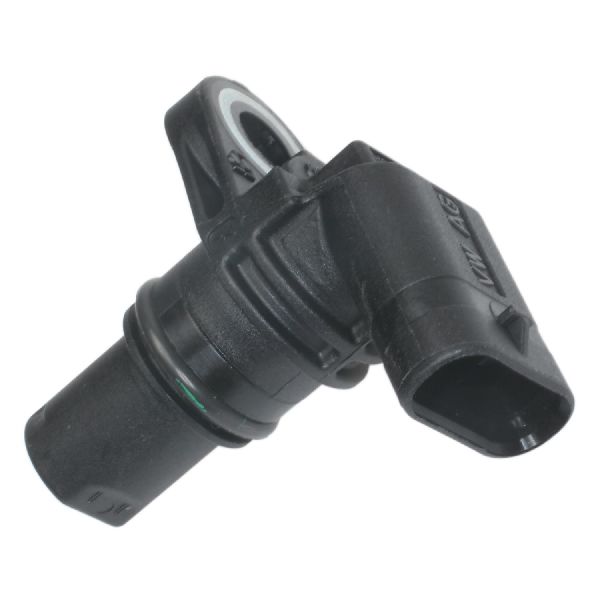
- Failed Camshaft Position Sensor (Bank 2 Intake) 🔴 High Probability → Shop Engine Camshaft Position Sensor These sensors can fail electronically over time or develop leaks where engine oil seeps through the sensor body into the electrical connector, disrupting the signal.
How to confirm: Inspect the sensor for oil contamination. The most effective test is to swap the Bank 2 (driver's side) intake sensor with the identical Bank 1 (passenger's side) intake sensor. Clear the codes. If the fault code changes to P0341 (Bank 1 fault), the sensor is bad.
Typical fix: Replace the faulty camshaft position sensor. It is held in by a single T30 Torx bolt. 🎬 See this walkthrough on how to replace the sensor.
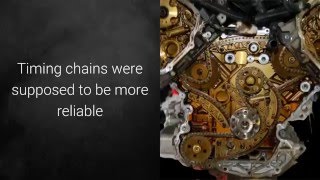
Est. part cost: $30-$120 - Stretched Timing Chain or Failed Tensioner/Guides 🟡 Medium Probability → Shop Engine Timing Chain The 3.2L FSI engine is known to have issues with its upper timing chain tensioners losing hydraulic pressure and the plastic guides becoming brittle and breaking. This causes slack in the chains, leading the camshafts to go out of sync with the crankshaft and triggering position sensor codes.
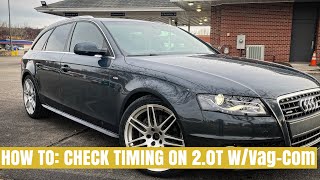
How to confirm: The primary symptom is a 1-3 second rattle from the rear of the engine on cold starts. Use a VAG-specific scan tool (like VCDS) to read 'Advanced Measuring Values' for 'camshaft adjustment' at warm idle. If the camshaft adaptation value for Bank 2 is beyond -8.0 degrees, it strongly indicates a timing system problem.
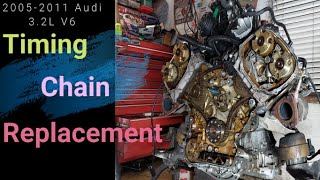
Typical fix: This is a major, engine-out repair that involves replacing the timing chains, guides, and tensioners. It is complex and labor-intensive, often requiring professional service 🎬 Watch: A deep dive into timing chain and guide replacement. with quotes ranging from $4,500 to over $10,000.
Est. part cost: $800-$1500 - Wiring or Connector Issue ⚪ Low Probability Engine bay heat and vibrations can cause wires to become brittle and break. A notable issue on this platform is that the electrical connector for the camshaft sensor is identical to the one for the nearby intake manifold tuning valve, and they can be accidentally swapped during reassembly after another repair.
How to confirm: Visually inspect the wiring harness for damage. Crucially, confirm the correct harness is plugged into the sensor. Use a multimeter to check for 5V power supply at the connector with the ignition on and for continuity on the signal and ground wires back to the ECM.
Typical fix: Ensure the correct connector is plugged in. Repair any damaged section of the wiring harness or replace the connector pigtail.
Est. part cost: $15-$50
Rare But Worth Checking
- Worn Camshaft Roller Rockers: → Shop Engine Camshaft In some cases on the 3.2L FSI, a worn roller rocker can create excessive play in the valvetrain, leading to a ticking noise and persistent misfires that are not resolved by new plugs or coils. This was documented in a Ross-Tech forum where it was the ultimate solution to a stubborn misfire on a CALB engine.
- Faulty Crankshaft Position Sensor: A failing crankshaft position sensor can sometimes send erratic signals that the ECM misinterprets as a camshaft sensor fault. If other diagnostics don't pinpoint the issue, this sensor should be considered.
Diagnosis Steps
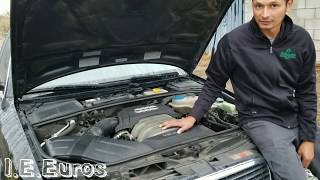
- Listen for a 1-3 second rattling or diesel-like sound from the rear of the engine on a cold start. 🎬 Watch: Hear the rattling noise caused by timing chain failure. This is a primary indicator of a timing tensioner problem.
- Scan the vehicle for fault codes to confirm P0345 and check for any other related codes, such as P0018 or misfires on Bank 2.
- Locate the Bank 2 (driver's side) intake camshaft position sensor (G163) on the upper front timing cover.
- Visually inspect the sensor's electrical connector and wiring for damage, corrosion, or oil saturation. Confirm the connector has not been accidentally swapped with the identical one for the intake manifold tuning valve.
- As a simple and effective test, swap the Bank 2 intake sensor with the Bank 1 (passenger's side) intake sensor. They are the same part.
- Clear the fault codes and start the engine. Let it run for a few minutes.
- Re-scan for codes. If P0341 (Bank 1 Sensor 'A' Circuit) appears, the sensor you moved is faulty and needs replacement.
- If code P0345 returns, the problem lies in the wiring or the engine's mechanical timing.
- Use a multimeter to test the Bank 2 sensor connector: check for a 5-volt reference and a good ground with the key on.
- If wiring is confirmed good, use a VAG-specific scan tool (like VCDS). Go to '01-Engine' -> 'Advanced Measuring Values' and search for 'camshaft adjustment'. The older 'Measuring Block 093' is not used on this engine. A value exceeding -8 degrees at warm idle indicates a likely timing chain/tensioner issue requiring professional inspection.
Parts You'll Likely Need
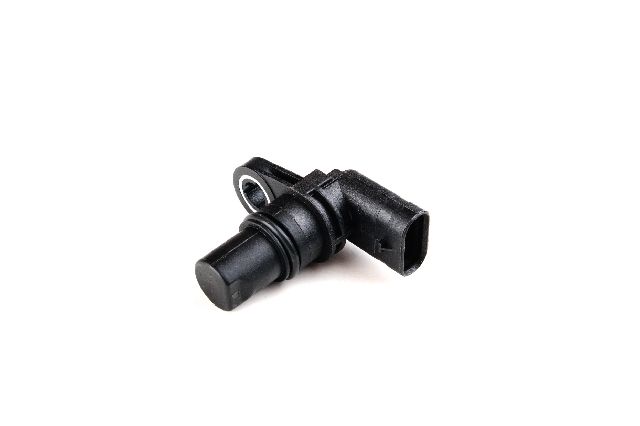
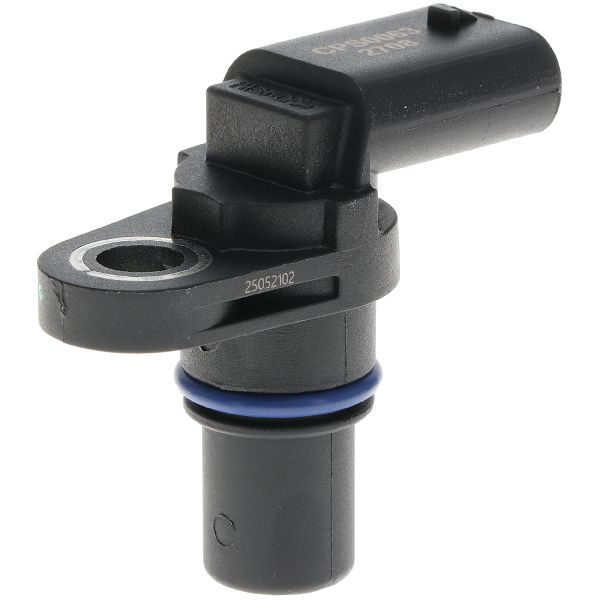
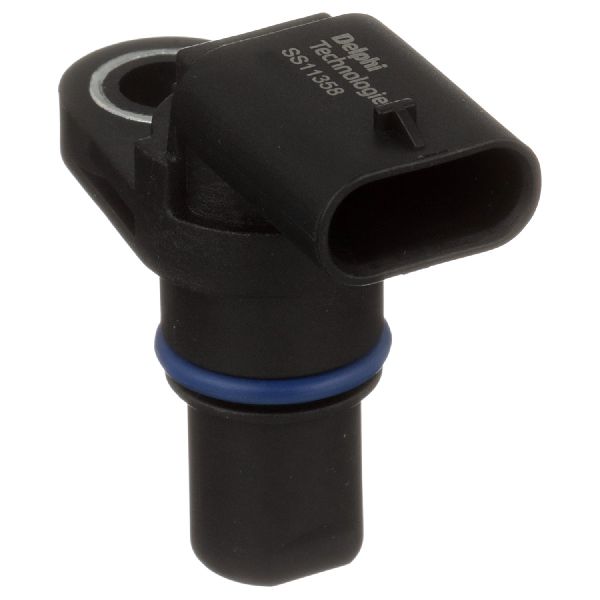
- Camshaft Position Sensor
(OEM #07L905163C)— This is the most common cause of a P0345 code, failing due to internal electronics or oil leaks. This part number supersedes older versions 07L905163A and 07L905163B.
Trusted brands: Bosch, Delphi, NTK, Genuine Audi
OEM price range: $80-$120
Aftermarket price range: $30-$70
Related Codes That Often Appear With This One
- P0346 — This code is for the Bank 2 exhaust camshaft position sensor. If there is a broader timing issue, both intake and exhaust sensors on the same bank may report faults.
- P0018 — This code indicates a Crankshaft-Camshaft Position Correlation error on Bank 2, which points more directly to a mechanical timing issue like a stretched chain rather than just a sensor circuit fault.
- P0300, P0304, P0305, P0306 — These are random and cylinder-specific misfire codes for Bank 2 (cylinders 4, 5, 6). Incorrect cam timing from a bad sensor or timing issue will cause misfires on that bank.
Technical Service Bulletins (TSBs) & Recalls
- TSB 15-09-04 (also 2029959/3): While not for P0345 specifically, this TSB addresses related timing correlation codes (P0016, P0017, P0018, P0019) on the 2009 A4/A5 3.2L engine, officially acknowledging the timing system as a factory-recognized issue.
Platform-Specific Known Issues
- The 3.2L FSI V6 engine is widely known for premature timing chain tensioner failure and chain stretch, which can manifest as camshaft position sensor codes. This should be considered a primary diagnostic path if a simple sensor swap does not resolve the issue.
Mechanic-Grade Diagnostic Values
- Camshaft Position Sensor (Hall Effect) Signal Waveform — expected: A clean, repeating digital square-wave signal switching between approximately 0V and 5V.. Failure: A missing, noisy, or distorted waveform (e.g., voltage drops, rounded edges) indicates a failing sensor or wiring issue.
- Camshaft vs. Crankshaft Sensor Oscilloscope Correlation — expected: On a mechanically sound engine at idle, the rising edge of the camshaft sensor's high signal should align precisely with the 17th signal pulse of the crankshaft sensor after its missing tooth reference point.. Failure: Any misalignment between these two signal events points directly to a mechanical timing error, such as a stretched chain or jumped tooth, rather than a sensor or electrical fault.
- Sensor Connector Voltage Supply (Key On, Engine Off) — expected: Approximately 5V reference voltage at one pin and a good ground (near 0V) at another.. Failure: Missing or low reference voltage, or high resistance on the ground pin, indicates a wiring or ECM power supply problem.
Hidden / Shadow Codes Worth Checking
- 17800 / P1392 / 005010: This is a VAG-specific fault code for "Camshaft Position Sensor Bank 2 (G163): Open Short to Plus". It is more descriptive than the generic P0345, pointing specifically to an electrical circuit fault rather than a correlation or performance issue. (see via Requires a VAG-specific scan tool like VCDS (VAG-COM) or OBDeleven to read manufacturer-specific codes.)
Scan Tool Commands That Help
- VCDS (VAG-COM) or equivalent: Reset Camshaft Adaptation Values — This function should be used after replacing the timing chains or performing other major timing system repairs. It resets the stored value the ECU uses to compensate for chain stretch. Failure to reset this can cause the ECU to calculate incorrect cam timing with new components, potentially triggering position codes.
- VCDS (VAG-COM) or equivalent: Camshaft Adaptation Relearn Procedure — After replacing a camshaft position sensor, some vehicles require a relearn procedure for the ECU to recognize the new sensor's characteristics. This can sometimes be initiated via a scan tool command, or may require a specific driving cycle to complete automatically.
Wiring & Ground Locations
- Ground Connection (12) — In the engine compartment on the left side, typically on the firewall or inner fender area.. This is a primary grounding point for the Engine Control Module (ECM) and various engine sensors. A corroded or loose connection here can cause erratic sensor readings and trigger faults like P0345.
- Engine Block to Chassis Ground — A heavy gauge cable running from the engine block (often near the starter or engine mount) to the vehicle's chassis frame rail.. This is the main ground for the entire engine. A poor connection here can create a floating ground, leading to widespread electrical issues, including sensor circuit malfunctions.
- Sensor Connector Pins — At the G163 sensor on the Bank 2 (driver's side) upper timing cover.. The 3-pin connector should be tested directly. Pin 1 is typically the 5V supply from the ECM, Pin 2 is the signal wire, and Pin 3 is the ground. Verifying power, ground, and signal continuity back to the ECM is essential.
Real Owner Repair Stories
- AudiWorld Forums User (Audi A6 3.2L) — Multiple codes including P0345 (VAG code 17800 / P1392), P0021, and P0011. Car would not start.
❌ Tried (didn't work) Replacing the Bank 2 camshaft position sensor (G163)., Measuring resistance and checking for shorts on the wiring between the sensor and the ECM connector; all wiring tested good.
✅ What actually fixed it The user discovered there was zero compression on all cylinders in Bank 2. The P0345 code was a symptom of a catastrophic mechanical engine failure (likely jumped timing), not an electrical or sensor issue. - AudiWorld Forums User (Audi 1.8T (similar sensor principle)) — Car would not start after a timing belt job, unless the camshaft position sensor was unplugged. With the sensor unplugged, it would start but run poorly.
❌ Tried (didn't work) Verifying timing marks were perfectly aligned., Replacing spark plugs and coil packs.
✅ What actually fixed it The suspected root cause was a damaged camshaft reluctor wheel. It was suggested that the locating tang on the wheel was flattened during installation, causing it to be out of phase with the camshaft, sending an incorrect signal that prevented the engine from starting.
"I Checked Everything" — The Actual Cause
- In the context of P0345, the equivalent of a 'smoke test clean' scenario is when the sensor is replaced and the wiring tests perfectly for continuity, yet the code persists. In one documented case, the root cause was a complete loss of compression on Bank 2, meaning the camshaft was likely not spinning at all or was severely out of time due to internal mechanical failure.
- Another case involved a no-start condition where all timing marks aligned correctly, but the engine would only run if the cam sensor was disconnected. The hidden cause was suspected to be a physically damaged or misaligned reluctor wheel on the camshaft itself, which is not something typically checked during a standard timing job.
When the Usual Fixes Don't Work
- While a bad sensor or stretched timing chain are the most common culprits, there are multiple documented instances where neither was the cause. In one case, a persistent P0345 and no-start condition, even after a new sensor and verified wiring, was ultimately traced to a total loss of compression on Bank 2, indicating a major mechanical failure. In another, a no-start that was 'fixed' by unplugging the sensor pointed to a damaged reluctor wheel on the camshaft, a detail missed by standard timing checks. These cases prove that if the simple fixes don't work, a deep mechanical inspection is required before assuming the wiring or ECM is bad.
OEM Part Supersession History
07L905163A, 07L905163B, 06C905163B→07L905163C— Updated OEM specification to improve reliability and performance. The new part is a direct, backward-compatible replacement.
Heads up: There are no known incompatibilities; 07L905163C is a direct physical and electrical replacement for the older part numbers.
Diagnostic Flowchart
Other Known Issues on This Vehicle
Issues unrelated to this code that are worth knowing about as an owner of this generation:
- Intake Valve Carbon Buildup 🔴 High — Common on all 3.2L FSI engines, typically requiring cleaning every 60,000-100,000 miles. Symptoms include rough idle, hard starting, and loss of power.
- Plastic Coolant System Component Failure 🟠 Medium — The water pump, thermostat housing, and coolant crossover pipes are made of plastic and prone to cracking and leaking over time, often after 80,000 miles.
- PCV Valve Failure 🟠 Medium — The PCV (crankcase ventilation) valve can fail, leading to a loud squealing or whistling noise from the engine bay, oil consumption, and rough running. Replacement requires removing the intake manifold.
- Oil Leaks from Gaskets/Seals 🟡 Low — Oil filter housing gaskets and valve cover gaskets (which use a silicone sealant from the factory) are known to degrade and cause oil leaks.
Used vs. New Parts: Buying Guide for This Vehicle
When a used part is the smart pick: For this repair, a used part is generally not recommended for the sensor itself. However, a used wiring harness connector (pigtail) from a junkyard is a viable option if the original connector is cracked or damaged, as it is a simple plastic and wire component.
Donor-vehicle mileage cap: roughly under 100000 miles for the part to have meaningful remaining life.
What to inspect on the donor part:
- For a wiring pigtail, ensure the plastic is not brittle or cracked.
- Check that the locking tab on the connector is intact.
- Inspect the wires for any signs of fraying, previous repairs, or heat damage.
OEM-only on this vehicle (don't cheap out):
- Camshaft Position Sensor: It is strongly recommended to use a Genuine Audi part or one from an OEM supplier like Bosch.
- Timing Chain Components: Never use used timing chains, tensioners, or guides. These are wear items critical to engine health.
Aftermarket brands forum-validated for this vehicle:
- Bosch (OEM supplier for many VAG components)
- NTK
Brands owners have reported issues with on this vehicle:
- Unnamed/white-box brands from online marketplaces.
- Some forum users have reported issues with Delphi sensors in VAG applications, suggesting caution.
Real Owner Stories
Aggregated from forums and TSBs cited above. Mileages and costs reflect what owners reported in those sources.
2009 Audi A6 3.2L FSI V6
Symptoms: Rough idle and stalling after a repair.
What fixed it: Corrected the electrical connectors; the owner had accidentally swapped the identical plugs for the Camshaft Position Sensor (G163) and the Intake Manifold Tuning Valve.
Source hint: AudiWorld Forums thread titled 'Audi A6 3.2 code G513 P2075 G163 P0345 fix'
2010 Audi Q5 3.2L CALB
Symptoms: Persistent misfire and noise under the valve cover.
What fixed it: Replacement of a worn roller rocker.
Source hint: Ross-Tech Forums thread titled '2010 Q5 3.2 CALB noise under 1-3 valve cover 3 misfire'
Related OBD-II Codes
Frequently Asked Questions
Does TSB 15-09-04 apply to my 3.2L Audi Q5?
Can I use Measuring Block 093 on my 2010 Q5 with the CALB engine to check timing?
Is there a simple way to tell if my P0345 code is just a bad sensor or a major timing chain failure?
Why would my Q5 stall and throw P0345 immediately after I had other engine work done?
What is the 'limit' for camshaft adaptation values before I need a timing chain replacement?
Are there any other common 3.2L FSI issues that cause similar symptoms like rough idling and power loss?
Helpful Videos



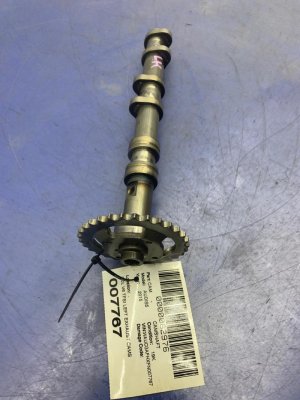
Used OEM Parts in Stock
New Aftermarket Parts Available


The information in this article is provided for general reference and educational purposes only. Vehicle specifications, procedures, and part compatibility can vary by production date, trim level, and region. Always consult your vehicle's factory service manual and verify part numbers before purchasing or performing repairs. Safety-critical components such as airbags, seat belts, and braking systems should be installed by a qualified professional.
- Audi Q5:
- 🧭 Diagnostic Flowchart
- 🎬 Helpful Videos
- 🛍️ Shop This Part
- What's Unique About the 2009-2017 Audi Q5
- Symptoms You May Notice
- Most Likely Causes
- Rare But Worth Checking
- Diagnosis Steps
- Parts You'll Likely Need
- Related Codes That Often Appear With This One
- Technical Service Bulletins (TSBs) & Recalls
- Platform-Specific Known Issues
- Mechanic-Grade Diagnostic Values
- Hidden / Shadow Codes Worth Checking
- Scan Tool Commands That Help
- Wiring & Ground Locations
- Real Owner Repair Stories
- "I Checked Everything" — The Actual Cause
- When the Usual Fixes Don't Work
- OEM Part Supersession History
- Other Known Issues on This Vehicle
- Used vs. New Parts: Buying Guide for This Vehicle
- Real Owner Stories
- 2009 Audi A6 3.2L FSI V6
- 2010 Audi Q5 3.2L CALB
- Related OBD-II Codes
- Frequently Asked Questions
- 🎟️ Get 5% Off