

P0345 on 2010-2016 Audi S4 3.0T: Camshaft Sensor Causes and Fixes
P0345 on a 2010-2016 Audi S4 most often means the driver's side intake camshaft position sensor has failed. A replacement sensor costs about $30-$100. However, this code can also be an early warning for a much more serious timing chain issue, especially if you hear a 1-3 second rattling noise on cold starts. The sensor swap test is the definitive first diagnostic step.
- P0345 points to the intake camshaft position sensor on the driver's side.
- The easiest and most effective diagnostic step is to swap the driver's side and passenger's side intake cam sensors to see if the fault code follows the sensor.
- Always listen for a 1-3 second rattle on cold starts. If you hear this noise, the P0345 code is likely a symptom of a more serious timing chain problem that needs professional diagnosis.
- When replacing the sensor, use a quality OEM or OEM-supplier brand like Bosch or Hella for reliability.
- The replacement is a simple DIY job, requiring only basic tools like a T30 Torx bit.
What's Unique About the 2010-2016 Audi S4
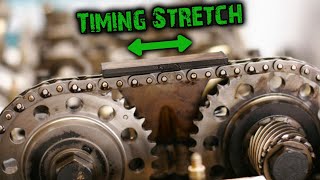
While a P0345 code on many vehicles points directly to a simple sensor failure, on the Audi 3.0T Supercharged V6, it must be treated with extra caution. This engine platform can be susceptible to timing chain stretch and, more commonly, hydraulic tensioner failure. A camshaft position sensor code is often the first electrical symptom of this serious mechanical issue. Any diagnosis must include listening for a cold start rattle. 🎬 Listen to an example of the 3.0T timing chain rattle. A distinct 1-3 second metallic chatter is a classic indicator of slack in the timing system, a known issue addressed by Audi TSB 2039995/1. Ignoring this can eventually lead to jumped timing, which is an expensive, engine-out repair on this vehicle.
Generation note: This guide covers the B8 (2010-2012) and B8.5 (2013-2016) generations of the Audi S4. Both generations use the same 3.0L Supercharged V6 engine (engine codes CCBA, CGWC, CGXC, CTUB). The causes and diagnostic procedures for P0345 are identical. However, B8.5 models (2013+) are considered to have more reliable DSG Mechatronic units and received updated timing chain tensioners partway through their run.
Symptoms You May Notice
- Check Engine Light is on
- Engine is hard to start or cranks for a long time
- Engine runs rough, misfires, or has an unstable idle
- Stalling, especially at low speeds or when stopping
- Noticeable loss of engine power and acceleration
- Reduced fuel economy
- Engine may start perfectly one time and fail to start the next
- Replacing the crankshaft position sensor. While related to timing, it has its own set of codes (e.g., P0335) and is not the cause of P0345.
- Replacing spark plugs and ignition coils. While these can cause misfires, they will not trigger a camshaft position sensor circuit code. Misfires are a symptom, not the cause.
- Assuming the timing chain must be replaced immediately. A brief startup rattle may only require upper tensioner replacement, which is less intensive than a full chain job.
Most Likely Causes
- Failed Camshaft Position Sensor (Bank 2 Intake) 🔴 High Probability → Shop Engine Camshaft Position Sensor The sensors operate in a high-heat environment and the internal electronics fail over time. It's the most common point of failure for this specific code.
How to confirm: Swap the Bank 2 (driver's side) intake camshaft sensor with the Bank 1 (passenger's side) intake sensor. They are identical parts (OEM P/N 07L905163C). Clear the codes and drive. If the fault code changes to P0340 (Camshaft Position Sensor 'A' Circuit Malfunction Bank 1), the sensor you moved is definitively bad.
Typical fix: Replace the faulty camshaft position sensor. It is located on the upper timing cover and held in by a single T30 Torx bolt.
Est. part cost: $30-$110 - Stretched Timing Chain or Failed Upper Tensioner 🟡 Medium Probability → Shop Engine Timing Chain The hydraulic upper timing chain tensioners are a known weak point. They can fail to maintain oil pressure on startup, causing chain slack. This changes the camshafts' physical timing relative to the crankshaft, which the sensors detect as a fault. This is more common on higher mileage vehicles or those with extended oil change intervals.
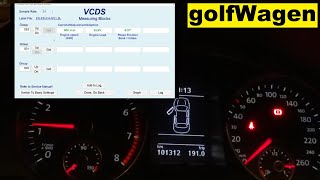
How to confirm: Listen for a distinct 1-3 second rattling or grinding noise from the rear of the engine during a cold start (after the car has sat overnight). Use a diagnostic tool (like VCDS) to check camshaft adaptation values in measuring blocks (e.g., block 93). 🎬 See how to check for timing chain stretch using VCDS. A deviation value greater than -8 degrees strongly suggests a timing issue. The absence of a rattle makes a sensor failure more likely.
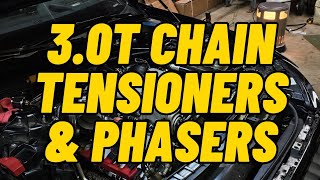
Typical fix: If only the upper tensioners are failing (evidenced by a brief startup rattle), they can sometimes be replaced without removing the engine, 🎬 Watch this walkthrough on replacing upper tensioners with the engine in. though it is still a significant job. If the chains are stretched or guides are broken, it is a major, engine-out service requiring replacement of all timing chains, tensioners, and guides. Audi released an updated tensioner for Bank 2 under part number 06E109217AH.
Est. part cost: $1000-$2500 - Wiring or Connector Damage ⚪ Low Probability Engine bay heat can make the wiring harness and plastic connectors brittle over time, leading to cracks, poor pin contact, or corrosion.
How to confirm: Visually inspect the wiring and the 3-pin connector for the Bank 2 intake cam sensor. Check for frayed wires, cracked plastic, or corrosion on the pins. With the ignition on, use a multimeter to test for a 5-volt reference signal and a good ground at the connector.
Typical fix: Repair the damaged section of wiring or replace the connector pigtail.
Est. part cost: $15-$50
Rare But Worth Checking
- Failing Camshaft Adjuster Magnet (Solenoid): → Shop Engine Camshaft A failing solenoid (N205/N208 valve) can cause incorrect camshaft timing adjustments, which may trigger a sensor code. This is less common for a P0345 circuit code but is a known issue in the VVT system that can cause related codes like P0018 or P0021.
- Failing Engine Control Unit (ECU): In very rare cases, the fault can be internal to the ECU itself, where the driver circuit for the sensor fails and it is unable to properly read the signal from a known-good sensor.
Diagnosis Steps
- Scan the ECU for any other stored fault codes to get a complete picture. Note any correlation or misfire codes.
- Listen carefully for a 1-3 second metallic rattle from the rear of the engine on a cold start. The absence of a rattle makes a simple sensor failure more likely.
- Remove the plastic engine cover. Locate the intake camshaft position sensor on the driver's side (Bank 2) cylinder head, near the front of the upper timing cover.
- Inspect the sensor's electrical connector and nearby wiring for any signs of damage, brittleness, or oil contamination.
- Perform the 'swap test': Unplug and remove the Bank 2 (driver's side) intake sensor and the Bank 1 (passenger's side) intake sensor. Swap their positions. They are the same part.
- Clear all fault codes using a scan tool, start the engine, and drive the vehicle. Re-scan for codes.
- If code P0340 (Bank 1) now appears, the sensor you moved is faulty and must be replaced.
- If code P0345 returns, the problem is not the sensor. The issue lies in the wiring to the Bank 2 sensor, the ECU, or it's a mechanical timing problem.
- If a timing chain issue is suspected, use an advanced scan tool like VCDS to check the camshaft phase/adaptation values in measuring block 93. A value greater than -8 degrees (e.g., -9, -10) strongly points to a stretched chain or failed tensioner.
Parts You'll Likely Need
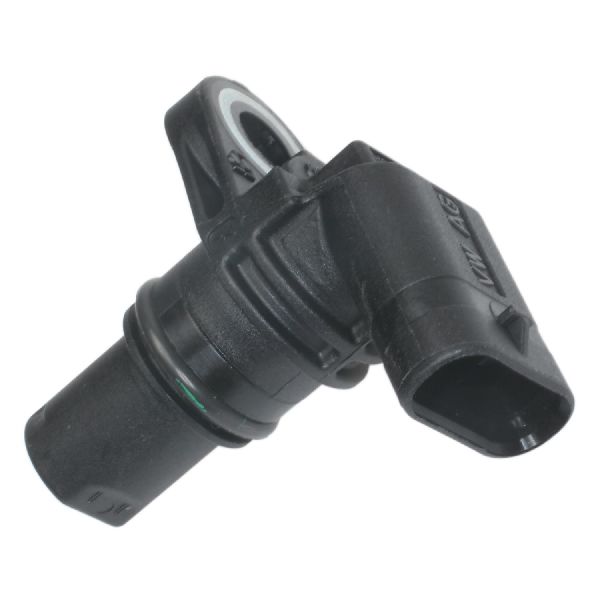
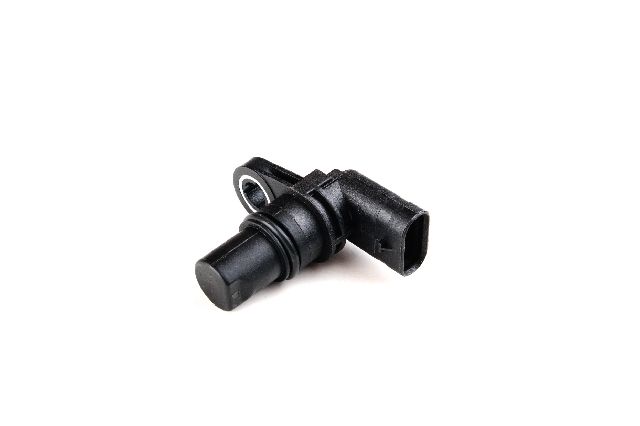
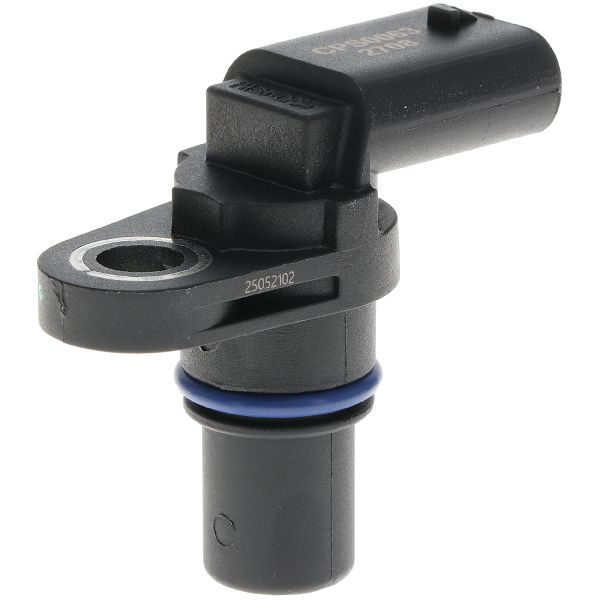
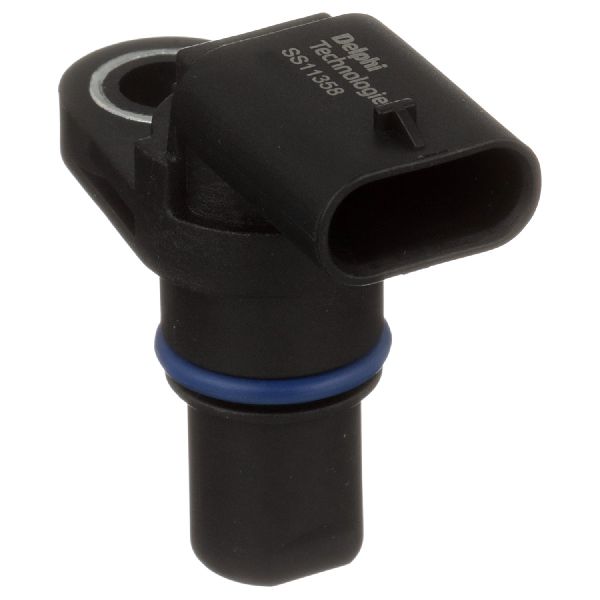
- Camshaft Position Sensor
(OEM #07L905163C)— This is the most frequent cause of code P0345. The sensor fails electronically. All four sensors (intake/exhaust for both banks) on the 3.0T engine are the same part number. Part number 07L905163C supersedes older versions like 07L905163B and 07L905163A.
Trusted brands: Bosch, Hella, Hitachi, Genuine Audi/VW
OEM price range: $80-$110
Aftermarket price range: $30-$70
Related Codes That Often Appear With This One
- P0340 — This is the equivalent code for Bank 1 (passenger's side). You will see this if you swap a faulty sensor from Bank 2 to Bank 1 during diagnosis, confirming the sensor is the problem.
- P0018 / P0019 — These are Crankshaft-Camshaft Correlation codes for Bank 2. Seeing these alongside P0345 strengthens the diagnosis of a mechanical timing issue (stretched chain or failed tensioner) rather than just a sensor circuit failure.
- P0300, P0304, P0305, P0306 — These are random or specific misfire codes for cylinders on Bank 2 (cylinders 4, 5, and 6). Incorrect cam timing from either a bad sensor signal or mechanical slack directly disrupts combustion and can easily lead to misfires on the affected bank.
Technical Service Bulletins (TSBs) & Recalls
- TSB 2039995/1 (also listed as 15-15-26): Addresses a 1-3 second engine rattling noise on cold start from the timing chain area. It identifies the cause as the upper chain tensioners and provides part numbers for optimized replacements (06E109217AH for Bank 2).
- While no TSB is specifically for P0345 on this model, TSB 2041097 addresses related camshaft codes (P0011/P0021) on other Audi engines caused by a failing filter on the camshaft adjustment valve, indicating a pattern of VVT system component issues.
Platform-Specific Known Issues
- A camshaft position sensor code on the 3.0T engine can be an early warning of timing chain and/or tensioner failure. This is a known, albeit not universal, problem for this platform. The repair is extremely labor-intensive as the timing system is at the rear of the engine, requiring engine removal for a full service.
- A brief (1-3 second) startup rattle is specifically addressed in TSB 2039995/1, which points to the upper chain tensioners. Audi states the noise itself does not cause damage, but it indicates wear in a critical system.
Mechanic-Grade Diagnostic Values
- Camshaft Position Sensor (G40) Connector Voltage — expected: Approximately 5.0 Volts DC between Pin 1 (power) and Pin 3 (ground) with the ignition on, engine off.. Failure: No voltage or significantly lower voltage suggests a wiring issue, blown fuse, or ECU fault. If voltage is present and the code persists after a sensor swap, the issue is likely mechanical.
- Camshaft Adaptation Phase Position (VCDS) — expected: At warm idle, values between 0° and -4° are considered acceptable. New chains are typically 0° to -2°.. Failure: Values approaching or exceeding -8° strongly indicate significant timing chain stretch or tensioner failure, requiring mechanical inspection. Some forum users suggest being alert at values greater than -4°.
- Wiring Harness Continuity — expected: Less than 1.5 Ω between the sensor connector pins and their corresponding pins at the ECU connector.. Failure: High resistance (or an open circuit) indicates a break in the wire. A low resistance reading to ground on the signal or power wire indicates a short.
Scan Tool Commands That Help
- VCDS (VAG-COM): Advanced Measuring Values for Engine — This is critical for diagnosing a suspected mechanical timing issue. Search for values like 'Camshaft adjustment: inlet phase: bank 2' or 'Camshaft adaptation intake bank 2: phase position'. This allows you to see the degree of deviation the ECU is compensating for, which directly correlates to timing chain stretch.
- VCDS (VAG-COM): Basic Settings - Test of camshaft adjustment intake — This function can be used to command the camshaft adjusters (phasers) to move, helping to diagnose if a camshaft adjuster solenoid or the phaser itself is stuck or slow to respond, which could cause related timing codes.
Wiring & Ground Locations
- Bank 2 Camshaft Position Sensor (G40) Connector — On the driver's side (Bank 2) upper timing chain cover. It is a 3-pin connector.. This is the primary connector to inspect for damage, corrosion, or oil contamination. Pin 1 is 5V power, Pin 2 is the signal to the ECU, and Pin 3 is ground.
- Engine Harness Ground Strap — There is a primary ground strap on the driver's side of the engine bay, connecting the engine block to the chassis frame rail, often near the alternator or engine mount.. A loose or corroded main engine ground can cause floating voltages and erratic behavior from multiple sensors, including the camshaft position sensors. If multiple, seemingly unrelated electrical faults are present, this ground should be inspected and cleaned.
Real Owner Repair Stories
- 2CarPros Forum User (2005 Audi Allroad 2.7T (Similar V6 timing principles)) — Immediate P0345 code and rougher idle after a timing belt and cam tensioner gasket service.
❌ Tried (didn't work) Erasing the code (it reappeared immediately)., Driving a short distance to see if the tensioner would self-correct.
✅ What actually fixed it The mechanic had incorrectly timed the driver's side (Bank 2) camshafts during reassembly. The problem was resolved by repeating the timing procedure correctly, using the proper cam locking tools to ensure alignment before tensioning the belt/chain. - AudiWorld Forum User dvs_dave (2004 Audi 4.2i (V8, but same sensor function and similar diagnostic path)) — Long crank time, reduced low-end torque, and a P0383 code (equivalent G40 sensor fault).
❌ Tried (didn't work) Replacing the Bank 2 camshaft position sensor (G40). The code returned after replacement.
✅ What actually fixed it The user concluded the issue was in the wiring harness. Another user in the thread confirmed that on Audis of this era, the connector and first few inches of wiring are common failure points due to heat and vibration, often requiring a new connector pigtail to be spliced in.
OEM Part Supersession History
07L905163A, 07L905163B→07L905163C— Internal revisions by the manufacturer (Bosch) for improved reliability and heat resistance.
Heads up: All versions (A, B, C) are physically and electrically compatible. However, it is best practice to use the latest 'C' revision for replacement. Using an older 'A' or 'B' sensor from old stock is not recommended.
Model Year Variations Within This Range
- 2013-2016 (B8.5): B8.5 models received updated upper timing chain tensioners from the factory partway through their production run. While they can still fail, they are considered more robust than the tensioners found on many B8 (2010-2012) models. The updated part for Bank 2 is 06E109217AH, which can be retrofitted to earlier cars.
Diagnostic Flowchart
Other Known Issues on This Vehicle
Issues unrelated to this code that are worth knowing about as an owner of this generation:
- DSG (S-Tronic) Mechatronic Unit Failure 🔴 High — Common, especially on earlier B8 models (2010-2012). Can fail from 60k miles onward. Symptoms include jerky shifting, flashing 'PRNDS' light, and loss of gears.
- Water Pump & Thermostat Failure 🔴 High — Very common. Original plastic components leak or stick, causing coolant loss or overheating. Replacement is labor-intensive (supercharger removal required). (Ref: TSB 2040491/1 addresses a related 'Coolant System Fault' warning.)
- PCV Valve / Oil Separator Failure 🟠 Medium — Common failure around 60k-80k miles. Causes high-pitched whistling, high oil consumption, and rough idle. Located under the supercharger, making replacement costly.
- Carbon Buildup on Intake Valves 🟠 Medium — Inevitable on all direct-injection engines. Typically requires cleaning every 60k-100k miles to prevent misfires and performance loss.
- Failing Engine Mounts 🟡 Low — The factory fluid-filled electronic mounts are known to leak and fail, causing excess engine vibration and movement on acceleration.
Used vs. New Parts: Buying Guide for This Vehicle
When a used part is the smart pick: For this specific P0345 repair, buying a used camshaft position sensor is NOT recommended. They are relatively inexpensive new and are a common failure item due to electronic breakdown from heat cycles. A used sensor has unknown remaining life. A used wiring connector pigtail from a junkyard is a viable option if the original is cracked or damaged.
Donor-vehicle mileage cap: roughly under 60000 miles for the part to have meaningful remaining life.
What to inspect on the donor part:
- For a wiring pigtail: Ensure the plastic is not brittle or cracked.
- Check that the locking tab is intact and functional.
- Inspect the wire insulation for at least 4-6 inches back from the connector to ensure it's not frayed or heat-damaged.
- Look for any signs of corrosion on the metal pins inside the connector.
OEM-only on this vehicle (don't cheap out):
- Timing Chains and Tensioners: Given the catastrophic consequences of failure and the extreme labor cost, using OEM or OEM-supplier (Iwis for chains, INA for tensioners) parts is critical. Avoid no-name timing kits.
Aftermarket brands forum-validated for this vehicle:
- Camshaft Position Sensor: Bosch (often the OEM supplier), Hella, Hitachi, NTK.
Brands owners have reported issues with on this vehicle:
- Unbranded or 'white-box' sensors from online marketplaces. These frequently have high failure rates, causing the code to return shortly after repair.
Real Owner Stories
Aggregated from forums and TSBs cited above. Mileages and costs reflect what owners reported in those sources.
2013 Audi S4 3.0T — ~85000 miles
Symptoms: The car would start perfectly one time and then fail to start the next. When it did run, it had an unstable idle and the Check Engine Light was on for P0345.
What fixed it: Swapped the Bank 2 sensor with the Bank 1 sensor; the code followed the sensor (changed to P0340), confirming a bad sensor. Replaced with a new OEM sensor.
Source hint: Audizine & AudiWorld forum threads
2011 Audi S4 3.0T — ~120000 miles
Symptoms: Distinct 1-3 second metallic rattling noise from the rear of the engine during cold starts. Noticed a loss of engine power and reduced fuel economy.
What fixed it: Checked VCDS measuring block 93 and found values beyond -8 degrees. Required a major engine-out service to replace timing chains, tensioners, and guides.
Source hint: Vehicle_specific_issues and TSB 2039995/1
Related OBD-II Codes
Frequently Asked Questions
My 2012 S4 has a 2-second rattle on cold starts; does TSB 2039995/1 mean my timing chain is broken?
Can I use the same sensor part for both Bank 1 and Bank 2 on my 3.0T engine?
What VCDS values should I look for to see if my P0345 is actually a stretched timing chain?
Is the P0345 code related to the common water pump or PCV failures on the B8 S4?
If I have to replace the timing chains to fix this code, does the engine have to come out?
Helpful Videos
![3.0 T AUDI TFSI ENGINE TIMING CHAIN RATTLE (NOISE) COLD Start .... [PART 1] #audi #automotive #a7](https://img.youtube.com/vi/MlMCHpJmELo/mqdefault.jpg)
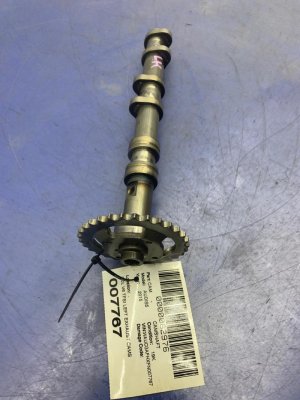
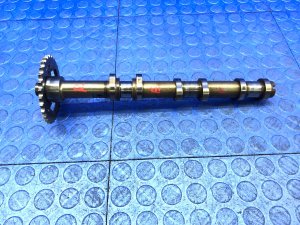
Used OEM Parts in Stock
New Aftermarket Parts Available


The information in this article is provided for general reference and educational purposes only. Vehicle specifications, procedures, and part compatibility can vary by production date, trim level, and region. Always consult your vehicle's factory service manual and verify part numbers before purchasing or performing repairs. Safety-critical components such as airbags, seat belts, and braking systems should be installed by a qualified professional.
- Audi S4:
- 🧭 Diagnostic Flowchart
- 🎬 Helpful Videos
- 🛍️ Shop This Part
- What's Unique About the 2010-2016 Audi S4
- Symptoms You May Notice
- Most Likely Causes
- Rare But Worth Checking
- Diagnosis Steps
- Parts You'll Likely Need
- Related Codes That Often Appear With This One
- Technical Service Bulletins (TSBs) & Recalls
- Platform-Specific Known Issues
- Mechanic-Grade Diagnostic Values
- Scan Tool Commands That Help
- Wiring & Ground Locations
- Real Owner Repair Stories
- OEM Part Supersession History
- Model Year Variations Within This Range
- Other Known Issues on This Vehicle
- Used vs. New Parts: Buying Guide for This Vehicle
- Real Owner Stories
- 2013 Audi S4 3.0T — ~85000 miles
- 2011 Audi S4 3.0T — ~120000 miles
- Related OBD-II Codes
- Frequently Asked Questions
- 🎟️ Get 5% Off