

P0345 on 2008-2012 Audi S5 4.2L V8: Camshaft Sensor Causes and Fixes
P0345 on the Audi S5 4.2L V8 most often means the camshaft position sensor on the driver's side (Bank 2) has failed. A new OEM sensor costs between $90 and $120. However, this code can also be an early warning for a much more serious timing chain issue, so a proper diagnosis is critical before replacing parts. A very common and simple-to-fix cause is the accidental swapping of the sensor's electrical connector with the nearby intake manifold runner valve connector.
- P0345 points to the intake camshaft position sensor on the driver's side (Bank 2).
- Before replacing parts, check that the sensor connector isn't swapped with the nearby intake manifold tuning valve connector, a very common mistake.
- If connectors are correct, the most likely fix is replacing the sensor itself, which is an easy DIY job.
- A rattling noise from the back of the engine on startup is a strong indicator of a much more serious and expensive timing chain problem that requires immediate professional attention.
What's Unique About the 2008-2012 Audi S5
The 4.2L V8 engine (code: CAUA) in the B8-generation S5 is a complex, high-performance engine with a timing chain system at the rear, against the firewall. While a P0345 code is frequently caused by a simple sensor failure, this engine platform is known for issues with its timing chain guides and tensioners. Unlike the older B6/B7 S4 V8s which had rampant timing guide failures, the B8 S5's components were improved, but they are not immune to wear, especially over 100,000 miles. Therefore, this code must be treated with extra caution, as it can be the first electronic sign of developing timing system slack, which is a very expensive, engine-out repair if left unaddressed.
Symptoms You May Notice
- Check Engine Light is on
- Extended crank time (long time to start)
- Engine stalls, sometimes unexpectedly
- Rough idle
- Reduced engine power and acceleration
- Increased fuel consumption
- Engine misfires
- Replacing the crankshaft position sensor. While related, P0345 specifically points to the camshaft sensor circuit on Bank 2.
- Immediately assuming a timing chain failure without proper diagnosis. Always start with the simplest and most common causes: swapped connectors and the sensor itself.
Most Likely Causes
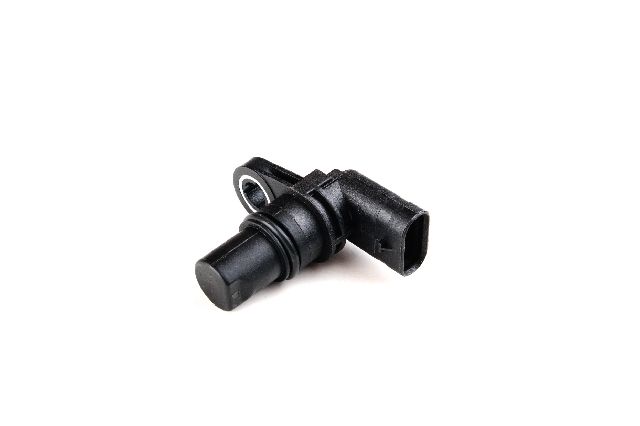
- Failed Camshaft Position Sensor (Bank 2) 🔴 High Probability → Shop Engine Camshaft Position Sensor Sensors are electronic components that can fail over time due to extreme heat cycles and vibration at the back of the engine bay.
How to confirm: Swap the Bank 2 intake camshaft sensor (driver's side) with the Bank 1 (passenger side) sensor. If the code changes to P0340 (Bank 1), the sensor is bad. Alternatively, test the sensor's output with a multimeter; it should receive a 5-volt reference from the harness and the signal should change as metal passes the sensor.
Typical fix: Replace the faulty camshaft position sensor. It is located on the rear of the driver's side cylinder head and held in by a single T30 Torx screw.
Est. part cost: $30-$185 - Wiring or Connector Issue 🟡 Medium Probability The connectors for the camshaft position sensor and the intake manifold tuning valve are identical and located near each other. They are very commonly swapped by mistake during maintenance, such as spark plug changes or intake manifold removal for carbon cleaning.
How to confirm: Visually inspect the wiring harness and connector for the Bank 2 camshaft position sensor. Ensure the connector is fully seated and not swapped with the nearby intake manifold runner connector. This issue will often throw both P0345 and P2075 codes simultaneously.
Typical fix: Clean the connector pins or repair the damaged wiring. If the connectors were swapped, plug them into their correct components. An AudiWorld forum user confirmed this exact scenario fixed their issue.
Est. part cost: $0-$50 - Failing Timing Chains, Guides, or Tensioners ⚪ Low Probability → Shop Engine Timing Chain The plastic guides for the timing chains on the 4.2L V8 are a known failure point, though improved from the previous generation S4. As they wear or break, the timing chain loses tension, causing the camshaft timing to deviate from the crankshaft timing, which can trigger a sensor code.
How to confirm: Listen for a distinct 'rattle' from the back of the engine on cold startups lasting more than a second. This is a classic symptom of failing timing chain tensioners. A professional diagnosis using VCDS to check camshaft adaptation measuring blocks (e.g., Block 093) is required for definitive confirmation. Large deviation values point to a mechanical timing problem.
Typical fix: This is a major, engine-out repair that involves replacing all timing chains, guides, and tensioners. It is very labor-intensive and expensive, with owner-reported costs ranging from $5,000 to $8,000 or more at independent shops.
Est. part cost: $1500-$3000
Rare But Worth Checking
- Low Oil Level or Incorrect Oil: The camshaft position is adjusted by oil pressure via camshaft adjusters (phasers). Incorrect oil viscosity or a low oil level can affect the performance of the phasers and potentially trigger timing-related codes.
- Failed Engine Control Module (ECM): This is extremely rare, but a faulty ECM can incorrectly interpret sensor data. All other possibilities should be exhausted before considering ECM replacement.
Diagnosis Steps
- Read the code with an OBD-II scanner and check for any other stored codes, paying close attention to P2075 or P0018.
- If any work was recently done on the engine, immediately inspect the connectors for the Bank 2 (driver's side) camshaft sensor and the intake manifold tuning valve. Ensure they are not swapped.
- Listen for a rattling noise from the rear of the engine during a cold start. The absence of a rattle makes a major timing issue less likely.
- Inspect the wiring and connector for the Bank 2 intake camshaft position sensor. Check for damage, corrosion, or loose connections.
- If the wiring seems correct, swap the Bank 2 intake camshaft sensor with the Bank 1 (passenger side) intake sensor. They are identical parts.
- Clear the codes and drive the vehicle. If the code returns as P0340 (Bank 1), the sensor you moved is faulty and needs to be replaced.
- If the P0345 code returns, the problem likely lies in the wiring or the timing system itself.
- Using a tool like VCDS, check the measuring values for camshaft adaptation in Block 093. Values deviating significantly from 0° indicate a mechanical timing problem.
- If a timing issue is suspected, seek professional diagnosis. This involves checking camshaft timing blocks and is beyond typical DIY capabilities.
Parts You'll Likely Need
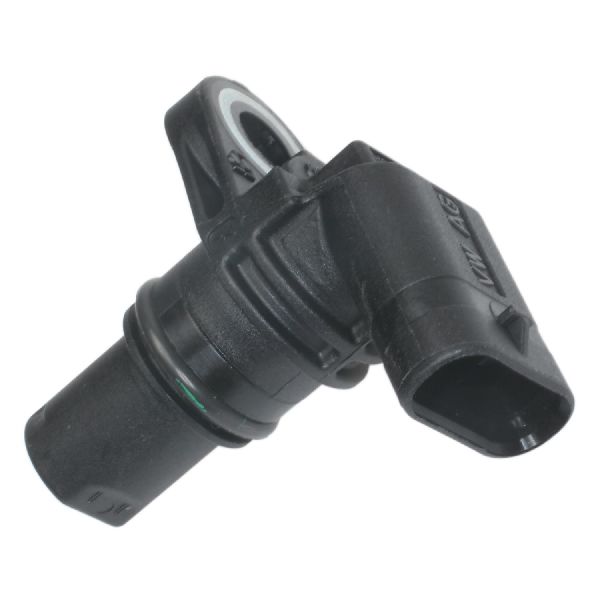
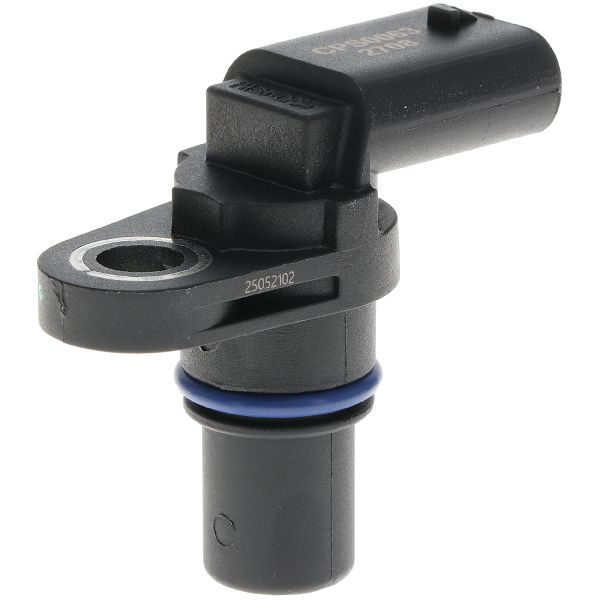
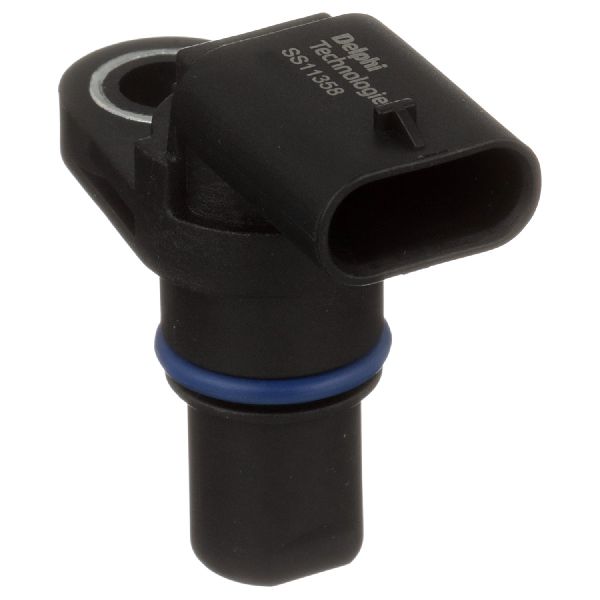
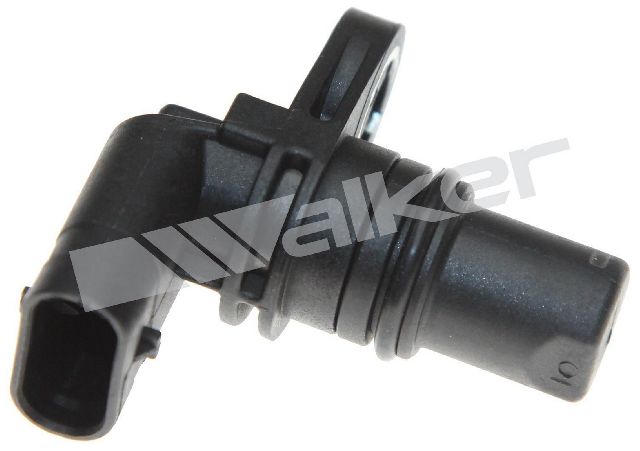
- Camshaft Position Sensor
(OEM #07L905163C)— This is the most common failure part for a P0345 code when no timing rattle is present and connectors are not swapped. The part number 07L905163C supersedes older versions 07L905163B, 07L905163A, and 7L905163.
Trusted brands: Bosch, OE Supplier / Bougicord (OEM), Delphi, NTK
OEM price range: $90-$120
Aftermarket price range: $30-$70
Related Codes That Often Appear With This One
- P0340 — If you swap a faulty Bank 2 sensor to Bank 1 for diagnosis, P0345 will disappear and P0340 (Camshaft Position Sensor 'A' Circuit - Bank 1) will appear.
- P0300, P0305, P0306, P0307, P0308 — Misfire codes for Bank 2 cylinders (5, 6, 7, 8). If the camshaft timing is incorrect, it can lead to misfires on that entire bank.
- P2075 — This code relates to the Intake Manifold Tuning (IMT) Valve. Its connector is identical to the camshaft position sensor's and they are located close to each other, making it easy to swap them by mistake during repairs. This is a very common cause of P0345 after recent engine work.
- P0018 — Crankshaft Position - Camshaft Position Correlation (Bank 2). This code strongly suggests the problem is mechanical timing (chain slack) rather than a sensor circuit fault.
Technical Service Bulletins (TSBs) & Recalls
- While no specific TSB number for P0345 was found, forum users have referenced an Audi TSB regarding an 'inherent fault' with the 4.2L short engine related to timing components, sometimes leading to warranty inspection and repair.
Platform-Specific Known Issues
- A rattling noise from the rear of the engine on cold starts is a well-documented symptom of failing timing chain guides on the 4.2L V8. A P0345 code can be an early electronic symptom of this mechanical failure.
- The identical connectors for the camshaft position sensor and intake manifold tuning valve are a frequent source of misdiagnosis. A forum user on AudiWorld confirmed that swapping the connectors back to their correct positions immediately resolved both P0345 and P2075 codes after a repair.
Mechanic-Grade Diagnostic Values
- VCDS Measuring Block 093 - Camshaft Phase Position (Adaptation) — expected: At warm idle, the values for Bank 1 and Bank 2 should be within +/- 6 degrees.. Failure: A consistent reading beyond +/- 6 degrees (e.g., -8°, -9°, -11°) on Bank 2 strongly indicates a mechanical timing issue like chain stretch or a failing tensioner.
- Camshaft Position Sensor (G163) Connector Voltage — expected: The sensor is a three-wire Hall effect sensor. It should have a power supply (typically 5V or 12V), a ground, and a signal wire that pulses as the camshaft rotates.. Failure: Absence of power or ground, or a static/absent signal voltage when the engine is cranked, indicates a wiring or sensor fault.
- Camshaft Position Sensor (G163) Wiring Resistance — expected: Maximum 1.5 Ohms on each wire between the sensor connector and the ECM.. Failure: Resistance higher than 1.5 Ohms indicates excessive resistance in the harness. A reading of infinite Ohms (no continuity) indicates a broken wire.
Hidden / Shadow Codes Worth Checking
- P0346, P0347, P0349: These are related codes for the same Bank 2 camshaft sensor. P0346 indicates a range/performance issue (erratic signal), P0347 indicates circuit low (potential short to ground), and P0349 indicates an intermittent fault. Seeing one of these can help pinpoint whether the fault is constant, intermittent, or performance-related. (see via Standard OBD-II scanner.)
Scan Tool Commands That Help
- VCDS (Ross-Tech): Basic Settings - "Adaptation after repair work on chain drive" — This function should be used after replacing timing chains or related components. It resets the ECU's learned adaptation values for chain stretch. Failure to do this after a timing job can cause rough running and trigger correlation codes.
- VCDS (Ross-Tech): Basic Settings - Group 060 (Throttle Body Adaptation) — While not directly for P0345, it's a common reset procedure performed after any major engine work, like intake manifold removal for carbon cleaning, which is often when the P0345-causing connector swap occurs.
Wiring & Ground Locations
- G163 Sensor Connector (Bank 2) — On the rear of the driver's side (left-hand) cylinder head, near the firewall.. This is the primary connection point to test. The three pins are for power, ground, and signal to the ECU. A bad connection here is a common cause of P0345.
- ECM Pins for G163 (Bank 2 Sensor) — On a similar 4.2L V8 (BHF), the pins are 98 (Power), 86 (Signal), and 108 (Ground) at the ECU test box. While the CAUA may differ slightly, this provides a starting point for checking continuity from the sensor to the ECU.. Allows a technician to perform a continuity test on the entire length of the sensor wiring harness to rule out a break or short between the sensor and the engine computer.
- Engine Ground Strap (12) — In the engine compartment on the left side, connecting the chassis to the engine block.. A poor or corroded main engine ground can cause a host of electrical issues, including erratic sensor readings. While not a direct cause, it should be checked if multiple, seemingly unrelated electrical faults are present.
Real Owner Repair Stories
- 2CarPros Forum User (2005 Audi Allroad 4.2L V8 (similar timing setup)) — Engine rattled for three seconds on startup, then smoothed out but threw P0345 code. Idle became progressively rougher.
❌ Tried (didn't work) Erasing the code (it came back immediately), Driving the car for a short distance to see if it would self-correct
✅ What actually fixed it The mechanic had performed a timing belt and cam tensioner gasket service but did not set the mechanical timing on the driver's side cam chain correctly. The fix was to re-do the timing procedure, correctly aligning the camshafts.
OEM Part Supersession History
7L905163→07L905163C (via 07L905163A, 07L905163B)— Standard part revision and improvement over time.
Heads up: All versions (A, B, C) are generally cross-compatible for this application, but it is always recommended to use the latest revision (07L905163C) for best results.
Model Year Variations Within This Range
- 2008-2012: The CAUA 4.2L V8 was used consistently in the S5 Coupe for this entire period. The major change happened in the 2013 model year (B8.5 facelift) when the coupe switched to the 3.0T supercharged V6, making this guide inapplicable to 2013+ coupes.
Diagnostic Flowchart
Other Known Issues on This Vehicle
Issues unrelated to this code that are worth knowing about as an owner of this generation:
- Intake Valve Carbon Buildup 🔴 High — Very common, typically requires cleaning every 60,000 to 100,000 miles. Causes misfires, rough idle, and power loss.
- Timing Chain Guide & Tensioner Wear 🔴 High → Shop Engine Timing Chain — Less common than on older Audi V8s, but a significant risk on cars over 100k miles. Symptoms include a startup rattle from the rear of the engine. Repair is engine-out and costs $5,000-$8,000+. (Ref: A TSB was mentioned in forums for an 'inherent fault' on some engines, but the number is not consistently documented.)
- Thermostat Failure 🟠 Medium — Common failure where the thermostat sticks open, preventing the engine from reaching operating temperature, or sticks closed, causing overheating.
- Cracked Coolant Expansion Tank 🟡 Low — The plastic coolant reservoir can become brittle and crack over time, leading to slow coolant leaks.
- Front Control Arm Bushing Wear 🟠 Medium — The front suspension control arm bushings are a common wear item, leading to clunking noises, imprecise steering, and uneven tire wear.
Used vs. New Parts: Buying Guide for This Vehicle
When a used part is the smart pick: A used part is generally not recommended for this repair. The primary fix is an electronic sensor which is a wear item, and a used sensor has unknown remaining life. If the cause is the timing system, using used guides or tensioners is extremely risky and not advised.
Donor-vehicle mileage cap: roughly under 60000 miles for the part to have meaningful remaining life.
What to inspect on the donor part:
- For a sensor, there are no reliable visual cues. It's an electronic component.
- If sourcing a larger component like a cylinder head, look for a donor vehicle with documented low mileage and no signs of overheating or oil sludge.
OEM-only on this vehicle (don't cheap out):
- Timing Chain Tensioners
- Timing Chain Guides
Aftermarket brands forum-validated for this vehicle:
- Bosch (often the OEM supplier)
- NTK
- Delphi
Brands owners have reported issues with on this vehicle:
- Unbranded, 'white box' sensors from online marketplaces should be avoided as their quality and longevity are highly questionable.
Real Owner Stories
Aggregated from forums and TSBs cited above. Mileages and costs reflect what owners reported in those sources.
2008 Audi S5 4.2L V8
Symptoms: P2075 and P0345 error codes appeared simultaneously after maintenance.
What fixed it: Swapping the identical connectors for the camshaft position sensor and the intake manifold tuning (IMT) valve back to their correct positions.
Source hint: AudiWorld Forums - P2075 and P0346 error codes
2009 Audi S5 4.2L V8 — ~100000 miles
Symptoms: Rattling noise from the rear of the engine during cold starts.
What fixed it: Major engine-out service to replace all timing chains, guides, and tensioners.
Cost: $5,000-$8,000
Source hint: Reddit r/Audi - How much is a b8 s5 timing chain service?
2010 Audi S5 4.2L V8
Symptoms: Engine code CAUA with timing chain rattle.
What fixed it: Diagnosis of timing chain components; discussion noted that while the B8 S5 is less prone than the B7 S4, failures still occur at higher mileages.
Source hint: AudiWorld Forums - 4.2 S5 timing chain rattle, engine code caua
Related OBD-II Codes
Frequently Asked Questions
I just finished a carbon cleaning on my 4.2L V8 and now have P0345 and P2075. Did I break a sensor?
How can I tell if my P0345 code is a simple sensor failure or a $5,000 timing chain issue?
Is there a TSB for timing issues on the CAUA engine?
Where is the Bank 2 camshaft sensor located on the S5 4.2L?
Can I use VCDS to confirm if my timing chains are stretched?
Are the camshaft sensors interchangeable between Bank 1 and Bank 2?
Helpful Videos
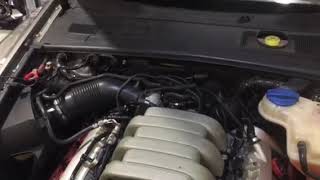
![How to Fix AUDI P0345 Engine Code in 3 Minutes [2 DIY Methods / Only $9.76]](https://img.youtube.com/vi/MI3WB0ZTDvA/mqdefault.jpg)
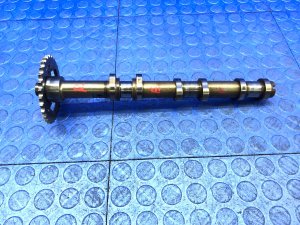
Used OEM Parts in Stock
New Aftermarket Parts Available


The information in this article is provided for general reference and educational purposes only. Vehicle specifications, procedures, and part compatibility can vary by production date, trim level, and region. Always consult your vehicle's factory service manual and verify part numbers before purchasing or performing repairs. Safety-critical components such as airbags, seat belts, and braking systems should be installed by a qualified professional.
- Audi S5:
- 🧭 Diagnostic Flowchart
- 🎬 Helpful Videos
- 🛍️ Shop This Part
- What's Unique About the 2008-2012 Audi S5
- Symptoms You May Notice
- Most Likely Causes
- Rare But Worth Checking
- Diagnosis Steps
- Parts You'll Likely Need
- Related Codes That Often Appear With This One
- Technical Service Bulletins (TSBs) & Recalls
- Platform-Specific Known Issues
- Mechanic-Grade Diagnostic Values
- Hidden / Shadow Codes Worth Checking
- Scan Tool Commands That Help
- Wiring & Ground Locations
- Real Owner Repair Stories
- OEM Part Supersession History
- Model Year Variations Within This Range
- Other Known Issues on This Vehicle
- Used vs. New Parts: Buying Guide for This Vehicle
- Real Owner Stories
- 2008 Audi S5 4.2L V8
- 2009 Audi S5 4.2L V8 — ~100000 miles
- 2010 Audi S5 4.2L V8
- Related OBD-II Codes
- Frequently Asked Questions
- 🎟️ Get 5% Off