

P0345 on 2008-2017 Buick Enclave 3.6L V6: Camshaft Sensor Causes and Fixes
P0345 means a fault in the Bank 2 intake camshaft position sensor circuit. On the Enclave's 3.6L V6, this is most often a failed sensor, which is easy to access on the front of the engine. A quality ACDelco replacement costs about $30-$50 and is a simple DIY fix. However, this code can also be an early warning of a stretched timing chain, a notorious issue for this engine.
- P0345 on your Enclave points to the intake cam sensor on the front (Bank 2) of the engine.
- The most likely fix is replacing the sensor itself, a simple 15-minute DIY job with a 10mm wrench.
- Before buying parts, swap the intake and exhaust sensors on Bank 2 to confirm the sensor is the problem. If the code changes to P0365, the sensor is bad.
- If the sensor swap doesn't fix it, or if you hear a rattling noise from the engine on startup, have the vehicle inspected for a stretched timing chain immediately.
- Always use a high-quality OEM sensor like ACDelco (part #12684186) to avoid repeat failures.
What's Unique About the 2008-2017 Buick Enclave
On the GM 3.6L V6, this code is a double-edged sword. The good news is that the Bank 2 intake sensor is located right at the front of the engine, making it incredibly easy to access and replace compared to the Bank 1 sensors against the firewall. The bad news is that this engine family (LLT/LFX) is known for premature timing chain stretching. While a bad sensor is the most frequent cause, P0345 can sometimes be the first electrical symptom of this much more serious mechanical failure, which requires immediate attention. If other codes like P0008, P0017, or P0018 are present, the timing chain is the prime suspect.
Generation note: The 2008-2017 range covers the first generation of the Buick Enclave. The 2008 model used the LLT 3.6L V6, while 2009-2017 models used the updated LFX 3.6L V6. The causes and fixes for P0345 are virtually identical for both engines as they share the same fundamental design and are both prone to the same issues, including sensor failure and timing chain wear.
Symptoms You May Notice
- Check Engine Light is illuminated
- Engine is difficult to start or cranks for a long time
- Engine may not start at all
- Rough idle or stalling at stops
- Hesitation and reduced engine power during acceleration
- Noticeable decrease in fuel economy
- Engine misfires
- Engine backfiring
- Replacing the crankshaft position sensor. While related, a failure here typically sets different codes.
- Replacing the PCM without thorough diagnosis. This is an expensive and unlikely fix.
- Replacing only the sensor when the connector is full of oil or the wiring is damaged.
- Replacing cam sensors repeatedly when the underlying issue is a stretched timing chain.
Most Likely Causes
- Failed Bank 2 Intake Camshaft Position Sensor 🔴 High Probability → Shop Engine Camshaft Position Sensor The sensor is an electronic component that can fail with age, heat cycles, or from internal oil leaks past its seals. It is the most common cause for an isolated P0345 code.
How to confirm: Swap the Bank 2 intake sensor with the Bank 2 exhaust sensor (they are the same part). Clear codes. If the code changes to P0365 (Exhaust Cam Sensor Circuit Bank 2), the sensor is faulty. If P0345 returns, the issue is with the wiring or is mechanical.
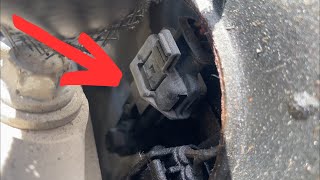
Typical fix: Replace the Bank 2 intake camshaft position sensor. It is held by a single 10mm bolt 🎬 Watch: How to locate and replace the cam sensors and is located on the front valve cover.
Est. part cost: $30-$60 - Wiring Harness or Connector Issue 🟡 Medium Probability The engine wiring harness can become brittle over time. A GM service bulletin for similar platforms (PI0631G) notes the harness can chafe against the edge of the transmission case, causing shorts to ground or open circuits. Oil leaks can also contaminate the connector, disrupting the signal.
How to confirm: Visually inspect the sensor connector for oil, corrosion, or loose pins. Trace the wiring harness from the sensor as far as possible, specifically checking the area where the harness passes near the transmission for any signs of chafing, melting, or breaks.
Typical fix: Clean the oil out of the connector with electrical contact cleaner. Repair or replace the damaged section of the wiring harness. If chafing is found, repair the wires and re-route or shield the harness to prevent future contact.
Est. part cost: $5-$200 - Stretched Timing Chain 🟡 Medium Probability → Shop Engine Timing Chain The GM 3.6L V6 has a well-documented history of premature timing chain stretching, often exacerbated by long oil change intervals. This causes the camshafts to go out of sync with the crankshaft, which the sensor reports as a fault. GM issued special coverage programs for this issue on many vehicles with this engine.
How to confirm: Check for other stored codes like P0008, P0017, or P0018, which are strong indicators of a timing issue. A professional can use a scan tool to view camshaft deviation data; on the LFX, a deviation of more than 6-9 degrees on the Bank 2 intake cam can indicate a stretched chain. A rattling noise on a cold start is also a classic symptom.
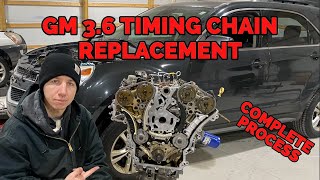
Typical fix: This is a major repair requiring the replacement of all three timing chains, tensioners, and guides. It is recommended for a professional shop 🎬 Watch: Full step-by-step timing chain replacement for the 3.6L due to the complexity.
Est. part cost: $250-$500
Rare But Worth Checking
- Low or Dirty Engine Oil: The camshaft position is adjusted by oil pressure through VVT solenoids. If oil level is low or the oil is sludgy, the system can't work correctly, which may trigger a sensor code. Always check your oil level and condition first.
- Failing Camshaft Actuator (VVT) Solenoid: → Shop Engine Camshaft If the solenoid that controls oil flow to the cam phaser gets stuck or clogged, it can cause timing correlation issues that the sensor reports. This usually throws other codes (like P0011 or P0021) but can be a contributing factor.
- Damaged Camshaft Reluctor Wheel: → Shop Engine Camshaft The sensor reads teeth on a reluctor wheel mounted to the camshaft. If this wheel is damaged, cracked, or has slipped, the sensor will generate an incorrect signal. This is rare and typically requires camshaft replacement.
- Faulty Powertrain Control Module (PCM): This is extremely rare. The PCM should only be considered after all other possibilities, including sensors, wiring, and mechanical timing, have been exhaustively ruled out.
Diagnosis Steps
- Check engine oil level and condition. Top off or change if necessary. Low or sludgy oil can cause VVT system faults that may trigger this code.
- Scan for any other trouble codes. Codes like P0008, P0017, or P0018 point towards a timing chain issue and should be prioritized.
- Locate the Bank 2 (front) intake camshaft position sensor. It is on the front valve cover (near the radiator), towards the driver's side of the engine.
- Inspect the sensor's electrical connector for oil contamination, corrosion, or loose/bent pins. Inspect the visible wiring for damage, paying close attention to where the harness runs near the transmission case.
- Perform a 'swap test'. Unplug and remove the intake sensor (P0345) and the exhaust sensor next to it (P0365). They are identical parts. Swap their positions, reinstall, and clear the codes. Drive the vehicle.
- If code P0365 appears, the sensor you moved is bad. Purchase a new, high-quality OEM sensor (e.g., ACDelco).
- If code P0345 returns, the problem is in the wiring circuit for that sensor or is a deeper mechanical issue. Test the circuit for proper voltage, ground, and signal continuity back to the ECM.
- If wiring and sensor are confirmed good, the vehicle should be checked by a professional for a stretched timing chain, especially if you hear a rattling noise on startup or have other timing-related codes.
Parts You'll Likely Need
- Camshaft Position Sensor
(OEM #12684186)— This is the most common failure point for this code. It is an electronic component that wears out over time. All four cam sensors on the 3.6L V6 are the same part number.
Trusted brands: ACDelco
OEM price range: $30-$60
Aftermarket price range: $20-$45 - Engine Timing Chain Kit
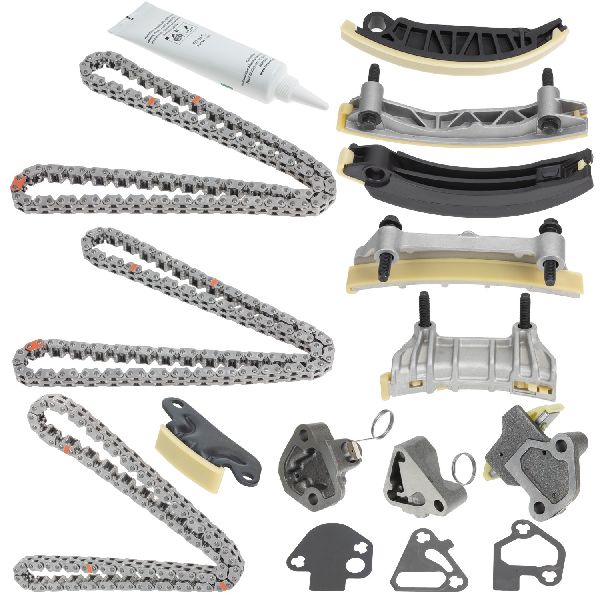
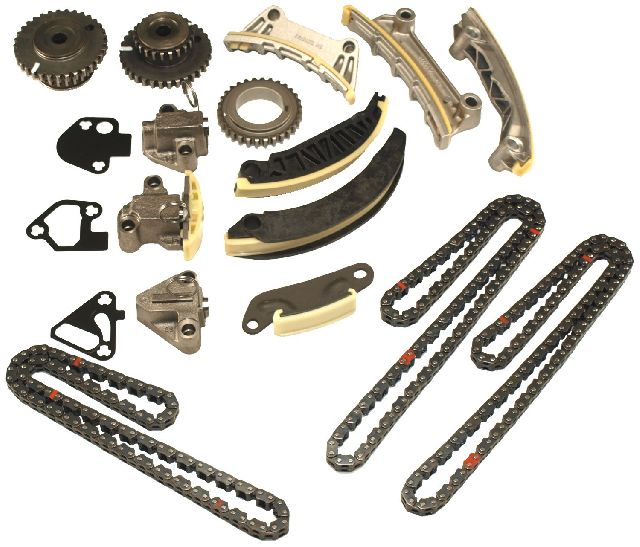
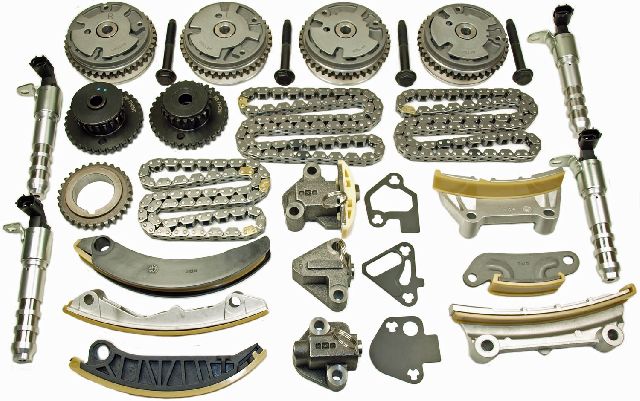
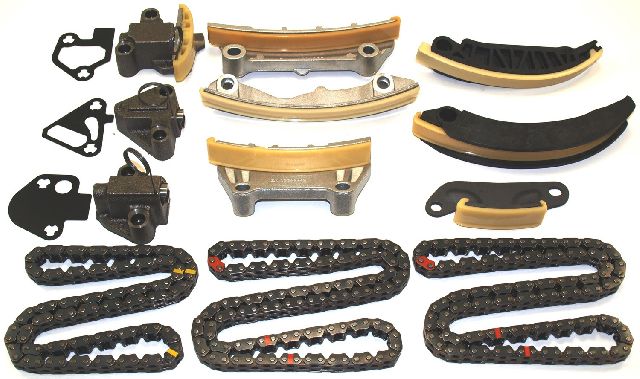
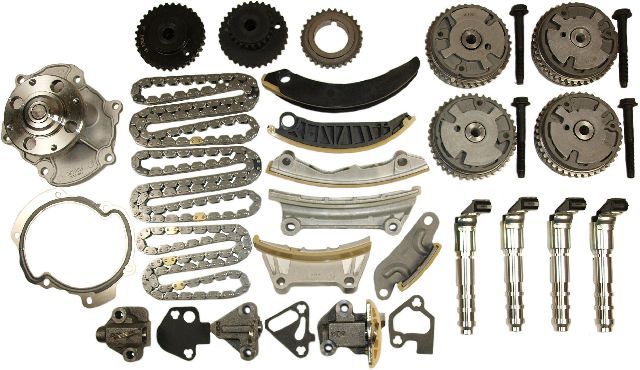
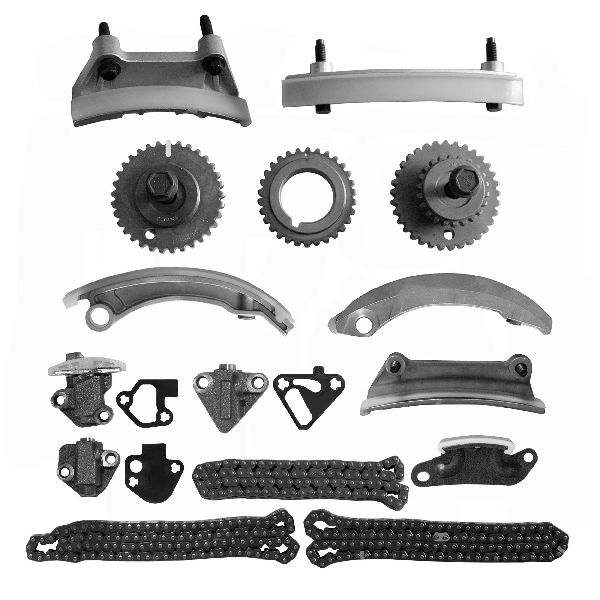
(OEM #12651450 (GM Kit Example))— If diagnosis confirms a stretched timing chain, a complete kit with chains, guides, and tensioners is required. This is the second most likely, but far more expensive, cause.
Trusted brands: ACDelco, Cloyes
OEM price range: $300-$500
Aftermarket price range: $150-$300
Related Codes That Often Appear With This One
- P0365 — Bank 2 Exhaust Camshaft Position Sensor. If you swap the intake and exhaust sensors for diagnosis, P0345 may turn into P0365, confirming a bad sensor.
- P0008 — Engine Positions System Performance Bank 1. This is a classic GM code for a stretched timing chain. If you see this with P0345, suspect the chain as the root cause.
- P0017 / P0018 — Crankshaft Position - Camshaft Position Correlation. Like P0008, these codes point directly to a mechanical timing problem between the crank and cams, making a stretched chain the likely culprit.
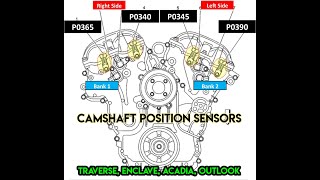
- P0340, P0365, P0390 — These are codes for the other three camshaft position sensors. Seeing multiple cam sensor codes at once is less likely to be multiple failed sensors and more likely points to a systemic issue like a timing chain problem, major wiring harness damage, or low oil pressure.
Technical Service Bulletins (TSBs) & Recalls
- 08-06-01-011K: While not for P0345 specifically, this TSB covers related cam codes (P0341, P0346) and provides advanced diagnostic steps for issues like camshaft end play, which can indicate timing system wear.
- PI0631G: Preliminary Information bulletin detailing a potential for the engine wiring harness to rub through on the transmission case, causing an array of DTCs including cam sensor circuit faults. The fix involves inspecting, repairing, and protecting the harness.
- 14882: Special Coverage Adjustment for timing chain wear on certain 3.6L engines. While not a direct fix for P0345, it acknowledges the underlying timing chain problem that can cause this and other codes.
Platform-Specific Known Issues
- The 3.6L LLT/LFX engine family is known for premature timing chain stretching. This is a widely documented issue that GM addressed with special coverage adjustments on some models. While the sensor is the first thing to check, always be aware that a timing chain problem could be the root cause.
- A GM technical service bulletin (08-06-01-011K) exists for related camshaft position codes, detailing diagnostic procedures and checks for excessive camshaft end play.
Mechanic-Grade Diagnostic Values
- Camshaft Position Sensor (3-wire Hall-effect) Signal Voltage — expected: The signal wire should switch between approximately 0V and 5V as the engine is cranked or running.. Failure: Voltage that is stuck high (5V), stuck low (0V), or does not change indicates a failed sensor or circuit issue.
- Camshaft Position Sensor Reference Voltage — expected: Approximately 5.0V on the reference wire at the sensor connector with key-on, engine-off.. Failure: Significantly lower or no voltage indicates a wiring problem or an issue with the ECM's 5V reference circuit.
- Camshaft Position Sensor Ground Circuit — expected: Near 0V on the ground wire at the sensor connector.. Failure: Voltage present on the ground wire indicates a poor ground connection, which can cause erratic sensor signals.
- Lab Scope Waveform Analysis vs. Crankshaft Position Sensor — expected: A known-good pattern showing the relationship between the cam sensor pulses and the crankshaft sensor's missing tooth reference point. For a healthy engine, the Bank 2 intake cam signal should cross in a specific relation to the crank signal gap.. Failure: A signal that has shifted to the right (retarded) on the time base relative to the crank signal is a strong indicator of a stretched timing chain. A distorted or missing waveform pattern points to a faulty sensor or reluctor wheel.
Scan Tool Commands That Help
- GDS2 (GM Global Diagnostic System 2): Live Data Monitoring: 'Camshaft Position Sensor Voltage (Bank 2 Intake)' — To observe the voltage signal from the sensor in real-time while the engine is running or cranking. This helps confirm if the ECM is receiving any signal at all and if it appears erratic.
- GDS2 (GM Global Diagnostic System 2): Camshaft Position Actuator Test / Solenoid Control — This bidirectional test allows a technician to command the VVT solenoid for the Bank 2 intake cam on and off. While commanding the solenoid, the technician watches the 'Camshaft Position Variance' PID. If the angle changes as commanded, it confirms the VVT solenoid, oil passages, and phaser are mechanically functional, which helps rule out these components and points more strongly toward a sensor, wiring, or base timing issue.
Wiring & Ground Locations
- G103 / G104 — On the front of the passenger's side cylinder head (G103) and the rear of the driver's side cylinder head (G104). These are primary engine-to-chassis grounds.. The ECM and its sensors rely on clean ground connections. A loose or corroded ground at these locations can introduce electrical noise or voltage offsets, causing the ECM to misinterpret the camshaft sensor's signal and set a false P0345 code.
- ECM Connector (e.g., X1) — On the Engine Control Module (ECM) itself.. When diagnosing a persistent P0345 after swapping sensors, technicians test for continuity and voltage directly at the ECM connector pins for the Bank 2 intake cam sensor. This definitively proves whether the wiring harness between the sensor and the ECM is intact or if the fault lies within the ECM itself.
- Camshaft Position Sensor Connector — Plugged directly into the sensor on the front valve cover.. This is the most common point of electrical failure besides the sensor itself. The 3-pin connector provides 5V reference, signal, and ground. Check for oil contamination from a leaking sensor, pushed-out pins, or corrosion. The pigtail connector (ACDelco PT2647) is a common replacement part if the lock tab is broken or terminals are damaged.
Real Owner Repair Stories
- L1 Automotive Training YouTube Channel (GM 3.6L Vehicle (specific model not stated, but engine is identical)) — Check Engine Light with camshaft position sensor codes (P0366, then P0346 after moving sensor).
❌ Tried (didn't work) Replacing the sensor with an aftermarket (CarQuest) part, which produced the same faulty waveform as the original failed sensor., Replacing the sensor with a brand new ACDelco OEM part from a GM dealer, which also produced a faulty waveform., Replacing the sensor with a second brand new ACDelco OEM part from the same dealer, which also failed.
✅ What actually fixed it After trying multiple new OEM and aftermarket sensors that were all defective out of the box, the technician sourced a used OEM sensor from eBay. The used sensor produced a correct waveform immediately and fixed the problem. This highlights a severe quality control issue with even genuine new replacement parts for this sensor, where an oscilloscope was required to prove that multiple new parts were bad.
OEM Part Supersession History
Multiple older numbers→12684186— Consolidation and potential design updates over the years.
Heads up: While 12684186 is the current primary replacement, there have been reports of poor quality control on new sensors, both aftermarket and genuine ACDelco. Technicians may need to test the sensor's output with a scope to confirm it is functional before assuming the fault is elsewhere.
Model Year Variations Within This Range
- 2008 (LLT) vs. 2009-2017 (LFX): The core engine architecture is similar, but the LLT (2008) and LFX (2009+) have key differences. The LFX features cylinder heads with integrated exhaust manifolds, a composite intake manifold instead of aluminum, and uses a Delphi ECM instead of the LLT's Bosch ECM. While the P0345 code's cause is the same, a technician tuning or diagnosing deep electrical issues would need to be aware of the different ECMs. The camshaft position sensors themselves, however, remained the same part across the change.
Diagnostic Flowchart
Other Known Issues on This Vehicle
Issues unrelated to this code that are worth knowing about as an owner of this generation:
- Premature Timing Chain Stretch 🔴 High → Shop Engine Timing Chain — Very common, especially on 2008-2012 models. Often occurs between 70,000 and 120,000 miles. Can be exacerbated by extended oil change intervals. (Ref: Special Coverage Adjustment 14882)
- Transmission 3-5-R Wave Plate Failure 🔴 High — Common on early 6T70/6T75 transmissions, particularly 2008-2010 models. Failure can be sudden and often requires a full transmission rebuild. Typically occurs around 80,000-100,000 miles. (Ref: GM TSB 14404 (Expired))
- Power Steering Pump Failure / Leaks 🟠 Medium — Widespread issue leading to whining noises, fluid leaks, and/or a sudden loss of power steering assist. Common across all early model years. (Ref: Special Coverage Adjustment 14329)
- Water Pump Failure 🟠 Medium — The water pump is prone to leaking coolant from its weep hole. It is located inside the engine block, making replacement a labor-intensive job.
- StabiliTrak / Traction Control Service Messages 🟡 Low — Often caused by failing wheel speed sensors or issues with their wiring harnesses, rather than the stability system itself. Can also be triggered by other engine or throttle body problems.
Used vs. New Parts: Buying Guide for This Vehicle
When a used part is the smart pick: For the Camshaft Position Sensor, a used OEM part from a reputable salvage yard may be a surprisingly reliable option, especially given documented quality control issues with new sensors. If a new sensor doesn't fix the code, a low-cost used OEM sensor can be a valuable diagnostic step before suspecting wiring or timing chains.
Donor-vehicle mileage cap: roughly under 80000 miles for the part to have meaningful remaining life.
What to inspect on the donor part:
- For a used sensor, look for a clean connector with no oil residue.
- Ask for the VIN of the donor vehicle to check its year and mileage.
- Avoid sensors from engines that show signs of heavy sludge or poor maintenance.
OEM-only on this vehicle (don't cheap out):
- Timing Chain Kit: Due to the critical nature and high labor cost of a timing chain job, using a high-quality OEM (ACDelco) or top-tier OEM supplier (like Cloyes) kit is strongly recommended to avoid premature failure.
Aftermarket brands forum-validated for this vehicle:
- Cloyes: A well-regarded OEM supplier for timing components, often considered equivalent to ACDelco.
Brands owners have reported issues with on this vehicle:
- Unbranded 'eBay special' timing kits: These often use inferior materials that can stretch or fail rapidly, leading to catastrophic engine damage.
- Off-brand camshaft position sensors: While some may work, there is a high risk of out-of-spec performance or premature failure, leading to a repeat of the same code.
Real Owner Stories
Aggregated from forums and TSBs cited above. Mileages and costs reflect what owners reported in those sources.
2008 Buick Enclave 3.6L
Symptoms: Owner discussed a new timing chain installation and subsequent diagnostic steps for VVT solenoids and cam/crank correlation issues.
What fixed it: Replacement of the timing chain, followed by advanced diagnostics for VVT and waveform analysis.
Source hint: scannerdanner.com forum post titled "08 Buick enclave new timing chain"
2009-2017 Buick Enclave 3.6L — ~95000 miles
Symptoms: Users reported isolated P0345 codes and discussed the diagnostic trick of swapping sensors to identify a failure.
What fixed it: Swapping the Bank 2 intake sensor with the exhaust sensor to confirm a faulty electronic component.
Source hint: enclaveforum.net threads discussing P0345 and sensor swap diagnostic trick
2008-2012 Buick Enclave 3.6L — ~70000 miles
Symptoms: Rattling noise on cold start and stored codes indicating the camshafts were out of sync with the crankshaft.
What fixed it: Major repair involving the replacement of all three timing chains, tensioners, and guides.
Source hint: Special Coverage Adjustment 14882 and enclaveforum.net timing chain replacement sagas
Related OBD-II Codes
Frequently Asked Questions
Is there a special coverage program for the timing chain issues on my 3.6L Buick Enclave?
My 2008 Enclave has a P0345 code; could this be related to the transmission issues I've heard about?
How can I tell if my P0345 code is just a bad sensor or a stretched timing chain?
Does TSB 08-06-01-011K apply to the P0345 code on my Enclave?
Where is the Bank 2 intake camshaft position sensor located on the LLT/LFX engine?
Can low oil levels cause a P0345 code on the Buick Enclave?
Helpful Videos
We Have This Part in Stock

The information in this article is provided for general reference and educational purposes only. Vehicle specifications, procedures, and part compatibility can vary by production date, trim level, and region. Always consult your vehicle's factory service manual and verify part numbers before purchasing or performing repairs. Safety-critical components such as airbags, seat belts, and braking systems should be installed by a qualified professional.
- Buick Enclave:
- 🧭 Diagnostic Flowchart
- 🎬 Helpful Videos
- 🛍️ Shop This Part
- What's Unique About the 2008-2017 Buick Enclave
- Symptoms You May Notice
- Most Likely Causes
- Rare But Worth Checking
- Diagnosis Steps
- Parts You'll Likely Need
- Related Codes That Often Appear With This One
- Technical Service Bulletins (TSBs) & Recalls
- Platform-Specific Known Issues
- Mechanic-Grade Diagnostic Values
- Scan Tool Commands That Help
- Wiring & Ground Locations
- Real Owner Repair Stories
- OEM Part Supersession History
- Model Year Variations Within This Range
- Other Known Issues on This Vehicle
- Used vs. New Parts: Buying Guide for This Vehicle
- Real Owner Stories
- 2008 Buick Enclave 3.6L
- 2009-2017 Buick Enclave 3.6L — ~95000 miles
- 2008-2012 Buick Enclave 3.6L — ~70000 miles
- Related OBD-II Codes
- Frequently Asked Questions
- 🎟️ Get 5% Off