

P0345 on 2009-2017 Chevrolet Traverse 3.6L: Cam Sensor vs. Timing Chain Guide
P0345 indicates a fault with the Bank 2 (front) intake camshaft sensor. While the sensor itself can fail, this code is a major red flag for stretched timing chains, a very common and serious issue on this engine. If other codes like P0008 or P0017 are present, expect a costly timing chain replacement. Do not ignore this code, as continued driving with a failing timing chain can lead to catastrophic engine failure.
- P0345 on a 2009-2017 Traverse is a serious code that should be diagnosed immediately.
- Do not automatically replace the camshaft sensor. First, check for other timing codes (like P0008, P0017). If they are present, the timing chains have almost certainly stretched.
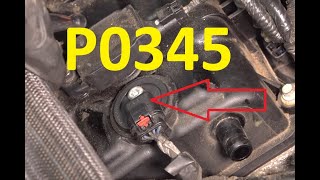
- The Bank 2 intake sensor is located at the front of the engine and is easy to access for testing or replacement.
- If the timing chains are the cause, this is a very expensive repair ($2000+) that should be done by a professional.
- Using high-quality full synthetic 5W-30 oil and changing it every 5,000 miles can help prolong the life of the timing components.
What's Unique About the 2009-2017 Chevrolet Traverse
On most vehicles, a P0345 code points to a simple sensor failure. However, on the 2009-2017 Traverse and its platform mates (Acadia, Enclave), this code is a notorious warning sign for premature timing chain failure. The earlier LLT engines (2009-2012) are especially known for this issue, which was so widespread that GM issued a Special Coverage Adjustment (#11340C) to extend the warranty for this specific repair. The problem was often linked to the original oil life monitor's long service intervals, leading to oil breakdown and accelerated chain wear, a fact corroborated in owner forums. Therefore, P0345 on this vehicle must be diagnosed with a high suspicion of a mechanical timing problem, not just an electrical one.
Generation note: The 2009-2017 model years cover the first generation of the Chevrolet Traverse. However, there was a significant engine update. The 2009-2012 models use the LLT 3.6L V6, which is highly susceptible to premature timing chain wear. The 2013-2017 models use the updated LFX 3.6L V6, which has an improved timing chain design but can still experience similar issues, though it is considered less frequent.
Symptoms You May Notice
- Check Engine Light is on
- Engine is difficult to start or cranks for a long time
- Engine stalls unexpectedly, either at idle or while driving
- Rough idle or engine stumbling
- Noticeable loss of engine power and poor acceleration
- Increased fuel consumption
- Rattling or scraping noise from the engine, especially on startup or acceleration (strong indicator of timing chain issue)
- Replacing only the camshaft position sensor when the true cause is a stretched timing chain. This is a very common mistake. The code will return, and it ignores the severe underlying mechanical problem that could lead to catastrophic engine failure.
Most Likely Causes
- Stretched Timing Chains 🔴 High Probability → Shop Engine Timing Chain This is a well-documented factory issue on the 3.6L V6, especially the 2009-2012 LLT engine. The original chains were prone to premature wear, a problem exacerbated by long oil change intervals. GM acknowledged this with TSBs and a special warranty extension (#11340C).
How to confirm: Check for other timing-related codes like P0008, P0009, P0016, P0017, P0018, or P0019. The presence of these codes alongside P0345 makes a stretched chain almost certain. A professional mechanic can use a scan tool to view 'Camshaft Position Variance' data; a sustained deviation of more than 4-6 degrees at idle confirms a timing issue.
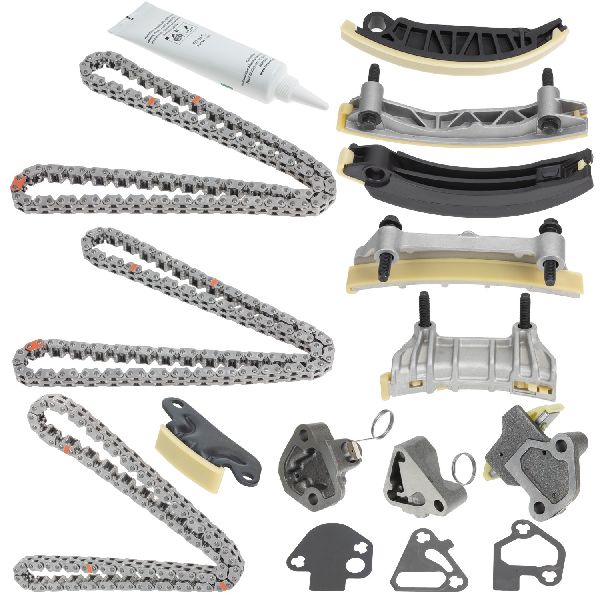
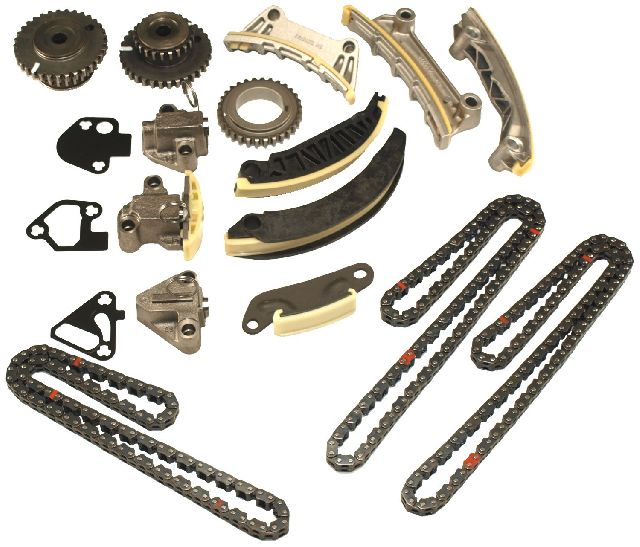
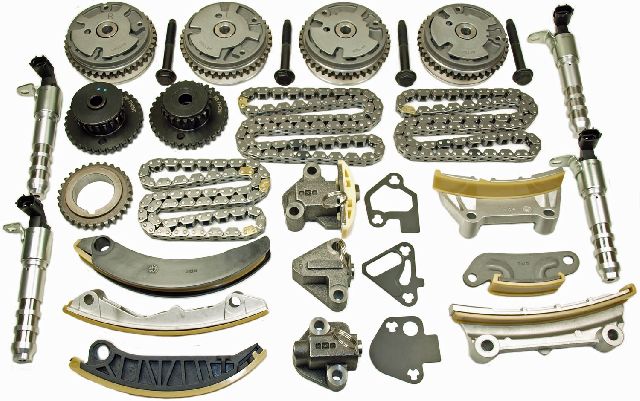
Typical fix: This is a major repair that requires replacing all three timing chains, all tensioners, and all guides. It is very labor-intensive (12+ hours) and often requires lowering the engine from the vehicle.
Est. part cost: $250-$600 - Failed Camshaft Position Sensor (Bank 2 Intake) 🟡 Medium Probability → Shop Engine Camshaft Position Sensor Sensors can fail from heat cycles and age. Since P0345 is for Bank 2, which is at the front of the engine, this sensor is exposed to significant heat from the radiator.
How to confirm: If P0345 is the only code present, swap the Bank 2 intake sensor with the Bank 2 exhaust sensor (they are identical parts). Clear the codes and drive. If the code changes to P0390 (Camshaft Position Sensor 'B' Circuit Bank 2), the sensor is bad. You can also test the sensor with a multimeter; it should show a change from 5V to 0V when metal is placed near it.
Typical fix: Replace the faulty camshaft position sensor. Since it's on Bank 2 (front), access is relatively easy without major disassembly.
Est. part cost: $25-$75 - Low or Dirty Engine Oil 🟡 Medium Probability The camshaft phasers (part of the VVT system) are hydraulically operated by engine oil. If the oil is low, dirty, or the wrong viscosity, the phasers cannot adjust cam timing correctly, which can trigger timing-related codes. The original Oil Life Monitor calibration was too optimistic, contributing to oil breakdown and chain wear.
How to confirm: Check the oil level on the dipstick and inspect its condition. If it's low or looks like sludge, this is a likely contributor. Note the mileage since the last oil change.
Typical fix: Perform an oil and filter change using a full synthetic 5W-30 oil that meets the GM Dexos1 specification. Clear the codes and see if they return. Adhere to a 5,000-mile oil change interval regardless of the oil life monitor.
Est. part cost: $50-$100 - Damaged Wiring or Connector ⚪ Low Probability The wiring harness for the Bank 2 sensor is near the front of the engine and can be susceptible to heat damage or physical abrasion over time.
How to confirm: Visually inspect the wiring harness and connector for the Bank 2 intake camshaft sensor. Look for any signs of corrosion, frayed wires, melted insulation, or loose pins at the connector.
Typical fix: Repair the damaged section of the wiring harness or replace the connector pigtail.
Est. part cost: $15-$50
Rare But Worth Checking
- Failed Camshaft Actuator Solenoid (VVT Solenoid): → Shop Engine Camshaft These solenoids control oil flow to the cam phasers. They can get clogged with sludge or fail electronically, causing timing issues that can set a P0345 code. Often, codes specific to the solenoids (like P0010 or P0020) will also be present.
- Failing Engine Control Module (ECM): This is extremely rare, but a faulty ECM can misinterpret the sensor's signal. All other possibilities, especially timing chains and sensors, should be exhausted before considering ECM replacement.
Diagnosis Steps
- Scan for all DTCs. Pay close attention to any other timing codes like P0008, P0009, or P0016-P0019. If present, a stretched timing chain is the most likely cause.
- Check the engine oil level and condition. If low or dirty, perform an oil change with the correct 5W-30 synthetic oil, clear the codes, and re-test.
- If P0345 is the only code, locate the intake camshaft position sensor on Bank 2 (front of the engine, near the radiator).
- Inspect the sensor's electrical connector and wiring for any visible damage, corrosion, or loose connections.
- To test the sensor, swap it with the adjacent exhaust camshaft position sensor on Bank 2. They are the same part. Clear the codes and drive the vehicle. If the code changes to P0390 (Bank 2 Exhaust), the sensor is confirmed to be faulty and should be replaced.
- If the code P0345 returns after the swap, the issue is not the sensor. The problem is likely in the wiring or is a deeper mechanical problem (timing chains).
- At this point, professional diagnosis with a high-end scan tool to monitor cam/crank deviation data is recommended. If the variance exceeds 4-6 degrees, it confirms a timing chain issue before attempting that major repair.
Parts You'll Likely Need
- Engine Camshaft Position Sensor
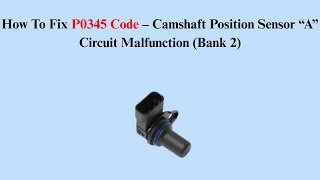
(OEM #12684186 (supersedes 12591720, 12615371))— This is the most likely part to replace if the cause is an isolated sensor failure. The four sensors on the 3.6L engine are identical.
Trusted brands: ACDelco (GM Genuine), NTK, Dorman
OEM price range: $35-$55
Aftermarket price range: $20-$40 - Engine Timing Chain Kit
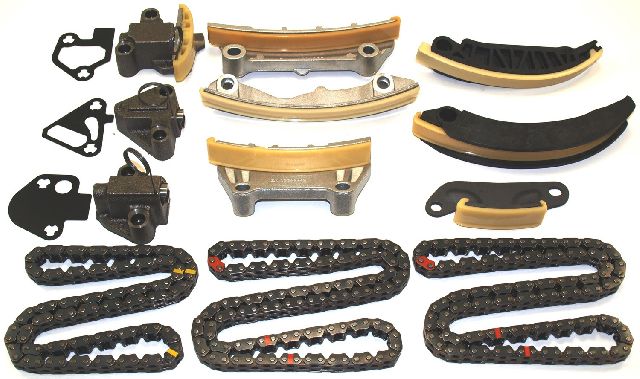
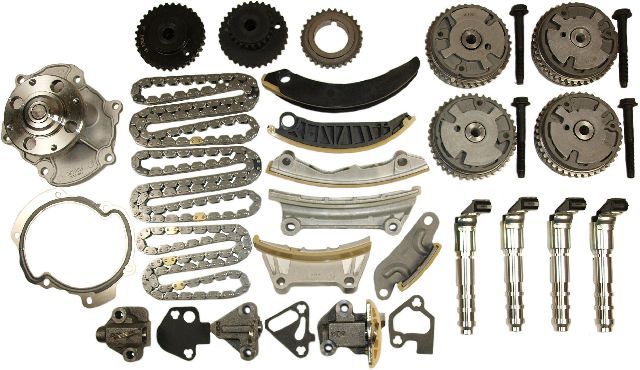
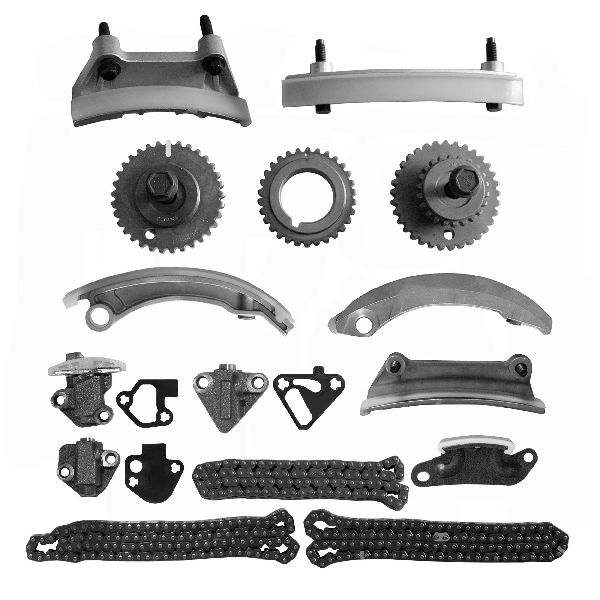
(OEM #12651450 (LLT Engine Kit))— This is required to fix the most common underlying cause of timing codes on this engine. A complete kit should include all three chains, tensioners, guides, and new sprocket gears.
Trusted brands: ACDelco (GM Genuine), Cloyes (9-0753S is a popular, complete aftermarket kit), Melling
OEM price range: $400-$600
Aftermarket price range: $250-$450
Related Codes That Often Appear With This One
- P0008 — This is a general engine position system performance code for Bank 1. When seen with P0345 on this engine, it is a near-certain indicator of a stretched primary timing chain affecting overall engine timing.
- P0017 — This code indicates a correlation error between the crankshaft and the Bank 1 exhaust camshaft. Seeing multiple correlation codes across different banks strongly points to a base timing issue (stretched chains) rather than a single sensor failure.
- P0340 — This is the equivalent code for the Bank 1 (rear) intake camshaft sensor. If you swap the Bank 2 sensor with the Bank 1 sensor for diagnosis and this code appears, it confirms the sensor you moved is faulty.
- P0390 — This code is for the Bank 2 (front) exhaust camshaft sensor. If you swap the intake and exhaust sensors on Bank 2 for diagnosis and this code appears, it confirms the intake sensor you moved is faulty.
Technical Service Bulletins (TSBs) & Recalls
- 11340C: Special Coverage Adjustment – Timing Chain Wear. Extended warranty coverage to 10 years/120,000 miles for premature timing chain wear on 2009 models. Also included an ECM reprogram to shorten oil life monitor intervals. This program is now expired.
- 14329 / SB-10056459-3388: Special Coverage Adjustment – Loss of Power Steering Assist. Addressed power steering pump wear causing loss of assist. Covered for 10 years/150,000 miles.
- 13091: Special Coverage Adjustment – Water Pump Leak. Addressed leaks from the water pump shaft seal, often due to low coolant levels. Covered for 10 years/120,000 miles.
- 12-06-01-009F: A general TSB covering various timing chain-related DTCs (including P0008, P0017, etc.) on High Feature V6 engines, providing updated diagnostic information.
Platform-Specific Known Issues
- Premature timing chain wear is the most significant known issue for this platform, particularly on 2009-2012 models with the LLT engine. This is not a routine maintenance item but a common, premature failure. Owners
Mechanic-Grade Diagnostic Values
- Camshaft Position Sensor (CMP) 3-wire Connector Voltage (Key On, Engine Off) — expected: Pin 1 (Low Reference): ~0V, Pin 2 (Signal): 4.8-5.2V, Pin 3 (5V Reference): 4.8-5.2V.. Failure: Absence of the 5V reference voltage or a signal voltage outside the specified range points to a wiring or ECM issue.
- Camshaft Position Sensor (CMP) Low Reference Circuit Resistance to Ground — expected: Less than 5.0 Ohms.. Failure: A reading higher than 5.0 Ohms indicates high resistance in the ground circuit, which can corrupt the sensor's signal.
- Cam/Crank Correlation Deviation Angle (Scan Tool Live Data) — expected: Stable and close to 0 degrees at idle.. Failure: A consistent deviation greater than 4-6 degrees at idle strongly points to a mechanical timing issue (stretched chain). The ECM will typically set a correlation code when the deviation exceeds 9-10 degrees.
Scan Tool Commands That Help
- GDS2 / Tech2: Camshaft Position Actuator Solenoid Control / Test — This bidirectional control manually activates the VVT solenoid while the engine is running. If the engine idle stumbles or stalls, it confirms the solenoid, its wiring, and the oil passages are likely working. No change in engine operation points to a faulty solenoid, clogged oil passage, or a failed cam phaser. This helps isolate the problem before tearing down the engine.
- GDS2 / Tech2: Camshaft Position Variance (Live Data Parameter) — This is the primary data PID the ECM uses to set timing correlation codes. Monitoring the desired vs. actual camshaft position in degrees for Bank 2 will show the deviation in real-time. A healthy engine should be near 0 degrees at idle. This is the definitive way to confirm a stretched timing chain electronically.
Wiring & Ground Locations
- G107 — On the upper left (driver's) side of the engine block or on the front of the right cylinder head.. This is a primary engine and ECM ground. A loose or corroded connection here can introduce electrical noise or voltage offsets, causing the ECM to misinterpret signals from the cam/crank sensors and set false codes.
- G110 — On the right rear of the engine, mounted to the back of the cylinder head, sometimes on a bracket above the power steering pump pressure hose.. This is a shared ground for the ECM (Connector X2, pins 1, 2, 4), TCM, and other critical components. A poor connection at G110 is a known issue that can cause a wide range of difficult-to-diagnose electrical problems, including sensor circuit codes.
- Camshaft Position Sensor Connector (Bank 2) — On the front valve cover, near the respective camshafts. Bank 2 is towards the radiator.. The connector has three pins: Pin 1 is the Low Reference (ground), Pin 2 is the Signal wire to the ECM, and Pin 3 is the 5V Reference from the ECM. Testing voltage and ground at this connector is a primary diagnostic step.
Real Owner Repair Stories
- PS Automotive, YouTube (2012 Chevrolet Traverse 3.6L V6) — Multiple timing correlation codes (P0016, P0017, P0018, P0019) and sluggish performance.
❌ Tried (didn't work) The video warns against immediately assuming the timing chains are the cause without further inspection.
✅ What actually fixed it The root cause was identified as a slipped crankshaft reluctor wheel. The mechanic demonstrated how to visually inspect the wheel's position through the crankshaft position sensor hole to confirm the slippage before tearing down the engine. - Reddit r/Cartalk user (2010 Chevy Traverse 3.6L, 155k miles) — P0008 and P0302 (Cylinder 2 Misfire).
❌ Tried (didn't work) Owner was quoted $2000 for an engine-out timing chain replacement and was seeking alternatives.
✅ What actually fixed it A technician confirmed that while difficult, the timing chain job can be done without completely dropping the subframe/engine. It requires removing the passenger side engine mount and using a jack to rock the engine forward to gain access to the front timing cover. This confirms the high labor cost and difficulty but provides a potential path for repair without a full engine drop.
OEM Part Supersession History
12615371→12684186— Part has been updated by the manufacturer.12591720→12615371 (then by 12684186)— Part has been updated by the manufacturer.
Model Year Variations Within This Range
- 2009-2012 (LLT Engine): Uses a Bosch ECM. These earlier engines are significantly more prone to premature timing chain stretch, which was the primary reason for GM's Special Coverage Adjustment #11340C.
- 2013-2017 (LFX Engine): Uses a Delphi ECM and features an improved timing chain design, integrated exhaust manifolds, and a redesigned intake manifold. While still susceptible to timing chain issues, the failure rate is considered lower than on the LLT engine.
Diagnostic Flowchart
Other Known Issues on This Vehicle
Issues unrelated to this code that are worth knowing about as an owner of this generation:
- Power Steering Pump and/or Steering Gear Failure 🔴 High — Very common, typically between 35,000 and 100,000 miles. Can manifest as a whining noise, difficulty turning at low speeds, or a sudden loss of power assist. (Ref: Special Coverage Adjustment #14329 (10 years/150,000 miles) was issued to cover pump replacement and system flush.)
- Leaking Water Pump 🟠 Medium — Common failure item, often leaking from the shaft seal or gasket. GM noted the issue was often due to operation with low coolant. (Ref: Special Coverage Adjustment #13091 (10 years/120,000 miles) was issued for this repair.)
- Transmission 3-5-R Wave Plate Failure 🔴 High — A well-known issue in the 6T75 automatic transmission, particularly in earlier models (approx. 2009-2012). A broken wave plate leads to loss of 3rd, 5th, and reverse gears, often requiring a transmission rebuild.
- EVAP Purge Valve Failure (P0496) 🟡 Low — A very common failure causing a check engine light with code P0496. Symptoms can include difficulty starting immediately after refueling.
- Worn/Leaking Front Struts 🟠 Medium — Front struts are a common wear item, leading to clunking noises over bumps, a bouncy ride, or fluid leaks visible on the strut body.
- Failing Master Window Switch 🟡 Low — The driver's side master window switch assembly is prone to failure, often due to moisture intrusion, causing one or more windows to become inoperable from that switch.
Used vs. New Parts: Buying Guide for This Vehicle
When a used part is the smart pick: A used camshaft position sensor from a low-mileage donor vehicle is a reasonable choice, as they are not a high-wear item and can be easily tested by swapping. Other simple electronic components like connectors or wiring pigtails are also good candidates for used parts.
Donor-vehicle mileage cap: roughly under 80000 miles for the part to have meaningful remaining life.
What to inspect on the donor part:
- For a sensor, ensure there is no physical damage to the housing or connector.
- Check for corrosion on the electrical pins.
- Verify the donor vehicle did not have timing-related trouble codes.
OEM-only on this vehicle (don't cheap out):
- Timing Chain Kit: This is a critical, high-labor repair. Using cheap, unproven aftermarket kits is a huge risk that could lead to catastrophic failure. Stick with GM Genuine/ACDelco or a top-tier, forum-vetted aftermarket brand.
Aftermarket brands forum-validated for this vehicle:
- Cloyes: Widely regarded as a high-quality OEM equivalent for timing chain kits; their 9-0753S kit is frequently recommended by professionals for this engine.
- Melling: Another trusted name for timing components and oil pumps.
- NTK/NGK: A reputable brand for camshaft and crankshaft position sensors.
Brands owners have reported issues with on this vehicle:
- Generic, unbranded timing chain kits from online marketplaces. Forum discussions frequently warn against using no-name kits due to questionable metallurgy and high failure rates, which can destroy the engine.
Real Owner Stories
Aggregated from forums and TSBs cited above. Mileages and costs reflect what owners reported in those sources.
2011 Chevrolet Traverse 3.6L V6
Symptoms: Multiple timing codes including P0011, P000B, and P0345 appearing simultaneously.
What fixed it: Investigation revealed a cam phaser bolt had come loose, a failure mode similar to those seen on related Acadia models.
Source hint: reddit.com/r/Justrolledintotheshop thread titled 'LY7 in 2011 Traverse. P0011, P000B, and P0345...'
2009 Chevrolet Traverse 3.6L V6
Symptoms: Check Engine Light with codes P0008 and P0017; owner discussed the high cost of repair and dealership interactions regarding special coverage.
What fixed it: Replacement of timing chains under the terms of the special coverage adjustment.
Source hint: traverseforum.com thread titled 'Timing chain discussion/CEL/P008 and P0017'
Related OBD-II Codes
Frequently Asked Questions
Is my 2009 Chevrolet Traverse covered for timing chain replacement under a special warranty?
I have P0345 along with P0008 and P0017 on my 2011 Traverse; what does this mean?
Can I just swap the sensors to see if the P0345 code is a simple sensor failure?
Does the Oil Life Monitor on my 2010 Traverse contribute to this P0345 code?
What type of oil should I use to prevent timing-related codes in my LFX engine?
Is the P0345 issue common on other vehicles besides the Traverse?
Helpful Videos
We Have This Part in Stock

The information in this article is provided for general reference and educational purposes only. Vehicle specifications, procedures, and part compatibility can vary by production date, trim level, and region. Always consult your vehicle's factory service manual and verify part numbers before purchasing or performing repairs. Safety-critical components such as airbags, seat belts, and braking systems should be installed by a qualified professional.
- Chevrolet Traverse:
- 🧭 Diagnostic Flowchart
- 🎬 Helpful Videos
- 🛍️ Shop This Part
- What's Unique About the 2009-2017 Chevrolet Traverse
- Symptoms You May Notice
- Most Likely Causes
- Rare But Worth Checking
- Diagnosis Steps
- Parts You'll Likely Need
- Related Codes That Often Appear With This One
- Technical Service Bulletins (TSBs) & Recalls
- Platform-Specific Known Issues
- Mechanic-Grade Diagnostic Values
- Scan Tool Commands That Help
- Wiring & Ground Locations
- Real Owner Repair Stories
- OEM Part Supersession History
- Model Year Variations Within This Range
- Other Known Issues on This Vehicle
- Used vs. New Parts: Buying Guide for This Vehicle
- Real Owner Stories
- 2011 Chevrolet Traverse 3.6L V6
- 2009 Chevrolet Traverse 3.6L V6
- Related OBD-II Codes
- Frequently Asked Questions
- 🎟️ Get 5% Off