

P0345 on 2011-2017 Dodge Durango: Camshaft Sensor Bank 2 Causes and Fixes
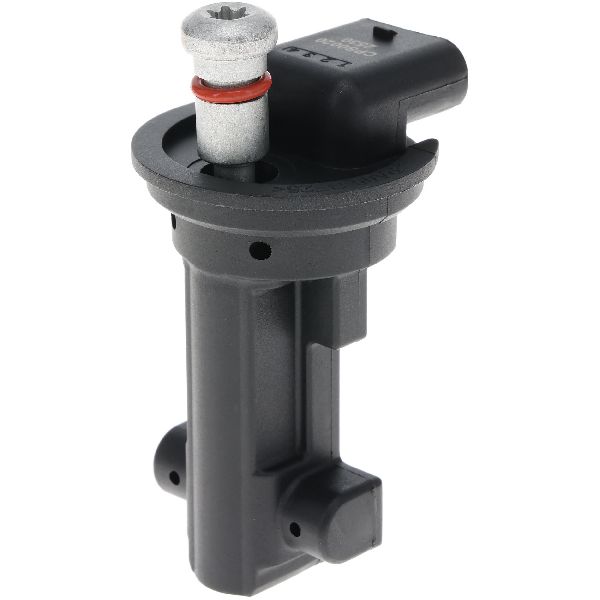
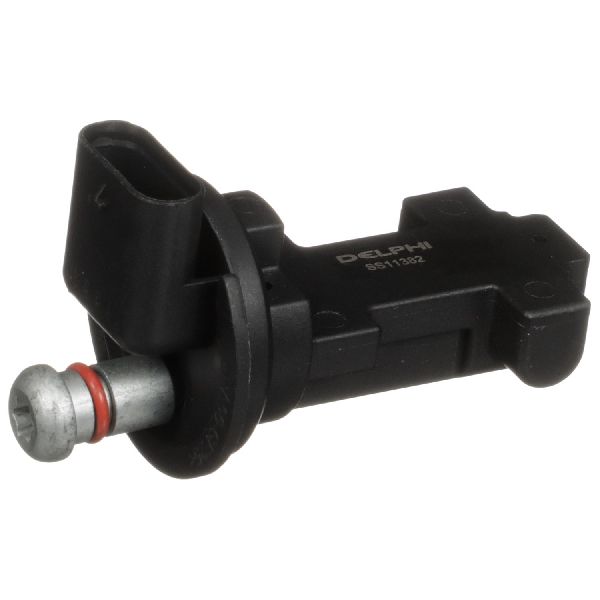
On the 3.6L V6 Durango, P0345 almost always points to a failed driver's side (Bank 2) camshaft position sensor. A Mopar sensor costs about $50-$100 and is a DIY-friendly fix. However, this code can also indicate deeper issues like failing cam phasers, a loose camshaft tone ring, or, most notably, low oil pressure in the head caused by loose oil gallery plugs—a known Pentastar issue often accompanied by code P06DD.
- P0345 specifically refers to the Bank 2 (driver's side) intake camshaft sensor, making it primarily a code for the 3.6L V6 engine.
- The most common fix is replacing the sensor (Mopar part #5149141AF), but always inspect the wiring and connector for damage first.
- Do not ignore this code; it causes serious drivability issues like stalling and hard starts.
- If a new sensor doesn't fix the code on a 3.6L V6, the problem could be a deeper mechanical issue like a failing cam phaser or an oil pressure problem specific to the Pentastar engine.
- The 5.7L HEMI has only one cam sensor (Mopar part #5149054AC) and should not throw a Bank 2-specific code.
What's Unique About the 2011-2017 Dodge Durango
This code is highly specific to the 3.6L Pentastar V6 engine, as it has two banks and multiple camshaft sensors. On the V6, Bank 2 is the driver's side. While the 5.7L HEMI V8 can technically set this code, it's less common as it only has one camshaft sensor; a fault there typically shows P0340 or P0344. For the 3.6L V6, this code is often more than just a bad sensor; it can be a symptom of known platform issues like failing VVT components (cam phasers) or oil pressure loss in the cylinder head, which Dodge has addressed in technical service bulletins. A widely documented cause is a loose or missing oil gallery plug under the driver's side valve cover, which starves the phasers of oil pressure and triggers cam codes.
Symptoms You May Notice
- Engine is hard to start or has long crank times
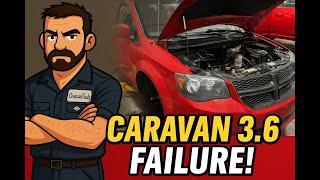
- Engine stalls unexpectedly, especially at idle 🎬 Watch: See how a worn camshaft causes stalling issues or low speeds
- Rough or unstable idle
- Significant lack of acceleration and reduced engine power
- Check Engine Light is on
- Worse than normal fuel economy
- Traction control light may illuminate and cruise control may be disabled
- Engine may enter 'limp mode,' refusing to shift out of a low gear
- Replacing the crankshaft position sensor. While related, a fault in the crank sensor has its own specific codes (P0335, P0339).
- Assuming the fix is always just the sensor on a 3.6L V6 without considering the possibility of a wiring or oil pressure issue, leading to the code returning.
- Replacing expensive cam phasers before checking for the simple, low-cost loose oil gallery plug under the valve cover.
Most Likely Causes
- Failed Bank 2 Camshaft Position Sensor (3.6L V6) 🔴 High Probability → Shop Engine Camshaft Position Sensor The sensor is located at the rear of the driver's side cylinder head, an area subject to high heat cycles. Valve cover gasket leaks can also drip oil onto the sensor and its connector, causing premature failure. Forum users and mechanics strongly advise against using cheap aftermarket sensors, as they often fail quickly or don't work at all.
How to confirm: Swap the Bank 2 (driver's side) sensor with the Bank 1 (passenger's side) sensor. Clear the codes. If the code changes to P0340 (Bank 1), the sensor is faulty. Note that accessing the Bank 1 sensor on the 3.6L is difficult and requires removing the upper intake manifold.
Typical fix: Replace the Bank 2 camshaft position sensor. It is highly recommended to use an OEM Mopar sensor (Part #5149141AF) to avoid compatibility issues.
Est. part cost: $50-$100 - Wiring or Connector Issue 🟡 Medium Probability Engine bay heat can make wires brittle over time. The connector pins can corrode or lose tension, and wires can chafe against other components, causing a short or open circuit. Oil contamination from leaks is also a common cause of connector failure.
How to confirm: Visually inspect the wiring harness and connector for the Bank 2 cam sensor. Check for frayed wires, corrosion, or loose pins. Use a multimeter to test for a 5-volt reference, good ground, and signal continuity back to the PCM.
Typical fix: Repair the damaged section of the harness or replace the connector pigtail.
Est. part cost: $15-$40 - Low Oil Pressure / Blocked Oil Galley (3.6L V6) 🟡 Medium Probability A well-documented issue on the 3.6L Pentastar is a missing or loose oil gallery plug (bolt) under the driver's side valve cover. This causes a significant loss of oil pressure to the VVT phasers in that cylinder head, leading to erratic cam timing that the sensor correctly reports as a fault. This is a prime suspect if code P06DD (Engine Oil Pressure Control Circuit Stuck Off) is also present.
How to confirm: If a new sensor and verified wiring do not fix the code, remove the driver's side valve cover and visually inspect the oil galley bolts to ensure they are present and torqued to specification (106 in-lbs).
Typical fix: Tighten or replace the missing oil galley plug. This is a labor-intensive but relatively low-cost parts fix that can prevent unnecessary replacement of expensive cam phasers.
Est. part cost: $5-$20 for the bolt, plus valve cover gaskets.
Rare But Worth Checking
- Failing Camshaft Phaser / VVT System (3.6L V6): → Shop Engine Camshaft If oil pressure is confirmed to be good, the cam phaser itself may have failed mechanically. Symptoms often include a rattling or knocking noise on cold starts. TSB #05048043AB specifically recommends replacing the phaser, actuator, and oil control valve (OCV) together when P0345 is diagnosed, indicating it's a known failure point.
- Stretched Timing Chain: → Shop Engine Timing Chain While not the most common cause, a stretched timing chain can cause the camshaft and crankshaft correlation to be off, leading to sensor circuit codes. This would typically be accompanied by other timing correlation codes (P0016, P0017, P0018) and possibly rattling noises.
- Damaged or Loose Camshaft Reluctor Ring (3.6L V6): → Shop Engine Camshaft The magnetic reluctor (or tone) ring on the camshaft, which the sensor reads, can become loose or damaged, especially if the camshaft has been recently replaced. This will cause an immediate P0345 code and likely a no-start or severe running issue. One owner reported this exact issue on a forum after a camshaft replacement. Technicians warn against using magnetic tools near the camshafts as it can damage the rings.
- Failed Powertrain Control Module (PCM): This is extremely rare. The PCM should only be considered after all other possibilities, including sensors, wiring, and mechanical timing components, have been exhaustively ruled out. TSB 18-049-20 does involve a software update for the PCM to make it less sensitive to intermittent sensor glitches.
Diagnosis Steps
- Read the code with an OBD-II scanner and note any other codes present, especially P06DD, P0390, or misfire codes.
- Check the engine oil level and condition. Low or dirty oil can disrupt the VVT system and cause multiple timing-related codes.
- For 3.6L V6: Locate the Bank 2 (driver's side) camshaft position sensor on the rear of the cylinder head.
- For 5.7L V8: If you see P0345, treat it as a generic cam sensor code (P0340). The single sensor is on the front timing cover. Listen carefully for any engine ticking that could indicate lifter failure.
- Inspect the sensor's electrical connector and wiring for any visible damage, corrosion, or oil contamination.
- Diagnostic Test (3.6L V6): If accessible, swap the Bank 2 sensor with the Bank 1 sensor. Clear codes and run the engine. If the code changes to P0340, the sensor is confirmed bad. If P0345 returns, the problem is in the wiring or is mechanical.
- If the sensor and wiring are good, the issue is likely mechanical. On a 3.6L, the next step is to remove the driver's side valve cover to inspect for loose/missing oil gallery plugs before condemning the cam phasers.
- If no oil pressure issue is found, advanced diagnosis is needed to check the cam phaser operation, timing chain alignment, and reluctor ring integrity. Professional diagnosis is recommended at this stage.
Parts You'll Likely Need
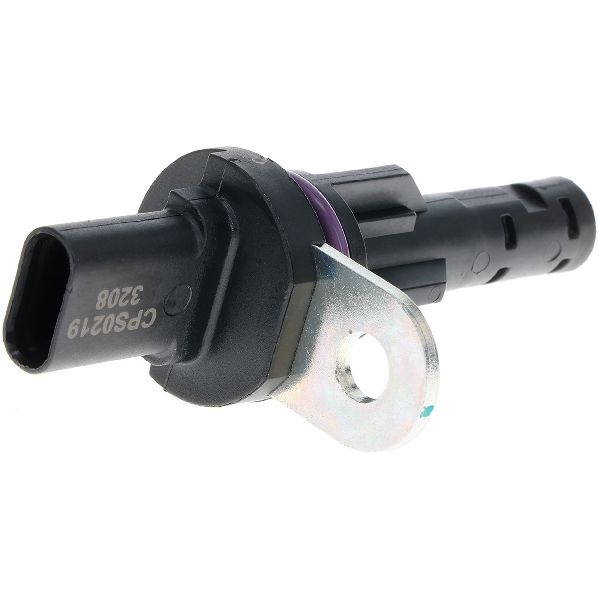
- Camshaft Position Sensor (3.6L V6)
(OEM #5149141AF (supersedes 5149141AE))— This is the most frequent cause for P0345 on the 3.6L engine. It's a common failure item due to heat and potential oil contamination.
Trusted brands: Mopar, Delphi, NGK/NTK
OEM price range: $50-$100
Aftermarket price range: $25-$60 - Camshaft Position Sensor (5.7L V8)
(OEM #5149054AC)— If the 5.7L HEMI has a cam sensor issue (typically P0340 or P0344), this is the part. P0345 is uncommon on the V8 but would point to this same sensor.
Related Codes That Often Appear With This One
- P0340 — This is the equivalent code for Bank 1 (passenger side). If you swap a bad Bank 2 sensor to Bank 1 for diagnosis, P0340 will appear. Seeing both codes at once could indicate a common wiring problem or a major timing issue.
- P06DD — This code means 'Engine Oil Pressure Control Circuit Stuck Off'. On the 3.6L Pentastar, seeing this with P0345 strongly points to an internal oil pressure problem (like a bad oil pump or, more commonly, a loose galley plug) as the root cause of the VVT system malfunction.
- P0390 — This is the code for the Bank 2 *exhaust* camshaft position sensor ('B' sensor). Since the 3.6L uses two separate sensors on each head (one for intake, one for exhaust), seeing P0345 and P0390 together strongly suggests a problem common to the entire bank, such as a wiring harness issue or a loss of oil pressure to that cylinder head.
- P0300, P0302, P0304, P0306 — These are misfire codes. P0300 is a random misfire, while the others are specific to the cylinders on Bank 2 (driver's side). Incorrect cam timing data will cause misfires on the affected bank.
Technical Service Bulletins (TSBs) & Recalls
- 18-049-20: A PCM software update that, among other things, changes the logic for setting camshaft position sensor DTCs to reduce false positives.
- A widely referenced but unnumbered TSB suggests replacing the camshaft phaser, actuator, and OCV together when P0345 is present on the 3.6L, indicating a known mechanical VVT issue.
Platform-Specific Known Issues
- On the 3.6L V6, TSB 18-049-20 was issued to update PCM software, which changes the sensitivity for setting camshaft sensor fault codes (including P0345) from a one-trip to a two-trip fault. This can prevent the light from illuminating due to a momentary glitch.
- A critical and widespread issue on 3.6L Pentastar engines is oil pressure loss to the cylinder heads due to loose or missing oil gallery plugs under the valve covers. This directly causes VVT system malfunctions that trigger P0345 and is often seen with code P06DD.
Mechanic-Grade Diagnostic Values
- Camshaft Position Sensor 5V Supply — expected: 4.5 - 5.0 Volts with key on, engine off.. Failure: Voltage below 4.5V or no voltage indicates a problem with the PCM or the wiring.
- Camshaft Position Sensor Ground Circuit Resistance — expected: Less than 5.0 ohms.. Failure: High resistance indicates a poor ground connection, which can cause erratic sensor readings.
- Camshaft Position Sensor Signal Voltage — expected: A square wave toggling between 0V and 5V as the engine is cranked or running.. Failure: A flat line at 0V or 5V, or a weak/noisy signal, indicates a failed sensor or a wiring issue.
Hidden / Shadow Codes Worth Checking
- Chrysler 'Star Case': Not a specific code, but an internal technician document. A relevant Star Case notes that mechanical cam phaser failures, such as a stuck internal lock pin, can cause what appear to be electrical circuit fault codes like P0340, P0345, etc. The sensor is correctly reporting an anomaly caused by the mechanical part. (see via This is not visible on a scan tool. It is a diagnostic note for technicians to consider when electrical testing does not find a fault.)
Scan Tool Commands That Help
- High-End OBD-II Scanner / wiTECH: Camshaft Position Sensor Relearn — After replacing a camshaft position sensor, some vehicles require a relearn procedure for the PCM to recognize the new sensor's characteristics. Failure to perform this can sometimes result in the code returning or poor running conditions, although it is not always required.
Wiring & Ground Locations
- Bank 2 Cam Sensor Connector — Rear of the driver's side cylinder head on the 3.6L V6.. This is the primary point of failure for wiring issues. The connector has three pins: Pin 1 (Signal), Pin 2 (Ground), and Pin 3 (5V Supply). Check for corrosion, oil contamination, and proper pin tension.
- G305 — A primary chassis ground located in the left front of the engine compartment, sometimes noted as being on the left fender area.. While not exclusively for the camshaft sensor, a poor main engine or chassis ground can create a floating voltage reference for multiple sensors, including the cam sensor, leading to erratic signals and difficult-to-diagnose electrical faults.
- PCM Connector C2 — This is one of the main connectors at the Powertrain Control Module (PCM).. The camshaft sensor's 5V supply and ground circuits originate here. A service manual procedure for checking circuit integrity involves measuring resistance between the sensor connector and the appropriate terminals at this PCM connector.
Real Owner Repair Stories
- JK-Forum.com user (2018 Jeep Wrangler JKU with 3.6L Pentastar (engine is identical to Durango's for this issue)) — Crank-no-start condition after an engine rebuild.
❌ Tried (didn't work) The user received codes for all four cam sensor positions (P0345, P0390, P0340, P0365)., Confirmed 4.9V supply and <3 ohms ground, which were within spec., Wiggling the harness produced no change., Disconnecting and reconnecting all sensors did not resolve the issue.
✅ What actually fixed it The thread ends before a final resolution is posted, but the evidence (all four cam sensors faulting simultaneously after a rebuild with good electrical readings) strongly points to a mechanical base timing error (e.g., timing chains off by a tooth) or a major harness issue common to both banks, not a sensor failure. - YouTube channel 'Online Mechanic Tips' (Vehicle with 3.6L Pentastar engine) — Multiple codes including P0345, P0394, P06DD.
❌ Tried (didn't work) The video notes that the cam phasers were already replaced with new OEM parts, so they were not the primary suspect.
✅ What actually fixed it Upon inspection, the mechanic found the oil galley plugs (bolts) under the valve cover were loose. One was described as being hand-tight. Tightening these bolts was identified as the likely fix, as their looseness disrupts oil pressure to the VVT system, causing the cam-related fault codes.
"I Checked Everything" — The Actual Cause
- The most common scenario fitting this pattern for P0345 is when the sensor and wiring test perfectly fine, yet the code persists. The actual cause is often a mechanical issue that the sensor is correctly reporting. The two main culprits are: 1) Loose oil galley plugs under the valve cover causing an oil pressure drop to the cam phasers, leading to erratic cam timing. 2) A mechanically failed cam phaser with a stuck internal lock pin, which prevents the camshaft from advancing or retarding as commanded by the PCM.
OEM Part Supersession History
5149141AE (and others)→5149141AF— Standard part revision and improvement over time.
Heads up: No major incompatibilities are noted; 5149141AF is the correct and current service part for the entire 2011-2017 range and beyond.
Model Year Variations Within This Range
- 2016-2017: For the 2016 model year, the 3.6L Pentastar engine was significantly upgraded. Changes included a two-stage variable valve lift (VVL) system in addition to the existing VVT, a higher compression ratio (11.3:1), and cooled EGR. While P0345 diagnosis remains similar, the VVT/VVL system is more complex, and technicians should be aware they are working on the 'upgrade' version of the engine.
- 2011-2013: Early Pentastar engines were known for a higher incidence of left cylinder head failure ('ticking' sound) due to premature valve guide wear. While this is a separate issue from P0345, it is a known problem for this specific year range and affects the same cylinder head (Bank 2) where the P0345 sensor is located.
Diagnostic Flowchart
Real Owner Stories
Aggregated from forums and TSBs cited above. Mileages and costs reflect what owners reported in those sources.
2012 Jeep Grand Cherokee 3.6L
Symptoms: Owner replaced a damaged camshaft, lifters, and rockers but still had a persistent P0345 code.
What fixed it: Reattached a loose magnetic tone ring that had fallen off the new camshaft, which was discovered after removing the valve cover.
Source hint: Reddit r/GrandCherokee - Help Please P0345
Jeep 3.6L
Symptoms: Chasing multiple cam codes including P0345, P0349, P0390, and P0394. Multiple shops replaced sensors (noting non-OEM parts were problematic), wiring harnesses, and the PCM without success.
What fixed it: Replaced a missing oil gallery plug under the valve cover, which was causing an oil pressure drop to the phasers.
Source hint: Our Next Chapter (Blog) - The Jeep is Finally….Fixed!(?) P0345, P0349, P0390, P0394
Related OBD-II Codes
Frequently Asked Questions
Is there a software update that fixes the P0345 code on my 3.6L Durango?
Should I use an aftermarket camshaft position sensor to save money?
I replaced the Bank 2 sensor on my 3.6L V6, but P0345 came back. What else could it be?
Where is the camshaft position sensor located on the 3.6L V6 versus the 5.7L V8?
Why do I have code P06DD along with P0345 on my Durango?
How can I confirm if the Bank 2 sensor is actually bad on my 3.6L V6 without buying a new one?
Helpful Videos
We Have This Part in Stock


The information in this article is provided for general reference and educational purposes only. Vehicle specifications, procedures, and part compatibility can vary by production date, trim level, and region. Always consult your vehicle's factory service manual and verify part numbers before purchasing or performing repairs. Safety-critical components such as airbags, seat belts, and braking systems should be installed by a qualified professional.
- Dodge Durango:
- 🧭 Diagnostic Flowchart
- 🎬 Helpful Videos
- 🛍️ Shop This Part
- What's Unique About the 2011-2017 Dodge Durango
- Symptoms You May Notice
- Most Likely Causes
- Rare But Worth Checking
- Diagnosis Steps
- Parts You'll Likely Need
- Related Codes That Often Appear With This One
- Technical Service Bulletins (TSBs) & Recalls
- Platform-Specific Known Issues
- Mechanic-Grade Diagnostic Values
- Hidden / Shadow Codes Worth Checking
- Scan Tool Commands That Help
- Wiring & Ground Locations
- Real Owner Repair Stories
- "I Checked Everything" — The Actual Cause
- OEM Part Supersession History
- Model Year Variations Within This Range
- Real Owner Stories
- 2012 Jeep Grand Cherokee 3.6L
- Jeep 3.6L
- Related OBD-II Codes
- Frequently Asked Questions
- 🎟️ Get 5% Off