

P0345 on 2009-2012 Ford Escape 3.0L V6: Camshaft Sensor Causes & Fixes
This code indicates a problem with the camshaft position sensor circuit for Bank 2. The most likely fix is replacing the Bank 2 camshaft position sensor, which is an affordable part and relatively easy to access on the front of the engine. Before replacing, inspect the wiring and connector for damage, and confirm battery voltage is stable, as low voltage during cranking can also trigger this code.
- P0345 on a 2009-2012 Escape 3.0L V6 points to the camshaft sensor circuit on the front cylinder bank (Bank 2).
- The most common fix is replacing the Bank 2 camshaft position sensor, a simple and inexpensive DIY job.
- Before buying parts, check the sensor's wiring and connector for damage and verify your battery and alternator are healthy.
- The Bank 2 sensor is located on the front of the engine near the radiator and is held in by a single 8mm bolt, making it easy to access.
What's Unique About the 2009-2012 Ford Escape
For the 2009-2012 Escape with the 3.0L V6, the P0345 code specifically points to the sensor on the front-facing (radiator side) cylinder bank, which is much easier to access than the Bank 1 sensor against the firewall. While timing chain issues can cause this code on other Ford engines, on the Duratec 30 it's more commonly a simple sensor or wiring failure. Owners often find this is a straightforward DIY repair due to the sensor's location. Some Ford diagnostic procedures note that on certain models, low voltage from a weak battery or starter can also trigger this code during engine cranking before a clear signal is established.
Symptoms You May Notice
- Check Engine Light is on
- Engine is hard to start or won't start
- Rough idle or stalling
- Noticeable loss of engine power
- Poor acceleration
- Increased fuel consumption
- Engine misfires
- Replacing the crankshaft position sensor instead of the camshaft position sensor.
- Replacing the wrong camshaft sensor (Bank 1 instead of Bank 2). P0340 is for Bank 1 (rear, by firewall), while P0345 is for Bank 2 (front, by radiator).
- Replacing the PCM when the actual fault is in the wiring or the sensor itself.
- Replacing the sensor repeatedly when the root cause is a wiring issue or electrical noise from the charging system.
Most Likely Causes
- Faulty Bank 2 Camshaft Position Sensor 🔴 High Probability → Shop Engine Camshaft Position Sensor Sensors can fail over time due to heat cycles and oil contamination. Given the age of the vehicle, sensor failure is a common electronic fault. Using a lower quality aftermarket sensor can also lead to premature failure; OEM-quality parts are recommended.
How to confirm: Swap the Bank 2 sensor (front) with the Bank 1 sensor (rear). If the code changes to P0340 (Bank 1), the sensor is bad. Alternatively, test the sensor's resistance with a multimeter; a functioning sensor typically reads between 250 to 1000 ohms. Visually inspect the sensor for oil contamination or physical damage.
Typical fix: Replace the Bank 2 camshaft position sensor.
Est. part cost: $20-$60 - Wiring Harness or Connector Issue 🟡 Medium Probability The wiring harness is exposed to engine heat and vibration, which can cause wires to become brittle, frayed, or for the connector pins to lose contact over time. The plastic connector itself can become brittle and fail to latch securely.
How to confirm: Visually inspect the wiring and connector leading to the Bank 2 sensor for any signs of damage, corrosion, or oil saturation. Check for a secure connection. Wiggle the harness with the engine running to see if it affects idle. Use a multimeter to check for continuity and proper voltage at the connector.
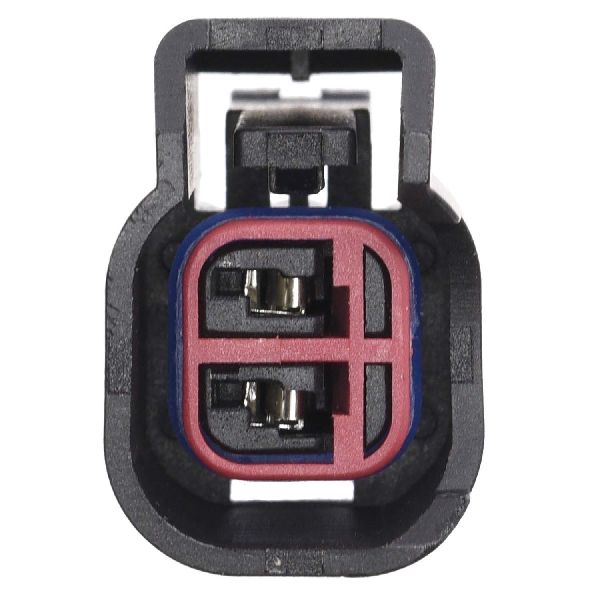
Typical fix: Repair the damaged section of wiring or replace the pigtail connector. The Motorcraft pigtail connector part number is WPT-1039.
Est. part cost: $10-$45 - Weak or Failing Battery / Alternator ⚪ Low Probability → Shop Alternator On some Ford models, low voltage during engine cranking can prevent the PCM from getting a clear signal from the cam sensor, triggering the code before the engine even starts properly. Ford has also previously issued TSBs for other engines regarding alternator electrical noise causing cam sensor codes.
How to confirm: Test the battery voltage with the engine off (should be ~12.4V or higher) and while running (should be ~13.5-14.5V). A parts store can perform a load test on the battery and alternator.
Typical fix: Replace the weak battery or faulty alternator.
Est. part cost: $150-$400
Rare But Worth Checking
- Stretched Timing Chain or Faulty VVT Components: → Shop Engine Timing Chain While less common than a sensor failure on the Duratec 30, if the timing chain has stretched or a phaser/solenoid has failed, the camshaft's actual position will not match what the PCM expects, triggering the code. This is a more complex and expensive repair. This engine is an interference design, so a failed timing chain can cause catastrophic engine damage.
- Failing Powertrain Control Module (PCM): This is extremely rare. On this specific platform, PCM failure is sometimes caused by a shorted ignition coil sending excessive voltage back to the module, which typically also triggers codes like P0351-P0356. Before considering PCM replacement, all other possibilities (sensor, wiring, timing) must be exhaustively ruled out.
- Damaged Reluctor Ring: The sensor reads teeth on a reluctor ring on the camshaft. If this ring is damaged, dirty, or has broken teeth, the sensor cannot get an accurate reading, which can trigger the code even with a good sensor. This requires significant disassembly to inspect.
Diagnosis Steps
- Verify the presence of code P0345 with an OBD-II scanner. Note any other codes present.
- Check battery voltage and the charging system. A healthy battery should read above 12.4V when off and 13.5-14.5V when running. A weak battery or faulty alternator can cause spurious codes on Fords.
- Locate the Bank 2 camshaft position sensor on the front (radiator side) of the 3.0L V6 engine, on the valve cover.
- Inspect the sensor's electrical connector and wiring for any visible damage, corrosion, or loose connections. Ensure the connector is seated firmly. The connector is a known point of failure.
- If wiring appears intact, perform a sensor swap. Unplug and remove the front (Bank 2) and rear (Bank 1) sensors. They are identical. Swap their positions. Clear the codes and drive the vehicle. If the code changes to P0340 (Bank 1), the sensor you moved to the rear is faulty.
- If the code P0345 returns after the swap, the problem is likely in the wiring, connector, or a mechanical issue on Bank 2.
- If the wiring looks good, the easiest next step is to replace the sensor. It is held in by a single 8mm bolt.
- After replacing the sensor, clear the codes with the scanner and test drive the vehicle to see if the code returns. Some vehicles may require a 'relearn' procedure, but often it's automatic.
- If the code persists, you may need to perform more advanced diagnostics, such as testing the wiring for continuity or checking for a signal with an oscilloscope. At this point, a mechanical issue like a timing chain problem or a faulty VCT solenoid should also be considered.
Parts You'll Likely Need
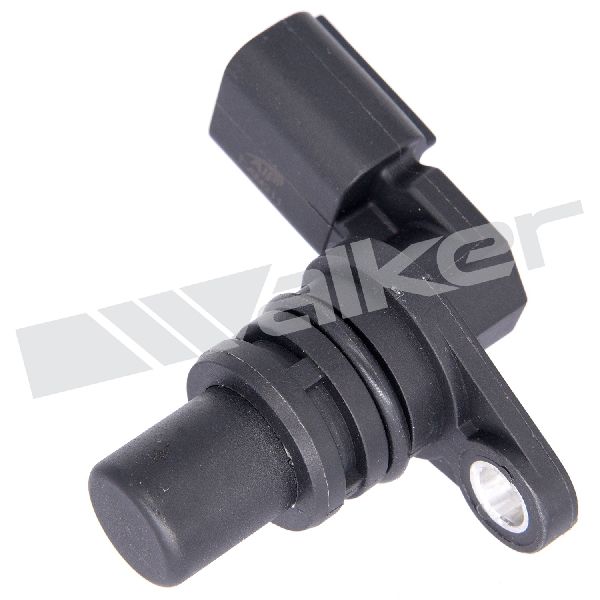
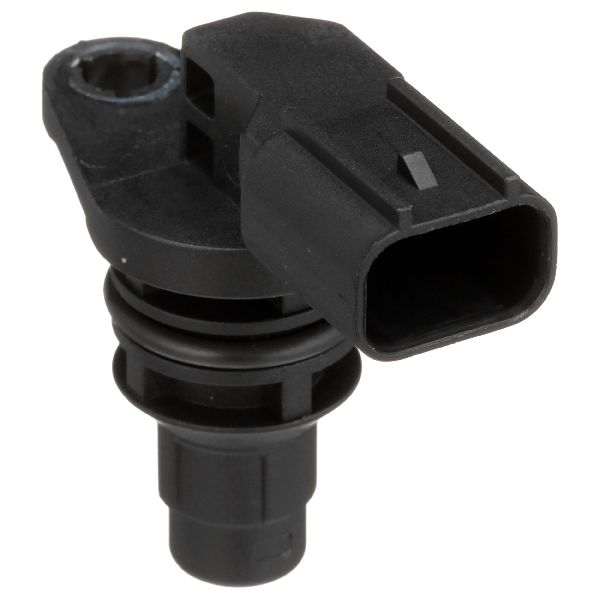
- Camshaft Position Sensor (Bank 2)
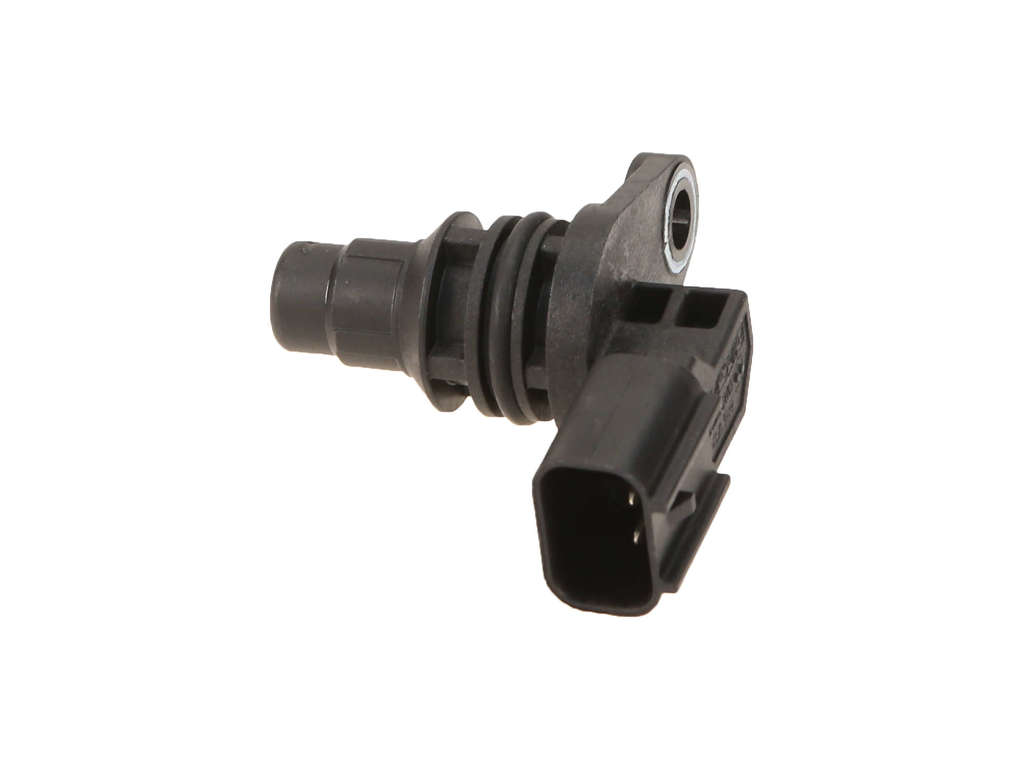
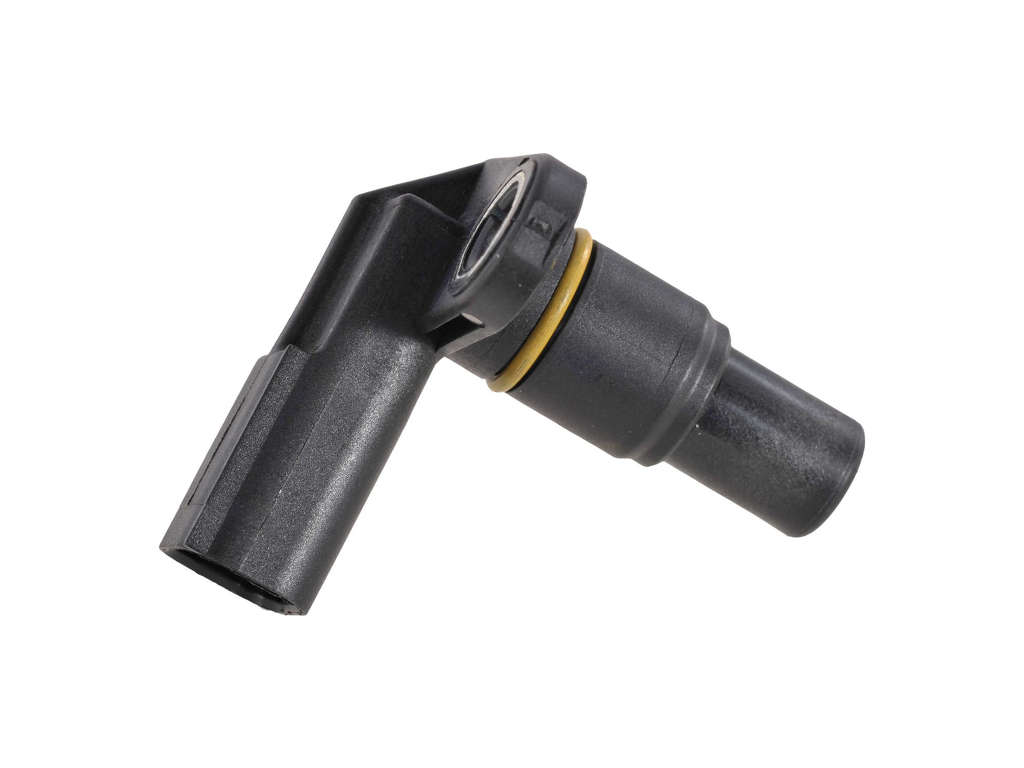
(OEM #Motorcraft DU-99)— This is the most common failure point for code P0345. The sensor itself wears out electronically over time.
Trusted brands: Motorcraft, Bosch, Delphi, NTK
OEM price range: $40-$70
Aftermarket price range: $20-$50 - Camshaft Position Sensor Connector Pigtail
(OEM #Motorcraft WPT-1039)— The connector can become brittle from heat and vibration, leading to a poor connection or broken locking tab. Replacing the pigtail is often necessary if the wiring is damaged near the connector.
Trusted brands: Motorcraft, Dorman, Standard Motor Products
OEM price range: $35-$45
Aftermarket price range: $10-$25
Related Codes That Often Appear With This One
- P0349 — P0349 indicates an intermittent signal from the same sensor circuit, often appearing with P0345 as the sensor begins to fail or if there is a loose connection.
- P0340 — If both P0340 (Bank 1) and P0345 (Bank 2) are present, it points towards a common issue affecting both sensors, such as a wiring problem, a weak battery, alternator noise, or a major timing issue.
- P0300, P0302, P0304, P0306 — Misfire codes for the cylinders on Bank 2 (P0302, P0304, P0306) or a random misfire code (P0300) can accompany P0345 because the PCM cannot properly time ignition and fuel injection for that bank without a valid cam signal.
Technical Service Bulletins (TSBs) & Recalls
- TSB 06-19-12: While for different engines (4.6L/5.4L 3V), this TSB highlights that Ford has previously investigated P0345 codes caused by alternator electrical noise, reinforcing the need to check the charging system.
- Ford Diagnostic Information: Some Ford diagnostic trees for camshaft position sensor codes (P0340-P0349) specifically mention checking for low battery voltage or starter issues as a potential cause.
Mechanic-Grade Diagnostic Values
- Camshaft Position Sensor (CMP) internal resistance — expected: 250 - 1,000 Ohms. Failure: Reading is open (OL) or outside the specified range.
- CMP sensor harness wire continuity (from sensor connector to PCM connector) — expected: < 5.0 Ohms. Failure: Resistance is higher than 5.0 Ohms, indicating an open or high resistance in the wire.
- CMP sensor harness wire short to ground — expected: > 10,000 Ohms (10kΩ). Failure: A low resistance reading indicates a short circuit to ground.
- Live Data: VCT Advance Error PID (VCT_ADV_ERR) — expected: Approximately 0° (+/- 5°) at warm idle in closed loop.. Failure: A consistent, significant deviation from 0° suggests a mechanical timing or VCT system problem, not a sensor issue.
Hidden / Shadow Codes Worth Checking
- N/A: No specific, commonly documented 'shadow' or 'hidden' sub-codes for P0345 are known for this platform. Advanced diagnosis relies on observing intermittent codes (e.g., P0349) and analyzing live data PIDs with a capable scanner like the Ford IDS, rather than looking for a hidden code. (see via Ford Integrated Diagnostic System (IDS) or high-end professional scan tools.)
Scan Tool Commands That Help
- Ford IDS (or equivalent professional scanner): Live Data PID Monitoring: VCT_ADV_ERR (Bank 2) — Use this after verifying the sensor and wiring are good. If the sensor is reporting a timing error (P0345) but the VCT Advance Error PID shows a large, persistent angle, it points to a mechanical issue with the VCT phaser or solenoid, confirming the sensor is likely working correctly and reporting a real problem.
- Ford IDS (or equivalent professional scanner): VCT Solenoid On/Off Command (Bidirectional Control) — To test the functionality of the VCT solenoid directly. Commanding the solenoid on and off at idle should cause a noticeable change in engine RPM and smoothness. If there is no change, the solenoid may be stuck or its oil passages may be clogged.
Wiring & Ground Locations
- G105 / G107 — Located at the front of the engine compartment, typically on the left and right sides of the core support or inner fender.. These are primary engine bay grounds. A corroded or loose connection at these points can introduce electrical noise or insufficient ground for various engine sensors, including the camshaft position sensor.
- G108 — Located at the rear of the engine, often on the firewall or a cylinder head.. This ground is a common termination point for harnesses at the rear/top of the engine. The Bank 1 (rear) sensor harness often uses this ground, and shared grounding paths can sometimes cause issues that manifest in codes for either bank.
- CMP Connector Pins — At the Bank 2 camshaft position sensor.. Testing should be done at the connector. For a typical 2-wire Ford sensor, one pin is the signal and the other is the signal return. For a 3-wire Hall-effect sensor, you will have Power, Ground, and Signal wires. Verifying voltage, ground, and signal integrity at these pins is the core of electrical diagnosis for this code.
Real Owner Repair Stories
- F150online Forums user (Ford F-150 (Note: Different vehicle, but uses similar Ford sensor/PCM logic)) — Persistent P0345 and P0349 codes that would return immediately after clearing, even though the truck was running well.
❌ Tried (didn't work) Clearing the codes with a programmer., Disconnecting the battery to reset the PCM.
✅ What actually fixed it The user had recently performed work on the cam phaser and suspected a bad sensor or connection. The final resolution was replacing the driver's side (Bank 2) camshaft position sensor, which permanently resolved the codes.
OEM Part Supersession History
9L8Z-6B288-B→Motorcraft DU-99— Standard part number update from Ford base part number to Motorcraft service part number.
Diagnostic Flowchart
Other Known Issues on This Vehicle
Issues unrelated to this code that are worth knowing about as an owner of this generation:
- 6F35 Transmission Failures 🔴 High — Widespread issue. Can manifest as harsh shifting, shuddering, slipping, or complete failure, sometimes before 100,000 miles. (Ref: Subject of a class-action lawsuit.)
- Rear Shock Tower Rust 🔴 High — Very common in regions that use road salt. The upper shock mount rusts through the wheel well, causing the shock to detach. Repair panels are available.
- Electronic Power Steering (EPAS) Failure 🔴 High — Common failure of the steering torque sensor can cause a sudden loss of power assist. (Ref: Ford Recall 14S05.)
- Leaking Driver's Side Axle Seal 🟠 Medium — A frequently reported issue where the transaxle seal on the driver's side leaks transmission fluid.
- Cracked ABS Tone Ring 🟡 Low — The front ABS tone rings can crack, causing the ABS and Traction Control lights to illuminate and the system to activate erratically at low speeds.
Used vs. New Parts: Buying Guide for This Vehicle
When a used part is the smart pick: For this repair, sourcing a used part is generally only recommended for the wiring pigtail connector (Motorcraft WPT-1039). If the original connector is broken, a used one from a junkyard vehicle is a viable and cost-effective option.
Donor-vehicle mileage cap: roughly under 150000 miles for the part to have meaningful remaining life.
What to inspect on the donor part:
- For a pigtail connector, ensure the plastic is not brittle or cracked.
- Check that the locking tab is intact and functional.
- Inspect the wire leads for any signs of cracking, fraying, or previous poor repairs.
- Avoid connectors that are saturated in oil or other fluids.
OEM-only on this vehicle (don't cheap out):
- Camshaft Position Sensor - While aftermarket sensors exist, the OEM Motorcraft sensor (DU-99) is strongly recommended for this vehicle. Forum and technician consensus suggests that cheap aftermarket sensors have a high failure rate, often causing the code to return shortly after repair, wasting time and money.
Aftermarket brands forum-validated for this vehicle:
- Bosch
- Delphi
- NTK/NGK
Brands owners have reported issues with on this vehicle:
- No-name or 'white-box' brands from online marketplaces without a clear warranty or positive reviews.
Real Owner Stories
Aggregated from forums and TSBs cited above. Mileages and costs reflect what owners reported in those sources.
2012 Ford Escape 3.0L V6
Symptoms: Vehicle stalled while driving on the highway with the battery light and CEL flashing. It would idle fine but die when revving it up. Scanner showed P0340 and P0345. Cylinder 4 was not firing.
What fixed it: Replacing the PCM (after replacing the alternator, spark plugs, coils, and camshaft sensors failed to resolve the issue).
Source hint: reddit.com r/MechanicAdvice
2010 Ford Fusion 3.0L V6
Symptoms: Multiple camshaft codes including P0341 and P0346 appearing simultaneously.
What fixed it: Investigation into common causes like wiring or oil condition affecting the VVT system, as dual sensor failure was unlikely.
Source hint: reddit.com r/MechanicAdvice
2009-2012 Ford Escape 3.0L V6
Symptoms: Check Engine Light with code P0345.
What fixed it: Replacing the front camshaft position sensor.
Source hint: escape-city.com
Ford V6 Owner Report
Symptoms: An owner reported the engine missing with codes P0345, P0349, and P0171 (NHTSA ODI #11163346).
What fixed it: While the specific fix wasn't detailed, these codes together often point to electrical or vacuum issues affecting bank performance.
Ford Cam Sensor Failure
Symptoms: A report describes a cam position sensor throwing code P0345; the part was replaced but the code returned a week later, followed by an engine rattle (NHTSA ODI #11568355).
What fixed it: In this case, the alternator, battery, and starter tested fine, suggesting the rattle and recurring code were likely due to internal mechanical timing components.
Related OBD-II Codes
Frequently Asked Questions
Where is the Bank 2 camshaft position sensor located on my 3.0L V6 Escape?
Does TSB 06-19-12 apply to my 2009-2012 Ford Escape?
Can I use an aftermarket sensor to fix the P0345 code?
Is there a specific replacement part for a damaged wiring connector?
How can I tell if the sensor is actually bad without buying a new one?
Could my Escape's hard starting and P0345 code be related to the battery?
Helpful Videos
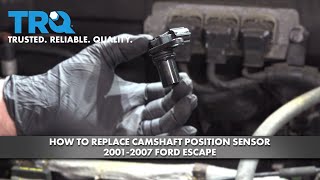
![How to Fix P0345 Engine Code in 3 Minutes [2 DIY Methods / Only $9.45]](https://img.youtube.com/vi/n2SF4lGzH58/mqdefault.jpg)
We Have This Part in Stock


The information in this article is provided for general reference and educational purposes only. Vehicle specifications, procedures, and part compatibility can vary by production date, trim level, and region. Always consult your vehicle's factory service manual and verify part numbers before purchasing or performing repairs. Safety-critical components such as airbags, seat belts, and braking systems should be installed by a qualified professional.
- Ford Escape:
- 🧭 Diagnostic Flowchart
- 🎬 Helpful Videos
- 🛍️ Shop This Part
- What's Unique About the 2009-2012 Ford Escape
- Symptoms You May Notice
- Most Likely Causes
- Rare But Worth Checking
- Diagnosis Steps
- Parts You'll Likely Need
- Related Codes That Often Appear With This One
- Technical Service Bulletins (TSBs) & Recalls
- Mechanic-Grade Diagnostic Values
- Hidden / Shadow Codes Worth Checking
- Scan Tool Commands That Help
- Wiring & Ground Locations
- Real Owner Repair Stories
- OEM Part Supersession History
- Other Known Issues on This Vehicle
- Used vs. New Parts: Buying Guide for This Vehicle
- Real Owner Stories
- 2012 Ford Escape 3.0L V6
- 2010 Ford Fusion 3.0L V6
- 2009-2012 Ford Escape 3.0L V6
- Ford V6 Owner Report
- Ford Cam Sensor Failure
- Related OBD-II Codes
- Frequently Asked Questions
- 🎟️ Get 5% Off