

P0345 on 2005-2006 Ford Expedition 5.4L: Cam Sensor, Wiring, or Timing Problem?
On a 2005-2006 Expedition with the 5.4L 3V engine, code P0345 often points to more than just a bad camshaft position sensor. It is frequently a symptom of deeper mechanical timing issues like failing VCT solenoids or cam phasers. Always diagnose beyond the sensor itself before replacing parts, as the root cause is often low oil pressure or worn timing components.
- On the 5.4L 3V engine, P0345 is more often a symptom of a mechanical timing problem (VCT solenoid, phaser) than a simple bad sensor.
- Always use the specified 5W-20 engine oil and a quality oil filter; low or incorrect oil pressure is a primary cause of VCT system faults.
- Before attempting an expensive timing job, rule out simpler causes like damaged wiring, a faulty VCT solenoid, or AC noise from the alternator (TSB 06-19-12).
- A key diagnostic step is to swap the sensors and then the VCT solenoids from bank to bank to see if the trouble code follows.
- If you hear ticking, knocking, or rattling from the front of the engine, it strongly suggests the root cause is worn timing components requiring a full timing service.
What's Unique About the 2005-2006 Ford Expedition
The 5.4L 3V Triton V8 engine in this generation of Expedition is notorious for issues within its Variable Camshaft Timing (VCT) system. While P0345 is an electrical circuit code, it is very often triggered by underlying mechanical problems. Issues like low oil pressure, failing VCT solenoids with clogged screens, worn timing chain guides, or faulty cam phasers can cause the camshaft's position to be out of sync with what the PCM expects. This discrepancy leads the computer to flag the sensor's signal as faulty, even though the sensor is merely reporting the mechanical error. Owners frequently misdiagnose the issue as a simple sensor failure, only to have the code return because the root cause is mechanical.
Symptoms You May Notice
- Check Engine Light is on
- Difficulty starting the engine or long crank times
- Engine stalling, especially at idle or when slowing to a stop.
- Rough idling
- A diesel-like ticking or knocking sound from the front of the engine, particularly at hot idle.
- Noticeable loss of power and acceleration
- Engine misfires (may be accompanied by other codes)
- Increased fuel consumption
- Replacing only the camshaft position sensor without checking for underlying mechanical timing issues or wiring faults. The code often returns because the sensor was only reporting the problem, not causing it.
- Assuming the alternator is good after a standard parts store test, which often does not check for the AC ripple specified in TSB 06-19-12.
Most Likely Causes
- Faulty Camshaft Position Sensor (CMP) 🟡 Medium Probability → Shop Engine Camshaft Position Sensor While the sensor can fail from heat and age, it's often replaced unnecessarily when the real problem lies elsewhere in the timing system. Forum users repeatedly report replacing the sensor does not fix the issue.
How to confirm: Swap the Bank 2 (driver's side) sensor with the Bank 1 (passenger's side) sensor. If the code changes to P0340 (Bank 1 fault), the sensor is bad. If the P0345 code returns, the sensor is likely not the issue. 🎬 Watch: How to test and swap your camshaft sensors.
Typical fix: Replace the Bank 2 camshaft position sensor. Use an OEM Motorcraft part to avoid issues with aftermarket sensor quality.
Est. part cost: $20-$60 - Damaged Wiring or Connector 🟡 Medium Probability The engine heat can make wiring brittle, and the connector itself can fail. A common, hard-to-find issue is a wire breaking *inside* the insulation right at the connector, which isn't visually apparent. Previous repairs can also lead to poor connections or swapped wires.
How to confirm: Visually inspect the wiring harness and connector for the Bank 2 CMP sensor for any signs of damage, corrosion, or loose pins. Gently tug on each wire at the connector to see if it pulls out, which indicates an internal break. Check for voltage at the connector with a multimeter; you should see over 10V on each wire with the key on.
Typical fix: Repair the damaged section of the harness or replace the connector pigtail.
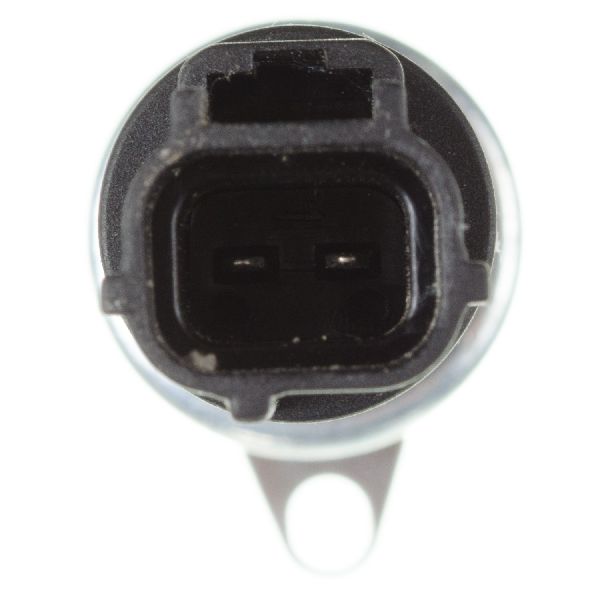
Est. part cost: $15-$40 - Failing VCT Solenoid 🔴 High Probability The VCT solenoids control oil flow to the cam phasers. They are prone to clogging from dirty oil or sludge, and their fine mesh screens can tear, causing them to stick. This prevents proper camshaft adjustment, triggering the P0345 code. Ford released an updated solenoid design to improve reliability.
How to confirm: You can test the solenoid's resistance or apply 12V to see if it actuates. A common diagnostic step is to swap the Bank 1 and Bank 2 solenoids to see if the trouble code follows to the other bank (e.g., P0012/P0022). On 2005-2006 models, this can be done without removing the valve cover. 🎬 See this walkthrough on replacing the VCT solenoid.
Typical fix: Replace the VCT solenoid on Bank 2. It is highly recommended to use OEM Motorcraft parts (updated part #8L3Z-6M280-B) and change the engine oil and filter at the same time.
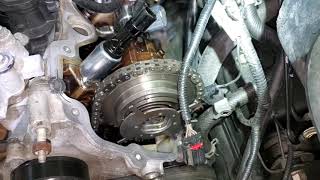
Est. part cost: $40-$90 - Worn Timing Components (Cam Phasers, Chains, Guides) 🔴 High Probability This is a well-documented, widespread issue on the 5.4L 3V engine. Plastic timing chain guides break, sending debris into the oil pan and potentially clogging the oil pump pickup tube. Chains stretch, and the locking pins inside the cam phasers fail, causing camshaft timing to become erratic. The resulting slack or incorrect cam position is detected by the CMP sensor, setting the code.
How to confirm: Listen for a distinct ticking or knocking sound from the front of the engine, especially at hot idle. Diagnosis requires removing the valve covers to inspect the phasers and timing components for excessive play or damage. A full diagnosis may require monitoring cam error PIDs with a scan tool like FORScan.
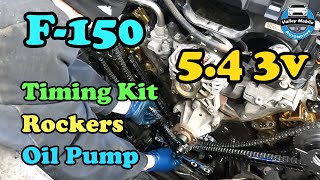
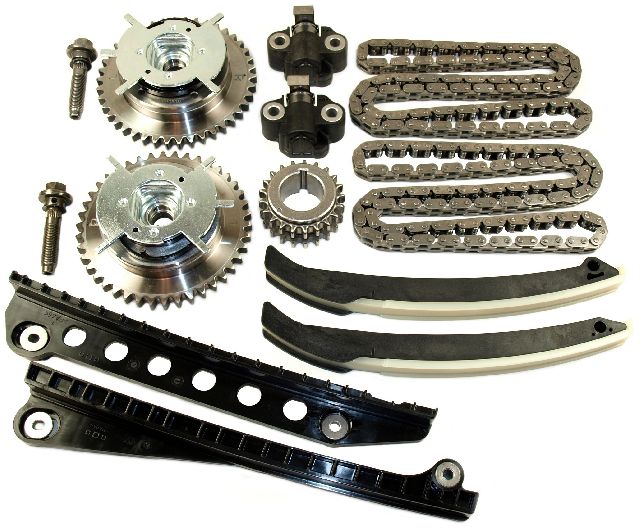
Typical fix: A complete timing job is required, replacing the timing chains, guides, tensioners, and cam phasers. A high-volume oil pump (like the Melling M340HV) is also a highly recommended upgrade during this extensive repair to improve oil pressure to the VCT system. 🎬 Watch: Complete guide to replacing timing chains and phasers.
Est. part cost: $500-$1200
Rare But Worth Checking
- Failing Alternator: → Shop Alternator A faulty alternator can introduce electrical noise (AC ripple) into the vehicle's electrical system, which can interfere with the CMP sensor signal. Ford issued TSB 06-19-12 regarding this issue for P0345/P0349 codes. Before diving into timing components, it's worth having the alternator tested specifically for AC ripple voltage under load, not just for charging output, as standard tests may miss this fault.
- Damaged Reluctor Wheel: The reluctor wheel (or tone ring) is what the camshaft position sensor reads. If a tooth on the wheel is damaged, bent, or has debris on it, it will send an erratic signal, causing a P0345 code. This is uncommon but can happen, especially if prior engine work was performed.
- Low or Incorrect Viscosity Oil: The entire VCT system is dependent on oil pressure. Using oil other than the recommended 5W-20 viscosity, or having a low oil level, can starve the VCT components and cause timing-related codes. Some owners on forums have reported codes appearing when the oil level was low and disappearing after topping it off.
Diagnosis Steps
- Check for other DTCs. Codes like P0022 or P0349 provide valuable clues that the problem is likely mechanical or intermittent.
- Inspect the engine oil level and condition. Ensure the correct 5W-20 oil is being used and the level is full.
- Visually inspect the wiring and connector for the Bank 2 (driver's side) camshaft position sensor. Gently pull on the wires at the connector to check for hidden breaks inside the insulation.
- Test the alternator for excessive AC ripple voltage, as per TSB 06-19-12. This requires an oscilloscope or a specialized alternator test under load.
- Swap the camshaft position sensors between Bank 1 and Bank 2. Clear codes and run the engine. If the code changes to P0340, the sensor is faulty. If P0345 returns, the problem is elsewhere.
- If the sensor is good, swap the VCT solenoids between Bank 1 and Bank 2. Clear codes and run the engine. If the code moves or changes to a Bank 1 timing code (like P0012), the VCT solenoid is the culprit.
- If the code persists, the issue is likely a deeper mechanical problem. Listen for ticking/knocking noises from the front of the engine, especially when warm.
- The final step is to remove the Bank 2 valve cover to physically inspect the cam phaser, timing chain, and guides for damage or slack. This is an invasive step and confirms a major timing job is needed.
Parts You'll Likely Need
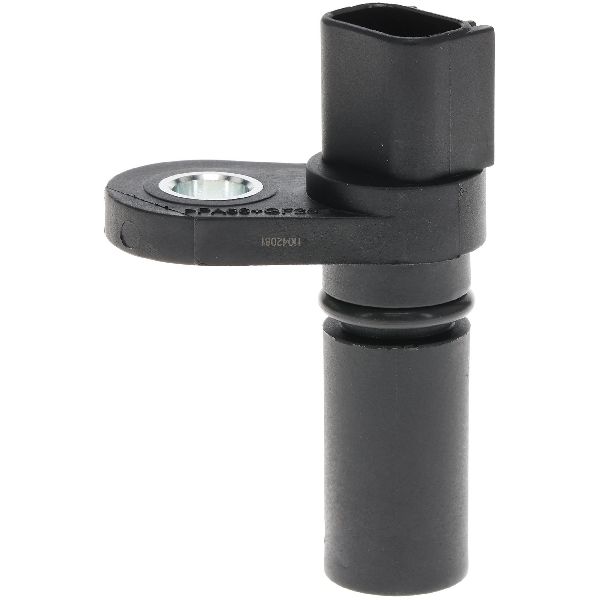
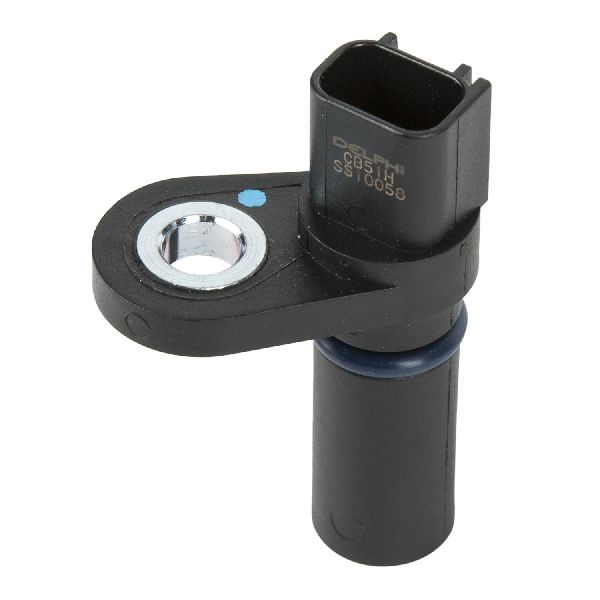
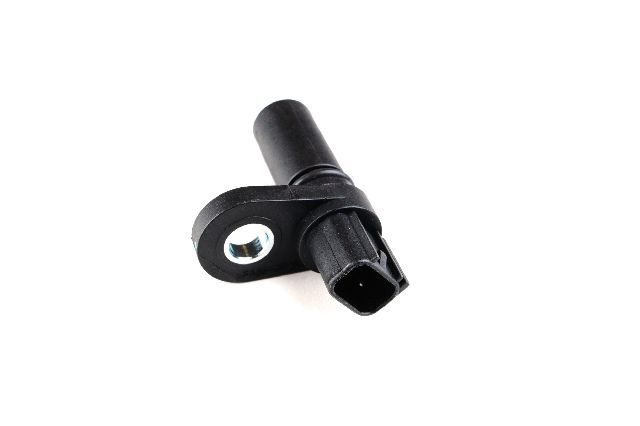
- Camshaft Position Sensor (Bank 2)
(OEM #3L3Z-6C535-AA (Motorcraft DU-51))— This is the simplest and cheapest potential fix, though often not the correct one. It's a common first step in diagnosis. - VCT Solenoid (Bank 2)
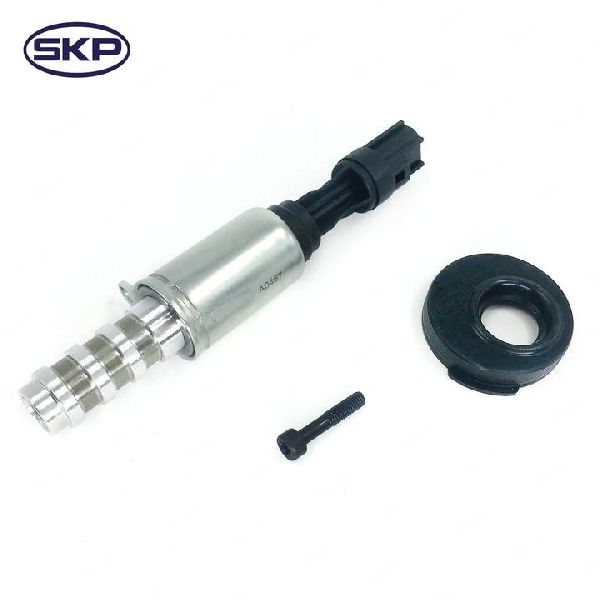
(OEM #8L3Z-6M280-B)— This is a very frequent cause of P0345 on the 5.4L 3V. The solenoid gets clogged or fails, disrupting cam timing. Replacing it is a high-probability fix if the sensor and wiring are good. - Timing Chain Kit (Chains, Phasers, Guides, Tensioners) — This is the 'worst-case' but very common scenario. Worn guides, stretched chains, and failed phasers are the root cause of many VCT-related codes on this engine.
Related Codes That Often Appear With This One
- P0349 — This code indicates an intermittent signal from the same Bank 2 camshaft position sensor, often appearing alongside P0345 as the problem develops or points to a wiring/connection issue.
- P0022 — This code means 'Camshaft Position 'A' - Timing Over-Retarded (Bank 2)'. It often appears with P0345 because it points directly to a mechanical timing problem on the same bank, such as a stuck VCT solenoid or bad phaser, corroborating that the issue is likely mechanical.
- P0340 / P0344 — These are the equivalent codes for Bank 1 (passenger side). Seeing them along with Bank 2 codes could indicate a systemic problem like low oil pressure, a failing alternator causing widespread electrical noise, or issues with both timing banks.
- P0300, P0302, P0305, P0306, P0307, P0308 — These are random or specific misfire codes for cylinders on Bank 2 (and sometimes Bank 1). Incorrect camshaft timing from a VCT or phaser issue will directly cause misfires on the affected bank.
Technical Service Bulletins (TSBs) & Recalls
- TSB 06-19-12 - DTC P0340/P0344/P0345/P0349: This Technical Service Bulletin addresses DTCs P0345/P0349 on some 2005-2006 Expedition/Navigator vehicles. It states the cause may be a malfunctioning diode or open phase in the generator (alternator), causing AC ripple voltage that interferes with the camshaft position sensor signal. It advises against replacing the generator unless a specific frequency test (using an oscilloscope) confirms the fault. A standard voltage/amperage test is not sufficient.
Platform-Specific Known Issues
- Owner Experience: Chasing P0345 and P0349: On F150forum.com, a user with a 2005 5.4L reported getting codes P0345 and P0349 without any noticeable performance issues initially. The advice given was to start with the inexpensive cam position sensor but be prepared for it to be a more complex issue like a VCT solenoid or mechanical timing components. This highlights the common diagnostic path owners take.
- Real-World Repair: Alternator Failure: → Shop Alternator A user on the Expedition Forum mentioned that after getting a P0345 code, the dealer suspected the alternator. After replacement, the issue was resolved, confirming the scenario described in TSB 06-19-12.
- Real-World Repair: Broken Wire in Harness: A detailed thread on F150forum.com showed an owner who solved a persistent P0345 code by discovering a broken wire inside the insulation at the sensor connector. The wire looked fine externally but had separated internally, causing an intermittent connection. This is a crucial check before suspecting major mechanical failure.
- Real-World Repair: Full Timing Job: A user on an F-150 forum detailed their experience with a full timing job on a 5.4L 3V engine with 172,000 miles. The symptoms included knocking and ticking. The repair involved replacing phasers, chains, guides, tensioners, VCTs, and upgrading to a Melling high-velocity oil pump. The total parts cost was around $2,400, and it took two people a full day to complete. This is a realistic depiction of the 'worst-case' scenario for this code.
Mechanic-Grade Diagnostic Values
- Camshaft Position (CMP) Sensor Resistance — expected: 205 to 579 Ohms. Failure: A reading outside this range indicates a faulty sensor.
- Camshaft Position (CMP) Sensor AC Voltage Output — expected: Greater than 0.25 Volts AC. Failure: Voltage below 0.25V AC while the engine is held at 2,500 RPM suggests a weak or failing sensor.
- VCT Solenoid Internal Resistance — expected: 5 to 15 Ohms. Failure: A reading outside this range, or an open circuit, indicates a bad solenoid coil.
- CMP Sensor Connector Voltage (Key On, Engine Off) — expected: Greater than 10 Volts DC on each wire. Failure: Voltage below 10V on either wire points to a problem in the wiring harness or a poor connection back to the PCM.
- Alternator AC Ripple Frequency (at idle, under load) — expected: Greater than 500 Hz. Failure: A frequency reading lower than 500 Hz at idle indicates a faulty alternator diode pack, which can cause electrical interference.
- FORScan Live Data PID: VCT Error (RCAM, CAMERRR) — expected: Close to 0 degrees at hot idle.. Failure: A large, persistent, or oscillating error value (e.g., +/- 30 degrees) indicates a mechanical problem with the phaser or a stuck VCT solenoid.
Scan Tool Commands That Help
- FORScan / Ford IDS: Monitor VCT PIDs (RCAM, VCT_ADV, CAMERRR) — Use this to get a live view of what the camshaft is doing. After clearing codes, monitor the cam error PIDs at hot idle. If Bank 2 (driver's side) shows a large or erratic error value while Bank 1 is stable, it strongly suggests a mechanical or hydraulic issue on Bank 2, not just a sensor fault.
- FORScan / Ford IDS: VCT Solenoid On/Off Command (Bidirectional Control) — This command allows you to manually activate and deactivate the VCT solenoids with the engine running. By commanding the solenoid on and off, you can watch the corresponding cam error PID to see if the phaser responds. If the angle doesn't change, it points to a stuck solenoid, clogged oil passage, or a failed phaser.
Wiring & Ground Locations
- Bank 2 CMP Sensor Connector — On the front of the driver's side valve cover.. This connector and its pigtail are common failure points. Wires can become brittle from heat and break internally, or the pins can lose tension. A previous repair with swapped wires is a known, hard-to-diagnose cause of this code.
- G100 / G101 — Typically located on the right side (passenger side) of the engine compartment, near the front.. These are major engine and PCM ground points. A loose or corroded connection here can create electrical noise or voltage drops that affect multiple sensors, including the CMP, leading to false codes.
- Firewall to Engine Block Ground Strap — A braided strap typically running from the firewall on the passenger side to a stud on the back of the cylinder head.. This is a critical body-to-engine ground. If it's loose, broken, or corroded, the PCM and its sensors may not have a stable ground reference, causing erratic behavior and codes like P0345.
- PCM Connector C175b — This is one of the main connectors at the Powertrain Control Module, located in the engine bay near the firewall.. The Bank 2 CMP sensor wires terminate here. Specifically, for a 2005 F-150 (similar wiring), the signal wire goes to pin 43. A continuity check from the sensor connector to this pin is a definitive way to test the wiring harness integrity.
Real Owner Repair Stories
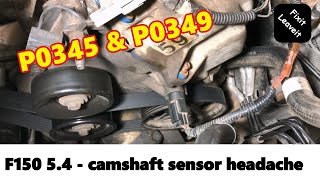
- YouTube user 'Fix It Or Leave It' (Ford F-150 with 5.4L 3V engine) — P0345 and P0349 codes, rough running.
❌ Tried (didn't work) Testing the alternator for AC ripple (it was good)., Testing the CMP sensor resistance (it was within spec at ~370 ohms)., Testing the CMP sensor AC voltage output (it was good at 1.1V AC at 2500 RPM).
✅ What actually fixed it The previous owner had replaced the sensor connector pigtail and swapped the two wires. The green factory wire should go to the flat side of the connector, but it had been wired to the rounded side. Correcting the wiring order immediately fixed the problem. - Ford Truck Enthusiasts forum user (2005 Ford F-150 5.4L 3V) — P0345 after engine swap where new timing components (chains, tensioners, guides, oil pump) were installed.
❌ Tried (didn't work) Replacing the Bank 2 CMP sensor (tried two different ones)., Clearing codes (P0345 and P0349 would return).
✅ What actually fixed it The user's final update indicated the timing chain had likely jumped a tooth during installation. Another user with identical codes (P0345, P0349, P0022) confirmed their fix was replacing the oil pump to restore proper oil pressure to the VCT system, which had been low at warm idle. - Ford F150 Forum user (2004 Ford F-150 5.4L 3V) — Sudden very rough idle, RPMs hunting, P0345 code.
❌ Tried (didn't work) Replacing the Bank 2 cam position sensor.
✅ What actually fixed it The user reported that unplugging the Bank 2 cam sensor made the engine run smoothly, while plugging it back in caused immediate rough running. While the original poster did not provide a final fix, another user with the exact same symptoms after a timing job asked for the solution, implying this is a common scenario pointing towards a wiring or mechanical timing issue that the PCM is trying to compensate for (and failing) when the sensor is plugged in. - NHTSA ODI #11568355 — An owner reported a cam position sensor throwing code P0345. They replaced the part, but the code returned a week later despite the alternator, battery, and starter testing fine. The engine started rattling a week after the code returned.
- NHTSA ODI #11163346 — A report describes a vehicle where the motor is missing and the computer has flagged codes P0345, P0349, and P0171.
OEM Part Supersession History
3L3Z-6M280-EA→8L3Z-6M280-A, then 8L3Z-6M280-B— The original VCT solenoids were prone to failure from oil contamination and screen tearing. The updated design (ending in -B) is more robust and considered the standard replacement.
Heads up: Using the older part numbers is not recommended as they are prone to the original failure mode. 8L3Z-6M280-B is the correct and most reliable OEM replacement.
Model Year Variations Within This Range
- 2006: Ford reportedly used slightly different fuel injectors and vacuum hose routing for the 2006 model year compared to 2004-2005 to address issues with faulty injectors in the 2005 models. While not directly related to the P0345 code, it's a known engine variation within this specific vehicle range.
- 2005 models built before 12/14/2005: TSB 06-19-12, which addresses alternator ripple causing P0340/P0345 codes, specifically calls out Expedition/Navigator vehicles built prior to this date. This suggests a production change may have been implemented to address the issue.
Diagnostic Flowchart
Real Owner Stories
Aggregated from forums and TSBs cited above. Mileages and costs reflect what owners reported in those sources.
2005 Ford F-150 5.4L 3V
Symptoms: Triggered codes P0345 and P0349 without any noticeable performance issues initially.
What fixed it: Started with the inexpensive cam position sensor, but the diagnostic path ultimately pointed toward a more complex issue like a VCT solenoid or mechanical timing components.
Source hint: F150forum.com
2005-2006 Ford Expedition 5.4L 3V
Symptoms: Triggered a P0345 code.
What fixed it: The dealer suspected the alternator. After replacing the alternator, the issue was resolved, confirming the scenario described in TSB 06-19-12.
Source hint: Expedition Forum
Ford F-150 5.4L 3V
Symptoms: Experienced a persistent P0345 code.
What fixed it: Discovered a broken wire inside the insulation at the sensor connector. The wire looked fine externally but had separated internally, causing an intermittent connection. Repaired the wiring harness.
Source hint: F150forum.com
Ford F-150 5.4L 3V — 172000 miles
Symptoms: Engine exhibited knocking and ticking noises.
What fixed it: Performed a full timing job, which involved replacing phasers, chains, guides, tensioners, VCTs, and upgrading to a Melling high-velocity oil pump. Took two people a full day to complete.
Cost: $2400
Source hint: F-150 forum
Related OBD-II Codes
Frequently Asked Questions
Does TSB 06-19-12 apply to my 2005-2006 Ford Expedition for code P0345?
Should I just replace the Bank 2 camshaft position sensor right away?
What updated parts should I use if I need to replace the VCT solenoid on my 5.4L 3V?
Why does my 5.4L engine sound like a diesel at hot idle with this code?
If I have to do a full timing job, are there any recommended upgrades for the Expedition?
Helpful Videos

We Have This Part in Stock

The information in this article is provided for general reference and educational purposes only. Vehicle specifications, procedures, and part compatibility can vary by production date, trim level, and region. Always consult your vehicle's factory service manual and verify part numbers before purchasing or performing repairs. Safety-critical components such as airbags, seat belts, and braking systems should be installed by a qualified professional.
- Ford Expedition:
- 🧭 Diagnostic Flowchart
- 🎬 Helpful Videos
- 🛍️ Shop This Part
- What's Unique About the 2005-2006 Ford Expedition
- Symptoms You May Notice
- Most Likely Causes
- Rare But Worth Checking
- Diagnosis Steps
- Parts You'll Likely Need
- Related Codes That Often Appear With This One
- Technical Service Bulletins (TSBs) & Recalls
- Platform-Specific Known Issues
- Mechanic-Grade Diagnostic Values
- Scan Tool Commands That Help
- Wiring & Ground Locations
- Real Owner Repair Stories
- OEM Part Supersession History
- Model Year Variations Within This Range
- Real Owner Stories
- 2005 Ford F-150 5.4L 3V
- 2005-2006 Ford Expedition 5.4L 3V
- Ford F-150 5.4L 3V
- Ford F-150 5.4L 3V — 172000 miles
- Related OBD-II Codes
- Frequently Asked Questions
- 🎟️ Get 5% Off