

P0345 on 2008-2019 Ford Taurus 3.5L V6: Camshaft Sensor Causes and Fixes
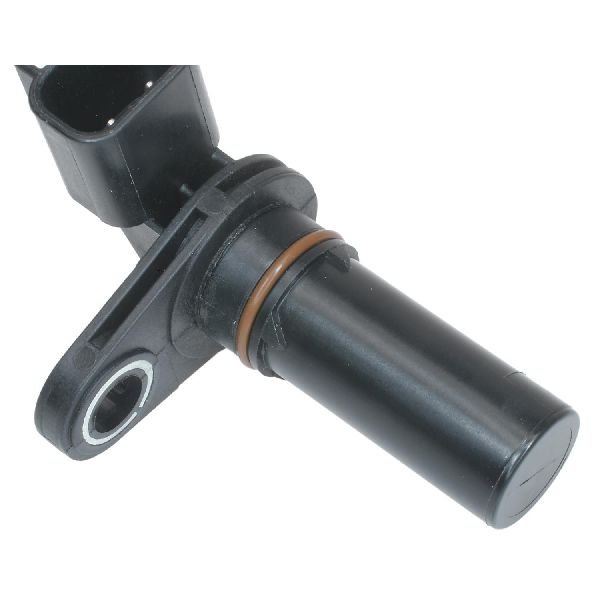
P0345 on a Ford Taurus 3.5L V6 most often means the Bank 2 intake camshaft position sensor has failed. This is a ~$40-$60 part that is relatively easy to replace, as it's located on the front of the engine near the radiator. Before replacing, check your oil level and condition, as issues with the VCT system can also trigger this code. Also, inspect the wiring connector for damage or oil contamination, as this is a common point of failure.
- P0345 points to the intake camshaft sensor on the front-facing side of the engine (Bank 2), which is the easiest one to access.
- Before buying parts, check your oil. If it's low, dirty, or looks milky, you have a different problem that must be addressed first.
- A faulty sensor is the most likely cause, but swapping it with an adjacent identical sensor is a free and effective way to confirm the diagnosis before spending money.
- If you hear a rattling noise when starting the engine, the problem is likely a more serious and expensive timing chain issue.
- Always use a quality replacement sensor from a reputable brand like Motorcraft, Delphi, or NGK to avoid repeat failures.
What's Unique About the 2008-2019 Ford Taurus
The 3.5L Cyclone V6 has two specific vulnerabilities that relate to this code. First, its Variable Camshaft Timing (VCT) system is highly sensitive to oil pressure and cleanliness. Low or dirty oil can cause the VCT phasers and solenoids to operate erratically, which can lead to camshaft position codes like P0345. More critically, this engine family features an internal, timing-chain-driven water pump. A failure of this pump can leak coolant directly into the engine oil, leading to rapid destruction of the timing chain, guides, and tensioners, which would cause a cascade of timing-related codes, including P0345.
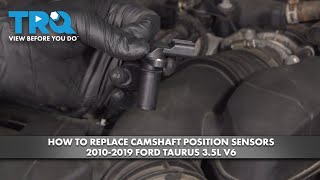
Generation note: This guide covers the fifth generation (2008-2009) and sixth generation (2010-2019) Ford Taurus. The 3.5L V6 engine and the meaning of code P0345 are consistent across these years. The location of the Bank 2 sensor (front of the engine, by the radiator) is the same for both generations, making it one of the easier sensors to access. 🎬 Watch this step-by-step guide to replacing the sensors on your Taurus. A significant engine power update occurred in 2013, when the 3.5L V6 output increased from 263 hp to 288 hp due to the addition of Twin Independent Variable Camshaft Timing (Ti-VCT).
Symptoms You May Notice
- Check Engine Light is on
- Engine is hard to start or cranks but won't start
- Rough idle
- Engine stalling, sometimes unexpectedly while driving
- Poor acceleration and loss of power
- Decreased fuel economy
- Engine misfire or "missing"
- Replacing the camshaft position sensor without checking the oil level and condition first.
- Replacing the sensor when the actual fault is in the wiring harness or connector.
- Ignoring other symptoms like startup rattle, which points to a much more serious timing chain issue.
- Replacing the sensor when a weak battery or failing alternator is causing voltage issues during cranking.
Most Likely Causes
- Faulty Bank 2 Intake Camshaft Position Sensor 🔴 High Probability → Shop Engine Camshaft Position Sensor Sensors can fail from heat cycles and age. A common cause of premature failure is oil leaking from the valve cover gasket and contaminating the sensor's connector and body.
How to confirm: The easiest way is to swap the suspect sensor with an identical one from another position (e.g., the Bank 2 exhaust sensor). If the code changes to P0365 (Cam Sensor 'B' Bank 2), the sensor is bad. Alternatively, test the sensor's resistance with a multimeter; for a similar Ford engine, the expected range is 586 to 2,033 ohms. A reading outside this range indicates a faulty sensor.
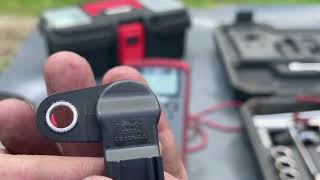
Typical fix: Replace the Bank 2 intake camshaft position sensor. Ensure the o-ring is lubricated with clean engine oil for a good seal. The OEM Motorcraft part is recommended. 🎬 See how to quickly swap out the Bank 2 sensor yourself.
Est. part cost: $20-$60 - Wiring or Connector Issue 🟡 Medium Probability The wiring harness connector is exposed to heat and vibration, which can cause wires to become brittle or the locking tab on the connector to break. Oil leaks can also degrade the wiring insulation.
How to confirm: Visually inspect the wiring leading to the sensor for any signs of cracking, fraying, or melting. Check the connector for corrosion, bent pins, or a loose fit. Wiggle the connector with the engine running to see if it affects idle. Use a multimeter to check for continuity and voltage at the connector according to the vehicle's wiring diagram.
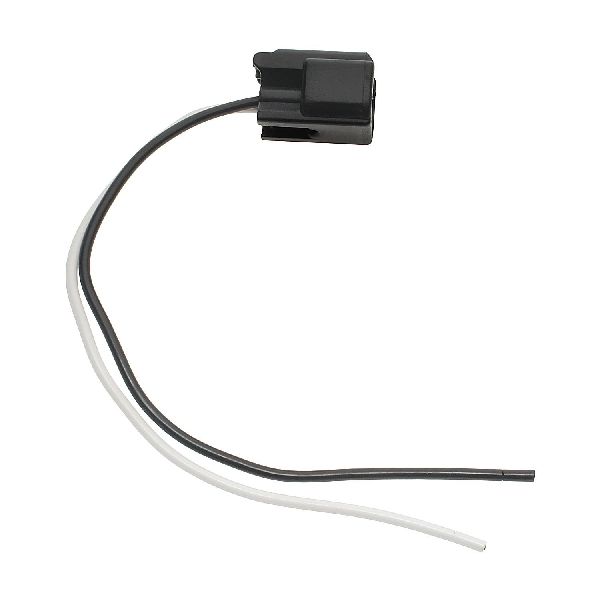
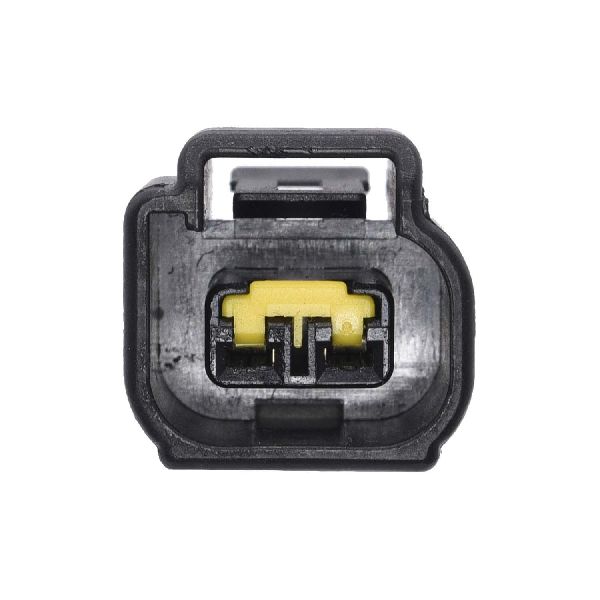
Typical fix: Repair the damaged section of wiring or replace the pigtail connector. The Motorcraft pigtail is part number WPT-579.
Est. part cost: $15-$30 - Low, Dirty, or Incorrect Viscosity Engine Oil 🟡 Medium Probability
How to confirm: Check the engine oil level and condition on the dipstick. If the oil is below the minimum mark, excessively dark, or appears sludgy, it needs to be addressed. Also, confirm the correct oil viscosity (e.g., 5W-20 as specified for your year) was used.
Typical fix: Perform an engine oil and filter change using the OEM-specified oil and a quality filter. Clear the codes and see if P0345 returns. Several owners on forums have reported that simply topping off low oil resolved P0345 and P0349 codes.
Est. part cost: $40-$80 - Weak Battery or Failing Alternator ⚪ Low Probability → Shop Alternator The PCM can set this code if it doesn't receive a clear signal from the sensor during engine cranking, which can be caused by low voltage. Additionally, a failing alternator can introduce electrical noise (AC ripple) into the system, which can interfere with sensor readings, a known issue on some Ford vehicles.
How to confirm: Test the battery voltage with a multimeter; it should be ~12.6V with the engine off and 13.7-14.7V while running. Most auto parts stores can perform a more comprehensive test on the battery and alternator.
Typical fix: Replace the weak battery or failing alternator.
Est. part cost: $150-$500
Rare But Worth Checking
- Stretched Timing Chain or Failed Cam Phaser: → Shop Engine Timing Chain This is a significant mechanical failure. A key symptom is a rattling noise from the engine for 2-5 seconds on a cold startup. This is due to VCT phasers losing oil pressure while sitting. If you hear this, the problem is likely beyond a simple sensor.
- Failing Internal Water Pump: This is a critical failure specific to the 3.5L/3.7L Cyclone engine family. The pump can leak coolant into the oil, creating a 'milkshake' consistency that destroys the timing components. Check your oil dipstick and oil cap for milky, frothy residue. If seen, stop driving immediately to prevent catastrophic engine failure.
- Sticking VCT Solenoid: Oil debris can cause the Variable Camshaft Timing (VCT) solenoid to stick, affecting cam timing and potentially triggering a sensor code. This is often preceded by poor oil maintenance. Testing the solenoid's resistance can help confirm failure; it should be between 6.9 and 7.9 ohms.
- Powertrain Control Module (PCM) Failure: This is extremely rare, and all other possibilities, especially wiring and mechanical issues, should be exhaustively ruled out before considering PCM replacement.
Diagnosis Steps
- Check the battery's state of charge and the starting system's health. Ensure voltage is stable during cranking.
- Inspect the engine oil level and condition. If low, dirty, or milky, address this first. A milky appearance indicates coolant contamination from a likely water pump failure; do not proceed without professional diagnosis.
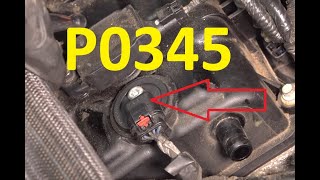
- Visually inspect the wiring and connector for the Bank 2 intake camshaft position sensor (front of the engine, near the radiator). Look for damage, corrosion, or oil contamination. The connector pigtail (Motorcraft WPT-579) is a known failure point. 🎬 Check out this video for a deep dive into P0345 causes.
- If no obvious issues are found, clear the codes and see if P0345 returns. If it does, proceed.
- As a simple diagnostic test, swap the Bank 2 intake sensor (the suspect one) with the Bank 2 exhaust sensor (usually right next to it). They are typically identical parts.
- Clear the codes and run the engine. If the code changes to P0365 (Camshaft Position Sensor 'B' Circuit Bank 2), the original sensor is faulty and needs replacement.
- If the P0345 code returns after the swap, the problem is in the circuit or is a deeper mechanical issue. Test the wiring harness for power, ground, and signal integrity.
- If you hear a rattling noise on startup or have other timing codes (e.g., P0021/P0022), the issue is likely mechanical. The timing chain, guides, and phasers should be inspected by a professional.
Parts You'll Likely Need
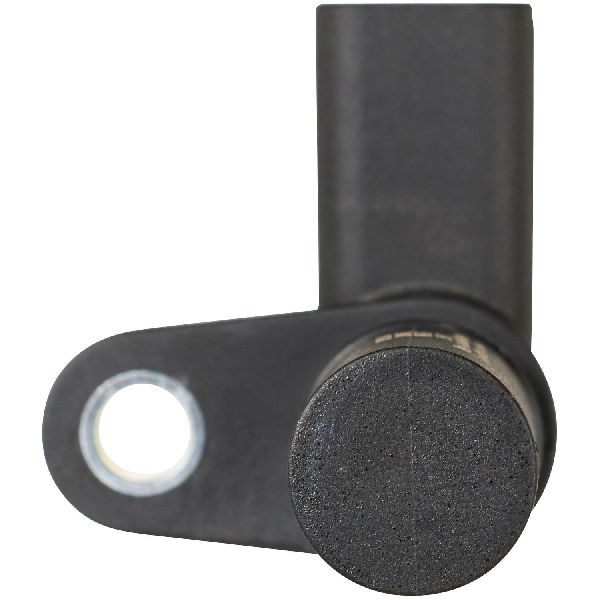
- Camshaft Position Sensor (Bank 2, Intake)
(OEM #BR3Z-6B288-A (also sold as Motorcraft DU-102))— This sensor is the most common failure point for code P0345. It is recommended to use the OEM Motorcraft part to avoid compatibility issues. - Camshaft Position Sensor Connector Pigtail
(OEM #WPT-579 (Motorcraft))— The connector's plastic can become brittle and the wires can fray from heat and vibration, causing an intermittent open or short in the sensor circuit.
Related Codes That Often Appear With This One
- P0349 — This is the 'intermittent' version of the same fault (Camshaft Position Sensor 'A' Circuit Intermittent Bank 2). They often appear together and point to the same set of causes, frequently leaning towards an electrical connection or oil pressure issue.
- P0021 / P0022 — These codes indicate that the Bank 2 intake camshaft timing is over-advanced (P0021) or over-retarded (P0022). If you see these alongside P0345, it increases the likelihood of a mechanical issue like a sticking VCT solenoid or a failing cam phaser, rather than just a bad sensor.
- P0340 / P0344 — These are the equivalent codes for Bank 1 (the rear bank, near the firewall). Seeing codes for both banks simultaneously (P0340, P0344, P0345, P0349) could point to a systemic issue like very low/dirty oil, a major wiring harness problem, a failing alternator, or a timing chain that has jumped a tooth.
Technical Service Bulletins (TSBs) & Recalls
- TSB 23-2143: Addresses cold start ticking/rattle from VCT units on some 3.5L EcoBoost engines, a symptom of timing system wear that can be related to timing codes.
- TSB 16-0043: Details a fix for a transmission fluid leak at the left side halfshaft seal on vehicles with the 6F35 transmission.
- Ford Customer Satisfaction Program 16B32: Extended warranty coverage for failing Electronic Throttle Bodies (ETB) that cause limp mode and codes like P2111/P2112.
Platform-Specific Known Issues
- The internal water pump on the 3.5L Cyclone V6 is a major point of failure. When it fails, it leaks coolant into the oil pan, contaminating the oil and destroying the timing chain, guides, and phasers. Any timing-related code on this engine warrants an immediate oil inspection for a milky/frothy consistency.
Documented NHTSA Reports
- NHTSA ODI #11568355 describes a situation where an owner replaced the camshaft position sensor after receiving code P0345, but the code returned a week later followed by an engine rattle, despite the battery and alternator testing fine.
- NHTSA ODI #11163346 reports a vehicle where the motor was "missing" and throwing codes P0345, P0349, and P0171.
Mechanic-Grade Diagnostic Values
- Camshaft Position (CMP) Sensor Resistance — expected: 586 - 2,033 Ohms. Failure: A reading outside this range, or an open/infinite reading, indicates a failed sensor.
- Variable Camshaft Timing (VCT) Solenoid Resistance — expected: 6.9 - 7.9 Ohms at 68°F (20°C). Failure: A reading of 0 ohms (short), no reading (open), or a value significantly outside the range points to a faulty solenoid.
- CMP Sensor AC Voltage Output (Engine Running) — expected: Greater than 0.25 V AC while running at ~2,500 RPM. Failure: Voltage below 0.25 V AC suggests the sensor is not generating a signal and should be replaced.
- Minimum Hot Idle Oil Pressure — expected: 15-25 PSI. Failure: Pressure below 15 PSI at hot idle can starve the VCT system, leading to timing codes like P0345.
Wiring & Ground Locations
- Engine Block Ground — There are multiple factory ground points. A key one is on the front of the engine block. Another is near the radiator fan frame. On F-150s with this engine family, grounds are also located on the firewall and on the left and right fenders.. A poor engine ground can cause erratic behavior in sensitive electronics like the camshaft position sensor. The PCM relies on a stable ground reference for accurate sensor readings. Verifying these grounds are clean and tight is a crucial step in diagnosing any electronic fault code.
- PCM Connector — The Powertrain Control Module (PCM) is typically located in the engine bay, often near the firewall or battery.. When diagnosing a persistent P0345, technicians may need to perform continuity checks on the CMP sensor circuit wires between the sensor connector and the PCM connector to rule out an open or short in the harness.
Real Owner Repair Stories
- YouTube channel 'Fix It Or Leave It' (Ford F-150 5.4L 3V (similar VCT system and codes)) — P0345 and P0349 codes present.
❌ Tried (didn't work) Initial assumption was a bad sensor or a failing alternator.
✅ What actually fixed it A close inspection revealed a previous repair on the Bank 2 cam sensor pigtail where the two signal wires had been installed in the wrong positions in the connector. Correcting the wire order fixed the issue immediately.
OEM Part Supersession History
BR3Z-6B288-A→BR3Z-6B288-B— Part revision or manufacturer change. The function remains the same.
Heads up: The original part number BR3Z-6B288-A is now replaced by BR3Z-6B288-B. While the original part number is associated with the Motorcraft DU-102, the superseding part is sometimes listed as DU-100. They are generally interchangeable for this application, but always verify fitment with the vehicle's VIN. Another part number, BL3Z-6B288-A, also fits many 3.5L applications.
Model Year Variations Within This Range
- 2013-2019: The standard 3.5L V6 engine received an update for the 2013 model year, increasing power from 263 hp to 288 hp. This was achieved through the implementation of Twin Independent Variable Camshaft Timing (Ti-VCT). While the P0345 code's meaning doesn't change, this more complex VCT system adds emphasis to the importance of clean oil and functional VCT solenoids.
- 2008-2009: These early models of the fifth generation used the 3.5L V6 with 263 hp and a standard 6-speed automatic. The core engine architecture and the P0345 fault are consistent with later models, but they lack the Ti-VCT system of the 2013+ models.
Diagnostic Flowchart
Other Known Issues on This Vehicle
Issues unrelated to this code that are worth knowing about as an owner of this generation:
- Internal Water Pump Failure 🔴 High — Common after 80,000-120,000 miles. Failure can be catastrophic as it leaks coolant directly into the engine oil, destroying timing components. (Ref: While no specific recall exists for the water pump itself, its failure is a well-documented cause of major engine repair across all 3.5L/3.7L Cyclone platforms.)
- Power Transfer Unit (PTU) Failure (AWD Models) 🔴 High — Common on AWD models, often due to fluid overheating and breakdown in a non-serviceable unit (from the factory). Symptoms include grinding noises or a 'propane-like' smell from cooked gear oil. (Ref: No recall, but a known issue. Dorman has released an OE-Fix part with a drain plug to make it serviceable.)
- Electronic Throttle Body (ETB) Failure 🟠 Medium — Can occur at various mileages, causing the vehicle to unexpectedly enter 'limp mode' with reduced power. (Ref: Ford Customer Satisfaction Program 16B32 extended the warranty on the ETB for certain vehicles. Symptoms often trigger codes P2111 and P2112.)
- Transmission Fluid Leak at Halfshaft Seal 🟠 Medium — Affects vehicles with the 6F35 transmission. A worn case bushing can cause the left-side halfshaft seal to leak. (Ref: TSB 16-0043 describes the issue and repair procedure, which involves replacing the seal and bushing.)
- Cracked Flex Plate 🟠 Medium — Less common, but can produce a rhythmic ticking or knocking sound that is often misdiagnosed as an engine or timing issue. The sound changes with RPM.
Used vs. New Parts: Buying Guide for This Vehicle
When a used part is the smart pick: For this repair, buying a used part is generally not recommended. The primary failure items are a low-cost electronic sensor and a wiring pigtail, both of which are wear items. The cost savings of a used sensor are minimal and not worth the risk of getting a part that is near the end of its service life.
Donor-vehicle mileage cap: roughly under 50000 miles for the part to have meaningful remaining life.
What to inspect on the donor part:
- If sourcing a wiring harness section, ensure there is no visible corrosion on the pins.
- Check for brittle plastic or cracked wire insulation, which are signs of heat damage.
- Avoid any parts from a vehicle that shows signs of a front-end collision or engine fire.
OEM-only on this vehicle (don't cheap out):
- Camshaft Position Sensor
- Crankshaft Position Sensor
Aftermarket brands forum-validated for this vehicle:
- Denso (if they are the original OE supplier)
- Bosch
Brands owners have reported issues with on this vehicle:
- Generic, unbranded sensors from online marketplaces are frequently cited on forums as being defective out of the box or failing prematurely. While some may work, the risk of having to do the repair twice often outweighs the initial savings.
Real Owner Stories
Aggregated from forums and TSBs cited above. Mileages and costs reflect what owners reported in those sources.
Ford Truck (3.5L Cyclone V6 platform)
Symptoms: Vehicle threw codes P0345 and P0349.
What fixed it: Checked the oil and found it was down at the half mark on the dipstick; topped it off with synthetic oil and cleared the codes.
Source hint: Ford Truck Enthusiasts Forums thread titled 'Codes: P0345 and P0349'
2011 Ford Edge 3.5L
Symptoms: After replacing the water pump, the vehicle was throwing P0345 and P0349 and running a little rough.
What fixed it: Ensuring the sensor connector was fully seated (technician suggested a connector was not fully seated after the major repair).
Source hint: 2CarPros thread titled '2011 Ford Edge Codes P0345 and 0349'
Ford F150 (3.5L Cyclone V6 platform)
Symptoms: Codes P0345 and P0349; metal found on the solenoid.
What fixed it: Performed two oil changes and replaced the oil filter within 200 miles.
Source hint: F150online Forums thread titled 'Codes P0345 and P0349'
Related OBD-II Codes
Frequently Asked Questions
I have a cold start ticking noise and a P0345 code on my 3.5L engine; does Ford have a TSB for this?
Which specific sensor should I replace for a P0345 code on my Ford Taurus 3.5L?
Could a transmission leak be related to the TSBs for my 2008-2019 Taurus?
My Taurus is in limp mode with throttle codes; is there a special program for this?
What is the specific pigtail connector part number if my camshaft sensor wiring is damaged?
Why is it important to check my oil for a 'milky' appearance when I see a P0345 code?
Helpful Videos
We Have This Part in Stock


The information in this article is provided for general reference and educational purposes only. Vehicle specifications, procedures, and part compatibility can vary by production date, trim level, and region. Always consult your vehicle's factory service manual and verify part numbers before purchasing or performing repairs. Safety-critical components such as airbags, seat belts, and braking systems should be installed by a qualified professional.
- Ford Taurus:
- 🧭 Diagnostic Flowchart
- 🎬 Helpful Videos
- 🛍️ Shop This Part
- What's Unique About the 2008-2019 Ford Taurus
- Symptoms You May Notice
- Most Likely Causes
- Rare But Worth Checking
- Diagnosis Steps
- Parts You'll Likely Need
- Related Codes That Often Appear With This One
- Technical Service Bulletins (TSBs) & Recalls
- Platform-Specific Known Issues
- Documented NHTSA Reports
- Mechanic-Grade Diagnostic Values
- Wiring & Ground Locations
- Real Owner Repair Stories
- OEM Part Supersession History
- Model Year Variations Within This Range
- Other Known Issues on This Vehicle
- Used vs. New Parts: Buying Guide for This Vehicle
- Real Owner Stories
- Ford Truck (3.5L Cyclone V6 platform)
- 2011 Ford Edge 3.5L
- Ford F150 (3.5L Cyclone V6 platform)
- Related OBD-II Codes
- Frequently Asked Questions
- 🎟️ Get 5% Off