

P0345 on 2017-2020 Genesis G80 3.8L: Camshaft Sensor Causes and Fixes
On a 2017-2020 Genesis G80 3.8L, code P0345 is most often caused by a failed Bank 2 (driver's side) intake camshaft position sensor. Replacing the sensor is a common DIY fix, with an OEM part costing around $150. Before replacement, swapping the Bank 1 and Bank 2 sensors is the definitive way to confirm the failure.
- P0345 on your G80 3.8L points to the intake camshaft sensor on the driver's side.
- The most likely fix is replacing the sensor itself, which is an accessible DIY job for many.
- Before buying parts, swap the driver's side and passenger's side intake sensors to confirm the sensor is the true cause of the fault.
- Always inspect the wiring and connector for damage or oil before replacing parts.
- If the code persists after replacing the sensor, the issue may be more complex (wiring or mechanical timing) and require professional help.
What's Unique About the 2017-2020 Genesis G80
The Genesis G80's 3.8L Lambda II V6 engine uses four camshaft position sensors (one for each intake and exhaust cam). Fortunately for diagnosis, the same part number, 39318-3L100, is used for multiple positions, allowing a technician or DIYer to swap sensors between banks to confirm if a sensor is faulty. While the sensors themselves can fail, the underlying Lambda engine architecture is generally robust, and this code is not typically associated with widespread timing chain failures on this specific G80 generation, especially if it appears without other timing correlation codes like P0017 or P0018.
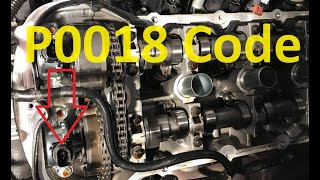
🎬 Watch: Understanding correlation codes and how to fix them.Symptoms You May Notice
- Check Engine Light is on
- Engine is difficult to start or has long crank times.
- Engine runs rough, misfires, or stalls, especially at idle.
- Noticeable loss of engine power and acceleration.
- Increased fuel consumption.
- Engine may crank but not start at all.
- Replacing the crankshaft position sensor. While related, a fault in the crankshaft sensor would typically set different codes (e.g., P0335) or a combination of crank/cam codes.
- Replacing the spark plugs or ignition coils, assuming the rough running is a simple tune-up issue without first addressing the specific circuit fault indicated by P0345.
- Replacing the wrong sensor. P0345 specifically refers to Sensor 'A' (Intake) on Bank 2 (Driver's Side). It is easy to confuse it with the exhaust sensor on the same bank or the intake sensor on the opposite bank.
Most Likely Causes
- Failed Bank 2 Intake Camshaft Position Sensor 🔴 High Probability → Shop Engine Camshaft Position Sensor Like any electronic component, these sensors are subjected to constant heat cycles and vibration in the engine bay, which can lead to internal failure over time. It is the most common point of failure for this code.
How to confirm: Swap the Bank 2 (driver's side) intake sensor with the Bank 1 (passenger's side) intake sensor. They are the same part (OEM # 39318-3L100). Clear the codes and drive the vehicle. If the code changes to P0340 (the equivalent code for Bank 1), the sensor is confirmed to be faulty.
Typical fix: Replace the faulty camshaft position sensor. Many owners and mechanics recommend using a genuine Hyundai/Genesis OEM sensor, as aftermarket sensors have a reputation for premature failure or being dead-on-arrival for this application. Since the cost is relatively low, some owners choose to replace both intake sensors at the same time as preventative maintenance.
Est. part cost: $60-$205 - Wiring Harness or Connector Issue 🟡 Medium Probability The wiring harness connector can become brittle from engine heat, or wires can be damaged during other engine service. A common issue on related Hyundai/Kia engines is oil from a leaking valve cover gasket seeping into the connector, disrupting the signal.
How to confirm: Visually inspect the wiring and connector for the Bank 2 intake cam sensor. Look for signs of corrosion, backed-out pins, frayed wires, or oil contamination inside the connector. Use a multimeter to check for proper voltage (typically a 5V reference), ground, and signal continuity at the connector with the key on.
Typical fix: Clean the connector terminals with electrical contact cleaner. If the connector is damaged, replace it with a new pigtail. Repair any broken or frayed wires, ensuring connections are sealed from moisture.
Est. part cost: $15-$40 for a connector pigtail
Rare But Worth Checking
- Stretched Timing Chain or Faulty Cam Phaser: → Shop Engine Timing Chain While not common on this platform for this code alone, if replacing the sensor and checking the wiring doesn't solve the issue, the problem could be mechanical. This is more likely if P0345 is accompanied by correlation codes like P0017 or P0018. This is a much more complex and expensive repair that requires professional diagnosis.
- Failing Engine Control Module (ECM): This is extremely rare. The ECM should only be considered after all other possibilities, including sensor, wiring, and mechanical timing, have been exhaustively ruled out by a professional.
- Low or Dirty Engine Oil: While less likely to cause a direct circuit fault code like P0345, extremely low or dirty oil can affect the operation of the CVVT (Continuously Variable Valve Timing) system, which could potentially contribute to erratic sensor readings. This is more commonly associated with performance/correlation codes (P00xx).
Diagnosis Steps
- Read the code from the OBD-II port to confirm P0345 is present.
- Locate the Bank 2 (driver's side) intake camshaft position sensor. It is the forward-most sensor mounted on the front of the driver's side valve cover, held by a single 10mm bolt.
- Inspect the sensor's electrical connector for any signs of damage, corrosion, or oil saturation. Ensure it is plugged in securely.
- Inspect the wiring leading to the sensor for any visible damage, fraying, or melting.
- Diagnostic Swap: The most effective DIY step is to swap the Bank 2 intake sensor with the Bank 1 (passenger side) intake sensor. They are the same part.
- Clear the trouble codes with a scanner.
- Start the engine and drive the vehicle. If the code returns as P0340 (Camshaft Position Sensor 'A' Circuit - Bank 1), the sensor you moved is faulty and needs replacement.
- If code P0345 returns, the problem lies within the Bank 2 circuit wiring or, less likely, the ECM or mechanical timing.
- If the problem is suspected to be wiring, use a multimeter to check for proper voltage (5V reference), ground, and signal at the sensor connector.
- If wiring and the sensor are confirmed good, seek professional diagnosis to check for mechanical timing issues, especially if other codes are present.
Parts You'll Likely Need
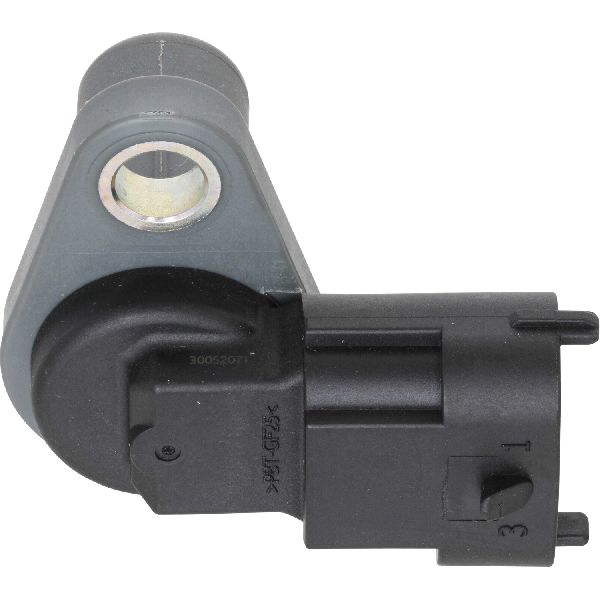
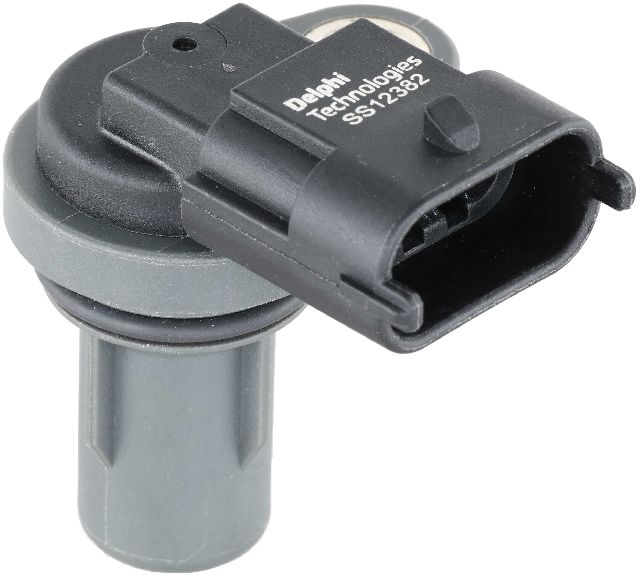
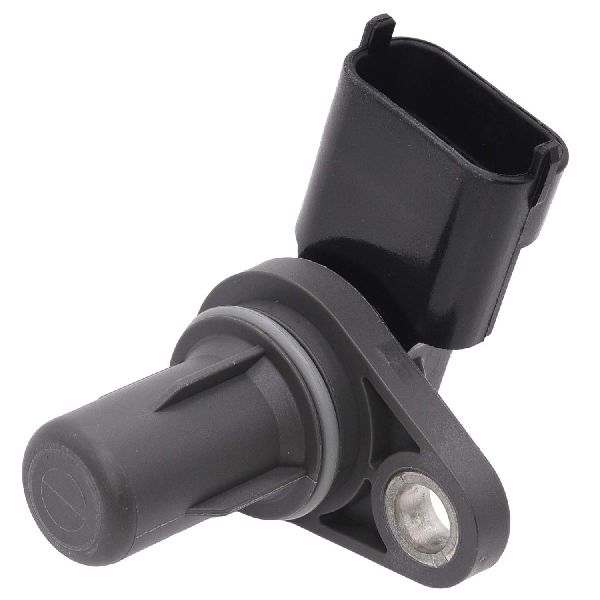
- Camshaft Position Sensor
(OEM #39318-3L100)— This is the most common failure point for code P0345. The sensor's internal electronics fail over time. It is strongly recommended to use an OEM part.
Trusted brands: Hyundai/Genesis (OEM), NTK, Delphi, Walker Products
OEM price range: $145-$205
Aftermarket price range: $60-$120
Related Codes That Often Appear With This One
- P0340 — If you swap a faulty Bank 2 sensor to Bank 1 for diagnosis, this code will appear, confirming the sensor is the problem.
- P0017 / P0018 — These codes indicate a correlation issue between the camshaft and crankshaft. If you see these along with P0345, it points more strongly towards a potential mechanical timing problem (e.g., stretched chain, faulty phaser) rather than just a sensor failure.
- P0346 — This code indicates a 'Range/Performance' problem with the same Bank 2 intake cam sensor, rather than a circuit malfunction. Seeing them together can point to an intermittent wiring issue or a sensor that is failing but hasn't died completely.
Platform-Specific Known Issues
- A known issue on related Hyundai engines is oil from a leaking valve cover gasket wicking into the camshaft position sensor connector, causing a poor connection and triggering circuit fault codes. While not explicitly documented for the G80 in wide numbers, it's a critical inspection point during diagnosis.
Mechanic-Grade Diagnostic Values
- Camshaft Position Sensor (CMP) Signal Voltage — expected: A square wave switching between approximately 0V and 5V as the engine is cranked or running. When the target on the camshaft triggers the sensor, voltage should be 5V; otherwise, it should be 0V.. Failure: No voltage, a constant voltage that does not switch, or a weak/erratic waveform when viewed on an oscilloscope indicates a failed sensor or wiring issue.
- CMP Connector Voltage (Key On, Engine Off) — expected: Using a multimeter to back-probe the connector: one pin should have 5V reference from the ECM, one pin should have a good ground (near 0V), and the third is the signal wire.. Failure: Absence of the 5V reference or ground points to a wiring issue between the sensor and the ECM, or a problem with the ECM itself.
Scan Tool Commands That Help
- Professional OBD-II Scan Tool / GDS: Cam Sensor Relearn Procedure — Some vehicles may require a 'relearn' procedure after the camshaft position sensor is replaced. This function commands the ECM to adapt to the new sensor's signal. If the engine runs poorly or won't start after a sensor replacement, check if this procedure is needed.
Wiring & Ground Locations
- Engine Compartment Fuse Box — Located in the engine bay, requires removing a cover by pressing a tab and pulling up.. The circuit for the camshaft position sensor may be protected by a fuse in this box. A blown fuse would cause a complete loss of signal and trigger a circuit code.
- Ghg03 (or similar) — On the related Genesis Coupe 3.8, a key engine ground point is located on the left rear of the engine. Poor engine grounds are a known potential issue on this vehicle platform, leading to voltage drops that can affect sensor readings.. A corroded or loose engine ground can cause erratic sensor behavior and trigger intermittent circuit fault codes like P0345. Ensuring all engine-to-chassis grounds are clean and tight is a critical diagnostic step if the sensor and wiring test good.
OEM Part Supersession History
39350-4A400→39318-3L100— Part update or consolidation by the manufacturer.
Diagnostic Flowchart
Other Known Issues on This Vehicle
Issues unrelated to this code that are worth knowing about as an owner of this generation:
- Engine Oil Consumption 🟠 Medium — Can become noticeable at higher mileage (over 75k-100k miles). Some owners report needing to top off oil between changes. (Ref: TSB 23-EM-007H provides a procedure for combustion chamber cleaning to address issues caused by carbon deposits, which can be related to oil consumption.)
- Intake Valve Carbon Buildup 🟠 Medium — A common issue for all Gasoline Direct Injection (GDI) engines, as fuel does not wash over the intake valves. Can cause performance loss over time. (Ref: Hyundai has a TSB (23-FL-003H) recommending the use of Techron-based fuel system cleaner to help mitigate deposit formation.)
- ABS Module Short Circuit 🔴 High — Subject to a major safety recall. Affects a large number of 2017-2020 G80 vehicles. (Ref: Recall 20V520000 / NHTSA Campaign 20V520000. The ABS module can malfunction and short circuit, increasing the risk of an engine compartment fire.)
- Starter Solenoid Contamination 🔴 High — Subject of a safety recall affecting 2017-2019 G80 models. (Ref: Recall 21V160000. Water can enter the starter solenoid, causing an electrical short that could result in a fire.)
- A/C System Not Cooling on Long Drives 🟡 Low — A recurring complaint among owners, where the A/C stops blowing cold air during long trips in hot weather, potentially due to evaporator issues.
Used vs. New Parts: Buying Guide for This Vehicle
When a used part is the smart pick: For this repair, a used OEM sensor from a reputable salvage yard is a reasonable choice, especially if it comes from a low-mileage, rear-ended donor vehicle. This provides a genuine OEM part at a lower cost.
Donor-vehicle mileage cap: roughly under 60000 miles for the part to have meaningful remaining life.
What to inspect on the donor part:
- Verify the part number on the used sensor is 39318-3L100.
- Inspect the plastic housing for cracks or signs of extreme heat stress.
- Ensure the connector pins are straight and free of corrosion.
- Ask for the donor vehicle's VIN to check its mileage and history if possible.
OEM-only on this vehicle (don't cheap out):
- Camshaft Position Sensor
Aftermarket brands forum-validated for this vehicle:
- While OEM is strongly preferred, NTK and Delphi are generally reputable brands for sensors if OEM is unavailable.
Brands owners have reported issues with on this vehicle:
- Unnamed or 'white-box' ultra-cheap sensors from online marketplaces are frequently reported as being dead-on-arrival or failing prematurely for this application.
Real Owner Stories
Aggregated from forums and TSBs cited above. Mileages and costs reflect what owners reported in those sources.
2012-2016 Hyundai Genesis Coupe 3.8L V6
Symptoms: Owners reported camshaft position sensor failures triggering P0340 and P0345 codes, establishing a history of this issue within the Lambda engine family.
What fixed it: Replacement of the faulty camshaft position sensor with an OEM unit.
Source hint: Article Context: platform_mates section for 2012-2016 Hyundai Genesis Coupe
Related OBD-II Codes
Frequently Asked Questions
Can I use an aftermarket sensor to fix the P0345 code on my G80?
Is there a way to test if the Bank 2 sensor is actually bad before I buy a new one?
Could an oil leak be causing my P0345 camshaft sensor code?
Are there any major recalls for the 2017-2020 Genesis G80 I should be aware of while diagnosing engine issues?
Does the GDI engine in my G80 require any specific maintenance to prevent performance loss?
What is the part number for the camshaft position sensor on the 3.8L V6 engine?
Helpful Videos
We Have This Part in Stock


The information in this article is provided for general reference and educational purposes only. Vehicle specifications, procedures, and part compatibility can vary by production date, trim level, and region. Always consult your vehicle's factory service manual and verify part numbers before purchasing or performing repairs. Safety-critical components such as airbags, seat belts, and braking systems should be installed by a qualified professional.
- Genesis G80:
- 🧭 Diagnostic Flowchart
- 🎬 Helpful Videos
- 🛍️ Shop This Part
- What's Unique About the 2017-2020 Genesis G80
- Symptoms You May Notice
- Most Likely Causes
- Rare But Worth Checking
- Diagnosis Steps
- Parts You'll Likely Need
- Related Codes That Often Appear With This One
- Platform-Specific Known Issues
- Mechanic-Grade Diagnostic Values
- Scan Tool Commands That Help
- Wiring & Ground Locations
- OEM Part Supersession History
- Other Known Issues on This Vehicle
- Used vs. New Parts: Buying Guide for This Vehicle
- Real Owner Stories
- 2012-2016 Hyundai Genesis Coupe 3.8L V6
- Related OBD-II Codes
- Frequently Asked Questions
- 🎟️ Get 5% Off