

P0345 on 2012-2017 Hyundai Azera 3.3L: Camshaft Sensor Bank 2 Causes and Fixes
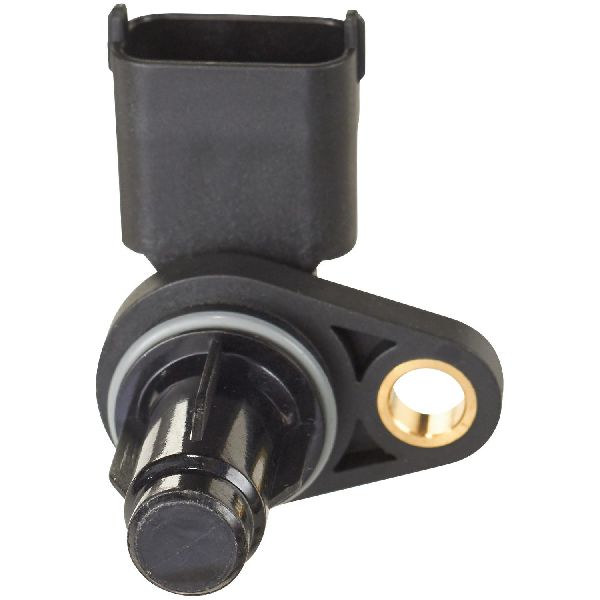
This code points to a problem with the Bank 2 intake camshaft position sensor. On this Azera, Bank 2 is the cylinder bank near the radiator. The most likely fix is replacing the sensor itself, which is often a DIY job, though access is tight. Expect to pay $50-$100 for an aftermarket sensor or around $170 for an OEM part. Before replacing, always inspect the wiring and connector for damage.
- P0345 on a 2012-2017 Azera means there's a fault with the intake camshaft position sensor on the front cylinder bank (near the radiator).
- The most common fix is to replace the sensor itself, but always check the wiring and connector first for any obvious damage.
- Be prepared for a tight workspace. The sensor is difficult to access, which increases the DIY difficulty from 'easy' to 'moderate'.
- If replacing the sensor doesn't fix the issue, the problem could be more complex, such as a wiring short or a mechanical timing issue that requires professional diagnosis.
What's Unique About the 2012-2017 Hyundai Azera
The core issue of a failing camshaft sensor is not unique to this platform. However, on the Azera's 3.3L V6, the Bank 2 sensor (the one triggering P0345) is in a notoriously tight and difficult-to-reach location. It is positioned at the back of the cylinder head (towards the firewall side of the front bank), partially obstructed by the upper intake plenum and a wiring harness bracket, which complicates what would otherwise be a very simple repair. A YouTube repair video for a 2013 Azera specifically highlights the need to remove a 10mm bolt holding this bracket to gain the necessary clearance.
Symptoms You May Notice
- Check Engine Light is on
- Engine is difficult to start or cranks for a long time
- Engine will not start at all
- Rough idle or stalling
- Noticeable loss of power and acceleration
- Increased fuel consumption
- Engine misfire, sometimes felt as a shudder
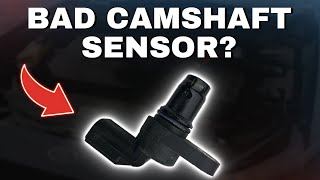
- Smell of unburnt gasoline from the exhaust 🎬 Watch: A breakdown of common bad camshaft sensor symptoms.
- Replacing the camshaft position sensor without first inspecting the wiring harness and connector for damage or corrosion.
- Replacing the timing chain when the actual fault is a much simpler and cheaper electrical issue with the sensor or its wiring.
- Replacing the wrong sensor (e.g., the exhaust sensor or the Bank 1 sensor).
Most Likely Causes
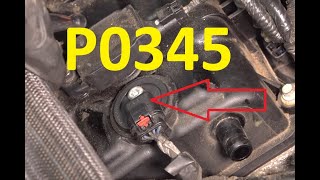
- Failed Bank 2 Intake Camshaft Position Sensor 🔴 High Probability → Shop Engine Camshaft Position Sensor Sensors are electronic components that can fail over time due to heat cycles, internal vibration, and oil contamination. It is the most common cause for P0345. 🎬 See this guide on causes and fixes for code P0345.
How to confirm: After checking wiring, test the sensor's output. A common method is to back-probe the signal wire with a multimeter while cranking; the voltage should fluctuate. A lack of signal or a steady, unchanging voltage points to a bad sensor. Some vehicles may require a 'relearn' procedure after replacement.
Typical fix: Replace the Bank 2 intake camshaft position sensor.
Est. part cost: $50 - $175 - Wiring Harness or Connector Issue 🟡 Medium Probability The sensor's location is tight, and wiring can become brittle from engine heat or damaged during other repairs. The connector itself can become loose, corroded, or contaminated with oil.
How to confirm: Visually inspect the wiring going to the sensor for any signs of fraying, melting, or breaks. Check the connector for a secure fit, corrosion on the pins, or backed-out wires. Use a multimeter to check for continuity and ensure there are no shorts to ground or power.
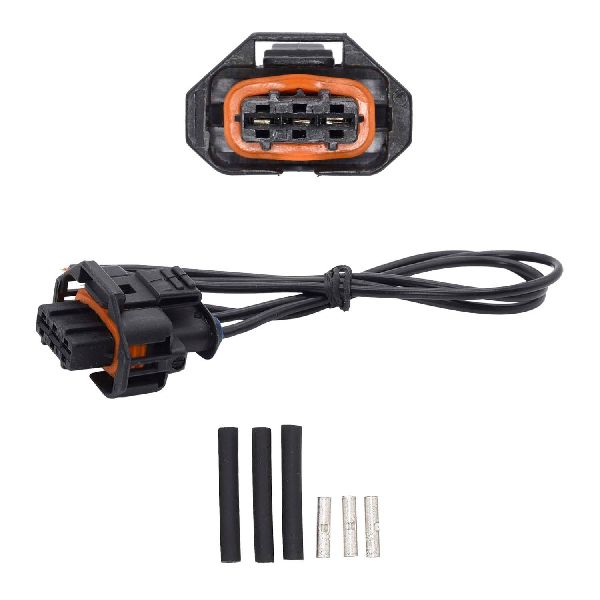
Typical fix: Repair the damaged section of wiring or replace the connector pigtail.
Est. part cost: $10 - $40 - Stretched Timing Chain or Timing Issue ⚪ Low Probability → Shop Engine Timing Chain While the Lambda II is a robust engine, high mileage or infrequent oil changes can lead to timing chain stretch. This causes a mismatch between the camshaft and crankshaft signals that the ECM interprets as a sensor fault.
How to confirm: This is a complex diagnosis. If new sensors and good wiring don't fix the code, and you also have correlation codes (like P0017/P0018), a technician will need to check cam/crank correlation with a professional scan tool and may need to physically inspect the timing components. A rattling noise on startup can be an early indicator.
Typical fix: Requires replacement of the timing chain, guides, and tensioners. This is a major and expensive repair.
Est. part cost: $400 - $800+
Rare But Worth Checking
- Failing Crankshaft Position Sensor: A bad crankshaft position sensor can sometimes confuse the ECM, causing it to incorrectly flag a fault with the camshaft sensor. If you also have crankshaft-related codes, investigate that sensor as well.
- Dirty or Damaged Reluctor Ring: The sensor reads teeth on a reluctor wheel on the camshaft. If this wheel is damaged, or if sludge/debris builds up and obstructs the sensor's view, it can cause an incorrect signal.
- Faulty Engine Control Module (ECM): This is extremely rare. The ECM should only be considered a potential cause after all other possibilities (sensor, wiring, timing) have been exhaustively ruled out by a professional.
Diagnosis Steps
- Read the code with an OBD-II scanner and confirm P0345 is present. Note any other codes, especially correlation or other sensor codes.
- Locate the Bank 2 intake camshaft position sensor. On the 3.3L V6, Bank 2 is the cylinder bank closer to the radiator. The intake sensor is on the cylinder head, often near the valve cover.
- Visually inspect the sensor's electrical connector and wiring harness. Look for loose connections, corroded pins, oil contamination, or any signs of damage like frayed or melted wires.
- If the wiring looks good, test the sensor circuit. Using a multimeter, check for the correct reference voltage (usually 5V) and a good ground at the connector.
- Test the sensor's output. Back-probe the signal wire and monitor the voltage while cranking the engine. A functioning sensor will produce a fluctuating voltage signal. No signal or a static voltage indicates a likely failed sensor.
- A video for a 2013 Azera shows that access is very tight. You will likely need to remove a 10mm bolt holding a wiring harness bracket out of the way to gain clearance to the sensor's 10mm mounting bolt.
- After replacing the sensor, clear the codes with the scanner and perform a test drive. Some vehicles may require a camshaft position sensor relearn procedure.
- If the code returns, the problem may lie in the wiring harness, a timing correlation issue, or, in rare cases, the ECM.
Parts You'll Likely Need
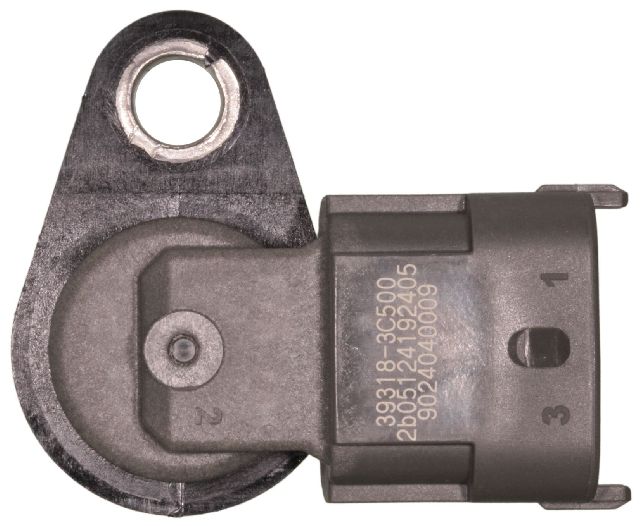
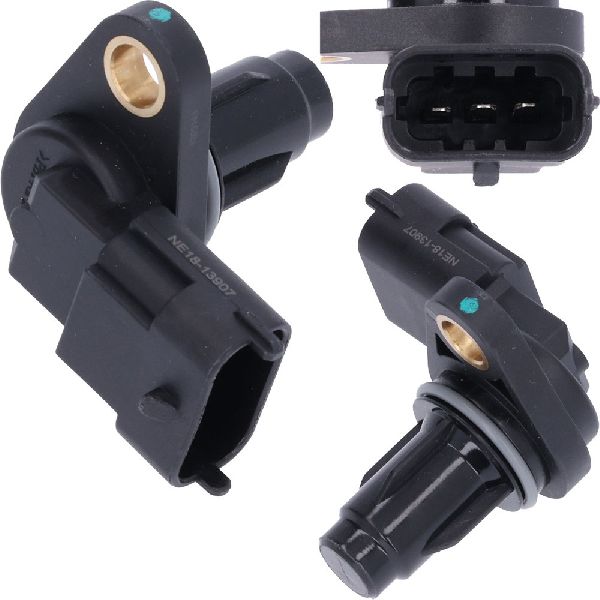
- Camshaft Position Sensor (Bank 2, Intake)
(OEM #39350-3L100 (supersedes 39350-2B030))— This is the most common component to fail and directly causes the P0345 code.
Trusted brands: Hyundai/Kia (OEM), NGK/NTK, Delphi, Standard Motor Products (SMP), Walker Products
OEM price range: $150-$180
Aftermarket price range: $45-$110
Related Codes That Often Appear With This One
- P0340 — This is the equivalent code for the Bank 1 intake camshaft sensor. If both appear, it could suggest a common issue like a wiring problem affecting both banks, a power supply issue, or a more significant timing problem.
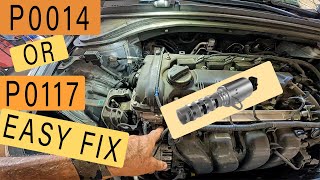
- P0017 / P0018 / P0019 — These codes indicate a Crankshaft/Camshaft Position Correlation error. Seeing them with P0345 strongly suggests a mechanical timing issue, such as a stretched timing chain, rather than just a sensor failure. 🎬 Watch: How to fix related P0017 correlation and solenoid codes.
- P0346, P0347, P0348, P0349 — These are all related to the Bank 2 camshaft position sensor, indicating performance issues, low circuit voltage, high circuit voltage, or an intermittent signal, respectively. They help narrow down whether the issue is the sensor itself or the electrical circuit.
Technical Service Bulletins (TSBs) & Recalls
- While no TSB is specific to P0345 on the Azera, Hyundai has issued TSB 24-EM-003H which extends the engine warranty for 2013-2019 Santa Fe models with the 3.3L Lambda II engine due to potential premature wear. This highlights known issues within the engine family that could, in advanced stages, relate to timing codes.
Platform-Specific Known Issues
- The Bank 2 (front) camshaft position sensor is in a very tight location, making replacement more difficult than the Bank 1 sensor. Access requires removing a wiring harness bracket held by a 10mm bolt and carefully maneuvering tools in a confined space near the intake plenum.
- A user on hyundai-forums.com with a 2013 Azera confirmed that replacing the Bank 2 sensor to fix a P0345 code was a difficult job due to the tight space, but ultimately successful. They reiterated the need to remove the harness bracket for access.
Mechanic-Grade Diagnostic Values
- Sensor Reference Voltage — expected: ~5V DC. Failure: Significantly lower or no voltage indicates a wiring or ECM issue.
- Sensor Ground Circuit — expected: Good continuity to chassis ground (near 0 ohms).. Failure: High resistance (ohms) indicates a corroded or broken ground wire.
- Sensor Signal Output (while cranking) — expected: Fluctuating square wave, switching between ~0V and ~5V.. Failure: A flat line at 0V, 5V, or any other static voltage indicates a failed sensor.
- Sensor Internal Resistance (generic test) — expected: Typically 500 - 1,200 Ohms for Hall effect types (varies by manufacturer).. Failure: A reading of 0 Ohms (short) or infinite/OL (open) indicates a faulty sensor.
Scan Tool Commands That Help
- Professional Scan Tool (e.g., Hyundai GDS): Camshaft Position Sensor Relearn/Reset — After replacing the camshaft position sensor, some vehicles may require a relearn procedure for the ECM to recognize the new sensor's signal correctly. Failure to do so can result in a persistent code, rough running, or a no-start condition.
- Advanced Aftermarket Scan Tool: Sensor Test Mode — If the sensor and wiring test good, this function can force a simulated signal to the ECM. If the ECM does not register the simulated signal, it points to a fault in the ECM's input circuit, which is a rare but possible cause.
Wiring & Ground Locations
- GE05 — Left rear of the engine compartment, near the PCM.. This is a primary engine management ground. A poor connection here can cause erratic behavior from multiple sensors, including the camshaft position sensor.
- GLG01 — Left front of the engine.. Another key engine ground point. Verifying this ground is clean and tight is a crucial step in diagnosing any electrical fault in the engine bay.
- PCM (ECM) Location — Left rear of the engine compartment.. Knowing the location of the Powertrain Control Module is necessary for testing the sensor circuit for continuity from the sensor connector all the way back to the computer.
Real Owner Repair Stories
- YouTube: SOLVED! 2013 Azera Cam Camshaft Sensor Replacement... (2013 Hyundai Azera 3.3L V6) — Check Engine Light with code P0019 (Crank/Cam correlation Bank 2).
❌ Tried (didn't work) The owner did not report trying other fixes first; they went straight to replacing the sensors based on the code.
✅ What actually fixed it The owner replaced both the Bank 1 and Bank 2 camshaft position sensors to address the P0019 code. The video documents the extreme difficulty of accessing the Bank 2 sensor (related to P0345), confirming the need to remove a wiring harness bracket to gain access. This resolved the check engine light.
OEM Part Supersession History
39350-2B030→39350-3L100— Standard part revision and update by the manufacturer.39350-3L100→N/A
Heads up: Be cautious not to use part number 39318-3L000, which is for later model year Hyundai/Kia vehicles (2017+) with different Lambda engine revisions. While it may look similar, it is not specified for the 2012-2017 Azera and may cause compatibility issues.
Diagnostic Flowchart
Other Known Issues on This Vehicle
Issues unrelated to this code that are worth knowing about as an owner of this generation:
- Intake Valve Carbon Buildup 🟠 Medium — Common on all GDI engines, including the Lambda II, as mileage exceeds 60,000-80,000 miles. More frequent with short-trip driving.
- Excessive Oil Consumption 🟠 Medium — Some owners report increased oil consumption as the engine ages, potentially due to stuck oil control rings on the pistons. This is a known issue across many Hyundai engine families.
- Premature Engine Wear / Failure 🔴 High — While less common than on the 4-cylinder Theta II engines, a class-action lawsuit has alleged that some 3.3L Lambda II GDI engines can suffer from premature wear and potential failure due to internal component issues. (Ref: TSB 24-EM-003H (for Santa Fe, not Azera, but same engine family))
- Timing Chain Tensioner Noise 🟡 Low → Shop Engine Timing Chain — RepairPal notes that improved timing chain tensioners are available to correct a rattling noise on startup, suggesting the original parts may be prone to wear.
Used vs. New Parts: Buying Guide for This Vehicle
When a used part is the smart pick: For this repair, using a salvaged part is NOT recommended for the sensor itself. The labor to access the Bank 2 sensor is significant, and the risk of a used electronic sensor failing shortly after installation is high. A used connector pigtail is an acceptable option if the original is broken or corroded.
Donor-vehicle mileage cap: roughly under 80000 miles for the part to have meaningful remaining life.
What to inspect on the donor part:
- For a connector pigtail, inspect for brittle plastic, cracks, or signs of heat damage.
- Ensure the locking tab on the connector is intact.
- Check the pins for any green or white corrosion.
- Ensure there is at least 4-6 inches of wire attached to the pigtail for easier splicing.
OEM-only on this vehicle (don't cheap out):
- Camshaft Position Sensor
Aftermarket brands forum-validated for this vehicle:
- NGK/NTK
- Delphi
- Standard Motor Products (SMP)
Brands owners have reported issues with on this vehicle:
- Unbranded, low-cost sensors from online marketplaces (e.g., eBay, Amazon) are frequently reported as faulty out-of-the-box or failing prematurely.
Real Owner Stories
Aggregated from forums and TSBs cited above. Mileages and costs reflect what owners reported in those sources.
2013 Hyundai Azera 3.3L V6
Symptoms: The owner experienced a P0345 code and noted the extremely tight clearance for the repair.
What fixed it: Replacement of the Bank 2 camshaft position sensor after removing a wiring harness bracket held by a 10mm bolt to gain access.
Source hint: hyundai-forums.com thread titled '2013 Azera P0345 code'
Related OBD-II Codes
Frequently Asked Questions
Where is the Bank 2 intake camshaft position sensor located on my 3.3L V6 Azera?
Does the engine warranty extension in TSB 24-EM-003H apply to my 2012-2017 Azera?
Why is the Bank 2 sensor more difficult to replace than Bank 1 on this vehicle?
Can I use a used sensor from a salvage yard to fix my P0345 code?
Is a rattling noise on startup related to the P0345 code on my Azera?
Do I need to perform a 'relearn' procedure after replacing the camshaft sensor?
Helpful Videos
We Have This Part in Stock


The information in this article is provided for general reference and educational purposes only. Vehicle specifications, procedures, and part compatibility can vary by production date, trim level, and region. Always consult your vehicle's factory service manual and verify part numbers before purchasing or performing repairs. Safety-critical components such as airbags, seat belts, and braking systems should be installed by a qualified professional.
- Hyundai Azera:
- 🧭 Diagnostic Flowchart
- 🎬 Helpful Videos
- 🛍️ Shop This Part
- What's Unique About the 2012-2017 Hyundai Azera
- Symptoms You May Notice
- Most Likely Causes
- Rare But Worth Checking
- Diagnosis Steps
- Parts You'll Likely Need
- Related Codes That Often Appear With This One
- Technical Service Bulletins (TSBs) & Recalls
- Platform-Specific Known Issues
- Mechanic-Grade Diagnostic Values
- Scan Tool Commands That Help
- Wiring & Ground Locations
- Real Owner Repair Stories
- OEM Part Supersession History
- Other Known Issues on This Vehicle
- Used vs. New Parts: Buying Guide for This Vehicle
- Real Owner Stories
- 2013 Hyundai Azera 3.3L V6
- Related OBD-II Codes
- Frequently Asked Questions
- 🎟️ Get 5% Off