

P0345 on 2009-2014 Hyundai Genesis 3.8L: Camshaft Sensor Circuit Causes and Fixes
This code indicates a fault in the Bank 2 (driver's side) intake camshaft position sensor circuit. The most likely cause is a failed sensor itself, which is an easy and affordable DIY replacement. Expect to pay $30-$80 for a new sensor. Before replacing, swap the Bank 1 and Bank 2 intake sensors to confirm the failure.
- P0345 points to an electrical fault with the driver's side intake camshaft position sensor.
- The most likely fix is replacing the sensor itself, which is a simple, 15-minute DIY job with a 10mm socket.
- Before buying parts, swap the driver's side and passenger's side intake sensors to confirm the sensor is the problem. If the code moves to Bank 1 (P0340), the sensor is bad.
- Always check the wiring and connector for damage before assuming the sensor has failed.
- Using a genuine OEM Hyundai/Kia replacement sensor is strongly recommended for reliability.
What's Unique About the 2009-2014 Hyundai Genesis
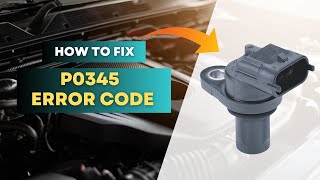
The Hyundai Lambda V6 engine family is generally robust but is known to be sensitive to oil quality and maintenance. While P0345 is an electrical circuit code, issues like oil sludge can sometimes contribute to erratic sensor behavior or mask underlying mechanical timing problems by affecting the CVVT system that the sensor monitors. However, for an isolated P0345 code, the issue is almost always electrical and confined to the sensor or its wiring, making it a straightforward diagnosis compared to 🎬 Watch: A complete repair guide for the P0345 circuit code. more complex mechanical timing codes like P0018.
Symptoms You May Notice
- Check Engine Light is on
- Engine is hard to start or cranks but won't start
- Engine stalls unexpectedly, either at idle or while driving
- Rough idle and engine misfires
- Noticeable loss of engine power and sluggish acceleration
- Decreased fuel economy
- Exhaust pipe releases smell of gas
- Replacing the camshaft position sensor without first performing a sensor swap to confirm it's faulty, or without checking the wiring harness for damage.
- Replacing the crankshaft position sensor before properly diagnosing the camshaft sensor circuit.
- Replacing timing components like the chain or phasers when the issue is a simple electrical sensor or wiring fault.
Most Likely Causes
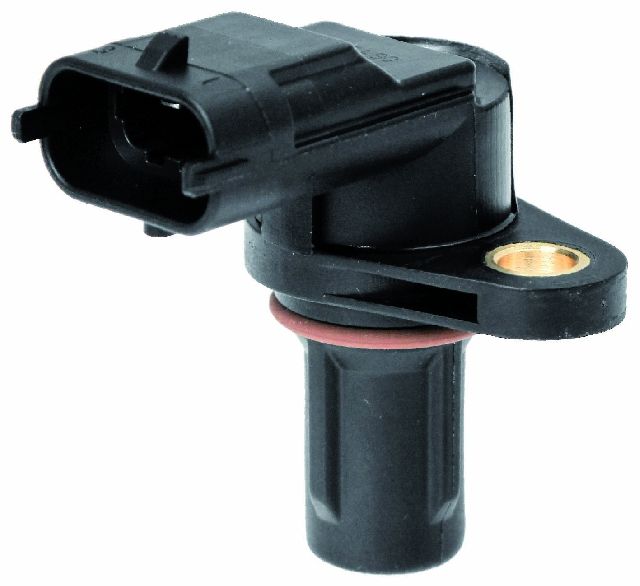
- Failed Bank 2 Intake Camshaft Position Sensor 🔴 High Probability → Shop Engine Camshaft Position Sensor Sensors are exposed to extreme heat cycles and oil vapor, causing them to fail over time. It's a common wear-and-tear item on most modern engines.
How to confirm: Swap the Bank 2 (driver's side) intake sensor with the Bank 1 (passenger's side) intake sensor. Clear the codes and drive. If the code changes to P0340 (Bank 1), the sensor you moved is faulty. You can also test the sensor's resistance with a multimeter; an out-of-spec reading indicates failure.
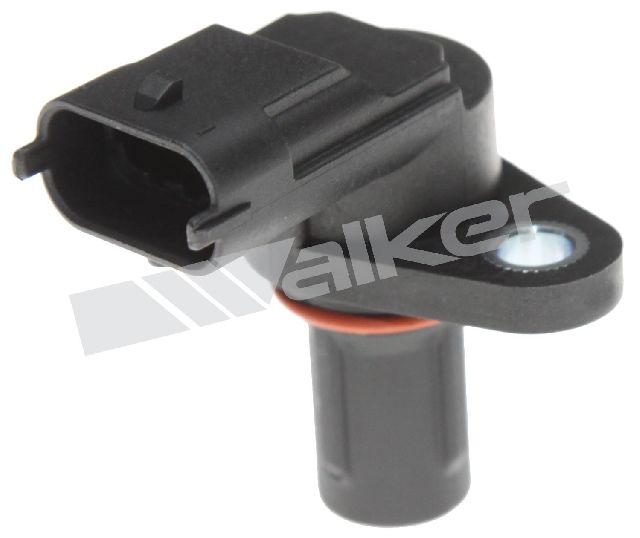
Typical fix: Replace the faulty camshaft position sensor. It is held in by a single 10mm bolt 🎬 See this walkthrough on how to replace the sensors. and is located on the front of the valve cover.
Est. part cost: $30-$80 - Wiring Harness or Connector Issue 🟡 Medium Probability Engine vibration and heat can cause wires to fray, or connectors can become loose or contaminated with oil. Rodents are also known to chew on engine bay wiring.
How to confirm: Visually inspect the wiring leading to the Bank 2 intake cam sensor for any breaks, melting, or chafing. Check that the connector is securely plugged in and that the pins are clean. Use a multimeter to back-probe the connector (with the key on) to verify a 5V reference voltage, a good ground, and a fluctuating signal when the engine is cranked.
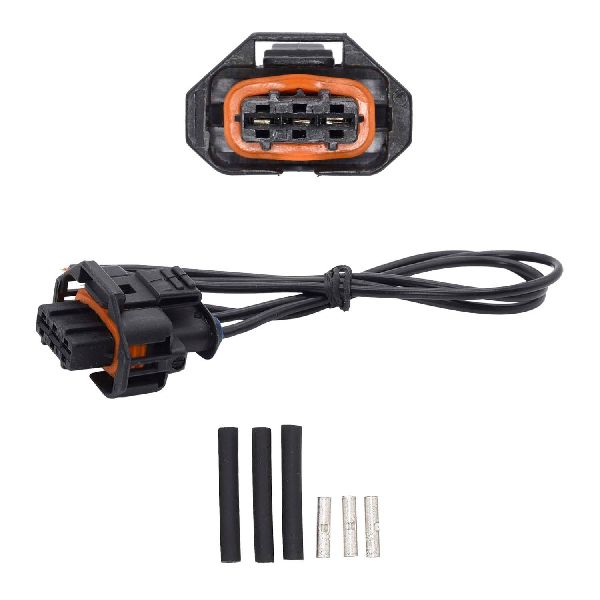
Typical fix: Repair the damaged section of wiring or clean the connector terminals with electrical contact cleaner. If the connector is broken, it will need to be replaced.
Est. part cost: $5-$50 - Low or Dirty Engine Oil ⚪ Low Probability The CVVT (Continuous Variable Valve Timing) system, which the cam sensors monitor, is operated by oil pressure. While low/dirty oil typically causes correlation codes (like P0018), severe sludge can clog passages, affect CVVT operation, and potentially contribute to erratic sensor readings.
How to confirm: Check the engine oil level and condition on the dipstick. If the oil is very low, dark, or sludgy, this could be a contributing factor.
Typical fix: Perform an oil and filter change using a high-quality full synthetic 5W-20 or 5W-30 oil and a quality filter.
Est. part cost: $40-$100
Rare But Worth Checking
- Failing Crankshaft Position Sensor: A bad crankshaft sensor can send erratic signals that cause the ECM to misinterpret the camshaft sensor's signal, leading to a P0345 code. This is uncommon but possible if replacing the cam sensor doesn't fix the issue.
- Damaged Reluctor Ring on Camshaft: → Shop Engine Camshaft The sensor reads teeth on a reluctor ring (or tone ring) on the camshaft. If this ring is damaged, cracked, or has missing teeth, the signal will be incorrect, which can trigger a P0345 code. This is a mechanical issue and requires more in-depth repair.
- Stretched Timing Chain: → Shop Engine Timing Chain This will almost always set correlation codes like P0018 or P0019 first. However, in very rare cases, severe timing slack could potentially cause an erratic signal that the ECM interprets as a circuit fault. A rattling noise on startup is a key symptom.
- Faulty Engine Control Module (ECM): This is extremely rare. The ECM should only be considered a potential cause after all other possibilities (sensor, wiring, timing) have been exhaustively ruled out by a professional.
Diagnosis Steps
- Scan the vehicle for all DTCs. Confirm P0345 is present and note any other codes, especially timing correlation codes like P0018.
- Visually inspect the Bank 2 (driver's side) intake camshaft position sensor and its electrical connector. Look for loose connections, oil contamination, or damaged wires.
- If a visual issue is found, repair it, clear the codes, and re-test.
- If no visual issues are present, perform a sensor swap. Disconnect and remove the Bank 2 intake cam sensor and the Bank 1 (passenger's side) intake cam sensor. Swap their positions.
- Clear all DTCs and start the engine. Let it run for a few minutes and then re-scan for codes.
- If code P0340 appears, the original Bank 2 sensor is faulty 🎬 Watch: How to diagnose and fix a Bank 2 malfunction. and must be replaced.
- If code P0345 reappears, the sensor is likely good. The problem is in the wiring harness or the ECM. Test the harness connector for a 5V reference, good ground, and a signal using a multimeter. Check the wiring for continuity from the connector back to the ECM.
- After replacing the sensor, some vehicles may require a 'relearn' procedure, which often completes automatically after a short drive cycle.
- If wiring tests good, the fault may lie with the ECM, which requires professional diagnosis.
Parts You'll Likely Need
- Camshaft Position Sensor (Bank 2, Intake)
(OEM #39350-3F000)— This is the most common failure part for a P0345 code. The sensor wears out over time. It is highly recommended to use a genuine Hyundai/Kia OEM part, as some aftermarket sensors have been reported to be unreliable or fail prematurely.
Trusted brands: Hyundai/Kia Genuine, Hitachi, Delphi, NTK
OEM price range: $60-$100
Aftermarket price range: $30-$70
Related Codes That Often Appear With This One
- P0340 — This is the equivalent code for Bank 1 (passenger's side). If you swap the Bank 1 and Bank 2 intake sensors for diagnosis, P0345 will turn into P0340, confirming a bad sensor.
- P0300 — A random/multiple cylinder misfire code can be triggered because the incorrect cam sensor data leads to improper ignition and fuel timing, causing the engine to run rough.
- P0018 — This is a timing correlation code for Bank 2. While P0345 is electrical, a related mechanical timing issue (like a failing OCV or stretched chain) could cause both codes to appear, suggesting a more complex problem than just a bad sensor.
Technical Service Bulletins (TSBs) & Recalls
- TSB 12-EM-004: While not for P0345 directly, this TSB addresses CVVT system performance issues related to oil sludge, which is relevant context for the overall health of the valve timing system monitored by the cam sensors.
- TSB 09-EM-002: Provides resistance specifications (6.7-7.9 ohms) for testing the Oil Control Valves (OCVs), which are a key part of the CVVT system. A failing OCV can cause timing codes that may appear alongside sensor circuit codes.
Platform-Specific Known Issues
- CVVT System Sensitivity: The Lambda V6's CVVT system is operated by oil pressure and can be sensitive to oil level and cleanliness. Hyundai TSB 12-EM-004 discusses issues related to CVVT performance and oil sludge. While this more commonly causes timing correlation codes, severe contamination could potentially affect the components the cam sensor is monitoring.
Mechanic-Grade Diagnostic Values
- Camshaft Position Sensor (Hall Effect Type) Signal Voltage — expected: A repeating digital square wave, switching between approximately 0V and 5V as the camshaft rotates.. Failure: A signal that is stuck high (at 5V), stuck low (at 0V), or shows a distorted or missing pattern indicates a sensor or circuit fault.
- Sensor Connector Power Supply Pin — expected: Approximately 5V with the key on, engine off.. Failure: A reading of 0V or significantly less than 5V points to an open or short in the power supply wire from the ECM.
- Sensor Connector Ground Pin — expected: Near 0V DC and very low resistance (less than 1 ohm) to chassis ground.. Failure: Any significant voltage on the ground pin or high resistance to ground indicates a bad ground connection.
- Oil Control Valve (OCV) Solenoid Resistance — expected: 6.7 - 7.9 ohms at 68°F (20°C).. Failure: A reading outside this range, or infinite (open) / zero (shorted) resistance, indicates a faulty OCV. While this typically sets a P0018 code, a malfunctioning CVVT system can sometimes contribute to erratic sensor readings.
Hidden / Shadow Codes Worth Checking
- P0346, P0347, P0348, P0349: These are related codes for the same sensor circuit. P0346 indicates a performance/range issue, P0347 indicates a low input, P0348 indicates a high input, and P0349 indicates an intermittent signal. Seeing one of these alongside P0345 can help pinpoint the nature of the electrical fault (e.g., a short to ground vs. an open circuit). (see via Standard OBD-II scanner.)
Wiring & Ground Locations
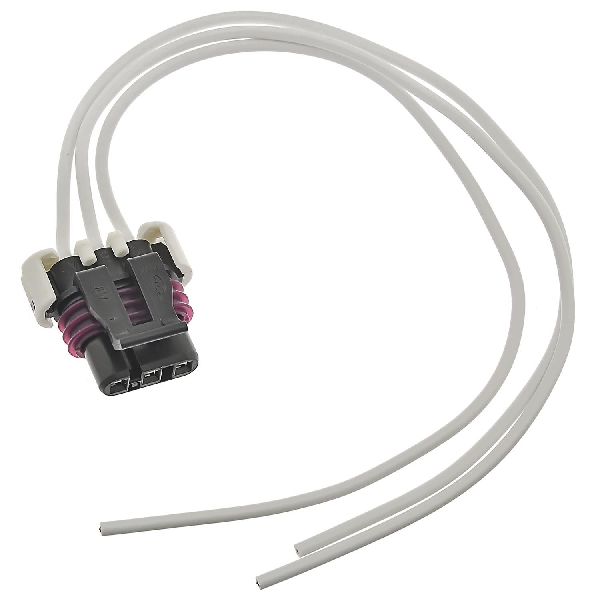
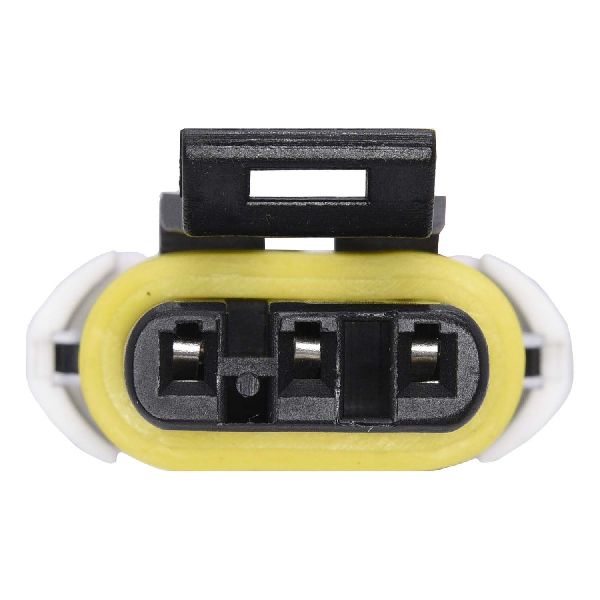
- Bank 2 Intake CMP Sensor Connector — On the front of the driver's side valve cover, near the top. It is a 3-pin connector.. This is the primary point for testing voltage, ground, and signal. The pins are typically: Pin 1 - Signal, Pin 2 - Ground, Pin 3 - 5V Power. Verify with a vehicle-specific diagram.
- ECM/PCM — Typically located in the engine bay, often near the battery or firewall, or sometimes inside the passenger cabin near the glove box.. This is the termination point for the sensor circuit. A continuity test from the sensor connector to the corresponding pins on the ECM connector is the final step to confirm wiring integrity if no fault is found at the sensor end.
Real Owner Repair Stories
- YouTube video by 'Replace Stuff' (2011 Hyundai Genesis 4.6L V8 Sedan (Note: 4.6L V8, but sensor location and replacement procedure are analogous to the 3.8L V6)) — Check Engine Light with a camshaft sensor code (P0366, which is Bank 1 Exhaust, but diagnosis is the same principle).
❌ Tried (didn't work) The user went straight to diagnosis and replacement.
✅ What actually fixed it The user replaced the faulty camshaft position sensor. The video clearly shows the location on the valve cover, the single 10mm bolt holding it in, and the process of removing the old sensor and installing the new one.
OEM Part Supersession History
39350-3F000→N/A - This part number appears to be stable and fits a wide range of Hyundai/Kia vehicles from 2008-2020.— N/A
Heads up: While the part number is used across many engines, including Elantra and Equus models, always verify fitment with the vehicle's VIN. There are other similar-looking sensors for different applications (e.g., 39350-25010, 39318-3C100) that will not work correctly.
Model Year Variations Within This Range
- 2009-2011: These years used the Lambda II MPI (Multi-Point Injection) version of the 3.8L V6. These engines are generally considered very reliable.
- 2012-2014: These years used the Lambda II GDI (Gasoline Direct Injection) version. While the P0345 diagnostic procedure is identical, GDI engines are inherently more susceptible to carbon buildup on intake valves. This doesn't directly cause P0345, but highlights a difference in long-term engine maintenance needs.
Diagnostic Flowchart
Other Known Issues on This Vehicle
Issues unrelated to this code that are worth knowing about as an owner of this generation:
- Carbon Buildup on Intake Valves (GDI models) 🟠 Medium — Common on 2012+ GDI engines, typically becoming problematic after 80,000-100,000 miles. Causes misfires, rough idle, and power loss.
- Brake System HECU Corrosion 🔴 High — Subject of NHTSA Recall 13V-113, affecting 2009-2012 models. Incorrect brake fluid could cause corrosion in the Hydraulic Electronic Control Unit (HECU), reducing braking performance. (Ref: NHTSA Campaign ID: 13V113000)
- Faulty Stop Lamp Switch 🟠 Medium — A widespread issue leading to NHTSA Recall 13V-113. The switch could fail, causing brake lights to not illuminate or cruise control to not deactivate. Affects 2009-2011 models. (Ref: NHTSA Campaign ID: 13V113000 (Expanded))
- Oil Leaks from Gaskets 🟡 Low — Becomes more common on higher mileage engines (100,000+ miles). Valve cover gaskets and oil pan gaskets are the most frequent sources of leaks.
- Early 8-Speed Transmission Problems 🟠 Medium — Some issues were reported with the new 8-speed automatic transmission introduced in 2012 models, though many were addressed under Hyundai's extensive warranty.
Used vs. New Parts: Buying Guide for This Vehicle
When a used part is the smart pick: Never. A camshaft position sensor is a relatively inexpensive electronic component that is a common wear-and-tear item. The labor to access it is minimal, but the risk of a used sensor failing shortly after installation makes it a poor value proposition. The potential for being stranded outweighs the small cost savings.
What to inspect on the donor part:
- Not applicable as a used part is not recommended.
OEM-only on this vehicle (don't cheap out):
- Camshaft Position Sensor
Aftermarket brands forum-validated for this vehicle:
- NTK
- Delphi
- Hitachi
Brands owners have reported issues with on this vehicle:
- Unbranded, 'white-box' parts from online marketplaces. Forum discussions frequently mention that cheap, no-name sensors are a common cause of repeat failures or codes that won't clear after replacement.
Real Owner Stories
Aggregated from forums and TSBs cited above. Mileages and costs reflect what owners reported in those sources.
2015 Hyundai Genesis 3.8L — ~110000 miles
Symptoms: Owner of a higher-mileage model reported idle issues caused by a faulty engine sensor.
What fixed it: Replacement of the faulty engine sensor.
Cost: $650-$875 (CAD)
Source hint: Reddit r/GenesisMotors thread titled '2015 Genesis 3.8 Reliability'
2012 Hyundai Genesis 3.8L
Symptoms: The vehicle experienced an abnormal signal from the camshaft position sensor circuit.
What fixed it: Diagnosis confirmed the P0345 code related to an abnormal sensor signal.
Source hint: AutoHex Online Help
Related OBD-II Codes
Frequently Asked Questions
Does TSB 12-EM-004 apply to my P0345 code on the 3.8L Lambda II V6?
What is the specific resistance specification for testing the CVVT components on my Genesis?
Is there a specific part number for the camshaft position sensor used in the 3.8L Genesis?
Can I use the 'sensor swap' method to diagnose a P0345 on my 2009-2014 Genesis?
Are there any recalls for the 2009-2012 Genesis that might be related to engine or electrical issues?
Does the 2012+ GDI engine have specific issues that could mimic P0345 symptoms?
Helpful Videos
We Have This Part in Stock


The information in this article is provided for general reference and educational purposes only. Vehicle specifications, procedures, and part compatibility can vary by production date, trim level, and region. Always consult your vehicle's factory service manual and verify part numbers before purchasing or performing repairs. Safety-critical components such as airbags, seat belts, and braking systems should be installed by a qualified professional.
- Hyundai Genesis:
- 🧭 Diagnostic Flowchart
- 🎬 Helpful Videos
- 🛍️ Shop This Part
- What's Unique About the 2009-2014 Hyundai Genesis
- Symptoms You May Notice
- Most Likely Causes
- Rare But Worth Checking
- Diagnosis Steps
- Parts You'll Likely Need
- Related Codes That Often Appear With This One
- Technical Service Bulletins (TSBs) & Recalls
- Platform-Specific Known Issues
- Mechanic-Grade Diagnostic Values
- Hidden / Shadow Codes Worth Checking
- Wiring & Ground Locations
- Real Owner Repair Stories
- OEM Part Supersession History
- Model Year Variations Within This Range
- Other Known Issues on This Vehicle
- Used vs. New Parts: Buying Guide for This Vehicle
- Real Owner Stories
- 2015 Hyundai Genesis 3.8L — ~110000 miles
- 2012 Hyundai Genesis 3.8L
- Related OBD-II Codes
- Frequently Asked Questions
- 🎟️ Get 5% Off