

P0345 on 2013-2019 Hyundai Santa Fe 3.3L V6: Camshaft Sensor Bank 2 Causes and Fixes
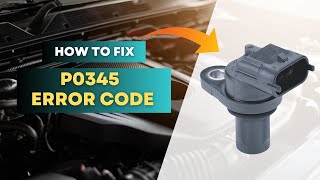
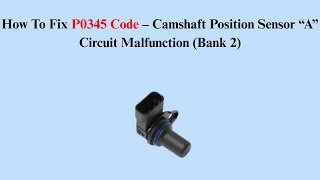
This code indicates a fault with the intake camshaft position sensor on Bank 2 (the engine bank near the radiator). The most common fix is replacing the sensor itself. Before buying parts, swap the front (Bank 2) and rear (Bank 1) intake cam sensors; if the code changes to P0340, you've confirmed the sensor is bad. An OEM sensor costs around $90-$150. Always check engine oil level and condition first, as low or dirty oil can cause timing issues on this engine.
- P0345 points to the intake camshaft sensor on the front (radiator side) of the engine.
- The most likely cause is a failed sensor, which is an easy and inexpensive DIY replacement.
- Always check your engine oil level and condition before starting repairs.
- The most effective diagnostic is to swap the front and rear intake cam sensors and see if the code changes to P0340.
- Use a quality OEM or reputable aftermarket brand for the replacement sensor for best results.
What's Unique About the 2013-2019 Hyundai Santa Fe
The Lambda II 3.3L V6 engine (G6DH) uses a Continuous Variable Valve Timing (CVVT) system that is highly dependent on clean oil and correct oil pressure to function properly. While P0345 is an electrical circuit code, its diagnosis should always start with an oil level and condition check, as low or dirty oil can cause various timing-related issues on this engine. Fortunately, on this vehicle, the Bank 2 sensor is located on the front of the engine, making it much easier to access than the Bank 1 sensor against the firewall.
Generation note: The 2013-2019 year range covers the third-generation Santa Fe (2013-2018, long-wheelbase model) and the 2019 Santa Fe XL, which was a continuation of the same platform. The Lambda II 3.3L GDi V6 engine (G6DH) and the causes for this code are consistent across these model years.
Symptoms You May Notice
- Check Engine Light is on
- Engine is hard to start or cranks but won't start
- Engine stalls, especially at idle or when decelerating
- Rough idling
- Noticeable loss of acceleration and power (limp mode)
- Reduced fuel economy
- Engine misfires, potentially on cylinders 2, 4, and 6
- Engine hesitates when accelerating
- Replacing the camshaft position sensor without first performing the 'swap test' to confirm it's the faulty component.
- Replacing the Bank 1 (firewall side) sensor instead of the Bank 2 (radiator side) sensor specified by the code.
- Replacing the crankshaft position sensor, which is a different part with a different function that typically sets code P0335.
- Replacing the Oil Control Valve (OCV), which typically sets correlation codes like P0018, not a circuit code like P0345.
Most Likely Causes
- Failed Bank 2 Intake Camshaft Position Sensor 🔴 High Probability → Shop Engine Camshaft Position Sensor Like any electronic sensor, it is subject to failure over time from constant heat cycles and vibration. The internal electronics can fail, leading to a complete or intermittent loss of signal. This is the most direct and frequent cause for a circuit-specific code like P0345.
How to confirm: Swap the Bank 2 intake sensor (front, near radiator) with the Bank 1 intake sensor (rear, near firewall). They are identical parts. Clear the codes and drive. If the code changes to P0340, the sensor is faulty. This is the most definitive diagnostic step.
Typical fix: Replace the faulty camshaft position sensor. It is held in by a single 10mm bolt. Many owners and technicians recommend using an OEM Hyundai/Kia sensor, as some aftermarket brands have been reported to be faulty out-of-the-box or fail prematurely.
Est. part cost: $40-$150 - Wiring Harness or Connector Issue 🟡 Medium Probability The wiring harness in the engine bay is exposed to heat, which can make wires brittle. Oil from a potential valve cover leak can also contaminate the connector, disrupting the signal.
How to confirm: Visually inspect the sensor's connector and wiring for signs of damage, corrosion, loose pins, or oil saturation. Perform a 'wiggle test' on the harness with the engine running to see if it affects the idle. Use a multimeter to check for 5V reference, ground, and signal continuity at the connector.
Typical fix: Repair the damaged section of wiring or replace the pigtail connector. Clean any oil out of the connector with electrical contact cleaner.
Est. part cost: $15-$50 - Low, Dirty, or Incorrect Engine Oil ⚪ Low Probability The Lambda V6's CVVT system relies on oil pressure to adjust cam timing. Severe oil sludging or a very low oil level can cause erratic camshaft movement, which the ECM might flag as a sensor circuit fault. This engine family has a known history of potential oil consumption issues, making regular oil level checks critical.
How to confirm: Check the engine oil level and condition on the dipstick. This should be the very first step before any other diagnosis.
Typical fix: Perform an oil and filter change using the correct viscosity oil (check owner's manual) and a quality filter. Using an OEM Hyundai/Kia oil filter is often recommended by forum members to ensure proper oil pressure.
Est. part cost: $50-$100
Rare But Worth Checking
- Stretched Timing Chain or Failed CVVT Components: → Shop Engine Timing Chain While this typically sets correlation codes like P0018, a significant mechanical timing issue can sometimes cause the sensor's signal to be so far out of the expected range that the ECM flags it as a circuit fault. Listen for a rattling noise on cold starts, which is a known symptom of a failing timing chain tensioner on this engine.
- Failed Powertrain Control Module (PCM): This is extremely rare. The PCM should only be considered after all other possibilities, including sensor, wiring, and mechanical checks, have been exhaustively ruled out by a professional.
- Failing Alternator: → Shop Alternator A failing alternator can introduce electrical noise (AC ripple) into the vehicle's electrical system, which can interfere with sensitive sensor signals like the camshaft position sensor, sometimes triggering a P0345 code.
Diagnosis Steps
- Read the code with an OBD-II scanner to confirm P0345 is the primary code present.
- Check the engine oil level and condition. Top off or change if necessary. This is a critical first step for this engine.
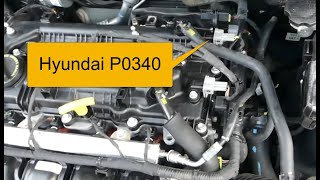
- Locate the Bank 2 intake camshaft position sensor on the front valve cover, near the radiator.
- Inspect the sensor's electrical connector and wiring for any signs of damage, corrosion, or oil contamination.
- Perform the Sensor Swap Test: Swap the Bank 2 (front) intake sensor with the Bank 1 (rear) intake sensor. They are identical parts held by a single 10mm bolt.
- Clear the codes, start the engine, and drive the vehicle. Re-scan for codes.
- If the code returns as P0340 (Bank 1), the sensor you moved is faulty and needs replacement. This is the most common outcome.
- If the P0345 code returns, the problem lies in the wiring to the Bank 2 sensor. Use a multimeter to test for 5V reference, ground, and signal at the connector.
- If wiring and sensor are confirmed good, the issue may be mechanical (timing chain, phaser) or a rare electrical problem (alternator, ECM) requiring advanced diagnosis.
Parts You'll Likely Need
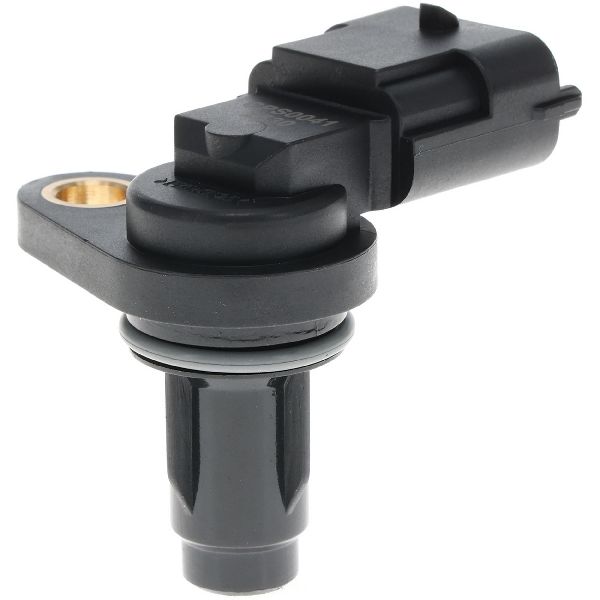
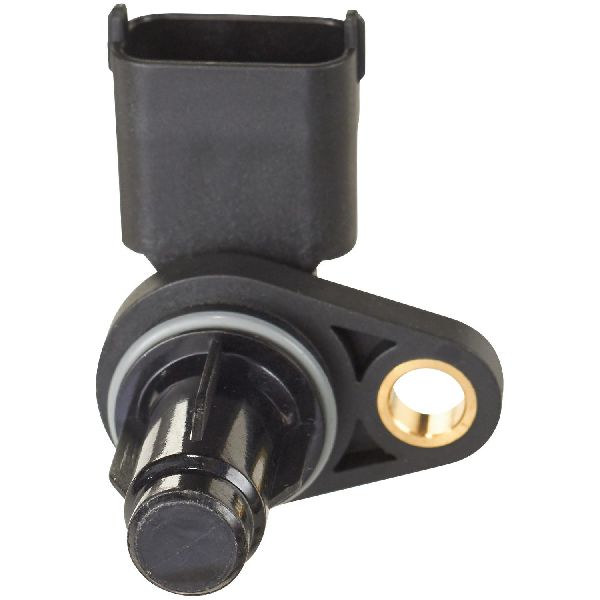
- Camshaft Position Sensor (Intake, Bank 2)
(OEM #39318-3C500)— This is the most common component to fail electronically, triggering the P0345 circuit code. The Bank 1 and Bank 2 intake sensors are identical. The OEM part number is also listed as 39318-3L000.
Trusted brands: Hyundai/Kia (OEM), Hitachi (often the OEM supplier), Delphi, NGK/NTK, Standard Motor Products (SMP), Beck/Arnley
OEM price range: $90-$150
Aftermarket price range: $40-$90
Related Codes That Often Appear With This One
- P0340 — This is the equivalent code for Bank 1. It will appear if you swap a faulty Bank 2 sensor to the Bank 1 position as a diagnostic test, confirming the sensor is bad.
- P0018 — This is a timing correlation code for Bank 2. Seeing P0345 and P0018 together may suggest a more serious mechanical issue, like a stretched timing chain or a failing oil control valve (OCV), is causing the sensor signal to be implausible.
- P0349 — This code indicates an intermittent signal from the same sensor. It often appears as the sensor begins to fail, before becoming a hard fault that sets P0345.
- P0300, P0302, P0304, P0306 — These are codes for random or specific misfires on Bank 2. An incorrect camshaft signal disrupts ignition and fuel timing, which can lead to misfires on the affected bank.
Technical Service Bulletins (TSBs) & Recalls
- TSB 25-EM-008H: Details a warranty extension (TXX8) to 15 years/150,000 miles for engine inspection and repair related to abnormal engine noise or damage on 2013-2019 Santa Fe 3.3L models. While not for P0345 directly, it is relevant context for overall engine health.
- TSB 19-EM-003H / 21-EM-003H / 23-EM-008H: These TSBs relate to oil consumption issues and testing procedures for the Lambda II engine family, which can be a contributing factor to timing-related fault codes if the oil level becomes critically low.
Platform-Specific Known Issues
- The Lambda II 3.3L V6 engine has a known history of potential oil consumption and timing chain tensioner wear at higher mileage, which can be signaled by a rattle on cold starts. While P0345 is an electrical code, being aware of the engine's mechanical health is important context.
- Some owners report better long-term reliability with OEM sensors compared to some aftermarket brands for this specific application. Using unbranded 'white-box' sensors from online marketplaces is frequently reported to cause issues.
- A class-action lawsuit alleges premature engine wear and failure on some 3.3L Lambda II GDI engines, leading Hyundai to extend the engine warranty for certain conditions to 15 years/150,000 miles. This highlights the importance of addressing any engine-related codes promptly.
Mechanic-Grade Diagnostic Values
- Camshaft Position Sensor Connector - Reference Voltage — expected: ~5.0 Volts DC (with key on, engine off, measured at the connector pigtail). Failure: A reading of 0V or significantly less than 5V points to a wiring issue or a problem with the ECM's 5V reference circuit.
- Camshaft Position Sensor Connector - Ground Circuit Resistance — expected: Near 0 Ohms of resistance to a known good chassis ground.. Failure: High resistance or an Open Line (OL) reading indicates a broken or corroded ground wire, which is a common cause of sensor circuit codes.
- Camshaft Position Sensor Internal Resistance — expected: Between 200 and 1,200 Ohms (measured across sensor terminals when disconnected).. Failure: A reading of infinite resistance (open circuit) or zero resistance (short circuit). Note: This test is not always conclusive as a sensor can fail under heat but test good when cold.
- Alternator AC Ripple Voltage — expected: Less than 100 millivolts (mV) AC, measured at the battery terminals with the engine running.. Failure: Excessive AC voltage (ripple) above 100mV indicates failing alternator diodes. This electrical noise can interfere with sensitive signals from the camshaft sensor, causing a false P0345 code.
Scan Tool Commands That Help
- Hyundai GDS (or equivalent professional scanner): Resetting Adaptive Values — After replacing the sensor or repairing the circuit, use this function under 'Vehicle S/W Management' to clear learned engine parameters. This forces the ECM to re-adapt to the new component more quickly and can resolve lingering drivability issues.
- Hyundai GDS (or equivalent professional scanner): Flight Logger / Data Analysis — For intermittent faults (like P0349) that are hard to reproduce. This function records sensor data over a complete drive cycle, allowing a technician to graph the camshaft sensor signal and visually identify dropouts or glitches that trigger the code.
Wiring & Ground Locations
- Bank 2 CMP Sensor Connector — On the front (radiator side) valve cover, plugged into the intake camshaft position sensor. It is easily visible and accessible from the top of the engine bay.. This is the primary point for all electrical testing. The connector itself and the first few inches of wiring are the most common locations for wiring faults due to engine vibration and heat, or oil contamination from a leaky valve cover gasket.
Real Owner Repair Stories
- Aggregated from Hyundai-Forums.com and SantaFeForums.com (2014 Hyundai Santa Fe 3.3L V6, approx. 95,000 miles) — Check engine light on, engine would occasionally hesitate when accelerating from a stop and sometimes took longer to start.
❌ Tried (didn't work) Checked oil level (it was full and clean)., Cleared the code, but it returned within two drive cycles.
✅ What actually fixed it Owner followed forum advice and performed the 'swap test.' They swapped the front (Bank 2) intake cam sensor with the rear (Bank 1) intake cam sensor. After clearing codes, the car threw a P0340 (Bank 1) code. This confirmed the sensor itself was faulty. Replacing the faulty sensor with a new OEM part (39318-3C500) and moving the good original sensor back to its correct bank permanently resolved the issue.
OEM Part Supersession History
39318-3C500→39318-3L000 (or considered equivalent/interchangeable)— Standard part evolution and supplier changes. Both part numbers are frequently cited for this application and are considered compatible for the intake camshaft position sensors on this engine.
Heads up: CRITICAL: Do NOT use part number 39350-3C410. It is often confused with the camshaft sensor but is for the CRANKSHAFT position sensor. It may look similar but will not work and will cause a no-start or poor running condition.
Diagnostic Flowchart
Other Known Issues on This Vehicle
Issues unrelated to this code that are worth knowing about as an owner of this generation:
- Premature Engine Failure / Rod Bearing Failure 🔴 High — Occurs at various mileages, sometimes under 80,000 miles. A class-action lawsuit was filed, and Hyundai issued a warranty extension (15yr/150k miles) for related engine damage. (Ref: Warranty Extension TXX8 (related to TSB 25-EM-008H))
- Timing Chain Tensioner Rattle on Cold Start 🟠 Medium → Shop Engine Timing Chain — Commonly reported on higher-mileage vehicles. A 2-3 second rattle upon cold start indicates a worn tensioner that has lost oil pressure, which can lead to a stretched or jumped timing chain if ignored.
- Excessive Oil Consumption 🟠 Medium — Reported by some owners as the engine ages, potentially due to piston oil control ring issues. Can lead to low oil levels that exacerbate other engine problems. (Ref: TSB 21-EM-003H, TSB 23-EM-008H)
- Intake Valve Carbon Buildup 🟡 Low — A common issue for all Gasoline Direct Injection (GDI) engines, including the Lambda II. Typically becomes noticeable after 60,000-80,000 miles, causing potential rough idle or minor power loss.
- Faulty Knock Sensor 🟡 Low — Can fail and trigger a Check Engine Light (P0326) without noticeable drivability issues. The sensor is located under the intake manifold, making replacement moderately labor-intensive.
Used vs. New Parts: Buying Guide for This Vehicle
When a used part is the smart pick: For this specific repair, a used part is almost never a smart choice. The part is a relatively low-cost electronic sensor that fails due to age and heat cycles. The risk of a used part failing soon after installation outweighs the small cost savings.
Donor-vehicle mileage cap: roughly under 40000 miles for the part to have meaningful remaining life.
What to inspect on the donor part:
- If forced to use a used part, source it from the lowest-mileage vehicle possible.
- Avoid parts from engines that show signs of heavy oil sludge or poor maintenance.
- Inspect the plastic connector housing for cracks or brittleness.
OEM-only on this vehicle (don't cheap out):
- Camshaft Position Sensor
Aftermarket brands forum-validated for this vehicle:
- NTK
- Delphi
- Mando (often an OE supplier for Hyundai/Kia)
Brands owners have reported issues with on this vehicle:
- Unbranded or 'white-box' sensors from online marketplaces like Amazon or eBay are frequently reported in forums to be dead-on-arrival or fail within a few months, causing the code to return.
Real Owner Stories
Aggregated from forums and TSBs cited above. Mileages and costs reflect what owners reported in those sources.
2017 Hyundai Santa Fe SE 3.3L V6
Symptoms: Startup rattle caused by a failed timing chain tensioner.
What fixed it: The owner discussed the startup rattle as a potential underlying mechanical issue related to the Lambda 3.3L V6 engine architecture.
Source hint: hyundai-forums.com thread titled 'Hyundai Lambda 3.3L V6 startup rattle - 2017 Hyundai Santa Fe SE - Is this normal?'
2014 Hyundai Santa Fe 3.3L V6
Symptoms: Catastrophic engine failure involving a rod bearing.
What fixed it: The owner received a warranty extension letter from Hyundai for this exact issue after the failure occurred.
Source hint: Reddit r/Hyundai post 'Engine failure in 2014 Santa Fe'
Related OBD-II Codes
Frequently Asked Questions
Does TSB 25-EM-008H apply to my 2013-2019 Santa Fe 3.3L if I have a P0345 code?
Can I use an aftermarket sensor to fix the P0345 code on my Santa Fe?
Is there a simple way to test if the Bank 2 intake sensor is actually bad before buying a new one?
Could low oil level cause a P0345 code on the 3.3L Lambda II engine?
Is the engine in my 2013-2019 Santa Fe covered by a warranty extension for these types of issues?
What is the 'wiggle test' mentioned for the Santa Fe wiring harness?
Helpful Videos
We Have This Part in Stock


The information in this article is provided for general reference and educational purposes only. Vehicle specifications, procedures, and part compatibility can vary by production date, trim level, and region. Always consult your vehicle's factory service manual and verify part numbers before purchasing or performing repairs. Safety-critical components such as airbags, seat belts, and braking systems should be installed by a qualified professional.
- Hyundai Santa Fe:
- 🧭 Diagnostic Flowchart
- 🎬 Helpful Videos
- 🛍️ Shop This Part
- What's Unique About the 2013-2019 Hyundai Santa Fe
- Symptoms You May Notice
- Most Likely Causes
- Rare But Worth Checking
- Diagnosis Steps
- Parts You'll Likely Need
- Related Codes That Often Appear With This One
- Technical Service Bulletins (TSBs) & Recalls
- Platform-Specific Known Issues
- Mechanic-Grade Diagnostic Values
- Scan Tool Commands That Help
- Wiring & Ground Locations
- Real Owner Repair Stories
- OEM Part Supersession History
- Other Known Issues on This Vehicle
- Used vs. New Parts: Buying Guide for This Vehicle
- Real Owner Stories
- 2017 Hyundai Santa Fe SE 3.3L V6
- 2014 Hyundai Santa Fe 3.3L V6
- Related OBD-II Codes
- Frequently Asked Questions
- 🎟️ Get 5% Off