

P0345 on 2016-2020 Kia Sorento 3.3L V6: Camshaft Sensor Bank 2 Causes and Fixes
This code points to a fault with the Bank 2 intake camshaft position sensor. On the 3.3L V6, this is the sensor on the cylinder head closer to the radiator. It's most often a failed sensor, which is an easy DIY fix costing $45-$80 for an aftermarket part or around $110 for OEM. Swapping the Bank 2 (front) and Bank 1 (rear) sensors is the best way to confirm the failure before buying a new part.
- P0345 specifically refers to the INTAKE camshaft sensor on the engine bank NEAR THE RADIATOR.
- The most likely cause is a failed sensor, which is an inexpensive part and very easy to replace with just a 10mm socket.
- Before buying a new sensor, check the wiring connector for damage and consider swapping the front and rear intake sensors to confirm the sensor is the problem.
- Driving with this code is risky as the engine could stall at any time.
- There are no known recalls or Technical Service Bulletins (TSBs) from Kia for this specific problem.
What's Unique About the 2016-2020 Kia Sorento
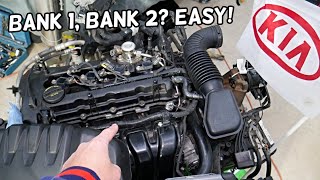
For the transverse-mounted Lambda II 3.3L V6 in the Sorento, correctly identifying 'Bank 2' is the most critical step. It is the bank of cylinders closer to the front of the vehicle (radiator), not the one against the firewall. 🎬 See this video to correctly identify Bank 1 and Bank 2. While the Lambda engine family is generally reliable, this code is almost always caused by a simple sensor failure rather than more complex mechanical timing issues, making it a common and straightforward repair for owners of this specific vehicle. The intake and exhaust sensors on the same bank are identical, as are the intake sensors between banks, allowing for easy diagnostic swapping.
Symptoms You May Notice
- Check Engine Light is on
- Engine is difficult to start or takes longer to crank
- Engine will not start at all
- Rough or unstable idle
- Engine hesitates or stalls during driving
- Noticeable loss of engine power and poor acceleration
- Decreased fuel economy
- Engine misfiring or running rough
- Replacing the wrong sensor (e.g., the Bank 1 sensor on the firewall side, or the exhaust sensor instead of the intake sensor).
- Replacing the camshaft position sensor without first inspecting the electrical connector and wiring for damage or corrosion.
- Replacing the camshaft position sensor when the actual problem is a clogged or faulty Oil Control Valve (OCV) due to poor oil maintenance.
Most Likely Causes
- Failed Bank 2 Intake Camshaft Position Sensor 🔴 High Probability → Shop Engine Camshaft Position Sensor Like any electronic component exposed to constant engine heat cycles, these sensors can fail over time. It is the most frequently reported cause for this code on Kia/Hyundai forums.
How to confirm: After checking the wiring, the easiest way to confirm is to swap the suspect sensor with the identical sensor from Bank 1 (firewall side). If the code changes to P0340 (Bank 1), the sensor is faulty. You can also test resistance with a multimeter, though swapping is more definitive.
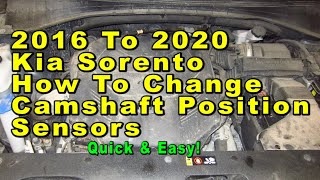
Typical fix: Replace the Bank 2 (front) intake camshaft position sensor. It is held by a single 10mm bolt and is easily accessible. 🎬 Watch this quick walkthrough on how to change the sensors.
Est. part cost: $45-$120 - Wiring Harness or Connector Issue 🟡 Medium Probability The wiring harness is located on top of the engine and is subject to heat and vibration, which can lead to chafing, breaks, or corrosion in the connector pins over time. Oil from a leaky valve cover gasket can also contaminate the connector.
How to confirm: Visually inspect the wiring leading to the sensor for any signs of damage, melting, or chafing. Unplug the connector and check for corrosion, bent pins, or oil contamination. Check for continuity and voltage at the connector with a multimeter.
Typical fix: Repair the damaged section of wire or clean the connector terminals with electrical contact cleaner. If the connector itself is damaged, a replacement pigtail may need to be spliced in.
Est. part cost: $5-$30 - Low or Dirty Engine Oil Affecting CVVT ⚪ Low Probability The Lambda GDI engine is known to be sensitive to oil level and quality. While less common for a pure circuit code like P0345, extremely low or sludgy oil can affect the operation of the CVVT (Continuously Variable Valve Timing) system's oil control valves (OCV), which can sometimes trigger related sensor codes.
How to confirm: Check the engine oil level and condition using the dipstick. If the oil is very low, black, or sludgy, this could be a contributing factor.
Typical fix: Perform an engine oil and filter change using the correct viscosity oil and a quality OEM filter. If the problem persists, the OCV for Bank 2 may be clogged or faulty.
Est. part cost: $40-$80
Rare But Worth Checking
- Stretched Timing Chain or Failed CVVT Phaser: → Shop Engine Timing Chain While rare for this specific code, a mechanical timing issue can cause the camshaft's position to be out of sync with what the ECM expects. This would typically be accompanied by rattling noises from the engine on startup and other timing correlation codes like P0018 or P0019. In one documented case on a similar 3.3L Lambda engine, the alignment dowel pin on the CVVT phaser sheared off, causing a timing correlation issue that could be misinterpreted.
- Failed Powertrain Control Module (PCM): This is extremely rare. The PCM should only be considered a potential cause after all other possibilities, including the sensor, wiring, and mechanical timing, have been thoroughly ruled out. A professional diagnosis is required to confirm a failed PCM.
Diagnosis Steps
- Read the code with an OBD-II scanner to confirm P0345 is present.
- Turn off the engine. Locate the Bank 2 (front/radiator side) intake camshaft position sensor.
- Inspect the electrical connector for loose connections, corrosion, or oil contamination. Check the wiring harness leading to the sensor for any visible damage, chafing, or melting.
- If wiring looks good, disconnect the connector and remove the sensor (held by one 10mm bolt). Inspect the sensor for physical damage or heavy oil sludge.
- For a definitive test, swap the Bank 2 intake sensor with the Bank 1 (rear/firewall side) intake sensor. They are identical parts (OEM #39318-3L000). 🎬 Watch a mechanic replace both sensors on a 3.3L engine.
- Reinstall the sensors, clear the codes with the scanner, and start the engine. Let it run for a few minutes and/or take a short drive.
- Re-scan for codes. If the code has changed to P0340 (Camshaft Position Sensor Circuit Malfunction Bank 1), the sensor you moved is faulty and needs to be replaced.
- If the P0345 code returns, the problem lies in the wiring to the Bank 2 sensor or, rarely, the ECM itself. Use a multimeter to test for 5V reference, ground, and signal at the Bank 2 connector.
- If no codes return, the issue may have been an intermittent connection that was resolved by reseating the connector. Continue to monitor.
Parts You'll Likely Need
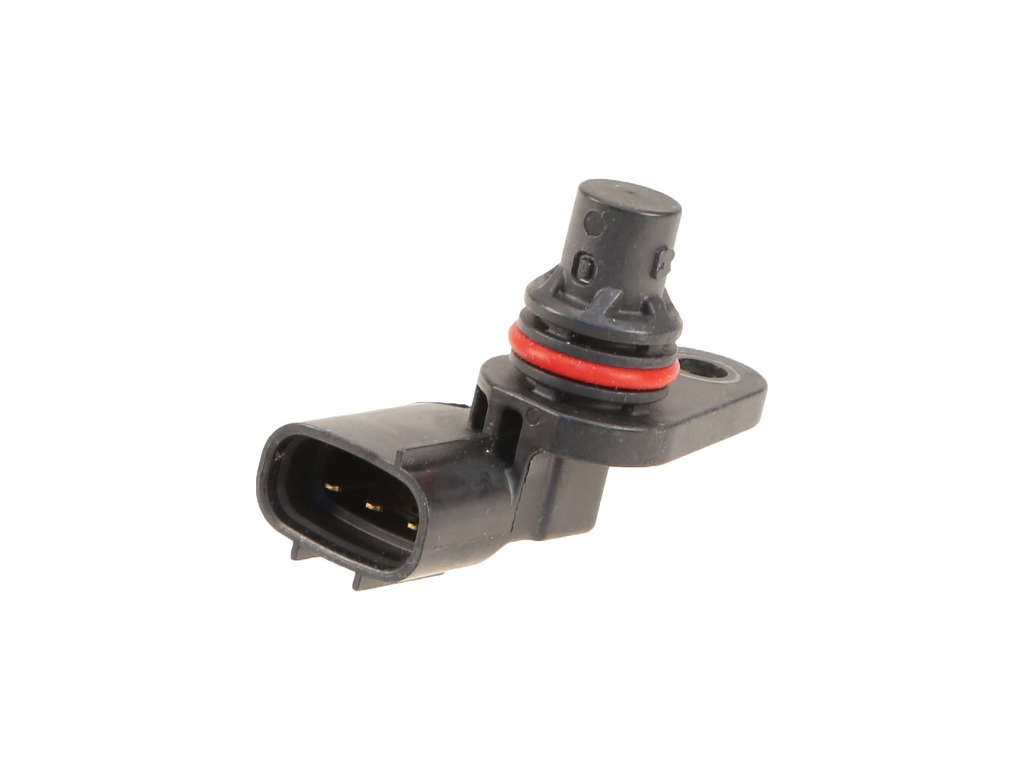
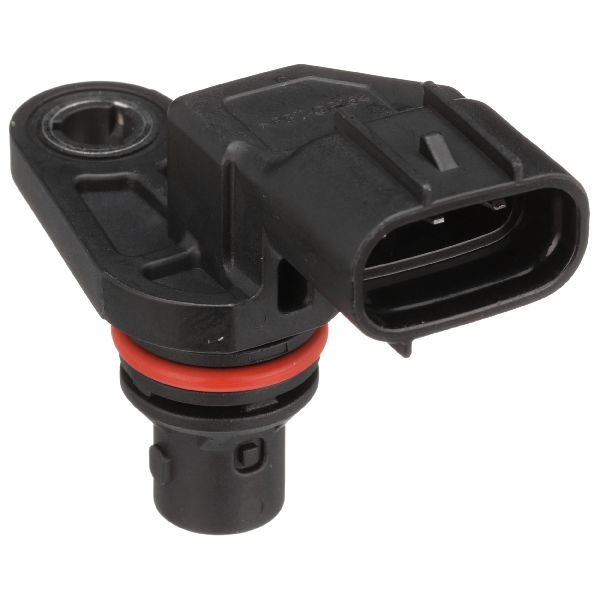
- Camshaft Position Sensor (Bank 2, Intake)
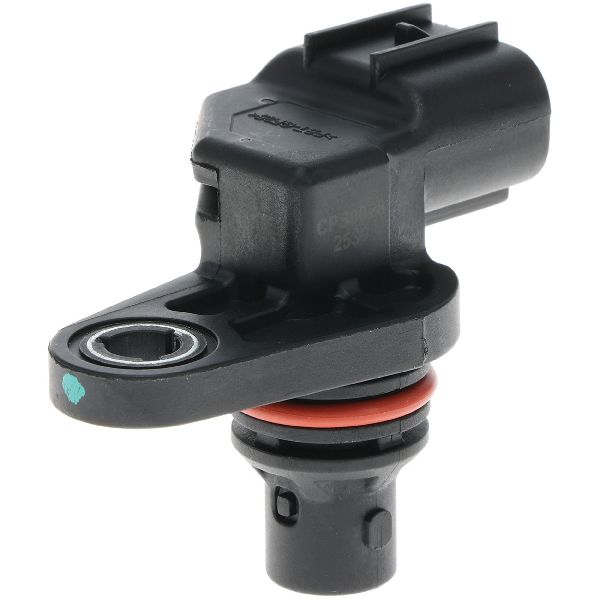
(OEM #39318-3L000)— This sensor is the most common failure point for code P0345. It is a simple electronic component that wears out over time due to heat and vibration. Using an OEM sensor is often recommended on forums to avoid compatibility issues with aftermarket parts.
Trusted brands: Kia (OEM), Hyundai (OEM), Delphi, Spectra Premium, Beck/Arnley
OEM price range: $100-$120
Aftermarket price range: $45-$80
Related Codes That Often Appear With This One
- P0340 — This is the identical code but for Bank 1. Seeing both P0340 and P0345 could indicate a systemic issue like a wiring problem common to both banks or a failing PCM. It will also appear if you swap a bad Bank 2 sensor to the Bank 1 position for diagnosis.
- P0335 — This is a code for the Crankshaft Position Sensor. Since the cam and crank sensors work together to establish engine timing, a fault in one can sometimes cause the ECM to report a fault in the other.
- P0018 / P0019 — These are timing correlation codes for Bank 2. If P0345 appears with these, it increases the likelihood of a mechanical issue like a stretched timing chain or a problem with the CVVT phaser, rather than just a sensor circuit fault.
Platform-Specific Known Issues
- Oil Consumption: The Lambda II 3.3L GDI engine can consume oil between changes. Owners should check oil levels frequently, as low oil can cause various timing-related codes, including those for the CVVT system which can be misdiagnosed as sensor issues.
Mechanic-Grade Diagnostic Values
- Camshaft Position Sensor (3-wire Hall Effect) Signal Voltage — expected: A repeating square-wave pattern switching between approximately 0.5V and 4.5V when viewed on an oscilloscope.. Failure: A flat line, a distorted pattern, or missing pulses indicates a faulty sensor or wiring issue.
- Oil Control Valve (OCV) / VVT Solenoid Resistance — expected: 6.9 - 7.9 Ω (Denso type) or 9.4 - 10.4 ohms (Delphi type) at 68°F / 20°C.. Failure: A reading of 0 ohms (short) or infinite/OL (open) indicates a failed solenoid. This is a related component, not the primary cause of a circuit code, but useful if timing correlation codes are also present.
Scan Tool Commands That Help
- Kia GDS (Global Diagnostic System): Actuation Test: "OIL CONTROL VALVE" — While not a direct test for the P0345 sensor circuit code, this command allows a technician to manually activate the CVVT Oil Control Valve (OCV). This is useful for ruling out a stuck OCV if mechanical timing issues or other codes like P0018/P0019 are suspected alongside P0345.
Wiring & Ground Locations
- Camshaft Position Sensor Connector — On the top of the valve cover for Bank 2 (front/radiator side), connecting to the intake camshaft position sensor.. This 3-pin connector is a common point of failure due to heat and vibration. Inspecting for corrosion, oil contamination, or loose pins is a critical first step. The pins correspond to power (approx. 5V), ground, and signal.
- Engine Ground Straps — Key grounding points are from the battery negative terminal to the chassis, and from the chassis to the engine block and transmission case.. A poor engine ground can introduce electrical noise and voltage drops, potentially causing erratic signals from sensors like the CMP. While not a primary cause, checking that main grounds are clean and tight is good practice for any electrical fault.
OEM Part Supersession History
39318-3C500→39318-3L000— Part number consolidation and potential minor internal revisions for durability across multiple Hyundai/Kia models with the Lambda V6 engine family.
Heads up: The newer part number 39318-3L000 is backward compatible and is the correct service part for the entire 2016-2020 range.
Model Year Variations Within This Range
- 2019-2020: For the 2019 model year refresh, the 3.3L V6 was paired with a new 8-speed automatic transmission, replacing the previous 6-speed. This change does not affect the engine's core components, sensors, or the diagnosis for code P0345, but it is a notable powertrain difference in later models of this generation.
Diagnostic Flowchart
Other Known Issues on This Vehicle
Issues unrelated to this code that are worth knowing about as an owner of this generation:
- GDI Intake Valve Carbon Buildup 🟠 Medium — Common on GDI engines, typically becomes noticeable after 60,000-80,000 miles. Can cause rough idle, misfires, and reduced performance.
- Engine Oil Consumption 🟠 Medium — Many owners on forums report noticeable oil consumption between changes. Can lead to low oil levels, triggering CVVT-related codes (e.g., P0024) and potentially causing severe engine damage if not monitored.
- Premature Headlight Burnout 🟡 Low — A widely reported issue where halogen headlight bulbs burn out frequently. Some owners suggest it may be due to wiring harness issues causing voltage spikes.
- Crankshaft Failure (2017 models) 🔴 High — A small number of 2017 Sorentos with the 3.3L engine were recalled for improperly heat-treated crankshafts that could fail, leading to engine stall. (Ref: NHTSA Recall SC153)
- High-Pressure Fuel Pump (HPFP) Failure 🟠 Medium — The camshaft-driven HPFP is a known weak point on this engine family, sometimes leading to fuel delivery errors. Kia has extended the warranty for this part on some platform mates. (Ref: Related to Kia Warranty Extension WTY034 on other models)
Used vs. New Parts: Buying Guide for This Vehicle
When a used part is the smart pick: A used part is generally not recommended for this repair. The camshaft position sensor is an electronic wear item exposed to significant heat. The cost savings of a used sensor (typically $15-$25) are minimal compared to a new aftermarket part and do not justify the risk of premature failure or receiving a part that is already faulty.
Donor-vehicle mileage cap: roughly under 40000 miles for the part to have meaningful remaining life.
What to inspect on the donor part:
- If buying used is unavoidable, source from a vehicle with the lowest possible mileage.
- Visually inspect the sensor's plastic housing for any cracks or signs of heat stress.
- Ensure the connector pins are straight and free of corrosion.
OEM-only on this vehicle (don't cheap out):
- Timing Chains
- Camshaft Phasers (CVVT Actuators)
Aftermarket brands forum-validated for this vehicle:
- Delphi
- Standard Motor Products (SMP)
- Beck/Arnley
- Hitachi
Brands owners have reported issues with on this vehicle:
- Unbranded, 'white-box' sensors from online marketplaces are frequently cited on forums as having high failure rates or causing compatibility issues.
Real Owner Stories
Aggregated from forums and TSBs cited above. Mileages and costs reflect what owners reported in those sources.
2020 Kia Sorento 3.3L V6
Symptoms: High oil consumption noted, which can lead to timing-related problems if the level gets too low.
What fixed it: Monitoring and maintaining oil levels to prevent CVVT and sensor-related issues.
Source hint: Reddit (r/kia)
2016-2020 Kia Sorento 3.3L V6
Symptoms: Standard P0345/P0340 error codes; sensor failure is the most common point of failure reported on forums.
What fixed it: Swapping sensors between banks to diagnose, followed by replacing the faulty sensor (OEM #39318-3L000).
Source hint: Kia Forums (kia-forums.com)
Related OBD-II Codes
Frequently Asked Questions
Which specific sensor do I need to replace for a P0345 code on my 3.3L Sorento?
Is there a way to test if the sensor is actually bad before I buy a new one?
Could my 2017 Sorento's P0345 code be related to the crankshaft recall?
Can low oil levels cause this code on the Lambda II GDi engine?
Are there any specific aftermarket brands recommended for the camshaft sensor?
Does the high-pressure fuel pump (HPFP) ever cause issues on this engine?
Helpful Videos
We Have This Part in Stock


The information in this article is provided for general reference and educational purposes only. Vehicle specifications, procedures, and part compatibility can vary by production date, trim level, and region. Always consult your vehicle's factory service manual and verify part numbers before purchasing or performing repairs. Safety-critical components such as airbags, seat belts, and braking systems should be installed by a qualified professional.
- Kia Sorento:
- 🧭 Diagnostic Flowchart
- 🎬 Helpful Videos
- 🛍️ Shop This Part
- What's Unique About the 2016-2020 Kia Sorento
- Symptoms You May Notice
- Most Likely Causes
- Rare But Worth Checking
- Diagnosis Steps
- Parts You'll Likely Need
- Related Codes That Often Appear With This One
- Platform-Specific Known Issues
- Mechanic-Grade Diagnostic Values
- Scan Tool Commands That Help
- Wiring & Ground Locations
- OEM Part Supersession History
- Model Year Variations Within This Range
- Other Known Issues on This Vehicle
- Used vs. New Parts: Buying Guide for This Vehicle
- Real Owner Stories
- 2020 Kia Sorento 3.3L V6
- 2016-2020 Kia Sorento 3.3L V6
- Related OBD-II Codes
- Frequently Asked Questions
- 🎟️ Get 5% Off