

P0345 on 2018-2023 Kia Stinger 3.3L: Camshaft Sensor Bank 2 Causes and Fixes
P0345 on a Kia Stinger 3.3L V6 typically indicates a failed camshaft position sensor on Bank 2 (driver's side). For 2018 models, a wiring harness recall (SC170) is a major suspect. For all years, oil leaking from the Bank 2 turbo feed line (Recall SC300) can contaminate and ruin the sensor. A new sensor costs about $60-$110 and is a straightforward DIY replacement.
- For a P0345 code, first check if your 2018 Stinger is affected by recall SC170, as a wiring issue is a very likely cause.
- For all 2018-2023 models, check for recall SC300 and inspect the Bank 2 sensor for oil contamination from the turbo feed line, which is a common cause of failure.
- The most likely failed part is the Bank 2 (driver's side) intake camshaft position sensor (part #39318-3L100).
- A simple and effective diagnostic is to swap the Bank 2 sensor with the identical Bank 1 sensor and see if the code follows to P0340.
What's Unique About the 2018-2023 Kia Stinger
For the Kia Stinger 3.3T, especially the 2018 model year, P0345 is not always a simple sensor failure. A crucial safety recall, SC170, was issued for a front wiring harness that could chafe against the driver's side fender apron, causing a short circuit. Since P0345 is a circuit code for the driver's side (Bank 2) sensor, this recall is a highly relevant and specific issue for this platform that can be misdiagnosed as a bad sensor. Additionally, recall SC300 addresses a leaking Bank 2 turbo oil feed pipe which can drip oil directly onto the Bank 2 camshaft sensor and its wiring, causing the sensor to fail and trigger the P0345 code.
Symptoms You May Notice
- Check Engine Light is on
- Engine is hard to start or takes longer to crank
- Engine may crank but not start
- Rough idle or stalling, especially at low speeds
- Noticeable loss of engine power and acceleration, possible 'Limp Home Mode'
- Reduced fuel economy
- Engine misfires or runs rough
- Replacing the crankshaft position sensor instead of the camshaft position sensor.
- Replacing the Bank 1 (passenger side) sensor instead of the correct Bank 2 (driver side) sensor.
- Replacing the Oil Control Valve (OCV). P0345 is an electrical circuit code, not a mechanical timing correlation code (like P0018 or P0022) which is often caused by a faulty OCV.
Most Likely Causes
- Failed Bank 2 Intake Camshaft Position Sensor 🔴 High Probability → Shop Engine Camshaft Position Sensor Electronic sensors are subject to failure from heat cycles. More specifically for this platform, the sensor is often damaged by oil contamination from a leaking Bank 2 turbocharger oil feed pipe, an issue addressed by recall SC300.
How to confirm: Swap the Bank 2 (driver's side) intake sensor with the identical Bank 1 (passenger's side) intake sensor. Clear the codes. If the code returns as P0340 (Bank 1), the sensor is faulty. Visually inspect the sensor and connector for oil saturation.
Typical fix: Replace the faulty camshaft position sensor.
Est. part cost: $60-$110 - Wiring Harness or Connector Issue 🔴 High Probability For 2018 models, recall SC170 addresses a known issue where the front wiring harness can rub against a sharp metal edge on the driver's side fender apron, causing a short. For all years, the connector can become contaminated with oil from the SC300 leak, or wires can be damaged by heat.
How to confirm: Visually inspect the wiring harness leading to the Bank 2 sensor for any signs of chafing, melting, or corrosion. For 2018 models, specifically check the harness near the driver's side fender apron. Test for voltage and ground at the connector with a multimeter.
Typical fix: Repair the damaged section of the wiring harness or replace the connector pigtail. If related to recall SC170, a dealer will perform the repair by installing a protective grommet and repairing/replacing the harness if needed.
Est. part cost: $10-$50 for a pigtail; recall work is free.
Rare But Worth Checking
- Low or Dirty Engine Oil: While P0345 is an electrical circuit code, the Lambda V6's timing system (CVVT) is heavily dependent on oil pressure. Extremely low, overfilled, or sludgy oil can cause erratic timing behavior that, in rare edge cases, might be misinterpreted by the PCM as a sensor circuit fault. This is an easy and important first check.
- Stretched Timing Chain or Mechanical Timing Issue: → Shop Engine Timing Chain While not common on the Lambda II engine, a significant mechanical timing issue could theoretically cause camshaft sensor codes. This would typically be accompanied by other correlation codes (like P0018/P0019) and significant engine noise. This should only be considered after ruling out the sensor and wiring.
- Faulty Powertrain Control Module (PCM/ECM): This is extremely rare. The PCM should only be considered as the cause after all other possibilities, including sensors, wiring, and mechanical timing, have been exhaustively tested and ruled out.
Diagnosis Steps
- Read the code with an OBD-II scanner and confirm P0345 is present. Note any other codes, like P0018.
- For 2018 models, check the vehicle's VIN for recall SC170 regarding the front wiring harness. If the recall is open or its status is unknown, inspect the harness near the driver's side fender apron for chafing.
- For all 2018-2023 models, check for recall SC300. Inspect the Bank 2 camshaft sensor and its connector for oil saturation from the turbo oil feed pipe leak.
- Locate the Bank 2 (driver's side) intake camshaft position sensor ('Sensor A').
- Perform a sensor swap: Exchange the Bank 2 intake sensor with the identical Bank 1 (passenger's side) intake sensor. They are the same part number.
- Clear the codes with the scanner and test drive the vehicle.
- If the code changes to P0340 (Bank 1), the sensor you moved is faulty and needs to be replaced.
- If the code P0345 returns, the problem lies in the wiring circuit for Bank 2 or the ECM.
- Use a multimeter to test for correct voltage (5V reference), ground, and signal integrity at the Bank 2 sensor connector.
- If wiring and sensor are confirmed good, and oil level/condition is fine, the problem may be mechanical, which requires professional diagnosis.
Parts You'll Likely Need
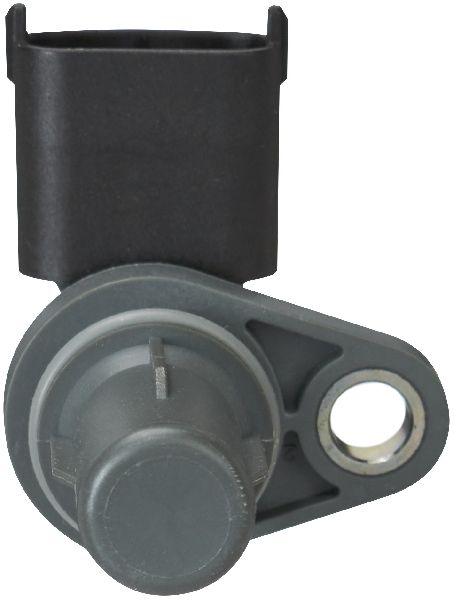
- Camshaft Position Sensor
(OEM #39318-3L100)— This is the most common part to fail and cause a P0345 code, either from normal wear or oil contamination from the SC300 recall issue. The Bank 1 and Bank 2 intake sensors are identical.
Trusted brands: Kia (Genuine), Hyundai (Genuine), NTK, Delphi, Bosch
OEM price range: $80-$110
Aftermarket price range: $50-$80
Related Codes That Often Appear With This One
- P0340 — Camshaft Position Sensor 'A' Circuit Malfunction (Bank 1). This will appear if you swap a faulty Bank 2 sensor to Bank 1 during diagnosis, confirming the sensor is bad.
- P0346, P0347, P0348, P0349 — These are other codes related to the Bank 2 intake camshaft sensor circuit, indicating performance issues, low input, high input, or intermittent signals, respectively. They point to the same set of potential causes.
- P0018 — Crankshaft Position - Camshaft Position Correlation (Bank 2 Sensor A). If seen with P0345, it strongly suggests the root cause is electrical (the sensor or its wiring) rather than a mechanical timing issue.
Technical Service Bulletins (TSBs) & Recalls
- SC170 / NHTSA 18V-754 - Safety Recall: Front Wiring Harness Inspection/Replacement and Grommet Installation (May 2019)
- SC300 / NHTSA 24V169000 - Safety Recall: Left-Hand Oil Feed Pipe and Hose Assembly Replacement (April 2024)
Platform-Specific Known Issues
- Safety Recall SC170: Affects some 2018 Stinger models. The front wiring harness on the driver's side can be damaged by a sharp edge ('burr') on the fender apron, causing an electrical short. This is a direct and highly likely cause for a P0345 circuit code on affected vehicles. The fix involves inspection and installing a grommet, or replacing the harness if damaged.
- Safety Recall SC300: Affects 2018-2023 models. The driver's side (Bank 2) turbocharger oil feed pipe may deteriorate from heat and leak oil. This oil can drip directly onto the Bank 2 camshaft position sensor and its wiring harness, causing the sensor to fail and triggering code P0345.
Mechanic-Grade Diagnostic Values
- Camshaft Position Sensor Connector Voltage Test (Key On, Engine Off) — expected: The 3-pin connector should show: Pin 1 (Ground): ~0V. Pin 3 (Power): 5V reference from ECM. Pin 2 (Signal): Should read 0V or 5V.. Failure: No 5V reference on Pin 3 points to a wiring or ECM issue. If power and ground are good, but the signal on Pin 2 does not produce a clean 0V-5V square wave when cranking (viewed on an oscilloscope), the sensor is bad.
Scan Tool Commands That Help
- Kia GDS (Global Diagnostic System): Reset Adaptive Values / VVT Learning Reset — After replacing a camshaft sensor or any timing component, it is best practice to perform this reset. The ECM learns the response characteristics of the VVT system, and resetting these values forces it to re-learn with the new parts, preventing the code from returning due to old, incorrect learned data.
- Kia GDS (or advanced scanner): Live Data Graphing: CKP vs. CMP Bank 1 vs. CMP Bank 2 — To visually confirm the fault. When graphing the three sensors, a P0345 fault will typically show a flatline or erratic signal from the CMP Bank 2 sensor, while the CKP and CMP Bank 1 signals appear as normal, clean waveforms.
Wiring & Ground Locations
- Bank 2 Camshaft Position Sensor Connector — On the front of the driver's side (Bank 2) valve cover, connecting to the upper sensor (intake).. This is the primary connection point for the sensor. It is susceptible to oil contamination from the SC300 recall leak, which can disrupt the signal and cause P0345.
- Engine Ground Point (e.g., E11) — There are several key engine grounds. One major ground point for the engine sensor harness is located on the driver's side of the upper intake plenum.. A loose or corroded engine ground can introduce electrical noise or cause an unstable voltage supply to all engine sensors, including the camshaft position sensor, leading to intermittent and difficult-to-diagnose circuit codes like P0345.
- SC170 Recall Area — Front wiring harness where it routes near the driver's side fender apron and shock tower.. On 2018 models, a sharp metal edge in this area can chafe through the harness insulation and short the camshaft position sensor circuit wires, directly causing P0345.
Real Owner Repair Stories
- stingerforum.org user report (2018+ Kia Stinger 3.3T) — P0345 and P0018 codes present.
❌ Tried (didn't work) Replaced the Bank 2 intake camshaft position sensor., Replaced the high-pressure fuel pump (HPFP) based on incorrect advice.
✅ What actually fixed it The root cause was a slipped camshaft reluctor wheel on the Bank 2 intake camshaft. This was a mechanical failure requiring valve cover removal to visually confirm the reluctor was out of position compared to the Bank 1 cam. The camshaft had to be replaced. - stingerforum.org user report (Kia Stinger 3.3T) — P0345 code appeared immediately after an oil change.
❌ Tried (didn't work) Initial inspection of sensor and wiring.
✅ What actually fixed it The engine oil had been significantly overfilled. This caused oil aeration and disrupted the CVVT system's hydraulic operation, which the ECM interpreted as a sensor circuit fault. Correcting the oil to the proper level resolved the code.
Model Year Variations Within This Range
- 2018 only: This model year is uniquely affected by Safety Recall SC170 for a wiring harness that can chafe on the fender apron, making a wiring issue a much higher probability cause for P0345 compared to later years.
- 2022-2023: The 2022 facelift included minor ECU tuning changes and a variable exhaust system for the 3.3T engine, resulting in a slight horsepower increase. However, the camshaft position sensors and their diagnostic procedures for P0345 remain the same as pre-facelift models.
Diagnostic Flowchart
Other Known Issues on This Vehicle
Issues unrelated to this code that are worth knowing about as an owner of this generation:
- Carbon Buildup on Intake Valves 🟠 Medium — Common to all GDI engines. Becomes noticeable after 40,000-80,000 miles, causing rough idle, misfires (P0300), and power loss.
- Sunset Yellow Paint Chipping/Peeling 🟡 Low — Affects only 2018 models with 'Sunset Yellow' (S7Y) paint due to a factory paint process error. (Ref: Voluntary Service Campaign SC166)
- Hatch/Trunk Rattle 🟡 Low — A very common complaint on early models (especially 2018) caused by hatch bump stops or latch alignment. (Ref: SA322 (addresses hatch rattles))
- Turbocharger Wastegate Rattle 🟡 Low — A metallic rattle or squeak may be heard, especially when revving or turning the engine off. Often considered normal but can be adjusted.
- High Pressure Fuel Pump (HPFP) Failure 🟠 Medium — Affects 2018-2021 models. The fuel control valve plunger can stick, causing loss of power. (Ref: NHTSA 23V634000)
- Transmission Logic (Early 2018 Models) 🟡 Low — On some early 2018 models with shift-by-cable, shifting quickly from Park to Sport could result in improper 1st gear engagement. (Ref: TSB SA341)
Used vs. New Parts: Buying Guide for This Vehicle
When a used part is the smart pick: A used part is a reasonable choice for a replacement wiring harness connector pigtail if the original is damaged or oil-saturated. For the sensor itself, buying new is strongly recommended due to its low cost and critical function.
Donor-vehicle mileage cap: roughly under 50000 miles for the part to have meaningful remaining life.
What to inspect on the donor part:
- For a pigtail, ensure the plastic is not brittle and the locking tab is intact.
- Check that the connector pins are clean, straight, and free of corrosion or oil residue.
- Ensure there is at least 6 inches of wire attached to the pigtail for easier splicing.
OEM-only on this vehicle (don't cheap out):
- Camshaft Position Sensor: While top-tier aftermarket brands are acceptable, using a genuine Kia/Hyundai sensor (OEM) is the safest choice to guarantee correct signal output and longevity. Avoid generic, unbranded parts.
Aftermarket brands forum-validated for this vehicle:
- NTK
- Bosch
- Delphi
Brands owners have reported issues with on this vehicle:
- Unbranded, low-cost sensors from online marketplaces are frequently reported on forums to be dead-on-arrival or fail within a short period.
Real Owner Stories
Aggregated from forums and TSBs cited above. Mileages and costs reflect what owners reported in those sources.
2018-2023 Kia Stinger 3.3L V6
Symptoms: The driver's side turbocharger oil feed pipe deteriorated from heat and leaked oil directly onto the Bank 2 camshaft position sensor and its wiring harness.
What fixed it: Replacement of the Left-Hand Oil Feed Pipe and Hose Assembly under recall SC300.
Source hint: SC300 / NHTSA 24V169000 - Safety Recall: Left-Hand Oil Feed Pipe and Hose Assembly Replacement (April 2024)
2018 Kia Stinger 3.3L V6
Symptoms: The front wiring harness rubbed against a sharp metal edge on the driver's side fender apron, causing an electrical short.
What fixed it: Dealer installation of a protective grommet and repair/replacement of the damaged wiring harness.
Source hint: SC170 / NHTSA 18V-754 - Safety Recall: Front Wiring Harness Inspection/Replacement and Grommet Installation (May 2019)
2018-2023 Kia Stinger 3.3L V6
Symptoms: Owner reported a P0345 code. After swapping the Bank 2 and Bank 1 sensors, the code migrated to the other bank.
What fixed it: The code changed to P0340 after the swap, confirming a bad sensor; replacing the sensor resolved the issue.
Source hint: stingerforum.org - A user with a P0345 code reported on 01-15-2024 (URL: https://stingerforum.org/threads/p0345-code.37085/)
Related OBD-II Codes
Frequently Asked Questions
Does Recall SC170 apply to my 2018 Kia Stinger regarding the P0345 code?
How can I tell if the wiring harness recall has already been performed on my Stinger?
Can an oil leak cause the Bank 2 camshaft sensor to fail on the 3.3L engine?
Is there a simple way to test if the sensor itself is bad before buying a new one?
What is the estimated cost for a replacement camshaft position sensor for the Stinger 3.3T?
Are there any other Genesis or Kia models that share this P0345 issue?
Helpful Videos


We Have This Part in Stock

The information in this article is provided for general reference and educational purposes only. Vehicle specifications, procedures, and part compatibility can vary by production date, trim level, and region. Always consult your vehicle's factory service manual and verify part numbers before purchasing or performing repairs. Safety-critical components such as airbags, seat belts, and braking systems should be installed by a qualified professional.
- Kia Stinger:
- 🧭 Diagnostic Flowchart
- 🎬 Helpful Videos
- 🛍️ Shop This Part
- What's Unique About the 2018-2023 Kia Stinger
- Symptoms You May Notice
- Most Likely Causes
- Rare But Worth Checking
- Diagnosis Steps
- Parts You'll Likely Need
- Related Codes That Often Appear With This One
- Technical Service Bulletins (TSBs) & Recalls
- Platform-Specific Known Issues
- Mechanic-Grade Diagnostic Values
- Scan Tool Commands That Help
- Wiring & Ground Locations
- Real Owner Repair Stories
- Model Year Variations Within This Range
- Other Known Issues on This Vehicle
- Used vs. New Parts: Buying Guide for This Vehicle
- Real Owner Stories
- 2018-2023 Kia Stinger 3.3L V6
- 2018 Kia Stinger 3.3L V6
- 2018-2023 Kia Stinger 3.3L V6
- Related OBD-II Codes
- Frequently Asked Questions
- 🎟️ Get 5% Off