

P0345 on 2007-2015 Lexus RX 350: Camshaft Sensor 'A' Bank 2 Causes and Fixes
This code points to a problem with the intake camshaft position sensor on Bank 2 (the front cylinder bank, near the radiator). The most common fix is replacing the faulty sensor, which is a relatively simple and affordable DIY job. A dirty or failing VVT solenoid or damaged wiring can also be the culprit. In some cases, a broken plastic timing chain guide can damage the sensor, leading to this code.
- P0345 specifically refers to the intake camshaft position sensor on the front cylinder bank (Bank 2).
- The most likely cause is a failed sensor, which is an easy and inexpensive part to replace yourself.
- A simple diagnostic trick is to swap the front (Bank 2) and rear (Bank 1) intake cam sensors. If the code changes to P0340, you've confirmed the sensor is bad.
- Before buying parts, always check the sensor's wiring and connector for obvious damage, as this can also cause the code.
- This is generally not a severe fault, but it will cause noticeable drivability issues and should be addressed to prevent being stranded.
What's Unique About the 2007-2015 Lexus RX 350
The 2GR-FE engine is widely used across the Toyota and Lexus lineup and is known for its reliability. For this specific code, the issue is almost always electronic (the sensor or wiring) rather than a major mechanical problem like a timing chain failure. One notable issue on some Toyota engines, including the 2GR-FE, is the potential for a plastic timing chain baffle to break, scattering debris that can damage the sensor. A video from a technician shows this exact failure, where the broken baffle allows the timing chain to contact and destroy the sensor tip, which is a tell-tale sign upon removal. While not extremely common, it's a known possibility if the sensor itself appears physically damaged.
Generation note: This guide covers the second generation (2007-2009) and third generation (2010-2015) of the Lexus RX 350. Both generations use the 2GR-FE 3.5L V6 engine, and the causes, diagnosis, and repair for code P0345 are consistent across this year range. Notably, earlier models (2007-2009) are more prone to certain platform-level issues like the VVT-i oil line rupture.
Symptoms You May Notice
- Check Engine Light and/or VSC light are on. The VSC (Vehicle Stability Control) light often illuminates as a secondary warning whenever a primary engine fault code is stored.
- Engine is hard to start or requires long cranking.
- Rough idle.
- Engine stalling, especially after warming up and returning to idle.
- Hesitation or stumbling during acceleration.
- Reduced engine power
- Decreased fuel economy.
- Replacing the Crankshaft Position Sensor. While related, a fault with the crankshaft sensor would typically set a different code (e.g., P0335).
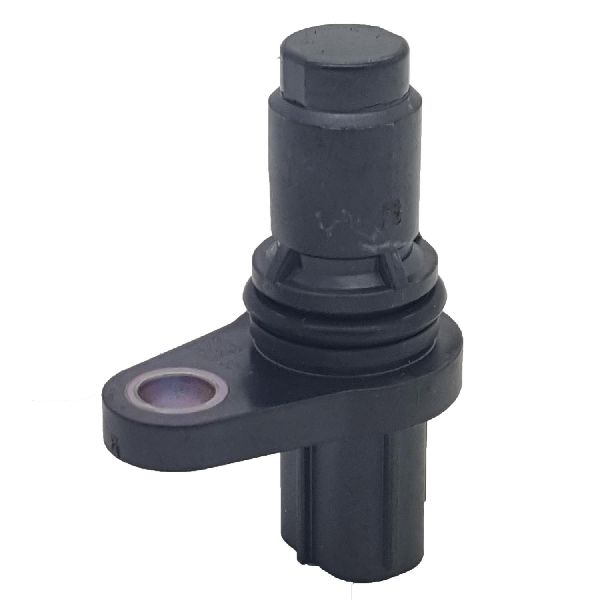
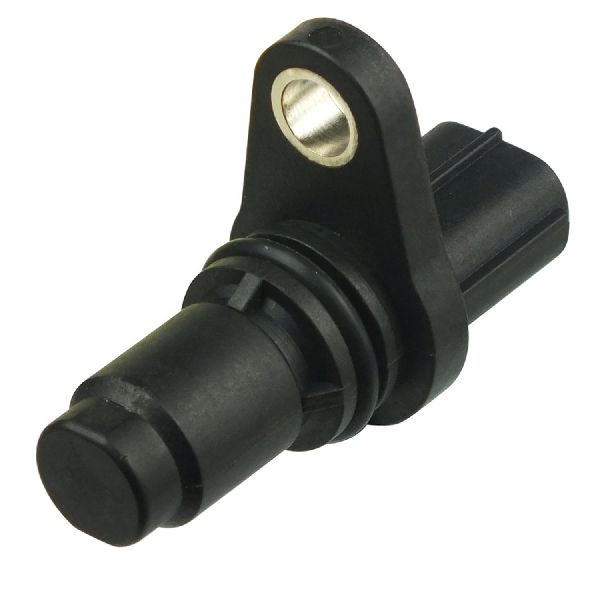
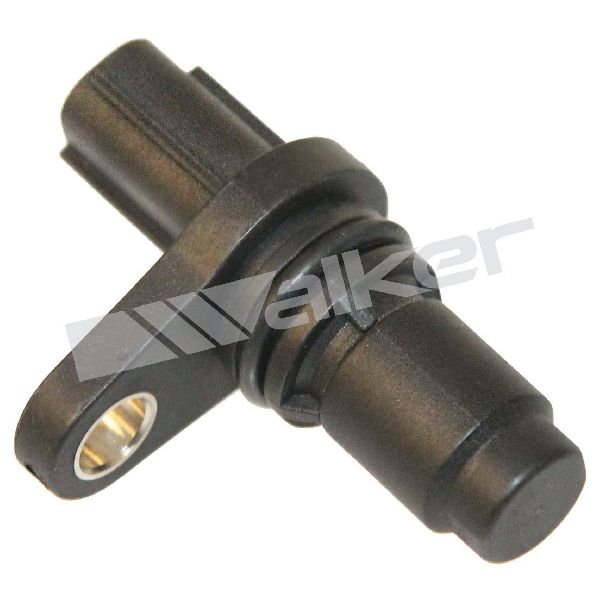
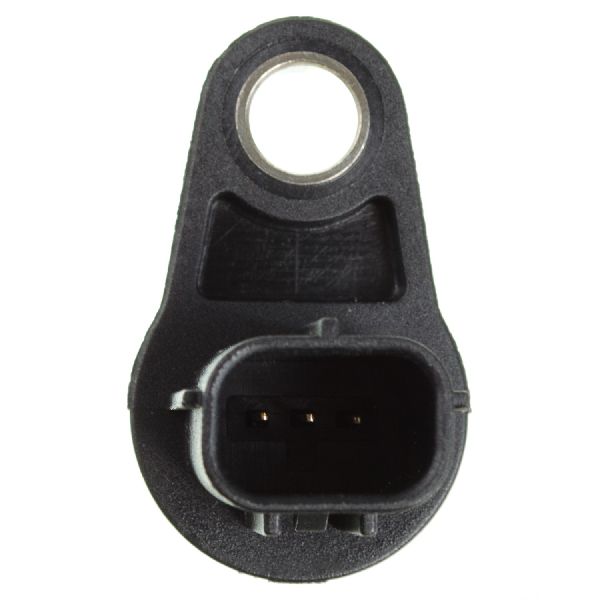
- Replacing the wrong sensor. It's easy to confuse the camshaft position sensor with the nearby VVT solenoid (Oil Control Valve). The camshaft sensor is typically a smaller, black plastic sensor held by a single 10mm bolt.
Most Likely Causes
- Failed Camshaft Position Sensor (Bank 2 Intake) 🔴 High Probability → Shop Engine Camshaft Position Sensor Sensors are electronic components that can fail over time due to heat cycles and vibration. This is the most frequent point of failure for this code.
How to confirm: The easiest way to confirm is to swap the Bank 2 intake sensor with the Bank 1 intake sensor (located on the rear cylinder bank). Clear the codes and drive the vehicle. If the code changes to P0340 (Camshaft Position Sensor 'A' Circuit Bank 1), the sensor is faulty.
Typical fix: Replace the Bank 2 intake camshaft position sensor. The sensor for Bank 2 is located on the front valve cover, near the oil filler cap.
Est. part cost: $40-$120 - Damaged Wiring or Connector 🟡 Medium Probability The engine bay environment can make plastic connectors brittle and wires susceptible to damage from heat and oil. The connector pigtail itself is a common failure point. In one forum case, frayed battery connection wires caused multiple sensor codes, including P0345, which were resolved by repairing the wiring.
How to confirm: Visually inspect the sensor's connector and wiring harness for any signs of cracking, corrosion, loose pins, or frayed wires. Use a multimeter to check for proper voltage and ground at the connector according to the factory service manual.
Typical fix: Repair the damaged section of the wiring harness or replace the connector pigtail.
Est. part cost: $15-$40 - Dirty or Failing VVT Solenoid (Oil Control Valve) ⚪ Low Probability Engine oil sludge or debris can clog the fine mesh screens on the VVT solenoids (also called Oil Control Valves), impeding their function and sometimes triggering related camshaft position codes due to incorrect valve timing.
How to confirm: Remove the Bank 2 intake VVT solenoid (located near the camshaft sensor) and inspect it for sludge or debris. You can test it by applying 12V power to its terminals to see if the plunger actuates.
Typical fix: Clean the solenoid and its filter screen. If cleaning doesn't work or it fails the electrical test, replace the solenoid.
Est. part cost: $50-$150
Rare But Worth Checking
- Broken Timing Chain Guide/Baffle: → Shop Engine Timing Chain A plastic baffle located near the timing chain can break apart. Pieces can strike the timing chain and the camshaft position sensor, causing physical damage and triggering the code. If you remove the sensor and see plastic shavings or signs of impact (scrapes/gouges on the sensor tip), this is a likely cause requiring more intensive repair to remove the debris and broken guide.
- Stretched Timing Chain: → Shop Engine Timing Chain While the 2GR-FE uses a durable timing chain, very high mileage can lead to stretching. This can cause a correlation issue between the cam and crank sensors, potentially triggering this code, often along with others like P0018. This is an unlikely cause unless the engine has extremely high mileage and other timing-related symptoms.
- Faulty Engine Control Module (ECM): An internal failure of the ECM is very rare but possible. This should only be considered after all other possibilities (sensor, wiring, timing components) have been exhaustively ruled out.
Diagnosis Steps
- Read the code with an OBD-II scanner and confirm P0345 is present. Note any other codes, like P0348 or C1201.
- Locate the Bank 2 (front) intake camshaft position sensor. It's on the cylinder head closest to the radiator, near the engine oil filler cap.
- Inspect the sensor's electrical connector and wiring for any visible damage, corrosion, or loose connections.
- For a definitive sensor test, swap the Bank 2 intake sensor with the Bank 1 (rear) intake sensor. They are identical parts.
- Clear the codes with the scanner and start the engine. Let it run or drive it for a few minutes.
- Re-scan for codes. If code P0340 appears, the sensor you moved to Bank 1 is faulty and needs replacement.
- If code P0345 returns, the problem is in the wiring, the VVT system, or (rarely) the ECM. Proceed to test the wiring for power, ground, and signal continuity using a multimeter.
- If wiring is good, inspect and test the Bank 2 intake VVT solenoid (Oil Control Valve).
- When removing the original sensor, inspect its tip for physical damage like scrapes or gouges. If damage is present, suspect a broken internal timing chain guide.
Parts You'll Likely Need
- Camshaft Position Sensor
(OEM #90919-05060)— This is the most common component to fail and trigger code P0345. Note: This is the intake sensor 'A'. The original Pass 2 part number may refer to the exhaust sensor.
Trusted brands: Denso, Aisin, Standard Motor Products (SMP)
OEM price range: $80-$120
Aftermarket price range: $40-$75 - VVT-i Oil Hose (Bank 1, Rear)
(OEM #15772-31030)— Not a direct cause of P0345, but a critical preventative maintenance item on 2007-2009 models. The original rubber hose is prone to rupture, causing catastrophic oil loss. This is the updated all-metal replacement part.
Trusted brands: Toyota (OEM)
OEM price range: $30-$50
Aftermarket price range: N/A
Related Codes That Often Appear With This One
- P0340 — If you swap the Bank 1 and Bank 2 sensors for diagnosis and the fault follows the sensor, you will see P0340, confirming the sensor is bad.
- P0348 — This code indicates a 'High Input' in the same circuit. It often appears alongside P0345 and points to the same set of potential causes, usually a faulty sensor or a wiring short. One owner reported the code changing from P0345 to P0348 after resetting the ECU.
- C1201 — This is a generic 'Engine Control System Malfunction' code that is often triggered by a primary engine fault code like P0345. Resolving the P0345 code will typically clear the C1201 as well.
- P0018 — This code indicates a 'Crankshaft Position - Camshaft Position Correlation (Bank 2 Sensor A)' error. It can be triggered by the same broken timing chain baffle that causes P0345, as the impact can disrupt the sensor's reading relative to the crankshaft.
Technical Service Bulletins (TSBs) & Recalls
- L-SB-0188-09 - This service bulletin clarifies the location of engine banks for various Lexus engines, confirming Bank 2 on the 2GR-FE is the one opposite Bank 1 (which contains cylinder #1).
- Limited Service Campaign (LSC) for VVT-i Oil Hose - While not a TSB for P0345, Toyota/Lexus issued this campaign for 2007-2009 RX 350 models to replace a rupture-prone rubber VVT-i oil line with an all-metal part, a critical issue for this engine.
Mechanic-Grade Diagnostic Values
- Camshaft Position Sensor Resistance — expected: 835 to 1,400 Ω (cold) or 1,060 to 1,645 Ω (hot). Failure: A reading outside of this range, or an open circuit (infinite resistance), indicates a failed sensor.
- Camshaft Position Sensor Connector Voltage (Power Pin) — expected: 4.5 to 5.0 V with key on, engine off.. Failure: No voltage or low voltage suggests a problem with the wiring or the ECM's 5V reference circuit.
- Camshaft Position Sensor Connector Voltage (Signal Pin) — expected: A pulsing 0V to 5V signal when the engine is cranking or running. This is best observed with an oscilloscope.. Failure: A flat 0V, a constant 5V, or an erratic signal indicates a failed sensor or a problem with the reluctor wheel/timing.
Scan Tool Commands That Help
- Toyota Techstream: Active Test: 'Control the VVT System (Bank 2)' — Use this command if the camshaft sensor and its wiring have been tested and confirmed to be good. This test allows you to command the VVT solenoid (Oil Control Valve) to actuate, helping to determine if the solenoid is stuck or if oil passages are clogged, which can cause timing correlation issues that trigger cam sensor codes.
- High-end OBD-II Scanner or Techstream: Camshaft Position Sensor Relearn Procedure — Some vehicles may require a 'relearn' procedure after the sensor is replaced to properly calibrate the new sensor with the ECM. If the engine runs poorly after a sensor replacement, check the service manual to see if this procedure is required and can be initiated with a scan tool.
Wiring & Ground Locations
- Camshaft Sensor Connector (Bank 2) — On the front valve cover (closest to the radiator), near the oil filler cap. It is a 3-pin oval-shaped connector.. This is the primary connection point for the sensor. The pins are typically Pin 1: Signal (to ECM), Pin 2: Ground, Pin 3: Power (5V from ECM). Checking for power, ground, and signal integrity at this connector is a critical diagnostic step.
- Main Engine Grounds — The primary ground cable runs from the battery negative terminal to the right inner fender. A secondary ground strap connects the lower firewall to the back of the engine block/cylinder head.. A poor engine ground can cause floating voltages and erratic behavior in multiple sensor circuits, including the camshaft position sensor. Verifying these grounds are clean and tight is a crucial step when diagnosing any electrical fault.
- ECM Terminals (for Bank 2 Intake Cam Sensor) — At the main Engine Control Module (ECM). For the Bank 2 intake sensor, the relevant terminals are often labeled VV2+, VV2-, and VC2 in wiring diagrams.. These are the final termination points for the sensor circuit. Checking for continuity between the sensor connector and these pins can definitively rule out a wiring break in the harness.
Real Owner Repair Stories
- ClubLexus user 'brokendown' (2009 Lexus RX 350 AWD) — Engine stalled when put in park, hard starting, Check Engine and VSC lights on, shuddering while driving. Codes P0345, P0365, and P0390 were present.
❌ Tried (didn't work) A dealership initially misdiagnosed the shudder as a bad transmission/torque converter., Performing three transmission fluid drain-and-fills did not resolve the shudder.
✅ What actually fixed it Repairing a frayed wire at the battery's positive connection to the main fuse box. This resolved all the camshaft position sensor codes and the stalling issue.
When the Usual Fixes Don't Work
- In a documented case for a 2009 RX 350, the vehicle presented with code P0345 along with other camshaft sensor codes. The common fix of replacing the sensor would not have worked. The actual cause was a frayed battery cable at the fuse box, which created system-wide voltage instability. The repair involved fixing the main power connection, after which the sensor codes were resolved. This highlights the importance of checking basic power and ground integrity before replacing components, especially when multiple electrical codes are present.
OEM Part Supersession History
90919-A5002→90919-05060— Part number clarification. 90919-05060 is commonly specified for the intake camshaft position sensor ('A' sensor) on the 2GR-FE, while 90919-A5002 may be for the exhaust sensor ('B' sensor). They are often physically identical but should be ordered by specific application.
Heads up: While the sensors may be interchangeable for testing purposes (swapping Bank 1 and Bank 2), it is critical to install the correct part number specified for the intake side for a permanent repair.
Model Year Variations Within This Range
- 2007-2009: These earlier models were equipped with a VVT-i oil supply line that contained a rubber section. This line is known to rupture, causing rapid and catastrophic oil loss. A Limited Service Campaign was issued to replace it with an all-metal line (P/N 15772-31030). Models from 2010 onwards were typically built with the all-metal line from the factory.
Diagnostic Flowchart
Other Known Issues on This Vehicle
Issues unrelated to this code that are worth knowing about as an owner of this generation:
- Rupturing VVT-i Oil Hose (Bank 1) 🔴 High — Very common on 2007-2009 models with the original rubber hose. Failure can be sudden and lead to catastrophic engine failure from oil starvation. (Ref: LSC (Limited Service Campaign) to replace the rubber hose with an all-metal line (Part No. 15772-31030).)
- Timing Cover Oil Leak 🟠 Medium — A well-known issue, particularly on earlier 2007-2010 models, where the sealant at the 'T-joints' of the timing cover, block, and cylinder head fails. The repair is labor-intensive, often requiring engine removal.
- Cracked or Sticky Dashboard 🟡 Low — Extremely common across many 2007-2009 Lexus models due to a materials defect reacting to heat and humidity. (Ref: Lexus Customer Support Program ZLZ (and the earlier ZLD) offered extended warranty coverage for replacement.)
- Power Steering Rack Leak 🟠 Medium — Reported by some owners of early second-generation models (2007-2009), where the rack and pinion assembly develops leaks, requiring a costly replacement.
- Water Pump Failure 🟠 Medium — A common failure point as the vehicle ages. Leaks are often identified by a 'pink crust' of dried coolant near the pump pulley.
Used vs. New Parts: Buying Guide for This Vehicle
When a used part is the smart pick: A used OEM sensor (Denso/Aisin) from a reputable salvage yard is a viable option, especially if from a low-mileage donor vehicle. Given the low cost of new aftermarket Denso sensors, many owners opt for new. A used connector pigtail is an excellent choice if only the connector is damaged.
Donor-vehicle mileage cap: roughly under 80000 miles for the part to have meaningful remaining life.
What to inspect on the donor part:
- For a sensor, ensure the plastic housing is not cracked or brittle.
- Check that the connector locking tab is intact and clicks securely.
- Inspect the electrical pins for any signs of corrosion (green or white powder).
- For a wiring pigtail, ensure the wires are flexible and the insulation is not cracked or hardened.
OEM-only on this vehicle (don't cheap out):
- Engine Control Module (ECM)
Aftermarket brands forum-validated for this vehicle:
- Denso (often the OEM supplier)
- Aisin
- Standard Motor Products (SMP)
Brands owners have reported issues with on this vehicle:
- Unbranded, 'white-box' sensors from major online marketplaces are frequently reported to fail prematurely or be dead-on-arrival.
Real Owner Stories
Aggregated from forums and TSBs cited above. Mileages and costs reflect what owners reported in those sources.
2009 Lexus RX 350 2GR-FE
Symptoms: Multiple camshaft sensor codes (P0345, P0365, P0390) appearing simultaneously.
What fixed it: Repairing a frayed battery connection to the main fuse box.
Source hint: ClubLexus: Cam Position Sensors P0345 P0365 P0390
Lexus IS250 (2GR/4GR Engine Family)
Symptoms: P0345 code accompanied by the VSC light; code changed to P0348 after a battery reset.
What fixed it: The issue was identified as an electrical/sensor failure after checking resistance and sensor location.
Source hint: ClubLexus: Code P0345 Camshaft Sensor
Related OBD-II Codes
Frequently Asked Questions
Where is the Bank 2 intake camshaft position sensor located on my 2GR-FE engine?
Does the VVT-i oil hose replacement campaign apply to my 2008 RX 350?
Why did my VSC light come on at the same time as the P0345 code?
How can I tell if the sensor is actually bad before buying a new one?
Is there a TSB that explains which side is Bank 2 on the RX 350?
Could a bad battery connection cause P0345 on this vehicle?
Helpful Videos
We Have This Part in Stock


The information in this article is provided for general reference and educational purposes only. Vehicle specifications, procedures, and part compatibility can vary by production date, trim level, and region. Always consult your vehicle's factory service manual and verify part numbers before purchasing or performing repairs. Safety-critical components such as airbags, seat belts, and braking systems should be installed by a qualified professional.
- Lexus RX 350:
- 🧭 Diagnostic Flowchart
- 🎬 Helpful Videos
- 🛍️ Shop This Part
- What's Unique About the 2007-2015 Lexus RX 350
- Symptoms You May Notice
- Most Likely Causes
- Rare But Worth Checking
- Diagnosis Steps
- Parts You'll Likely Need
- Related Codes That Often Appear With This One
- Technical Service Bulletins (TSBs) & Recalls
- Mechanic-Grade Diagnostic Values
- Scan Tool Commands That Help
- Wiring & Ground Locations
- Real Owner Repair Stories
- When the Usual Fixes Don't Work
- OEM Part Supersession History
- Model Year Variations Within This Range
- Other Known Issues on This Vehicle
- Used vs. New Parts: Buying Guide for This Vehicle
- Real Owner Stories
- 2009 Lexus RX 350 2GR-FE
- Lexus IS250 (2GR/4GR Engine Family)
- Related OBD-II Codes
- Frequently Asked Questions
- 🎟️ Get 5% Off