

P0345 on 2007-2015 Mazda CX-9 3.7L: Camshaft Sensor (Bank 2) Causes and Fixes
P0345 on a Mazda CX-9 3.7L indicates a fault with the Bank 2 (front, radiator side) camshaft position sensor. The most likely cause is a failed sensor itself, which is a relatively inexpensive part ($30-$80). However, this code can also be an early warning for a stretched timing chain or a failing internal water pump, which are serious and expensive known issues on this engine that can lead to catastrophic failure if ignored.
- P0345 refers to the camshaft position sensor on Bank 2, which is the front cylinder bank near the radiator.
- The easiest and most common fix is replacing the Bank 2 camshaft position sensor.
- ALWAYS check the engine oil for a 'milky' appearance. This is a sign of a failing internal water pump, a known catastrophic issue on this engine that requires immediate attention.
- A rattling noise on startup is a strong indicator of a stretched timing chain, which is an expensive but necessary repair to prevent engine damage.
- You can confirm a bad sensor by swapping the front (Bank 2) and rear (Bank 1) sensors and seeing if the code changes to P0340.
What's Unique About the 2007-2015 Mazda CX-9
The Mazda CX-9's 3.7L MZI V6 (a Ford Cyclone engine derivative) has a well-documented, critical design flaw involving its internal water pump. The pump is driven by the timing chain, and when its seal fails, it can leak coolant directly into the engine oil. This contaminated oil quickly destroys timing components, including the chain, tensioners, and phasers, and can lead to complete engine failure. A camshaft position code like P0345 can be the first electronic symptom of this catastrophic mechanical failure, making it much more significant on this platform than just a simple sensor issue. Mazda has issued TSBs like 01-007/15 and 01-012/13 for related issues.
Symptoms You May Notice
- Check Engine Light is on
- Difficulty starting the engine, or engine won't start
- Rough idle or stalling
- Engine misfires
- Hesitation or loss of acceleration
- Reduced fuel economy
- Rattling noise from the engine on cold startups, lasting a few seconds (indicates timing chain issue)
- Replacing the crankshaft position sensor. While related to timing, a P0345 code specifically points to the camshaft sensor circuit for Bank 2.
- Replacing only the sensor when the underlying cause is a stretched timing chain. The code will return until the mechanical issue is addressed.
- Assuming the sensor is bad without checking the oil. On this platform, contaminated oil from a water pump leak is a frequent root cause of timing codes.
Most Likely Causes
- Failed Camshaft Position Sensor (Bank 2) 🔴 High Probability → Shop Engine Camshaft Position Sensor Sensors fail from heat cycles and age. This is the most common and simplest cause when no mechanical noises are present.
How to confirm: Swap the Bank 2 (front) sensor with the Bank 1 (rear) sensor. If the code changes to P0340 (Bank 1), the sensor is faulty. The Bank 2 sensor is on the front valve cover and is easily accessible. The Bank 1 sensor is on the rear valve cover under the throttle body area and is more difficult to access.
Typical fix: Replace the faulty camshaft position sensor. Some vehicles may require a 'relearn' procedure after replacement, though many do not.
Est. part cost: $30-$80 - Stretched Timing Chain / Failed Timing Components 🟡 Medium Probability → Shop Engine Timing Chain This engine is known for timing chain stretch, often caused by a failing internal water pump contaminating the oil with coolant. This is a widely discussed failure among owners.
How to confirm: Listen for a rattling noise from the engine, especially on cold starts. An inspection of the oil for a 'milky' or light brown, coffee-like appearance indicates coolant contamination. A mechanic can measure chain slack by removing the valve cover or inspect timing correlation PIDs with an advanced scan tool.
Typical fix: Replace the timing chain, tensioners, guides, and crucially, the water pump. This is a major, labor-intensive repair often costing over $2,000.
Est. part cost: $400-$800 for a full kit - Wiring or Connector Issue ⚪ Low Probability
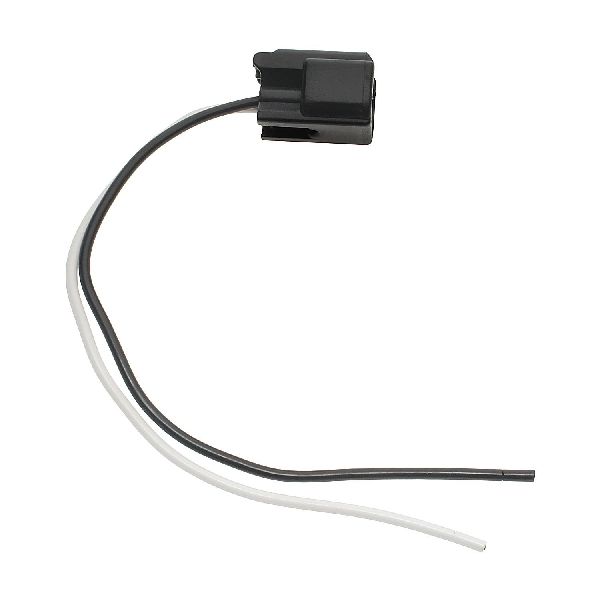
How to confirm: Visually inspect the wiring harness and connector for the Bank 2 camshaft position sensor. Check for corrosion, loose pins, or damage from heat or oil. Use a multimeter to test for proper voltage (usually 5V reference) and ground at the connector.
Typical fix: Repair or replace the damaged section of the wiring harness or the connector.
Est. part cost: $10-$50
Rare But Worth Checking
- Low or Dirty Engine Oil: The variable valve timing (VVT) system uses oil pressure to function. Low or sludgy oil can affect cam phaser operation and trigger timing-related codes. Always check oil level and condition first. Oil sludge from a failing water pump is a major concern on this engine.
- Failed Engine Oil Cooler: A less common but possible cause for oil and coolant mixing is a failure of the engine oil cooler located near the oil filter. This can produce a 'milky' radiator while the engine oil on the dipstick appears clean, differentiating it from a water pump failure.
- Failing Powertrain Control Module (PCM): This is extremely rare. The PCM should only be considered after all other possibilities, including sensors, wiring, and mechanical timing, have been exhaustively ruled out.
Diagnosis Steps
- Read the code with an OBD-II scanner to confirm P0345 is present.
- Check the engine oil level and condition. If it is low, top it off. If it appears milky or light brown, stop immediately. This indicates coolant contamination from a likely water pump failure, and the engine should not be run.
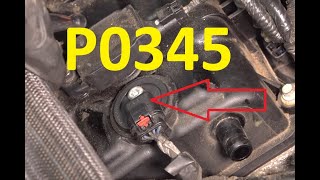
- Inspect the wiring and connector for the Bank 2 camshaft position sensor, located on the front valve cover. Look for any signs of damage, corrosion, or loose connections.
- To test the sensor, swap it with the Bank 1 sensor. The Bank 1 sensor is located on the rear valve cover and may require removing the throttle body or using specialized tools for access. Clear the codes and run the engine. If the code changes to P0340 (Bank 1), the sensor is confirmed to be faulty.
- If the code P0345 returns after the swap, the problem lies in the wiring or the timing system.
- Use a multimeter to check for a reference voltage (usually 5V) and a good ground at the sensor connector.
- If wiring and the sensor are good, the next step is to investigate for a mechanical timing issue. Listen for chain rattle on startup. A professional diagnosis is recommended to check timing chain stretch and the health of the VVT system.
- Some advanced scan tools may offer a camshaft sensor relearn procedure, which could be attempted after replacement, though it is not always necessary.
Parts You'll Likely Need
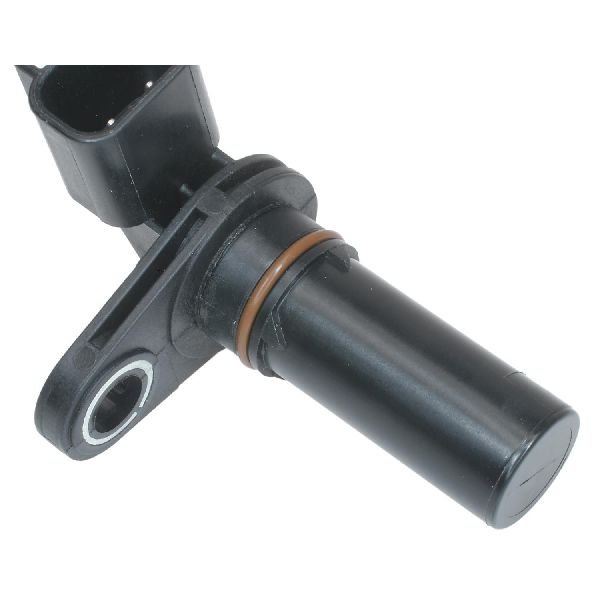
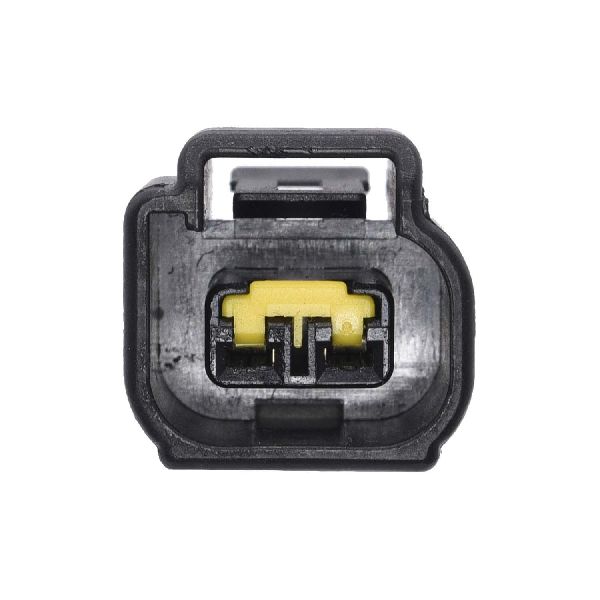
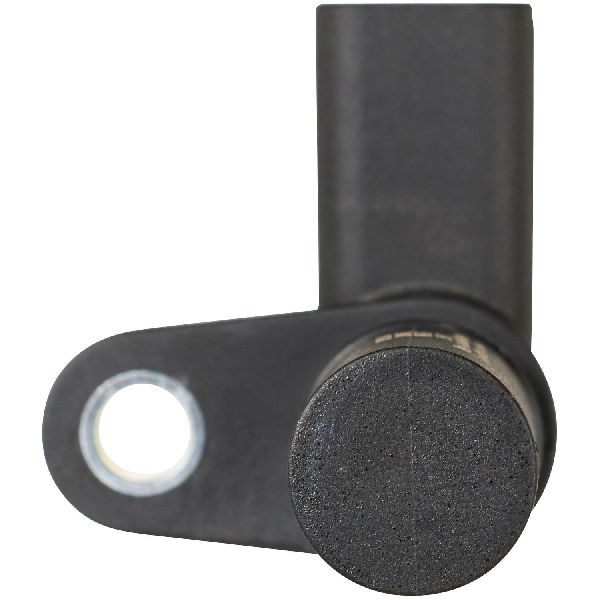
- Camshaft Position Sensor (Bank 2)
(OEM #CY01-18-230)— This is the most frequent cause of a P0345 code when no mechanical symptoms are present. The OEM part number may be superseded by CA01-18-230 or PE01-18-230.
Trusted brands: Mazda OE, Denso, NGK, Hitachi
OEM price range: $60-$100
Aftermarket price range: $30-$80 - Engine Timing Chain Kit
(OEM #Motorcraft KT-4000 (example, verify by VIN))— Required if diagnosis points to a stretched timing chain. A complete kit is necessary. Using a Ford/Motorcraft kit is common since it is a Ford engine.
Trusted brands: Motorcraft, Cloyes
OEM price range: $500-$800
Aftermarket price range: $300-$500 - Engine Water Pump
(OEM #AG2Z-8501-A (Motorcraft PW509))— This is the root cause of many timing failures on the 3.7L V6. It is internal and driven by the timing chain, so it MUST be replaced during a timing chain job.
Trusted brands: Motorcraft, Aisin, Gates
OEM price range: $150-$250
Aftermarket price range: $80-$150
Related Codes That Often Appear With This One
- P0340 — Camshaft Position Sensor 'A' Circuit (Bank 1). If you swap sensors for diagnosis and the original P0345 changes to P0340, it confirms the sensor itself is bad.
- P0349 — Camshaft Position Sensor 'A' Circuit Intermittent (Bank 2). This code is often set along with P0345 and points to the same set of potential failures, such as a failing sensor or wiring issue.
- P0016 / P0018 — Crankshaft/Camshaft Position Correlation codes for Bank 1 and Bank 2. These codes strongly suggest a mechanical timing issue, such as a stretched timing chain, and often appear with P0345 when the problem is severe.
- P0021 — 'A' Camshaft Position – Timing Over-Advanced (Bank 2). This code is also related to the VVT system on Bank 2 and can be caused by the same issues, including a bad VVT solenoid, low/dirty oil, or timing chain problems.
Technical Service Bulletins (TSBs) & Recalls
- Mazda TSB 01-007/15: Addresses VVT actuator issues and oil leakage from the timing chain cover, sometimes related to water pump failure.
- Mazda TSB 01-012/13: Specifically mentions coolant mixing with engine oil on 3.7L engines, pointing toward the internal water pump issue.
Platform-Specific Known Issues
- The internal water pump driven by the timing chain is a major point of failure. When it fails, it leaks coolant into the oil, causing rapid wear of the timing chain and related components, leading to catastrophic engine failure if not addressed. Any timing-related code on this engine warrants an immediate check of the oil for coolant contamination.
- Owners on forums frequently discuss the sensor swap (Bank 1 to Bank 2) as the primary diagnostic step before suspecting larger issues.
Mechanic-Grade Diagnostic Values
- Camshaft Position Sensor (CMP) Circuit Voltage — expected: The 3-wire Hall effect sensor should have one wire with a 5V reference from the PCM, one ground wire, and a signal wire that produces a square wave as the engine turns.. Failure: Absence of the 5V reference, a bad ground, or a signal wire that does not fluctuate during engine cranking points to a wiring or sensor fault.
- Variable Valve Timing (VVT) Solenoid Resistance — expected: A healthy VVT solenoid should measure between 6.9 and 7.9 ohms when tested at 68°F (20°C).. Failure: A reading significantly outside this range, or an open/short circuit, indicates a failed solenoid which can contribute to timing codes.
Scan Tool Commands That Help
- Mazda IDS (Integrated Diagnostic Software): Power Balance Test — While not directly for P0345, if the code is accompanied by misfires, this test can help identify which cylinder is not contributing, narrowing down if the issue is isolated to one cylinder or is a broader bank-wide timing problem.
- Mazda IDS (Integrated Diagnostic Software): VCT Solenoid Cleaning Cycle / Pinpoint Test HK11 — If a related VVT code (like P0021/P0022) is also present, this Ford-derived command can be used to cycle the VVT solenoid to test its function and potentially clear minor blockages, helping to isolate the cause between the solenoid and the mechanical phaser.
Wiring & Ground Locations
- Main Engine Ground — Commonly found on the passenger side of the engine, with a ground strap attached to one of the motor mount bolts.. A poor or corroded main engine ground can cause erratic voltage signals from all engine sensors, including the camshaft position sensor, leading to false codes.
- G11 (Ground Point) — Located behind the left side of the dashboard.. This is a key interior ground point. While not a direct engine ground, it can affect the PCM and instrument cluster, which process the sensor signals. A wiring diagram for a 2010 model shows its location.
- Bank 2 CMP Sensor Connector — On the front valve cover, near the radiator. It is a 3-pin connector.. This is the direct connection point for the sensor. Pin 1 is typically the signal wire, Pin 2 is ground, and Pin 3 is the 5V reference. These pin assignments must be verified with a specific wiring diagram for the vehicle year.
Real Owner Repair Stories
- Mazdas247 Forum User 'MariettaTaco' (2011 Mazda CX-9 GT with 105,000 miles) — No specific symptoms reported, but the owner was aware of the water pump failure issue and decided to perform preventative maintenance after reading horror stories.
❌ Tried (didn't work) This was a preventative repair, not a diagnostic one.
✅ What actually fixed it The owner proactively had a Mazda dealer replace the water pump, timing chain, all belts and hoses, and the oil pump. The total cost was $4500. The mechanic noted that the two large radiator hoses had bulges. This story highlights the extreme cost and labor involved in addressing the root cause of potential timing failures on this engine.
OEM Part Supersession History
CY01-18-230→CA01-18-230— Standard part revision and update by the manufacturer.
Heads up: The new part number CA01-18-230 is the correct replacement for CY01-18-230. Another part number, ZZJ1-18-280, is also replaced by CA01-18-230.
Model Year Variations Within This Range
- 2007 vs 2008-2015: The 2007 model year used a 3.5L V6 engine. In 2008, this was upgraded to the 3.7L V6, which remained until 2015. While both are Ford Cyclone-family engines and share the internal water pump design flaw, part numbers for some components may differ. The P0345 diagnosis is largely the same for both.
- 2010, 2013: The CX-9 received facelifts for the 2010 and 2013 model years. These were primarily cosmetic, but interior electronics like the infotainment and climate controls were updated. These changes are unlikely to affect the diagnosis of a P0345 code, as the core engine and powertrain electronics remained consistent.
Diagnostic Flowchart
Other Known Issues on This Vehicle
Issues unrelated to this code that are worth knowing about as an owner of this generation:
- AWD Transfer Case (PTU) Failure 🔴 High — Common, especially on models over 70,000 miles. The unit's fluid overheats and degrades, leading to internal wear and failure. (Ref: Mazda issued an extended warranty in the USA for some model years, but many failures occur outside this window.)
- Power Brake Booster Failure 🔴 High — Common enough to trigger a NHTSA investigation and a Special Service Program (SSP 93) from Mazda. Symptoms include a hard brake pedal and a hissing sound from the driver's footwell. (Ref: Mazda SSP 93 extended warranty coverage to 7 years or 90,000 miles for this specific failure.)
- Front Suspension Component Wear 🟠 Medium — Control arm bushings and strut mounts are known to wear out prematurely, causing squeaking and clunking noises from the front end, particularly over bumps.
- Sunroof Drain Clogging & BCM Damage 🟠 Medium — The sunroof drain tubes can become clogged, causing water to leak into the cabin on the driver's side, potentially damaging the Body Control Module (BCM) located in the kick panel.
Used vs. New Parts: Buying Guide for This Vehicle
When a used part is the smart pick: For this specific repair, sourcing used parts is generally not recommended. The primary failure items (sensor, timing components, water pump) are all wear-and-tear or design-flaw related parts. The cost of a new sensor is low, and the labor to install used timing components is too high to justify the risk.
Donor-vehicle mileage cap: roughly under 80000 miles for the part to have meaningful remaining life.
What to inspect on the donor part:
- If sourcing a complete used engine as a last resort, demand proof of mileage.
- Obtain an oil analysis report from the donor engine if possible to check for coolant (glycol).
- Inspect the oil fill cap and dipstick on the donor engine for any signs of 'milky' residue.
OEM-only on this vehicle (don't cheap out):
- Engine Water Pump: Given the catastrophic failure mode, using the OEM Motorcraft pump (PW509) is highly recommended by mechanics and forum members.
- Timing Chain Kit: While reputable aftermarket kits exist (e.g., Cloyes), many prefer the OEM Ford/Motorcraft kit for this critical job to ensure longevity.
Aftermarket brands forum-validated for this vehicle:
- Camshaft Position Sensor: Denso, NGK, Hitachi are all reputable OEM suppliers and provide reliable aftermarket sensors.
- VVT Solenoid: NTK (part of NGK) and Denso are trusted brands for VVT solenoids.
Brands owners have reported issues with on this vehicle:
- Avoid unbranded, 'white-box' sensors and timing kits from online marketplaces. The failure of these cheap parts can lead to engine damage, making the initial savings insignificant compared to the potential cost of a second repair.
Real Owner Stories
Aggregated from forums and TSBs cited above. Mileages and costs reflect what owners reported in those sources.
2012 Mazda CX-9 3.7L V6
Symptoms: Owner detailed a diagnostic process for a sensor code, including attempting a sensor swap and noting the difficulty of accessing the rear (Bank 1) sensor.
What fixed it: Attempted a sensor swap to isolate the fault between Bank 1 and Bank 2.
Source hint: mazdas247.com/forums/showthread.php?123859604-2012-CX-9-Crankshaft-Position-Sensor-questions
2008 Mazda CX-9 GT 3.7L V6
Symptoms: Engine knock and noises.
What fixed it: Dealer diagnosis pointed to a timing chain tensioner bearing problem.
Source hint: mazdas247.com/forum/showthread.php?123720794-Engine-knock-on-CX-9-GT-2008
2007 Mazda CX-9 3.7L V6
Symptoms: Chocolate milk/milky fluid in the radiator reservoir.
What fixed it: Diagnosed as a failed oil cooler rather than the common water pump failure.
Source hint: mazdas247.com/forum/showthread.php?123852888-Chocolate-milk-in-radiator-reservoir-2007-CX-9
2008 Mazda CX-9 3.7L V6
Symptoms: Engine quit, oil light was on but oil level was high; suspected gas leaked into and diluted the oil.
What fixed it: Changed oil to ensure correct level and investigated potential dilution.
Source hint: r/MazdaCX9
Related OBD-II Codes
Frequently Asked Questions
Does Mazda TSB 01-012/13 apply to my 3.7L CX-9 if I see P0345?
I have a P0345 code and hear a rattling noise on cold starts; what does this mean for my CX-9?
Can I test the Bank 2 camshaft sensor myself before buying a new one?
Is there a TSB for the VVT actuator or oil leaks on the 2007-2015 CX-9?
Why is my oil milky or light brown when I checked it for the P0345 code?
Is the Bank 1 camshaft sensor as easy to reach as the Bank 2 sensor?
Helpful Videos
We Have This Part in Stock


The information in this article is provided for general reference and educational purposes only. Vehicle specifications, procedures, and part compatibility can vary by production date, trim level, and region. Always consult your vehicle's factory service manual and verify part numbers before purchasing or performing repairs. Safety-critical components such as airbags, seat belts, and braking systems should be installed by a qualified professional.
- Mazda CX-9:
- 🧭 Diagnostic Flowchart
- 🎬 Helpful Videos
- 🛍️ Shop This Part
- What's Unique About the 2007-2015 Mazda CX-9
- Symptoms You May Notice
- Most Likely Causes
- Rare But Worth Checking
- Diagnosis Steps
- Parts You'll Likely Need
- Related Codes That Often Appear With This One
- Technical Service Bulletins (TSBs) & Recalls
- Platform-Specific Known Issues
- Mechanic-Grade Diagnostic Values
- Scan Tool Commands That Help
- Wiring & Ground Locations
- Real Owner Repair Stories
- OEM Part Supersession History
- Model Year Variations Within This Range
- Other Known Issues on This Vehicle
- Used vs. New Parts: Buying Guide for This Vehicle
- Real Owner Stories
- 2012 Mazda CX-9 3.7L V6
- 2008 Mazda CX-9 GT 3.7L V6
- 2007 Mazda CX-9 3.7L V6
- 2008 Mazda CX-9 3.7L V6
- Related OBD-II Codes
- Frequently Asked Questions
- 🎟️ Get 5% Off