

P0345 on 2006-2012 Mitsubishi Eclipse 3.8L: Camshaft Position Sensor 'A' Circuit (Bank 2) Causes and Fixes
This code almost always means the Bank 2 camshaft position sensor has failed. Bank 2 is the cylinder bank closer to the radiator. Replacing the sensor is a common DIY fix, with an aftermarket part costing around $50-$75. Swapping the front (Bank 2) and rear (Bank 1) sensors is the definitive way to confirm a bad sensor.
- P0345 points to the camshaft position sensor on Bank 2, which is the cylinder bank near the radiator on the 3.8L V6.
- The most likely cause is a failed sensor. A quick way to confirm this is to swap the front (Bank 2) and rear (Bank 1) sensors and see if the code changes to P0340.
- Replacing the sensor is a DIY-friendly job that requires basic tools and can be completed in under an hour.
- Always inspect the wiring connector for damage or corrosion before replacing parts.
What's Unique About the 2006-2012 Mitsubishi Eclipse
For the 4th generation Eclipse with the 6G75 V6 engine, this code is a straightforward sensor circuit fault. There are no widespread, unique design flaws that cause this specific code. The most critical vehicle-specific knowledge is identifying Bank 2 correctly as the bank near the radiator to ensure you are diagnosing and replacing the correct sensor. The causes and fixes are typical for this engine across all Mitsubishi platforms it was used in, such as the Galant, Endeavor, and Pajero.
Symptoms You May Notice
- Check Engine Light is on
- Engine is hard to start or will not start
- Engine stalls intermittently, especially at idle
- Rough idle
- Noticeable loss of engine power and acceleration
- Increased fuel consumption
- Engine misfires, potentially triggering codes like P0300, P0302, P0304, P0306
- Replacing the Bank 1 (firewall side) sensor instead of the Bank 2 (radiator side) sensor.
- Replacing the sensor without first checking the wiring and connector for damage.
- Replacing the ECM when the actual fault is in the wiring or the sensor itself.
- Assuming a new sensor is good without testing. Aftermarket sensors can sometimes be faulty out of the box.
Most Likely Causes
- Failed Bank 2 Camshaft Position Sensor 🔴 High Probability → Shop Engine Camshaft Position Sensor Heat and vibration in the engine bay cause electronic sensors to fail over time. This is the most common point of failure for this code. Oil contamination can also degrade the sensor.
How to confirm: Swap the Bank 2 sensor (near the radiator) with the Bank 1 sensor (near the firewall). If the code changes to P0340 (Bank 1), the sensor is faulty. The sensors are identical and interchangeable. This is the most definitive DIY test.
Typical fix: Replace the Bank 2 camshaft position sensor.
Est. part cost: $50 - $130 - Wiring Harness or Connector Issue 🟡 Medium Probability The wiring harness connector can become brittle from heat cycles, and wires can get damaged, corroded, or break internally, leading to a poor connection or an open/short circuit.
How to confirm: Visually inspect the sensor's connector and wiring for cracks, corrosion, or loose pins. Wiggle the harness while the engine is running to see if it causes stalling or stumbling. Use a multimeter to check for 5V reference, ground, and a fluctuating signal at the connector with the engine cranking.
Typical fix: Repair the damaged section of wiring or replace the connector pigtail.
Est. part cost: $10 - $30 - Incorrect Engine Timing ⚪ Low Probability The 6G75 is an interference engine with a timing belt that requires replacement every 60,000-100,000 miles. If the belt is old, has stretched, or has jumped a tooth, the camshaft and crankshaft signals will be out of sync, which can trigger this code. This is more likely if the code appeared after a recent timing belt service.
How to confirm: After ruling out the sensor and wiring, the engine's timing marks on the camshaft sprockets and crankshaft must be physically inspected to ensure they are aligned correctly. This is an advanced diagnostic step.
Typical fix: Re-time the engine by correctly aligning the timing belt. This may also require replacing the timing belt, tensioner, and related components.
Est. part cost: $150 - $400
Rare But Worth Checking
- Damaged Camshaft Reluctor Wheel: → Shop Engine Camshaft The sensor reads teeth on a wheel (reluctor) on the camshaft. If this wheel is damaged, has broken teeth, or is covered in metallic debris, the sensor cannot get a correct reading. This is very unlikely unless the engine has suffered other internal damage.
- Failing Crankshaft Position Sensor: The ECM compares signals from both the camshaft and crankshaft sensors to verify timing. A faulty or intermittent crankshaft position sensor can sometimes cause the ECM to incorrectly flag a camshaft sensor circuit code.
- Faulty Engine Control Module (ECM): This is extremely rare. The ECM itself can fail, but all other possibilities should be exhausted before considering ECM replacement. A short circuit in the wiring could potentially damage the ECM driver for that sensor circuit.
Diagnosis Steps
- Read the code with an OBD-II scanner 🎬 See this breakdown of P0345 causes and potential fixes to confirm P0345 is present. Note any other codes.
- Identify Bank 2. On the 3.8L V6, it is the bank of cylinders closer to the radiator.
- Inspect the wiring and connector for the Bank 2 camshaft position sensor. Look for any signs of melting, corrosion, loose pins, or frayed wires.
- Diagnostic Swap: The easiest and most definitive test is to swap the Bank 2 (front) sensor with the Bank 1 (rear) sensor. They are the same part (OEM P/N MR985041) and held by a single 10mm bolt. Clear the codes and drive the vehicle. If the code returns as P0340 (for Bank 1), the sensor you moved is faulty and needs to be replaced.
- If the P0345 code returns after the swap, the problem is in the wiring circuit for Bank 2 or, rarely, the ECM. The sensor itself is good.
- Wiring Test: Use a multimeter to test the Bank 2 connector. With the key on, you should have a 5-volt reference signal on one pin and a good ground on another. The third pin is the signal wire, which should show a fluctuating voltage when the engine is cranked.
- If the sensor and wiring are confirmed to be good, the next step is to inspect the mechanical engine timing. This involves removing the upper timing covers to check the alignment marks on the camshaft sprockets. This is an advanced step and usually only necessary if the timing belt was recently serviced or is long overdue for replacement.
- If all else fails, the issue may be a rare fault with the ECM, which would require professional diagnosis.
Parts You'll Likely Need
- Camshaft Position Sensor
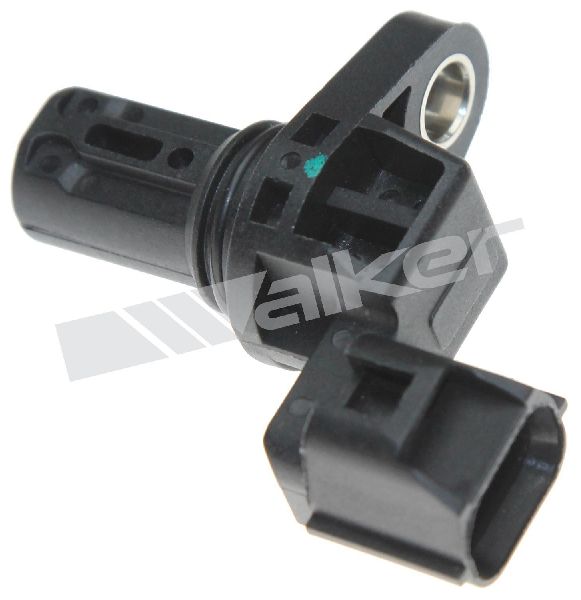
(OEM #MR985041)— This sensor is the most common cause of a P0345 code due to failure from heat and age. Both banks use the same sensor.
Trusted brands: Mitsubishi (OEM), Bosch, Denso, NGK/NTK, VEMO
OEM price range: $110-$140
Aftermarket price range: $50-$80
Related Codes That Often Appear With This One
- P0340 — If you swap the Bank 1 and Bank 2 sensors for diagnosis, a P0345 code will become a P0340 if the sensor is bad.
- P0300, P0302, P0304, P0306 — Misfire codes for the cylinders on Bank 2 (cylinders 2, 4, 6) can occur because the incorrect cam signal leads to improper spark and fuel timing on that bank.
- P0349 — This code indicates an intermittent signal from the Bank 2 sensor 🎬 Watch: Understanding Bank 2 circuit faults and diagnostic steps, which often precedes a complete failure that logs P0345.
Platform-Specific Known Issues
- Owner Experience: Sensor Swap is Key: Multiple forum threads and owner discussions emphasize that swapping the front and rear camshaft sensors is the most effective first step. It definitively isolates the problem to the sensor itself before spending money on a new part or investigating complex wiring issues.
- Aftermarket Sensor Quality: Some owners report that very cheap, unbranded aftermarket sensors can be dead-on-arrival or fail quickly. Sticking with OEM, Denso, or NGK/NTK is often recommended for longevity, even if the initial cost is higher.
Mechanic-Grade Diagnostic Values
- Camshaft Position Sensor Internal Resistance — expected: 200 - 900 Ohms (General specification). Failure: A reading significantly outside this range, or an open circuit (infinite resistance), indicates a failed sensor.
- Sensor Connector Voltage (Key On, Engine Off) — expected: Pin 1 (Power): ~5V DC; Pin 2 (Ground): 0V (good ground); Pin 3 (Signal): ~5V DC. Failure: Missing 5V reference or a bad ground points to a wiring or ECM issue, not a sensor failure.
- Sensor Signal Voltage (Engine Cranking) — expected: A fluctuating or switching voltage (e.g., toggling between ~0.5V and 5V). Failure: A flat, unchanging voltage on the signal wire while the engine is cranking indicates the sensor is not reading the camshaft's rotation.
Scan Tool Commands That Help
- Professional OBD-II Scanner: Camshaft Position Sensor Relearn / Crank Angle Sensor Error (CASE) Relearn — Some vehicles require this procedure after replacing a cam or crank sensor to synchronize the new sensor signal with the ECM. If the engine runs poorly or won't start after replacing the sensor, a relearn procedure may be necessary.
Wiring & Ground Locations
- Engine Wiring Harness — The camshaft position sensor connectors are part of the main engine wiring harness. The Bank 2 sensor is located on the front (radiator side) cylinder head.. This harness is exposed to significant heat and vibration, making it a potential failure point. Damage to the wires or the 3-pin connector for the Bank 2 sensor will directly cause a P0345 code.
- Main Engine Ground — While specific ground point designators for the Eclipse are not readily available, primary engine grounds are typically located on the engine block, cylinder head, and from the block to the chassis.. A poor engine ground can introduce electrical noise and voltage discrepancies, potentially affecting the sensor's signal and causing intermittent or false codes.
Real Owner Repair Stories
- Reddit user on r/G35 (Infiniti) (Infiniti G35 (different vehicle, but same failure principle)) — Persistent P0345 code even after replacing the sensor twice with an OEM part.
❌ Tried (didn't work) Replacing the sensor multiple times., Checking wiring., Resetting the ECU.
✅ What actually fixed it The user discovered the old sensor had physical score marks, indicating it was grazing the camshaft. The final fix was to install a new sensor, rotate it in its mount to maximize clearance from the cam, and tighten it to the correct torque specification (85 inch-pounds), which was tighter than they had previously done by feel. This prevented the sensor from wandering into contact with the rotating components.
OEM Part Supersession History
MR985041→MR985041— No supersession found.
Heads up: This part number appears to be consistent for all applicable Mitsubishi models, including the 2006-2012 Eclipse.
Diagnostic Flowchart
Other Known Issues on This Vehicle
Issues unrelated to this code that are worth knowing about as an owner of this generation:
- Clear Coat / Paint Failure 🟠 Medium — Very common, especially on cars exposed to high UV/sunlight. Peeling often starts on the hood, roof, and bumpers. Darker and pearl colors seem more affected.
- Cracked or Peeling Dashboard 🟠 Medium — Widespread issue where the dashboard material cracks, peels, or lifts near the windshield due to heat and sun exposure.
- Timing Belt Replacement Interval 🔴 High → Shop Engine Timing Chain — The 6G75 is an interference engine, making timely timing belt replacement critical. The recommended interval is typically 60,000 to 100,000 miles. Failure results in catastrophic engine damage.
- Automatic Transmission Problems 🟠 Medium — Some owners report issues with the automatic transmission, including hard shifts, slipping, or solenoid failures (e.g., code P1775).
- Valve Cover Gasket Oil Leaks 🟡 Low → Shop Engine Valve Cover — The V6 engine is known for developing oil leaks from the valve cover gaskets over time as the seals degrade.
Used vs. New Parts: Buying Guide for This Vehicle
When a used part is the smart pick: For this specific part, a used sensor is NOT recommended. It is a relatively inexpensive electronic component that fails due to heat and age. The risk of a used part failing shortly after installation outweighs the minimal cost savings over a new, quality aftermarket part.
What to inspect on the donor part:
- Not applicable, as buying used is not advised.
OEM-only on this vehicle (don't cheap out):
- While not strictly 'OEM-only', critical electronic sensors like the camshaft position sensor have a high rate of failure with cheap, no-name aftermarket brands. Sticking to OEM or top-tier aftermarket is strongly advised for reliability.
Aftermarket brands forum-validated for this vehicle:
- Bosch
- Denso
- NGK/NTK
- Delphi
- Beck Arnley
Brands owners have reported issues with on this vehicle:
- Generic, unbranded sensors from online marketplaces are frequently reported by owners to be dead-on-arrival or to fail within a short period.
Real Owner Stories
Aggregated from forums and TSBs cited above. Mileages and costs reflect what owners reported in those sources.
2006-2012 Mitsubishi Eclipse 3.8L V6
Symptoms: Multiple owners on club4g.com reported the Check Engine Light appearing and discussed the necessity of identifying the correct bank for the P0345 code.
What fixed it: Swapping the front (radiator side) and rear (firewall side) camshaft sensors to isolate the failure to the sensor itself.
Source hint: club4g.com - Numerous threads discuss P0340/P0345
2006-2012 Mitsubishi Eclipse 3.8L V6
Symptoms: A user experienced crank and cam sensor codes after an electrical mishap where the battery shorted to the chassis.
What fixed it: Diagnosis of the sensitive sensor circuits following an electrical short.
Source hint: reddit.com/r/MitsubishiEclipse
Related OBD-II Codes
Frequently Asked Questions
Where is the Bank 2 Camshaft Position Sensor located on my 3.8L V6 Eclipse?
Can I test the sensor myself without buying a new one immediately?
Should I use a cheap aftermarket sensor to fix the P0345 code?
Could my P0345 code be related to my timing belt?
What voltage should I see when testing the sensor connector?
Is it worth getting a used sensor from a salvage yard?
Helpful Videos
We Have This Part in Stock


The information in this article is provided for general reference and educational purposes only. Vehicle specifications, procedures, and part compatibility can vary by production date, trim level, and region. Always consult your vehicle's factory service manual and verify part numbers before purchasing or performing repairs. Safety-critical components such as airbags, seat belts, and braking systems should be installed by a qualified professional.
- Mitsubishi Eclipse:
- 🧭 Diagnostic Flowchart
- 🎬 Helpful Videos
- 🛍️ Shop This Part
- What's Unique About the 2006-2012 Mitsubishi Eclipse
- Symptoms You May Notice
- Most Likely Causes
- Rare But Worth Checking
- Diagnosis Steps
- Parts You'll Likely Need
- Related Codes That Often Appear With This One
- Platform-Specific Known Issues
- Mechanic-Grade Diagnostic Values
- Scan Tool Commands That Help
- Wiring & Ground Locations
- Real Owner Repair Stories
- OEM Part Supersession History
- Other Known Issues on This Vehicle
- Used vs. New Parts: Buying Guide for This Vehicle
- Real Owner Stories
- 2006-2012 Mitsubishi Eclipse 3.8L V6
- 2006-2012 Mitsubishi Eclipse 3.8L V6
- Related OBD-II Codes
- Frequently Asked Questions
- 🎟️ Get 5% Off