

P0345 on 2006-2009 Pontiac G6 3.5L: Camshaft Sensor 'A' (Bank 2) Causes and Fixes
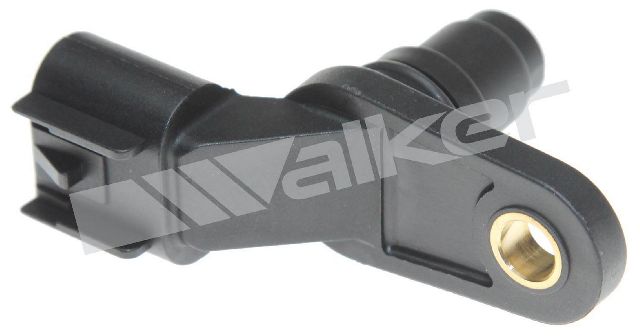
On the 2006-2009 Pontiac G6 with the 3.5L V6 engine, code P0345 almost always points to a failed camshaft position sensor. Despite the 'Bank 2' in the code's name, this pushrod engine has only one cam sensor. A replacement sensor costs about $30-$75. Check for power steering fluid leaks contaminating the sensor, as this is a very common failure pattern.
- P0345 on your G6 3.5L refers to the single camshaft position sensor, even though the code says 'Bank 2'.
- The most likely cause is a failed camshaft position sensor, which is a relatively inexpensive part.
- Before replacing the sensor, carefully inspect the wiring and connector for oil or power steering fluid contamination, as this is a very common cause of failure.
- Symptoms include stalling, difficulty starting, and a rough idle. The car is unreliable to drive until this is fixed.
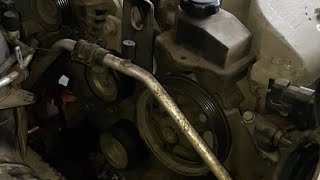
- This is a DIY-friendly repair for those with basic tools, with the sensor located behind the power steering pump. Consider replacing the pigtail connector (ACDelco PT2647) at the same time.
What's Unique About the 2006-2009 Pontiac G6
The most confusing aspect of a P0345 code on the 3.5L LZ4 V6 engine is the "Bank 2" designation. This is an overhead valve (OHV), or pushrod, engine that has its camshaft located inside the engine block. Because of this design, it only has a single camshaft and therefore only one camshaft position sensor. Unlike engines with dual overhead cams (DOHC) that have a separate sensor for each bank, this code points to a problem with the single, shared sensor or its wiring circuit. The generic code is used because the PCM software is shared with other GM vehicles that do have multiple sensors.
Symptoms You May Notice
- Check Engine Light is on
- Hard starting or no-start condition
- Engine stalling, especially at low speeds or idle
- Rough idle and engine vibrations
- Reduced engine power and poor acceleration
- Decreased fuel economy
- Engine may crank for a long time before starting
- Replacing the crankshaft position sensor instead of the camshaft position sensor.
- Replacing the PCM before thoroughly testing the sensor and its circuit.
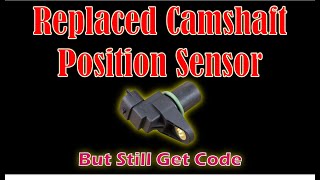
- Replacing the sensor but not the oil-soaked pigtail connector, leading to a quick return of the code.
Most Likely Causes
- Failed Camshaft Position Sensor 🔴 High Probability → Shop Engine Camshaft Position Sensor The sensor is located behind the power steering pump, where fluid leaks are common. This fluid saturates the sensor's wiring and connector, causing the plastic to become brittle and the connection to fail, leading to premature failure of the sensor itself.
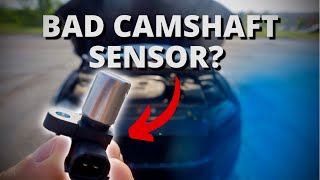
How to confirm: Inspect the sensor and its connector for oil or power steering fluid saturation. Test the sensor's output signal with a multimeter or oscilloscope. A lack of signal or an erratic signal points to a failed sensor. Often, simply unplugging the sensor allows the car to start (in a default mode), which strongly suggests the sensor is faulty.
Typical fix: Replace the camshaft position sensor and, if contaminated, the pigtail connector.
Est. part cost: $30-$75 - Wiring Harness or Connector Issue 🟡 Medium Probability The wiring harness is susceptible to damage from heat, oil contamination, or vibrations. The connector pins can also become corroded or loose. The pigtail connector itself (ACDelco PT2647) is a known failure point due to becoming oil-soaked and brittle.
How to confirm: Visually inspect the wiring harness from the PCM to the sensor for any signs of damage, melting, or corrosion. Check for a secure connection at the sensor and the PCM. Wiggle the harness while the engine is running (if possible) to see if it causes stalling or stumbling. Test for 5V reference, ground, and signal continuity using a multimeter.
Typical fix: Repair the damaged section of wiring or replace the pigtail connector.
Est. part cost: $15-$40 - Weak Battery or Charging System Fault ⚪ Low Probability
How to confirm: Test the battery voltage with the engine off (should be ~12.6V) and the alternator output with the engine running (should be ~13.7-14.7V). Low system voltage can cause spurious sensor codes.
Typical fix: Charge or replace the battery. If the alternator is faulty, it will need to be replaced.
Est. part cost: $100-$300
Rare But Worth Checking
- Faulty Alternator (AC Ripple): → Shop Alternator A failing alternator can introduce AC voltage (ripple) into the DC electrical system. This electrical noise can interfere with sensitive sensor signals, like the camshaft sensor, causing a false P0345 code. This can be tested by setting a multimeter to AC volts and measuring across the battery terminals with the engine running; a reading above 0.5V AC suggests a problem.
- Faulty Powertrain Control Module (PCM): This is very rare. The PCM should only be considered after all other possibilities, including the sensor, wiring, grounds (especially G105 and G106), and mechanical timing, have been exhaustively ruled out.
- Mechanical Timing Issue: A stretched timing chain or worn timing gear can cause the camshaft and crankshaft signals to be out of sync. This is less common on this engine for this specific code but becomes more likely if code P0016 is also present.
Diagnosis Steps
- Scan the PCM for any other stored trouble codes. Address other codes first if they are present.
- Visually inspect the camshaft position sensor and its electrical connector. Look for signs of damage or heavy fluid contamination from the nearby power steering pump.
- Check for a secure connection at the sensor. Reseat the connector.
- Using a multimeter, verify that the sensor connector has the correct voltage for power (5V reference), ground, and signal with the key in the 'ON' position.
- A common driveway diagnostic is to unplug the sensor. If the car starts and runs (though poorly, in a limp mode) with the sensor unplugged, but stalls or fails to start when plugged in, the sensor itself is highly suspect.
- The most definitive test is to use an oscilloscope to view the sensor's output waveform while cranking or running the engine. A good sensor will produce a clean, square wave. No signal or an erratic signal indicates a faulty sensor.
- If the sensor signal is good at the sensor connector, check the signal again at the PCM connector to rule out a wiring issue between the two points.
- Check main engine grounds G105 (left rear of engine compartment) and G106 (front of engine at a transmission stud) for tightness and corrosion, as a bad ground can cause sensor issues.
- If the sensor and wiring are confirmed to be good, the issue may be mechanical (timing chain) or, in very rare cases, a faulty PCM.
Parts You'll Likely Need
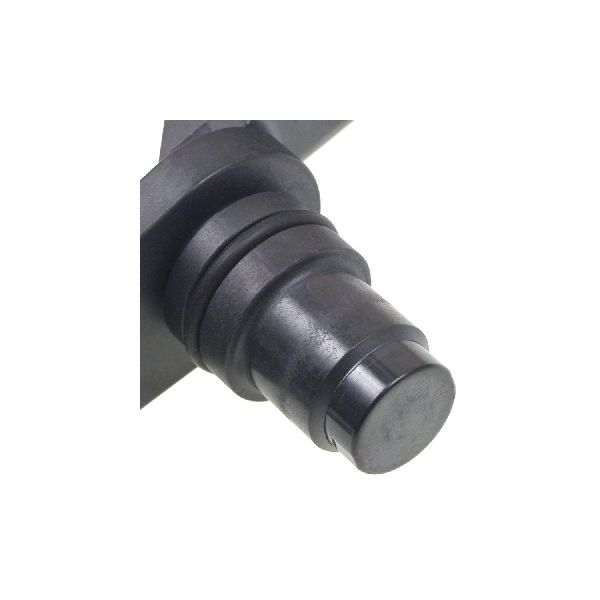
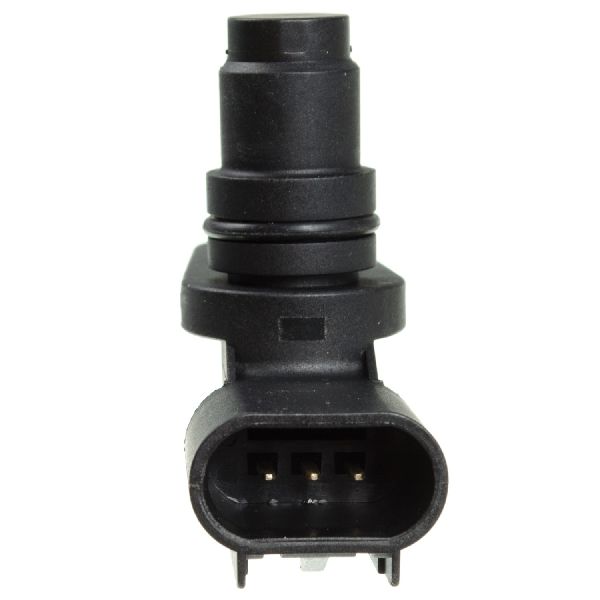
- Camshaft Position Sensor
(OEM #12588992)— This is the most common failure point for code P0345 on this engine. The sensor fails electronically or due to fluid contamination.
Trusted brands: ACDelco (Original Equipment), Delphi (Often OEM), NGK/NTK, Standard Motor Products
OEM price range: $50-$75
Aftermarket price range: $30-$60 - Camshaft Position Sensor Connector Pigtail
(OEM #ACDelco PT2647)— Frequently required if the original connector is saturated with power steering fluid, brittle, or corroded. Replacing it with the sensor prevents a repeat failure.
Trusted brands: ACDelco, Dorman
OEM price range: $20-$35
Aftermarket price range: $15-$25
Related Codes That Often Appear With This One
- P0300 — A random misfire code can be triggered because the faulty cam sensor signal disrupts proper ignition and fuel timing.
- P0302, P0304, P0306 — These are misfire codes for the individual cylinders on Bank 2. A bad cam signal can directly cause misfires on the bank it's supposed to be monitoring.
- P0016 — This code indicates a Crankshaft/Camshaft Position Correlation error. Seeing it with P0345 strongly suggests a more serious mechanical timing issue, like a stretched timing chain, rather than just a sensor circuit fault.
- P0340 — This is the general camshaft position sensor circuit malfunction code. It is often seen with P0345 as the PCM tries to narrow down the fault. Some owners report seeing both codes simultaneously for the single sensor failure.
Technical Service Bulletins (TSBs) & Recalls
- GM TSB 06-02-35-009G: Details replacement of the intermediate steering shaft to fix a common 'clunking' noise.
- GM TSB 07-02-32-002M: Addresses power steering fluid leaks, a common cause of the cam sensor failure.
- NHTSA Campaign 14V153000 / GM Recall N140115: Safety recall for sudden loss of electric power steering assist.
Platform-Specific Known Issues
- The 3.5L LZ4 engine is a pushrod (OHV) design with only one camshaft and one camshaft position sensor, which can cause confusion with the 'Bank 2' code definition.
- The sensor is located behind the power steering pump, and leaks from the pump or its lines are a known issue that can saturate the sensor's connector and cause it to fail. This is the most common context for this failure.
Mechanic-Grade Diagnostic Values
- Camshaft Position Sensor 5V Reference Supply — expected: 4.8V to 5.2V with key on, engine off, measured at the sensor connector.. Failure: Voltage below 4.8V or above 5.2V points to a problem with the PCM or the wiring.
- Camshaft Position Sensor Ground Circuit Resistance — expected: Below 5.0 ohms between the sensor connector's ground pin and a known good chassis ground.. Failure: Resistance above 5.0 ohms indicates a poor ground connection, which can cause erratic sensor signals.
- Camshaft Position Sensor Signal (Hall Effect Sensor) — expected: A square wave signal that toggles between approximately 0V and 5V, visible on an oscilloscope as the engine cranks. A multimeter set to DC volts should show the voltage fluctuating.. Failure: A flat line (no signal), a noisy signal, or a signal that does not switch indicates a failed sensor or a problem with the reluctor wheel.
- Alternator AC Ripple Voltage — expected: Below 0.5V AC measured across the battery terminals with the engine running.. Failure: A reading above 0.5V AC suggests a failing diode in the alternator is creating electrical noise that can interfere with sensor signals.
Scan Tool Commands That Help
- Tech2 / GDS2: CMP Active Counter — When viewing live data, this parameter should increase steadily as the engine runs. If the count is zero, erratic, or freezes, it confirms a loss of signal from the camshaft position sensor, pointing directly to a sensor or wiring fault.
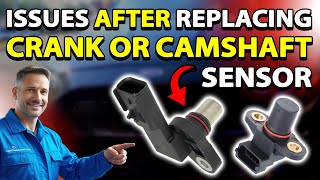
- Tech2 / GDS2: Crankshaft Position Variation Learn — This procedure may be required after replacing a camshaft or crankshaft position sensor to synchronize the new sensor's signal with the pattern stored in the ECM. Failure to perform this can sometimes cause persistent codes or rough running even after a successful repair.
Wiring & Ground Locations
- G105 — For the 3.5L engine, located on the left rear side of the engine compartment, on an engine-to-transmission stud, below the upper coolant hose.. This is a critical ground for the Engine Control Module (ECM). A loose or corroded connection here can cause a voltage drop on the ground circuit for multiple sensors, including the camshaft sensor, leading to false codes like P0345.
- G106 — For the 3.5L engine, this ground is located on the front of the engine at a transmission stud, near the Park/Neutral Position (PNP) switch.. This is another primary ground for the ECM/PCM on the 3.5L engine. A fault here can cause similar issues to a bad G105 ground.
- Camshaft Position Sensor Connector — On the front side of the engine block, tucked behind and below the power steering pump.. This is the primary point for testing the sensor circuit. The three pins are typically: Pin A (Pink wire) = 5V Reference, Pin B (Black/White wire) = Ground, Pin C (Brown/White wire) = Signal. Voltages should be verified here before condemning the sensor.
Real Owner Repair Stories
- g6ownersclub.com user (2007 Pontiac G6 GT 3.9L V6) — Check engine light on with code P0345.
✅ What actually fixed it Replaced the front (Bank 2) camshaft position sensor with part number 12588992. The repair was reported to take only 10 minutes on this engine variant. - g6performance.com user (2007 Pontiac G6 3.5L V6) — Hard starting and stalling with both P0340 and P0345 codes present.
✅ What actually fixed it The problem was solved by replacing the single camshaft position sensor located behind the power steering pump.
OEM Part Supersession History
12588992→19541730— Standard part lifecycle update by GM.
Heads up: The new part number 19541730 is the direct, backward-compatible replacement for 12588992. The ACDelco service part number is often 213-3524.
Diagnostic Flowchart
Other Known Issues on This Vehicle
Issues unrelated to this code that are worth knowing about as an owner of this generation:
- Intermediate Steering Shaft Clunk 🟠 Medium — Very common. Noise typically appears at low speeds during turns, like in parking lots. Often misdiagnosed as a bad steering rack. (Ref: GM TSB 06-02-35-009G (later revised) advises replacing the intermediate shaft (P/N 25810450) to fix the noise.)
- Sudden Loss of Electric Power Steering (EPS) 🔴 High — Widespread issue leading to a major safety recall. Steering becomes very heavy at low speeds, increasing crash risk. (Ref: NHTSA Campaign 14V153000 (GM Recall N140115). Dealers were to replace the torque sensor assembly or other EPS components.)
- 4T45-E Automatic Transmission Faults 🟠 Medium — Common as vehicles age. Issues include failed shift solenoids (causing harsh shifts or getting stuck in gear), broken feed pipes (no forward gear), and failed Transmission Control Modules (TCM). (Ref: Recall for shift cable tabs fracturing (NHTSA 12V460000) and shift cable adjustment clips (NHTSA 09V152000).)
- Power Steering Fluid Leaks 🟠 Medium — Commonly reported. Leaks from the pump, lines, or reservoir can cause loss of assist and also directly lead to code P0345 by contaminating the camshaft sensor and its connector below. (Ref: GM TSB 07-02-32-002M addresses power steering fluid leaks.)
Used vs. New Parts: Buying Guide for This Vehicle
When a used part is the smart pick: For this specific repair, a used part is generally not recommended. The camshaft position sensor is an electronic component known for failure due to heat and fluid contamination. It is also an inexpensive part, making a new, warrantied part a much smarter choice for reliability.
Donor-vehicle mileage cap: roughly under 50000 miles for the part to have meaningful remaining life.
What to inspect on the donor part:
- If buying used is unavoidable, inspect the plastic housing for any cracks, melting, or signs of physical damage.
- Check the electrical connector pins to ensure they are straight and free of corrosion.
- Avoid any sensor that shows signs of being saturated with power steering fluid or engine oil, as this is the primary failure mode.
OEM-only on this vehicle (don't cheap out):
- Camshaft Position Sensor
Aftermarket brands forum-validated for this vehicle:
- ACDelco (Original Equipment)
- Delphi (Often the OEM manufacturer)
Brands owners have reported issues with on this vehicle:
- Unnamed 'white-box' or no-name brands from online marketplaces. Forum users frequently report premature failure with these parts, leading to the code returning within a short period.
Real Owner Stories
Aggregated from forums and TSBs cited above. Mileages and costs reflect what owners reported in those sources.
2007 Pontiac G6 3.5L V6
Symptoms: The owner experienced hard starting and engine stalling, accompanied by both P0340 and P0345 codes.
What fixed it: Replacing the single camshaft position sensor located behind the power steering pump.
Source hint: g6performance.com thread titled 'P0340 and P0345 on 2007 G6 3.5'
2006-2009 Pontiac G6 3.5L V6
Symptoms: A stall/no-start condition that is temporarily resolved by unplugging the camshaft sensor.
What fixed it: Replacing the camshaft position sensor after confirming the car runs in default mode with the sensor disconnected.
Source hint: Reddit r/MechanicAdvice thread titled 'Pontiac G6 cam sensor issue'
Pontiac G6 3.9L V6
Symptoms: Stored P0345 code on the 3.9L engine variant which shares the same architecture as the 3.5L.
What fixed it: Replacing the camshaft position sensor (part #12588992).
Source hint: g6ownersclub.com thread titled 'P0345 on 3.9L - Cam Sensor?'
Related OBD-II Codes
Frequently Asked Questions
My 2007 Pontiac G6 3.5L has a P0345 code for 'Bank 2', but I only see one camshaft sensor. Is that right?
Is there a specific part number recommended for the camshaft sensor on the 3.5L/3.9L V6 engines?
Why does my power steering pump leak seem to be causing engine stalling and the P0345 code?
What is the recommended fix if the camshaft sensor connector is soaked in oil or power steering fluid?
Could my G6's hard starting be related to the electric power steering recall?
Is there a simple way to test if the sensor is the reason my G6 won't start?
Helpful Videos

We Have This Part in Stock



The information in this article is provided for general reference and educational purposes only. Vehicle specifications, procedures, and part compatibility can vary by production date, trim level, and region. Always consult your vehicle's factory service manual and verify part numbers before purchasing or performing repairs. Safety-critical components such as airbags, seat belts, and braking systems should be installed by a qualified professional.
- Pontiac G6:
- 🧭 Diagnostic Flowchart
- 🎬 Helpful Videos
- 🛍️ Shop This Part
- What's Unique About the 2006-2009 Pontiac G6
- Symptoms You May Notice
- Most Likely Causes
- Rare But Worth Checking
- Diagnosis Steps
- Parts You'll Likely Need
- Related Codes That Often Appear With This One
- Technical Service Bulletins (TSBs) & Recalls
- Platform-Specific Known Issues
- Mechanic-Grade Diagnostic Values
- Scan Tool Commands That Help
- Wiring & Ground Locations
- Real Owner Repair Stories
- OEM Part Supersession History
- Other Known Issues on This Vehicle
- Used vs. New Parts: Buying Guide for This Vehicle
- Real Owner Stories
- 2007 Pontiac G6 3.5L V6
- 2006-2009 Pontiac G6 3.5L V6
- Pontiac G6 3.9L V6
- Related OBD-II Codes
- Frequently Asked Questions
- 🎟️ Get 5% Off