

P0345 on 2003-2006 Porsche Cayenne: Camshaft Position Sensor Bank 2 Causes and Fixes
This code indicates a malfunction with the Bank 2 camshaft position sensor. On the V8 Cayenne, this is most often a failed sensor itself. Expect difficult starting and rough running. Replacing the sensor is a difficult, labor-intensive job for this vehicle, as the entire intake manifold must be removed for access.
- P0345 on a 2003-2006 Cayenne V8 points to a fault in the driver's side camshaft position sensor circuit.
- The most common fix is replacing the faulty sensor, but wiring issues should also be checked.
- This is not a simple repair for DIYers; the intake manifold must be removed to access the sensor, making it a labor-intensive job with a difficulty of 4/5.
- Symptoms are severe and include hard starting, stalling, and significant power loss, so prompt repair is recommended.
- Always replace the intake manifold gaskets when performing this repair. It is highly advisable to replace both cam sensors and consider other 'while-you're-in-there' items like the starter and coolant pipes.
What's Unique About the 2003-2006 Porsche Cayenne
The user-specified M96/M97 engine family is incorrect for the Porsche Cayenne; those engines are found in 911, Boxster, and Cayman models. The 2003-2006 Cayenne V8 models (S and Turbo) use the M48 engine family (specifically M48.00 for the S and M48.50 for the Turbo). On these M48 V8 engines, the two camshaft position sensors are located at the rear of the cylinder heads, tucked under the intake manifold in the valley of the 'V'. This location makes replacement significantly more labor-intensive than on many other vehicles, as the entire intake manifold must be removed to gain access, turning a simple sensor swap into a multi-hour job.
Symptoms You May Notice
- Check Engine Light is on
- Engine is difficult to start or will not start
- Engine cranks but does not fire
- Engine stalls or idles roughly, sometimes vibrating
- Noticeable loss of engine power and acceleration
- Engine misfires, sometimes felt as a shudder
- Reduced fuel economy
- Engine may enter 'limp mode' with drastically reduced power
- Replacing the crankshaft position sensor. While a faulty crankshaft sensor can cause similar no-start or stalling symptoms, the P0345 code specifically points to the Bank 2 camshaft sensor circuit.
- Only replacing the faulty sensor. Given the 3-4 hours of labor to remove the intake manifold, it is considered a best practice to replace both camshaft sensors, the intake manifold gaskets, and inspect other 'while-you're-in-there' items to avoid paying for the same labor again in the near future.
Most Likely Causes
- Failed Bank 2 Camshaft Position Sensor 🔴 High Probability → Shop Engine Camshaft Position Sensor The sensor is a common failure point due to prolonged exposure to high heat in the engine valley and age. Oil leaks from valve cover gaskets or other seals can also seep into the engine valley, contaminating and damaging the sensor's electronics and connector.
How to confirm: After verifying the wiring is intact, swapping the sensor with the one from Bank 1 is a common diagnostic technique. If the fault code changes to P0340 (Camshaft Position Sensor 'A' Circuit - Bank 1), the sensor is confirmed bad. Otherwise, testing the sensor's output signal with an oscilloscope is the most definitive test. A multimeter can be used to check for power and ground at the connector.
Typical fix: Replace the camshaft position sensor for Bank 2. It is highly recommended to replace both sensors (Bank 1 and Bank 2) at the same time due to the high labor cost of accessing them.
Est. part cost: $50-$150 - Damaged Wiring or Connector 🟡 Medium Probability The wiring harness is exposed to extreme heat at the back of the engine, under the intake manifold. Over time, the plastic connectors can become brittle and crack, and wire insulation can degrade, leading to shorts or open circuits. Rodent damage to wiring in this area is also a known possibility.
How to confirm: Visually inspect the wiring harness and connector for the Bank 2 camshaft position sensor. Check for cracks, melting, corrosion, or signs of rodent damage. Perform a continuity test on the signal, power, and ground wires from the sensor connector to the ECM connector. Check for voltage and ground at the sensor connector with the ignition on.
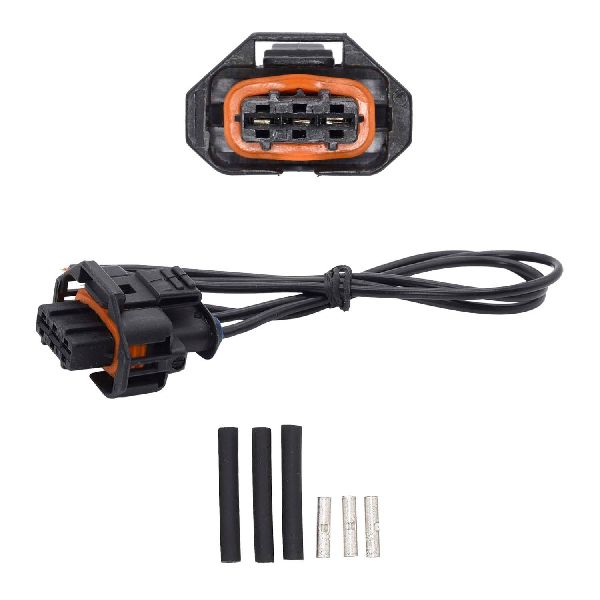
Typical fix: Repair the damaged section of the wiring harness or replace the connector pigtail. In severe cases, a section of the engine harness may need to be replaced.
Est. part cost: $20-$60
Rare But Worth Checking
- Timing Chain Issue: → Shop Engine Timing Chain While less common than a sensor failure, a stretched timing chain, failing chain tensioner, or a slipped camshaft adjuster can cause the camshaft timing to deviate enough to trigger this code. This would typically be accompanied by other timing-related codes (like P0016), audible rattling noises from the front of the engine, especially on startup, and potentially more severe running issues.
- Failed Engine Control Module (ECM): In very rare instances, the fault may lie within the ECM itself, specifically the driver circuit that reads the sensor's signal. This should only be considered after all other possibilities (sensor, wiring, timing) have been exhaustively ruled out by a professional technician.
- While-You're-In-There Preventative Maintenance: Because accessing the cam sensors requires removing the intake manifold, many owners and shops use the opportunity to replace other components in the engine valley. These include the starter motor, which is also under the manifold, and the plastic coolant pipes, which are a notorious failure point and were later updated to aluminum. If you are paying for the labor to remove the manifold, addressing these items proactively can save significant future expense.
Diagnosis Steps
- Read the code with an OBD-II scanner to confirm P0345 is present. Note any other codes.
- Visually inspect the engine bay for any obvious signs of damage, such as disconnected hoses or chewed wires.
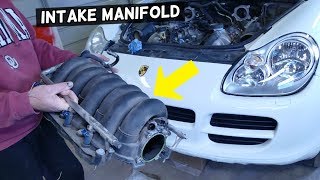
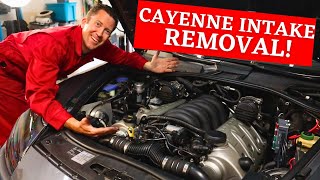
- Begin the process of removing the intake manifold. This involves disconnecting air intake components, fuel lines (relieve pressure first), and various electrical connectors and vacuum hoses. This is a complex step; a detailed guide is essential. 🎬 Watch this step-by-step guide to removing the intake manifold.
- Once the intake manifold is removed, locate the Bank 2 (driver's side) and Bank 1 (passenger's side) camshaft position sensors at the rear of the engine valley.
- Inspect the sensor's electrical connector and wiring for any signs of heat damage, melting, corrosion, or oil contamination.
- If the wiring appears intact, test the sensor. A common DIY method is to swap the Bank 2 sensor with the Bank 1 sensor. Re-assemble enough to run the engine, clear codes, and see if the fault code changes to P0340. If it does, the sensor is bad.
- For a more precise test, use a multimeter to check for reference voltage (typically 5V or 12V) and ground at the sensor's connector. Use an oscilloscope to view the square wave signal from the sensor with the engine cranking.
- If wiring and sensor are confirmed good, the issue may be mechanical (timing chain, camshaft adjuster) or a faulty ECM, which typically requires professional diagnosis.
- Recommendation: While the intake manifold is off, strongly consider replacing both cam sensors, the starter motor, and upgrading the plastic coolant pipes to the aluminum versions to prevent future failures.
Parts You'll Likely Need
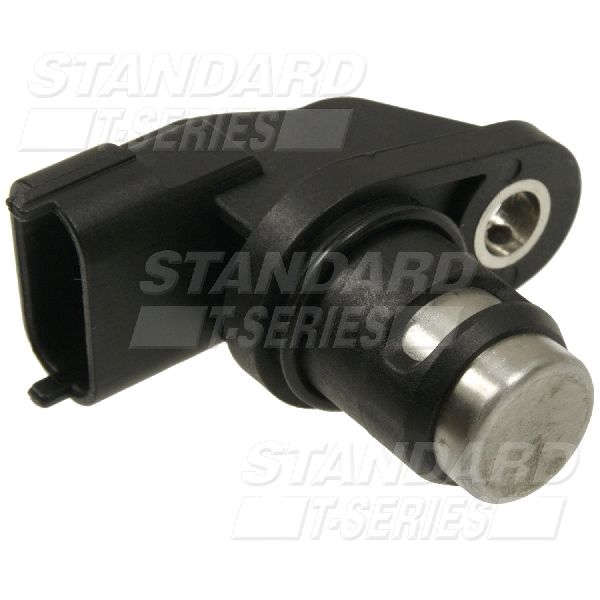
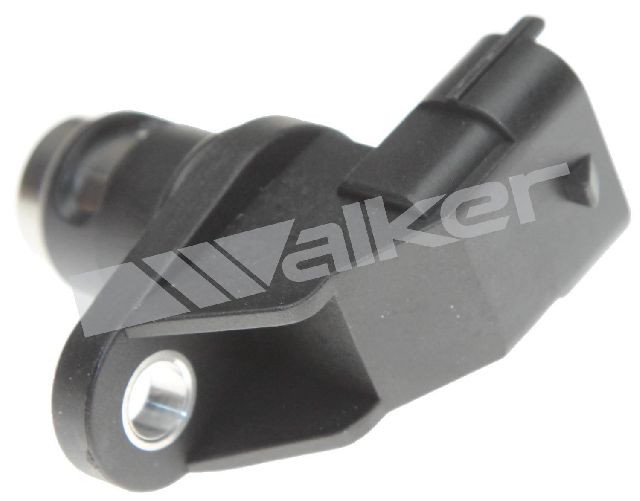
- Camshaft Position Sensor
(OEM #99660610602)— This is the most frequent cause of a P0345 code on this vehicle. The original part number may be superseded. It is critical to verify with VIN. The Pass 2 part number (94860610601) is for later 957/958 generation models.
Trusted brands: Bosch (OEM), Vemo, Hella
OEM price range: $100-$150
Aftermarket price range: $40-$90 - Intake Manifold Gaskets
(OEM #94811014601)— These are single-use gaskets and must be replaced whenever the intake manifold is removed to prevent vacuum leaks. Two are required.
Trusted brands: Victor Reinz, Elring
OEM price range: $40-$60
Aftermarket price range: $20-$40
Related Codes That Often Appear With This One
- P0340 — If both camshaft position sensors are failing simultaneously, if there is a systemic issue like a timing chain problem affecting both banks, or if an owner swaps the sensors for diagnosis and then reads the codes again.
- P0300, P0305, P0306, P0307, P0308 — Random (P0300) or specific cylinder misfires on Bank 2 (P0305-P0308) are common because the ECM cannot time the ignition spark and fuel injection correctly for that bank without a proper cam signal.
- P0016 — Crankshaft Position - Camshaft Position Correlation (Bank 1 Sensor A). This or similar codes (P0018 for Bank 2) strongly suggest a mechanical timing issue, such as a stretched chain or failed tensioner, rather than just a sensor failure.
- P0349 — This code indicates an intermittent signal from the Bank 2 camshaft sensor. It often points to a wiring issue, a loose connection, or a sensor that is in the initial stages of failure, rather than a complete failure.
Platform-Specific Known Issues
- Access to the camshaft position sensors on the M48 V8 engine requires the complete removal of the intake manifold, which significantly increases the labor time and complexity of the repair compared to other vehicles.
- The plastic connectors for sensors and vacuum lines at the rear of the manifold become extremely brittle with age and heat, and are very easy to break during removal.
- This repair provides a crucial opportunity for preventative maintenance on other known failure points located under the intake manifold, such as the starter motor and the original plastic coolant pipes.
Mechanic-Grade Diagnostic Values
- Camshaft Position Sensor Connector Voltage (Key On) — expected: Pin 1 to Pin 3: ~12V (Battery Voltage). Pin 2 (Signal) to Pin 3 (Ground): Should produce a square wave when engine is cranking, viewable on an oscilloscope. A static DC voltage reading may be misleading, but one forum user reported 0.45V on a faulty circuit.. Failure: No voltage between Pin 1 and 3 indicates a power or ground supply issue. A flat line or absent signal on Pin 2 while cranking indicates a failed sensor or wiring fault.
- Camshaft Deviation (Live Data) — expected: Using a scan tool like a Durametric or PIWIS, the camshaft deviation for Bank 1 and Bank 2 should be a steady value close to 0 degrees at idle and should change predictably with RPM.. Failure: A value of all zeros, or a value that is stuck and does not change, can indicate a failed sensor for that bank. A large, wandering, or out-of-spec deviation value can indicate a mechanical timing issue, such as a stretched chain or slipped camshaft sprocket.
Hidden / Shadow Codes Worth Checking
- P0346: Camshaft Position Sensor 'A' Circuit Range/Performance (Bank 2). This indicates the sensor signal is present but not plausible compared to the crankshaft sensor or other inputs. (see via Advanced OBD-II scanners (e.g., Durametric, PIWIS) or some high-end consumer scanners.)
- P0349: Camshaft Position Sensor 'A' Circuit Intermittent (Bank 2). This is triggered when the signal from the sensor cuts in and out. It strongly suggests a wiring harness problem, a loose connector, or a sensor in the first stages of failure. (see via Advanced OBD-II scanners (e.g., Durametric, PIWIS).)
Scan Tool Commands That Help
- Durametric / PIWIS: Live Data / Actual Values — To monitor 'Camshaft Deviation' for both banks in real-time. This is a critical step to differentiate between a simple sensor failure (often shows a '0' or stuck value) and a more serious mechanical timing problem (shows a large or wandering deviation value).
- PIWIS: Guided Fault Finding (GFF) — The Porsche dealer tool provides a step-by-step diagnostic test plan for any given DTC. For P0345, it will guide the technician through checking voltages, signals, and related components, providing expected values and wiring diagrams.
Wiring & Ground Locations
- Engine Block Ground Straps — On the rear of the engine block, often below the heater control valve. Access is very difficult without removing the intake manifold.. The DME/ECU and its sensors rely on a solid engine ground. A corroded or loose ground strap at the back of the engine can introduce electrical noise or voltage drops, potentially causing intermittent sensor circuit faults like P0345.
- Bell Housing Ground — A smaller ground connection is located on the bell housing, also at the rear of the engine.. Similar to the main engine grounds, a poor connection here can affect sensor readings and cause difficult-to-diagnose electrical issues.
- Sensor Connector Pins — At the 3-pin connector on the sensor itself, located in the engine valley under the intake manifold.. This is the primary location for testing. The three pins are typically Power (12V), Signal, and Ground. Probing here with a multimeter or oscilloscope confirms if the sensor is receiving power and sending a signal.
Real Owner Repair Stories
- Rennlist Forum Thread (2004 Porsche Cayenne Turbo (CTT)) — Persistent Check Engine Light with code P0349 (Camshaft Position Sensor A Circuit Intermittent Bank 2).
❌ Tried (didn't work) Replacing the Bank 2 camshaft position sensor did not fix the problem; the code returned.
✅ What actually fixed it The root cause was determined to be a mechanical timing issue. On these M48 engines, the camshaft sprockets are not keyed to the camshafts; they are held in place by friction from special diamond-coated washers and bolts. The timing had slipped between the sprocket and the camshaft on Bank 2. The fix required re-timing the cams using special tools and replacing the one-time-use camshaft bolts and diamond-coated washers.
OEM Part Supersession History
99660610602→99660610602 (current)— This is the correct part number for the 2003-2006 (955) 4.5L V8 models.
Heads up: The part number from Pass 2, 94860610601, is for the later 957/958 generation Cayennes (2007+) and is not compatible with the 955 models. The Bosch OEM equivalent for the correct 955 part is 0232103022.
Diagnostic Flowchart
Used vs. New Parts: Buying Guide for This Vehicle
When a used part is the smart pick: For this specific repair, using used parts is generally not recommended for the electronic sensors due to the high labor cost to access them. However, a used starter motor from a reputable salvage yard with a known low-mileage donor vehicle could be a cost-effective alternative to a new OEM unit.
Donor-vehicle mileage cap: roughly under 80000 miles for the part to have meaningful remaining life.
What to inspect on the donor part:
- For a starter motor, check for a clean unit without excessive corrosion or signs of fluid contamination.
- Verify the donor vehicle's mileage and ask for a short warranty (e.g., 30-90 days) from the salvage yard.
- Never buy used electronic sensors like the camshaft position sensor for this job.
- Never buy used plastic coolant pipes; they are a guaranteed failure point.
OEM-only on this vehicle (don't cheap out):
- Coolant Pipes: Do not use used or even new OEM plastic pipes. This is a critical failure point that MUST be addressed with an aftermarket ALUMINUM pipe upgrade kit.
- Intake Manifold Gaskets: Always use new gaskets to prevent vacuum leaks. OEM or high-quality aftermarket (Victor Reinz, Elring) are required.
Aftermarket brands forum-validated for this vehicle:
- Camshaft Position Sensor: Bosch is the Original Equipment Manufacturer (OEM) and is the most trusted brand.
- Starter Motor: A remanufactured starter from Bosch is a reliable alternative to a new OEM part.
- Coolant Pipe Upgrade Kits: URO Parts, Hamburg-Technic, and various kits from vendors like ECS Tuning and Pelican Parts are well-regarded for the aluminum pipe upgrade.
Brands owners have reported issues with on this vehicle:
- Avoid unbranded, no-name electronic sensors from online marketplaces. The risk of premature failure is high, and the labor to replace it again is substantial.
Related OBD-II Codes
Frequently Asked Questions
I have to remove the intake manifold to fix P0345. What other parts should I replace at the same time on my Cayenne?
Is it okay to just replace the one failed Bank 2 camshaft position sensor?
My mechanic suggested swapping the Bank 1 and Bank 2 sensors to see if the code changes. Is this a valid diagnostic step for this engine?
What brand of camshaft position sensor is best for my 2003-2006 Cayenne?
Are there any parts that are known to break easily when removing the intake manifold?
I've heard about coolant pipe failures on these V8s. Is that related to this P0345 repair?
Helpful Videos

![How to Fix P0345 Engine Code in 3 Minutes [2 DIY Methods / Only $9.45]](https://img.youtube.com/vi/n2SF4lGzH58/mqdefault.jpg)
We Have This Part in Stock


The information in this article is provided for general reference and educational purposes only. Vehicle specifications, procedures, and part compatibility can vary by production date, trim level, and region. Always consult your vehicle's factory service manual and verify part numbers before purchasing or performing repairs. Safety-critical components such as airbags, seat belts, and braking systems should be installed by a qualified professional.
- Porsche Cayenne:
- 🧭 Diagnostic Flowchart
- 🎬 Helpful Videos
- 🛍️ Shop This Part
- What's Unique About the 2003-2006 Porsche Cayenne
- Symptoms You May Notice
- Most Likely Causes
- Rare But Worth Checking
- Diagnosis Steps
- Parts You'll Likely Need
- Related Codes That Often Appear With This One
- Platform-Specific Known Issues
- Mechanic-Grade Diagnostic Values
- Hidden / Shadow Codes Worth Checking
- Scan Tool Commands That Help
- Wiring & Ground Locations
- Real Owner Repair Stories
- OEM Part Supersession History
- Used vs. New Parts: Buying Guide for This Vehicle
- Related OBD-II Codes
- Frequently Asked Questions
- 🎟️ Get 5% Off