

P0345 on 2007-2017 Toyota Camry 3.5L V6: Camshaft Sensor 'A' Bank 2 Causes and Fixes
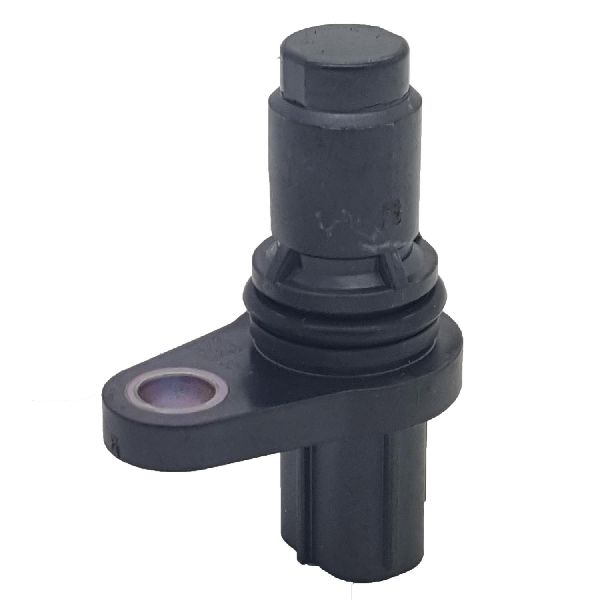
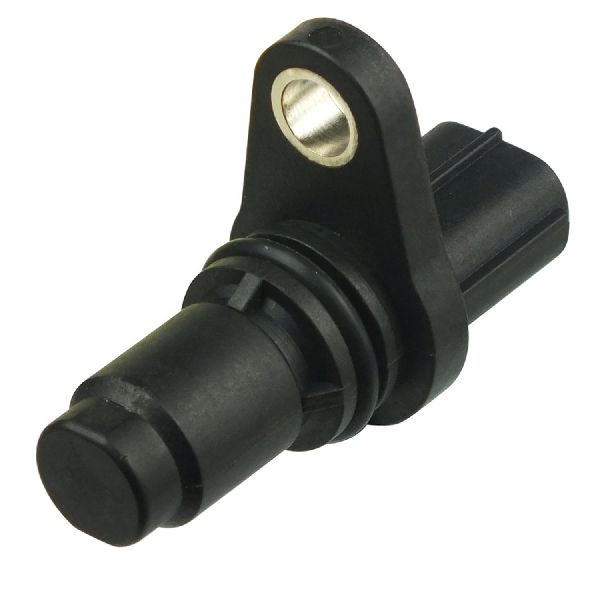
On a 2007-2017 Camry V6, P0345 almost always points to a failed Bank 2 intake camshaft position sensor or its wiring. Bank 2 is the cylinder bank closer to the radiator. A new OEM-quality sensor from a brand like Denso costs about $60-$90 and is a straightforward DIY replacement. The sensor swap test is the definitive diagnostic for a bad sensor.
- P0345 refers to the intake camshaft sensor on Bank 2, which is the bank at the front of the engine bay, near the radiator.
- The most likely cause is a bad sensor. A quick way to diagnose this is to swap it with the identical sensor on Bank 1 (by the firewall) and see if the code changes to P0340.
- Before replacing the sensor, always inspect the wiring and connector for damage, as this is another common point of failure.
- If a new sensor and good wiring don't fix the issue, check for a broken plastic oil baffle inside the valve cover before suspecting more complex timing or ECM issues.
What's Unique About the 2007-2017 Toyota Camry
For the 2GR-FE engine, the P0345 code is a very common and typically straightforward issue. Unlike some platforms where timing component failure is the primary cause, on this Camry it's most often the sensor itself or its wiring. A unique but notable issue on some Toyota V6 engines is a plastic oil baffle inside the valve cover breaking and falling into the timing chain, which can damage the camshaft sensor. This is worth checking if a new sensor doesn't solve the problem, especially if recent work like a valve cover gasket replacement was performed.
Generation note: This range covers the XV40 (2007-2011) and XV50 (2012-2017) generations of the Toyota Camry. Both used the 2GR-FE 3.5L V6, and the causes, diagnosis, and repair for code P0345 are consistent across both generations as no major changes were made to the cam sensor system.
Symptoms You May Notice
- Check Engine Light is on
- Engine is difficult to start or cranks but won't start
- Engine stalls, especially at low speeds or idle
- Rough or erratic idle
- Hesitation or loss of power during acceleration
- Noticeable decrease in fuel economy
- Engine misfires
- Replacing the VVT solenoid (Oil Control Valve). A solenoid failure typically sets performance codes like P0020, P0021, or P0022, not a circuit code like P0345.
- Replacing the crankshaft position sensor. While a failing crank sensor can cause similar symptoms, it will set its own specific codes (e.g., P0335).
Most Likely Causes
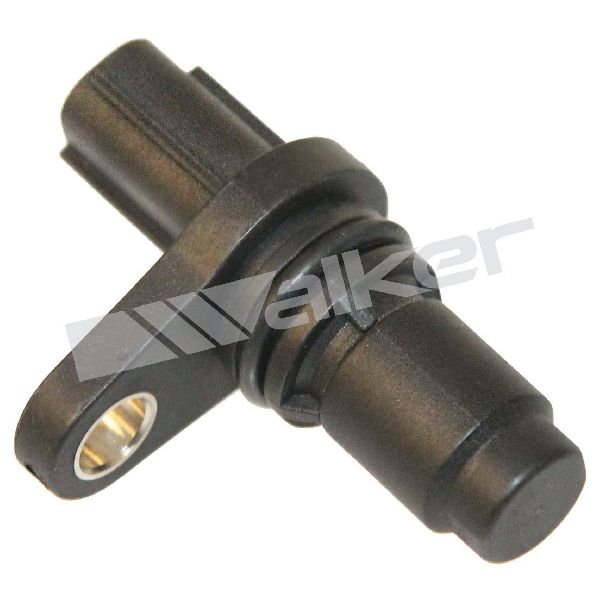
- Failed Bank 2 Intake Camshaft Position Sensor 🔴 High Probability → Shop Engine Camshaft Position Sensor Sensors are electronic components that can fail over time due to heat cycles and vibration. It is the most common cause for P0345.
How to confirm: Swap the Bank 2 intake cam sensor (front of engine, by radiator) with the Bank 1 intake cam sensor (rear of engine, by firewall). They are identical parts. Clear the codes. If the code changes to P0340 (Bank 1), the sensor is faulty. This is the most definitive and common diagnostic step shared by owners.
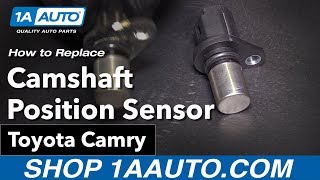
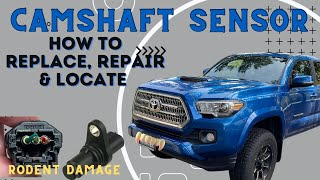
Typical fix: Replace the Bank 2 intake camshaft position sensor. It is held by a single 10mm bolt. 🎬 Watch: Step-by-step guide to replacing the camshaft position sensor.
Est. part cost: $40-$90 - Damaged Wiring or Connector 🟡 Medium Probability The wiring harness connector can become brittle from heat, and the locking tab can break. Wires can also chafe or corrode, causing an open or short in the circuit. This is a common point of failure, especially on older, higher-mileage vehicles.
How to confirm: Visually inspect the sensor's connector for corrosion, backed-out pins, or damage. Check the wiring harness for any signs of chafing, melting, or breaks. Use a multimeter to check for 5V reference, ground, and signal continuity back to the ECM.
Typical fix: If the connector is damaged, replace it with a new pigtail connector. Repair any damaged sections of the wiring harness.
Est. part cost: $15-$30 for a pigtail - Broken Internal Oil Baffle ⚪ Low Probability A plastic baffle inside the valve cover can be accidentally broken during service (like a valve cover gasket replacement) and fall into the timing assembly, where it can be hit by the chain and physically damage the sensor tip.
How to confirm: After removing the sensor, look inside the mounting hole with a light. If you see plastic debris or physical damage to the timing gear's reluctor teeth, this is the likely cause. This may require removing the valve cover for a full inspection.
Typical fix: Remove the valve cover, retrieve all broken plastic pieces, and replace the damaged camshaft position sensor.
Est. part cost: $40-$90 for the sensor, plus a valve cover gasket set if needed.
Rare But Worth Checking
- Stretched Timing Chain or Faulty VVT Cam Phaser: → Shop Engine Timing Chain While possible, this is less common on the 2GR-FE before 150,000 miles. It would usually be accompanied by rattling noises on startup and other timing correlation codes, such as P0018 or P0022.
- Faulty Engine Control Module (ECM): This is extremely rare and should only be considered after all other possibilities (sensor, wiring, timing components) have been definitively ruled out.
Diagnosis Steps
- Read the fault code with an OBD-II scanner to confirm P0345 is present. Check for any other related codes.
- Locate the Bank 2 intake camshaft position sensor. It is on the front valve cover (closer to the radiator), on the driver's side of the engine.
- Carefully inspect the sensor's electrical connector and wiring for any obvious damage, corrosion, or oil contamination. Ensure the connector is securely latched.
- Sensor Swap Test: Disconnect and remove the Bank 2 intake sensor (front) and the Bank 1 intake sensor (rear, by firewall). They are identical parts. Swap their positions, clear the codes, and start the engine. If the code changes to P0340 (Bank 1), you have confirmed the sensor is bad. Purchase and install a new sensor in the Bank 2 position.
- If the P0345 code returns after the swap, the problem lies in the wiring or the ECM. The sensor you moved is good.
- Wiring Test: Disconnect the sensor connector. With the key on (engine off), use a multimeter to verify you have approximately 5 volts at one pin (reference) and a good ground at another. The third pin is the signal wire which can be checked for continuity back to the ECM.
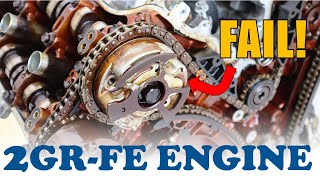
- Inspect for Debris: Remove the sensor and look into the hole in the valve cover with a flashlight for any signs of a broken plastic oil baffle or damage to the timing components. 🎬 Watch: How a broken oil baffle can cause engine failure.
- If wiring and sensor are confirmed good, the final, though rare, possibilities are a mechanical timing issue (stretched chain, bad phaser) or a faulty ECM.
Parts You'll Likely Need
- Camshaft Position Sensor (Bank 2, Intake)
(OEM #90919-05060)— This sensor is the most frequent point of failure for the P0345 code. The part number 90919-05060 is used for all four cam sensors (intake/exhaust on both banks). Always verify the part number with your vehicle's VIN.
Trusted brands: Denso (OEM manufacturer), Aisin, Standard Motor Products (SMP), NTK
OEM price range: $80-$120
Aftermarket price range: $40-$75 - Camshaft Position Sensor Connector Pigtail
(OEM #90980-11885 (Connector Housing))— The plastic connector can become brittle and fail, causing a poor connection even if the sensor itself is good. A pigtail allows for easy replacement of a broken connector.
Trusted brands: Dorman (p/n 645-940), Standard Motor Products (SMP), ACDelco
OEM price range: $25-$40
Aftermarket price range: $15-$30
Related Codes That Often Appear With This One
- P0340 — If someone has swapped the Bank 1 and Bank 2 sensors for diagnosis, a P0340 will appear if the sensor was the original problem.
- P0347, P0348 — These are related codes for the same sensor circuit, indicating low input or high input, respectively. They point to the same set of potential causes.
- P0346 — This code indicates a performance problem with the same sensor, rather than a circuit malfunction. It suggests the signal is present but incorrect, which could point more towards a timing chain or reluctor wheel issue.
Platform-Specific Known Issues
- A known, though uncommon, issue is the internal plastic oil baffle on the valve cover breaking off, falling into the timing chain path, and causing physical damage to the camshaft position sensor. This is often mentioned in owner forums as something to check if a sensor replacement doesn't fix the issue.
- Forum discussions on ToyotaNation and other enthusiast sites frequently confirm that the sensor swap between Bank 1 and Bank 2 is the go-to diagnostic step for owners experiencing P0345 or P0340, often resolving the issue by identifying a failed sensor.
Mechanic-Grade Diagnostic Values
- Camshaft Position Sensor Internal Resistance — expected: 1,630 to 2,740 Ω (cold) or 2,065 to 3,225 Ω (hot). Failure: A reading outside of this range, or an open/infinite resistance, indicates a failed sensor.
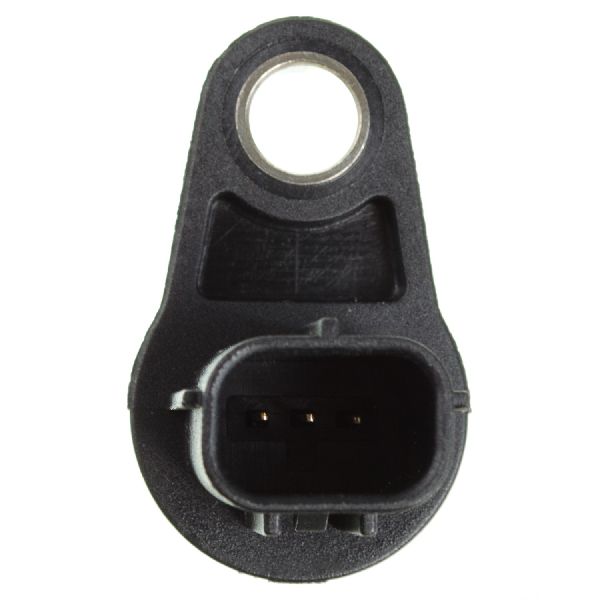
- Sensor Connector Voltage (Key On, Engine Off) — expected: Pin 3 (VC): 4.5 to 5.5 volts (Reference Voltage from ECM). Pin 2 (E2): Near 0 volts (Ground). Pin 1 (VV2+): 4.5 to 5.5 volts (Signal wire with pull-up voltage).. Failure: Missing reference voltage or ground points to a wiring or ECM issue. Incorrect signal voltage with good power/ground points to a sensor or wiring issue.
- Sensor Signal Waveform (at idle) — expected: A clean, repeating square wave pattern switching between approximately 0.5V and 4.5V. The service manual shows a specific 3-tooth pattern relative to the crankshaft sensor signal.. Failure: A missing, distorted, or erratic waveform indicates a failing sensor, damaged reluctor wheel, or wiring interference.
Hidden / Shadow Codes Worth Checking
- Pending Code P0345: The ECM may store a 'pending' code before the fault occurs frequently enough to illuminate the Check Engine Light. This can indicate an intermittent fault in the early stages. (see via Use a scan tool like Toyota Techstream or a high-quality OBD-II scanner and look for the 'Pending Codes' or 'Current Codes' menu.)
- Freeze Frame Data: When the P0345 code is set, the ECM captures a snapshot of all major sensor values (engine speed, coolant temp, vehicle speed, etc.) at the moment of the fault. This data is critical for understanding the conditions under which the failure occurred. (see via Accessible via the 'Freeze Frame' or 'FFD' menu on most OBD-II scanners, with Toyota Techstream providing the most comprehensive data.)
Scan Tool Commands That Help
- Toyota Techstream: DTC INFO / PENDING CODES — Used to check for intermittent faults that haven't yet triggered the MIL, or to see if a cleared code returns immediately as pending after a short drive.
- Toyota Techstream: Data List — Allows for live monitoring of sensor inputs. A technician can watch the 'Camshaft Signal - Bank 2' parameter to see if it is dropping out or providing erratic readings while the engine is running, confirming a live fault.
Wiring & Ground Locations
- C19 (Bank 2 Intake VVT Sensor Connector) — The 3-pin electrical connector on the camshaft position sensor located on the front (radiator side) valve cover.. This is the primary point for testing voltage, ground, and signal directly at the sensor. A poor connection here is a common cause of P0345.
- E9 (ECM Connector) — One of the main multi-pin connectors at the Engine Control Module (ECM), typically located in the engine bay.. The wires from the C19 sensor connector terminate here. For example, the signal wire (VV2+) from C19 Pin 1 goes to Pin 29 of the E9 connector. This allows for end-to-end continuity testing of the harness.
- E1, E01, E02 (ECM Ground Points) — These are specific pins on the ECM connectors that provide ground for internal circuits. The sensor itself is grounded through the harness back to an ECM ground pin.. A bad ECM ground can cause floating voltages and erratic behavior for multiple sensors, including the camshaft sensor. Verifying a solid ground at the sensor connector (Pin 2) is crucial.
Real Owner Repair Stories
- YouTube video by 'Tundra Gurus' (Toyota V6 (2GR-FE applicable)) — Check engine light with codes P0018 and P0345.
❌ Tried (didn't work) The video warns against immediately assuming a stretched timing chain, which is a very expensive repair.
✅ What actually fixed it The plastic oil baffle inside the valve cover had broken, fallen into the timing assembly, and physically damaged the camshaft position sensor. The fix was to remove the broken baffle debris and replace the damaged sensor.
OEM Part Supersession History
90919-05060→90919-T5002, 90919-T5005— Standard part evolution and supplier changes.
Heads up: No known incompatibilities within the 2007-2017 Camry 2GR-FE range. These part numbers are widely cross-compatible with many Toyota/Lexus models. Always verify with VIN.
Model Year Variations Within This Range
- 2007-2017: No significant variations have been identified for the P0345 diagnostic process between the XV40 (2007-2011) and XV50 (2012-2017) generations. The 2GR-FE engine and its sensor systems remained fundamentally the same for this specific fault.
Diagnostic Flowchart
Other Known Issues on This Vehicle
Issues unrelated to this code that are worth knowing about as an owner of this generation:
- VVT-i Oil Line Rupture 🔴 High — Common on early models (2007-2010). The original rubber section of the high-pressure oil line for Bank 1 VVT-i can degrade and burst, leading to rapid oil loss and catastrophic engine failure. (Ref: A Limited Service Campaign (LSC) was issued by Toyota to replace the rubber hose with an all-metal line (p/n 15772-31030).)
- Water Pump Failure 🟠 Medium — Water pumps can fail prematurely, sometimes before 100,000 miles, leading to coolant leaks and potential overheating. It is often recommended to replace the water pump preventatively during other major services.
- Idler Pulley Failure 🟡 Low — The serpentine belt idler pulley on early 2GR-FE engines (pre-2010) was prone to premature bearing failure, causing a loud whining or grinding noise. Toyota later updated the part to a more robust design.
- Ignition Coil Failure 🟠 Medium — While not a chronic widespread problem, ignition coil failure is a common maintenance item as the vehicle ages past 100,000 miles. Coils on Bank 1 (rear, near firewall) are significantly more labor-intensive to replace as the intake manifold must be removed.
Used vs. New Parts: Buying Guide for This Vehicle
When a used part is the smart pick: For an inexpensive electronic sensor that is a high-failure item, buying used is generally not recommended. The potential for premature failure and the labor to replace it a second time often outweigh the small cost savings over a quality aftermarket or OEM part.
Donor-vehicle mileage cap: roughly under 80000 miles for the part to have meaningful remaining life.
What to inspect on the donor part:
- Ensure the connector is not cracked or brittle.
- Check that the plastic housing has no signs of physical damage or melting.
- Inspect the electrical pins for any corrosion or signs of water intrusion.
- Ask for the mileage of the donor vehicle if possible.
OEM-only on this vehicle (don't cheap out):
- While not strictly 'OEM-only', using a Denso (OEM manufacturer) or Aisin sensor is highly recommended for electronic components like this to ensure signal accuracy and longevity. Cheap, unbranded sensors are a common source of repeat failures.
Aftermarket brands forum-validated for this vehicle:
- Denso
- Aisin
- NTK/NGK
- Standard Motor Products (SMP)
Brands owners have reported issues with on this vehicle:
- Unbranded, 'white-box' sensors from online marketplaces like eBay or Amazon should be avoided due to inconsistent quality control and high failure rates reported in owner forums.
Real Owner Stories
Aggregated from forums and TSBs cited above. Mileages and costs reflect what owners reported in those sources.
2011 Toyota Camry V6
Symptoms: P0345 code appeared immediately after a valve cover gasket job.
What fixed it: The owner discovered the oil baffle was broken during the repair, fell into the timing assembly, and destroyed the new cam sensor. The fix required retrieving the plastic pieces and replacing the sensor.
Source hint: Reddit r/MechanicAdvice thread titled '2011 Camry V6 P0345 after valve cover gasket job'
Toyota Camry 2GR-FE V6
Symptoms: The car was stalling and the Check Engine Light came on with code P0345.
What fixed it: The owner swapped the Bank 1 and Bank 2 sensors to confirm the failure, then replaced the faulty sensor with a Denso part.
Source hint: ToyotaNation Forums: Multiple threads under the Camry and Highlander sections
Related OBD-II Codes
Frequently Asked Questions
Where is the Bank 2 intake camshaft position sensor located on my 3.5L V6 Camry?
Is there a simple way to test if the sensor itself is bad before I buy a new one?
I just did a valve cover gasket job and now have a P0345 code. What could have happened?
What brand of replacement sensor is recommended for the 2GR-FE engine?
My 2009 Camry V6 has this code and a loud whining noise; are they related?
Could a low oil condition or oil line issue cause timing-related codes on my 2007-2010 Camry?
Helpful Videos
We Have This Part in Stock


The information in this article is provided for general reference and educational purposes only. Vehicle specifications, procedures, and part compatibility can vary by production date, trim level, and region. Always consult your vehicle's factory service manual and verify part numbers before purchasing or performing repairs. Safety-critical components such as airbags, seat belts, and braking systems should be installed by a qualified professional.
- Toyota Camry:
- 🧭 Diagnostic Flowchart
- 🎬 Helpful Videos
- 🛍️ Shop This Part
- What's Unique About the 2007-2017 Toyota Camry
- Symptoms You May Notice
- Most Likely Causes
- Rare But Worth Checking
- Diagnosis Steps
- Parts You'll Likely Need
- Related Codes That Often Appear With This One
- Platform-Specific Known Issues
- Mechanic-Grade Diagnostic Values
- Hidden / Shadow Codes Worth Checking
- Scan Tool Commands That Help
- Wiring & Ground Locations
- Real Owner Repair Stories
- OEM Part Supersession History
- Model Year Variations Within This Range
- Other Known Issues on This Vehicle
- Used vs. New Parts: Buying Guide for This Vehicle
- Real Owner Stories
- 2011 Toyota Camry V6
- Toyota Camry 2GR-FE V6
- Related OBD-II Codes
- Frequently Asked Questions
- 🎟️ Get 5% Off