

P0349 on 2016-2017 Dodge Durango: Cam Sensor Fault or Simple Software Update?
This code indicates an intermittent signal from the Bank 2 (driver's side) intake camshaft position sensor. Before replacing the sensor, check with a dealer if your vehicle needs a critical PCM software update outlined in TSB #18-049-20, as the original software is often too sensitive. This TSB changes the fault from a one-trip to a two-trip logic, making it less likely to trigger a false positive. If the update is done, the likely fix is a new Mopar sensor (part #5149141AF) for about $45-$60.
- Before buying any parts for a P0349 code, have a dealer check if your Durango needs the PCM software update from TSB #18-049-20.
- The code points to the intake camshaft position sensor on the driver's side (Bank 2).
- If the software is up-to-date, the most likely cause is a failing sensor, which is a relatively inexpensive part.
- Symptoms can include stalling, hard starting, and rough idling, so it's best to address the issue promptly.
- On the 3.6L V6, you can diagnose a bad sensor for free by swapping it with the sensor from the passenger side (Bank 1) and seeing if the code follows it.
What's Unique About the 2016-2017 Dodge DURANGO
For this specific Durango and its platform mate, the Jeep Grand Cherokee (WK2), the P0349 code has a unique history. Chrysler released technical service bulletins (TSBs) because the original engine computer software was overly sensitive and could trigger a Check Engine Light for very brief, insignificant signal interruptions from the sensor. This means that unlike many other vehicles where this code points directly to a bad sensor, on the 2016-2017 Durango, the root cause is often the software itself. A simple dealer-performed update can permanently fix the problem by changing the fault logic from a single-trip to a two-trip event, making the system more tolerant.
Diagnostic Flowchart
Tap your situation to follow the diagnostic path that matches what you're seeing on this vehicle.
Symptoms You May Notice
- Check Engine Light is on
- Engine stalls, especially at low speeds or when coming to a stop
- Difficulty starting the engine (long crank time)
- Rough or unstable idle, sometimes fluctuating
- Hesitation or lack of power during acceleration
- Reduced fuel economy
- Engine runs rough, but may smooth out at higher RPMs
- Replacing the camshaft position sensor without first checking if the PCM software update (TSB #18-049-20) has been performed. Many owners replace the sensor only to have the code return because the overly sensitive software was the real issue.
- Using a cheap, aftermarket sensor. Many forum users report that non-OEM sensors fail quickly or are dead-on-arrival, causing the code to return. Sticking with a Mopar-branded sensor is highly recommended.
Most Likely Causes
- Outdated Powertrain Control Module (PCM) Software 🔴 High Probability → Shop Engine Control Module (ECM) Manufacturer TSBs #18-049-20 and #18-024-17 REV. C were issued specifically to address this. The original software was too sensitive and would log a fault for minor signal glitches that don't affect performance. The update changes P0349 from a one-trip to a two-trip fault.
How to confirm: A Dodge dealership or a qualified repair shop with access to wiTECH (Chrysler's diagnostic software) can check your vehicle's VIN to see if this software update has been performed. This should be the first step in any diagnosis. The dealer can see if the flash is available for your specific vehicle configuration.
Typical fix: Reprogram (or 'flash') the PCM with the latest software version. This is a dealer or specialty shop procedure that takes approximately 6-10 minutes once connected.
Est. part cost: $0 (if under warranty) or ~$150 (dealer labor for flash) - Failing Camshaft Position Sensor (Bank 2, Intake) 🟡 Medium Probability → Shop Engine Camshaft Position Sensor The sensor is an electronic component that operates in a high-heat environment and can fail intermittently before failing completely. Oil leaks from the valve cover gasket can also seep into the sensor's connector, causing damage.
How to confirm: If the PCM software is up-to-date, the next step is to test the sensor. A common DIY method on the 3.6L V6 is to swap the Bank 2 intake sensor with the Bank 1 intake sensor (passenger side). If the code changes to P0344 (the equivalent code for Bank 1), the sensor is bad. Note that on the 3.6L, the Bank 1 sensor is much harder to access and may require removing the upper intake manifold.
Typical fix: Replace the Bank 2 intake camshaft position sensor. It is highly recommended to use an OEM Mopar part to avoid compatibility issues.
Est. part cost: $25-$60 - Wiring or Connector Issue ⚪ Low Probability Engine vibrations and heat can cause wires to chafe or connector pins to become loose or corroded over time. Oil from a leaking valve cover gasket is a known issue that can contaminate the connector, leading to an intermittent signal.
How to confirm: Visually inspect the wiring harness and connector for the Bank 2 intake cam sensor. Check for oil saturation, corrosion on the pins, or any signs of damaged wires. Use a multimeter to check for proper voltage (typically 5V) and ground at the connector.
Typical fix: Repair the damaged section of the wiring harness or replace the connector pigtail. Clean oil from the connector with electrical contact cleaner.
Est. part cost: $15-$40
Rare But Worth Checking
- Low or Dirty Engine Oil: While less common for an intermittent code, low or dirty engine oil can affect the operation of the VVT (Variable Valve Timing) system, which can sometimes lead the PCM to flag cam sensor codes. Diagnostic procedures often list checking oil level and condition as a preliminary step.
- Damaged Camshaft Tone Ring: → Shop Engine Camshaft The sensor reads a multi-toothed ring on the camshaft. If this ring is cracked, damaged, or has metallic debris stuck to it, it can cause an erratic signal. This is rare and usually only occurs if major internal engine work was recently performed or if there is a significant internal engine failure.
- Failing Crankshaft Position Sensor: → Shop Engine Crankshaft Position Sensor The cam and crank sensors work together for timing correlation. A failing crank sensor can sometimes send conflicting data that makes the PCM incorrectly flag the cam sensor. The TSBs from Dodge group these codes together, 🎬 Watch: Diagnosing multiple camshaft position sensor codes on the 3.6L. as the software update addresses the sensitivity of all these position sensors. This would typically be accompanied by crankshaft sensor codes like P0335 or P0339.
Diagnosis Steps
- Check for TSBs: The most crucial first step. Contact a dealer or use a professional scan tool to verify if the PCM software update from TSB #18-049-20 or #18-024-17 REV. C has been applied. If not, perform this update before any other repairs.
- Check Engine Oil: Verify the engine oil is at the correct level and is in good condition. Low or dirty oil can impact VVT system performance and indirectly cause timing codes.
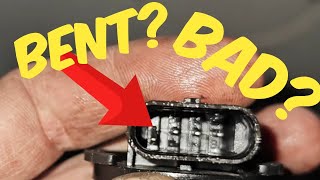
- Inspect the Sensor and Connector: Locate the intake camshaft position sensor on the driver's side (Bank 2) of the engine. On the 3.6L V6, it's on the rear of the cylinder head. On the 5.7L V8, there is only one cam sensor located on the front timing cover. Visually inspect the connector for corrosion, oil contamination, or loose pins. Check the wiring for any visible damage.
- (3.6L V6) Swap Sensors: If the inspection is clear and the software is up-to-date, swap the Bank 2 intake sensor with the Bank 1 (passenger side) intake sensor. They are identical parts. Clear the codes and drive the vehicle. Be aware the Bank 1 sensor is difficult to access.
- Re-Scan for Codes: If the code returns as P0344 (Bank 1), the sensor you moved is faulty. If the code returns as P0349, the problem is in the Bank 2 circuit, not the sensor.
- Test the Circuit: If the problem remains on Bank 2 after the swap, use a multimeter to check for the correct reference voltage (usually 5V) and a good ground at the sensor connector. Test the signal wire for continuity back to the PCM.
- Replace the Part: If the sensor is confirmed bad from the swap test, replace it with a new OEM Mopar part. If the circuit is found to be faulty, repair the wiring.
- Perform Cam/Crank Relearn: After replacing a sensor, some service manuals recommend performing a 'Cam/Crank Variation Relearn' procedure with a capable scan tool to ensure the PCM recognizes the new component correctly.
- Inspect Tone Ring: If all else fails, the problem may be with the tone ring on the camshaft itself, which requires more significant disassembly to inspect.
Parts You'll Likely Need
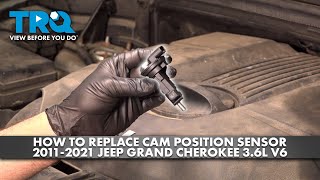
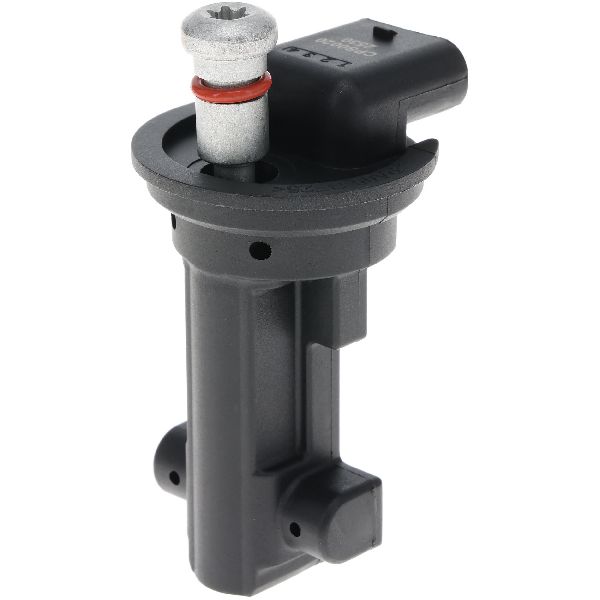
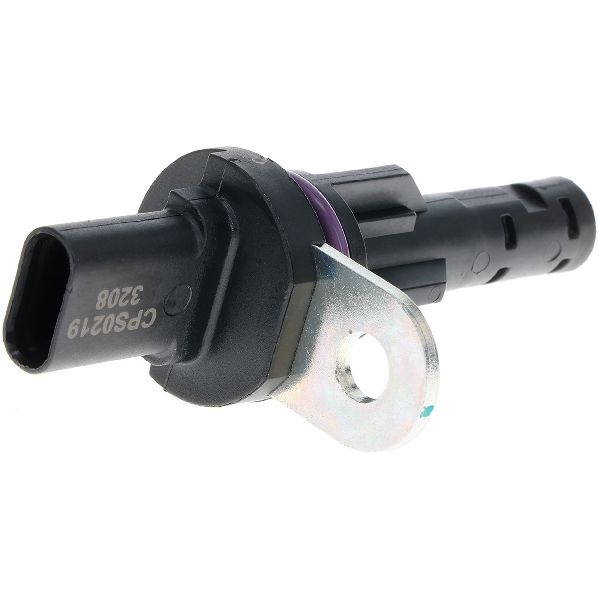
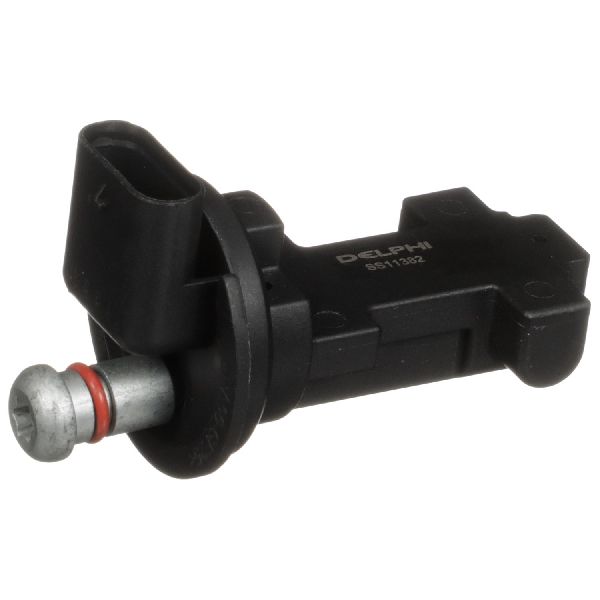
- Camshaft Position Sensor
(OEM #5149141AF)— This sensor is the most common hardware failure for this code after the software has been updated. It provides the position signal that the PCM is reporting as intermittent. The part number 5149141AF is a widely used Mopar sensor for many Chrysler/Dodge/Jeep/Ram vehicles with the 3.6L engine.
Trusted brands: Mopar (Recommended), NTK, Delphi, Dorman (907-728)
OEM price range: $45-$60
Aftermarket price range: $25-$50
Related Codes That Often Appear With This One
- P0345 — This is the code for a hard fault ('Circuit Malfunction') in the same sensor, while P0349 is for an 'Intermittent' fault. They can appear together if the sensor is failing completely.
- P0390 / P0394 — These are the circuit and intermittent codes for the exhaust camshaft sensor on the same bank (Bank 2). A wiring issue affecting the harness for Bank 2 could potentially trigger codes for both sensors. The TSB also addresses these codes.
- P0335 / P0339 — These are codes for the crankshaft position sensor. The TSBs from Dodge group these codes together, as the software update addresses the sensitivity of all these position sensors.
Technical Service Bulletins (TSBs) & Recalls
- 18-049-20: Involves flashing the Powertrain Control Module (PCM) with updated software to address multiple intermittent Diagnostic Trouble Codes (DTCs), including P0349. It changes the code from a one-trip to a two-trip fault for the 3.6L engine. This TSB supersedes previous versions.
- 18-024-17 REV. C: A previous version of the bulletin that also recommends a PCM software update to address P0349 and other codes by making the fault detection less sensitive.
Platform-Specific Known Issues
- A primary issue for the 2016-2017 Durango is the overly sensitive PCM software from the factory. TSB #18-049-20 was released to change the logic for P0349 (and other sensor codes) from a one-trip to a two-trip fault.
Mechanic-Grade Diagnostic Values
- 5V Reference Supply Voltage at Sensor Connector — expected: 4.5 to 5.2 Volts (Key On, Engine Off). Failure: Voltage below 4.5V or above 5.2V points to a wiring or PCM issue.
- Sensor Ground Circuit Resistance — expected: Less than 5.0 Ohms (measured between ground pin and chassis ground). Failure: High resistance indicates a poor ground connection, which can cause erratic signals.
- CMP Signal Circuit Voltage — expected: A square wave toggling between ~0.5V and ~4.5V (viewed on an oscilloscope with engine running). Failure: A static voltage (stuck high or low) or a noisy/distorted pattern indicates a failed sensor or wiring short/open.
- Signal Wire Continuity — expected: Less than 5.0 Ohms (measured from sensor connector to PCM connector). Failure: Resistance higher than 5.0 Ohms indicates an open or excessive resistance in the signal wire.
Scan Tool Commands That Help
- wiTECH or capable aftermarket scanner (e.g., Appcar DiagFCA): Cam/Crank Relearn — This procedure should be performed after replacing a camshaft or crankshaft position sensor, or after any repair involving the timing components, to synchronize the new sensor data with the PCM. Failure to do so can sometimes cause the code to persist or other performance issues. The engine coolant temperature must be above 158°F (70°C) to run the routine.
- wiTECH (Chrysler Dealer Tool): VVT System Test — If the sensor and wiring test good but the code persists, this test can be used to command the cam phasers to move and measure their response. It helps differentiate a sensor/wiring fault from a mechanical VVT system problem (like a sticking phaser), which can also trigger timing codes.
Wiring & Ground Locations
- Bank 2 Camshaft Position Sensor Connector (3.6L V6) — On the rear of the driver's side (Bank 2) cylinder head, often requiring removal of the upper intake manifold for access.. This is the primary connection point for testing power, ground, and signal for the sensor related to P0349. Its difficult-to-access location makes a simple visual inspection challenging.
- Camshaft Position Sensor Connector (5.7L V8) — The 5.7L Hemi uses a single cam sensor located on the front timing cover, near the thermostat housing and below the alternator.. Although this engine has only one sensor, a fault can still be logged with bank-specific codes like P0349 if the PCM's software logic determines the intermittent fault corresponds to a Bank 2 timing event. Its location is more accessible than on the 3.6L.
- Ground G914A — A common engine ground point located on the right side (passenger side) of the engine block.. This is a shared ground for multiple engine sensors. A loose or corroded connection at this specific ground can introduce electrical noise and cause intermittent, hard-to-diagnose signal faults for both camshaft and crankshaft position sensors, potentially leading to a P0349 code.
- Sensor Connector Pinout (3.6L V6) — The 4-pin connector on the sensor. Pin 1 is signal, Pin 2 is signal, Pin 3 is 5V supply, and Pin 4 is ground. The P0349 code corresponds to the intake cam, which uses one of the two signal wires.. Knowing the pinout is essential for accurately testing for the 5V supply, ground, and the correct signal wire with a multimeter or oscilloscope. A documented case showed the signal wire (Circuit K44) broken internally near the PCM connector.
Helpful Videos

We Have This Part in Stock


The information in this article is provided for general reference and educational purposes only. Vehicle specifications, procedures, and part compatibility can vary by production date, trim level, and region. Always consult your vehicle's factory service manual and verify part numbers before purchasing or performing repairs. Safety-critical components such as airbags, seat belts, and braking systems should be installed by a qualified professional.
- Dodge DURANGO:
- 🧭 Diagnostic Flowchart
- 🎬 Helpful Videos
- 🛍️ Shop This Part
- What's Unique About the 2016-2017 Dodge DURANGO
- Symptoms You May Notice
- Most Likely Causes
- Rare But Worth Checking
- Diagnosis Steps
- Parts You'll Likely Need
- Related Codes That Often Appear With This One
- Technical Service Bulletins (TSBs) & Recalls
- Platform-Specific Known Issues
- Mechanic-Grade Diagnostic Values
- Scan Tool Commands That Help
- Wiring & Ground Locations
- 🎟️ Get 5% Off